Epilepsy: New (old) treatment without drugs
Posted: March 10, 2013 Filed under: Nutrition/diet, self-healing, Uncategorized | Tags: biofeedback, diet, ketogenic diet, neurofeedback 11 CommentsNothing is so hard as watching a child having a seizure.
–Elizabeth A. Thiele, MD, PhD, professor of neurology at Harvard Medical School
Until recently, when people asked me, “What would I suggest as a non-toxic/non-invasive biofeedback approach for the treatment of epilepsy?” I automatically replied, “A combination of neurofeedback, behavioral analysis treatment, respiration training, a low glycemic diet, and stress management and if these did not work, medications.” I have now changed my mind!
Epilepsy is diagnosed if the person has two or more seizures. About one to two percent of the population is diagnosed with epilepsy and it is the most common neurological illness in children. Medication is usually the initial treatment intervention; however, in about one third of the people, the seizures will still occur despite the medications. In some cases, people -often without the support of their neurologist/healthcare provider–will explore other treatment strategies such as diet, respiration training, neurofeedback, behavioral control, diet, or traditional Chinese medicine.
It is ironic that one of the tools to diagnose epilepsy is recording the electroencephalography (EEG)– brain waves–of the person after fasting while breathing quickly (hyperventilating). For some, the combination of low blood sugar and hyperventilation will evoke epileptic wave forms in their EEG and can trigger seizures (hyperventilation when paired with low sugar levels tends to increase slow wave EEG which would promote seizure activity).
If hyperventilation and fluctuating blood sugar levels are contributing factors in triggering seizures, why not teach breathing control and diet control as the first non-toxic clinical intervention before medications are prescribed. This breathing approach has shown very promising clinical success. (For more details see the book, Fried, R. (1987). The Hyperventilation syndrome-Research and Clinical Treatment. Baltimore: The Johns Hopkins University Press).
Self-management should be the first clinical intervention and not the last. Similarly, neurofeedback– brain wave biofeedback–is another proven approach to reduce seizures. This approach was developed by Professor Maurice B. Sterman at UCLA and was based upon animal studies. He demonstrated that cats who were trained to increase sensory motor rhythm (SMR) in their EEG could postpone seizure onset when exposed to a neurotoxin that induced seizures. He then demonstrated that human beings with epilepsy could equally learn to control their EEG patterns and inhibit seizures. This approach, just as the breathing approach, is non-toxic and reduces seizures.
Underlying both these approaches is the concept of behavioral analysis to identify and interrupt the chained behavior that leads to a seizure. Namely, a stimulus (internal or external) triggers a cascading chain of neurological processes that eventually results in a seizure. Thus, if the person learns to identify and interrupt/divert this cascading chain, the seizure does not occur. From this perspective, respiration training and neurofeedback could be interpreted to interrupt this cascading process. Behavioral analyses includes all behaviors (movement, facial expressions, emotions, etc) which can be identified and then interrupted. As professors Joanne Dahl and Tobias Lundgren from Uppsala University in Sweden state, The behavior technology of seizure control provides low-cost, drug free treatment alternative for individual already suffering from seizures and the stigmatization of epilepsy.
Until recently, I would automatically suggest that people explore these self-control strategies as the first intervention in treatment of epilepsy and only medication for the last resort. Now, I have changed my mind. I suggest the ketogenic diet as the first step for the treatment of epilepsy in conjunction with the self-regulation strategies—medication should only be used if the previous strategies were unsuccessful.
A ketogenic diet has a 90% clinical success rates in children–even in patients with refractory seizures. This diet stabilizes blood sugar levels and is very low on simple carbohydrates, high in fat, some protein, and lots of vegetables (a ratio of 4 grams of fat to 1 gram of carbohydrates and protein). In adults, the success rates drops to about 50%. The lower success rate may be the result of the challenges in implementing these self-regulatory diet approaches. As Elizabeth A. Thiele, MD, PhD, professor of neurology at Harvard Medical School points out, dietary therapy is the most effective known treatment strategy for epilepsy. Even though, ketogenic diet is the most effective therapy, it is less likely to be prescribed than medications—there are no financial incentives; there are, however, many financial incentives for prescribing pharmaceuticals.
These lifestyle changes are very challenging to implement. They need to be taught and socially supported. Just telling people what to do does not often work. It is similar to learning to play a musical instrument. The person needs step by step coaching and social support which is an intensive educational approach. To learn more about the research underlying the ketogenic diet as the first level of intervention for epilepsy, watch Professor Thiele’s presentation from the 2012 Ancentral Health Symposium, Dietary Therapy: Role in Epilepsy and Beyond.
Cut out the sugar-it is toxic!
Posted: March 3, 2013 Filed under: Nutrition/diet, Uncategorized | Tags: diabetes, diet, sugar 2 CommentsPutting it simply: Too much sugar in our diet is harmful and when we return to our paleolithic diet, health tends to improve.
Sugar intake in all different forms is the single most important ingredient that contributes to diabetes. In the last one hundred years our sugar intake has radically increased as is shown in figure 1.

Figure 1. Sugar intake per capita in the United Kingdom from 1700 to 1978 and in the United states from 1975-2000. The line on the right with black dots is the obesity rates in the United States in non-Hispanic white men aged 60-69 y. Values for 1880-1910 are based on studies conducted in male Civil War veterans aged 50-59y. From: Johnson RJ et al, AJCN 2007; 86:899-906; Initial source: http://www.indiana.edu/~oso/Fructose/Fructose.html
Even though research and clinical findings over the last one hundred years have shown that increased sugar and processed simple carbohydrate intake are contributing factors to many illnesses ranging from diabetes, obesity, cancer and even epilepsy, the data is now undisputable. As Mark Bittman wrote in the New York Times on February 27th, “Sugar is indeed toxic. It may not be the only problem with the Standard American Diet, but it’s fast becoming clear that it’s the major one.”
When researchers accounted for poverty, aging, exercise, total food intake, and other factors, increased sugar intake increased diabetes and decreased sugar decreased diabetes. As the authors state, “for every 150 kcal/person/day increase in sugar availability (about one can of soda/day) there was associated with increased diabetes prevalence by 1.1% (p <0.001).” (Basu S, Yoffe P, Hills N, Lustig RH (2013) The Relationship of Sugar to Population-Level Diabetes Prevalence: An Econometric Analysis of Repeated Cross-Sectional Data. PLoS ONE 8(2): e57873. doi:10.1371/journal.pone.0057873)
Presently, the level of proof linking sugar to diabetes is equal to if not better than the level of proof that linked cigarette smoking to lung cancer and other illnesses. Despite the overwhelming scientific data, it will be an uphill battle to change our diet and diet recommendations from the highly processed high glycemic index diet that promotes inflammation and diabetes to a low glycemic index Paleolithic diet that supports health. The major agricultural and food processing businesses have significant influence with the USA Government (for Senate and House members lobbying pays for the election), the FDA and USDA priorities are also highly affected through direct and indirect lobbying efforts or by the financial reward to be offered a job in the agribusiness after working for the FDA or USDA. In the USA lobbying and being rewarded with a highly paid job in industry is the expression of the democratic process–for the rest of the world it is called bribery. Thus, it is likely that agricultural and food processing industries will continue to delay and obstruct any recommendations to reduce sugars and highly processed carbohydrates in our food supply. A preview of this battle has already occurred when Major Michael Bloomberg of New York City intended to restrict sales of sugary soft drinks to no more than 16 ounces a cup in city restaurants, movie theaters, stadiums and arenas. A barrage of negative comments filled the media spaces. For example, Bloomberg News, reported the comments by Kirsten Witt Webb, a Coca-Cola (KO) spokeswoman, who said in an e-mail. “They can make their own choices about the beverages they purchase. We hope New Yorkers loudly voice their disapproval about this arbitrary mandate.”
Soft drinks and soft drinks contain often eight or more table spoons of sugar per drink as shown in Figure 2.
 Figure 2. Amount of sugar cubes in soft drinks. Source: http://www.sugarstacks.com/beverages.htm
The sugar/highly processed foods battle will be similar to the battle the smoking lobby fought for the last 30 years. Just like tobacco subsidies, farmers receive subsidies to grow corn to make more low cost high fructose corn syrup. As recent as 2005 tobacco farmers were still receiving a billion and a half dollars in subsidy while farmers growing corn received more than seven billion dollars in subsidies as shown in Figure 3.

Figure 3. Farm subsidies in 2005. source: http://en.wikipedia.org/wiki/Agricultural_subsidy
At the same time pharmaceutical companies continue to reap a financial bonanza from the sugar diet induced illnesses. They will create more and more drugs to attempt to reduce the illnesses and symptoms.
We cannot expect the US government to promote our health as the lobbying power by agribusiness is overwhelming. We cannot expect published information, whether on the web or in print, to be accurate as advertising dollars significantly affect editorial decisions.
We can start eating differently ourselves and with our families and friends. Begin now. Do an experiment by eating a predominantly Paleolithic diet. For the next two weeks, eat only foods that are real foods which your great grandparents recognized as food. Thus nothing out of box or can. Nothing that has been processed or prepared! Buy only foods in their natural form. Shop at farmers’ markets or only at the periphery of the supermarket: vegetables and fruits, the meat and fish counters. After eating this diet for two weeks, check how you feel. Many people report having more energy, feeling less tired and irritability, and some experience a reduction in arthritic pains, inflammation, headaches and even anxiety. For dietary suggestions see the common sense recommendations in Michael Pollan’s book, In Defense of Food: An Eater’s Manifesto.
There is hope for neurological recovery: Redirect behaviors of habit
Posted: February 23, 2013 Filed under: self-healing, Uncategorized | Tags: behavior analysis, Cerebral palsy, epilepsy, habit, neurofeedback, rehabilitation, stroke Leave a commentAlthough many neurological disorders appear to be structural and the result of neurological dysfunctioning, recent research suggests that there is much more hope that people can learn to restore function. Even people affected by stroke, cerebral palsy, or epilepsy can regain function. The observed symptoms and dysfunctional movement patterns can be understood as the nervous system’s best strategy to solve a problem at that moment and is the best response the person could perform under the circumstances. For example in the case of stroke, a spastic movement is the best solution that becomes a conditioned habit pattern. It may occur because the person tries to achieve the previous motor behaviors which can no longer be performed because of the neurological damage. With cerebral palsy, the initial damage at birth changed the motor patterns as the child attempted to walk. While in cases of epilepsy, the spreading of the seizure across the brain is not inhibited. Despite the neurological damage, improvement is possible as demonstrated by Jill Bolte Taylor’s presentation of her experience and remarkable recovery from a left hemisphere stroke.
Application to stroke rehabilitation
A useful premise underlying neural regeneration and development is that it healing follows developmental movement sequences which cannot be skipped. Thus after a neurological injury such as a stroke, the movement sequence needs to be re-integrated. It is not relearning what was lost; it is learning the new skills as if the skills are being learned for the first time. This includes an attitude of acceptance, non judgment, fun, play and exploration concurrent with many, many, many training practices until the skills are mastered. Thus stroke patients sitting in wheelchairs may try to repeat movements which were present before the stroke but which are now beyond the biological developmental stage due to the neural damage. The person instead needs to learn anew the movement sequences that a baby mastered (lifting the head, rolling over, cross crawl moment, crawling, etc). This takes lots of practice. Compare the many hours a baby/child practices in order to be able to stand to the limited time people with strokemay spent performing their prescriptive exercises. Thus, children usually show mastery while many people with stroke demonstrate limited improvement. It is practice, practice and practice; it is not mindless practice, it is practice with awareness and intent.
Dysfunctional patterns can be understood as over learned conditioned chained behaviors which occur automatically. A superb explanation of this process is described by Charles Duhigg in his book, The power of habit-Why we do what we do in life and business. Clinical success is to identify these chains and the sequential steps and then teach the person to redirect the behavior.
Application to epilepsy
Some people with epilepsy can learn to identify the initiation of the seizure and then interrupt the cascading sequence by doing something different. In this way the seizure process is interrupted and no seizure will occur. For example, one man hyperventilated before a grand mal seizure. When the therapist taught him to become aware and change his breathing pattern each he began to hyperventilate, his epileptic seizures did not occur. Similarly, a young woman with epilepsy turned her head to the right and slightly lifted her chin upward just before an absence seizure occurred. Teaching her to interrupt her initial head movement and looking straight ahead while slowly exhaling inhibited her seizures. The efficacy of this type of behavioral analysis for the treatment of epilepsy has been described by psychologists, Joanne Dahl, PhD and Tobias Lundgren, PhD in their superb article, Behavior analysis of epilepsy: Conditioning mechanisms, behavior technology and the contribution of ACT.
Another powerful treatment approach to treat seizures was developed by M. B. Sterman, Ph.D. at UCLA who taught people with epilepsy to control their own electrical activity of their brain with neurofeedback. Many people benefited from neurofeedback training and significantly reduced their seizures.
Application to cerebral palsy
To appreciate the power of interrupting the chained behaviors and the possibility that there is hope for people with cerebral palsy. This is illustrated in the remarkable TEDx Winnepeg talk, Baby brains DO recover, but habit hides it, by Karen Pape, MD.
Improve recovery from diseases. Youtube interviews of Erik Peper, PhD by Larry Berkelhammer, PhD
Posted: February 8, 2013 Filed under: Uncategorized | Tags: cancer, healing, Immune function 1 CommentThe psychophysiology of health and recovery from cancer and other medical conditions
Discussion about remarkable recoveries from life-threatening diseases following a visit to a shaman, medicine man, faith healer, voodoo master, or other indigenous healer. Also discussed is the importance of deep trust in the doctor, healer, healthcare team, the treatment, and in the ability of the immune system to improve their health.
Shifts in consciousness improve recovery rates for cancer and other diseases
This discussion explored shifts in consciousness that are associated with improved recovery rates for cancer and other diseases. Patients with a sense of control and who are empowered tend to heal faster. Acceptance for our present circumstances, when combined with hope for the future, and a belief in possibilities contribute to speedier recoveries. An optimistic view of the future and of health have physiological correlates that are associated with healing.
Improve health with fun movements: Practices you can do at home and at work
Posted: February 2, 2013 Filed under: Uncategorized | Tags: exercise, mind-body, muscle tension, neck pain, relaxation, shoulder pain, stress management 9 CommentsPhysical fitness promotes health. For one person it may be walking, for another jogging, bicycling or dancing. Increase the joy and pleasure of movement. In most cases about 20 minutes of continued activity is enough to keep in shape and regenerate. When the urge to watch TV or just to crash occurs, do some of the movement—you will gain energy. The exercises this article are are developed to reduce discomfort, increase flexibility and improve health. Practice them throughout the day, especially before the signals of pain or discomfort occur. First read over the General Concepts Underlying the Exercises and then explore the various practices.
General Concepts Underlying the Exercises
While practicing the strength and stretch exercises, always remember to breathe. Exercises should be performed slowly, gently and playfully. If pain or discomfort occurs, STOP. Please consult your health care provider if you have any medical condition which could be affected by exercise.
Perform the practices in a playful, exploratory manner. Ask yourself: “What is happening?” and “How do I feel different during and after the practice?” Practice with awareness and passive attention. Remember, Pain, No gain — Pain discourages practice. Pain and the anticipation of pain usually induce bracing which is the opposite of relaxation and letting go. In addition, many of our movements are conditioned and without knowing we hold our breath and tighten our shoulders when we perform an exercise. Explore ways to keep breathing and thereby inhibit the startle/orienting/flight response embedded and conditioned with the movements. For example, continue to breathe and relax instead of holding your breath and tightening your shoulders when you initially look at something or perform a task.
Learn to reduce the automatic and unnecessary tightening of muscles not needed for the performance of the task. As you do an exercise, continuously, check your body and explore how to relax muscles that are not needed for the actual exercise. Become your own instructor in the same way that a yoga teacher reminds you to exhale when you are doing an asana (yoga pose). If you are unsure whether you are tightening, initially look another person doing the exercise to observe their bracing and breath holding patterns. Ask them to observe you and give feedback. In many cases, the more others are involved the easier it is to do a practice.
It is often helpful to perform the practice in a group. Encourage your whole work unit to take breaks and exercise together. Usually it is much easier to do something together, especially when you are not motivated—use social support to help you do your practices.
Problems with neck, back and shoulders
The number one overall work-related complaint is the back pain and this is also true for many people who work at the computer. In many cases there are correlations between backache and stress, immobility, and lack of regeneration. Back pain is often blamed on disk problems which may be aggravated by chronic tension that may have some psychological factors. When you experience discomfort, explore some of the following questions:
- Is there something for which I am spineless?
- Who or what is the pain in my neck or back?
- What is the weight I am carrying?
- Am I rigid and not willing to be flexible?
- What negative emotion, such as anger or resentment, needs to resolved?
Be willing to act on whatever answers you observe. Back and neck pain is often significantly reduced after emotional conflicts are resolved (see the book by John Sarno, MD., Healing Back Pain: The Mind-Body Connection). The best treatment is prevention, emotional resolution, and physical movement. Allow your back to relax and move episodically. Allow tensions to dissipate and explore the physical, psychological and social burdens you carry. To loosen your neck practice the following exercise.
Free your neck and shoulders[1]
This is a slightly complicated, but very effective process. You may want to ask a friend or co-worker to read the following instructions to you.
Pretest: Push away from the keyboard. Sit at the edge of the chair with your knees bent at approximately 90 degrees and your feet flat on the floor about shoulder width apart. Do the movements slowly. Do NOT push yourself if you feel discomfort. Be gentle with yourself.
Look to the right and gently turn your head and body as far as you can go to the right. When you have gone as far as you can comfortably, look at the furthest spot on the wall and remember that spot. Gently rotate your head and body back to center. Close your eyes and relax.
Movement practice: Reach up with your right hand; pass it over the top of your head and hold on to your left ear. Then gently bend to the right lowering the elbow towards the floor. Slowly straighten up. Repeat a few times, feeling as if you are a sapling flexing in the breeze as shown in Figure 1.
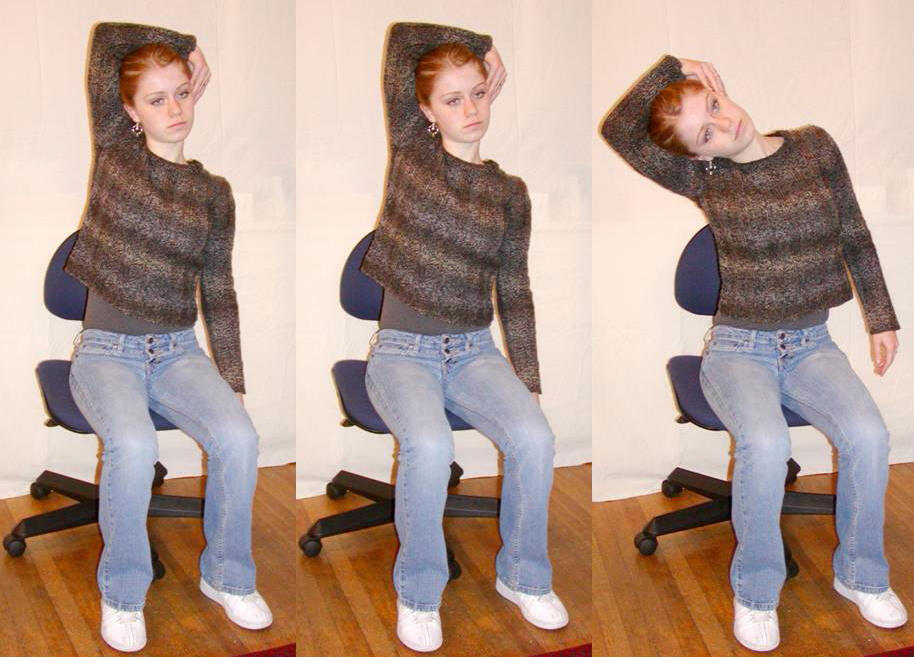
Figure 1. Illustration of side ways bending with hand holding ear.
Observe what your body is doing as it bends and comes back up to center. Notice the movements in your ribs, back and neck. Then drop your arm to your lap and relax. Make sure you continue to breathe diaphragmatically throughout the exercise.
Reach up with your left hand, pass it over the top of your head and hold on to your right ear. Repeat as above, this time bending to the right.
Reach up with your right hand and pass it over the top of your head, now holding onto your left ear. Then look to the right with your eyes and rotate your head to the right as if you are looking behind you. Return to center and repeat the movement a few times. Then drop your arm to your lap and relax for a few breaths as shown in Figure 2. 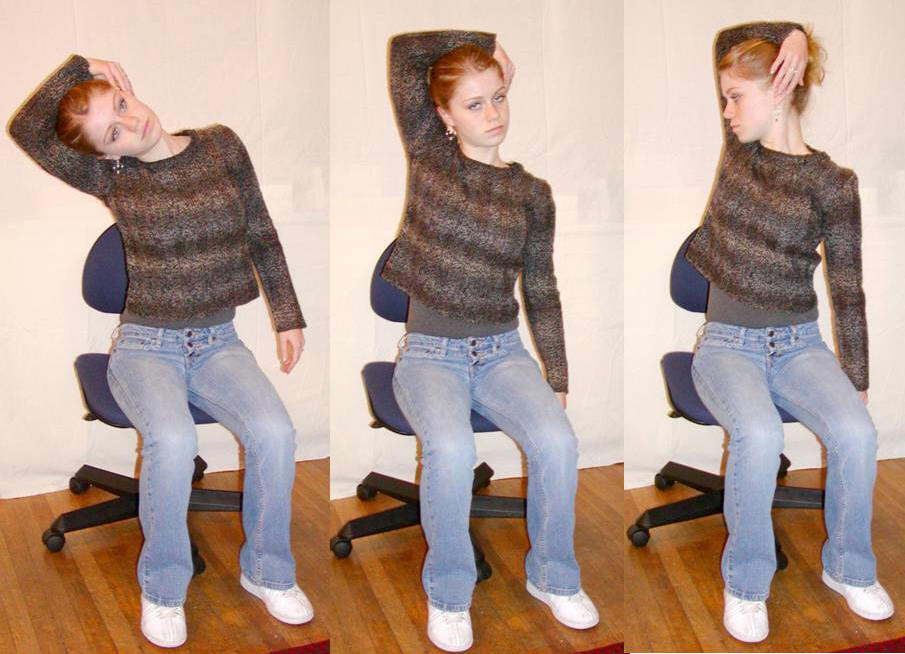 Figure 2. Illustration of rotational movement with hand holding ear.
Repeat the same rotating motion of your head to the right, except that now your eyes look to the left. Repeat this a few times, then drop your arm to your lap and relax for a few breaths.
Repeat the exercise except reach up with your left hand and pass it over the top of your head, and hold on to your right ear. Then look to the left with your eyes and rotate your head to the left as if you are looking behind you. Return to center and repeat a few times. Then drop your arms to your lap and relax for a few breaths.
Repeat the same rotating motion of your head to the left, except that your eyes look to the right. Repeat this a few times, then drop your arm to your lap and relax for a few breaths.
Post test: look to the right and gently turn your head and body as far as you can go. When you cannot go any further, look at that point on the wall. Gently rotate your head back to center, close your eyes, relax and notice the relaxing feelings in your neck, shoulders and back.
Did you rotate further than at the beginning of the exercise? More than 95% of participants report rotating significantly further as compared to the pretest.
For additional exercises on how to loosen your neck, shoulders, back, arms, hands, and legs, click on the link for the article, Improve health with movement: There is life after five or look at the somatic relaxation practices in part 3 of our book, Fighting Cancer-A Nontoxic Approach to Treatment.
[1] Adapted from a demonstration by Sharon Keane and developed by Ilana Rubenfeld
Prevent Stress Immobilization Syndrome
Posted: January 27, 2013 Filed under: Uncategorized | Tags: exercise, muscle tension, neck pain, repetitive sttrain injury, shoulder pain 7 Comments
Source unknown
Working at the computer, tablet or smartphone is often a pain in the neck. Young adults who are digital natives and work with computers and mobile phones experienced frequent pain, numbness or aches in their neck and more than 30% reported aches in their hip and lower back. In addition, women experienced almost twice as much aches in their necks than men (Korinen and Pääkkönen, 2011). Similarly findings have been reported previously when Peper and Gibney observed that most students at San Francisco State University, experienced some symptoms when working at their computer near the end of the semester. At work, many employees also experience exhaustion, neck, back and shoulder pains when working at the computer. Although many factors contribute to this discomfort such as ergonomics, work and personal stress, a common cause is immobility. To prevent stress immobility syndrome, implement some of the following practice.
- Every hour take a 5-minute break (studies at the Internal Revenue Service show that employees report significant reduction in symptoms without loss in productivity when they take a 5 minute break each hour).
- Take a short walk or do other movements instead of snacking when feeling tense or tired.
- Perform a stretch, strengthening, relaxation, or mobilization movement every 30 minutes.
- Install a computer reminder program to signal you to take a short stress break such as StressBreak™.
- Perform 1-2 second wiggle movements (micro-breaks) every 30 to 60 seconds such as dropping your hands to your lap as you exhale.
- Leave your computer station for the 15-minute mid-morning and mid-afternoon breaks.
- Eat lunch away from your computer workstation.
- Stand or walk during meetings.
- Drink lots of water (then, you’ll have to walk to the restroom).
- Change work tasks frequently during the day.
- Move your printer to another room so that you have to walk to retrieve your documents.
- Stand up when talking on the phone or when a co-worker stops by to speak with you.
When people implement these new habits, they experience significant decrease in symptoms and improvements in quality of life and health (Peper & Gibney, 2004; Wolever et al, 2011)
Change Illness Beliefs with Words, Biofeedback, and Somatic Feedback*
Posted: January 2, 2013 Filed under: Uncategorized | Tags: biofeedback, cancer, illness beliefs, mind-body 8 CommentsI never felt that thinking about my work affected my body. I was totally surprised to see my body’s reaction on the computer screen. I now realized how I contributed to my illness and could see other ways to change and improve my health. The feedback made the invisible visible, the undocumented documented.
Use of words, biofeedback and somatic feedback to transform illness beliefs. Many clients are unaware how much their thoughts and emotions affect their physiology. The numbers and graphs on the computer screen show how the body is responding. Seeing the changes in the physiological recording and the immediate feedback signals are usually accepted by the client as evidence, whereas the verbal comments made by a therapist might be denied as the therapist’s subjective opinion. The feedback is experienced as objective data—numbers and graphs ‘‘do not lie’’—which represents truth to the client. Clients seek biofeedback therapy because they believe the cause of illness is in their body, and then the biofeedback may demonstrate that emotions and cognitions influence their somatic illness patterns. This process has been labeled by Ian Wickramasekera (2003) as a ‘‘Trojan Horse’’ approach. Biofeedback and somatic feedback exercises provide effective tools for changing illness attributions and awaken the client to the impact of thoughts and emotions on physiology. Whether the feedback comes from a biofeedback device that records the covert physiological signal or is subjectively experienced through a somatic exercise, the self-experience is a powerful trigger for an ‘‘aha’’ experience—a realization that mind, body, and emotions are not separate (Wilson, Peper, & Gibney, 2004). Clinically, this approach can be used to facilitate changing illness beliefs and to motivate clients to begin changing their cognitive, emotional, and behavioral patterns. Clients begin to realize that they can be active participants in the healing process and that in many cases it is their mind-body life patterns that contribute to illness or health. For more information, case example and detailed description of a somatic feedback practice, download a pre-publication of our article, The Power of Words, Biofeedback, and Somatic Feedback to Impact Illness Beliefs.
*Adapted from: Peper, E., Shumay, D.M., & Moss, D. (2012). Change Illness Beliefs with Biofeedback and Somatic Feedback. Biofeedback. 40(4), 154–159.
 the peper perspective