Improve fertility and decrease cancer risk: THE PLASTIC DETOX
Posted: May 7, 2026 Filed under: behavior, cancer, health, Uncategorized | Tags: bisphenols, BPA, endocrine disruptors, environment, environmental pollution, fertility, health, microplastics, plastics, polution, pregnancy, sperm, sustainability, wellness 3 CommentsAre you concerned about your or your children’s future fertility, or do you want to get pregnant?
Do you want to reduce your cancer risk?
In 1962, Rachel Carson published the seminal, groundbreaking book Silent Spring, which brought public awareness to the harmful effects of environmental pollution (Carson, 1962). In many cases, public awareness of environmental pollution has been driven by observations and research involving people living near or on toxic waste sites, such as the infamous Love Canal in Niagara Falls, New York. Residents living in this area experienced a significantly higher risk of developing bladder, kidney, and other cancers due to contaminated water and soil (Gensburg et al., 2009).
Equally important is the impact of environmental pollution, including ongoing exposure to plastics, on health and embryological development. Many studies report that downstream pollution from agriculture, chemical plants, and sewage causes significant harm, ranging from limb deformities in amphibians (Taylor et al., 2005) to disruptions in human reproductive health. For example, microplastics have been shown to impair ovarian function, decrease fertility rates, and disrupt hormone levels in female subjects and their offspring’s health (Inam, 2025).
Research findings suggest that many human-made chemicals reduce fertility and increase cancer risk. Many chemicals in plastics (e.g., bisphenols (BPA, BPS, BPF), phthalates, flame retardants, and nonylphenol) are endocrine disruptors contributing to reduced fertility and can act as carcinogenic initiators or promoters (NIH, 2026). Ongoing exposure to plastics is one of several factors that may contribute to declines in fertility and earlier onset of cancers such as breast and prostate cancer in younger populations.
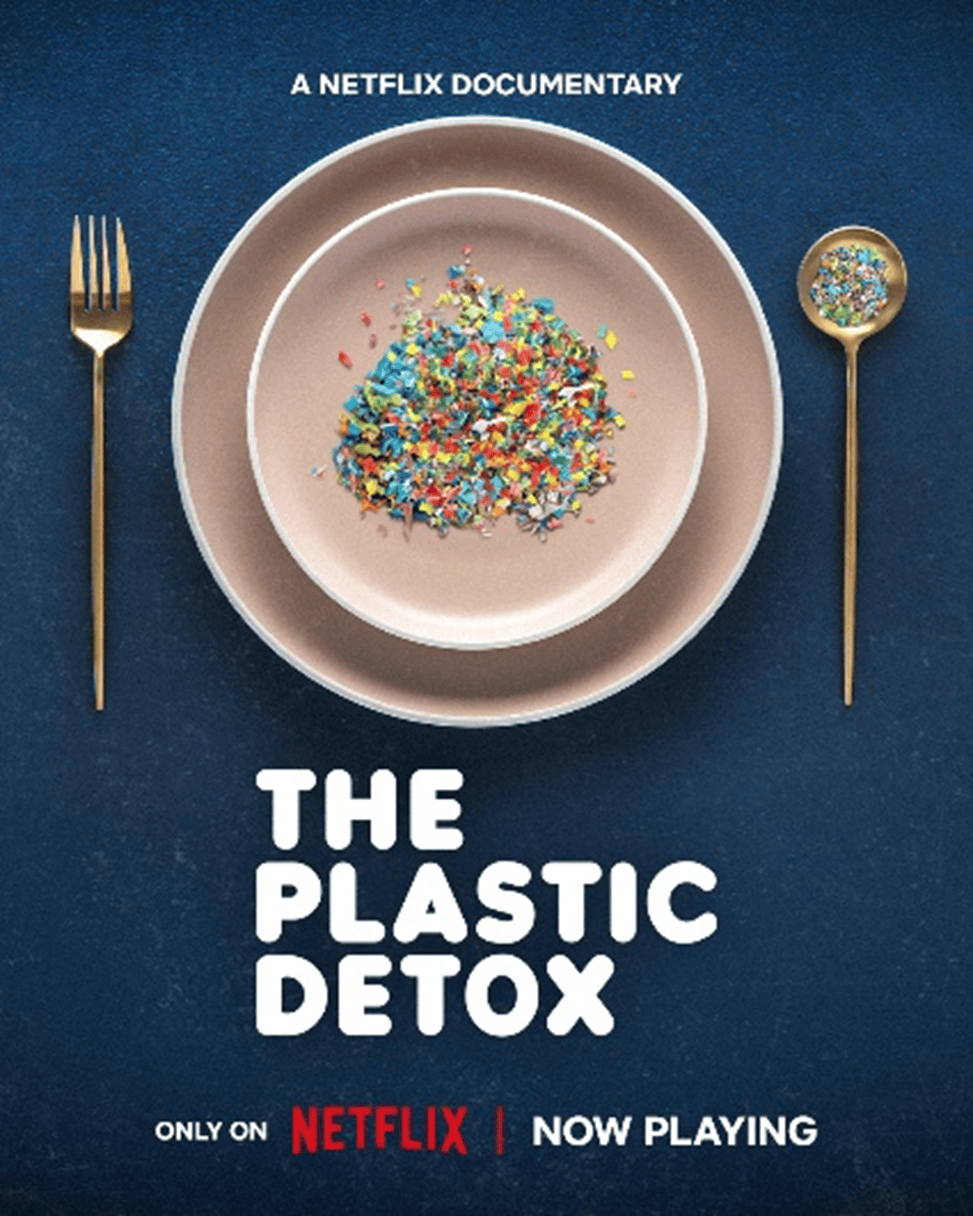
The recently released Netflix documentary The Plastic Detox offers an eye-opening exploration of the hidden dangers of the chemicals in plastics in our homes and daily lives and how it may impact fertility. It highlights concerns ranging from hormone disruption—which may contribute to declining fertility worldwide—to increasing rates of cancer and earlier occurrences of heart attack and stroke.
In the documentary, Professor Shanna H. Swan, a research scientist at the Icahn School of Medicine at Mount Sinai in New York City, explains how microplastics and their associated chemicals may affect our health—and what steps we can take to reduce our exposure. Although the documentary is not a randomized controlled trial and it doesn’t disentangle the possible placebo effects that arise when people shift their beliefs about the cause of infertility (for example, “it’s not my fault; it’s the plastics”), its central message is valid. From a psychophysiological perspective, how we interpret the causes of our health challenges can shape both our stress responses and our sense of agency.
Even with its scientific limitations, the film points toward an important concern: that environmental exposures, including plastics, play an important role in reproductive health. I also wonder whether some of the sharp “scientific critiques” of the documentary reflect more than scientific caution alone. History reminds us that industries whose profits are threatened have often worked to amplify uncertainty and delay regulation as the tobacco industry famously did for decades despite mounting evidence of harm (Maani et al., 2022; Oreskes & Conway, 2010).
I strongly recommend watching the documentary and taking steps to reduce exposure to plastics and other environmental toxins (such as glyphosate and the chemicals in air and water pollution) to support your health and that of your children. Watch it on Netflix: https://www.netflix.com/title/82074244
Listen to the in-depth discussion of this blog created with Google NotebookLM
References
Carson, R. (1962). Silent Spring. Houghton Mifflin Co. https://www.amazon.com/Silent-Spring-Rachel-Carson/dp/0395075068
Gensburg, L. J., Pantea, C., Fitzgerald, E., Stark, A., Hwang, S. A., & Kim, N. (2009). Mortality among former Love Canal residents. Environmental Health Perspectives, 117(2), 209–216. https://doi.org/10.1289/ehp.11350
Inam, Ö. (2025). Impact of microplastics on female reproductive health: Insights from animal and human experimental studies: A systematic review. Archives of Gynecology and Obstetrics, 312(1), 77–92. https://doi.org/10.1007/s00404-024-07929
Maani, N., van Schalkwyk, M. C. I., Filippidis, F. T., Knai, C., & Petticrew, M. (2022). Manufacturing doubt: Assessing the effects of independent vs. industry-sponsored messaging about the harms of fossil fuels, smoking, alcohol, and sugar-sweetened beverages. SSM – Population Health, 17, 101009. https://doi.org/10.1016/j.ssmph.2021.101009
NIH. (2026). Endocrine disruptors. National Institute of Environmental Health Sciences. Retrieved May 7, 2026, from https://www.niehs.nih.gov/health/topics/agents/endocrine/index.cfm
Oreskes, N., & Conway, E. M. (2010). Merchants of doubt: How a handful of scientists obscured the truth on issues from tobacco smoke to global warming. Bloomsbury Press. https://www.amazon.com/Merchants-Doubt-Handful-Scientists-Obscured/dp/1608193942/
Taylor, B., Skelly, D., Demarchis, L. K., Slade, M. D., Galusha, D., & Rabinowitz, P. M. (2005). Proximity to pollution sources and risk of amphibian limb malformation. Environmental Health Perspectives, 113(11), 1497–1501. https://doi.org/10.1289/ehp.7585
Good morning,
There is a network of physicians and scientist involved in research on the health effects of plastics. Are you interested in joining this network?
The network is: P-SNAP Physicians and scientists addressing plastics and Health.
Their roundtable meetings typically are on Fridays from 12 to 1 PM Eastern standard time. Members typically are affiliated with major universities, medical schools and other research facilities.
Contact:
Megan Wolf, PhD, MPH
Megan-PSNAP.org@shared1.send.com
Best regards,
Paul Gunser, PsyD, BCN PSNAP member
[…] Improve fertility and decrease cancer risk: THE PLASTIC DETOX Can Your Daily Choices Influence Cancer Risk and Recovery? […]
[…] Improve fertility and decrease cancer risk: THE PLASTIC DETOX Are food companies responsible for the epidemic in diabetes, cancer, dementia and chronic disease and do their products need to be regulated like tobacco? Is it time for a class action suit? Live longer, enhance fertility and increase stress resistance: Eat organic foods Do night lights cause cancer? Fever can save your life Be Skeptical: Finding and Evaluating Online Health Resources Cancer: A modern scourge or the cost of being a multi-cell organism? […]