Will the stock market bubble collapse? Will human fertility decrease to zero?
Posted: July 13, 2026 Filed under: behavior, cancer, Evolutionary perspective, healing, health, lifestyle, Nutrition/diet | Tags: books, cycles, economics, fertility, financial bubble, sperm count, stocks, technology Leave a comment
“Those who cannot remember the past are condemned to repeat it.” – George Santayana (Santayana, 1905)
These two questions may seem totally unrelated, yet they are deeply connected if one takes a long historic view and hypothesizes that present-day trends will continue.
When I drive or commute, I very much enjoy listening to podcasts. They offer an in-depth, nuanced discussions that are missing from today’s soundbite culture. These deep-dive podcasts offer a vital antidote, providing the nuanced, extended discussions necessary for true cognitive synthesis. One of my favorite podcasts is The Diary of a CEO with Steven Bartlett. I found the recent episode, “Billionaire’s WARNING: I’m SELLING. The Crash Is Already Here!”, very eye opening.
The interview was with billionaire investor Jeremy Grantham, the co-founder and long-term investment strategist of GMO. He is also the chairman of the Grantham Foundation for the Preservation of the Environment, and co-author of “The Making of a Permabear: The Perils of Long-term Investing in a Short-term World.”
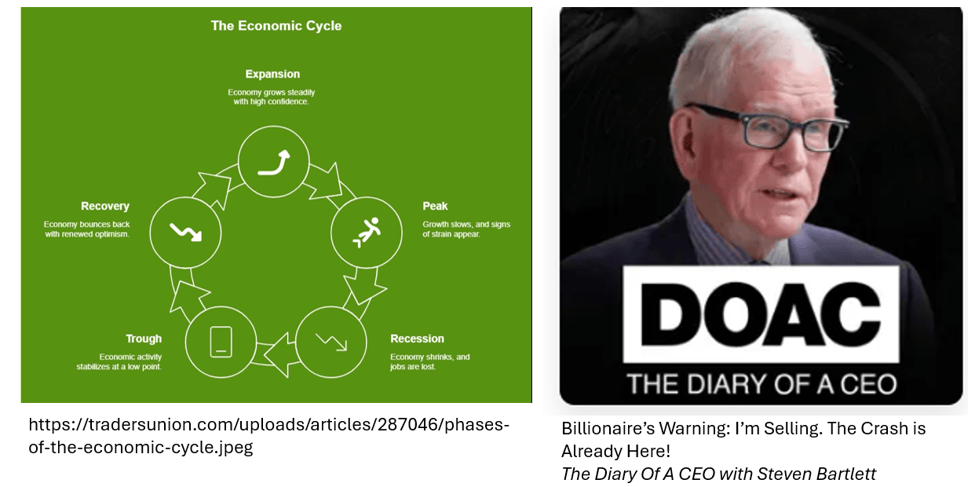
While economics and financial markets fall outside my primary line of research, I deeply appreciated his long-term perspective—an analysis I find to be entirely spot-on. The actual content offered a masterclass in pattern recognition, forcing me to sit back and critically analyze the macroeconomic shifts happening around us rather than just reacting to the daily noise of the market. He persuaded me that the present AI-driven financial bubble will burst; we simply do not know exactly when. I concur with him that it will occur sooner rather than later. Personally, I would not be surprised if it occurred within the next two years. We must simply be prepared to deal with more challenging times.
What surprised and fascinated me even more were the last 40 minutes of the podcast. Grantham shifted entirely away from the financial markets and applied that same rigorous, analytical thinking to what is truly driving the modern “baby bust” (Dilmaghani et al., 2024).
The scientific data is clear: human fertility—both male and female—has been decreasing each decade. This is starkly indicated by a 50% drop in male sperm counts and a rising number of couples struggling to conceive (Ravitsky & Kimmins, 2019; Mann et al., 2020; Inam, 2025). The culprits as for the increase in cancer rates? Ubiquitous modern disruptions like microplastics, pesticides, and pervasive environmental toxins (NIOSH, 2023; Doroftei et al., 2025; Brander et al., 2026).
Although the prognosis can look bleak, Grantham doesn’t just sound the alarm; he offers realistic strategies. He outlines how to protect yourself from the impending financial bubble collapse, as well as what you and your community can do to minimize toxic exposure and enhance fertility.
I smiled as I listened to the podcast, because his systemic analysis and practical recommendations are very similar to what we described in our just-published book, Cancer reconsidered-Why Environment, lifestyle, and immunity matter more than we thought (Peper et al., 2026).
To prepare yourself for the financial future and optimize your health and fertility, listen to Grantham’s insights on the podcast episode, “Billionaire’s WARNING: I’m SELLING. The Crash Is Already Here!”,
See the following blogs for more detailed information:
References
Brander, S.M., Swan, S.H., Mehinto, A.C., & et al. (2026). Impacts of environmental stressors on fertility and fecundity across taxa, with implications for planetary health. npj Emerging Contaminants, 2, Article 12. https://doi.org/10.1038/s44454-026-00032-6
Dilmaghani, D., Ainsworth, A. J., Nath, K. A., & Garovic, V. D. (2024). Decreasing fertility rate in the United States: Demographics, challenges, and consequences. Mayo Clinic Proceedings, 99(11), 1693–1697. https://doi.org/10.1016/j.mayocp.2024.09.004
Doroftei, B., Savuca, A., Cretu, A.-M., Maftei, R., Anton, N., Ilea, C., Doroftei, M., & Puha, B. (2025). Microplastics and human fertility: A comprehensive review of their presence in human samples and reproductive implication. Ecotoxicology and Environmental Safety, 303, Article 118939. https://doi.org/10.1016/j.ecoenv.2025.118939
Inam, Ö. (2025). Impact of microplastics on female reproductive health: Insights from animal and human experimental studies: A systematic review. Archives of Gynecology and Obstetrics, 312(1), 77–92. https://doi.org/10.1007/s00404-024-07929
Mann, U., Shiff, B., & Patel, P. (2020). Reasons for worldwide decline in male fertility. Current Opinion in Urology, 30(3), 296–301. https://doi.org/10.1097/MOU.0000000000000745
NIOSH. (2023, December 15). About pesticides and reproductive health. National Institute for Occupational Safety and Health Centers for Disease Control and Prevention. https://www.cdc.gov/niosh/reproductive-health/prevention/pesticides.html
Peper, E. Gorter, R. & Faass, N. (2026). Cancer Reconsidered: Why Environment, Lifestyle, and Immunity Matter More Than We Thought. BiofeedbackHealth/Regent Press. https://www.amazon.com/Cancer-Reconsidered-Environment-Lifestyle-Immunity/dp/1587907402/
Ravitsky, V. & Kimmins, S. (2019). The forgotten men: rising rates of male infertility urgently require new approaches for its prevention, diagnosis and treatment. Biol Reprod. 101(5), 872-874. https://doi.org/10.1093/biolre/ioz161
Santayana, G. (1905). The Life of Reason: Vol. 1. Reason in Common Sense. Charles Scribner’s Sons. p. 284. https://www.amazon.com/Reason-Phases-Progress-Introduction-Common/dp/B01DF937WU
Improve fertility and decrease cancer risk: THE PLASTIC DETOX
Posted: May 7, 2026 Filed under: behavior, cancer, health, Uncategorized | Tags: bisphenols, BPA, endocrine disruptors, environment, environmental pollution, fertility, health, microplastics, plastics, polution, pregnancy, sperm, sustainability, wellness 2 CommentsAre you concerned about your or your children’s future fertility, or do you want to get pregnant?
Do you want to reduce your cancer risk?
In 1962, Rachel Carson published the seminal, groundbreaking book Silent Spring, which brought public awareness to the harmful effects of environmental pollution (Carson, 1962). In many cases, public awareness of environmental pollution has been driven by observations and research involving people living near or on toxic waste sites, such as the infamous Love Canal in Niagara Falls, New York. Residents living in this area experienced a significantly higher risk of developing bladder, kidney, and other cancers due to contaminated water and soil (Gensburg et al., 2009).
Equally important is the impact of environmental pollution, including ongoing exposure to plastics, on health and embryological development. Many studies report that downstream pollution from agriculture, chemical plants, and sewage causes significant harm, ranging from limb deformities in amphibians (Taylor et al., 2005) to disruptions in human reproductive health. For example, microplastics have been shown to impair ovarian function, decrease fertility rates, and disrupt hormone levels in female subjects and their offspring’s health (Inam, 2025).
Research findings suggest that many human-made chemicals reduce fertility and increase cancer risk. Many chemicals in plastics (e.g., bisphenols (BPA, BPS, BPF), phthalates, flame retardants, and nonylphenol) are endocrine disruptors contributing to reduced fertility and can act as carcinogenic initiators or promoters (NIH, 2026). Ongoing exposure to plastics is one of several factors that may contribute to declines in fertility and earlier onset of cancers such as breast and prostate cancer in younger populations.
The recently released Netflix documentary The Plastic Detox offers an eye-opening exploration of the hidden dangers of the chemicals in plastics in our homes and daily lives and how it may impact fertility. It highlights concerns ranging from hormone disruption—which may contribute to declining fertility worldwide—to increasing rates of cancer and earlier occurrences of heart attack and stroke.
In the documentary, Professor Shanna H. Swan, a research scientist at the Icahn School of Medicine at Mount Sinai in New York City, explains how microplastics and their associated chemicals may affect our health—and what steps we can take to reduce our exposure. Although the documentary is not a randomized controlled trial and it doesn’t disentangle the possible placebo effects that arise when people shift their beliefs about the cause of infertility (for example, “it’s not my fault; it’s the plastics”), its central message is valid. From a psychophysiological perspective, how we interpret the causes of our health challenges can shape both our stress responses and our sense of agency.
Even with its scientific limitations, the film points toward an important concern: that environmental exposures, including plastics, play an important role in reproductive health. I also wonder whether some of the sharp “scientific critiques” of the documentary reflect more than scientific caution alone. History reminds us that industries whose profits are threatened have often worked to amplify uncertainty and delay regulation as the tobacco industry famously did for decades despite mounting evidence of harm (Maani et al., 2022; Oreskes & Conway, 2010).
I strongly recommend watching the documentary and taking steps to reduce exposure to plastics and other environmental toxins (such as glyphosate and the chemicals in air and water pollution) to support your health and that of your children. Watch it on Netflix: https://www.netflix.com/title/82074244
Listen to the in-depth discussion of this blog created with Google NotebookLM
References
Carson, R. (1962). Silent Spring. Houghton Mifflin Co. https://www.amazon.com/Silent-Spring-Rachel-Carson/dp/0395075068
Gensburg, L. J., Pantea, C., Fitzgerald, E., Stark, A., Hwang, S. A., & Kim, N. (2009). Mortality among former Love Canal residents. Environmental Health Perspectives, 117(2), 209–216. https://doi.org/10.1289/ehp.11350
Inam, Ö. (2025). Impact of microplastics on female reproductive health: Insights from animal and human experimental studies: A systematic review. Archives of Gynecology and Obstetrics, 312(1), 77–92. https://doi.org/10.1007/s00404-024-07929
Maani, N., van Schalkwyk, M. C. I., Filippidis, F. T., Knai, C., & Petticrew, M. (2022). Manufacturing doubt: Assessing the effects of independent vs. industry-sponsored messaging about the harms of fossil fuels, smoking, alcohol, and sugar-sweetened beverages. SSM – Population Health, 17, 101009. https://doi.org/10.1016/j.ssmph.2021.101009
NIH. (2026). Endocrine disruptors. National Institute of Environmental Health Sciences. Retrieved May 7, 2026, from https://www.niehs.nih.gov/health/topics/agents/endocrine/index.cfm
Oreskes, N., & Conway, E. M. (2010). Merchants of doubt: How a handful of scientists obscured the truth on issues from tobacco smoke to global warming. Bloomsbury Press. https://www.amazon.com/Merchants-Doubt-Handful-Scientists-Obscured/dp/1608193942/
Taylor, B., Skelly, D., Demarchis, L. K., Slade, M. D., Galusha, D., & Rabinowitz, P. M. (2005). Proximity to pollution sources and risk of amphibian limb malformation. Environmental Health Perspectives, 113(11), 1497–1501. https://doi.org/10.1289/ehp.7585
Live longer, enhance fertility and increase stress resistance: Eat organic foods
Posted: April 21, 2013 Filed under: Nutrition/diet, Uncategorized | Tags: diet, fertility, organic foods, pesticide, stress 12 CommentsHealth food advocates have long claimed that organic foods are better for your health because they have more nutrients and fewer pesticides than non organic or genetically modified grown foods. On the other hand, the USDA and agribusiness tend to claim that organically grown foods have no additional benefits. Until now, much of the published research appeared inconclusive and meta-analysis appeared to indicate that there are no health benefits from organic as compared to non organic foods although organic foods did reduce eczema in infants (Dangour et al, 2010).
Food studies that have demonstrated no benefits of organic farmed foods as compared to non-organic or genetically modified crops should be viewed with skepticism since many of these studies have been funded directly or indirectly by agribusiness. On the other hand, independently funded research studies have tended to demonstrate that organic foods are more beneficial than non-organic foods. Sadly, the United States Department of Agriculture (USDA) and agribusiness are highly interdependent as the USDA both regulates and promotes agricultural products. On the one hand the USDA’s mission is “To expand economic opportunity through innovation, helping rural America to thrive; to promote agriculture production” and on the other hand “Enhance food safety by taking steps to reduce the prevalence of food borne hazards from farm to table, improving nutrition and health by providing food assistance and nutrition education and promotion. (For more discussion on the conflict of interest between agribusiness and the USDA, see Michael Pollan’s superb books, The Omnivore’s Dilemma: A Natural History of Four Meals and In Defense of Food: An Eater’s Manifest).
Historically, most nutritional studies have investigated the nutritional difference or pesticide residue between organic and non-organically farmed. Many studies have shown that organic grown foods have significantly lower pesticide residues than non organic foods (Baker et al, 2002; Luc, 2006). Even though agribusiness and the USDA tend to state that the pesticide residues left in or on the food are safe and non-toxic and have no health consequences, I have my doubts. Human beings accumulate pesticides just like tuna fish accumulates mercury—frequent ingesting of very low levels of pesticides residue may result in long term harmful effects. One way to measure if there is an effect of organic, non organic or genetically modified grown foods or residual pesticides is to do a long term follow up and measure the impact over the lifespan of the organism. This is difficult with human beings; since, it would take 50 or more years to observe the long term effects. Nevertheless, the effects of organically grown foods versus non-organically grown foods upon lifespan, fertility and stress resistance has now been demonstrated with fruit flies.
The elegant research by Chhabra R, Kolli S, Bauer JH (2013) showed that when fruit flies were fed either organic bananas, potatoes, soy or raisins, they demonstrated a significant increase in longevity, fertility and stress resistance as compared to eating non-organic bananas, potatoes, soy and raisins. In this controlled study, the outcome data is stunning. Below are some of their results reproduced from their article, “Organically Grown Food Provides Health Benefits to Drosophila melanogaster.”

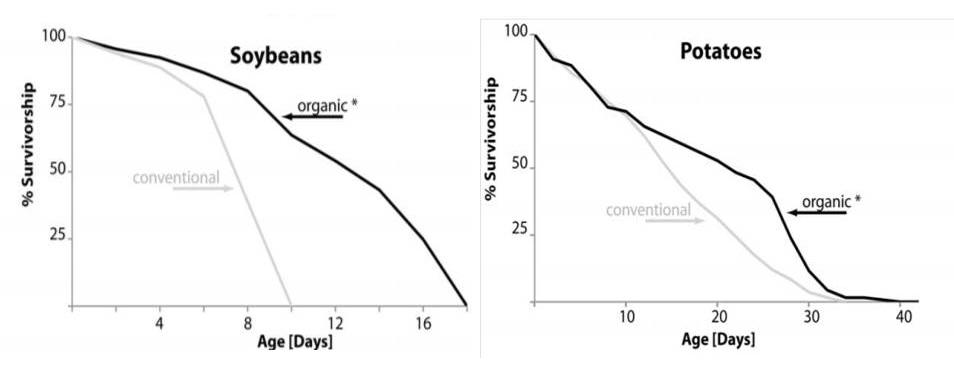
Figure 1. Longevity of D. melanogaster fed organic diets. Survivorship curves of female fruit flies fed diets made from extracts of potatoes, raisins, bananas or soybeans (grey: conventional food; black: organic food; statistically significant changes (p,0.005) are indicated by asterisks).Median survival times of flies on conventional and organics food sources, respectively, are: potatoes: 16 and 22 days (,38% longevity increase,p,0.0001); soybeans: 8 and 14 days (,75% longevity increase, p,0.0001).doi:10.1371/journal.pone.0052988.g001. Reproduced from Chhabra R, Kolli S, Bauer JH (2013).
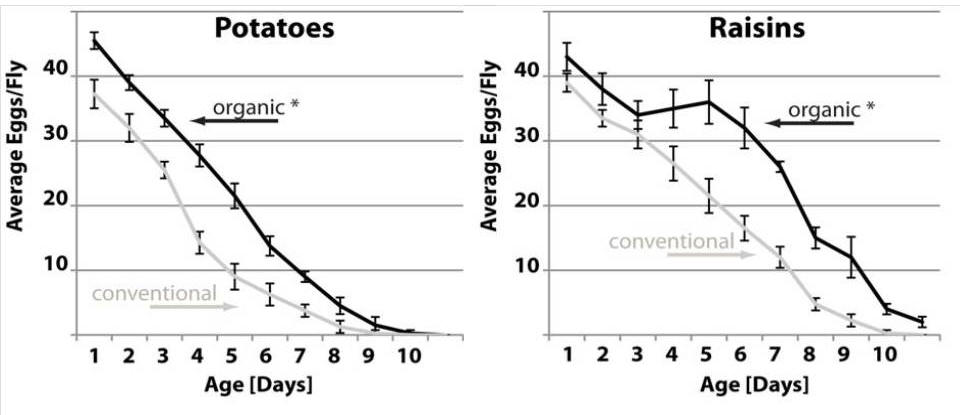
Figure 2. Daily egg-laying of flies exposed to organic diets. Egg production of flies fed the indicated food was determined daily. Shown are the averages of biological replicates; error bars represent the standard deviation (grey: conventional food; black: organic food; statistically significant changes (p,0.005) are indicated by asterisks; p,0.0001 for all food types). doi:10.1371/journal.pone.0052988.g002. Reproduced from Chhabra R, Kolli S, Bauer JH (2013).
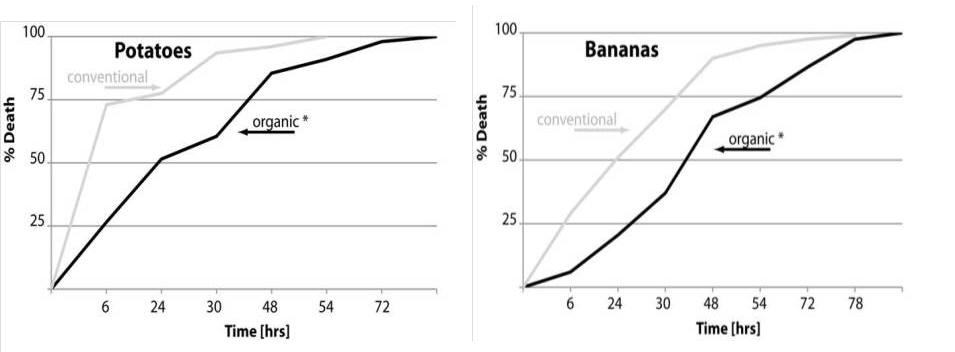
Figure 3. Starvation tolerance of flies raised on organic diets. Survivorship curves of female flies raised for 10 days on the indicated food sources. Flies were then transferred to starvation media and dead flies were counted twice daily (grey: conventional food; black: organic food; statistically significant changes (p,0.005) are indicated by asterisks). Median survival times of flies on conventional and organics food sources, respectively, are: potatoes: 6 and 24 hours (p,0.0001); bananas: 24 and 48 hours (p,0.0001). doi:10.1371/journal.pone.0052988.g003. Reproduced from Chhabra R, Kolli S, Bauer JH (2013)
This elegant study demonstrated the cumulative impact of organic versus non-organic food source upon survival fitness. It demonstrated that non-organic foods decreased the overall health of the organism which may be due to the lower levels of essential nutrients, presence of pesticides or genetic modified factors.
The take home message of their research is: If you are concerned about your health, want to live healthier and longer, improve fertility and resist stress, eat organically grown fruits and vegetable. Although this research was done with fruit flies and human beings are not fruit flies since we eat omnivorously, it may still be very relevant especially for children. As children grow the ingestion of non-organic foods may cause a very low level nutrient malnutrition coupled with an increased exposure to pesticides. The same concept can be extended to meats and fish. Eat only meat from free ranging animals that have been fed organic grown foods and not been given antibiotics or hormones to promote growth.
Bon appétit
.References
Baker, B.P., Benbrook, C.M., & Groth III, E., & Lutz, K. (2002). Pesticide residues in conventional, integrated pest management (IPM)-grown and organic foods: insights from three US data sets. Food Additives and Contaminants, 19(5) http://www.tandfonline.com/doi/abs/10.1080/02652030110113799
Chhabra R, Kolli S, Bauer JH (2013) Organically Grown Food Provides Health Benefits to Drosophila melanogaster. PLoS ONE 8(1): e52988. doi:10.1371/journal.pone.0052988 http://www.plosone.org/article/info:doi%2F10.1371%2Fjournal.pone.0052988
Dangour, A.D., Lock, K., Hayter, A., Aikenhead, A., Allen, E., Uauy, R. (2010). Nutrition related health effects of organic foods: a systematic review. Am J Clin Nutr, 92,203–210. http://ajcn.nutrition.org/content/92/1/203.short
Luc, C., Toepel, K., Irish, R., Fenske, R.A., Barr, D.B., & Bravo, R. (2006). Organic Diets Significantly Lower Children’s Dietary Exposure to Organophosphorus Pesticides. Environ Health Perspect, 114(2), 260–263. http://www.ncbi.nlm.nih.gov/pmc/articles/PMC1367841/
Pollan, M. (2009). In Defense of Food: An Eater’s Manifesto. New York: Penguin Press. ISBN: 978-0143114963
Pollan, M. (2006). The Omnivore’s Dilemma: A Natural History of Four Meals. New York: Penguin Press. ISBN: 1594200823