What to eat? Low fat foods, high fat foods…..?
Posted: July 12, 2014 Filed under: Evolutionary perspective, Nutrition/diet, Uncategorized | Tags: cancer, diet, evolution, health, heart disease, vitamins 4 Comments
Meat for sale (tongue and liver) at a traditional market (photo by Erik Peper).
Should I eat vegetables or meats? Should it be steaks or organ meats such as liver, heart, sweet breads? What foods contributes most to heart disease or cancer? Should I change my diet or take medications to lower my cholesterol?
Despite the many years of research the data is not clear. Many public health dietary guidelines and recommendations were based upon flawed research, researchers’ bias and promoted by agribusiness. Starting in the 1950s there has been a significant change in the dietary habits from eating animal fats to plant based oils and fats. It is so much cheaper to produce plant based polyunsaturated salad or cooking oils (e.g. Wesson and Mazola) and hydrogenated hardened oils (e.g. margarine and Crisco) than animal fats (e.g., butter, beef tallow, and lard). Despite the many claims that lowering animal fat intake would reduce heart disease and possibly cancer, the claims are not supported by research data. It is true that consuming liquid plant based oils lowers the cholesterol, but with the possible exception of olive oil, polyunsaturated oils are associated with an increased cancer and death rates in large population studies (Multiple Risk Factor Intervention Trial Research Group,1982; Shaten, 1997).
 We assume that lowering cholesterol is healthy; however, it is usually a surrogate marker representing a hypothesized improvement in health. A short term apparent reduction in cholesterol levels or other illness markers may mask the long term harm. Only long term outcome studies which measure the total death rate– not just from one disease being studied but from all causes of death–provides the objective results. When looking at the results over a longer time period, there appears to be no correlation between fat intake and heart disease. In fact lowering fat intake seems to be associated with poorer long term health as described in the outstanding book, The Big Fat Surprise–Why Butter, Meat & Cheese Belong in a Healthy Diet, by the science writer, Nina Teichol. Her superb investigative reporting describes in detail the flawed and biased research that underpinned the United States Department of Agriculture (USDA) and the American Heart Association (AHA) recommendations to reduce animal fats and use more plant based oils.
What should I eat now?
Diet recommendations used to be simple: Reduce animal fat intake and eat more plants. Now, there are no simple recommendations because they may depend upon your genetics (e.g., digestion of milk depends whether you are lactose tolerant or intolerant), your epigenetics (e.g., maternal malnutrition during your embryological development is a major risk for developing heart disease in later life), your physical and social activities (e.g., exercise reduces the risk for many diseases), and environment. The recent popularity of the hunter and gatherer diet, often known as the paleo diet, is challenging–it may depends on your ancestors. What hunter and gatherers ate depended upon geography and availability of food sources. The Inuit’s diet in the Arctic consisted of 90% meat/fish diet while the !Kung Bushman’ diet from the Kalahari desert in Africa consisted of less than a 15% meat/fish diet as shown in Figure 1.

Figure 1. The food content of hunter gatherers varied highly depending on geography. From: Jabr, F. (2013). How to Really Eat Like a Hunter-Gatherer: Why the Paleo Diet Is Half-Baked. Scientific American, June 3.
Use common sense to make food choices.
- Eat only those foods which in the course of evolution have been identified as foods. This means eating a variety of plants based foods (fruits, tubers, leaves, stems, nuts, etc.) and more organ meats. Ask yourself what foods did your forefathers/mothers ate that supported survival and reproductive success. Carnivores usually ate the internal organs first and often would leave the muscles for scavengers.
- Eat like your great, great grandparents. They were not yet brainwashed by the profit incentives of agribusiness and pharmaceutical industry. For more information, read the outstanding books by Michael Pollan, The Omnivore’s Dilemma: A Natural History of Four Meals and In Defense of Food: An Eater’s Manifesto.
- If possible eat only organically grown/raised foods. Non organic foods usually contain low levels of pesticides, insecticides, antibiotics and hormones which increases the risk of cancer (Reuben, 2010). They may also also contain fewer nutrients such as essential minerals, vitamins, and antioxidants (Barański et al, 2014). The beneficial effects of organic foods have been challenging to demonstrate because it may take many years to show a difference. Preliminary data strongly suggests that organic foods as compared to non organic foods increases longevity, improves fertility and enhances survival during starvation (Chhabra, Kolli, & Bauer, 2013). For more information, see my blog, Live longer, enhance fertility and increase stress resistance: Eat Organic foods.
- Adapt the precautionary principle and assume that any new and artificially produced additives or chemically processed foods–most of the foods in boxes and cans in the central section of the supermarket–contain novel materials which have not been part of our historical dietary experience. These foods may be harmful over the long term and our bodies not yet know how to appropriately digest such foods such as trans fats (Kummerow, 2009).
- Be doubtful of dietary recommendations especially if you know of counter examples and exceptions. For example, the low fat diet recommendations could not explain the French or Swiss paradox (high butter and cheese intake and low heart disease rates). If examples exist, the popular dogma is incomplete or possibly wrong. Be skeptical about any health food claims. Ask who has funded the research, who decides whether a food can have a label that states “it is heart health” and can prevent a disease, and who would benefit if more of this food is sold.
My final comments on nutrition (source unknown).
- The Japanese eat very little fat and suffer fewer heart attacks than us.
- The Mexicans eat a lot of fat and suffer fewer heart attacks than us.
- The French eat lots of butter and drink alcohol and suffer fewer heart attacks than us.
- The Chinese drink very little red wine and suffer fewer heart attacks than us.
- The Italians drink a lot of red wine and suffer fewer heart attacks than us.
- The Germans drink a lot of beer and eat lots of sausages and fats and suffer fewer heart attacks than us.
Conclusion
Eat and drink what you like especially if you enjoy it with company…speaking English is apparently what kills you!
References:
Jabr, F. (2013). How to Really Eat Like a Hunter-Gatherer: Why the Paleo Diet Is Half-Baked. Scientific American, June 3.http://www.scientificamerican.com/article/why-paleo-diet-half-baked-how-hunter-gatherer-really-eat/
Kummerow, F. A. (2009). The negative effects of hydrogenated trans fats and what to do about them. Atherosclerosis, 205(2), 458-465.http://www.atherosclerosis-journal.com/article/S0021-9150%2809%2900208-1/abstract
Multiple Risk Factor Intervention Trial Research Group. (1982). Multiple risk factor intervention trial. JAMA: The Journal of the American Medical Association, 248(12), 1465-1477. http://jama.jamanetwork.com/article.aspx?articleid=377969
Pollan, M. (2006). The Omnivore’s Dilemma: A Natural History of Four Meals. New York: Penguin Press. ISBN: 1594200823
Pollan, M. (2009). In Defense of Food: An Eater’s Manifesto. New York: Penguin Press. ISBN: 978-0143114963
Reuben, S. H. (2010). Reducing environmental cancer risk: what we can do now. DIANE Publishing. http://deainfo.nci.nih.gov/advisory/pcp/annualReports/pcp08-09rpt/PCP_Report_08-09_508.pdf
Shaten, B. J., Kuller, L. H., Kjelsberg, M. O., Stamler, J., Ockene, J. K., Cutler, J. A., & Cohen, J. D. (1997). Lung cancer mortality after 16 years in MRFIT participants in intervention and usual-care groups. Annals of epidemiology, 7(2), 125-136. http://www.annalsofepidemiology.org/article/S1047-2797%2896%2900123-8/abstract
Teicholz, N. (2014). The big fat surprise-Why butter, meat & cheese belong in a healthy diet. New York: Simon & Schuster. ISBM 978-1-4516-2442-7 http://www.thebigfatsurprise.com/
Increase strength and mood
Posted: June 22, 2014 Filed under: Uncategorized | Tags: depression, exercise, mind-body, posture, stress 13 Comments“Don’t slouch! How many times do I have to tell you to sit up straight?”
“I couldn’t believe it, I could not think of any positive thoughts while looking down?
Body posture is part of our nonverbal communication; it sometimes projects how we feel. We may collapse when we receive bad news or jump up with joy when we achieve our goal. More and more we sit collapsed for many hours with our spine in flexion. We crane our heads forward to read text messages, a tablet, a computer screen or watch TV. Our bodies collapse when we think hopeless, helpless, powerless thoughts, or when we are exhausted. We tend to slouch and feel “down” when depressed.
We often shrink and collapse to protect ourselves from danger when we are threatened. In prehistoric times this reaction would protect us from predators as we were still prey. Now we may still give the same reaction we worry or respond to demands from our boss. At those moments, we may blank out and have difficulty to think and plan for future events. When the body reacts defensively, the whole body-mind is concerned with immediate survival. Rational and abstract thinking is reduced as we attempt to escape.
When standing tall we occupy more space and tend to project power and authority to others and to ourselves. When we feel happy, we walk erect with a bounce in our step. Emotions and thoughts affect our posture and energy levels; conversely, posture and energy affect our emotions and thoughts. At San Francisco State University, we have researched how posture changes physical strength and access to past memories. Experience this in the following practice (you will need a partner to do this).
How posture affects strength
Stand behind your partner and ask them to lift their right arm straight out as shown in figure 1. Apply gentle pressure downward at the right wrist while your partner attempts to resist the downward pressure. Apply enough pressure downward so that the right arm begins to go down. Relax and repeat the same exercise with the left arm. Then relax.

Figure 1. Experimenter pressing down on the arm while the subject resist the downward pressure
For the rest of this exercise, do the testing with the arm that most resisted to the downward pressure.
Have the person stand in a slouched position and then lift the same arm straight out. Again the experimenter applies enough pressure downward so that the arm begins to go down. Relax.
Then have the person stand a tall position and lift the arm straight out. Again, the experimenter now applies enough pressure downward so that the arm begins to go down. Relax.
Describe to each other how easy it was to resist the downward pressure and how much effort it took to press the arm down while standing tall or slouched.
In our just completed study in the Netherlands with my colleague Annette Booiman, we observed that 98% of the participants felt significantly stronger to resist the downward pressure when they stood in a tall position than when they stood in the collapsed position as shown in Figure 2.

Figure 2. The perceived strength to resist the down pressure on the arm in either the erect or collapsed position as observed by the subjects and the experimenters (Exp).
The subjective experience of strength may be a metaphor of how posture affects our thoughts, emotions, hormones and immune system[1]. When slouching we experience less strength to resist and it is much more challenging to project authority, think creatively and successfully solve problem. Obviously, the loss of strength mainly related to the change in the shoulder mechanics; however, the collapsed body position contributes to feeling hopeless, helpless, and powerless.
With my colleague Dr. Vietta Wilson (Wilson & Peper, 2004), we discovered that in the collapsed position it was very difficult to evoke positive and empowering memories as compared to the upright position (for more information see the article by Wilson and Peper: http://biofeedbackhealth.files.wordpress.com/2013/01/the-effects-of-posture-on-mood.pdf).
Consistently, my students at San Francisco State University have reported that when they blank out on exams or class presentations, if they stop for a moment, change their posture and breathe, they can think again. Similarly, clients who are captured by worry and discomfort, when they shift position and look up, find it is easier to think of new options. Explore for this yourself.
How Posture effect Memory Recall
Sit comfortably at the edge of a chair and then collapse downward so that your back is rounded like the letter C. Let your head tilt forward and look at the floor between your thighs as shown in figure 3.
 Figure 3. Sitting in a collapsed position (photo by Jana Asenbrennerova). Reprinted by permission from Gorter and Peper (2011).
While in this position, bring to mind hopeless, helpless, powerless, and depressive memories one after the other for thirty seconds.
Then, let go of those thoughts and images and, without changing your position and still looking downward, recall empowering, positive, and happy memories one after the other for thirty seconds.
Shift position and sit up erect, with your back almost slightly arched and your head held tall while looking slightly upward as shown in figure 4.
 Figure 4. Sitting in an upright position (photo by Jana Asenbrennerova). Reprinted by permission from Gorter and Peper (2011).
While is this position, bring to mind many hopeless, helpless, powerless, or depressive memories one after the other for thirty seconds.
Then, let go of those thoughts and images and, without changing position and while still looking upward, recall as many empowering, positive, and happy memories one after the other for thirty seconds
Ask yourself: In which position was it easier to evoke negative memories and in which position was it easier to evoke empowering, positive, and happy memories?
Overwhelmingly participants report that in the downward position it was much easier to recall negative and hopeless memories. And, in the upright position it was easier to recall positive and empowering memories. In many cases, participant reported that when they looked down, they could not evoke any positive and empowering memories. It is not surprising that when people feel optimistic about the future, they say, “Things are looking up.”
Mind and body affect each other. The increase in depression and fatigue may be in part be caused by the body position of sitting collapsed at work, at home and walking a slouched pattern. By shifting body movement and position from slouching to skipping one’s subjective energy may significantly increase (Peper & Lin, 2012) (for more information see: https://peperperspective.com/2012/09/30/take-charge-of-your-energy-level-and-depression-with-movement-and-posture/)
Take charge, lightening your mood and give yourself the opportunity to be empowered and hopeful. When feeling down, acknowledge the feeling and say, “At this moment, I feel overwhelmed, and I’m not sure what to do” or whatever phrase fits the felt emotions. When your energy is low, again acknowledge this to yourself: “At this moment I feel exhausted,” or “At this moment, I feel tired,” or whatever phrase fits the feeling. As you acknowledge it, be sure to state “at this moment.” The phrase “at this moment” is correct and accurate. It implies what is occurring without a self-suggestion that the feeling will continue, which helps to avoid the idea that this was, is, and will always be. The reality is that whatever we are experiencing is always limited to this moment, as no one knows what will occur in the future. This leaves the future open to improvement.
Remind yourself that you to shift your mood by changing your posture. When you’re outside, focus on the clouds moving across the sky, the flight of birds, or leaves on the trees. In your home, you can focus on inspiring art on the wall or photos of family members you love and who love you. When you hang pictures, hang them higher than you normally would so that you must look up. You can also put pictures above your desk to remind yourself to look up and to evoke positive memories.
These two studies point out that psychology needs to incorporate body posture and movement as part of the therapeutic and teaching process. Without teaching how to change body posture only one half of the mind-body equation that underlies health and illness is impacted.
Each time you collapse or have negative thoughts, change your position and sit up and look up. Arrange your world so that you are erect (e.g., stand while working at the computer, use a separate keyboard with your laptop so that the top of the screen is at eye level, or place a pillow in your lower back when sitting). Finally, every so often, get up and move while alternately reach up with your arms into the sky as if picking fruits which you can not quite reach.
After having done these two practices, I realized how powerful my body effects my mood and energy level. Now each time I am aware that I collapse, I take a breath, shift my position, look up, and often stand up and stretch. To my surprise, I have so much more energy and my negative depressive mood has lifted.
References:
Gorter, R. & Peper, E. (2011). Fighting cancer-A nontoxic approach to treatment. Berkeley: North Atlantic Books.
Peper, E. & Lin, I-M. (2012). Increase or decrease depression-How body postures influence your energy level. Biofeedback, 40 (3), 126-130.
Wilson, V.E. and Peper, E. (2004). The Effects of upright and slumped postures on the generation of positive and negative thoughts. Applied Psychophysiology and Biofeedback.29 (3), 189-195.
[1] In an elegant study by Professor Amy Cuddy from the Harvard Business School, she demonstrated that two minutes of standing in a power position significant increased testosterone and decreased cortisol while standing in the collapsed position significantly decreased testosterone and increased cortisol. By changing posture, you not only present yourself differently to the world around you, you actually change your hormones (For more information, see Professor Amy Cuddy’s Ted talk: http://www.ted.com/talks/amy_cuddy_your_body_language_shapes_who_you_are).
Look up! Be aware and be open new possibilities
Posted: May 4, 2014 Filed under: Uncategorized | Tags: anxiety, cell phones, health, loneliness 2 CommentsHow is it possible that one is lonely while being connected to hundreds of Facebook friends, networked with even more LinkiedIn colleagues, and continuously sending and receiving Tweets and texts? Are we so captured by the digital devices that we do not notice the actual reality around us? Watch Gary Turk’s remarkable video and then remember to look up and connect with others.
Don’t poison yourself: Avoid foods with high pesticide residues
Posted: May 1, 2014 Filed under: Nutrition/diet, Uncategorized | Tags: diet, health, pesticides Leave a commentIs it worth to pay $3.49 for the organic strawberries while the non-organics are a bargain at $2.49?
Are there foods I should avoid because they have high pesticide residues?
The United States Department of Agriculture (USDA) and the United States Environmental Protection Agency (EPA) state that pesticide residues left in or on food are safe and non-toxic and have no health consequences. I have my doubts! Human beings accumulate pesticides just like tuna fish accumulates mercury—frequent ingesting of very low levels of pesticides residue may result in long term harmful effects and these long term risks have not been assessed. Most pesticides are toxic chemicals and were developed to kill agricultural pests — living organisms. The actual risk for chronic low level exposure is probably unknown; since, the EPA pesticide residue limits are a political compromise between scientific findings and lobbying from agricultural and chemical industries (Portney, 1992).
Organic diets expose consumers to fewer pesticides associated with human disease (Forman et al, 2012). In addition, preliminary studies have shown that GMO foods such as soy, potatoes, bananas and raisins reduces longevity, fertility and starvation tolerance in fruit flies (Chhabra et al, 2013)
Adopt the precautionary principle. As much as possible avoid the following foods that have high levels of residual pesticides as identified by the Environmental Working Group in their 2014 report.
Apples
Strawberries
Grapes
Celery
Peaches
Spinach
Sweet bell peppers
Nectarines-imported
Cucumbers
Cherry tomatoes
Snap peas-imported
Potatoes
Hot peppers
Blueberries-domestic
Lettuce
Kale/collard greens
For more details, see the Environmental Working Group report for the rankings of 48 foods listed from worst to best.
https://www.youtube.com/watch?feature=player_embedded&v=BfNQGd9BTK0
References:
Chhabra R, Kolli S, Bauer JH (2013) Organically Grown Food Provides Health Benefits to Drosophila melanogaster. PLoS ONE 8(1): e52988. doi:10.1371/journal.pone.0052988 http://www.plosone.org/article/info:doi%2F10.1371%2Fjournal.pone.0052988
Portney, P. R. (1992). The determinants of pesticide regulation: A statistical analysis of EPA decision making. The Journal of Political Economy, 100(1), 175-197.
Making the Unaware Aware*
Posted: April 27, 2014 Filed under: Uncategorized | Tags: awareness, biofeedback, mind-body, muscle tension, posture, relaxation 2 Comments“You only have to think to lift the hand and the muscles react.”
“I did not realize that muscle tension occurred without visible movement.”
“I was shocked that I was unaware of my muscle activity—The EMG went up before I felt anything.”
“Just anticipating the thought of the lifting of my hand increased the EMG numbers.”
“After training I could feel the muscle tension and it was one third lower than before I started.”
-Workshop participants after working with SEMG feedback
Many people are totally unaware that they are tightening their muscles and continuously holding slight tension until they experience stiffness or pain. This covert low-level muscle tension can occur in any muscle and has been labeled dysponesis, namely, misplaced and misdirected efforts (from the Greek: dys = bad; ponos = effort, work, or energy) (Whatmore & Kohli, 1974; Harvey & Peper, 2012). This chronic covert tension is a significant contributor to numerous disorders that range from neck, shoulder, and back pain to headaches and exhaustion and can easily be observed in people working at the computer.
While mousing and during data entry, most people are unaware that they are slightly tightening their shoulder muscles. One can often see this low level chronic tension when a person continuously lifts an index finger in anticipation of clicking the mouse or bends the wrist and lifts the fingers away from the keyboard while mousing with the other hand as shown in Figure 1.

Figure 1. Lifting the hand without any awareness while mousing with the other hand (from Peper et al, 2014)
People may hold a position for a long time without being aware that they are contracting their muscles. They are focusing on their task performance. They are “captured by the screen” – until discomfort and pain occur. Only after they experience discomfort or pain, do they change position. Factors that contribute to this apparent lack of somatic awareness include:
- Being captured by the task. People are so focused upon performing a task that they are unaware of their dysfunctional body position, which eventually will cause discomfort.
- Institutionalized powerlessness. People accept the external environment as unchangeable. They cannot conceive new options and do not attempt to adjust the environment to fit it to themselves.
- Lack of somatic awareness and training. People are unaware of their own low levels of somatic and muscle tension.
Being Captured By the Task
People often want to perform a task well and they focus their attention upon correctly performing the task. They forget to check whether their body position is optimized for the task. Only after the body position becomes uncomfortable and interferes with task performance, do they become aware. At this point, the discomfort has often transformed into pain or illness.
This process of immediately focusing on task performance is easily observed when people are assigned to perform a new task. For example, you can ask people who are sitting in chairs arranged by row to form discussion groups to share information with the individuals in front or behind them. Some will physically lift and rotate their chair to be comfortable, while others will rotate their body without awareness that this twisted position increases physical discomfort. As instructors, we often photograph the participants as they are performing their tasks as shown in Figure 2.

Figure 2. Workshop participants rotating their bodies or chairs to perform the group exercise (from Peper et al, 2014).
Although there are many strategies to teach participants awareness of covert tension, our recent published article, Making the Unaware Aware-Surface Electromyography to Unmask Tension and Teach Awareness,describes a simple biofeedback approach to teach awareness and control of residual muscle contraction. Almost all the subjects can rapidly learn to increase their recognition of minimal muscle tension as shown in figure 3.
 Figure 3. Measurement of forearm extensor muscle awareness of minimum muscle tension before and after feedback training (from Peper et al, 2014).
This study showed that participants were initially unaware of covert tension and that they could quickly learn to increase their sensitivity of muscle tension and reduce this tension within a short time period. Surface electromyograpy (SEMG) provides an objective (third person) perspective of what is actually occurring inside the body and is more accurate than a person’s own perception (first person perspective). The SEMG feedback (numbers and graphs) learning experience was a powerful tool to shift participants’ illness beliefs and encourage them to actively participate in their own self-improvement. It demonstrated that: 1) they were unaware of low tension levels, and 2) they could learn to increase their awareness with SEMG feedback.
The participants became aware that covert tension could contribute to their discomfort and would inhibit regeneration. In some cases, they observed that merely anticipating the task caused an increase in muscle tension. Finally, they realized that if they could be aware during the day of the covert tension, they could identify the situation that triggered the response and also lower the muscle tension.
For detailed methodology and clinical application, see the published article, Peper,E., Booiman, A., Lin, I-M., & Shaffer, F. (2014). Making the Unaware Aware-Surface Electromyography to Unmask Tension and Teach Awareness. Biofeedback, 42(1), 16-23.
References:
Harvey, E. & Peper, E. (2012). I thought I was relaxed: The use of SEMG biofeedback for training awareness and control. In W. A. Edmonds, & G. Tenenbaum (Eds.),Case studiesin applied psychophysiology: Neurofeedback and biofeedback treatments foradvances inhuman performance. West Sussex, UK: Wiley-Blackwell, 144-159.
Concered about food and health?
Posted: April 19, 2014 Filed under: Nutrition/diet, Uncategorized | Tags: agriculture, cooking, diabetes, diet, food, health Leave a commentIf you are concerned about food and health, watch Michael Pollan’s presentation, How Cooking Can Change Your Life. It is pragmatic and full of wisdom.
Support Healthy Brain Development*
Posted: April 11, 2014 Filed under: Evolutionary perspective, Uncategorized | Tags: ADHD, brain development, child development, computers, evolution, medication, neurofeedback 2 CommentsFactors that support brain development and contribute to the possible development of ADD/ADHD is the focus of my recently article, Support Healthy Brain Development: Implications for Attention Deficit/ Hyperactivity Disorder, published in Psychophysiology Today,9(1), 4-15. The article takes an evolutionary perspective of development and suggests that our lifestyle interacting with the digital devices has implications for our health. This blog extracts some parts of the published article. For the complete article with references see: http://biofeedbackhealth.files.wordpress.com/2014/04/support-healthy-brain-development-psychophysiology-today.pdf
In class, he fidgets, every auditory and visual stimulus distracts him– he gets up, talks to other students and disrupts the class. Nothing seems to hold his attention, he looks at the page and moments later turns around and disturbs the boy behind him. At home, he grabs his food and leaves the table. He is continuously distracted. The only thing that seems to capture his attention is his computer games.
ADD/ADHD has become an epidemic in the last 30 years. Now one in seven boys by the time they reach the age of 18 have received this diagnosis according to the Centers for Disease Control and Prevention, as shown in Figure 1.

Figure 1. Rate of office-based visits per 1000 US population aged 5 through 18 with diagnosis (Dx) of ADHD and rate of use of medication (Rx) for boys and girls. Redrawn from: Sclar, D. A., Robison, L. M., Bowen, K. A., Schmidt, J. M., Castillo, L. V., & Oganov, A. M. (2012). Attention-Deficit/Hyperactivity Disorder among Children and Adolescents in the United States Trend in Diagnosis and Use of Pharmacotherapy by Gender. Clinical pediatrics, 51(6), 584-589.
The increase in ADD/ ADHD diagnoses cannot be explained by genetics alone. It may depend upon the interaction of genetics and the environment. It may develop into a disorder as a result of disrespecting and not understanding our evolutionary background during our development. We attempt remedy them with medications (e.g., Adderall, Concerta and Ritalin) that provide an 8 billion dollar revenue stream for pharmaceutical companies. Yet, there is little or no evidence of long term benefits. Self-mastery approaches such as Neurofeedback have demonstrated long term benefits in improving reading, writing, and mathematical scores as well as decreasing impulsive behavior. Neurofeedback training teaches children how to control their brain function.
Our modern lifestyle has compromised the healthy development of the brain and behavior. To prevent this we need to support those factors that during the course of evolution increased survival, reproductive fitness and promoted healthy brains.
1) Breast feed children at least for one year and concurrently introduce new foods slowly after 6 or 8 months to reduce the risk of developing food allergies.
2) Respect the importance of face-to-face contact to provide safety, develop empathy and nurture social connection.
3) Encourage motor development such as crawling, playing in nature, and physical movement that occurs while playing games support brain development instead sitting and being entertained by smartphones, computers, tablets or TV screens. Physical movement during play– without being distracted by the overwhelming rapid changing stimuli shown on LED and TV screens–is necessary for brain development.
4) Reestablish circadian (daily) rhythms. Until the 19th century our biological and activity rhythms were controlled by natural light. It is hard to imagine not having light at night to read. When the sun went down, we went to sleep. Light not only illuminates, it affects our physiology by regulating our biological rhythms by blocking melatonin production which interferes with sleep.
5. Support touch and movement with vision and sound to develop the brain. During the first years of life, the baby/toddler integrates the visual and auditory world with touch and movement. Motor development is the underpinning of brain development..
6. Provide constancy and reduce novelty. When reading a bedtime story, the child wants to hear the same story again and again. If part of the story is skipped, the child interrupts and reminds us to read correctly. When the child is stressed, it wants to hear a past story for comfort and safety. Repetition while feeling safe allows memory to create appropriate neural connections. Neural growth depends upon the appropriate level and type of stimuli.Too few stimuli hinders brain development and too many novel stimuli may decrease brain development.
7. Limit hours of watching or playing computer games that trigger orienting and activation. The rapidly changing visual stimuli from these screens evokes the biological reflexes to attend– there is something new and it could be safe, dangerous or life threatening. The physiological processes and the important implications for health and illness have been elucidated by the polyvagal theory developed by Professor Stephen Porges.
 Over-stimulation with digital devices has been associated with impaired learning and decreased ability to self-regulate. The flood of novel visual and auditory stimuli trains the brain to react, to react again, and again. The ongoing external novelty captures the child’s attention, instead of directing attention from within.
8. Provide face to face safety as infants begin to explore the world. In the last 50 years we have radically increased the visual and auditory input to a developing baby following the concept of more is better. Babies are now exposed to visual and auditory stimuli which rapidly pass by them without repetition or the ability to interact kinesthetically with them. Babies are often carried on the chest or in baby carriages/strollers facing forward- leading the charge into the unknown–instead of receiving face-to-face reassurance from the parent, touching the parent, or hiding behind the parent for safety.
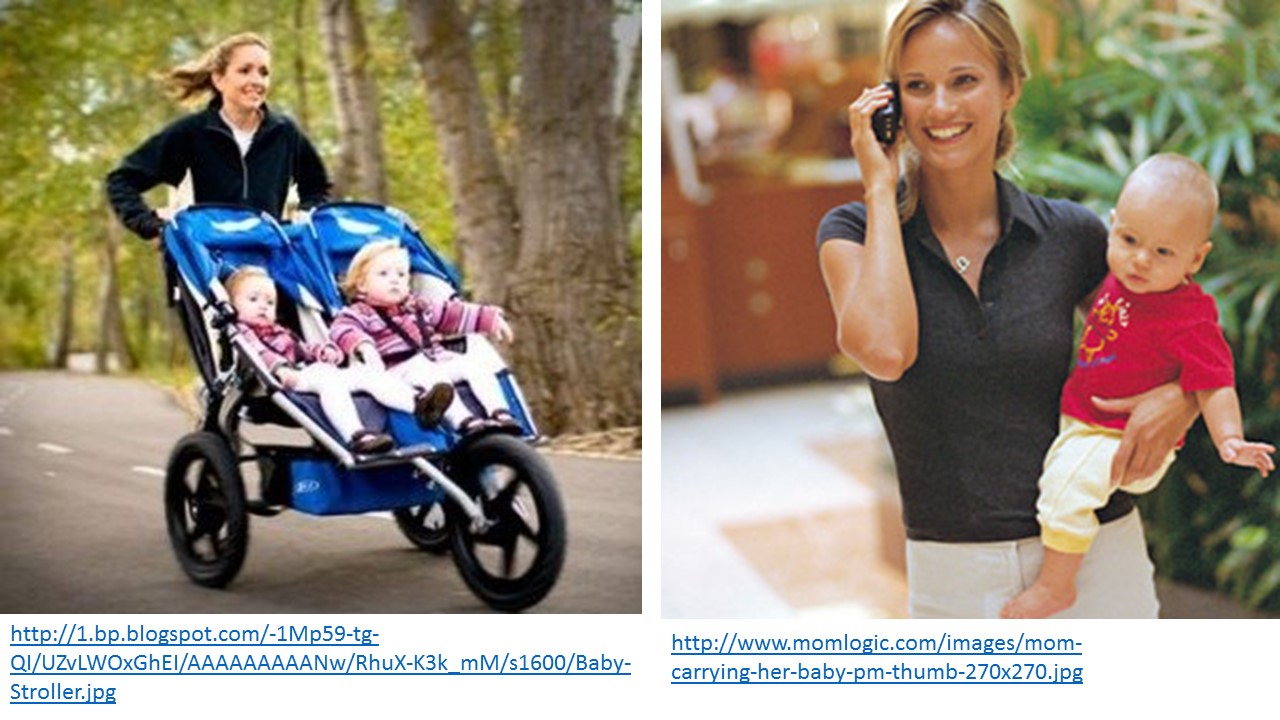
In a study of 2722 observations of parent-child pairs by developmental psychologist Dr Suzanne Zeedyk, parents talked twice as much to their baby when it faced them than when the baby was facing forward in the stroller. The impact of stress was measured by the decrease in baby laughing. Babies who faced their mother/caretaker while being pushed laughed 90% more than those who faced forward. As babies become older they do want to face the environment as it is more interesting; however, when the infants feel overwhelmed or threatened there is an opportunity to automatically reconnect with the caretaker to feel safe.
In summary, do not park children in front of smart phones, tablets, computer games, and television screens that flood the auditory and visual senses without the ability to integrate the information through touch and movement. Although TV and computer games are superb baby sitters, it is not the same as interacting and playing with a baby and toddler to develop the appropriate motor and emotional control. Let’s create an environment that is in harmony with our evolutionary background–An environment where infants play interactively with objects, explore nature and have face-to-face contact with their caregiver.
Even if the initial conditions during growing up were less than optimum, the brain can change—a process known as neuroplasticity. Thus, nurture inner directed attention by having the child develop skill mastery. Learning these skills can include neurofeedback training, back-to-nature explorations, learning to play a musical instrument, practicing a sport or martial art technique, or participating in yoga and meditation. These and many other practices will change the neural structure: it is never too late to learn, change, and optimize health.
To view or download the whole article with references: http://biofeedbackhealth.files.wordpress.com/2014/04/support-healthy-brain-development-psychophysiology-today.pdf
*I thank Drs. Stephen Porges, Linda Thompson, Michael Thompson, Monika Fuhs, and Annette Booiman for their constructive feedback.
Social media: Alone or together?
Posted: March 25, 2014 Filed under: Uncategorized | Tags: cell phones, communication, social media, stress 1 CommentPushing a baby carriage the caretaker texts or talks on the phone instead of cooing the infant. Dining at restaurants, couples check emails, search the web, text, or tweet telling others what they are doing instead of talking with each other. In hallways at universities students collapse against the walls looking at their tablets or smart phones instead of meeting other students. In lecture halls students text or search the web instead of processing the class materials. In their cubicle at work employees email and text instead of walking over to the next cubicle to share information. On the sidewalk pedestrians text while being oblivious to the environment.

All new innovations and inventions have a positive and negative side (e.g., nuclear medicine and atomic weapons). When adopting the new social media and technologies, use the precautionary principle by respecting our evolutionary background. In-depth communication and sharing is healing and nurturing, thus create/demand enough time to explore and connect in actual face-to-face synchronous communication with family, friends and colleagues.
Most new technology has been met with naysayers until it has been integrated appropriately into our lives. Nevertheless, I am concerned how social media may substitute for actual communication. It may allow us to present our persona and hide our real self as our messages ping back and forth. This same asynchronous communication is also true for letter writing except that it takes much longer to receive feedback in return. The obvious difference between texting/tweeting and letter writing is the possible depth and length of the communication. The addictive social media communication may hinder social and emotional growth which is developed during actual face-to-face communication. Before deciding whether the social media causes harm –anything that is beneficial may also in excessive dosages cause harm– read Alison Gonik’ essay, The kid who wouldn’t let go of ‘the device’ which was published in the March 22-23, 2014 issue of the Wall Street Journal.
Although there are many advantages of the new digital devices, there may also be unintended consequences. These consequences are superbly explored by professor Sherry Turkle, founder and director of the MIT Initiative on Technology and Self, in her book, Alone Together: Why We Expect More From Technology and Less From Each Other and in her Ted talk, Connected but all alone.
These concepts are also graphically illustrated in the video clip, The innovation of loneliness.
Surviving end-stage liver cancer with the Gorter treatment: A patient’s perspective
Posted: March 13, 2014 Filed under: Uncategorized | Tags: cancer, dendritic cell, hyperthermia, liver cancer, remission 2 CommentsWillem Kloosterboer describes his successful recovery of end-stage liver cancer with the Gorter protocol. The concepts and treatment protocol of this non-invasive treatment with hyperthermia and dendritic cell vaccination is described our book Fighting Cancer: A non-toxic approach to treatment. The short documentary is in Dutch with English subtitles.

Video link for this video: https://vimeo.com/63555498
Additional documentaries from cancer patients sharing their experience as they experienced total remission. All these patients were in the final & last stages of their disease and are now have lived for years and years cancer free. These patients are followed up every two years.
One of the remarkable documentary is of a boat tour through the Amsterdam canals with about 50 Dutch patients. These are all people who had stage four terminal cancer are interviewed while on the boat. It is heart warming to hear them say: “8 years ago I was told to have 2 to 3 months maximum to live and now I am cancer free since years and never thought I could make a boat trip like this at that time” To see the videos click on the following link:
https://vimeo.com/channels/mcctestimonials/page:1
Screens will hurt your children
Posted: March 11, 2014 Filed under: Uncategorized | Tags: ADHD, attention, cell phones, exercise, smart phones, tablets 5 CommentsWe park children in front of tablets, smartphone, computers and TVs. The visual and auditory stimulation captures their attention. It is a superb baby sitter. We substitute electronic displays for human attention.

To distract the baby at dinner in a restaurant, we hand the baby a smartphone. To have some private time, we let the child play games on the tablet. To reduce stress before dinner, we hand the child the tablet to watch video clips or play games. The short term benefits of letting handheld devices capture the child’s attention may have long term costs.
The child sits, sits and sits while being captured by the rapid changing visual scenes and auditory sounds instead of playing and enhancing motor development. The addictiveness of electronic devices occurs because we automatically attend to and are captured by rapidly changing stimuli—it is new and could be dangerous. This reaction to attend which is continuously evoked by the handheld devices may occur at the expense of developing self-directed attention.
The handheld devices expose the brain and dividing cells to electromagnetic radiation which can harmful. This is the radiation by which hand held devices communicates with connect cell phone towers or the server as it connects to the web.
From the precautionary principle and the numerous research studies, young children should limit the use of hand held devices. I totally agree with Cris Rowan’s superb blog, 10 Reasons Why Handheld Devices Should Be Banned for Children Under the Age of 12, which is reprinted below with her permission.
10 Reasons Why Handheld Devices Should Be Banned for Children Under the Age of 12
Cris Rowan pediatric occupational therapist, biologist, speaker, author
The American Academy of Pediatrics and the Canadian Society of Pediatrics state infants aged 0-2 years should not have any exposure to technology, 3-5 years be restricted to one hour per day, and 6-18 years restricted to 2 hours per day (AAP 2001/13, CPS 2010). Children and youth use 4-5 times the recommended amount of technology, with serious and often life threatening consequences (Kaiser Foundation 2010, Active Healthy Kids Canada 2012). Handheld devices (cell phones, tablets, electronic games) have dramatically increased the accessibility and usage of technology, especially by very young children (Common Sense Media, 2013). As a pediatric occupational therapist, I’m calling on parents, teachers and governments to ban the use of all handheld devices for children under the age of 12 years. Following are 10 research-based reasons for this ban. Please visit zonein.ca to view the Zone’s Fact Sheet for referenced research.
1. Rapid brain growth
Between 0 and 2 years, infant’s brains triple in size and continue in a state of rapid development to 21 years of age (Christakis 2011). Early brain development is determined by environmental stimuli or lack thereof. Stimulation to a developing brain caused by overexposure to technologies (cell phones, internet, iPads, TV), has been shown to be associated with executive functioning and attention deficit, cognitive delays, impaired learning, increased impulsivity and decreased ability to self-regulate e.g. tantrums (Small 2008, Pagini 2010).
2. Delayed Development
Technology use restricts movement, which can result in delayed development. One in three children now enter school developmentally delayed, negatively impacting literacy and academic achievement (HELP EDI Maps 2013). Movement enhances attention and learning ability (Ratey 2008). Use of technology under the age of 12 years is detrimental to child development and learning (Rowan 2010).
3. Epidemic Obesity
TV and video game use correlates with increased obesity (Tremblay 2005). Children who are allowed a device in their bedrooms have 30% increased incidence of obesity (Feng 2011). One in four Canadian, and one in three U.S. children are obese (Tremblay 2011). 30% of children with obesity will develop diabetes, and obese individuals are at higher risk for early stroke and heart attack, gravely shortening life expectancy (Center for Disease Control and Prevention 2010). Largely due to obesity, 21st century children may be the first generation many of whom will not outlive their parents (Professor Andrew Prentice, BBC News 2002).
4. Sleep Deprivation
60% of parents do not supervise their child’s technology usage, and 75% of children are allowed technology in their bedrooms (Kaiser Foundation 2010). 75% of children aged 9 and 10 years are sleep deprived to the extent that their grades are detrimentally impacted (Boston College 2012).
5. Mental Illness
Technology overuse is implicated as a causal factor in rising rates of child depression, anxiety, attachment disorder, attention deficit, autism, bipolar disorder, psychosis and problematic child behavior (Bristol University 2010, Mentzoni 2011, Shin 2011, Liberatore 2011, Robinson 2008). One in six Canadian children have a diagnosed mental illness, many of whom are on dangerous psychotropic medication (Waddell 2007).
6. Aggression
Violent media content can cause child aggression (Anderson, 2007). Young children are increasingly exposed to rising incidence of physical and sexual violence in today’s media. “Grand Theft Auto V” portrays explicit sex, murder, rape, torture and mutilation, as do many movies and TV shows. The U.S. has categorized media violence as a Public Health Risk due to causal impact on child aggression (Huesmann 2007). Media reports increased use of restraints and seclusion rooms with children who exhibit uncontrolled aggression.
7. Digital dementia
High speed media content can contribute to attention deficit, as well as decreased concentration and memory, due to the brain pruning neuronal tracks to the frontal cortex (Christakis 2004, Small 2008). Children who can’t pay attention can’t learn.
8. Addictions
As parents attach more and more to technology, they are detaching from their children. In the absence of parental attachment, detached children can attach to devices, which can result in addiction (Rowan 2010). One in 11 children aged 8-18 years are addicted to technology (Gentile 2009).
9. Radiation emission
In May of 2011, the World Health Organization classified cell phones (and other wireless devices) as a category 2B risk (possible carcinogen) due to radiation emission (WHO 2011). James McNamee with Health Canada in October of 2011 issued a cautionary warning stating “Children are more sensitive to a variety of agents than adults as their brains and immune systems are still developing, so you can’t say the risk would be equal for a small adult as for a child.” (Globe and Mail 2011). In December, 2013 Dr. Anthony Miller from the University of Toronto’s School of Public Health recommend that based on new research, radio frequency exposure should be reclassified as a 2A (probable carcinogen), not a 2B (possible carcinogen). American Academy of Pediatrics requested review of EMF radiation emissions from technology devices, citing three reasons regarding impact on children (AAP 2013).
10. Unsustainable
The ways in which children are raised and educated with technology are no longer sustainable (Rowan 2010). Children are our future, but there is no future for children who overuse technology. A team-based approach is necessary and urgent in order to reduce the use of technology by children. Please reference below slide shows on www.zonein.ca under “videos” to share with others who are concerned about technology overuse by children.
Problems – Suffer the Children – 4 minutes
Solutions – Balanced Technology Management – 7 minutes
The following Technology Use Guidelines for children and youth were developed by Cris Rowan, pediatric occupational therapist and author of Virtual Child; Dr. Andrew Doan, neuroscientist and author of Hooked on Games; and Dr. Hilarie Cash, Director of reSTART Internet Addiction Recovery Program and author of Video Games and Your Kids, with contribution from the American Academy of Pediatrics and the Canadian Pediatric Society in an effort to ensure sustainable futures for all children.
Technology Use Guidelines for Children and Youth

Please contact Cris Rowan at info@zonein.ca for additional information. © Zone’in February
Follow Cris Rowan on Twitter: www.twitter.com/zoneinprograms
 the peper perspective