Increase energy*
Posted: April 1, 2016 Filed under: self-healing, stress management, Uncategorized | Tags: cognitive therapy, energy level, health, Holistic health, stress management 2 CommentsAre you full of pep and energy, ready to do more? Or do you feel drained and exhausted? After giving at the office, is there nothing left to give at home? Do you feel as if you are on a treadmill that will never stop, that more things feel draining than energizing?
Feeling chronically drained is often a precursor for illness; conversely, feeling energized enhances productivity and encourages health. An important aspect of staying healthy is that one’s daily activities are filled more with activities that contribute to our energy than with tasks and activities that drain our energy. Similarly, Dr. John Gottman and colleagues have discovered that marriages prosper when there are many more positive appreciations communicated by each partner than negative critiques.
Energy is the subjective sense of feeling alive and vibrant. An energy gain is an activity, task, or thought that makes you feel better and slightly more alive—those things we want to or choose to do. An energy drain is the opposite feeling—less alive and almost depressed—those things we have to or must do; often something that we do not want to do. In almost all cases, it is not that we have to, should, or must do, it is a choice. Remember, even though you may say, “I have to study.” It is a choice. You can choose not to study and choose to drop out of school. Similarly, when you say, “I have to do the dishes,” it is still a choice. You can choose to do the dishes or let the dirty dishes pile up and just use paper plates.
Energy drains and gains are always unique to the individual; namely, what is a drain for one can be a gain for another. Energy drains can be doing the dishes and feeling resentful that your partner or children are not doing them, or anticipating seeing a person whom you do not really want to see. An energy gain can be meeting a friend and talking or going for a walk in the woods, or finishing a work project.
When patients with cancer start exploring what they truly would like to do and start acting on their unfulfilled dreams, a few experience that their health improves as documented by Dr. Lawrence LeShan in his remarkable book, Cancer as a Turning Point. So often our lives are filled with things that we should do versus want to do. In some cases, the lives we created are not the ones we wanted but the result of self-doubt and worry, “If I did do this, my family and friends won’t like me”, or “I am not sure I will be successful so I will do something that is safe.” Just ask yourself the question when you woke up this morning and most mornings this week, “How did you feel?” Did you felt happy and looking forward to the day?
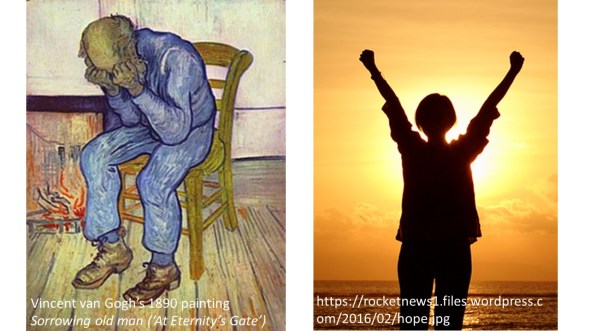
Explore strategies to decrease the drains and increase the energy gains. Use the following exercise to increase your energy:
- For one week monitor your energy drains and energy gains. Monitor events, activities, thoughts, or emotions that increase or decrease energy at home and at work. For example some drains can include cleaning bathroom, cooking another meal, or talking to a family member on the phone, while gains can be taking a walk, talking to a friend, completing a work task. Be very honest, just note the events that change your energy level.
- After the week look over your notes and identify at least one activity that drains your energy and one activity that increases your energy
- Develop a strategy to decrease one of the energy drains. Be very specific how, where, when, with whom, and which situations decreasing the tasks that drain your energy. As you think about it, anticipate obstacles that may interfere with reducing your drains and develop new ways to overcome these obstacles such as trading tasks with others (I will cook if you clean the bathroom), setting time limits, giving yourself positive reward after finishing the task (a cup of tea, a text or phone message to a close friend, watching a video in the evening).
- Develop new ways how you can increase energy gains such as doing exercise, completing a task.
- Each day implement the behavior to reduce one less energy drain and increase one energy gain and observe what happens.
Initially it may seem impossible, many students and clients report that the practice made them aware, increased their energy, and they had more control over their lives than they thought. It also encouraged them to explore the question, “What is it that you really want to do?” So often we do energy drains because of convention, habit and fear which makes us feel powerless and suppresses our immune system thereby increasing the risk of illness. In observing the energy drains and energy gains, it may give the person a choice. Sometimes, the choice is not changing the tasks but how we think about it. Many of the things we do are not MUSTs; they are choices. I do the work at my job because I choose to benefits of earning money.
How your internal language impacts your energy**
Sit and think of something that you feel you have to do, should do, or must do. Something you slightly dread such as cleaning the dishes, doing a math assignment. While sitting say to yourself, “I have to do, should do, or must do_______________.” Keep repeating the phrase for a minute.
Then change your internal phrase and instead say one of the following phrases, “I choose to do,” “I look forward to doing,” or “I choose not to do _________.” Keep repeating the phrase for a minute.
Now compare how you felt. Almost all people feel slight less energy and more depressed when they are thinking, “I have to do,” “should do”, or must do”. While when they shifted the phrase to, “I choose to,” “I look forward to doing,” or “I choose not to do it,” they feel lighter, more expanded and more optimistic. When university students practice this change of language during the week, they find it was easier to start and complete their homework tasks.
Watch your thoughts; they become words.
Watch your words; they become actions.
Watch your actions; they become habits.
Watch your habits; they become character.
Watch your character; it becomes your destiny.
– Frank Outlaw
References
Gottman, J.M. & Silver, N. (2015). The Seven Principles for Making Marriage Work. New York: Harmony.
LeShan, L. (1999). Cancer as a Turning Point. New York: Plume
*Adapted from: Peper, E. (2016). Increase energy. Western Edition. April, pp4. http://thewesternedition.com/admin/files/magazines/WE-April-2016.pdf
**Adapted from: Gorter, R. & Peper, E. (2011). Fighting Cancer-A Nontoxic Approach to Treatment. Berkeley: North Atlantic Books, 107-200.
Antifragile: How to survive in an uncertain world
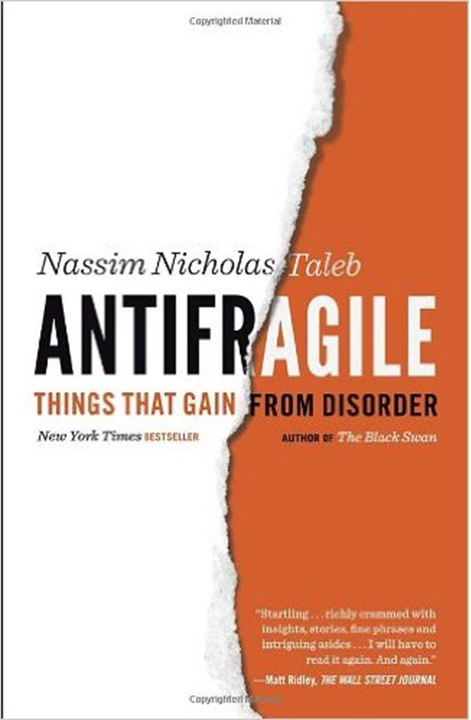
Posted: February 11, 2016 Filed under: Uncategorized | Tags: health, risk 1 CommentMany of our experiences are unpredictable and radically changed by rare events. Although our conventional thinking is useful for maintaining the status quo, it is unable to anticipate or cope with unprecedented events . Just think of the unanticipated political consequences of the 9/11 terrorist attack, the iatrogenic effects (treatment induced negative side effects) of taking statins to reduce cholesterol (15% of the patients experience serious complications such as muscle weakness and cognitive dysfunction) or the 44 percent increase risk of dementia in people age 75 or older who regularly take heartburn medications called proton pump inhibitors (PPIs) such as Prilosec, Nexium and Prevacid, the elimination of book stores by Amazon’s success, or how computer failures can shut down air travel. One of the most thoughtful and brilliant authors who cuts through the cloud of conventional thinking and teaching is Nassim Nicholas Taleb. His books offer useful guidelines how to think about risk when interfacing with medicine or how to make healthy lifestyle choices. Begin by reading The Black Swan: The Impact of the Highly Improbable and then enjoy his recent book, Antifragile-Things that Gain from Disorder.
Sharing gratitude
Posted: December 23, 2015 Filed under: Uncategorized | Tags: gratitude, healing, health, mind-body, stress management 4 CommentsIt was late in the afternoon and I was tired. A knock on my office door. One of my students came in and started to read to me from a card. “I want to thank you for all your help in my self-healing project…I didn’t know the improvements were possible for me in a span of 5 weeks…. I thank you so much for encouraging and supporting me…. I have taken back control of myself and continue to make new discoveries about my identity and find my own happiness and fulfillment.,,, Thank you so much.”
I was deeply touched and my eyes started to fill with tears. At that moment, I felt so appreciated. We hugged. My tiredness disappeared and I felt at peace.
This student had completed the daily self-healing practices . When the university students practice a sequence of daily self-healing exercises outlined in the book, Make Health Happen (Peper, Gibney & Holt, 2002), most report significant improvement in their health and well-being as shown in Figure 1 (Peper et al, 2014).
 Figure 1. Self-rating by students after completing a personal health improvement project over a period of four weeks (Bier, Peper, & Burke, 2005).
The practice which students report impacts them profoundly and by which they experience a deepening connection and sense of agape (selfless unconditional caring and love) with another person is Sharing Gratitude.
Sharing Gratitude practice was adapted from Professor Martin Seligman’s 2004 TED presentation, The new era of positive psychology.
Take the opportunity during the holiday season to give joy to others. Just do the following:
- Remember someone who did something for you that impacted your life in a positive direction and whom you never properly thanked.
- Write a 300 word testimonial describing what the person did and how it positively impacted you.
- Visit the person and when you meet her/him, read the testimonial to her/him (if the person cannot be visited, use Skype so you can see and connect with each other).
Although it may seem awkward to read the testimonial, after you have done it, you most likely will feel closer and more deeply connected to the person. Moreover, the person to whom you read the testimonial, will feel deeply touched and both of your hearts will open.
For more background information, watch Professor Martin Seligman’s Ted presentation below.
References:
Bier, M., Peper, E., & Burke, A. (2005). Integrated Stress Management with Make Health Happen: Measuring the Impact through a 5-Month Follow-Up. Presented at the 36th Annual Meeting of the Association for Applied Psychophysiology and Biofeedback. Abstract published in: Applied Psychophysiology and Biofeedback, 30(4), 400.
Peper, E., Gibney, K.H. & Holt. C. (2002). Make Health Happen: Training Yourself to Create Wellness. Dubuque, IA: Kendall-Hunt. ISBN-13: 978-0787293314
Peper, E., Lin, I-M, Harvey, R., Gilbert, M., Gubbala, P., Ratkovich, A., & Fletcher, F. (2014). Transforming chained behaviors: Case studies of overcoming smoking, eczema and hair pulling (trichotillomania). Biofeedback, 42(4), 154-160.
https://biofeedbackhealth.files.wordpress.com/2011/01/transforming-chained-behavior-published.pdf
Seligman, M. (2004). The new era of positive psychology. http://www.ted.com/index.php/talks/martin_seligman_on_the_state_of_psychology.html
Less Medicine, More Health?
Posted: October 19, 2015 Filed under: Uncategorized | Tags: decision making, health, iatrogenic disease, medical testing, Medicine 1 CommentShould I get a body scan?
How aggressively should I lower my blood sugar level as I have type 2 diabetes?
I have no symptoms, should I get a routine mammogram?
I feel great, should I follow my doctor’s advice and have my annual physical?
These and hundreds of other questions often imply that the more medical care the better and healthier you will be. We assume that more care, more testing, the newer the drug, the more screening, etc. will prevent illness and promote health. In numerous cases this is not true! Although medical care can be superb for the treatment of acutely ill and injured, excessive use sometimes leads to harm.
In a superb book, Less Medicine, More Health, by Dr. H. Gilbert Welch, professor at Dartmouth Medical School and recognized expert on the effects of medical testing, the following seven basic assumptions underlying too much medical care are described in a readable and personable style.
- All risks can be lowered
- It’s always better to fix the problem
- Sooner is always better
- It never hurts to get more information
- Action is always better than inaction
- Newer is always better
- It’s all about avoiding death
Welch’s book explains the assumptions and the limitations of the assumption. Before assuming that the recommended medical procedures will improve your health—in some cases it will make you sicker—read his book, Less Medicine More Health.

Welch, H.G. (2015). Less Medicine, More Health. Boston: Beacon Press. ISBM 978-0-8070-7164-9
Doctor Mike Evans: What’s the Best Diet? Healthy Eating 101
Posted: September 24, 2015 Filed under: Nutrition/diet, Uncategorized | Tags: diet, exercise, food, health 1 CommentA healthy diet is much more than just focusing on a single food. People focus so often on adding one type of food or eliminating another such as, “Don’t eat ice cream!”, “Eat chia seeds.” “No red meat.” In almost all cases, it is not just one thing, instead a healthy diet is embedded in awareness and healthy life style choices. Watch the superb common sense white board video presentation by Doctor Mike Evans, What’s the Best Diet? Healthy Eating 101. In this short presentation, he summarizes the best practices known. Implement his approach and your health will significantly improve.
Gut understanding-From salivating to pooping and all that is in between
Posted: August 16, 2015 Filed under: Uncategorized | Tags: allergy, antibiotics, bacteria, digestion, health, microbiome 4 CommentsEighty percent of all your cells in your body are bacteria and not human cells. Or is it that human beings are this mixture of beneficial bacteria and human cells? The majority of the bacteria live in our large intestines and contribute to our health and well-being. One of the hottest area in medicine and biology is the study of the human microbiome–understanding the role of the bacteria that co-habitate with us. The dynamic mixture of healthy and harmful bacteria can create illness or health and change our moods.
Ever wondered how food is digested, what foods do for you, what is a stomach ache, diarrhea or how defecation occurs? To understand our digestive tract from the mouth to the anus, from the first morsel of food entering our mouth to pooping is explained in superb readable book, Gut-The Inside Story of Our Body’s Most Underrated Oran, written by the German writer and scientist. Giulia Enders. It is a must read for anyone concerned about impact of cesarean birth, food allergies, eczema, ulcers, effect of antibiotics, constipation, farting, bloating, etc.For a fun summary, see Steve Palkin’s interview with Giulia Enders on YouTube.

Be aware of evolutionary/ecological traps
Posted: May 16, 2015 Filed under: Uncategorized | Tags: ADHD, diabetes, diet, evolution, exercise, health 6 Comments
Dead bird on Midway Island in the North Pacific, 2000 miles from any other islands. The bird mistook attractive coloring of plastics that float in the ocean as food. From: https://www.youtube.com/watch?v=dtJFiIXp5Bo

Being captured by a digital device. From: http://images.gameskinny.com/gameskinny/c9689c75994e58a03dbc5e489d346e55.jpg
How come birds on Midway Island are dying?
How come your son keeps playing computer games even after he said he would stop?
How come you ate all the French fries and the dessert even though you promised yourself to reduce your calorie intake?
How come you procrastinated and did not get up from the couch to exercise?
How come you watched pornography?
The usual answer is absence of will, self-control or self-discipline. The person is automatically blamed for making poor life choices. If you had more self-worth than you would not let yourself get obese, addicted to computer games, or watch pornography. Blaming the victim is easy, however, there are other factors that underlie the person’s covert/unconscious choices. Many of these illness producing behaviors (e.g., overeating, playing the computer games, sitting and sitting) are responses to external cues that in prehistoric times promoted survival, reproduction and health. To respond rapidly and appropriately to those cues offered a reproductive advantages while not reacting would reduce your survival. In many cases there are no upper limits to turn off our responses to these cues because the more the person responded to those cues the more was there a reproductive advantage. Now, however, our adaptive preferences have become maladaptive because the cues that trigger the same behaviors lead to lower fitness and illness (Schlaepfer et al, 2002; Robertson et al, 2013). The cues have become evolutionary/ecological traps!
Some of the recent evolutionary/ecological traps include:
Vigilance for survival. While playing a computer games, the person rapidly responds and continuously experiences immediate rewards (e.g., successful shooting the target, points, next game level). This process activates the same survival mechanisms that hunter used for thousands of generations. A visual or auditory stimuli represents sources of food or danger (a game animal to hunt for food, an attack by a predator or an enemy). The visual/auditory cue captures the person’s attention and if the person reacts to that cue he would probably survive. On the other hand, if he did not react, he may not survive and reproduce. In our modern world, similar stimuli now hijack the neurological pathways that in earlier times supported survival. Over activation of these pathways is a cofactor in the development of ADHD and other disorders (Peper, 2014). For a superb discussion of how cellphones, computers, gaming and social medial are changing our brains, read Dr. Mari Swingle’s new book, i-Minds (Swingle, 2015)
Energy for survival: Eating carbohydrate/sugary and fat foods are necessary for survival as humans constantly searched for energy sources to support life. Breast milk and almost any fruit that is sweet contain calories and supports growth. If the food was bitter it was usually harmful. For most of our evolutionary past, we would eat as much as possible because food was scarce. There was no evolutionary advantage to limit food intake as the stored calories would supply enough calories to survive during periods of famine. In our modern world, our survival mechanisms have been hijacked by advertising and the oversupply of foods which contribute to the epidemic of obesity and diabetes.
Being a couch potato and not moving again is again survival mechanism. In a prehistoric world with limited food supply, the less movement (the fewer calories you burned), the longer you could survive. You would move when you needed to build shelter or search for food. Again in a world where shelter and food are often abundant, there is no intrinsic mechanism to initiate movement.
Sexual arousal for reproduction: Men are often captured by pornography. They can watch for hours and feel aroused. The whole porn industry is based upon hijacking our sexual drive for reproduction.
Our brain does not discriminate between actual visual and auditory stimuli, imagined or film/video images. Until the late 19th century everything we saw and heard was real. Only in the 20th century could we produce images and sounds that appeared real. These film, TV , and the ever present digital displays activate the same neurophysiological pathways as when the stimuli were actually real. A scene on a digital screen triggers the same biological pathways and responses that for thousands of generations supported survival. If we did not respond we would not have survived. If you have any doubt, watch a scary horror movie and check how you feel afterwards. You may feel more scared, your sleep may be disturbed, your heart rate increased, and you probably interpreted any noise around you as possible danger. Thus, cues in the environment may become evolutionary/ecological traps in the same way that birds on Midway Island in the North Pacific, 2000 miles from any other islands, mistook the attractive coloring of plastics as food. See: https://www.youtube.com/watch?v=dtJFiIXp5Bo. Should the birds be blamed because they have no self-control?
What can you do!
Recognize that modern industries for the sake of profits have hijacked our cues that had evolved to aid survival (Kemp, 2014).
Recognize that not reacting to product cues means inhibiting the intrinsic biological triggered survival responses. Yes, it is possible not react to the stimuli and demonstrate self-control; however, it is not only a problem of will. It is a problem that our cues have been hijacked and tricked for commercial profit.
Society may need to protect its own populations from commercial exploitation of evolutionary/ecological traps. A young child is automatically drawn to the visual stimuli on a smartphone and tablet which parents use to quiet the child during dinner. In this process they are activating the pre-wired biological pathways that captured attention for survival. By over activating these pathways, the brain is changing in response to this activation which increases the risk of developing ADHD, autism, and mood deregulation including anxiety, depression, and anger management, and other forms of addictive behavior (Swingle, 2015). In addition, school performance and memory retention are reduced when students take notes using their keyboard or read text from digital screens (OCallaghan, 2014). It will take the family and society to limit the availability of these cues until self-control has been developed. Similarly, the availability of cheap calories in large food portions, sugars in soft drinks and sugar and fats in snacks, need to be limited if the epidemic of obesity and diabetes is to be reversed.
It may be unreasonable to think that people can easily interrupt their biological responses to cues that have been created to increase profits. We need to take collective responsibility and limit the availability of commercially augmented evolutionary traps and cues in the same way we need to limit the plastic in the ocean so that the birds at Midway Island may be able survive. Without respecting our evolutionary past, our future may not be different from those Midway Island birds.
References
Kemp, C. (2014). Trapped!. New Scientist, 221(2960), 43-45
OCallaghan, T. (2014). Goodbye, paper: What we miss when we read on screen. New Scientist.224 (2993). 41-43.
Peper, E. (2014). Support Healthy Brain Development: Implications for Attention Deficit/Hyperactivity Disorder. Psychophysiology Today, 9(1), 4‐15.
Robertson, B. A., Rehage, J. S., & Sih, A. (2013). Ecological novelty and the emergence of evolutionary traps. Trends in ecology & evolution, 28(9), 552-560.
Swingle, M.K. (2015). i-Minds. Portland, OR: Inkwaterpress.com ISBN-13 978-1-62901-213-1
Schlaepfer, M. A., Runge, M. C., & Sherman, P. W. (2002). Ecological and evolutionary traps. Trends in Ecology & Evolution, 17(10), 474-480.
Overdiagnosed: Should I have more tests or treatments?
Posted: February 1, 2015 Filed under: Uncategorized | Tags: cancer, diagnosis, health, medication, prevention 2 CommentsOne Computerized tomography (CT) scan of the abdomen and pelvis will expose you to more radiation than the residents of Fukushima, Japan absorbed after the Fukushima Daiichi nuclear power plant accident in 2011. –Consumer Reports, March 2015, Vol.80 No.3, 39.
High-risk patients with heart failure and cardiac arrest hospitalized in teaching hospitals had a significantly lower 30-day mortality when admitted during dates of national cardiology meetings (70% survival when doctors attended meeting as compared to 60% survival when doctors did not attend the meetings). –-Jena et al, 2014.
There are so many questions
I feel healthy but worry that cancer could be lurking in the background, should I do a preventative body scan?
I sometimes have slightly higher blood pressure especially when the doctor measures it. It is probably borderline, should I go on medication?
Should I have my PSA tested?
I am a healthy fifty year old, should I have a mammogram?
Should I have an annual physical?
In the quest to stay healthy or prevent disease, we are bombarded by information that preventative testing would save lives and improve health. Only in the United States and New Zealand allow direct to consumer medical advertising which tends to increase excessive drug use and medical testing (Liang & Mackey, 2011). The messages imply that medical screening and testing (e.g., body scan or stress tests) can identify early stages of a disease and implying that earlier treatment will improve quality of life and survival. Similar messages encourage basically healthy people to take drugs for borderline conditions (e.g., borderline hypertension, osteopenia, increased cholesterol levels. What is not shared is the possible risk of unnecessary medical interventions or the harm caused by drug or treatment side effects especially when they are used for a long time period. When unbiased research such as the Cochran Reviews are done, even the annual physical exam appears to offer no benefits (Krogsbøll et al, 2013). Similarly, mammograms and PSA testing for a healthy population appears to offer no benefits and may increase risks. It is truly difficult to accept that an annual health check up is worthless or that a routine mammogram or PSA test may do more harm than good since for many years the public message has been the opposite: to get more screening and testing. There are many reasons for this approach such as:
- Genuine belief, although not evidence based, that an early intervention and more testing would reduce suffering.
- Financial incentives for the parties that perform testing and preventative screening or encourage increased drugs sales for borderline conditions for which the risk and benefits are not well documented.
- Fear of lawsuits by medical providers. If a patient develops an illness which possibly could have been diagnosed by screening, even though the screening may not have affected the actual outcome, the health professional could be sued.
Become an informed consumer
When you have a symptom and do not feel well, see your doctor and get diagnosed, it may safe your life. At the same time be an educated consumer and when unexpected findings are discovered and not related to your specific symptom/complaint, ask questions before agreeing to have more tests or treatments. Ask your provider some of the following questions which were initially outlined by Dr. Eugene Robins (1984):
- Why are you doing this test or procedure?
- What are the risks and what are the benefits?
- What are the risks of treatment and what are the benefits of treatment?
- How accurate is the test?
- How will the test results change the treatment strategy?
- Are there less invasive strategies that could be used? Be very careful of exposing yourself and especially children to CT scans. It is estimated that for every 1000 children who have an abdominal CT scan, one will develop cancer as a result (2015, Consumer Report, March 16).
To be able to navigate the complexities of diagnosis and to understand the risks and benefits of treatment and testing, read the recent two articles in the New York Times, Can this treatment help me? There is a statistic for that, How to Measure a Medical Treatment’s Potential for Harm and the superb book, Over-diagnosed-Making people sick in the pursuit of health, by Drs. H. Gilbert Welch, Lisa M Schwartz, and Steven Woloshin who are professors at Darthmouth Institute for Health Policy and Clinical Practice. This book is a must read for every patient and health care provider. 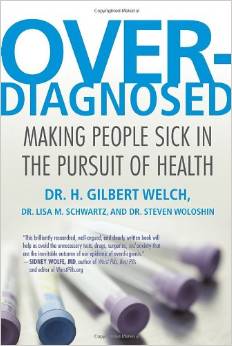
References:
(2015). Overexposed. Consumer Reports, 80(3), 37-41. http://www.consumerreports.org/cro/2015/01/when-to-skip-ct-scans-and-x-rays/index.htm
Carroll, A.E. & Frakt, A. (2015). How to Measure a Medical Treatment’s Potential for Harm. New York Times, February 2.
Frakt, A. & Carroll, A.T. (2015). Can This Treatment Help Me? There’s a Statistic for That, New York Times, January 26.
Jena, A. B., Prasad, V., Goldman, D. P., & Romley, J. (2014). Mortality and Treatment Patterns Among Patients Hospitalized With Acute Cardiovascular Conditions During Dates of National Cardiology Meetings. JAMA internal medicine. doi:10.1001/jamainternmed.2014.6781 http://www.drperlmutter.com/wp-content/uploads/2015/01/Cardiac-outcome.pdf
Krogsbøll, L. T., Jørgensen, K. J., & Gøtzsche, P. C. (2013). General health checks in adults for reducing morbidity and mortality from disease. JAMA, 309(23), 2489-2490. http://drkney.com/pdfs/WAC_A_061913.pdf
Liang, B. A., & Mackey, T. (2011). Direct-to-consumer advertising with interactive internet media: global regulation and public health issues. JAMA, 305(8), 824-825. http://jama.jamanetwork.com/article.aspx?articleid=645713
Robins, E. D. (1984). Matter of Life & Death: Risks vs. Benefits of Medical Care. New York: W.H. Freeman and Company
Welch, H.G., Schwartz, L.M., & Woloshin, S. (2011). Over-diagnosed-Making people sick in the pursuit of health. Boston: Beacon Press.
A historical perspective of neurofeedback: Video interview by Larrry Berkelhammer of Erik Peper
Posted: January 18, 2015 Filed under: Uncategorized | Tags: biofeedback, cancer, electroencephalography, health, neurofeedback, self-regulation 1 CommentDr. Erik Peper is interviewed by Dr. Larry Berkelhammer about the research he did in the late 60s and early 70s on EEG alpha training. He describes how he learned to turn off alpha brain rhythms in one hemisphere and turn them on in the other.
Neurofeedback equipment allows researchers and clinicians to get extremely useful feedback, allowing people who are hooked up to get very good at identifying their own brain rhythms and to alter them at will. This can potentially allow us to re-train our brains. Dr. Peper talks about how the real gift of science is about being open to explore rather than to assume our beliefs are factual. Science is about curiosity, experimentation, and exploration. In studying people with cancer and other diseases it is vital that we study more than just pathology–we need to study those individuals who are the outliers, that is, those who recovered against all odds–let’s see what they did to mobilize their health.
 the peper perspective