Use the power of your mind to transform health and aging
Posted: February 18, 2025 Filed under: attention, behavior, cancer, CBT, cognitive behavior therapy, COVID, education, health, meditation, mindfulness, Pain/discomfort, placebo, stress management, Uncategorized | Tags: health, imimune function, longevity, mental-health, mind-body, nutrition, Reframing, wellness Leave a commentMost of the time when I drive or commute by BART, I listen to podcasts (e.g., Freakonomics, Hidden Brain, this podcast will kill you, Science VS, Huberman Lab). although many of the podcasts are highly informative; , rarely do I think that everyone could benefit from it. The recent podcast, Using your mind to control your health and longevity, is an exception. In this podcast, neuroscientist Andrew Huberman interviews Professor Ellen Langer. Although it is three hours and twenty-two minute long, every minute is worth it (just skip the advertisements by Huberman which interrupts the flow). Dr. Langer delves into how our thoughts, perceptions, and mindfulness practices can profoundly influence our physical well-being.
She presents compelling evidence that our mental states are intricately linked to our physical health. She discusses how our perceptions of time and control can significantly impact healing rates, hormonal balance, immune function, and overall longevity. By reframing our understanding of mindfulness—not merely as a meditative practice but as an active, moment-to-moment engagement with our environment—we can harness our mental faculties to foster better health outcomes. The episode also highlights practical applications of Dr. Langer’s research, offering insights into how adopting a mindful approach to daily life can lead to remarkable health benefits. By noticing new things and embracing uncertainty, individuals can break free from mindless routines, reduce stress, and enhance their overall quality of life. This podcast is a must-listen for anyone interested in the profound connection between mind and body. It provides valuable tools and perspectives for those seeking to take an active role in their health and well-being through the power of mindful thinking. It will change your perspective and improve your health. Listen to or watch the interview:
Youtube: https://www.youtube.com/watch?v=QYAgf_lfio4

Useful blogs to reduce stress
From Conflict to Calm: Reframing Stress and Finding Peace with Difficult People
Posted: February 6, 2025 Filed under: attention, behavior, Breathing/respiration, CBT, emotions, healing, health, Neck and shoulder discomfort, Pain/discomfort, stress management | Tags: anger, anger management, conflict resolution, Reframing, resentment 8 Comments
Adapted from: Peper, E. (2025, Feb 15). From Conflict to Calm: Reframing Stress and Finding Peace with Difficult People. Townsend Letter-Innovative Health Perspectives. https://townsendletter.com/from-conflict-to-calm-reframing-stress-and-finding-peace-with-difficult-people/
After living in our house for a few years, a new neighbor moved in next door. Within months, she accused us of moving things in her yard, blamed us when there was a leak in her house, dumped her leaves from her property onto other neighbors’ properties, and even screamed at her tenants to the extent that the police were called numerous times.
Just looking at her house through the window was enough to make my shoulders tighten and leave me feeling upset. When I drove home and saw her standing in front of her house, I would drive around the block one more time to avoid her while feeling my body contract. Often, when I woke up in the morning, I would already anticipate conflict with my neighbor. I would share stories of my disturbing neighbor and her antics with my friends. They were very supportive and agreed with me that she was crazy.
However, this did not resolve my anger, indignation, or the anxiety that was triggered whenever I saw her or thought of her. I spent far too much time anticipating and thinking about her, which resulted in tension in my own body—my heart rate would increase, and my neck and shoulders would tighten. I decided to change. I knew I could not change her; however, I could change my reactivity and perspective.
Thus, I practiced the “Pause and Recenter” technique described in the blog. At the first moment of awareness that I was thinking about her or her actions, I would change my posture by sitting up straight and looking upward, breathe lower and slower, and then, in my mind’s eye, send a thought of goodwill streaming to her like an ocean wave flowing through and around her in the distance. I choose to do this because I believe that within every person, no matter how crazy or cruel, there is a part that is good, and it is that part I want to support.
I repeated this many times—whenever I looked in the direction of her house or saw her in her yard. I also reframed her aggressive, negative behavior as her way of coping with her own demons. Three months later, I no longer react defensively. When I see her, I can say hello and discuss the weather without triggering my defensive reaction. I feel so much more at peace living where I am.
When stressed, angry, rejected, frustrated, or hurt, we so often blame the other person. The moment we think about that person or event, our anger, indignation, resentment, and frustration are triggered. We keep rehashing what happened. As we do this, we are unaware that we are reliving the past event and are often unaware of the harm we are doing to ourselves until we experience symptoms such as high blood pressure, gastrointestinal distress, insomnia, anxiety, or muscle tightness. As we think of the event or interact again with that person, our body automatically responds with a defense reaction as if we are actually being threatened. This response activates the defense to protect ourselves from harm— the person is not a threat like the saber-toothed tiger ready to attack. Yet we respond as if the person is the tiger.
This defense reaction activates our “fight or flight” responses and increases sympathetic activation so that we can run faster and fight more ferociously to survive; however, it reduces blood flow through the frontal cortex—a process that reduces our ability to think rationally (Willeumier, et al., 2011; van Dinther et al., 2024). When we become so upset and stressed that our mind is captured by the other person, it contributes to an increase in hypertension, myofascial pain, depression, insomnia, cardiovascular disease, and other chronic disorders (Russel et al., 2015; Suls, 2013; Duan et al., 2022).
Our initial response of sharing our frustrations with others is normal. It feels good to blame the other; however, over time, the only person who gets hurt is yourself (Fast & Tiedens, 2010; Lou et al., 2023). The time spent rehashing and justifying our feelings diminishes our time we are in the present moment or focus on upcoming opportunities.
We may not realize that we have a choice. We can keep living and reacting to past hurt or losses, or we can let go and/or forgive and make space for new opportunities. Although the choice is ours, it is often very challenging to implement—even with the best intentions—as we react automatically when reminded of the past hurt (seeing that person, anticipating meeting or actually meeting that person who caused the hurt, or being triggered by other events that evoke memories of the pain).
What can you do
If choose to change your response and reactivity, it does not mean you condone what happened or agree that the other person was right. You are just choosing to live your life and not continue to be captured and react to the previous triggers. Many people report that after implementing some of the practices described below or others stress management techniques frequently their automatic reactivity was significantly reduced. They report that their symptoms are reduced and have the freedom to live in present instead of being captured by the painful past.
Pause and recenter
Our automatic reaction to the trigger elicits a defense reaction that reduces our ability to think rationally. Therefore, the moment you anticipate or begin to react, take three very slow diaphragmatic breaths. As you inhale, allow your abdomen to expand; then, as you exhale slowlymake your yourself tall and look up. Looking up allows easier access to empowering and positive memories (Peper et al., 2017). Continue looking up and inhale slowly allow the abdomen to expand. Repeat this slow breath again.
On the third breath, while looking up, evoke a memory of someone in whose presence you felt at peace and who loves –you such as your grandmother, aunt or uncle or your dog. Reawaken that feeling associated with that memory. Allow a smile with soft eyes to come to your face as you experience the loving memory. Then, put your hands on your chest, take a breath as your abdomen to expands, and as you exhale, bring your hands away from your chest and stretch them out in front of you. At the same time, in your mind’s eye imagine sending good will to that person or conflict that previously evoked your stress response.
As you do this, you are not condoning what happened; instead, you are sending goodwill to that person’s positive aspect. From this perspective, everyone has an intrinsic component—however small—that some label as Christ nature or Buddha nature.
Why could this be effective? This practice short-circuits the automatic stress response and provides time to recenter. It interrupts ongoing rumination by shifting the mind away from thoughts about the person or event that induces stress and toward a positive memory. Evoking a loving memory from the past facilitates a reduction in arousal, evokes a positive mood, and decreases sympathetic nervous system activation (Speer & Delgado, 2017). Additionally, slower diaphragmatic breathing reduces sympathetic activation (Birdee et al., 2023; Siedlecki et al., 2022). By combining body and mind, we can pause and create the opportunity to respond positively rather than reacting with anger and hurt.
Practice sending goodwill the moment you wake up
So often when we wake up, we already anticipate the challenges and even the prospect of interacting with person or event heightens our defense reaction. Therefore, as soon as you wake up, sit at the edge of the bed, repeat the previous practice, Pause and Center. Then, as you sit at the edge of the bed, slightly smile with soft eyes, look up, inhale as your abdomen expand. Then, stamp your right foot into the floor while saying, “Today is a new day.” Next, inhale allowing your abdomen expand; as you look up, stamp your left foot on the floor while saying, “Today is a new day.” Finally, send goodwill to the person who previously triggered your defensive reaction.
Why could this be effective?
Looking up makes it easier to access positive memories and thoughts. Stamping your foot on the ground is a non-verbal expression of determination and anchors the thought of a new day, thereby focuses on new opportunities (Feldman, 2022).
Discuss your issue from the third-person perspective instead of the first-person perspective
When thinking, ruminating, talking, texting, or writing about the event, discuss it from the third-person perspective. Replace the first-person pronoun “I” with “she” or “he.” For example, instead of saying:
I was really pissed off when my boss criticized my work without giving any positive suggestions for improvement,
Say:
He was really pissed off when his boss criticized his work without offering any positive suggestions for improvement.
Why could this be effective? The act of substituting the third person pronoun for the first-person pronoun interrupts our automatic reactivity because it requires us to observe and change our language, which activating the frontal cortex. This process creates a psychological distance from our feelings, allowing for a more objective and calmer perspective on the situation. It effectively reducing stress by stepping back from the immediate emotional response (Moser et al., 2017). It means that you are no longer fully captured by the emotions, as you are simultaneously the observer of your own inner language and speech.
Compare yourself to others who are suffering more
When you feel sorry for yourself or hurt, take a breath, look upward, and compare yourself to others who are suffering much more. In that moment, consider yourself incredibly lucky compared to people enduring extreme poverty, bombings, or severe disfigurement. Be grateful for what you have.
Why could this be effective? The research data shows that if we have low self-esteem when we compare ourselves to people who are more successful (healthier, richer, or successful), we feel worse in comparison and if we compare ourselves to other who are suffering more we feel better (Aspinwall, & Taylor, 1993). The comparision relativize our suffering. Thus our own suffering become less significant compared to the other people’s severe suffering.
Research shows that when we compare ourselves to people who are more successful (healthier, richer, or more accomplished), we tend to feel worse—especially if we have low self-esteem. However, when we compare ourselves to others who are suffering more, we tend to feel better (Aspinwall, & Taylor, 1993). This comparison relativizes our suffering, making our own hardships and suffering seem less significant compared to the severe suffering of others.
Interrupt the stress response
When overwhelmed by a stress reaction, implement the recue techniques described in the article, Quick rescue techniques when stress (Peper, Oded and Harvey, 2024) and the blog to help reduce stress. https://peperperspective.com/2024/02/04/quick-rescue-techniques-when-stressed/
Conclusion
It is much easier to write and talk about these practices than to actually do them. Remembering and reminding yourself to implement them can be very challenging. It requires significant effort and commitment. In most cases, the benefits are not experienced immediately. However, when practiced many times over weeks and months, many people report feeling less resentment, experience a reduction in symptoms, and improvements in health and relationships.
*This blog was inspired by the podcast, No hard feelings, that featured psychologist Fred Luskin. It is an episode on Hidden Brain, produced by Shankar Vedantam (2025) and the wisdom taught by Dora Kunz (Kunz & Peper, 1983; Kunz and Peper, 1984a; Kunz and Peper, 1984b; Kunz and Peper, 1987).
Useful blog that complement the concepts in this blog
References
Aspinwall, L. G., & Taylor, S. E. (1993). Effects of social comparison direction, threat, and self-esteem on affect, self-evaluation, and expected success. Journal of Personality and Social Psychology, 64(5), 708–722. https://doi.org/10.1037/0022-3514.64.5.708
Birdee, G., Nelson, K., Wallston, K., Nian, H., Diedrich, A., Paranjape, S., Abraham, R., & Gamboa, A. (2023). Slow breathing for reducing stress: The effect of extending exhale. Complementary Therapies in Medicine, 73. https://doi.org/10.1016/j.ctim.2023.102937
Duan, S., Lawrence, A., Valmaggia, L., Moll, J. & Zahn, R. (2022). Maladaptive blame-related action tendencies are associated with vulnerability to major depressive disorder. Journal of Psychiatric Research, 145, 70-76. https://doi.org/10.1016/j.jpsychires.2021.11.043
Fast, N.J. & Tiedens, L.Z. (2010). Blame contagion: The automatic transmission of self-serving attributions. Journal of Experimental Social Psychology, 46(1), 97-106. https://doi.org/10.1016/j.jesp.2009.10.007
Feldman, Y. (2022). The Dialogical Dance-A Relational Embodied Approach to Supervision. In Butte, C. & Colbert, T. (Eds). Embodied Approaches to Supervision-The Listening Body. London: Routledge. https://www.amazon.com/Embodied-Approaches-Supervision-C%C3%A9line-Butt%C3%A9/dp/0367473348
Kunz, D. & Peper, E. (1983). Fields and Their Clinical Implications-Part III: Anger and How It Affects Human Interactions. The American Theosophist, 71(6), 199-203. https://www.researchgate.net/publication/280777019_Fields_and_their_clinical_implications-Part_III_Anger_and_how_it_affects_human_interactions
Kunz, D. & Peper, E. (1984a). Fields and Their Clinical Implications IV: Depression from the Energetic Perspective: Etiological Underpinnings. The American Theosophist, 72(8), 268-275. https://biofeedbackhealth.org/wp-content/uploads/2011/01/fields-and-their-clinical-implications-iv-depression-from-the-energetic-perspectivive.pdf
Kunz, D. & Peper, E. (1984b). Fields and Their Clinical Implications V: Depression from the Energetic Perspective: Treatment Strategies. The American Theosophist, 72(9), 299-306. https://biofeedbackhealth.org/wp-content/uploads/2011/01/fields-and-their-clinical-implications-part-v-depression-treatment-strategies.pdf
Kunz, D. & Peper, E. (1987). Resentment: A poisonous undercurrent. The Theosophical Research Journal. IV (3), 54-59. Also in: Cooperative Connection. IX (1), 1-5. https://www.researchgate.net/publication/387030905_Resentment_Continued_from_page_4
Lou, Y., Wang, T., Li, H., Hu, T. Y., & Xie, X. (2023). Blame others but hurt yourself: blaming or sympathetic attitudes toward victims of COVID-19 and how it alters one’s health status. Psychology & Health, 39(13), 1877–1898. https://doi.org/10.1080/08870446.2023.2269400
Moser, J. S., Dougherty, A., Mattson, W. I., Katz, B., Moran, T. P., Guevarra, D., Shablack, H., Ayduk, O., Jonides, J., Berman, M. G., & Kross, E. (2017). Third-person self-talk facilitates emotion regulation without engaging cognitive control: Converging evidence from ERP and fMRI. Scientific reports, 7(1), 4519. https://doi.org/10.1038/s41598-017-04047-3
Oneda, B., Ortega, K., Gusmão, J. et al. (2010). Sympathetic nerve activity is decreased during device-guided slow breathing. Hypertens Res, 33, 708–712. https://doi.org/10.1038/hr.2010.74
Peper, E., Oded, Y, & Harvey, R. (2024). Quick somatic rescue techniques when stressed. Biofeedback, 52(1), 18–26. https://doi.org/10.5298/982312
Peper, E., Lin, I-M., Harvey, R., & Perez, J. (2017). How posture affects memory recall and mood. Biofeedback.45 (2), 36-41. https://doi.org/10.5298/1081-5937-45.2.01
Russell, M. A., Smith, T. W., & Smyth, J. M. (2016). Anger Expression, Momentary Anger, and Symptom Severity in Patients with Chronic Disease. Annals of behavioral medicine : a publication of the Society of Behavioral Medicine, 50(2), 259–271. https://doi.org/10.1007/s12160-015-9747-7
Siedlecki, P., Ivanova, T.D., Shoemaker, J.K. et al. (2022). The effects of slow breathing on postural muscles during standing perturbations in young adults. Exp Brain Res, 240, 2623–2631. https://doi.org/10.1007/s00221-022-06437-0
Speer, M. & Delgado, M. (2017).Reminiscing about positive memories buffers acute stress responses. Nat Hum Behav 1, 0093 (2017). https://doi.org/10.1038/s41562-017-0093
Suls J. (2013). Anger and the heart: perspectives on cardiac risk, mechanisms and interventions. Progress in cardiovascular diseases, 55(6), 538–547. https://doi.org/10.1016/j.pcad.2013.03.002
van Dinther, M., Hooghiemstra, A. M., Bron, E. E., Versteeg, A., Leeuwis, A. E., Kalay, T., Moonen, J. E., Kuipers, S., Backes, W. H., Jansen, J. F. A., van Osch, M. J. P., Biessels, G. J., Staals, J., van Oostenbrugge, R. J., & Heart-Brain Connection consortium (2024). Lower cerebral blood flow predicts cognitive decline in patients with vascular cognitive impairment. Alzheimer’s & dementia : the journal of the Alzheimer’s Association, 20(1), 136–144. https://doi.org/10.1002/alz.13408
Vedantma, S. (2025). Hidden Brain episode, No hard feelings. Accessed February 5, 2025. https://hiddenbrain.org/podcast/no-hard-feelings/
Willeumier, K., Taylor, D. V., & Amen, D. G. (2011). Decreased cerebral blood flow in the limbic and prefrontal cortex using SPECT imaging in a cohort of completed suicides. Translational psychiatry, 1(8), e28. https://doi.org/10.1038/tp.2011.28
Reduce stress, anxiety and negative thoughts with posture, breathing and reframing
Posted: October 19, 2019 Filed under: behavior, Breathing/respiration, emotions, Exercise/movement, posture, stress management, Uncategorized | Tags: Acceptance and comitment therapy, ACT, CBT, cognitive behavior therapy, empowerment, Reframing 10 CommentsWhen locked into a position, options appear less available. By unlocking our body, we allow our brain to unlock and become open to new options.
Changing positions may dissolve the rigidity associated with a fixed position. When we step away from the conflict, take a walk, look up at the treetops, roof lines and clouds, or do something different, we loosen up and new ideas may occur. We may then be able see the conflict from a different point of view that allows resolution.
When stressed, anxious or depressed, it is challenging to change. The negative feelings, thoughts and worries continue to undermine the practice of reframing the experience more positively. Our recent study found that a simple technique, that integrates posture with breathing and reframing, rapidly reduces anxiety, stress, and negative self-talk (Peper, Harvey, Hamiel, 2019).
Thoughts and emotions affect posture and posture affects thoughts and emotions. When stressed or worried (e.g., school performance, job security, family conflict, undefined symptoms, or financial insecurity), our bodies respond to the negative thoughts and emotions by slightly collapsing and shifting into a protective position. When we collapse/slouch, we are much more at risk to:
- Feel helpless (Riskind & Gotay, 1982).
- Feel powerless (Westfeld & Beresford, 1982; Cuddy, 2012).
- Recall and being more captured by negative memories (Peper, Lin, Harvey, & Perez, 2017; Tsai, Peper, & Lin, 2016),
- Experience cognitive difficulty (Peper, Harvey, Mason, & Lin, 2018).
When we are upright and look up, we are more likely to:
- Have more energy (Peper & Lin, 2012).
- Feel stronger (Peper, Booiman, Lin, & Harvey, 2016).
- Find it easier to do cognitive activity (Peper, Harvey, Mason, & Lin, 2018).
- Feel more confident and empowered (Cuddy, 2012).
- Recall more positive autobiographical memories (Michalak, Mischnat,& Teismann, 2014).
Experience how posture affects memory and the feelings (adapted from Alan Alda, 2018)
Stand up and do the following:
- Think of a memory/event when you felt defeated, hurt or powerless and put your body in the posture that you associate with this feeling. Make it as real as possible . Stay with the feeling and associated body posture for 30 seconds. Let go of the memory and posture. Observe what you experienced.
- Think of a memory/event when you felt empowered, positive and happy put your body in the posture that you associate with those feelings. Make it as real as possible. Stay with the feeling and associated body posture for 30 seconds. Let go of the memory and posture. Observe what you experienced.
- Adapt the defeated posture and now recall the positive empowering memory while staying in the defeated posture. Observe what you experience.
- Adapt the empowering posture and now recall the defeated hopeless memory while staying in the empowered posture. Observe what you experience.
Almost all people report that when they adapt the body posture congruent with the emotion that it was much easier to access the memory and feel the emotion. On the other hand when they adapt the body posture that was the opposite to the emotions, then it was almost impossible to experience the emotions. For many people, when they adapted the empowering posture, they could not access the defeated hopeless memory. If they did access that memory, they were more likely be an observer and not be involved or emotionally captured by the negative memory.
Comparison of Posture with breathing and reframing to Reframing
The study investigated whether changing internal dialogue (reframing) or combining posture change and breathing with changing internal dialogue would reduce stress and negative self-talk more effectively.
The participants were 145 college students (90 women and 55 men) average age 25.0 who participated as part of a curricular practice in four different classes.
After the students completed an anonymous informational questionnaire (history of depression, anxiety, blanking out on exams, worrying, slouching), the classes were divided into two groups. They were then asked to do the following:
- Think of a stressful conflict or problem and make it as real as possible for one minute. Then let go of the stressful memory and do one of the two following practices.
- Practice A: Reframe the experience positively for 20 seconds.
- Practice B: Sit upright, look up, take a breath and reframe the experience positively for 20 seconds.
- After doing practice A or practice B, rate the extent to which your negative thoughts and anxiety/tension were reduced, from 0 (not at all) to 10 (totally).
- Now repeat this exercise except switch and do the other practice. (Namely, if you did A now you do B; if you did B now you do A).
RESULTS
Overwhelmingly students reported that sitting erect, breathing and reframing positively was much more effective than only reframing as shown in Figure 1 and 2.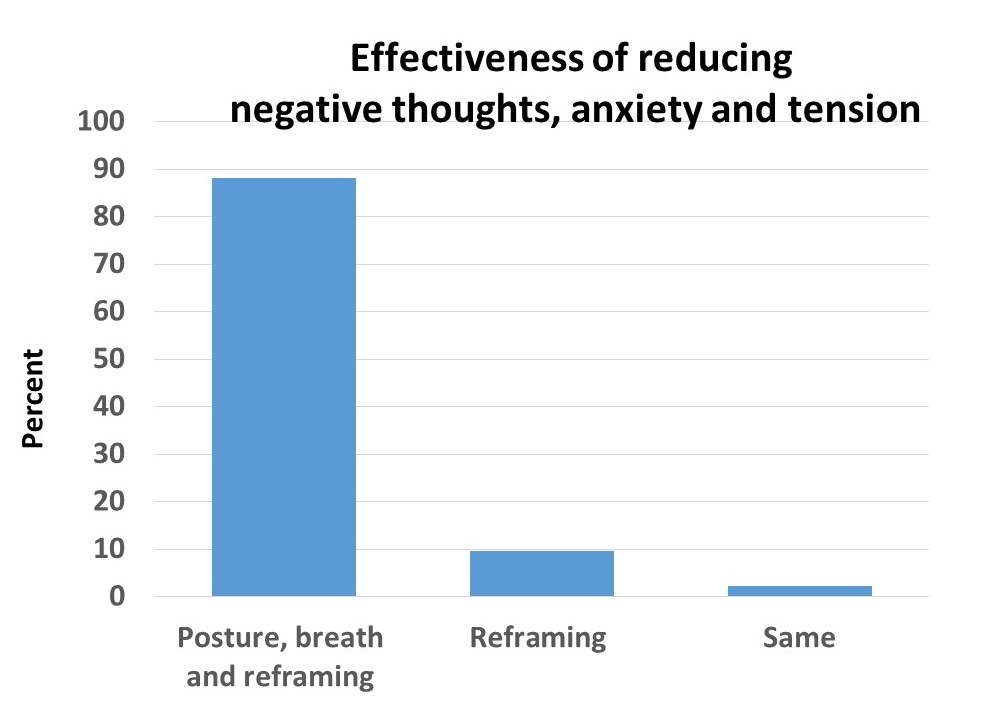
Figure 1. Percentage of students rating posture, breath and reframing practice (PBRP) as more effective than reframing practice (RP) in reducing negative thoughts, anxiety and stress.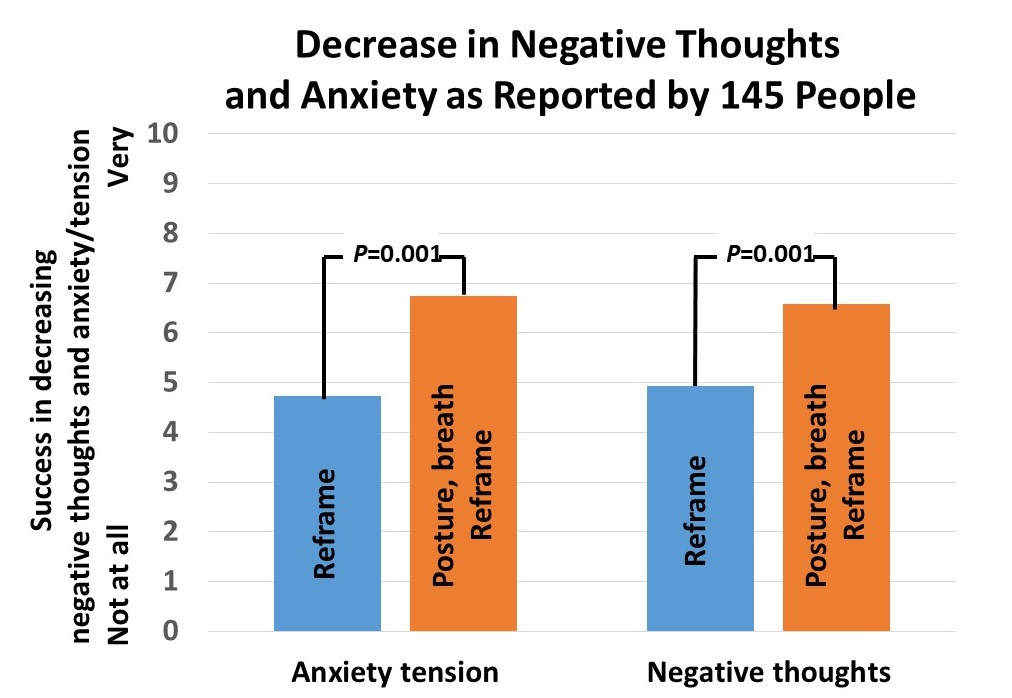 Figure 2. Self-rating of reduction of negative thoughts and anxiety/tension
Stop reading. Do the practice yourself. It is only through experience that you know whether posture with breathing and reframing is a more beneficial than simply reframing the language.
Implications for education, counseling, psychotherapy.
Our findings have implications for education, counseling and psychotherapy because students and clients usually sit in a slouched position in classrooms and therapeutic settings. By shifting the body position to an erect upright position, taking a breath and then reframing, people are much more successful in reducing their negative thoughts and anxiety/stress. They report feeling much more optimistic and better able to cope with felt stress as shown by representative comments in table 1.
| Reframing | Posture, breath and reframing |
| After changing my internal language, I still strongly felt the same thoughts. | I instantly felt better about my situation after adjusting my posture. |
| I felt a slight boost in positivity and optimism. The negative feelings (anxiety) from the negative thoughts also diminished slightly. | The effects were much stronger and it was not isolated mentally. I felt more relief in my body as well. |
| Even after changing my language, I still felt more anxious. | Before changing my posture and breathing, I felt tense and worried. After I felt more relaxed. |
| I began to lift my mood up; however, it didn’t really improve my mood. I still felt a bit bad afterwards and the thoughts still stayed. | I began to look from the floor and up towards the board. I felt more open, understanding and loving. I did not allow myself to get let down. |
| During the practice, it helped calm me down a bit, but it wasn’t enough to make me feel satisfied or content, it felt temporary. | My body felt relaxed overall, which then made me feel a lot better about the situation. |
| Difficult time changing language. | My posture and breathing helped, making it easier to change my language. |
| I felt anger and stayed in my position. My body stayed tensed and I kept thinking about the situation. | I felt anger but once I sat up straight and thought about breathing, my body felt relaxed. |
| Felt like a tug of war with my thoughts. I was able to think more positively but it took a lot more brain power to do so. | Relaxed, extended spine, clarity, blank state of mind. |
Table 1. Some representative comments of practicing reframing or posture, breath and reframing.
The results of our study in the classroom setting are not surprising. Many us know to take three breaths before answering questions, pause and reflect before responding, take time to cool down before replying in anger, or wait till the next day before you hit return on your impulsive email response.
Currently, counseling, psychotherapy, psychiatry and education tend not to incorporate body posture as a potential therapeutic or educational intervention for teaching participants to control their mood or reduce feelings of powerlessness. Instead, clients and students often sit slightly collapsed in a chair during therapy or in class. On the other hand, if individuals were encouraged to adopt an upright posture especially in the face of stressful circumstances it would help them maintain their self-esteem, reduce negative mood, and use fewer sadness words as compared to the individual in a slumped and seated posture (Nair, Sagar, Sollers, Consedine, & Broadbent, 2015).
THE VALUE OF SELF-EXPERIENCE
What makes this study valuable is that participants compare for themselves the effects of the two different interventions techniques to reduce anxiety, stress and negative thoughts. Thus, the participants have an opportunity to discover which strategy is more effective instead of being told what to do. The demonstration is even more impressive when done in groups because nearly all participants will report that changing posture with breathing and reframing is more beneficial.
This simple and quick technique can be integrated in counseling and psychotherapy by teaching clients this behavioral technique to reduce stress. In Cognitive Behavioral Therapy (CBT), sitting upright can help the individual replace a thought with a more reasonable one. In third wave CBT, it can help bypass the negative content of the original language and create a metacognitive change, such as, “I will not let this thought control me.”
It can also help in Acceptance and Commitment Therapy (ACT) since changing one’s body posture may facilitate the process of “acceptance” (Hayes, Pistorello, & Levin, 2012). Adopting an upright sitting position and taking a breath is like saying “I am here, I am present, I am not escaping or avoiding.” This change in body position represents movement from inside to outside, movement from accepting the unpleasant emotion related to the negative thoughts toward a “commitment” to moving ahead, contrary to the automatic tendency to follow the negative thought. The positive reframing during body position or posture change is not an attempt to color reality in pretty colors, but rather a change of awareness, perspective, and focus that helps the individual identify and see some new options for moving ahead toward commitment according to one’s values. This intentional change in direction is central in ACT and also in positive psychology (Stichter, 2018).
CONCLUSION AND RECOMMENDATIONS
We suggest that therapists, educators, clients and students get up out of their chairs and incorporate body movements when they feels overwhelmed and stuck. Finally, this study points out that mind and body are affected by each other. It provides another example of the psychophysiological principle enunciated by Elmer Green (1999, p 368):
“Every change in the physiological state is accompanied by an appropriate change in the mental-emotional state, conscious or unconscious; and conversely, every change in the mental-emotional state, conscious or unconscious is accompanied by an appropriate change in the physiological state.”
The findings of this study echo the ancient spiritual wisdom that is is central to the teaching of the Zen Master, Thich Nhat Hanh. He recommends that his students recite the following at any time:
Breathing in I calm my body,
Breathing out I smile,
Dwelling in the present moment,
I know it is a wonderful moment.
References
Cuddy, A. (2012). Your body language shapes who you are. Technology, Entertainment, and Design (TED) Talk, available at: www.ted.com/talks/amy_cuddy_your_body_language_shapes_who_you_are
Green, E. (1999). Beyond psychophysics, Subtle Energies & Energy Medicine, 10(4), page 368.
Peper, E., Booiman, A., Lin, I.M., & Harvey, R. (2016). Increase strength and mood with posture. Biofeedback. 44(2), 66–72.
 the peper perspective