Are LED screens harming you?
Posted: June 18, 2016 Filed under: Uncategorized | Tags: blue light, dry eyes, health, myopia, stress management, vision, visual stress 7 Comments
Sleep has become more and more elusive since checking my cellphone in bed.
Ouch, my eyes hurt when I flipped the light switch on and the room was flooded with light.
After working on my computer screen, the world looked blurry.
At night, the intense blue white LED headlights blinded me unlike the normal incandescent headlights.
My eyes become irritated and dry after looking at the computer screen.
More and more people are myopic and wear contacts lenses.
Many older people are suffering from macular degeneration and may go blind.
Migraine pain significantly decreased when a person looks at soft green light and significantly increased when looking at bright white light (Hamzelou, 2016). .
Vision problems are becoming more and more frequent. More and more children are near sighted and need vision correction while macular degeneration–a major cause of blindness for older adults–is becoming more prevalent (Fan et al, 2004: Lee et al, 2002;
Faber et al, 2015; Schneider, 2016). As we look ahead into the future, a new epidemic is starting to roll in—compromised vision. Major culprits include:
- Near visual stress caused by looking intensely at surfaces or objects one to two feet away such as computer screens, tablets and cell phones inhibits the eyes to relax and increases near sightedness (Fernández-Montero et al, 2015).
- Absence of visual relaxation and shifting focus from close to far distance. This ongoing increased focus decreases blinking rate and exhausts the eyes.
- Absence of looking at the green coloring of vegetation that historically predominated our visual environment–a color that is relaxing for the eyes and body especially when looked from a distance.
- Sleep suppression and disturbance caused working/reading/watching the LED screens (computer screen, tablet, cell phone, TV, or e-readers such as Amazon Kindle Fire or any tablet) before going to bed (Tosini et al, 2016). The blue light component produced by the LED screen suppresses melatonin production and interferes with sleep onset.
- Extreme variation in light intensity damages the retina. The pupil which normally contracts to protect the retina as light intensity increases is too slow to respond to the sharp changes in light intensity. This is very similar to looking at the sun during a solar eclipse without eye protection. The intense sun light literally will burn/damage the retina and can induce blindness.
- Harmful exposure of the blue light component of the LED screens or light bulbs may increase inflammation and damage to the macular area of the retina. This is often labeled as toxic blue light with a wavelength of 415-455nm (Roberts, 2011).
The light that illuminates our visual world and how our world conditions us to use our eyes is totally different from how our eyes evolved over the last million years. Although our present life is far removed from our evolutionary past, our evolutionary past is embedded within us and controls much of our biology and psychology. Consider how we used to live for millennia.
I look up and see vultures circling. It is not too far. I rapidly walk in the direction. I have a sense where the possible food source could be. As I walk I alternately look at the distance and close at the ground and scrubs. I continually scan the environment. Although there are shadows where I look the light is of somewhat similar intensity unless I look directly at the sun. While doing tasks I focus ahead where I will plant my feet or at my food or objects my hands are manipulating. I alternately shift from foreground to background. As I look in the distance and the many green plants, my eyes relax.
In the morning, the natural light wakes me. The bright morning light wakes me, I stretch and move. As the day progresses the light becomes brighter, then at sunset the light becomes softer and the yellow orange red spectrum predominates.
Whether we lived twenty thousand years ago in caves or communities, or two hundred years ago in small houses in cities or farms, sunlight illuminated our world. The sun light warm us, is necessary for vitamin D production and controls our biological circadian rhythms. The sun light and sometime the moonlight provided the only source of illumination. Generally, we woke up with the light and went to sleep when the light disappeared. For thousands of years human beings have attempted to bring light to the darkness to reduce danger. Light produced by fire for cooking and protection against predators, and some form of oil lamps to provide minimal illumination. These light sources were predominantly red and yellow. It was only with the application of gas and electrical illumination that lights could become brighter. Usually the light transitions were slow and gentle which allowed the ciliary muscles of the iris to contract thus making the pupil much smaller and reduce the influx of light to the retina and thereby protected the retina from excessive fluctuating light intensity.
Exposure to light in the evening or night is very recent in evolutionary terms. For hundreds of thousands of years the night was dark as we hid away in caves to avoid predators. And, the darkness allowed our eyes to regenerate. Only in the last few thousand years did candles or oil lamps with their yellow orange light illuminate the dark. The fear of the dark is primordial– in the dark we were the prey. During those prehistoric times, our fear was reduced by huddling together for warmth and safety as we slept. These days, while sleeping we turn on a night light to feel safe or allow us to see in case we have to get up. For many of us, darkness still feels unsafe since as babies the fear was amplified as we slept alone in a crib without feeling the tactile signals of safety provided by direct human contact.
Now most people live and work indoors and we are no longer exposed to direct or indirect sun light. Instead, we can illuminate our work and personal world twenty four hours a day and total darkness is elusive. Even when I close the shades in my bedroom, the blinking light of the smartphone charger, and the headlights of the cars passing by penetrate the darkness. While entering a dark room, we throw the switch and the room instantly is flooded with light. This instant transition to full light pains the eyes as the eyes struggle to adapt by closing the iris. The retina was already impacted. This may be one of the covert factors that contribute to the development of macular degeneration?
Historically, we mainly looked at reflected light and almost never at the light source such as the sun. Now we predominantly look directly into the light source of the light bulb, TV, computer, laptop, e-readers and smart phone screens. We are unaware that the light we see is not the same type of light as natural sun light. It still appears white; however, it is an illusion. We live most of our lives indoors illuminated by incandescent, fluorescent and LED light sources. These lights have limited spectrums and may lead to light malnutrition and blue light poisoning.
The most recent change has been the use of light-emitting diode (LED)–an electronic semiconductor device that emits light when an electric current passes through it. This is the process of flat TV, computer, tablet, cellphone screens and LED light bulbs. These bulbs are highly energy efficient and thus are being installed everywhere but are a significant health hazard which is described superbly and in detail at the end of the article by architect and lighting expert Milena Simeonova, www.lighting4health.com
What can you do to protect your eyes and improve your vision?
Use your eyes as much as possible as we did through most of our evolutionary history which means:
- Read and implement the practices described in the superb book, Vision for Life: Ten Steps to Natural Eyesight Improvement., by Meir Schneider which has helped thousands of people maintain and improve their vision.
- Take many vision breaks and look away from your screen. If possible look at the far distance and green plants and trees to relax your eyes.
- Do NOT use LED e-reader; instead, use e-readers that can be read by reflective light such as Amazon Kindle Paperwhite eReader.
- Block direct intense light sources. Arrange them so that they illuminate the walls and you only see gradual light gradients of reflective light.
- Install warm LED light (particularly for evening time) which have much less damaging blue light.
- Install software such on your computer that automatically adjusts your screen’s color-temperature depending on the time of day and your location. Thus, when the sun sets, the colors of the screen change and become more yellow, orange, and red thereby reducing the transmitted blue light I(Robinson, 2015).
–Mac, Windows, and Linux computers: f.flux is a free app (https://justgetflux.com/).
–Android or iPhones: install a “blue light filter” app.
–For additional free apps to protect your eyes from too bright screen light at night, see: http://sometips.wersjatestowa.eu/how-to-protect- eyes-from-too-bright-screen-light-especially-at-night/
- Spent as much time as possible looking at far distances with soft green light backgrounds.
- Encourage children to play outside and do not allow young children to entertain themselves with screen time especially as the eyes are developing (see my 2011 blog: Screens will hurt your children).
- Limit screen time and increase movement and physical activity time.
- Blink and blink more and relax your eyes. When visually stressed, blinking is inhibited because you do not want to miss the tiger who potentially could attack you. That is our evolutionary response pattern; however, there are no life threatening tigers around, thus allow yourself to blink. Do the following exercise to experience how your eyes change depending how you open and close them.
How to increase stressed dry eyes:
Sit comfortably and let your eyes be closed and breathe. Then exhale and when ready to inhale, inhale rapidly into your upper chest while opening your eyes wide as if fearful and frightened. Repeat a second time and then keep holding your eyes wide open as if looking for danger.
Observe what happened. Most people report that the front of their eyes felt slightly cooler as if a slight breeze was going over the cornea, and the eyes (cornea) are drier.
How to increase relaxed moist eyes:
Sit comfortably and let your eyes be closed and breathe. While breathing allow your abdomen to expand when you inhale and gently constrict when you exhale as if the lungs are a balloon in your abdomen. When ready, inhale while keeping the shoulders relaxed and the eyes still closed and then gently begin to exhale and very slowly and softly open your eyes slightly while looking down peacefully and content. Just as a mother may look down upon their baby in her arms with a slight smile. Repeat a second time and gently open your eyes slightly as the exhalation has started and is softly flowing.
Observe what happened. Most people report that their eyes became softer, more relaxed with increased of the beginning of a tear beginning to fill the front of the cornea.
You have a choice! You can mobilize health or continue to risk your vision. Adapt the precautionary principle and act now. See the in-depth description of the potential harm of LED lights described by architect and lighting designer Milena Simeonova who helps people stay healthy by applying natural light patterns inside buildings (www.lighting4health.com).
LED Lighting and Blue Light Hazard
By Milena Simeonova, Architect, MS in Lighting LRC, IES, LC
When TVs, computers, tablets, and mobile devices are used in the evening hours, the cool LED light emanating from the screens, shifts the body onset for melatonin production, pushing back our bed time by 1-1.5hr or later. You may think that’s not bad, if you have to study for exams or deliver this final project. Think twice when disrupting the circadian system and depriving your body of normal sleep hours. It is a recipe for initiating illness. Watch the superb TEDxCambridge 2011 lecture, A Sleep Epidemic, by Charles Szeisler, PhD, MD from Harvard Medical School (https://www.youtube.com/watch?v=p4UxLpoNCxU)
Science has discovered that Blue light suppresses melatonin (the sleep hormone), and can either regulate or deregulate our circadian system (bio-clock), disrupting our sleep during the night, and lowering our performance during the day. It affects our normal body function that is synchronized with the daylight-night cycle as shown in Figure 1. If this cycle is disrupted, poor health follows in the form of heart disease, cancer, depression, obesity, etc. Figure 1: Double plot (2 x 24 hours.) of typical daily rhythms of body temperature, melatonin, cortisol, and alertness in humans for a natural 24-hour light/dark cycle. Our circadian system regulates the body’s endocrine and hormonal production; these functions are synchronized with the cycle of day-night in Nature. A healthy body starts producing melatonin at about 7pm and melatonin (sleep hormone) peaks at 12am-3am. From: van Bommel, W. J. M. & van den Beld, G. J. (2003). Lighting for work: visual and biological effects. Philips Lighting. p.7.
What about the change from incandescent to LED light in the room? With LED lighting, the Blue Light Hazard has increased, particularly from high output cool LED light fixtures with clear lens. LED lighting is produced from a Blue LED chip combined with warm phosphors; think of it as a Blue spike with a warm tail (see Figure 2). The trouble with the Blue spike is that it peaks at about 430nm-440nm, and science has found that light below the 440nm wavelength frequency, results in macular degeneration in older people (Roberts, 2001). For more detail, see Chemistry Professor Joan E. Roberts from Fordham University presentation, How does the spectrum of light affects the human health? http://www.be-exchange.org/media/ByLightofDay_Presentation.compressed-1.pdf
 Figure 2: Actual measurements with LED Spectrometer of color tuning LED light source. On the left is cool LED light with big Blue light spike (big output of Blue light) and a small warm tail of phosphors. On the right is a warm LED light with decreased Blue Light output. From: Floroiu, V.A. (2015). The ABCs of truly energy efficient LED lighting. https://www.linkedin.com/pulse/abcs-truly-energy-efficient-led-lighting-victor-adrian-floroiu
The health risk is even greater for younger eyes (ages 20-40) because the older eyes are more protected with the natural aging of the eye lens that is thickening and yellowing, which in turn scatters Blue light and protects the eye retina from energy absorption. In contrast, the younger eyes allow 2-3 times more transmittance of Blue light, resulting in higher ocular oxidation and greater risk of retinal photo-degradation (Hammond et al, 2014). Thus in a room lighted with cool LED lighting (above 4000K), there will be a lot of Blue light that can be damaging to the eye retina. This is particularly true, when eyes have direct exposure to high output LED fixtures that are non-dimmable.
This is just the tip of the iceberg, as LED lighting has other potential health issues, such as flicker that is barely discernible at full light output, but increases when dimming the lights; or the spatial flicker resulting from the gazing along bright LED lights in a room; or the multi-fringed or multiple shadows of a single object, projected from the multiple LED chips in a fixture, that is unnatural and not observed in Nature. It is important to choose LED lighting that maintains human health. (See: https://www.greenbiz.com/blog/2010/01/21/pendulum-energy-efficiency-and-importance-human-factors)
Interactive and dynamic lighting are also on the rise, and will have unintended effects on the Autonomous Nervous System (ANS) with over-stimulating the Sympathetic neural system, disrupting the balance of arousal and rest that is needed for people to stay healthy.
How can we protect our health? For now, use 4000K LED light for daytime, use warmer lights 3000K and below for the evening hours; use as night light warm or amber color light; get blue light filter apps for your screens; dim your room lights in the evening, use LED lights that have a diffuse lens, shade to soften the light beam; aim LED lights to the ceiling or wall surfaces, and away from the eyes; and best of all – get plenty of healthy daylight during the day.
The mechanism of Blue Light Hazard (BLH). Blue light also known as “cool” light, has a high frequency of oscillation, high excitation of its light particles or photons. The “blue” photons have smaller mass, and carry significantly higher energy than the red light photons, blue photons can create oxidative photodegradation in ocular tissues, and suppress effectively melatonin and disrupt sleep even at very low level.
The colors of a rainbow illustrate the visible Light Spectrum. Each color represents a specific light frequency, vibrational energy, wavelength, and excitation. Light wavelength can be for the benefit or to the detriment of human health, depending on the dosage or length of exposure to the particular wavelength of light; and depending on the timing or when exposured to light.
Visible light spectrum ranges from 360 nm to 760 nm wavelengths; with Red light (620-750 nm) having the longer wavelength and smaller excitation, and Blue light (420-490 nm) having a short wavelength with high frequency (more pulses/time).
Contact information for Milena Simeonova, Architect, MS in Lighting LRC, IES, LC
1658 8th Avenue, San Francisco, California 94122, USA
T: 415-684-2770 Light4Health, www.lighting4health.com
References:
Hamzelou, J. (2016). Green light eases migraine pain – but we don’t know why. New Scientist. 19 May 2016. https://www.newscientist.com/article/2089062-green-light-found-to-ease-the-pain-of-migraine/
Faber, C., Jehs, T., Juel, H. B., Singh, A., Falk, M. K., Sørensen, T. L., & Nissen, M. H. (2015). Early and exudative age‐related macular degeneration is associated with increased plasma levels of soluble TNF receptor II. Acta ophthalmologica, 93(3), 242-247.
Fernández-Montero, A., Olmo-Jimenez, J. M., Olmo, N., Bes-Rastrollo, M., Moreno-Galarraga, L., Moreno-Montañés, J., & Martínez-González, M. A. (2015). The impact of computer use in myopia progression: A cohort study in Spain. Preventive medicine, 71, 67-71.
Hammond, B. R., Johnson, B. A., & George, E. R. (2014). Oxidative photodegradation of ocular tissues: beneficial effects of filtering and exogenous antioxidants. Experimental eye research, 129, 135-150.
Roberts, D. (2011). Artificial Lighting and the Blue Light Hazard. Posted in: Daily Living. Retrieved June 18, 2016.
Roberts, J. E. (2001). Ocular phototoxicity. Journal of Photochemistry and Photobiology B: Biology, 64(2), 136-143.
Robinson, M. (2015). This app has transformed my nighttime computer use. TechInsider, Oct. 28, 2015. http://www.techinsider.io/flux-review-2015-10
Schneider, M. (2016). Vision for Life: Ten Steps to Natural Eyesight Improvement. Berkeley, CA: North Atlantic Books. ISBN-13: 978-1623170080
Health: Belonging to a tribe
Posted: June 4, 2016 Filed under: Uncategorized | Tags: community, depression, evolution, health, PTSD, suicide Leave a commentHow come rampage killings occur in affluent or upper middle class communities and in rural towns with low crime rate and not in high crime urban neighborhoods?
How come that most rampage shootings by a lone gunman continue to increase since the 1980’s?
How come suicide is extremely high in most modern societies (e.g., USA) while extremely low in traditional tribal societies?
How come the depression and anxiety rates in wealthy countries are eight times that of poor countries?
How come people in countries with the largest income disparity such as the United States have the highest lifelong risk of develop depression as compared to countries with the smallest income disparity?
How come babies feel scared at night?
How come when people reflect back at their suffering during war it was simultaneous the worsts and the best of times?
How come after 9/11 or other major crisis, suicide and crime rates went down?
How come post-traumatic stress disorder (PTSD) is significantly higher for the rear based troops who suffer relatively few casualties as compared to the front line troops who engage in actual combat?
How come Israel Defense Forces have a very low PTSD rate compared to the USA military forces?
How come the elderly and so many people feel isolated, lonely and sad?
How come the streets and parks are covered with litter and buildings and surfaces are covered with graffiti?
The answers may not reside within the individual but in our pathological individualistic culture. Through millions of years of evolution, we were a clan–a tribe. And, as a tribe, we were mutually dependent and supportive. This is our biological and social DNA–we are social interdependent beings. The common theme underlying the questions above is that we are disconnected from others and our community. We are living apart from our evolutionary background where living together as tribe allowed us to survive and prosper for thousands of generations. When we are part of a community and are welcomed back after experiencing trauma, depression, anxiety, violence, PTSD, and even littering is significantly lower.
The importance of community, being part of tribe, is superbly described by New York Times bestselling author, Sebastian Junger, in his book, Tribe-On Homecoming and Belonging. This is a must read book to understand the hidden pathology created by our modern economic inequality American culture that worships the individual affluence over the common good. It suggests that we must return to our evolutionary origins, radically reduce economic inequality, work on community wide projects to enhance the common good, and actively participate in rebuilding our tribe. Being a meaningful part of a tribe can be much more healing than ingesting a profit based pharmaceutical drug for depression and PTSD. Let us support the common good over the individual increase in wealth.

As the poet John Donne wrote in 1624:
No man is an island,
Entire of itself,
Every man is a piece of the continent,
A part of the main.
If a clod be washed away by the sea,
Europe is the less.
As well as if a promontory were.
As well as if a manor of thy friend’s
Or of thine own were:
Any man’s death diminishes me,
Because I am involved in mankind,
And therefore never send to know for whom the bell tolls;
It tolls for thee.
Thought provoking essays: Aeon Magazine
Posted: June 2, 2016 Filed under: Uncategorized | Tags: essays, health 1 CommentEach day, I look forward to opening the email from Aeon Magazine which lists the titles of three essays, ideas or video clips. Immediately I click on one of titles that captivate me and read, watch or save it for a later. The essays are superbly written and cover philosophy, science, psychology, health society, technology and culture. As stated on their website, “Aeon has been publishing some of the most profound and provocative thinking on the web. It asks the biggest questions and finds the freshest, most original answers, provided by world-leading authorities on science, philosophy and society.”
The online Aeon Magazine is a remarkable source of well-thought out concepts and ideas. Below are a few of the recent articles that captured me.
Soon we will see ‘chrono-’ attached to every form of medicine | Aeon Essays
Does evolution explain the social antipathy to refugees? | Aeon Essays
Your brain does not process information and it is not a computer | Aeon Essays
To receive the daily email, sign up at https://aeon.co/
Increase energy*
Posted: April 1, 2016 Filed under: self-healing, stress management, Uncategorized | Tags: cognitive therapy, energy level, health, Holistic health, stress management 2 CommentsAre you full of pep and energy, ready to do more? Or do you feel drained and exhausted? After giving at the office, is there nothing left to give at home? Do you feel as if you are on a treadmill that will never stop, that more things feel draining than energizing?
Feeling chronically drained is often a precursor for illness; conversely, feeling energized enhances productivity and encourages health. An important aspect of staying healthy is that one’s daily activities are filled more with activities that contribute to our energy than with tasks and activities that drain our energy. Similarly, Dr. John Gottman and colleagues have discovered that marriages prosper when there are many more positive appreciations communicated by each partner than negative critiques.
Energy is the subjective sense of feeling alive and vibrant. An energy gain is an activity, task, or thought that makes you feel better and slightly more alive—those things we want to or choose to do. An energy drain is the opposite feeling—less alive and almost depressed—those things we have to or must do; often something that we do not want to do. In almost all cases, it is not that we have to, should, or must do, it is a choice. Remember, even though you may say, “I have to study.” It is a choice. You can choose not to study and choose to drop out of school. Similarly, when you say, “I have to do the dishes,” it is still a choice. You can choose to do the dishes or let the dirty dishes pile up and just use paper plates.
Energy drains and gains are always unique to the individual; namely, what is a drain for one can be a gain for another. Energy drains can be doing the dishes and feeling resentful that your partner or children are not doing them, or anticipating seeing a person whom you do not really want to see. An energy gain can be meeting a friend and talking or going for a walk in the woods, or finishing a work project.
When patients with cancer start exploring what they truly would like to do and start acting on their unfulfilled dreams, a few experience that their health improves as documented by Dr. Lawrence LeShan in his remarkable book, Cancer as a Turning Point. So often our lives are filled with things that we should do versus want to do. In some cases, the lives we created are not the ones we wanted but the result of self-doubt and worry, “If I did do this, my family and friends won’t like me”, or “I am not sure I will be successful so I will do something that is safe.” Just ask yourself the question when you woke up this morning and most mornings this week, “How did you feel?” Did you felt happy and looking forward to the day?
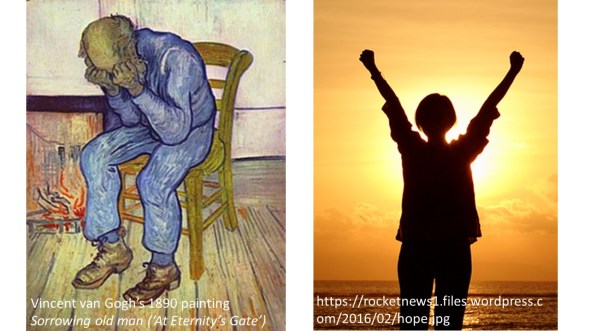
Explore strategies to decrease the drains and increase the energy gains. Use the following exercise to increase your energy:
- For one week monitor your energy drains and energy gains. Monitor events, activities, thoughts, or emotions that increase or decrease energy at home and at work. For example some drains can include cleaning bathroom, cooking another meal, or talking to a family member on the phone, while gains can be taking a walk, talking to a friend, completing a work task. Be very honest, just note the events that change your energy level.
- After the week look over your notes and identify at least one activity that drains your energy and one activity that increases your energy
- Develop a strategy to decrease one of the energy drains. Be very specific how, where, when, with whom, and which situations decreasing the tasks that drain your energy. As you think about it, anticipate obstacles that may interfere with reducing your drains and develop new ways to overcome these obstacles such as trading tasks with others (I will cook if you clean the bathroom), setting time limits, giving yourself positive reward after finishing the task (a cup of tea, a text or phone message to a close friend, watching a video in the evening).
- Develop new ways how you can increase energy gains such as doing exercise, completing a task.
- Each day implement the behavior to reduce one less energy drain and increase one energy gain and observe what happens.
Initially it may seem impossible, many students and clients report that the practice made them aware, increased their energy, and they had more control over their lives than they thought. It also encouraged them to explore the question, “What is it that you really want to do?” So often we do energy drains because of convention, habit and fear which makes us feel powerless and suppresses our immune system thereby increasing the risk of illness. In observing the energy drains and energy gains, it may give the person a choice. Sometimes, the choice is not changing the tasks but how we think about it. Many of the things we do are not MUSTs; they are choices. I do the work at my job because I choose to benefits of earning money.
How your internal language impacts your energy**
Sit and think of something that you feel you have to do, should do, or must do. Something you slightly dread such as cleaning the dishes, doing a math assignment. While sitting say to yourself, “I have to do, should do, or must do_______________.” Keep repeating the phrase for a minute.
Then change your internal phrase and instead say one of the following phrases, “I choose to do,” “I look forward to doing,” or “I choose not to do _________.” Keep repeating the phrase for a minute.
Now compare how you felt. Almost all people feel slight less energy and more depressed when they are thinking, “I have to do,” “should do”, or must do”. While when they shifted the phrase to, “I choose to,” “I look forward to doing,” or “I choose not to do it,” they feel lighter, more expanded and more optimistic. When university students practice this change of language during the week, they find it was easier to start and complete their homework tasks.
Watch your thoughts; they become words.
Watch your words; they become actions.
Watch your actions; they become habits.
Watch your habits; they become character.
Watch your character; it becomes your destiny.
– Frank Outlaw
References
Gottman, J.M. & Silver, N. (2015). The Seven Principles for Making Marriage Work. New York: Harmony.
LeShan, L. (1999). Cancer as a Turning Point. New York: Plume
*Adapted from: Peper, E. (2016). Increase energy. Western Edition. April, pp4. http://thewesternedition.com/admin/files/magazines/WE-April-2016.pdf
**Adapted from: Gorter, R. & Peper, E. (2011). Fighting Cancer-A Nontoxic Approach to Treatment. Berkeley: North Atlantic Books, 107-200.
Antifragile: How to survive in an uncertain world
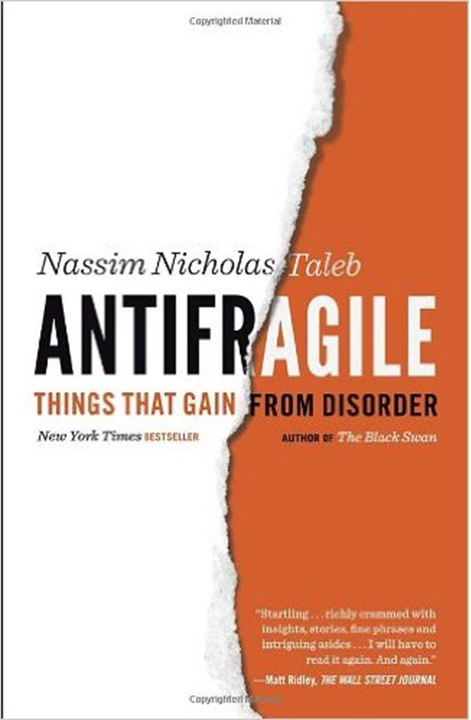
Posted: February 11, 2016 Filed under: Uncategorized | Tags: health, risk 1 CommentMany of our experiences are unpredictable and radically changed by rare events. Although our conventional thinking is useful for maintaining the status quo, it is unable to anticipate or cope with unprecedented events . Just think of the unanticipated political consequences of the 9/11 terrorist attack, the iatrogenic effects (treatment induced negative side effects) of taking statins to reduce cholesterol (15% of the patients experience serious complications such as muscle weakness and cognitive dysfunction) or the 44 percent increase risk of dementia in people age 75 or older who regularly take heartburn medications called proton pump inhibitors (PPIs) such as Prilosec, Nexium and Prevacid, the elimination of book stores by Amazon’s success, or how computer failures can shut down air travel. One of the most thoughtful and brilliant authors who cuts through the cloud of conventional thinking and teaching is Nassim Nicholas Taleb. His books offer useful guidelines how to think about risk when interfacing with medicine or how to make healthy lifestyle choices. Begin by reading The Black Swan: The Impact of the Highly Improbable and then enjoy his recent book, Antifragile-Things that Gain from Disorder.
Sharing gratitude
Posted: December 23, 2015 Filed under: Uncategorized | Tags: gratitude, healing, health, mind-body, stress management 4 CommentsIt was late in the afternoon and I was tired. A knock on my office door. One of my students came in and started to read to me from a card. “I want to thank you for all your help in my self-healing project…I didn’t know the improvements were possible for me in a span of 5 weeks…. I thank you so much for encouraging and supporting me…. I have taken back control of myself and continue to make new discoveries about my identity and find my own happiness and fulfillment.,,, Thank you so much.”
I was deeply touched and my eyes started to fill with tears. At that moment, I felt so appreciated. We hugged. My tiredness disappeared and I felt at peace.
This student had completed the daily self-healing practices . When the university students practice a sequence of daily self-healing exercises outlined in the book, Make Health Happen (Peper, Gibney & Holt, 2002), most report significant improvement in their health and well-being as shown in Figure 1 (Peper et al, 2014).
 Figure 1. Self-rating by students after completing a personal health improvement project over a period of four weeks (Bier, Peper, & Burke, 2005).
The practice which students report impacts them profoundly and by which they experience a deepening connection and sense of agape (selfless unconditional caring and love) with another person is Sharing Gratitude.
Sharing Gratitude practice was adapted from Professor Martin Seligman’s 2004 TED presentation, The new era of positive psychology.
Take the opportunity during the holiday season to give joy to others. Just do the following:
- Remember someone who did something for you that impacted your life in a positive direction and whom you never properly thanked.
- Write a 300 word testimonial describing what the person did and how it positively impacted you.
- Visit the person and when you meet her/him, read the testimonial to her/him (if the person cannot be visited, use Skype so you can see and connect with each other).
Although it may seem awkward to read the testimonial, after you have done it, you most likely will feel closer and more deeply connected to the person. Moreover, the person to whom you read the testimonial, will feel deeply touched and both of your hearts will open.
For more background information, watch Professor Martin Seligman’s Ted presentation below.
References:
Bier, M., Peper, E., & Burke, A. (2005). Integrated Stress Management with Make Health Happen: Measuring the Impact through a 5-Month Follow-Up. Presented at the 36th Annual Meeting of the Association for Applied Psychophysiology and Biofeedback. Abstract published in: Applied Psychophysiology and Biofeedback, 30(4), 400.
Peper, E., Gibney, K.H. & Holt. C. (2002). Make Health Happen: Training Yourself to Create Wellness. Dubuque, IA: Kendall-Hunt. ISBN-13: 978-0787293314
Peper, E., Lin, I-M, Harvey, R., Gilbert, M., Gubbala, P., Ratkovich, A., & Fletcher, F. (2014). Transforming chained behaviors: Case studies of overcoming smoking, eczema and hair pulling (trichotillomania). Biofeedback, 42(4), 154-160.
https://biofeedbackhealth.files.wordpress.com/2011/01/transforming-chained-behavior-published.pdf
Seligman, M. (2004). The new era of positive psychology. http://www.ted.com/index.php/talks/martin_seligman_on_the_state_of_psychology.html
Less Medicine, More Health?
Posted: October 19, 2015 Filed under: Uncategorized | Tags: decision making, health, iatrogenic disease, medical testing, Medicine 1 CommentShould I get a body scan?
How aggressively should I lower my blood sugar level as I have type 2 diabetes?
I have no symptoms, should I get a routine mammogram?
I feel great, should I follow my doctor’s advice and have my annual physical?
These and hundreds of other questions often imply that the more medical care the better and healthier you will be. We assume that more care, more testing, the newer the drug, the more screening, etc. will prevent illness and promote health. In numerous cases this is not true! Although medical care can be superb for the treatment of acutely ill and injured, excessive use sometimes leads to harm.
In a superb book, Less Medicine, More Health, by Dr. H. Gilbert Welch, professor at Dartmouth Medical School and recognized expert on the effects of medical testing, the following seven basic assumptions underlying too much medical care are described in a readable and personable style.
- All risks can be lowered
- It’s always better to fix the problem
- Sooner is always better
- It never hurts to get more information
- Action is always better than inaction
- Newer is always better
- It’s all about avoiding death
Welch’s book explains the assumptions and the limitations of the assumption. Before assuming that the recommended medical procedures will improve your health—in some cases it will make you sicker—read his book, Less Medicine More Health.

Welch, H.G. (2015). Less Medicine, More Health. Boston: Beacon Press. ISBM 978-0-8070-7164-9
Doctor Mike Evans: What’s the Best Diet? Healthy Eating 101
Posted: September 24, 2015 Filed under: Nutrition/diet, Uncategorized | Tags: diet, exercise, food, health 1 CommentA healthy diet is much more than just focusing on a single food. People focus so often on adding one type of food or eliminating another such as, “Don’t eat ice cream!”, “Eat chia seeds.” “No red meat.” In almost all cases, it is not just one thing, instead a healthy diet is embedded in awareness and healthy life style choices. Watch the superb common sense white board video presentation by Doctor Mike Evans, What’s the Best Diet? Healthy Eating 101. In this short presentation, he summarizes the best practices known. Implement his approach and your health will significantly improve.
Gut understanding-From salivating to pooping and all that is in between
Posted: August 16, 2015 Filed under: Uncategorized | Tags: allergy, antibiotics, bacteria, digestion, health, microbiome 4 CommentsEighty percent of all your cells in your body are bacteria and not human cells. Or is it that human beings are this mixture of beneficial bacteria and human cells? The majority of the bacteria live in our large intestines and contribute to our health and well-being. One of the hottest area in medicine and biology is the study of the human microbiome–understanding the role of the bacteria that co-habitate with us. The dynamic mixture of healthy and harmful bacteria can create illness or health and change our moods.
Ever wondered how food is digested, what foods do for you, what is a stomach ache, diarrhea or how defecation occurs? To understand our digestive tract from the mouth to the anus, from the first morsel of food entering our mouth to pooping is explained in superb readable book, Gut-The Inside Story of Our Body’s Most Underrated Oran, written by the German writer and scientist. Giulia Enders. It is a must read for anyone concerned about impact of cesarean birth, food allergies, eczema, ulcers, effect of antibiotics, constipation, farting, bloating, etc.For a fun summary, see Steve Palkin’s interview with Giulia Enders on YouTube.

 the peper perspective