When Screens Replace Connection: Impact on Children’s Brains
Posted: August 31, 2026 Filed under: ADHD, attention, behavior, cellphone, computer, emotions, Evolutionary perspective, Exercise/movement, healing, health, laptops, lifestyle, neurofeedback, screen fatigue, techstress, Uncategorized | Tags: infant development, neurodevelopment, screeen trauma, screen addiction, serve and return, snesory deprivation, social engagement, synesthesia, touch Leave a commentErik Peper, PhD, BCBa, Stoyan Vezenkov, PhDb, Violeta Manolovab, Lauren Mason, PhDc and Richard Harvey, PhDd
a BiofeedbackHealth, Berkeley, CA; b Center for Applied Neuroscience Vezenkov, Sofia, Bulgaria; c Mason-White Consulting, La Mesa, CA, USA; d San Francisco State University, San Francisco, CA, USA
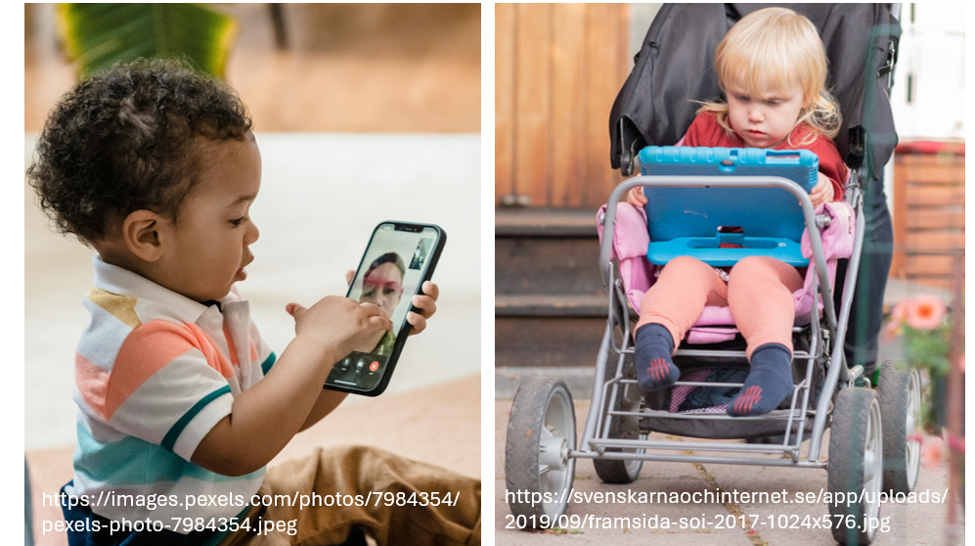
Why are top tech CEOs strictly limiting their own children’s screen time while digital devices increasingly dominate classrooms and homes? In this latest post, When Screens Replace Connection: The Impact on Children’s Brains, we examine the physiological realities behind the growing mental-health challenges facing young people. We explore how excessive screen exposure may contribute to traits associated with ASD, ADHD, and emotional dysregulation, including through mechanisms such as “screen-induced dysregulation” and the erosion of vital “serve-and-return” interactions between children and caregivers.
Drawing on psychophysiological research, the article investigates how digital media can disrupt the human “social engagement system.” When face-to-face eye contact, vocal prosody, physical touch, movement, and responsive interaction are replaced by rapid 2D stimulation, developing systems involved in attention, attachment, and stress regulation may be affected.
It includes practical, evidence-based strategies for families, educators, and communities to restore balance through embodied connection, shared presence, movement, and time in nature. Rather than rejecting technology altogether, we advocate for more intentional use: fewer dependency-forming screens and more opportunities for responsive caregiving and real-world connection. The blog asks an essential question: Are we giving children more digital stimulation than human connection—and what might they be losing as a result?
*********************************
“So, your kids must love the iPad?” I asked Mr. Jobs, trying to change the subject. The company’s first tablet was just hitting the shelves. “They haven’t used it,” he told me. “We limit how much technology our kids use at home” (Bilton, 2014).
“Peter Thiel and other tech billionaires are publicly shielding their children from the products that made them rich” (Quiroz-Gutierrez, 2026).
Many of us are aware that something has shifted in the way we live, learn, and relate to one another. Screens—once tools of convenience—have become our primary portals for information, education, and social connection. Yet this shift comes with an unintended cost. The social psychologist Jonathan Haidt (2024) compellingly documents in his book, The Anxious Generation, that the rapid rise in screen use, especially social media content, parallels a striking decline in the self-reported mental health of young people (Haidt, 2024).
Beginning in the early 2000s, general rates of anxiety, depression, loneliness, and self-harm among adolescents have increased (Haidt, 2022). The trend did not start with the COVID-19 pandemic; rather, it preceded it by more than a decade. Facebook was launched in 2004, and the iPhone—ushering in the era of constant connectivity—arrived in 2007. Social media content combined with omnipresent technological innovations fundamentally reshaped how people, and especially young people experience the world: less face-to-face interaction, increasingly curated online identities, as well as a constant stream of social comparisons and forms of stimulation aimed at engaging developing brains (Swingle, 2019).
From a psychophysiological perspective, human beings evolved to regulate physical stress along with their emotional reactions without social media content. Instead the human ‘social engagement system’ linking heart, lungs and facial expressions (e.g. Ventral Vagal Complex) (Porges, 2011) along with direct social contact that includes eye gaze, touch, and shared presence regulate stress and emotional reactions such as release of hormones (e.g. vasopressin and oxytocin) (Eckstein, Mamaev, Ditzen, & Sailer, 2020; Atzil et al., 2018). When ‘social engagement’ behaviors are replaced by screen-mediated interactions, the body loses key cues for safety and connection (Haidt, 2022). The result can be a subtle but chronic activation of stress responses, contributing to emotional dysregulation, sleep disruption, reduced resilience, and an increase in serious psychologic distress, depression and suicidal thoughts, as shown in Figure 1 (Braghieri et al, 2022).
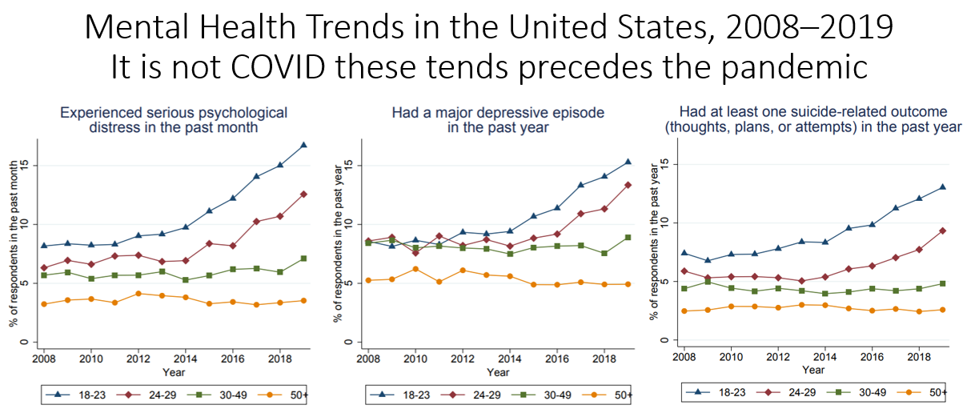
Figure 1. Mental health trends in the United States by age group in 2008–2019. The data come from the National Survey on Drug Use and Health. From: Braghieri, L., Levy, R., & Makarin, A. (2022). Social media and mental health. American Economic Review, 112(11), 3660–3693. https://doi.org/10.1257/aer.20211218
As screens become more prevalent and are increasingly incorporated into TK–12 education, with some municipalities enrolling children as young as 3.5 years of age, the promise of improved social engagement learning often fails to be realized. There is a parallel in reduced levels of intellectual attainment. For most students—outside of small groups who already perform at very high levels—math and reading scores have steadily declined since the introduction of social media content post COVID-2019 (Kus, 2025). In the United States, math scores are at their lowest levels in decades, according to the National Assessment of Educational Progress (NAEP). There was also a meaningful decline in overall science scores for 8th graders, with almost 40% of students below a ‘basic’ level of proficiency and a similar decline in math and reading scores for 12th graders in 2024 compared to 2019 representing what has been called the largest achievement gap in decades (NAEP, 2022; Harris, 2025),.
The findings related to deficits of social engagement and academic achievement do not mean that technology use is inherently harmful. Rather, they highlight a mismatch between our biological needs and our digital habits of engaging with dependency-forming content delivered by technology. Just as we learned to balance nutrition, movement, and rest for our well-being, we now face the challenge of consciously shaping our relationship with screens (Peper et al., 2020). Reintroducing embodied experiences— movement and dance, real-world social interactions, and time spent with others in nature—can help restore physiological balance and emotional flourishing by amplifying the social engagement system which evolved over millennia.
Although some have suggested that screen addiction may be overestimated (Anderson & Wood, 2025), many people report concern about the effects on young adults from exposure to digital dependency-forming content, this content delivered on screens and rapid digital displays may be even more harmful to infants and toddlers (Amirthalingam, & Khera, 2024; Reinecke, Gilbert, & Eden, 2022). The brains of young children are still developing and forming new neural connections and pathways in response to these ‘digital-engagement’ stimuli. There are two major risk factors:
- Caregivers being physically present but not attending to or communicating with the infant or toddler, and
- The remodeling of infants’ and toddlers’ brains through exposure to screens and their content.
- Caregivers being physically present but not attending to or communicating with the infant or toddler
Being physically nearby a child however attending to content on a screen rather than attending to the infant or toddler results in potential for experiencing feeling left out, ignored or abandoned and misses opportunities for personal, dynamic, interactive social feedback. Analogously, there may be a process that is similar for college students who report feeling neglected when they are engaged in a conversation that becomes interrupted by a phone notification (Peper & Harvey, 2018).
Infant development and communication are a dyadic feedback process (e.g., behavioral and neural synchronization or coupling; the “Serve and Return” Framework) which is essential for healthy brain architecture in which the caregiver and infant respond to each other rather than to digital content (Carozza & Leong, 2021; Ilyka, Johnson & Lloyd-Fox, 2021; Theyer & Wijeakumar, 2025). Because brains continue to mature for at least two or more decades, college students are likely also benefitting from increased social engagement rather than digital media engagement.
For example, dynamic social engagement is often studied through the lens of serve-and-return interactions (Chen et al., 2023; Komanchuk et al., 2023). If communication pathways are not activated, then the biological foundation for social and emotional skills may not develop fully (Shonkoff & Phillips, 2000). Infants and young children may learn that their needs are not consistently met, leading to “avoidant” or “disorganized” attachment styles. This can manifest later in life as difficulty trusting others or difficulty regulating one’s own emotions (Gunnar & Quevedo, 2007). Spoken languages and social cognitions are learned through mirroring and feedback loops. Without active participation during language acquisition—when babies learn the rhythm of conversation and the meaning of sounds by watching their caregivers’ responses—their vocabulary growth and verbal communication are often significantly delayed. These children may also lack social understanding as they can struggle to interpret social cues or develop empathy later on (Kuhl, 2007; National Scientific Council on the Developing Child, 2012; National Scientific Council on the Developing Child, 2026).
When a caregiver does not respond to the subtleties of the infant’s communication, the infant may be unable to learn effectively and may also feel frustrated. The developmental harm of inattention while physically present has been graphically shown by the research of Dr. Edward Tronick in the Still Face Experiment, as demonstrated in the following two videos (Still face with mother: https://www.youtube.com/watch?v=YTTSXc6sARg ; Still face with dad: https://www.youtube.com/watch?v=7Pcr1Rmr1rM(Tronick, 2007; Weinberg, et al., 2008).
The extreme harm of neglect along with lack of social engagement including non-verbal feedback has previously been demonstrated in the research by Harry Harlow’s 1950s–1960s experiments on rhesus monkeys, who were placed with wire or cloth surrogate mothers rather than real mothers. These studies showed that infant attachment is initially and primarily driven by comfort and warmth interactions. More importantly, adult monkeys, when raised in isolation or with artificial mothers, were socially incompetent, often unable to interact or mate, and exhibited severe behavioral issues (Harlow et al., 1965).
Similar findings have been observed with human infants. For example, following the political transfer and fall of Romanian leader Nicolae Ceaușescu in 1989, it was revealed that over 100,000 children in Romanian institutions faced extreme physical, cognitive, and emotional neglect. Confined to cribs with minimal human contact, these babies suffered severe developmental delays, structural brain changes, and profound attachment issues, often exhibiting self-stimulatory behaviors (Nelson et al., 2023).
It is important to acknowledge that parents and caregivers do not typically go to the extremes seen in Harlow’s rhesus monkeys or the neglected Romanian infants; however, implicit neglect can occur when the caregiver is not attentive to their children and are instead absorbed in their screen content. Engaging in dynamic serve-and-return interactions with the infant reduces a risk factor for healthy infant development. The solution is obvious: attend to and interact with people, especially infants and young children in a serve-and-return style. When interacting with infants, be present:
- Put your cellphone away and engage dynamically with the infant and children.
- Do not give a screen to an infant as a distraction. Instead, play with and attend to the child while sharing responsibilities as primary caregivers with others in a household or community.
2. The remodeling of infants’ and toddlers’ brains through exposure to screens
Over the past decade, through their clinical and research work at the Vezenkov Center for Applied Neuroscience in Sofia and Weinheim, Drs. Vezenkov and Manolova have arrived at a position that may sound strong at first hearing but which, in our view, is now unavoidable: in a substantial subgroup of young children presenting with severe disorders with features that are like autism spectrum disorder (ASD-like), Attention Deficit Hyper-Activity Disorder (ADHD-like), Oppositional Defiant Disorder (ODD-like), or Pervasive Developmental Disorder (PDD-like) features, there are no observations of a primary neurodevelopmental disorder. Rather there is a clinical signature of early screen addiction (Vezenkov & Manolova, 2025a), screen trauma (Manolova & Vezenkov, 2025a), and may be called ‘reversed development’ (Manolova & Vezenkov, 2025c). Importantly, treating these children for screen addiction and screen trauma, the clinical picture changes, and in many cases the original ASD or ADHD diagnosis is lifted. This is a clinical hypothesis derived from repeated observations and consistent therapeutic outcomes — offered as a framework that is testable, falsifiable, and one that can be described as clinically urgent.
Screen addiction is not screen time
The first conceptual step is to separate screen addiction from screen time. Severe early screen addiction is not simply indexed by hours in front of a device. Rather, (a) compulsive seeking of high-intensity, low-social-density visual or sensory stimulation combined with (b) cycles of soothing and crash as well as (c) a shift of interest away from human faces toward objects, colors, shapes, and repetitive sensory patterns along with (d) a collapse of joint attention and eye-to-eye play. Removing the device produces withdrawal — crying, hysteria, aggression, or shutdown — not because the child is willful, but because what has been removed is the child’s regulatory prosthesis.
Three learning systems (e.g. identified as ‘System 0, 1 and 2 described below) frame and organize behavior during clinical care. Drawing on Kahneman, System 2 is the slow human system: language, reflective thinking, social context, values, and the capacity to delay action (Kahneman, 2011; Khalil & Brüne, 2025). System 1 is the fast system: automatisms, immediate reward, and reinforcement through the dopaminergic reward circuitry. A third is System 0, drawing on Rizzolatti’s work on mirror neurons — the biological bridge between “I see” and “I do” in human encounters (Rizzolatti & Sinigaglia, 2016). In healthy development, the three systems work together. In screen-dominant development, System 1 wins and closes an addiction loop, System 2 stalls, and System 0 is hacked: human mirroring is replaced by immersion in the object world. Mirror neurons are not damaged in these children; they are retuned, away from faces and toward screens.
The developing brain: sensitive windows and the arrest of pruning
The first six years of life are a period of intense synaptogenesis, reorganization, and myelination. The brain calibrates itself to the environment — deciding which sounds are meaningful, which faces matter, and which rhythms feel safe. The dominant cortical frequency accelerates from delta in the newborn to roughly 10 Hz at age nine, at approximately one hertz per year (Freschi et al., 2022; Wilkinson et al., 2024). Behind this gradient lies a series of sensitive windows in which the child’s experiences shape what the brain becomes.
When the environment is rich in human movement, touch, eye contact, prosody, and rhythm, the brain prunes excess connections and strengthens those that support attention, language, and self-regulation. When the environment is dominated by fast, repetitive audiovisual stimulation, the brain strengthens those pathways instead. The auditory and visual sensory systems become hypertrophic at the expense of executive motor loops, affect, and speech, producing the splitting and fragmentation of cortical function described below.
A second key point is pruning. The hypermnesic period around 18–36 months should normally be followed by reorganization and selection (Gonzalez-Escamilla et al., 2018; Sakai, 2020). In severe early screen addiction, this process does not unfold normally. Development does not simply slow; it freezes. Children enter what we term addictive homeostasis — a state actively defended against change. In clinical settings, we observe twelve-year-olds who have not yet shed their primary teeth, as well as delayed acquisition of bowel and bladder control. The child may accumulate fragments — words, scripts, colors, routines — without integrating them into a language system or socially meaningful behavior. The result is not delay but a traumatization and deformation of development that cannot self-correct without specialized intervention.
Biomarkers: the physiological signature of screen addiction
If this framework is to be taken seriously, it must leave physiological traces. In our work it does so consistently across several hundred qEEG and HRV recordings in children, adolescents, and adults (Vezenkov & Manolova, 2025a). We observe four broad classes of biomarkers in early screen addiction:
- Altered cortical activity in opposing directions across networks. Some leads show slowing — theta and/or alpha peaks in central, frontal, and frontopolar sites — while others show acceleration, with SMR, beta1, or beta2 bursts in central, parietal, and occipital sites. Similar findings have also been reported by Law et al. (2023). The two patterns coexist and produce what we call cortical splitting. Other researchers have observed similar effects in which EEG results suggested a higher connectivity in theta vs. beta bands in the screen group, but not in the control group (Zivan et al., 2019). Their results support the negative relationship between screen exposure and attention-related patterns generated from EEG in typically developing preschool children.
- Reversed hemispheric asymmetry, with dominant alpha or theta rhythms in the left hemisphere — the inverse of the typical pattern.
- Functional fragmentation: each cortical site behaves as if running on its own clock, with frequency differences between leads often greater than 1.5 Hz. High local coherence coexists with weak long-range coherence, indicating disrupted connectivity. This pattern is most pronounced when onset of screen exposure is between 0 and 3 years.
- Autonomic dysregulation, expressed in HRV as sympathicotonia, dorsal vagotonia, or unstable mixed patterns — rather than the ventral vagal balance associated with secure attachment and social engagement (Porges, 2011; Pankova et al., 2021). In the clinic it has been observed that the age of onset of severe screen exposure leaves a signature in the dominant cortical frequencies. Onset before 18 months tends to be associated with peaks at 2–3 Hz; 18–30 months with 3–4 Hz; 30–36 months with 4–5 Hz. This remains a practice-derived hypothesis rather than an established rule, but it aligns strikingly with parental histories. The biomarker profile does not, on its own, constitute a diagnosis. Together, however, these markers outline a recognizable physiological spectrum from nonverbal dorsal-freeze states to verbal, high-functioning children with autistic traits.
Screen trauma: why detox alone is not enough
Parents and clinicians often assume that simply removing screens will return the child to a typical developmental trajectory. In many cases it does not. Even after weeks or months of complete digital detox, the child remains anchored in infantile, sensory-dominant patterns. During clinical work, we have come to call this state screen trauma (Manolova & Vezenkov, 2025a).
Screen trauma is what state-dependent learning looks like when the state in which learning was acquired was screen-induced dysregulation. The anchors are physiological: persistent primitive reflexes, atypical vestibular and postural patterns, sensory disintegration, cortical fragmentation, and a vision-dominant mode of processing. Functioning is tuned to stereotyped, repetitive stimuli — which the world outside the screen does not provide. Removing the screen removes the trigger but leaves the architecture in place. Recovery requires therapeutic work that lifts these anchors sequentially.
Pathological screen-induced reflexes: SIPVR and SIPECR
Two clinical reflexes have been identified that serve as among the most useful sensitive markers for screen trauma. Both are present in screen-addicted children and absent in typically developing peers, and both resolve with therapy and re-emerge with screen re-exposure, confirming their conditioned, environmental nature:
The Screen-Induced Pathological Vestibular Reflex (SIPVR) is elicited by a controlled backward tilt or inversion of the child (Vezenkov & Manolova, 2025c). An affected child shows arching backward, reaching out to grasp support, trembling and panic, full-body muscular stupor while desperately seeking support, and intense fear of falling — disproportionate to the postural challenge. In typically developing children, the same maneuver elicits play, laughter, or rapid adaptation. The reflex is highly sensitive in children up to age twelve. The SIPVR can be seen in the following video: https://youtu.be/_9PKtanDClU?si=KNicSRlDqEAutBQihttps://youtu.be/_9PKtanDClU?si=KNicSRlDqEAutBQ
The Screen-Induced Pathological Eye-Covering Reflex (SIPECR) is elicited by briefly covering the child’s eyes with hands, a mask, or a cloth (Vezenkov & Manolova, 2025d). Affected children respond with intense panic, screaming, agitation, and in severe cases aggression toward caregivers or self-injurious behavior such as head-banging. Episodes can persist for ten to thirty minutes and do not de-escalate while the visual occlusion remains. The SIPECR reflex was observed in 275 of 285 children evaluated at our center (96.5%). Unlike a startle reflex, it is provoked by the removal rather than the onset of stimulation; unlike nyctophobia, it persists when the child is enclosed under a translucent cloth in the presence of a caregiver, demonstrating that the trigger is not darkness itself but the loss of familiar visual cues. SIPECR is not observed in typical development and, alongside SIPVR, helps differentiate screen trauma from primary neurodevelopmental conditions.
Sensory disintegration versus sensory deprivation
These reflexes acquire their full meaning within a broader framework we have proposed for distinguishing the screen-induced ASD-like phenotype from primary visual impairment (Vezenkov & Manolova, 2025e). Both groups can present with stereotypies, social withdrawal, atypical orienting, and spatial insecurity, yet the underlying sensory architectures are opposite.
In early blindness, the core problem is sensory deprivation: visual input is absent, and the brain compensates by re-weighting toward vestibular and proprioceptive channels. Stereotypic movements — the so-called “blindisms” — function here as self-calibration, generating the bodily anchors that vision would normally provide. In screen-induced ASD-like states, the core problem is sensory disintegration: visual input is present but pathologically dominant — what we describe as “2D-locked” vision — and actively suppresses vestibular and proprioceptive feedback. The child’s sense of safety, arousal regulation, and attention all run through a single hyper-dominant channel. This explains why SIPVR and SIPECR appear in this group and not in blindness: when vision is suppressed (eyes covered) or contradicted (body inverted), the child’s only working regulatory channel is disabled, producing existential panic. It also explains why post-rotatory nystagmus is often absent in these children despite hours of self-induced spinning — the dominant visual system inhibits the vestibular response that should follow. Critically, while deprivation requires lifelong adaptation, disintegration is environmentally induced and, in most cases, reversible.
Screen-induced synesthesia and cue-dependent behavior
A further consequence of disrupted synaptic pruning during periods of audiovisual hyperstimulation is the emergence of screen-induced synesthesia and cue-dependent behavior (Manolova & Vezenkov, 2025b). Where pruning would normally eliminate weak cross-modal connections, persistent overstimulation preserves them as parasitic links between sensory modalities — a child sweats profusely on seeing a dog, scratches on seeing a particular color, perceives the mother as “blue” and the father as “green” and avoids “green people,” or arranges objects in fixed color-coded matrices and self-injures if the arrangement is disturbed. Modern animation and games — with their tightly synchronized audiovisual markers and the well-described Game Transfer Phenomena — appear to actively cultivate such cross-modal anchoring as an immersive design feature. In the developing brain, these become persistent neurosensory dependencies.
The clinical counterpart is cue-dependent behavior, in which physiological functions become locked to specific external stimuli. Children may eat only in the presence of a particular cartoon, urinate only when seeing a yellow image, defecate only while singing a specific theme song, or fall asleep only with a light on or a swing in motion. This is not stubbornness, nor classical ASD rigidity — it is a neurological inability to initiate the program without its acquired sensory key. In a quasi-experimental observation across our three index cases, both the synesthetic responses and the cue-dependent behaviors disappeared during five months of comprehensive screen-addiction therapy, supporting their environmental origin and reversibility.
Reversed development and the question of recovery
‘Reversed development’ refers to a condition in which evolutionarily older survival programs come to dominate higher human regulatory systems — not as fate, but as strategy. Within the Unified Trauma–Addiction Functioning (UTAF) model, this corresponds to the inversion of the normal autonomic hierarchy into a “dark matryoshka,” in which the same regulatory layers — ventral vagal, sympathetic, dorsal vagal, and enteric — operate in mirrored form, oriented inward toward an intrauterine-like illusion of safety rather than outward toward human co-regulation (Manolova & Vezenkov, 2025c). Stereotyped movements, rigid ritualism, demand for predictability at any cost, withdrawal of gaze from people toward objects: these are not “non-human” features, they are deeply human defenses deployed when the social world has become too complex to navigate. Other people are no longer experienced as partners in development but as instruments for maintaining a narrow, pathological homeostasis.
The dark paradox is that this homeostasis confers real short-term advantages — reduced uncertainty, lower complexity, immediate predictability, protection from overload. That is precisely why it is so stable, and why parents often describe their children as having “superpowers”: rare illness, hypermnesia, extraordinary visual recall, remarkable consistency within narrow routines. What is sometimes celebrated as neurodiversity may, in these cases, reflect the stabilization of older, narrower modes of functioning — efficient in their own way, but costly in relation to human reciprocity, language, and growth.
The clinically important news, however, is that these disturbances are functional, reversible, modifiable, and in many cases compatible with full recovery — provided that therapy addresses the whole system: total digital detox; containment of the older defensive programs; sequential lifting of developmental anchors including SIPVR and SIPECR, with parallel resolution of induced synesthesias and cue-dependent behaviors; sensory restart and re-engagement of cortical activity; reconnection of the child with therapist and parent; language development in social context; and parallel therapy with the parents. No child recovery occurs without therapeutic work with the parents.
Foundational papers have been peer-reviewed on this framework — biomarkers, the neurobiology of recovery, screen trauma, the SIPVR, the SIPECR, screen-induced synesthesia, the unified trauma–addiction functioning model, and the sensory disintegration framework — across the first issues of the journal Nootism (https://www.nootism.eu/), where the case reports and quantitative data underlying the claims above can be examined in detail.
Across the globe, there is a growing awareness that social media and other dependency-forming content delivered on screens are detrimental for young people’s development. Numerous countries have already implemented or are currently prioritizing regulations to limit screen time in young people.
China in 2019 began to set time limits and curfew on gaming. By 2021, the maximum limit on gaming was set to 3 hours/week. By 2023, they limited digital device and cellphone use for children less than 8 years of age to 40 minutes per day, children less than 16 to 1 hour per day and those aged 18 to a maximum of 2 hours per day on the phone, and no access to internet or mobile devices from 22:00 to 6:00 am (Soo, 2023).
Sweden in 2026 is reversing its “digital-first” education policy, shifting back to traditional learning tools to combat declining literacy and attention spans. They are aiming to ban smartphones in schools by August 2026, limiting screen time in favor of paper, pens and books (Champion-Osselin, 2025.
England in 2026 also banned mobile phone use in schools, and in the UK, new guidance recommends that children under five should spend no more than one hour on screens each day and should refrain from watching any fast-paced, social-media style videos whatsoever (Editorial, 2026).
Denmark in 2025 plans to ban social media for children under the age of 15 (Hubenko, 2025)..
Australia in 2025 legislated a ban that makes it unlawful for social media platforms to allow users under the age of 16 to maintain accounts (UN, 2025, December 10).
USA in 2026 numerous local cities or states are implementing bans on cell phones and screen usage. New Jersey prohibits cellphones and internet enabled devices throughout the school day and Los Angeles is the first US school district to limit classroom screen time (NJSBA, 2026; Ede-Osifo, 2026).
Given the lobbying power of technology and media companies, combined with the USA constitutional right for free speech, it is unlikely that screen time will be limited at the national level (Kang, 2024). With no regulations, the USA will continue to allow screen and digital media to harm children. This is not the first time that a lack of government oversight has perpetuated harm: the failure to ban smoking despite overwhelming negative impacts also persists (Action on Smoking and Health, 2020). Thus, screentime guidelines and regulations must be developed and implemented at the local level (school boards, cities, counties, or state) and within family and social groups.
Recommendations
The international landscape surveyed above shows growing recognition that screen exposure in childhood is a public-health concern, but national policies remain a patchwork — varying widely across age thresholds, scope (school, social media, gaming), and enforcement. The recommendations we offer below reflect the convergence of three streams: international policy precedent, the psychophysiological literature on stress and attachment, and our own clinical experience with several hundred children across the screen-addiction and screen-trauma spectrum (Swingle, 2016; Peper et al., 2020; Petrov et al., 2025; Novoli et al., 2025).
A core distinction underpins everything that follows. We differentiate between euthymic screen time (EST) and hedonic screen time (HST). EST refers to screen engagement that supports cognitive activity, psycho-emotional balance, and autonomic stability without leading to compulsive use — a focused educational task with a defined endpoint, used in social context. HST refers to screen engagement aimed at pleasure, emotional regulation, or stress avoidance — animations, gaming, social media, short-form video, pornography, and gambling. HST is the form most strongly associated with the development of screen addiction and screen-induced trauma. The two are not interchangeable, and recommendations that conflate them — such as generic “two hours of screen time” rules — miss the mechanism that matters.
For families and caregivers.
Ages 0–3 years. No screen exposure of any kind. This is the period of most intense synaptogenesis, language acquisition, and attachment formation; it is also the developmental window in which screen exposure produces the most severe and least reversible damage we observe clinically. We agree with WHO guidance for children under two and extend it through age three (World Health Organization, 2019). Screens should not be used as pacifiers, feeding aids, or to occupy the child while the caregiver attends to something else.
Ages 3–9 years. Screen exposure is not necessary for typical development, and there is no evidence that screen use in this age band confers benefits that cannot be obtained through embodied alternatives — physical play, reading aloud, time in nature, music, drawing, and social interaction with adults and peers. We therefore recommend zero screen use as the default for this age range, with euthymic exceptions (educational, brief, supervised, in social context) reserved for genuine necessity.
Ages 9–12 years. Limited euthymic screen time may be carefully introduced — up to 2 hours per week in the presence of an adult, distributed across non-consecutive days. A feature film or documentary (excluding animations, VR, augmented reality, and short-form video) of up to 90 minutes once every two weeks may be permitted as supervised hedonic exposure. The principle is gradual, accompanied introduction rather than a sudden expansion.
Ages 12–18 years. Up to 5 hours per week of EST, with no more than 60 minutes on any single day; up to 2 hours per week of HST, again excluding animations, gaming, social media, pornography, and gambling. We support the legislative direction of Australia, France, and Spain in raising the minimum age for social media accounts and would set the threshold at 16 years of age minimum.
Ages 18+. EST can be largely unrestricted; HST should remain capped at roughly 3 hours per week, again excluding the high-risk categories where addictive functioning most readily develops.
Five practical principles apply across all age groups.
- Measure screen time in hours per week, not per day, to allow flexibility.
- Maintain at least two digital-fasting days per week; keep them flexible rather than fixed, to avoid building rigid screen-use rituals.
- No screen use at night, stopping at least two hours before sleep.
- Caregivers’ own screen use is part of the child’s environment — modelling matters, and a parent absorbed in a phone is, from the infant’s perspective, a Still Face.
- Screen access is not a child’s right but a developmental risk factor; it is the adults’ job to manage it.
For children with established screen addiction or screen trauma
The recommendations above are designed for children whose nervous systems have not yet been reorganized around screen-induced dysregulation. Once early screen addiction or screen trauma has formed — recognizable through the biomarkers, reflexes, and clinical patterns described in Section 2 — generic time limits no longer apply and may even be misleading. As little as fifteen minutes of daily exposure can be sufficient to reactivate established traumatic neural patterns (Petrova et al., 2025). At this point, the child requires:
- Objective clinical assessment of severity (qEEG, HRV, SIPVR/SIPECR screening, developmental and behavioral evaluation).
- Complete digital detox of at least two years, beginning immediately.
- Targeted therapy that lifts developmental anchors sequentially and rebuilds the regulatory hierarchy from below upward.
- Parallel therapeutic work with the parents, including assessment for parental screen addiction. There is no recovery in a child whose immediate environment continues to model and provide screen-based regulation.
This guidelines above are thought of as a clinical pathway, not only as a behavioral guideline, but also as a pathway that requires trained professionals.
For schools and educators
The empirical record on educational technology in early and primary education has not delivered on its promises — math and reading scores have declined while screen use in classrooms has risen, as the U.S. NAEP data and Sweden’s recent reversal of its “digital-first” education policy make plain. We therefore recommend:
- No personal mobile devices on school premises during the school day for children under 16, including breaks and recess. Storage policies (lockers, locked pouches, collected at entry) work better than “off but in pocket” rules; the policies in the Netherlands, Hungary, Brazil, and Belgium offer functional templates.
- No tablets or laptops in early childhood education (nursery, kindergarten) and minimal use in primary education, restricted to specific, time-bounded, teacher-supervised purposes.
- Pilot any educational technology with longitudinal evaluation before broad adoption — Finland’s approach of legislating limits in parallel with a nationwide impact study is the right template.
- Train educators to recognize signs of screen-induced dysregulation. The ASD-like, ADHD-like, and ODD-like presentations described in Section 2 are increasingly common in classrooms and increasingly attributable, in our clinical experience, to early screen exposure rather than to primary neurodevelopmental conditions.
For policymakers, public health, and society
A whole-of-government and whole-of-society approach is required. We propose five priorities:
- Treat screen exposure of children aged 0–3 as a child-safeguarding matter, not merely as a private parenting choice. Where parental behavior produces moderate to severe psycho-physical harm, child protection services and public-health authorities should have legal standing to intervene, on the same logic that already applies to other forms of caregiver-mediated harm. Taiwan’s 2015 legislation classifying excessive child screen use as a public-health violation, and the legal framework Australia introduced in 2024, point in this direction.
- Set 16 as a minimum age for social media accounts and short-form video platforms, with effective age verification — following the Australian, Spanish, and emerging Danish models.
- Require platforms to provide a verified “minor mode” with parental oversight, time caps, and night curfews, on the Chinese model — without endorsing the broader framework of state surveillance that accompanies it in that jurisdiction.
- Fund clinical and research infrastructure for the assessment and treatment of screen addiction and screen trauma, including training of biofeedback and neurofeedback clinicians and family-based therapy programs.
- Recognize screen addiction in adults — including parents and educators — as a risk factor for the children in their care and integrate brief screening into routine pediatric and family-health encounters.
The set of recommendations described are straight forward however not easy to implement, particularly because digital dependency is stubbornly reinforced for commercial reasons and therefore resistant to change. Legislators will be opposed by the platforms whose business models depend on engagement, and they will be uncomfortable for families and institutions that have organized daily life around screens. The relevant question is whether the harms documented across the international epidemiological, neuroscientific, and clinical literature — and assembled in this paper — are now sufficient enough to justify a proportionate response.
Additional recommended blogs
References
Action on Smoking and Health. (2020). Tobacco control in the United States: Failure to protect the right to health. Tobacco Prevention & Cessation, 6, 34. https://doi.org/10.18332/tpc/122543
Amirthalingam, J., & Khera, A. (2024). Understanding social media addiction: A deep dive. Cureus, 16(10), e72499. https://doi.org/10.7759/cureus.72499
Anderson, I. A., & Wood, W. (2025). Overestimates of social media addiction are common but costly. Scientific Reports, 15, 39388. https://doi.org/10.1038/s41598-025-27053-2
Atzil, S., Gao, W., Fradkin, I., & Barrett, L. F. (2018). Growing a social brain. Nature Human Behaviour, 2(9), 624–636. https://doi.org/10.1038/s41562-018-0384-6
Braghieri, L., Levy, R., & Makarin, A. (2022). Social media and mental health. American Economic Review, 112(11), 3660–3693. https://doi.org/10.1257/aer.20211218
Bilton, N. (2014, September 10). Steve Jobs was a low tech parent. The New York Times. Accessed April 27, 2026. https://www.nytimes.com/2014/09/11/fashion/steve-jobs-apple-was-a-low-tech-parent.html
Carozza, S., & Leong, V. (2021). The role of affectionate caregiver touch in early neurodevelopment and parent–infant interactional synchrony. Frontiers in Neuroscience, 14, 613378. https://doi.org/10.3389/fnins.2020.613378
Champion-Osselin, Y. (2025, August 2025). Screens In Classrooms? A Serious Swedish Debate Spreads Worldwide. Worldcrunch. Accessed April 27, 2026. https://worldcrunch.com/culture-society/sweden-phones-in-schools/
Chen, Y., Cabrera, N. J., & Reich, S. M. (2023). Mother–child and father–child “serve and return” interactions at 9 months: Associations with children’s language skills at 18 and 24 months. Infant Behavior and Development, 73, 101894. https://doi.org/10.1016/j.infbeh.2023.101894
Eckstein, M., Mamaev, I., Ditzen, B., & Sailer, U. (2020). Calming effects of touch in human, animal, and robotic interaction: Scientific state-of-the-art and technical advances. Frontiers in Psychiatry, 11, 555058. https://doi.org/10.3389/fpsyt.2020.555058
Ede-Osifo, U. (2026, April 22). Los Angeles school board votes to set limits on classroom screen time. The Guardian. Accessed April 27, 2026. https://www.theguardian.com/us-news/2026/apr/22/los-angeles-school-district-screen-time
Editorial. (2026, April 27). The Guardian view on screens in schools: big tech is finally under the microscope. The Guardian. Accessed April 27, 2026. https://www.theguardian.com/commentisfree/2026/apr/27/the-guardian-view-on-screens-in-schools-big-tech-is-finally-under-the-microscope?
Freschl, J., Azizi, L. A., Balboa, L., Kaldy, Z., & Blaser, E. (2022). The development of peak alpha frequency from infancy to adolescence and its role in visual temporal processing: A meta-analysis. Developmental Cognitive Neuroscience, 57, 101146. https://doi.org/10.1016/j.dcn.2022.101146
Gonzalez-Escamilla, G., Muthuraman, M., Chirumamilla, V. C., Vogt, J., & Groppa, S. (2018). Brain networks reorganization during maturation and healthy aging: Emphases for resilience. Frontiers in Psychiatry, 9, 601. https://doi.org/10.3389/fpsyt.2018.00601
Gunnar, M. R., & Quevedo, K. (2007). The neurobiology of stress and development. Annual Review of Psychology, 58, 145–173. https://doi.org/10.1146/annurev.psych.58.110405.085605
Haidt, J. (2022). Teen Mental Health Is Plummeting, and Social Media is a Major Contributing Cause, 117th Congress, (May 4, 2022) (Testimony of Testimony of Jonathan Haidt
Professor of Ethical Leadership, New York University – Stern School of Business
Before the Senate Judiciary Committee, Subcommittee on Technology, Privacy, and the Law.) https://www.judiciary.senate.gov/imo/media/doc/Haidt%20Testimony.pdf
Haidt, J. (2024). The Anxious Generation: How the Great Rewiring of Childhood Is Causing an Epidemic of Mental Illness. Penguin Press. https://www.amazon.com/Anxious-Generation-Rewiring-Childhood-Epidemic/dp/B0C9N2L56X
Harlow H. F., Dodsworth R. O., & Harlow M. K. (1965). Total social isolation in monkeys. Proceedings of the National Academy of Sciences of the United States of America. Retrieved from
https://www.ncbi.nlm.nih.gov/pmc/articles/PMC285801/pdf/pnas00159-0105.pdf
Harris, S. (2025). Nation’s Report Card Shows Declines in 8th-Grade Science and 12th-Grade Math and Reading; Last in a Series of Post-Pandemic NAEP Data. National Assessment Governing Board. Retrieved April 29, 2026. https://www.nagb.gov/news-and-events/news-releases/2025/declines-in-8th-grade-science-and-12th-grade-math-and-reading.html
Ilyka, D., Johnson, M. H., & Lloyd-Fox, S. (2021). Infant social interactions and brain development: A systematic review. Neuroscience & Biobehavioral Reviews, 130, 448–469. https://doi.org/10.1016/j.neubiorev.2021.09.001
Kahneman, D. (2011). Thinking Fast and Slow. Farrar, Straus and Giroux. https://www.amazon.com/Thinking-Fast-Slow-Daniel-Kahneman/dp/0374533555
Kang, C. (2024, October 7). The tech lobbying group helping to broaden the First Amendment’s reach. The New York Times, October 7, 2024. Retrieved May 6, 2026. https://www.nytimes.com/2024/10/07/technology/netchoice-free-speech-meta-google.html
Khalil, R., & Brüne, M. (2025). Adaptive decision-making “fast” and “slow”: A model of creative thinking. European Journal of Neuroscience, 61(5), e70024. https://doi.org/10.1111/ejn.70024
Komanchuk, J., Letourneau, N., Duffett-Leger, L., & Cameron, J. L. (2023). History of “serve and return” and a synthesis of the literature on its impacts on children’s health and development. Issues in Mental Health Nursing, 44(5), 406–417. https://doi.org/10.1080/01612840.2023.2192794
Kuhl, P. K. (2007). Is speech learning “gated” by the social brain? Developmental Science, 10(1), 110–120. https://doi.org/10.1111/j.1467-7687.2007.00572.x
Kuş, M. (2025). A meta-analysis of the impact of technology-related factors on students’ academic performance. Frontiers in Psychology, 16, 1524645. https://doi.org/10.3389/fpsyg.2025.1524645
Law, E. C., Han, M. X., Lai, Z., Lim, S., Ong, Z. Y., Ng, V., Gabard-Durnam, L. J., Wilkinson, C. L., Levin, A. R., Rifkin-Graboi, A., Daniel, L. M., Gluckman, P. D., Chong, Y. S., Meaney, M. J., & Nelson, C. A. (2023). Associations between infant screen use, electroencephalography markers, and cognitive outcomes. JAMA Pediatrics, 177(3), 311–318.
Manolova, V. R., & Vezenkov, S. R. (2025a). Screen trauma – Specifics of the disorder and therapy in adults and children. Nootism, 1(1), 37–51. https://doi.org/10.64441/nootism.2NCSC.3
Manolova, V. R., & Vezenkov, S. R. (2025b). Are screen-induced synesthesia and screen-induced cue-dependent behavior contributing factors in the misdiagnosis of ASD among children with screen addiction? Nootism, 1(3), 11–16. https://doi.org/10.64441/nootism.1.3.2
Manolova, V. R., & Vezenkov, S. R. (2025c). Unified trauma–addiction functioning model. Nootism, 1(4), 4–24. https://doi.org/10.64441/nootism.1.4.1
NAEP. (2022). 2022 Age 9 Long-Term Trend Reading and Mathematics Highlights Report. (2022). U.S. Department of Education, Institute of Education Sciences. Retrieved September 12, 2022, from https://www.nationsreportcard.gov/highlights/ltt/2022/.
National Scientific Council on the Developing Child. (2012). The Science of Neglect: The Persistent Absence of Responsive Care Disrupts the Developing Brain: Working Paper 12. https://developingchild.harvard.edu/wp-content/uploads/2024/10/The-Science-of-Neglect-The-Persistent-Absence-of-Responsive-Care-Disrupts-the-Developing-Brain.pdf
National Scientific Council on the Developing Child. (2026). Finding the Balance: Transforming How We Think About the Body’s Response to Stress in Early Childhood: Working paper 16. National Scientific Council on the Developing Child Harvard University. Retrieved April 29, 2026. https://developingchild.harvard.edu/wp-content/uploads/2026/04/HCDC_WP18_InBrief_R5C.pdf
Nelson, C. A., Fox, N. A., & Zeanah, C. H. (2023). Romania’s abandoned children: The effects of early profound psychosocial deprivation on the course of human development. Current Directions in Psychological Science, 32(6), 515–521. https://doi.org/10.1177/09637214231201079
NJSBA. (2026, January 13). Governor Murphy signs cell phone ban into law.
New Jersey School Boards Association. School Board Notes, ( XLIX)2. https://www.njsba.org/news-information/school-board-notes/governor-murphy-signs-cell-phone-ban-into-law/
Peper, E. & Harvey, R. (2018). Digital addiction: increased loneliness, depression, and anxiety. NeuroRegulation. 5(1),3–8. doi:10.15540/nr.5.1.3 http://www.neuroregulation.org/article/view/18189/11842
Peper, E., Harvey, R., & Faass, N. (2020). TechStress: How technology is hijacking our lives, strategies for coping and pragmatic ergonomics. North Atlantic Books. https://www.amazon.com/Beyond-Ergonomics-Prevent-Fatigue-Burnout/dp/158394768X
Petrov, P. P., Dimova, V. R., Manolova, V. R., & Vezenkov, S. R. (2025). Screen time and policy approaches to digital media use in nurseries, kindergartens, and schools worldwide: A critical analysis. Nootism, 1(2), 41–50. https://doi.org/10.64441/nootism.1.2.4
Petrova, S. N., Manolova, V. R., & Vezenkov, S. R. (2025). Reintroducing screens: Severe regression and symptom aggravation in children with ASD/screen addiction. Nootism, 1(1), 59–65. https://doi.org/10.64441/nootism.2NCSC.5
Porges, S. W. (2011). The polyvagal theory: Neurophysiological foundations of emotions, attachment, communication, and self-regulation. W. W. Norton. https://www.amazon.com/Polyvagal-Theory-Neurophysiological-Communication-Self-regulation/dp/0393707008
Quiroz-Gutierrez, M. (2026, February 21). Peter Thiel and other tech billionaires are publicly shielding their children from the products that made them rich. Fortune. Accessed April 27, 2026. https://fortune.com/2026/02/21/peter-thiel-bill-gates-steve-jobs-steve-chen-tech-billionaires-publicly-shielding-their-children-from-tech-products-social-media/
Reinecke, L., Gilbert, A., & Eden, A. (2022). Self-regulation as a key boundary condition in the relationship between social media use and well-being. Current Opinion in Psychology, 45, 101296. https://doi.org/10.1016/j.copsyc.2021.12.008
Rizzolatti, G., Sinigaglia, C. The mirror mechanism: a basic principle of brain function. Nat Rev Neurosci 17, 757–765 (2016). https://doi.org/10.1038/nrn.2016.135
Sakai, J. (2020). How synaptic pruning shapes neural wiring during development and, possibly, in disease. Proceedings of the National Academy of Sciences of the United States of America, 117(28), 16096–16099. https://doi.org/10.1073/pnas.2010281117
Shonkoff, J. P., & Phillips, D. A. (Eds.). (2000). From neurons to neighborhoods: The science of early childhood development. National Academies Press. https://doi.org/10.17226/9824
Soo, Z. (2023, January 19). China keeping 1 hour daily limit on kids’ online games. AP News. Accessed April 27, 2026. https://apnews.com/article/gaming-business-children-00db669defcc8e0ca1fc2dc54120a0b8
Swingle, M. K. (2019). I-Minds-: How and why constant connectivity is rewiring our brains and what to do about it. New Society Publishers. https://www.amazon.com/i-Minds-Constant-Connectivity-Rewiring-Brains/dp/0865719012
Theyer, A., & Wijeakumar, S. (2025). Brain–behavior associations during interactions between caregivers and infants. Infancy, 30(5), e70044. https://doi.org/10.1111/infa.70044 Tronick, E. (2007). Still Face Experiment Dr Edward Tronick. YouTube. Retrieved April 29, 2026. https://www.youtube.com/watch?v=YTTSXc6sARg
UN. (2025, December 10). Social media: Age-related bans won’t keep kids safe, UNICEF warns. United Nations-UN News. Accessed April 27, 2026. https://news.un.org/en/story/2025/12/1166557
Vezenkov, S. R., & Manolova, V. R. (2025a). Screen addiction – Biomarkers, developmental damage and recovery. Nootism, 1(1), 6–18. https://doi.org/10.64441/nootism.2NCSC.1
Vezenkov, S. R., & Manolova, V. R. (2025b). Neurobiology of autism / early screen addiction recovery. Nootism, 1(1), 19–36. https://doi.org/10.64441/nootism.2NCSC.2
Vezenkov, S. R., & Manolova, V. R. (2025c). Screen-induced pathological vestibular reflex: A specific marker of early screen addiction. Nootism, 1(2), 5–10. https://doi.org/10.64441/nootism.1.2.1
Vezenkov, S. R., & Manolova, V. R. (2025d). Screen-induced pathological eye-covering reflex in children with early screen addiction. Nootism, 1(3), 5–10. https://doi.org/10.64441/nootism.1.3.1
Vezenkov, S. R., & Manolova, V. R. (2025e). Sensory disintegration versus sensory deprivation: Vestibular–visual dynamics and shared behavioral phenotypes in ASD and early blindness. Nootism, 1(6), 4–12. https://doi.org/10.64441/nootism.1.6.1
Weinberg, M. K., Beeghly, M., Olson, K. L., & Tronick, E. (2008). A still-face paradigm for young children: 2½-year-olds’ reactions to maternal unavailability during the still-face. Journal of Developmental Processes, 3(1), 4–22. https://pmc.ncbi.nlm.nih.gov/articles/PMC3289403/
Wilkinson, C. L., Yankowitz, L. D., Chao, J. Y., Gutiérrez, R., Rhoades, J. L., Shinnar, S., Purdon, P. L., & Nelson, C. A. (2024). Developmental trajectories of EEG aperiodic and periodic components in children 2–44 months of age. Nature Communications, 15(1), 5788. https://doi.org/10.1038/s41467-024-50204-4
World Health Organization. (2019, April 24). To grow up healthy, children need to sit less and play more. https://www.who.int/news/item/24-04-2019-to-grow-up-healthy-children-need-to-sit-less-and-play-more#
Zivan, M., Bar, S., Jing, X., Hutton, J., Farah, R., & Horowitz-Kraus, T. (2019). Screen-exposure and altered brain activation related to attention in preschool children: An EEG study. Trends in Neuroscience and Education, 17, 100117. https://doi.org/10.1016/j.tine.2019.100117
Download the complete article: https://peperperspective.com/wp-content/uploads/2026/08/0-when-screens-replace-connections-2026-05-07.pdf
 the peper perspective