Head position, it matters!*
Posted: January 23, 2019 Filed under: behavior, digital devices, Exercise/movement, health, Neck and shoulder discomfort, Pain/discomfort, posture, Uncategorized 5 CommentsThe blog has been adapted from our published article, Harvey, R., Peper, E., Booiman, A., Heredia Cedillo, A., & Villagomez, E. (2018). The effect of head and neck position on head rotation, cervical muscle tension and symptoms. Biofeedback. 46(3), 65–71.

Why is it so difficult to turn your head to see what is behind you?
How come so many people feel pressure in the back of the head or have headaches after working on the computer?
Your mother may have been right when she said, “Sit up straight! Don’t slouch!” Sitting slouched and collapsed is the new norm as digital devices force us to slouch or tilt our head downward. Sometimes we scrunch our neck to look at the laptop screen or cellphone. This collapsed position also contributes to an increased in musculoskeletal dysfunction (Nahar & Sayed, 2018). The more you use a screen for digital tasks, the more you tend to have head-forward posture, especially when the screens are small (Kang, Park, Lee, Kim, Yoon, & Jung, 2012). In addition, the less time children play outside and the more time young children watch the screen, the more likely will they become near sighted and need to have their vision corrected (Sherwin et al, 2012). In addition, the collapsed head forward position unintentionally decreases subjective energy level and may amplify defeated, helpless, hopeless thoughts and memories (Bader, 2015; Peper & Lin, 2012; Tsai, Peper, & Lin, 2016; Peper et al, 2017).
Explore the following two exercises to experience how the head forward position immediately limits head rotation and how neck scrunching can rapidly induce back of the head pressure and headaches.
Exercise 1. Effect of head forward position on neck rotation
Sit at the edge of the chair and bring your head forward, then rotate your head to the right and to the left and observe how far you can rotate. Then sit erect with the crown of the head reaching towards the ceiling and again rotate your head from right to left and observe how far you can rotate as shown in Figure 1.
 Figure 1. Head-erect versus head-forward position.
What did you experience?
Most likely your experience is similar to the 87 students (Mean Age = 23.6 years) who participated in this classroom activity designed to bring awareness of the effect of head and neck position on symptoms of muscle tension. 92.0% of the students reported that is was much easier to rotate their head and could rotate further during the head-erect position as compared to the head-forward position (see Figure 2).
 Figure 2. Self-report of ease of head rotation.
What does this mean?
Almost all participants were surprised that the head forward position restricted head rotation as well as reduced peripheral awareness (Fernandez-de-Las-Penas et al., 2006). The collapsed head forward may directly affect personal safety; since, it reduces peripheral awareness while walking, biking or driving a car. In addition, when the head is forward, the cervical vertebrae are in a more curved position compared to the erect head with the normal cervical curve (Kang et al., 2012). This means that in the head-forward position, the pressure on the vertebrae and the intervertebral disc is elevated compared to the preferred position with a stretched neck. This increases the risk of damage to the vertebrae and intervertebral disc (Kang et al, 2012). It also means that the muscles that hold the head in the forward position have to work much harder.
Be aware that of factors that contribute to a head-forward position.
- Sitting in a car seat in which the headrest pushes the head forward. Solutions: Tilt the headrest back or put pillow in your back from your shoulders to your pelvis to move your body slightly forward.
- If you wear a bun or ponytail, the headrest (car, airplane seat, or chair) will often push your head forward. This causes a change of the head to a more forward position and it becomes a habit without the person even knowing it. Solution: Place a pillow in your back to move your body forward or loosen the bun or ponytail.
- Difficulty reading the text on the digital screen. The person automatically cranes their head forward to read the text. Solutions: Have your eyes checked and, if necessary, wear computer-reading glasses; alternatively, increase the font size and reduce glare.
- Working on a laptop and looking down on the screen. Solutions: Detachable keyboard and laptop on a stand to raise screen to eye level as shown in Figure 3.

Figure 3. Trying to read the laptop screen, which causes the head to go forward as compared to raising the screen and using an external keyboard. Reproduced by permission from www.backshop.nl
- Being tired or exhausted encourages the body to collapse and slouch and increases the muscle tension in the upper cervical region. You can explore the effect of tiredness that causes slouching and head-forward position during the day by observing the following if you drive a car.
In the morning, adjust your rear mirror and side mirrors. Then at the end of the day when you sit in the car, you may note that you may need to readjust your inside rear mirror. No, the mirror didn’t change of position during the day by itself—you slouched unknowingly. Solutions: Take many breaks during the day to regenerate, install stretch break reminders, or wear an UpRight Go posture feedback device to remind you when you begin to slouch (Peper, Lin & Harvey, 2017).
Exercise 2: Effect of neck scrunching on symptom development
Sit comfortably and your nose forward and slightly. While the head is forward tighten your neck as if your squeezing the back of the head downward into the shoulders and hold this contracted neck position for 20 seconds. Let go and relax.
What did you experience?
Most likely your experience was similar to 98.4% of the 125 college students who reported a rapid increase in discomfort after neck scrunching as shown in Figure 4.
 Figure 4. Symptoms induced by 30 seconds of neck scrunching.
During scrunching there was a significant increase in the cervical and trapezius sEMG activity recorded from 12 volunteers as shown in Figure 5. Figure 5. Change in cervical and trapezius sEMG during head forward and neck scrunching.
What does this mean?
Nearly all participants were surprised that 30 seconds of neck scrunching would rapidly increase induce discomfort and cause symptoms. This experience provided motivation to identify situations that evoked neck scrunching and avoid those situations or change the ergonomics that induced the neck scrunching. If you experience headaches or neck discomfort, scrunching could be a contributing factor.
Factors that contribute to neck scrunching and discomfort.
- Bringing your head forward to see the text or graphics more clearly. There may be multiple causes such as blurred vision, tiny text font size, small screen and ergonomic factors. Possible solutions. Have your eyes checked and if appropriate wear computer-reading glasses. Increase the text font size or use a large digital screen. Reduce glare and place the screen at the appropriate height so that the top of the screen is no higher than your eyebrows.
- Immobility and working in static position for too long a time period. Possible solutions. Interrupt your static position with movements every few minutes such as stretching, standing, and wiggling.
Conclusion
These two experiential practices are “symptom prescription practices” that may help you become aware that head position contributes to symptoms development. For example, if you suffer from headaches or neck and backaches from computer work, check your posture and make sure your head is aligned on top of your neck–as if held by an invisible thread from the ceiling and take many movement breaks.The awareness may help you to identify situations that cause these dysfunctional body patterns that could cause symptoms. By inhibiting these head and neck patterns, you may be able to reduce or avoid discomfort. Just as a picture is worth a thousand words, self-experience through feeling and seeing is believing.
REFERENCES
Bader, E. E. (2015). The Psychology and Neurobiology of Mediation. Cardozo J. Conflict Resolution, 17, 363.
Fernandez-de-Las-Penas, C., Alonso-Blanco, C., Cuadrado, M. L., & Pareja, J. A. (2006). Forward head posture and neck mobility in chronic tension-type headache: A blinded, controlled study. Cephalalgia, 26(3), 314-319.
Kang, J. H., Park, R. Y., Lee, S. J., Kim, J. Y., Yoon, S. R., & Jung, K. I. (2012). The effect of the forward head posture on postural balance in long time computer based worker. Annals of rehabilitation medicine, 36(1), 98-104.
Lee, M. Y., Lee, H. Y., & Yong, M. S. (2014). Characteristics of cervical position sense in subjects with forward head posture. Journal of physical therapy science, 26(11), 1741-1743. https://doi.org/10.1589/jpts.26.1741
Nahar, S., & Sayed, A. (2018). Prevalence of musculoskeletal dysfunction in computer science students and analysis of workstation characteristics-an explorative study. International Journal of Advanced Research in Computer Science, 9(2), 21-27. https://doi.org/10.26483/ijarcs.v9i2.5570
Peper, E., & Lin, I. M. (2012). Increase or decrease depression: How body postures influence your energy level. Biofeedback, 40(3), 125-130
Peper, E., Lin, I-M., Harvey, R., & Perez, J. (2017). How posture affects memory recall and mood. Biofeedback.45 (2), 36-41.
Peper, E., Lin, I-M, & Harvey, R. (2017). Posture and mood: Implications and applications to therapy. Biofeedback.35(2), 42-48.
Sherwin, J.C., Reacher, M.H., Keogh, R.H., Khawaja, A.P, Mackey, D.A., & Foster, P.J. (2012). The Association between Time Spent Outdoors and Myopia in Children and Adolescents: A Systematic Review and Meta-analysis. Ophthalmology, 119(10), 2141-2151. https://doi.org/10.1016/j.ophtha.2012.04.020
Tsai, H. Y., Peper, E., & Lin, I. M. (2016). EEG patterns under positive/negative body postures and emotion recall tasks. NeuroRegulation, 3(1), 23-27.
*This blog was adapted from our published article, The blog has been adapted from our research article, Harvey, R., Peper, E., Booiman, A., Heredia Cedillo, A., & Villagomez, E. (2018). The effect of head and neck position on head rotation, cervical muscle tension and symptoms. Biofeedback. 46(3), 65–71.
Today is a new day-a new beginning
Posted: December 31, 2018 Filed under: behavior, health, Pain/discomfort, self-healing, Uncategorized | Tags: dance, hope, joy, pain, regenration, spinal injury 3 CommentsIn a world of turmoil, it is often challenging to think that tomorrow can be different and better. Yet, each day is an opportunity to accept whatever happened in the past and look forward to the unfolding present. So often, we anticipate that the future will be the same or worse especially if we feel depressed, suffer from ongoing pain, chronic illness, family or work stress, etc. At those moments, we forget that yesterday’s memories may contribute to how we experience and interpret the future. Most of us do not know what the future will bring, thus be open to new opportunities for growth and well-being. For the New Year, adapt a daily ritual that I learned from a remarkable healer Dora Kunz.
Each morning when you get out of bed, take a few slow deep breaths. Then think of someone who you feel loved by and makes you smile whether your grandmother, aunt or dog. Then when you get up and put your feet on the ground, say out loud, “Today is a new day- a new beginning.”
Watch the following two videos of people for whom the future appeared hopeless and yet had the courage to transcend their limitations and offer inspiration and joy.
Janine Shepherd: A broken body isn’t a broken person. Cross-country skier Janine Shepherd hoped for an Olympic medal — until she was hit by a truck during a training bike ride. She shares a powerful story about the human potential for recovery. Her message: you are not your body, and giving up old dreams can allow new ones to soar.
Ma Li and Zhai Xiaowei: Hand in Hand. This is a video of a broadcast that originally aired on China’s English-language CCTV channel 9 during a modern dance competition in Beijing, China in 2007. This very unique couple–she without an arm, he without a leg–was one of the finalists among 7000 competitors in the 4th CCTV national dance competition. It is the first time a handicapped couple had ever entered the competition. They won the silver medal and became an instant national hit. The young woman, in her 30’s, was a dancer who had trained since she was a little girl. Later in life, she lost her entire right arm in an automobile accident and fell into a state of depression for a few years. After rebounding, she decided to team with a young man who had lost his leg in a farming accident as a boy and who was completely untrained in dance. After a long and sometimes agonizing training regimen, this is the result. The dance is performed by Ma Li (馬麗) and Zhai Xiaowei (翟孝偉). The music “Holding Hands” is composed by San Bao and choreographed by Zhao Limin.
What is normal may be habitual and not true for others
Posted: November 21, 2018 Filed under: behavior, health, Uncategorized Leave a commentThe pot roast parable/allegory reprinted from http://selfdefinedleadership.com/blog/
A young woman is preparing a pot roast while her friend looks on. She cuts off both ends of the roast, prepares it and puts it in the pan. “Why do you cut off the ends?” her friend asks. “I don’t know”, she replies. “My mother always did it that way and I learned how to cook it from her”.
Her friend’s question made her curious about her pot roast preparation. During her next visit home, she asked her mother, “How do you cook a pot roast?” Her mother proceeded to explain and added, “You cut off both ends, prepare it and put it in the pot and then in the oven”. “Why do you cut off the ends?” the daughter asked. Baffled, the mother offered, “That’s how my mother did it and I learned it from her!”
Her daughter’s inquiry made the mother think more about the pot roast preparation. When she next visited her mother in the nursing home, she asked, “Mom, how do you cook a pot roast?” The mother slowly answered, thinking between sentences. “Well, you prepare it with spices, cut off both ends and put it in the pot”. The mother asked, “But why do you cut off the ends?” The grandmother’s eyes sparkled as she remembered. “Well, the roasts were always bigger than the pot that we had back then. I had to cut off the ends to fit it into the pot that I owned”.
What we are used to is what we assume to be normal. Similarly, we interpret the results of scientific studies–often recorded from college students or white males–can be generalized to all people. We forget that what is “normal” may only be normal for this moment of time and specific location for western, educated, industrialized, rich, and democratic (WEIRD) people. Without being aware of our evolutionary past, without awareness how we evolved, and without asking questions, we accept cultural patterns and habits even though there may be other options. Enjoy the blog by Daniel Hruschka that was republished from The Conversation under a Creative Commons license.

You can’t characterize human nature if studies overlook 85 percent of people on Earth
Daniel Hruschka, Arizona State University ,
By only working in their own backyards, what do psychology researchers miss about human behavior? Over the last century, behavioral researchers have revealed the biases and prejudices that shape how people see the world and the carrots and sticks that influence our daily actions. Their discoveries have filled psychology textbooks and inspired generations of students. They’ve also informed how businesses manage their employees, how educators develop new curricula and how political campaigns persuade and motivate voters.
But a growing body of research has raised concerns that many of these discoveries suffer from severe biases of their own. Specifically, the vast majority of what we know about human psychology and behavior comes from studies conducted with a narrow slice of humanity – college students, middle-class respondents living near universities and highly educated residents of wealthy, industrialized and democratic nations.
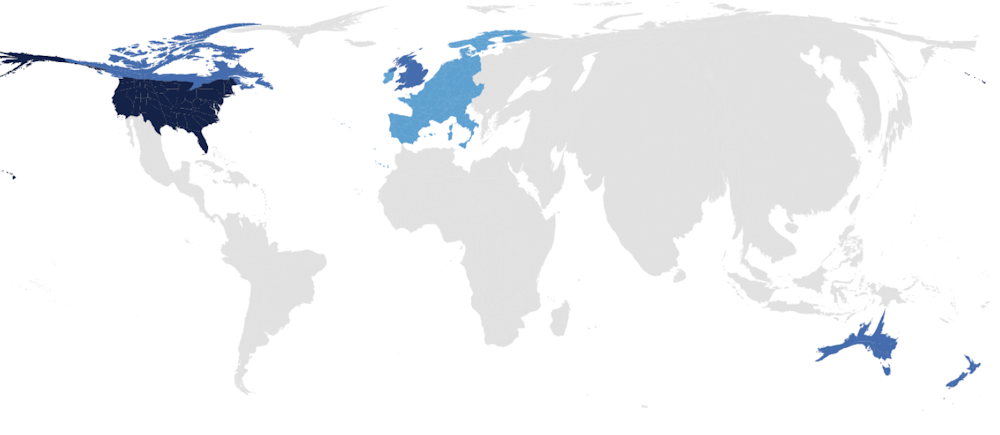
To illustrate the extent of this bias, consider that more than 90 percent of studies recently published in psychological science’s flagship journal come from countries representing less than 15 percent of the world’s population.
If people thought and behaved in basically the same ways worldwide, selective attention to these typical participants would not be a problem. Unfortunately, in those rare cases where researchers have reached out to a broader range of humanity, they frequently find that the “usual suspects” most often included as participants in psychology studies are actually outliers. They stand apart from the vast majority of humanity in things like how they divvy up windfalls with strangers, how they reason about moral dilemmas and how they perceive optical illusions.
Given that these typical participants are often outliers, many scholars now describe them and the findings associated with them using the acronym WEIRD, for Western, educated, industrialized, rich and democratic.
WEIRD isn’t universal
Because so little research has been conducted outside this narrow set of typical participants, anthropologists like me cannot be sure how pervasive or consequential the problem is. A growing body of case studies suggests, though, that assuming such typical participants are the norm worldwide is not only scientifically suspect but can also have practical consequences.
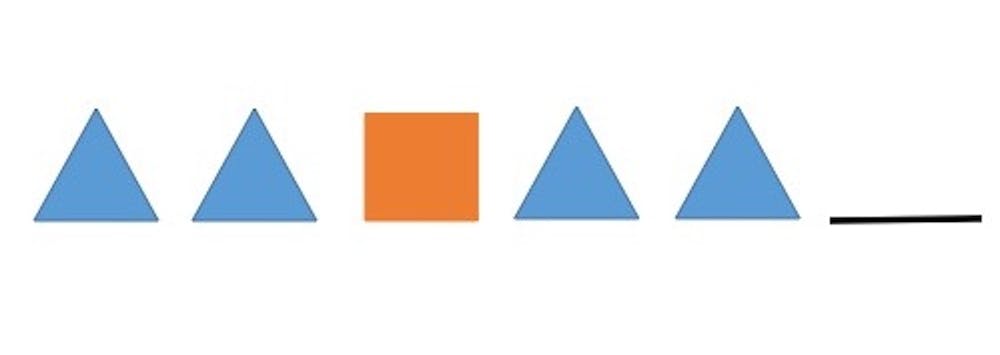
Daniel Hruschka, CC BY-ND
Consider an apparently simple pattern recognition test commonly used to assess the cognitive abilities of children. A standard item consists of a sequence of two-dimensional shapes – squares, circles and triangles – with a missing space. A child is asked to complete the sequence by choosing the appropriate shape for the missing space.
When 2,711 Zambian schoolchildren completed this task in one recent study, only 12.5 percent correctly filled in more than half of shape sequences they were shown. But when the same task was given with familiar three-dimensional objects – things like toothpicks, stones, beans and beads – nearly three times as many children achieved this goal (34.9 percent). The task was aimed at recognizing patterns, not the ability to manipulate unfamiliar two-dimensional shapes. The use of a culturally foreign tool dramatically underestimated the abilities of these children.
Misplaced assumptions about what is “normal” might also affect the very methods scientists use to assess their theories. For example, one of the most commonly used tools in the behavioral sciences involves presenting a participant with a statement – something like “I generally trust people.” Then participants are asked to choose one point along a five- or seven-point line ranging from strongly agree to strongly disagree. This numbered line is named a “Likert item” after its social psychologist originator, Rensis Likert.

Likert Scales are commonly used to collect opinions and reactions.
Nicholas Smith/Wikimedia Commons, CC BY
Most readers of this article have likely responded to many Likert items in their lifetime, but when this tool is taken to other settings it encounters varying success. Some people may refuse to answer. Others prefer to answer simply yes or no. Sometimes they respond with no difficulty.
If something as apparently simple and normal as a Likert item fails in different contexts (and not in others), it raises serious questions about our most basic models of how people should perceive and respond to stimuli.
Aiming for a science of all humanity
To address these potentially vast gaps in our understanding of human psychology and behavior, researchers have proposed a number of solutions. One is to reward researchers who take the time and effort to build long-term research relationships with diverse communities. Another is to recruit and retain behavioral scientists from diverse backgrounds and perspectives. Still another is to pay closer attention to the norms, values and beliefs of study communities, whether they are WEIRD or not, when interpreting results.
A key part of these efforts will be to go beyond theories of “universal humans” and build theories that make predictions about how the local culture and environment can shape all aspects of human behavior and psychology. These include theories of how trading in markets can make people treat strangers more fairly, how some societies became WEIRD in recent centuries, and how the number of personality traits we find in a society – such as agreeableness, conscientiousness, neuroticism – depends on the complexity of a society’s organization.
Proponents disagree on the best paths to moving beyond WEIRD science to building a science of all humanity. But hopefully some combination of these solutions will expand our understanding of both what makes us human and what creates such remarkable diversity in the human experience.
Daniel Hruschka, Professor and Associate Director of the School of Human Evolution and Social Change , Arizona State University
This article is republished from The Conversation under a Creative Commons license. Read the original article.
Biofeedback, breathing and health
Posted: November 17, 2018 Filed under: Breathing/respiration, emotions, health, mindfulness, posture, relaxation, stress management, Uncategorized | Tags: resentment 3 CommentsIn the video interview recorded at the 2018 Conference of the New Psychology Association, Jagiellonian University, Krakow, Poland, Erik Peper, PdD, defines biofeedback and suggests three simple breathing and imagery approaches that we can all apply to reduce pain, resentment and improve well-being.
 the peper perspective
