Being safe means more than being physically and emotionally protected. It is the trust that, whatever happens, you can cope with it.
Posted: September 14, 2026 Filed under: attention, behavior, biofeedback, cognitive behavior therapy, emotions, healing, health, meditation, Pain/discomfort, relaxation, self-healing, stress management, Uncategorized, zoom fatigue | Tags: hope, resilience, safety, trust Leave a comment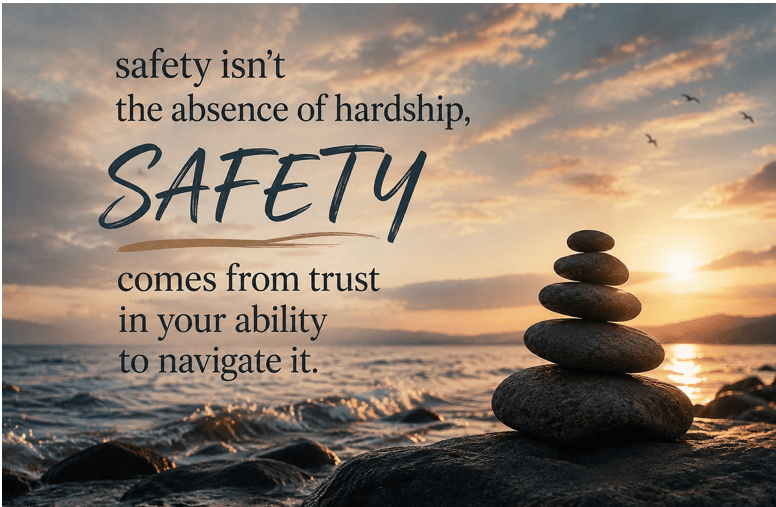
From: Pulde, A, & Lederman, M. (2026). The safest man I met had every reason not to feel safe.. https://connectiondocs.substack.com/p/the-safest-man-i-met-had-every-reason
Self-regulation is the cornerstone of biofeedback and neurofeedback and a potent tool for reducing symptoms and enhancing both health and performance. Early in my work, I hypothesized that if a participant, whether a student or client, simply mastered their self-regulation skills, they would generalize these practices into their daily lives, thereby improving their well-being. While this often leads to success, I have come to recognize that the true power of these interventions lies in the synergy between physiological techniques and psychological states.
When a person learns to master relaxation and slow, diaphragmatic breathing while intentionally adopting a state of “being in the present” that is free from the constraints of expectation and the noise of rumination, they facilitate a biological environment conducive to healing. This is because healing and regeneration are most effective when the autonomic nervous system is shifted away from the stress response (Levy et al., 2013; Budhiraja et al., 2024).
My perspective on these mechanisms was significantly expanded through the observation of a yogi and Sufi practitioners who voluntarily engaged in what would objectively be considered deliberate harm to the body, such as the insertion of skewers, without reporting pain or discomfort (Kakigi et al., 2005; Peper et al., 2005a; Peper et al., 2006–; Fuhs & Peper, 2005). Witnessing this, demonstrated that beyond breathing and relaxation, a critical ingredient is the profound “knowing” that one is safe and no harm will occur. Feeling safe is the first step in the healing process (Peper et al., 2025).
In those Sufi piercings, total trust and visceral sense of safety were anchored by the permission and blessing of their Sheikh (their spiritual guide). This dynamic illustrates that implicit and explicit trust, combined with a conviction of safety, is likely a fundamental quality underpinning the placebo effect: the embodied belief that a procedure will lead to healing .
Often, this quality is highly state-dependent, constrained to the specific setting where the safety is perceived (for the Sufis it was the permission and blessing by their Sheik). The challenge is to generalize this feeling of safety beyond the specific setting and therapeutic room. To transcend situational anxiety or future-oriented worry, one must cultivate a foundational belief that whatever unfolds is acceptable, and that the person possess the internal resources and skills to cope with it. When one truly adopts and experience this perspective, the stressors of life can be met with resilience rather than reactivity.
This process has been exquisitely described by Drs Alona Pulde and Matthew Lederman in their inspirational substack blog, The Safest Man I Met Had Every Reason Not to Feel Safe (Pulde & Ledereman, 2026). Their blog is reproduced with their permission from, https://connectiondocs.substack.com/p/the-safest-man-i-met-had-every-reason?r=4scjd0&utm_medium=ios
The Safest Man I Met Had Every Reason Not to Feel Safe
Dr. Alona Pulde and Dr. Matthew Lederman
What a chance encounter at an LAX rental car counter taught me about the difference between trying to control what happens and trusting myself to meet whatever does.
Sep 08, 2026
It was late when I pulled into the rental car return at LAX, probably 10 or 11 at night. I was tired, ready to be done with the day, and there was some kind of problem with my return. The woman helping me clicked around on her computer for a while before finally looking up and calling over to someone nearby.
“Hey, Moose. Can you help this man? I can’t figure out what’s going on with his return.”
I looked over and saw this massive man walking toward me. Not heavy, just big. Tall, broad, the kind of person who has a commanding presence without needing to do anything to command it. But what I noticed almost immediately was his smile. There was something warm about him, something easy.
As he started working on my problem, I asked, “Is your name really Moose?”
He laughed and told me his actual name, which seemed to contain about sixteen more syllables than I was prepared for.
“My friends just call me Moose,” he said.
I smiled. “I’m going to call you Moose, too.”
I asked where his name came from, and he told me he was from a country in Africa. I didn’t recognize the name of the place. I sort of laughed and said, “Maybe I should visit. I’ve always wanted to go to Africa.”
His expression changed.
“No. Never go there.”
I wasn’t expecting that.
“Why not?”
He told me it was dangerous. Then, standing there at a rental car counter at LAX, while he was trying to figure out whatever was wrong with my paperwork, this man began telling me his story.
When he was a child, he said, he was kidnapped from his family and forced into labor connected to the conflict diamond trade. Eventually he was rescued and placed in an orphanage. Then the orphanage was bombed and destroyed.
There was more, one impossible thing after another.
I remember looking at him as he told me all of this and thinking about the person standing in front of me. He wasn’t telling the story with bitterness. He wasn’t collapsed under the weight of it. He still had that enormous smile.
Finally, I asked him the question that had been forming in my mind.
“How are you still smiling?”
His answer has stayed with me.
He told me, essentially, that after everything he had lived through, he wasn’t very afraid of what life could throw at him anymore. He had already been through things most of us couldn’t imagine. And he had made it through them.
He trusted himself.
Whatever happened next, he believed he would find a way through that, too.
I stood there listening to him and realized he was describing something I have spent a lot of time trying to find in myself.
Safety.
I think about safety a lot. I notice what happens inside me when I feel safe and what happens when I don’t. When I feel safe, connection comes more easily. I listen better, I’m more present. My body feels different. When fear takes over, everything starts to narrow. I can feel myself wanting to manage, anticipate, fix, prepare.
And like a lot of people, one of the ways I have tried to create safety is through control.
If I can know what’s coming, I can prepare for it. If I can anticipate what might go wrong, maybe I can prevent it. If I make the right decisions, say the right thing, watch closely enough, think far enough ahead, maybe I can keep the people I love from getting hurt.
I feel this especially as a father.
There is a part of me that wants to make sure nothing bad happens to my kids. Of course there is. I love them. I want to protect them. I want to see the danger before they see it. I want to know that they’ll be okay.
But there is something exhausting about trying to get safety that way. Because life refuses to make that promise. There is always another thing I haven’t considered. Another possibility. Another what if. Another way something could go wrong.
I’m beginning to wonder whether some of what I’ve called my pursuit of safety has actually been a pursuit of certainty. And certainty is a brutal thing to require from life.
Because if safety depends on certainty, the conditions for relaxing are almost impossible to meet. If everything goes according to plan, I can relax. If everyone I love is okay, I can relax. If I know what is going to happen next, I can relax.
Except life never signs that contract.
And here was Moose. A man whose life had given him almost none of the certainty I keep trying to create.
Terrible things had happened to him. Things he couldn’t predict or control or prevent. Yet somehow the evidence of his survival had become stronger than his fear of what might happen next.
I don’t want to romanticize that. What happened to him was horrific. Trauma doesn’t automatically make people stronger, and suffering isn’t something we need to be grateful for. But there was something in the way he had made meaning of his own survival that I couldn’t stop thinking about.
He didn’t seem to feel safe because he believed the world was safe. He clearly knew it wasn’t.
He seemed to feel safe because he trusted himself to meet the world as it was.
That turned something upside down for me.
Maybe safety isn’t knowing that nothing bad is going to happen. Maybe safety is knowing that if something does, I won’t abandon myself in it.
I’ll hurt. I’ll grieve. I’ll get scared. I might be overwhelmed for a while. I might need help. Trusting myself doesn’t mean believing I’ll handle everything gracefully. Maybe it means trusting that even when I don’t handle something gracefully, I can still find my way back.
That feels different from control.
Control says, “I need life to go a certain way so I can be okay.”
Trust says, “I don’t know how life is going to go, but I believe I can meet it.”
As Moose and I were talking, another manager called out sick. Moose had told me earlier that he was at the end of his eight-hour shift. Now someone needed to cover another eight hours overnight.
I watched him hear the news.
There was no visible outrage. No “You’ve got to be kidding me.” No sense that the night had suddenly become something that shouldn’t be happening to him.
He smiled.
Basically: Okay. I guess I’m working tonight.
He even seemed determined to enjoy it.
And I remember thinking, He’s doing it right in front of me.
This wasn’t a philosophy he had developed for an inspirational quote. It was how he was moving through his life. Something happened that he hadn’t planned. He adjusted. Life changed. He moved with it.
And somehow, because he wasn’t spending all of his energy demanding that the moment be different, he was still there to experience the moment he actually had.
I’ve thought about that a lot since. Because when safety depends on control, we don’t only suffer when things are bad. Sometimes we have trouble fully enjoying when things are good.
Things are going well and some part of the mind starts whispering, How long is this going to last? Someone you love is happy, and you imagine what could happen to them. Life feels good, and instead of settling into the goodness, you start preparing for its disappearance.
And maybe that is one of the hidden costs of trying to protect ourselves from the future: we make the present pay for something that hasn’t happened yet.
Maybe trust gives us another option.
Maybe I don’t have to use the good times to prepare myself for the bad ones. Maybe I can actually be here. Because when the hard thing comes, I can meet it then.
I still want to protect my kids. I still want to make good decisions. I still want to anticipate real risks and take care of the people I love. Trust isn’t passivity, and it isn’t pretending bad things don’t happen.
Maybe it’s simply loosening my grip on the belief that I need to prevent every painful thing in order for us to be okay.
And maybe there is something else I want my kids to learn from me. Not only that I will try to protect them from hard things, but that I believe in their ability to meet hard things too.
Because perhaps one of the greatest forms of safety we can give the people we love isn’t the promise that nothing will happen to them. It’s helping them discover, If something does, I won’t be alone. And I can find my way through.
There is a strange kind of freedom in that.
I don’t need every person I love to be okay every second in order to experience this second. I don’t need life to promise me that nothing painful is coming.
Maybe safety isn’t a promise life makes to me at all.
Maybe it’s a relationship I’m building with myself.
Eventually, whatever problem I’d had with the rental car got resolved. I barely remember what it was now. I do remember shaking Moose’s hand. I told him there was something about him I found incredibly inspiring. I told him I felt drawn to his energy and his way of looking at life. I wished him well.
And then I laughed and told him that I don’t get inspired all that often, and I definitely hadn’t expected it to happen while returning a rental car at LAX late at night.
I walked away thinking about this man who had experienced so many reasons not to trust life, yet somehow had developed an extraordinary trust in himself.
I’m still working on that. I still catch myself reaching for certainty. I still try to think far enough ahead that I can protect myself and the people I love from whatever might be coming.
But now, sometimes, I think about Moose.
And I wonder if the question isn’t, How do I make sure nothing bad happens?
Maybe it’s, Can I trust myself even when I don’t know what happens next?
The article was reproduced with permission from the blog by Dr. Alona & Dr. Matt’s Substack which is a reader-supported publication. To receive new posts and support our work, consider becoming a free or paid subscriber. https://connectiondocs.substack.com/p/the-safest-man-i-met-had-every-reason?r=4scjd0&utm_medium=ios
References
Budhiraja, A., Mehta, A., Alhamo, M. A., Swedarsky, R., Dahle, S., & Isseroff, R. R. (2024). Vagus nerve stimulation: Potential for treating chronic wounds. Wound Repair and Regeneration, 32(1), 108–117. https://doi.org/10.1111/wrr.13151
Fuhs, M., & Peper, E. (2005). The limits of your beliefs are the limits of your reality. Psychophysiology Today, 2(1), 9–13. https://www.researchgate.net/publication/414300494_Limits_of_your_belief
Kakigi, R., Nakata, H., Inui, K., Hiroe, N., Nagata, O., Honda, M., Tanaka, S., Sadato, N., & Kawakami, M. (2005). Intracerebral pain processing in a yoga master who claims not to feel pain during meditation. European Journal of Pain, 9(5), 581–589. https://doi.org/10.1016/j.ejpain.2004.12.006
Levy, G., Fishman, J. E., Xu, D., Chandler, B. T. J., Feketova, E., Dong, W., Qin, Y., Alli, V., Ulloa, L., & Deitch, E. A. (2013). Parasympathetic stimulation via the vagus nerve prevents systemic organ dysfunction by abrogating gut injury and lymph toxicity in trauma and hemorrhagic shock. Shock, 39(1), 39–44. https://doi.org/10.1097/shk.0b013e31827b450d
Peper, E. (2015). Pain as a contextual experience. Townsend Letter, 388, 63–66.
Peper, E., Booiman, A. & Harvey, R. (2025). Pain-There is Hope. Biofeedback, 53(1), 1-9. http://doi.org/10.5298/1081-5937-53.01.16
Peper, E., Gibney, K. H., & Wilson, V. E. (2005a). Enhancing therapeutic success — Some observations from Mr. Kawakami: Yogi, teacher, mentor and healer. Somatics, 14(4), 18–21. https://biofeedbackhealth.org/wp-content/uploads/2011/01/edited-enhancing-therapeutic-success-8-23-05.pdf
Peper, E., Wilson, V. E., Gunkelman, J., Kawakami, M., Sata, M., Barton, W., & Johnston, J. (2006). Tongue piercing by a Yogi: QEEG observations. Applied Psychophysiology and Biofeedback, 31(4), 331–338. https://doi.org/10.1007/s10484-006-9025-3
Pulde, A. & Lederman, M. (2026). The safest man I met had every reason not to feel safe. Connection Docs. https://connectiondocs.substack.com/p/the-safest-man-i-met-had-every-reason
Welcome the New Year with Inspiration
Posted: December 22, 2025 Filed under: attention, behavior, CBT, cognitive behavior therapy, emotions, healing, health, mindfulness, self-healing | Tags: hope, Inspreiation, meaning, post=traumatic growth, purpose, resilience 1 CommentAs the holiday season begins, I find myself looking back on all that has unfolded this year and looking forward with hope to the year ahead. My social media feed is full of touching, uplifting messages and videos—reminders of resilience, creativity, and the simple goodness in the world. Best wishes for the holidays and the New Year and I hope you will enjoy the two inspiring videos.
1. Nine life lessons from comedian Tim Minchin, presented at the University of Western Australia. His humor and wisdom offer a refreshing take on what truly matters.
2. A powerful story about transforming disaster into blessing.
If you ever feel stuck or unsure about the future, this video is a beautiful reminder that unexpected turns can lead to new possibilities.
Wishing you a healthy and inspiring New Year!
Erik
There is hope in these crazy times—three inspirational TED talks
Posted: December 16, 2020 Filed under: behavior, emotions, health, mindfulness, self-healing, Uncategorized | Tags: hope, racial bias, resilience 2 CommentsI just received an email from the Rick Hansen Foundation that inspired me to share its recommendations. In 1957 at the age of 15, Rick Hansen injured his spinal cord and was paralyzed from the waist down. He is an inspiration for all of us. In these crazy times of sheltering in place, experiencing social isolation, anxiety, depression, racial bias, and also happiness and joy, he recommends the following TED talks to increase resilience, overcome racial bias, and achieve self-acceptance. Enjoy watching the talks as they suggest strategies to deal with adversity and offer hope for the New Year.
3 Secrets of resilient people by Dr. Lucy Hone, Co-director of the New Zealand Institute of Wellbeing & Resilience and adjunct fellow at the University of Canterbury in Christchurch, New Zealand.
How racial bias works-and how to disrupt it by Stanford University social psychologist, Jennifer L. Eberhardt
To overcome challenges, stop comparing yourself to other by wheelchair athlete Dean Furnes
Today is a new day-a new beginning
Posted: December 31, 2018 Filed under: behavior, health, Pain/discomfort, self-healing, Uncategorized | Tags: dance, hope, joy, pain, regenration, spinal injury 3 CommentsIn a world of turmoil, it is often challenging to think that tomorrow can be different and better. Yet, each day is an opportunity to accept whatever happened in the past and look forward to the unfolding present. So often, we anticipate that the future will be the same or worse especially if we feel depressed, suffer from ongoing pain, chronic illness, family or work stress, etc. At those moments, we forget that yesterday’s memories may contribute to how we experience and interpret the future. Most of us do not know what the future will bring, thus be open to new opportunities for growth and well-being. For the New Year, adapt a daily ritual that I learned from a remarkable healer Dora Kunz.
Each morning when you get out of bed, take a few slow deep breaths. Then think of someone who you feel loved by and makes you smile whether your grandmother, aunt or dog. Then when you get up and put your feet on the ground, say out loud, “Today is a new day- a new beginning.”
Watch the following two videos of people for whom the future appeared hopeless and yet had the courage to transcend their limitations and offer inspiration and joy.
Janine Shepherd: A broken body isn’t a broken person. Cross-country skier Janine Shepherd hoped for an Olympic medal — until she was hit by a truck during a training bike ride. She shares a powerful story about the human potential for recovery. Her message: you are not your body, and giving up old dreams can allow new ones to soar.
Ma Li and Zhai Xiaowei: Hand in Hand. This is a video of a broadcast that originally aired on China’s English-language CCTV channel 9 during a modern dance competition in Beijing, China in 2007. This very unique couple–she without an arm, he without a leg–was one of the finalists among 7000 competitors in the 4th CCTV national dance competition. It is the first time a handicapped couple had ever entered the competition. They won the silver medal and became an instant national hit. The young woman, in her 30’s, was a dancer who had trained since she was a little girl. Later in life, she lost her entire right arm in an automobile accident and fell into a state of depression for a few years. After rebounding, she decided to team with a young man who had lost his leg in a farming accident as a boy and who was completely untrained in dance. After a long and sometimes agonizing training regimen, this is the result. The dance is performed by Ma Li (馬麗) and Zhai Xiaowei (翟孝偉). The music “Holding Hands” is composed by San Bao and choreographed by Zhao Limin.
Happy New Year: Explore the positive
Posted: December 26, 2017 Filed under: stress management, Uncategorized | Tags: Confidence, health, hope, Inspiration, peak performance 2 CommentsAs the New Year begins, I wish you health, happiness and the courage to follow your dreams. Even though we may face challenges, they are also the gateway to new opportunities. Within each person there are unknown potentials which are so often limited by our beliefs. Enjoy the video that points out there is nothing more powerful than a human being with a dream. Best wishes for the New Year.
Link: https://www.youtube.com/watch?v=IWLZ2b158HI&feature=player_embedded
How effective is treatment? The importance of active placebos
Posted: December 16, 2017 Filed under: Pain/discomfort, placebo, self-healing, stress management, Uncategorized | Tags: Active placebo, Clinical trials, expectancy, hope, nocebo, passive placebo, placebo 3 CommentsAdapted by Erik Peper and Richard Harvey from: Peper, E. & Harvey, R. (2017). The fallacy of the placebo-controlled clinical trials: Are positive outcomes the result of “indirect” treatment effects? NeuroRegulation, 4(3–4), 102–113. http://dx.doi.org/10.15540/nr.4.3-4.102
How come some drugs or medical procedures are initially acclaimed to be beneficial and later ineffective or harmful and withdrawn from the market?
How come some patients with a cancer diagnosis experience symptom remission after receiving a placebo medication? Take the case of Mr. Wright. Several decades ago Dr. Klopher (1957) described Mr. Wright as a patient who had a generalized and far advanced malignancy in the form of a lymphosarcoma with an estimated life expectancy of less than two weeks. Following the diagnosis Mr. Wright read a newspaper article about a promising experimental cancer medication called Krebiozen and requested that he receive the latest treatment. Soon after receiving the drug, Mr. Wright had a complete remission of cancer symptoms with no signs of the deadly tumor. For over two months after receiving the new promising drug, Krebiozen, Mr. Wright engaged in a normal life and was even able to fly his own plane at 12,000 feet. After a promising introduction to the medication, Mr. Wright subsequently read another newspaper article which proved the new medication to be a useless, inert preparation. Confused and demoralized, the results of the wonder drug did not last and his symptoms returned. When the final AMA announcement was published “Nationwide tests show Krebiozen to be a worthless drug in treatment of cancer,” his symptoms became acute and he died within two days (Klopher, 1957).
The term placebo loosely translates as ‘I shall please you’ can be contrasted with the term nocebo which loosely translates as ‘I shall harm you’ when referring to exposure to a sham medication, treatment or procedure that results a positive outcome (placebo response), or a negative outcome (nocebo response), respectively. The responses a person has reflect a complex interaction between many processes. For example, when studying a placebo or nocebo response we measure internal psychological processes, measured in terms of a person’s self-reported attitudes, beliefs, cognitions and emotions; behavioral processes, measured overtly by observations of a person’s actions; and, physiological processes, measured more or less directly with instruments such as heart rate monitors, or biochemical analyses. Most relevant is that a person’s beliefs about the placebo (or nocebo) medication, treatment or procedure leads to predictable positive (or negative) behaviors and physiological benefits or harms.
The case of Mr. Wright illustrates that we may underestimate the positive power of the placebo or, the negative power of the nocebo, where Mr. Wright’s belief about the medication’s benefits first interacted in a positive way (placebo) with his behaviors (e.g. engaging in daily activities including flying an airplane) as well as his physiology (e.g. cancer remission) and unfortunately later, in a negative way (nocebo) interacting with his physiology (e.g. cancer return) contributing to his death.
The placebo response can be very powerful and healing. For example, watch the very dramatic demonstration of how the placebo response can be optimized in Derren Brown’s BBC video Fear and Faith Placebo https://www.youtube.com/watch?v=y2XHDLuBZSw).
Placebo and nocebo effects are found in all therapeutic transactions when the communications between therapist and patient reflect embedded beliefs about the treatment. For example, patients have faith in clinician’s knowledge and belief that a prescribed medication is going to be effective at treating their symptoms, which then reinforces the patient’s belief in the medication, increasing indirect, embedded placebo effects, above and beyond any direct effects from the medication. The indirect effects of placebo responses have been most studied with medications; however, placebo effects are also studied in non-drug therapies. The research on placebo effects has demonstrated time and time again that when patients expect that the drug, surgery, or other therapeutic technique to be beneficial, then the patients tend to benefit more from the treatment.
The expectancy that the treatment will be effective at reducing symptoms is overtly, and covertly communicated by the health care professional during patient interactions, as well as by drug companies through direct to consumer advertising, and social media. The implied message is that the drug or procedure will improve symptoms, recovery or improve quality of life. On the other hand, if you do not do take the drug or do the procedure, your health will be compromised. For example, if you have high cholesterol, then take a statin drug to prevent the consequences of high cholesterol such as a heart attack or stroke. The implied message is that if you do not take it, you will die significantly sooner. Statins lower the risk for heart attacks; however, the benefits may be over stated. For people without prior heart disease, 60 people will have to take statins for 5 years to prevent 1 heart attack and 268 people to prevent 1 stroke. During the same time period 1 in 10 will experience muscle damage and 1 in 50 develop diabetes (theNNT, 2017 November).
If placebo and nocebo can have significant effects on medical outcome, how do you know if the treatment benefits are due to the direct effects of a drug or procedure or due to any indirect placebo effects or a combination of both?
The randomized controlled trial (RCT) is considered the gold standard method to determine the effectiveness of a drug or procedure. The ideal study would be a double blind, randomized, placebo controlled clinical trial in which neither the practitioner nor the patient would know who is getting what condition. For example, blinding implies the placebo group would receive a pill that appears identical to a ‘real’ pill, except the placebo has pharmacological ingredients. Similarly, a patient may receive an ‘exploratory’ surgery in which anesthesia is given and the skin is cut however the no further actual internal surgery occurs because the surgeon determined further internal surgery was unnecessary. Although, it is not possible to perform a double blind surgery study, the patient may be totally unaware whether an internal surgery had occurred.
Peper and Harvey (2017) point out that the positive findings of an ‘effective’ treatment are not always the results of the direct effects of medications and may be more attributable to indirect placebo responses. For example, patients may attribute the ‘effectiveness’ of the treatment to their experience of ‘non-directed’ treatment side effects that include: the post-surgical discomfort which signals to the patient that the procedure was successful, or a dry mouth and constipation that were caused by the antidepressant medication, which signals to the person that the trial medication or procedure-related medication is working (Bell, Rear, Cunningham, Dawnay, & Yellon, 2014; Stewart-Williams & Podd, 2004).
Just imagine the how pain can evoke totally different reactions. If you recently had a heart attack and then later experienced pain and cramping in the chest, you automatically may feel terrified as you could interpret the pain as another heart attack. The fear response to the pain may increase pathology and inhibit healing (a nocebo response). On the other hand, after bypass surgery, you may also experience severe pain when you move your chest. In this case, you interpret the pain as a sign that the bypass surgery was successful, which then reduces fear and reinforces the belief that you have survived a life threatening situation and will continue healing (placebo response).
Many research studies employ a placebo control, however what is less typical is a double-blind study using an ‘active’ placebo (Enck, Bingel, Schedlowski, & Rief, 2013). Less than 0.5% of all placebo studies include an active placebo group. (Shader, 2017; Jensen et al, 2017).
Unfortunately, a typical ‘placebo controlled’ study design is problematic for distinguishing the direct from any indirect (covert) placebo effects that occur within the study as shown in Figure 1.
 Figure 1. Normal (passive) placebo control group controls and experimental group. What is not assessed are placebo benefits induced by the medication/treatment induced side effects.
With a passive placebo, there is no way to know if the observed benefits are from the medication/medical procedure, or from the placebo/self-healing response triggered by the medication/medical procedure (or both combined, or neither the placebo or medical procedure). The best way to know if the treatment is actually beneficial is to use an ‘active’ placebo instead of a passive placebo.
An active placebo builds on a patient’s attributions about a medication or medical procedure. For example, a patient may be told by a clinician that feeling any side effects such as insomnia, a racing heart or, experiencing a warm flushing feeling will let them know the medication is working, so the patient becomes conditioned to expect the medication is working when they feel or experience side effects. Whereas a passive (inert) placebo such as a sugar pill will have effects that are extremely subtly felt or experienced, an active placebo will have effects that are more overtly felt or experienced. Examples of active placebos include administering low doses of caffeine or niacin that have effects which may be felt internally however which do not have the same effects as the medication. When a patient is told they may have side effects from the medication that include felt changes in heart rate or a flushing feeling, the patient attributes the changes they feel to a medication they believe will bring about benefits, even though the changes are rightfully attributed to the caffeine or niacin in the active placebo.
An active placebo triggers observed and felt body changes which do not affect the actual illness. For surgical procedures, an ‘active’ placebo control would be a sham/mock surgery in which the patient would undergo the same medical procedure (e.g. external surgery incision) without continuing some internal surgical procedure (Jonas et al, 2015). In numerous cases of accepted surgery, such as the Vineberg procedure (Vineburg & Miller, 1951) for angina, or arthroscopic knee surgery for treating osteoarthritis, the clinical benefits of a sham/mock surgery were just as successful as the actual surgery. Similar studies suggest the clinical benefits were solely (or primarily) due directly to the placebo response (Beecher, 1961; Cobb et al, 1959; Moseley et al, 2002).
To persuasively demonstrate that a treatment or therapeutic procedure is effective it should incorporate a study design using an active placebo arm as shown in Figure 2. Figure 2. Active placebo control group controls for the normal placebo benefits plus those placebo benefits induced by the medication/treatment induced side effects.
Some treatments may be less effective then claimed because they were not compared to an active placebo, which could be one of the reasons why so many medical and psychological studies cannot be replicated. The absence of ‘active’ placebo controls may also be a factor explaining why some respected authorities have expressed some doubt about published scientific medical research results. Following are two quotes that illustrate such skepticism.
“Much of the scientific literature, perhaps half, may simply be untrue.” —Richard Horton, editor-in-chief of the Lancet (Horton, 2015).
“It is simply no longer possible to believe much of the clinical research that is published, or to rely on the judgment of trusted physicians or authoritative medical guidelines. I take no pleasure in this conclusion, which I reached slowly and reluctantly over my two decades as an editor of the New England Journal of Medicine” —Dr. Marcia Angell, longtime Editor in Chief of the New England Medical Journal (Angell, 2009).
There are a variety of questions to ask before agreeing on a procedure or before taking medication
A quick way to ask whether a medication or medical treatment effectiveness is the result of placebo components is to ask the following questions:
- Have there been successful self-care or behavioral approaches beyond surgical or pharmaceutical treatments that have demonstrated effectiveness? When successful treatments are reported, then questions are raised whether pharmaceutical or surgical outcomes are also attributable to the result of placebo effects. On the other hand, if there a no successful self-care approaches, then the benefits may be more due to the direct therapeutic effect of a surgical procedure or medication.
- Has the procedure been compared to an active placebo control? If not, then to what extent it is possible that the results of the surgical or pharmaceutical therapy could be attributed to a placebo response instead of directly to the medication or surgery?
- What are the long term benefits and complication rates of the medication, treatment or procedure? When benefits are low and risks of the procedure are high, explore the risks associated with ‘watchful waiting’ (Colloca, Pine, Ernst, Miller & Grillon, 2016; Thomas et al, 2014; Taleb, 2012).
Unfortunately, most clinical studies that includes pharmaceuticals and/or surgery do not test their medication, surgery against an ‘active’ placebo. Whenever possible, enquire whether an active placebo was used to determine the degree of effectiveness of the proposed treatment or procedure. Fortunately, the design of ‘active’ placebo-controlled studies is very possible for anyone interested in comparing the effectiveness of medications, treatments and procedures in various settings, from hospitals and clinics to university classrooms and individual homes.
In summary, the benefits of the treatment must significantly outweigh any risks of negative treatment side effects. Short-term treatment benefits need to be balanced by any long-term benefits. Unfortunately, short-term benefits may lead to significant, long-term harm such as in the use of some medications (e.g. sleep medications, opioid pain killers) that result in chronic dependency and which lead to a significant increase in morbidity and mortality of many kinds. We suggest that more medications and other procedures are tested against an active placebo to investigate whether the medication or procedure is actually effective.
For a detailed analysis and discussion of placebo and the importance of active placebo see our article, Peper, E. & Harvey, R. (2017). The fallacy of the placebo-controlled clinical trials: Are positive outcomes the result of “indirect” treatment effects? NeuroRegulation, 4(3–4), 102–113. http://dx.doi.org/10.15540/nr.4.3-4.102
References:
Angell M. Drug companies and doctors: A story of corruption. January 15, 2009. The New York Review of Books 56. Available: http://www.nybooks.com/articles/archives/2009/jan/15/drug-companies-doctorsa-story-of-corruption/. Accessed 24, November, 2016.
Beecher, H. K. (1961). Surgery as placebo: A quantitative study ofbias. JAMA, 176(13), 1102–1107. http://dx.doi.org/10.1001/jama.1961.63040260007008
Bell, R. M., Rear, R., Cunningham, J., Dawnay, A., & Yellon, D. M. (2014). Effect of remote ischaemic conditioning on contrast-induced nephropathy in patients undergoing elective coronary angiography (ERICCIN): rationale and study design of a randomised single-centre, double-blind placebo-controlled trial. Clinical Research in Cardiology, 103(3), 203-209. http://dx.doi.org/10.1007/s00392-013-0637-3
Cobb, L. A., Thomas, G. I., Dillard, D. H., Merendino, K. A., & Bruce, R. A. (1959). An evaluation of internal-mammary-artery ligation by a double-blind technic. New England Journal of Medicine, 260(22), 1115–1118. http://dx.doi.org/10.1056/NEJM195905282602204
Colloca, L., Pine, D. S., Ernst, M., Miller, F. G., & Grillon, C. (2016). Vasopressin boosts placebo analgesic effects in women: A randomized trial. Biological Psychiatry, 79(10), 794–802. http://dx.doi.org/10.1016/j.biopsych.2015.07.019
Derren Brown’s BBC video Fear and Faith Placebo https://www.youtube.com/watch?v=y2XHDLuBZSw
Enck, P., Bingel, U., Schedlowski, M., & Rief, W. (2013). The placebo response in medicine: minimize, maximize or personalize?. Nature reviews Drug discovery, 12(3), 191-204. http://dx.doi.org/10.1038/nrd3923
Horton, R. (2015). Offline: What is medicine’s 5 sigma. The Lancet, 385(9976), 1380. http://www.thelancet.com/pdfs/journals/lancet/PIIS0140-6736%2815%2960696-1.pdf
Jensen, J. S., Bielefeldt, A. Ø., & Hróbjartsson, A. (2017). Active placebo control groups of pharmacological interventions were rarely used but merited serious consideration: A methodological overview. Journal of Clinical Epidemiology. https://doi.org/10.1016/j.jclinepi.2017.03.001
Jonas, W. B., Crawford, C., Colloca, L., Kaptchuk, T. J., Moseley, B., Miller, F. G., & Meissner, K. (2015). To what extent are surgery and invasive procedures effective beyond a placebo response? A systematic review with meta-analysis of randomised, sham controlled trials. BMJ open, 5(12), e009655. http://dx.doi.org/10.1136/bmjopen-2015-009655
Klopfer, B., (1957). Psychological Variables in Human Cancer, Journal of Projective Techniques, 21(4), 331–340. http://www.tandfonline.com/doi/abs/10.1080/08853126.1957.10380794
Moseley, J. B., O’Malley, K., Petersen, N. J., Menke, T. J., Brody, B. A., Kuykendall, D. H., … Wray, N. P. (2002). A controlled trial of arthroscopic surgery for osteoarthritis of the knee. The New England Journal of Medicine. 347(2), 81–88. http://dx.doi.org/10.1056 /NEJMoa013259
Peper, E. & Harvey, R. (2017). The fallacy of the placebo-controlled clinical trials: Are positive outcomes the result of “indirect” treatment effects? NeuroRegulation, 4(3–4), 102–113. http://dx.doi.org/10.15540/nr.4.3-4.102
Shader, R. I. (2017). Placebos, Active Placebos, and Clinical Trials. Clinical Therapeutics, 39(3), 451–454. http://dx.doi.org/10.1016/j.clinthera.2017.02.001
Stewart-Williams, S., & Podd, J. (2004). The placebo effect: dissolving the expectancy versus conditioning debate. Psychological bulletin, 130(2), 324. http://dx.doi.org/10.1037/0033-2909.130.2.324
Taleb, N. N. (2012). Antifragile: Things that gain from disorder. Random House.
TheNNT (2017, November). http://www.thennt.com/nnt/statins-for-heart-disease-prevention-without-prior-heart-disease/
Thomas, R., Williams, M., Sharma, H., Chaudry, A., & Bellamy, P. (2014). A double-blind, placebo-controlled randomised trial evaluating the effect of a polyphenol-rich whole food supplement on PSA progression in men with prostate cancer—the UK NCRN Pomi-T study. Prostate Cancer and Prostatic Diseases, 17(2), 180–186. http://dx.doi.org/10.1038/pcan.2014.6
Vineberg, A., & Miller, G. (1951). Treatment of coronary insufficiency. Canadian Medical Association Journal, 64(3), 204. https://www.ncbi.nlm.nih.gov/pmc/articles/PMC1821866/pdf/canmedaj00654-0019.pdf
Go for it: The journey from paraplegia to flying
Posted: November 30, 2014 Filed under: Uncategorized | Tags: biofeedback, depression, exercise, healing, hope, human potential, illness beliefs, paraplegia 2 CommentsAfter a catastrophic event occurs a person often becomes depressed as the future looks bleak. One may keep asking, ”Why, why me?” When people accept–acceptance without resignation— and concentrate on the small steps of the journey towards their goal, remarkable changes may occur. The challenge is to focus on new possibilities without comparing to how it was in the past. The limits of possibility are created by the limits of our beliefs. We may learn from athletes who aim to improve performance whereas clients usually come to reduce symptoms. As Wilson and Peper (2011) point out, “Athletes want to go beyond normal—they want to be superb, to be atypical, to be the outlier. It is irrelevant what the athlete believes or feels. What is relevant is whether the performance is improved, which is a measurable and documented event”. They have described some of the factors that distinguish work with athletes from work with clients which includes intensive transfer of learning training, often between 2 and 6 hours of daily practice across days, weeks, and months. This process is described by the Australian cross-country skier, Janine Shepherd, who had hoped for an Olympic medal — until she was hit by a truck during a training bike ride. She shares a powerful story about the human potential for recovery. Her message: You are not your body, and giving up old dreams can allow new ones to soar. Watch Janine Shepherd’s 2012 Ted talk, A broken body isn’t a broken person.
Reference:
Wilson, V.E. & Peper, E. (2011). Athletes Are Different: Factors That Differentiate Biofeedback/Neurofeedback for Sport Versus Clinical Practice. Biofeedback, 39(1), 27–30.
Shepherd, J. (2012). A broken body isn’t a broken person. Ted talk. http://www.ted.com/talks/janine_shepherd_a_broken_body_isn_t_a_broken_person
Choices: Creating meaningful days
Posted: October 19, 2014 Filed under: Uncategorized | Tags: cancer, depression, healing, health, hope, palliative care 1 CommentWhen you woke up this morning, how did you feel? Were you looking forward to the day anticipating with joy what would occur or were you dreading the day as if once again you had to step on the treadmill of life?

Whenever I ask this question of college students in their junior or senior year at an urban university about 20% will answer that they are looking forward to the day. The majority answer, “Well not really”, or even “Oh shit, another day”. For many students the burden of living- working 40 hours a week to pay for rent and tuition, worrying about financial debt, and the challenge of commuting, and finding time to do the homework—feels and is overwhelming.
Asking this question about the quality—not quantity—of life is not just a question for students–it is applicable for all of us. The more one chooses to do actively what gives fulfillment and meaning, the higher the quality of life (I do not mean eating more chocolate).
In a remarkable study by Dr. Jennifer Temel and her many colleagues, patients with metastatic non-small-cell lung cancer were given the option of early palliative care versus standard aggressive end-of-life treatment. The patients who were assigned to the early palliative care group had significantly better quality of life, fewer depressive symptoms and lived on the average three months longer than the group who received standard treatment.
Even at the end of life there may be choices. Choosing quality of life and doing what gives meaning may nurture a peaceful transition in death. This process of choice has been tenderly described in the recent New York Times essay, The best possible day. Take a moment and read this article by clicking on the link. http://www.nytimes.com/2014/10/05/opinion/sunday/the-best-possible-day.html?smid=fb-share&_r=0
Then ask yourself each day, “Am I looking forward to my day and my activities?” If the answer tends to be “No,” begin to explore new options. Ask yourself, “What would I like to do and look forward to?” First begin to dream about possible options and then begin to plan how to implement your dreams so that you are on the path to where you want to be.
It is a challenging process; however, each of us can do something that will give meaning and joy to our lives. For suggestions, see the outstanding book by Dr. Lawrence LeShan, Cancer as a Turning Point, or explore the practices in our book by Drs. Robert Gorter and Erik Peper, Fighting Cancer- A Non-Toxic Approach to Treatment.
Reference:
Evoking your healing potential: You are your placebo
Posted: August 31, 2014 Filed under: Uncategorized | Tags: health, hope, illness beliefs, mind-body, nocebo, placebo 3 CommentsBe careful what you think. You may get what you wish.
The power of the placebo and nocebo are remarkable and often overlooked in medicine. With a placebo, severe chest pain disappears with mock surgery, Parkinson’s tremors stop, knee pain is eliminated following mock arthroscopic knee surgery and even of lymphosarcoma can be affected (Beecher, 1961; Benedeteti, 2007; Moseley et al, 2002; Kirkley et al., 2008; Klopfer, 1957; Moerman & Jonas, 2002). On the other hand, nocebo can increase pain, accelerate cancer growth, and cause death (Cannon, 1942; Klopfer, 1957; Benedeteti, 2007). These are demonstrations of the self-healing and non-healing potential intrinsic within each of us.
The placebo response (from Latin, “I shall please”) is the beneficial physiological or psychological effect that results from the administration of an otherwise ineffective or inert substance, procedure, instruction. and/or environment. An example of placebo on neuron activity is demonstrated with a patient who has Parkinson’s disease (see figure 1).
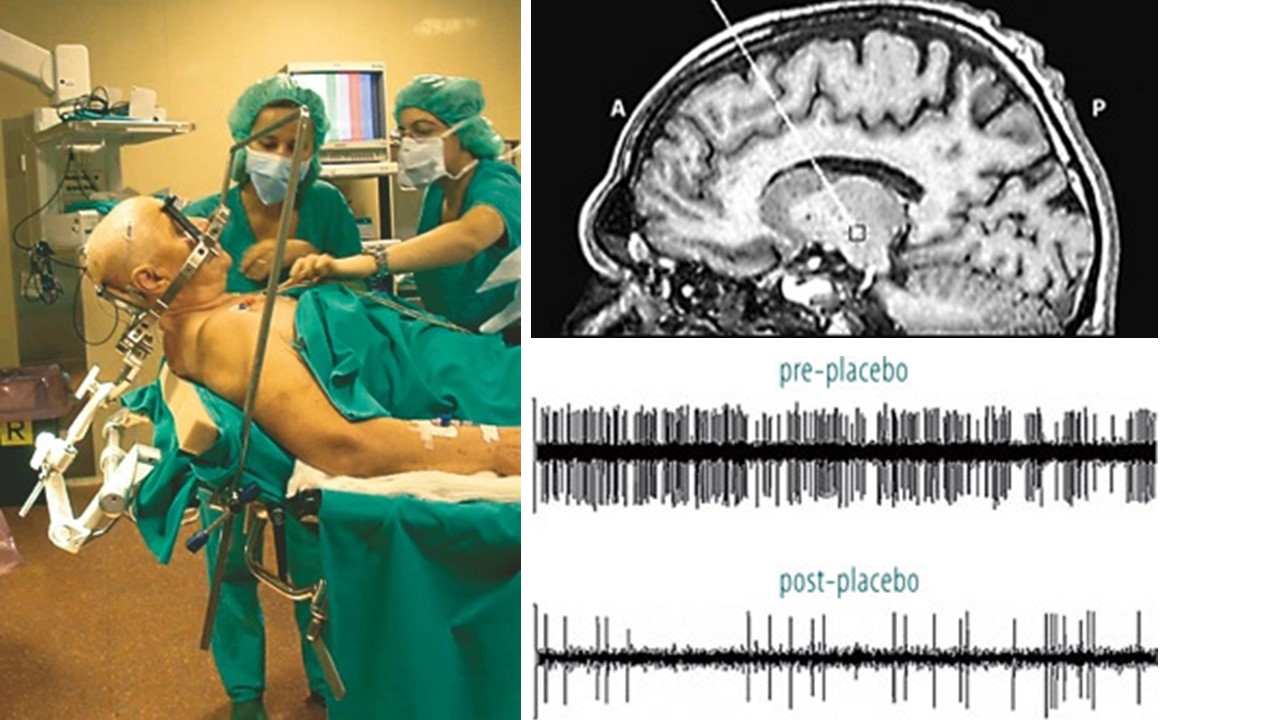 Figure 1. Recording the activity of single neurons from the brain of an awake patient suffering from Parkinson’s disease. Both the recording apparatus (a) and the electrode track (b) can be seen. In (c), the activity of a single neuron in the subthalamic nucleus can be seen before and after placebo administration (reproduced from: Benedeteti, F.(2007). The Placebo and Nocebo Effect: How the Therapist’s Words Act on the Patient’s Brain. Karger Gazette, 69).
The nocebo response (from Latin, “I will harm”) may evoke the non-healing process and reactivate symptom/disease producing process and experiences. The nocebo response can be evoked by ineffective or inert substances, procedures, instructions, and internal and external environments which by themselves have no known effects.
The placebo/nocebo response is modulated by our covert cultural, familial and personal beliefs, limitations and expectations. The placebo/nocebo effects are the actual demonstrations that the limits of our beliefs are the limits of our possibilities. This process is well described in the recent published book, You are the Placebo: Making Your Mind Matter, by Chiropractor Joe Dispenza.
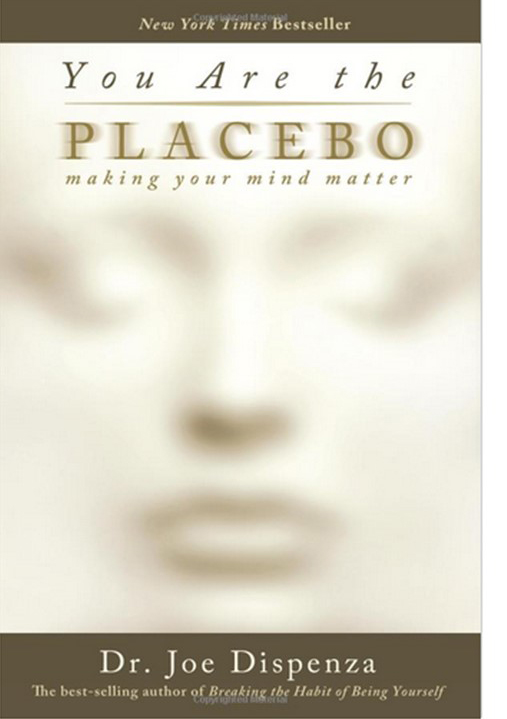 Dr. Dispenza describes the classic studies of placebo, mental processes and possible mechanisms by which placebo effects occur and disappears and how our thoughts and expectancies create our reality. The placebo transforms the inner beliefs and give the person the experience of improved health which transforms beliefs. In many cases we can experience improvement but are pulled back into our previous beliefs and self-images of illness by inner and outer cues which are associated with disease process.
The book describes of the covert conditioning process by which we return to our old self and may maintain illness. It is challenging to maintain new beliefs and act/think in new patterns. The internal mental chatter and doubts flood our awareness. Even the question, “How long will the improvement last?” re-evokes the associative mental conditioned disease patterns. If it is possible to interrupt and transform our thoughts moment by moment, minute by minute, hour by hour, day by day and not just for 15 minutes of practice, remarkable changes are sometimes possible. Every thought that triggers an association of the illness state needs to be interrupted and redirected. When patients somehow transform their thoughts, it may result in reversing and eliminating illnesses such as polyostotic fibrous dysphasia, Hashimot’sthyroiditis or chronic lympocytic thyroiditis, and secondary progressive multiple sclerosis.
I highly recommend this book for its outstanding description of placebo/nocebo and cognitive a model of the conditioning processes that underlie it. The book offers hope and inspiration for many patients who accept “what is/was” and are open to the present and future possibilities without judgement.
The book’s cases show that it is possible to reverse chronic “incurable illnesses.” Patients and health care providers should read the book–it provides hope, empowerment, and possibility. It is an antidote to the feeling that there is nothing one can do except to live with the illness. Medicine needs to explore and study the unusual patient who has reversed the disease process and ask, “How can we understand this process and teach it to other patients.”
The major limitation of the book is the absence of data; namely, what percentage of the patients/participants who have practiced Dispenza’s techniques have actually benefited and transformed their illness? The book would be more useful if it included both successful and the many unsuccessful cases. This would help patients who do the practices and do not improve. These patients sometimes blame themselves and failed at their self-healing—a process that increases depression and hopelessness. We need to realize that many factors affecting our health and illness are beyond our control.
Although I agree with Dr. Dspenza’s basic premise that our beliefs, acceptance of what is and being open to the present and future supports healing. This perspective is only part of the whole picture. Health and illness are multi-factorial and many factors are not within our control.
Read the book and skip chapter 8, The Quantum Mind. This chapter attempts to describe the physics of the healing process using quantum physics. As I did not understand quantum physics and quantum mind, I asked my colleague, James Johnston, PhD, who is an expert in quantum physics, to read it for accuracy. He confirmed my gut reaction when he said, “the quantum physics description of how energy changes is pseudo science, involving an incomplete understanding of quantum theory.”
Beecher, H.K. (1961). Surgery as Placebo. JAMA, 176(13), 1102-1107.
Cannon, W. B. (1942). “Voodoo” death. American Anthropologist, 44(2), 169-181.
Dispenza, J. (2014). You are the Placebo: Making Your Mind Matter. Hay House, Inc.
Biofeedback and pain control. Two YouTube interviews of Erik Peper, PhD by Larry Berkelhammer, PhD
Posted: October 12, 2012 Filed under: Uncategorized | Tags: asthma, biofeedback, hope, pain, self-regulation, stress, stress management 1 CommentErik Peper, Biofeedback Builds Self-efficacy, Hope, Health, & Well-being
Interview with biofeedback pioneer Dr. Erik Peper on how biofeedback builds self-efficacy, hope, health and well-being. How to use the mind to improve physiological functioning and health. Skill-building to develop self-efficacy, self-empowerment, and hope. Evidence-based mental training to manage symptoms, self-regulate blood pressure, chronic pain & fatigue, cardiac dysrhythmias, digestion, and many other bodily processes.
Erik Peper, Pain Control Through Relaxation
This interview of Dr. Erik Peper explores the frontier of psychophysiological self-regulation. Included is conscious regulation of pain, blood pressure, and other physiological measures. We discuss how you can take control and consciously calm your sympathetic nervous system in order to attenuate pain. Autogenic Training, yogic disciplines, biofeedback, and other methods are mentioned as ways to use the mind to gain conscious control of cognitive, emotional, and physiological processes. For example, when we experience sudden pain, we automatically brace against it in the hope of resisting it. Paradoxically, this increases suffering. Autogenic Training and many other disciplines provide us with the skills to relax into any painful stimulus. Although it seems counterintuitive, learning to fully accept and relax into the pain allows us to take control over the pain, whereas trying to control it serves to increase the suffering. Another concept that is discussed in this video is that we can reduce pain and speed healing by extending loving self-care to any injury.