Medication can reduce functional health in schizophrenia-we must do long term follow up
Posted: March 8, 2014 Filed under: Uncategorized | Tags: medication, Quality of life, Schizophrenia 1 CommentIn the late 19th and early 20th century, numerous people with schizophrenia recovered and lived functional lives without receiving pharmaceutical treatment (Whitaker, 2011). The spontaneous recovery has changed since advent of barbiturates and the use of antipsychotic medications. With medication, the initial schizophrenic crises can be more easily managed– patients have less disruptive symptoms although they slow down and often life in a mental fog. Now there is new doubt about the efficacy of long term use of antipsychotic medication treatment as reported by science writer Clare Wilson in her New Scientist article, “Rethinking schizophrenia: taming demons without drugs”. She point out that there have been no long term comparative outcome studies between continued drug treatment and stopping drug treatment except for observing the increase in serious side effects such as tardive dyskinesia.
Psychiatrist Wunderlink and colleagues (2113) in the Netherlands have just published an outstanding controlled study. They showed that when the people were assigned to either a medication or stopped medication group, the stopped medication group did nearly twice well over the long term. In the short term, the stopped medication group had a higher relapse rate. However, at the end of seven years they showed significant lower relapse rate and double the rate of having functional lives (e.g., holding down a job and looking after themselves) than the group that continued to take medication as shown in figure 1 and 2.

Figure 1. Long term study showing the benefit of minimal or no drugs after the initial schizophrenic episode as compared to continued medication. From: Wilson, C. (2014). Rethinking schizophrenia: taming demons without drugs. New Scientist, 221(2955), 32-35; based upon the published research by Wunderink, et al, 2013.
Figure 2. Long term out of the ability to hold down a job or look after themselves. Those who were assigned to the minimal or no drug group had a significant improvement in functional recovery. From: Wilson, C. (2014). Rethinking schizophrenia: taming demons without drugs. New Scientist, 221(2955), 32-35; based upon the published research by Wunderink, et al, 2013.
This study points out the importance of not generalizing from short term benefits which are so often augmented by active placebo factors. As the Dutch study showed, there is more harm than benefit from long term medication use in the treatment of schizophrenia. Similar results have also been reported in long term use of sleeping medication—it increases mortality risk by 25%. Long term chronic medication may cause different outcomes than for short term crises use. When medication is taken over an extended period of time, the body will adapt to achieve homeostasis. Namely, it will reduce or increase endogenous neurotransmitters or receptors to compensate for the increase presence of the drug. When the medication is withdrawn, the symptoms are now worse because the neurotransmitter or receptor have been changed and they takes time to regenerate. This process is similar to having a caffeine withdrawal headache. Drinking caffeine, induced vasoconstriction, the body compensates by reducing its own vasoconstriction. Then, when caffeine is stopped, the blood vessels dilate too much and a headache results. It usually resolves itself in a few days as the body rebalanced.
The reported results that the minimal or no drug group did so much better confirms the observations that numerous people with schizophrenia in the late 19th century and early 20th century could regain functional recovery unlike what occurred after the use of antipsychotic medication treatment (for more discussion on this topic see the superb book by Robert Whitaker, Anatomy of an Epidemic.
Finally, this post is a reminder to doubt the benefits of medication for ongoing long term use based upon short term studies.
REFERENCES
Whitaker, R. (2011). Anatomy of an epidemic: Magic bullets, psychiatric drugs, and the astonishing rise of mental illness in America. Random House.r
Entrepreneurship, work and life balance: a must read
Posted: March 4, 2014 Filed under: Uncategorized | Tags: Book, entrepreneurship, resilience, startups Leave a commentI am very proud that my son just published his novel, Uncommon Stock. It’s a fictional thriller about two entrepreneurs starting a new technology company.
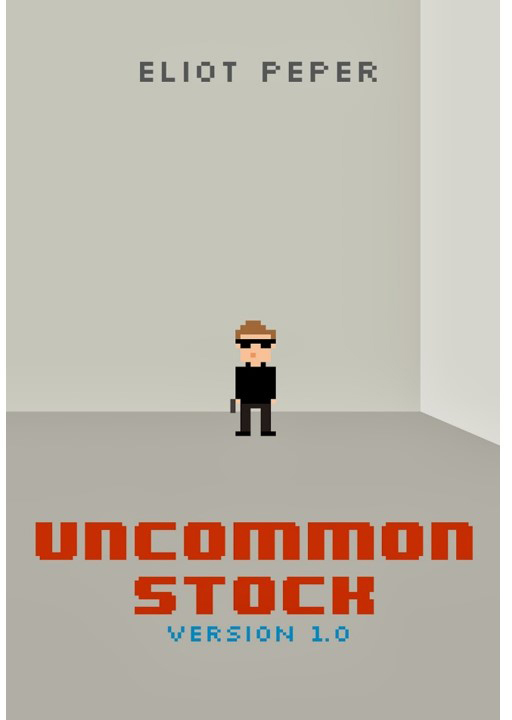 One of the most powerful pieces of the book that resonated with me was its focus on resilience, the ability to bounce back after a setback/disaster, with total commitment towards achieving a specific. For young students searching for a career, parents of children who are striking out on a career, teachers who counsel students on career choices and clinicians who help clients learn work/life balance and enhance health, they may be unaware of the dynamic emotional and commitment struggles that underlie successful entrepreneurship.
Uncommon Stock explores many of these themes and how they impact our next generation of leaders. Once I started the book, I was captured and did not put it down. When I finished I realized that not only was it a great entertainment for my plane ride, it also gave me remarkable insight in the trials and tribulations of my students and many young adults who are the new Silicon Valley entrepreneurs.
It is a must read for any student thinking about striking out on their own and creating a business. Every business major should own a copy. Finally, it provides constant insights for adults who teach or counsel young people and parents trying to understand their children. Plus, it’s perfect entertainment for a rainy afternoon.
The book is now available from Amazon and other major retailers. Your can also download a free excerpt here.
Optimizing ergonomics: Adapt the world to you and not the other way around
Posted: February 24, 2014 Filed under: Uncategorized | Tags: ergonomics, muscle tension, posture, stress, Workstyle 2 CommentsHaving the right equipment doesn’t mean we use it correctly. It turns out that usage patterns matter just as much as fancy new office furniture. This post was inspired by a wonderful article that David Kadavy generously interviewed me for. His article explores split keyboards and working wellness. In this post, I go in-depth on some complimentary workplace tools and techniques.

After working on a laptop, smartphone or computer, many people experience discomfort and exhaustion. Back and neck pain and vision problems are very common. Although there are many components that contribute to maintaining health and productivity with digital devices, two factors stand out:
- Ergonomic arrangement: the way the physical environment forces the person to adapt, such as bending over to read and perform data entry with a tablet.
- Work style: the way the person manages themselves to perform the tasks.

Many problems that are aggravated or caused by inappropriate ergonomics can be compensated by changing workstyle. For example, if you bend forward to read the tablet or squint to see the text on the monitor, you can take many movement and stress reduction breaks to compensate for the challenging ergonomics. Having the right equipment, appropriately adjusted, is the focus of ergonomics. Working so that health is maintained regardless of equipment is the focus of work style.
Shoes are a great example. Healthy shoes would look like duck feet–wider at the ball of the feet and toes and narrower at the heel. However, most shoes have pointy or narrow toe boxes. Over time, incorrect footwear becomes a major cause of bunions, foot, hip and back pain for older adults. It causes physical deformity just as the 19th century Chinese practice of foot-binding crippled many women. If you want to run a 100 meter race or a marathon—running shoes are better than high heels. Adapting the environment to you instead of the other way around is the underlying theme of ergonomics.
But even with correctly fitting shoes many people still experience discomfort. Often this is because of misaligned movement patterns. such as their feet point outward while walking instead of pointing ahead. Or they unknowingly favor one leg over the other because many years earlier they broke that leg and adapted their walking pattern to reduce the pain. After walking to avoid pain for a month, this new dysfunctional pattern became habitual and their gait never returned to normal. Changing how you walk or work is the focus of optimum work style. For useful suggestions about workstyle see Healthy Computer Email Tips by Erik Peper.
Many experts have worked for decades on defining optimal ergonomics for using digital devices. The results are always compromises because human beings did not evolve to sit in a chair for hours without movement or read from a small screen in front of them. Nevertheless, the ergonomic setup while using laptops and tablets can be significantly improved. It is impossible to achieve a healthy ergonomic setup while using a laptop or tablet. If the screen is placed so that is easily readable, then the fingers and hands need to be lifted (which often involves lifting the shoulders) to perform data entry. On the other hand if the keyboard is at the appropriate height then you have to look down on the screen. If you regularly use a laptop or tablet, consider purchasing a separate monitor and/or keyboard to improve your setup.
And if you’re replacing your keyboard, make sure to check out David Kadavy’s excellent blog: This weird keyboard may be the biggest thing since your standing desk.
Great resource: Dr. Mike Evans-The Single Most Important Thing You Can Do for Your Stress
Posted: February 6, 2014 Filed under: self-healing, stress management, Uncategorized | Tags: anxiety, exercise, healing, hypertension, mind-body, stress management 1 CommentA major factor that contributes to illness and health is how we cope with stress. Learning stress management techniques and integrating them into our daily life can significantly reduce illness and discomfort. Patients report significant improvement in numerous disorders such as hypertension, headaches, cancer, pain, or arthritis.
A great health resource are the short YouTube videos by Dr. Mike Evans who is founder of the Health Design Lab at the Li Ka Shing Knowledge Institute, an Associate Professor of Family Medicine and Public Health at the University of Toronto, and a staff physician at St. Michael’s Hospital. His informative short video clips cover a range of medical conditions from concussions to stopping smoking (see his website: http://www.myfavouritemedicine.com).
Watch the following video presentation on The Single Most Important Thing You Can Do for Your Stress.
Energy Gain Wisdom: Strategies for Maximizing Support and Emotional Wellbeing for Caregivers & Patients
Posted: January 23, 2014 Filed under: Uncategorized | Tags: cancer, fatigue, healing, mind-body, stress management 1 CommentAre you exhausted and not sure there is anything you can do to change it? Learn strategies to mobilize your self-healing potential as you cope with cancer. Regardless of the severity of disease, learn skills to increase energy.
Watch the following presentation by Dianne Shumay, PhD, Associate Director, UCSF Psycho-Oncology, and Erik Peper, PhD, Professor Holistic Health, SFSU. This invited lecture was presented January 19, 2014 at the NorCal CarciNET/UCSF 2014 Patient Conference, hosted by: NorCal CarciNET Community & UCSF Helen Diller Family Comprehensive Cancer Center, at the Krutch Theater (Clark-Kerr) on the UC Berkeley Campus.
Harmony and Homeostasis. Youtube interview of Erik Peper, PhD, by Larry Berkelhammer, PhD
Posted: January 9, 2014 Filed under: Uncategorized | Tags: exercise, healing, mind-body, stress management Leave a commentIn this interview with Dr. Larry Berkelhammer, Dr. Erik Peper discusses the statement from the World Health Organization “Disease is a rupture in life’s harmony”. He also offers two pragmatic behavioral approaches to optimize health:
- Observe energy drains and gains and then decrease energy drains and increase energy gains
- Take movement breaks to increase energy and prevent immobility syndrome
There is Hope! Interrupt Chained Behavior
Posted: December 28, 2013 Filed under: self-healing, stress management, Uncategorized | Tags: biofeedback, biofeedback breathing, posture, psoriasis, self-talk, stress management 4 Comments“I was able to self-heal myself. I didn’t need anyone else to do it for me.”
“I was surprised that I actually succeeded and had some really great results.”
“How much control I really had over being able to change several of my habits, when I previously thought that it was impossible.”
“That I actually have control.”
Students who have practiced stress management at SFSU
This blog summarizes our recent published article that describes a teaching healing approach that can be used by many clients to mobilize their health. The process is illustrated by a case report student who had suffered from psoriasis for more than five years totally cleared his skin in six weeks and has continued to this benefit (Klein & Peper, 2013). At the recent one year follow-up his skin is still clear.
Low energy, being tired and depressed, having pain, insomnia, itching skin, psoriasis, nervously pulling out hair, hypertension and other are symptoms that affects our lives. In many cases there is no identifiable biological cause. Currently, 74% of patients who visit their health care providers have undiagnosed medical conditions. Most of the symptoms are a culmination of stress, anxiety, and depression. In many cases, health care professionals treat these patients ineffectively with medications instead of offering stress management options. For example, if patients with insomnia visits their physicians, they are most likely prescribed a sleep inducing medication (hypnotics). Patients who take sleeping medication nightly have a fourfold increase in mortality (Kripke et al., 2012). If on the other hand if the healthcare professional takes time to talk to the patient and explores the factors that contribute to the insomnia and teach sleep hygiene methods, 50s% fewer prescriptions are written. Obviously, you may not be able to sleep if you are worried about money, job security, struggles with your partner or problems with your children; however, medication do not solve these problems. Learning problem solving and stress management techniques often does!
When students begin to learn these stress management and self-healing skills as part of a semester long Holistic Health Class at San Francisco State University, 82% reported improvement in achieving benefits such as increasing physical fitness, healthier diets, reducing depression, anxiety, pain and eliminating eczema or reducing hair pulling (one student with Trichotillomania reduced her hair pulling from 855 to 19 minutes per week) (Peper et al., 2003; Bier et al., 2005; Ratkovich et al., 2012). The major factors that contributed to the students’ improvement are:
- Daily monitoring of subjective and objective experiences to facilitates awareness and identify cues that trigger or aggravate the symptoms.
- Ongoing practicing during the day and during activities of the stress management skills as adapted from the book, Make Health Happen (Peper et al, 2003)
- Sharing subjective experiences in small groups which reduces social isolation, normalizes experiences, and encourages hope. Usually, a few students will report rapid benefits such as aborting a headache, falling asleep rapidly, or reducing menstrual cramps, which helps motivate other students to continue their practices.
- Writing an integrative summary paper, which provides a structure to see how emotions, daily practices and change in symptoms are related.
The first step is usually Identifying the trigger that initiates the illness producing patterns. Once identified, the next step is to interrupt the pattern and do something different. This can include transforming internal dialogue, practicing relaxation or modifying body posture. The mental/emotional and physical practices interrupts and diverts the cascading steps that develop the symptoms (Peper et al., 2003).
Interrupting and transforming the chained behavior is illustrated in our article “There Is Hope: Autogenic Biofeedback Training for the Treatment of Psoriasis” published in the recent issue of Biofeedback. We report on the process by which a 23-year-student totally cleared his skin after having had psoriasis for the last five years. Psoriasis causes red, flaky skin and is currently the most common autoimmune disease affecting approximately 2% of the US population. Many people afflicted with this disease use steroids, topical creams, special shampoos, and prescription medication. Unfortunately, the disease can only be suppressed, not cured. Thus many people with psoriasis feel damaged and have a difficult time socially. Stress is often one of the triggers that makes psoriasis worse. In this case study, the 23-year-old student learned how to train his mind/body to transform his feelings of stress, anxiety, self-doubt, and urge to scratch his skin into a positive self-healing process.
Initially, the student was trained in stress management and biofeedback techniques that included relaxation, stress reduction, and desensitization. He learned how to increase his confidence by changing his body posture while sitting and standing. He also took time to stop and refocus his energy when he felt the need to fall back into old habits. What did he really do?
The moment he became aware of skin sensations, he would:
- Stop, take a deep breath into his abdomen and slowly exhale
- Assess how he was thinking-having negative and hopeless thoughts
- Change the negative thoughts into positive affirmative thoughts
- Breathe deeply
- Imagine as he exhaled feeling heaviness and warmth in his arms and feet
- Talk to his body by saying, “My skin is cool, clear, and regenerative.” “I am worthy.”
To become aware of his automatic negative behavior was very challenging. He had to stop focusing on the task in front of him and to put all of his energy into regaining his composure. This is very difficult because people are normally captured by whatever they are doing at that moment. As he stated: “Breaking this chain behavior was by far the hardest things I’ve ever done. It didn’t matter what situation I found myself in, my practice took precedence. The level of self- control I had to maintain was far beyond my norm. I remember taking an exam. I was struggling to recall the answer to the last essay question. All I wanted to do was finish the exam and go home. I knew that I knew it, it was coming to me, I began to write… Yet in that same moment I felt my right elbow start to tingle (the location of one of the psoriasis plagues) and my left hand started to drift towards it. Immediately I had to switch my focus. Despite my desire to finish I dropped my pen. I paused to breathe and focused upon my positive thoughts. Moments like this happened daily, my normal functions were routinely interrupted by urges to scratch. Sometimes I would spend significantly more time doing the practices than the task at hand.
Similarly, whenever he observed his body posture “collapsing” and “hiding” — thus falling into a more powerless posture — he would interrupt the collapse and shift to a power position by expanding and being more erect. He did this while standing, sitting, and talking to other students. As he stated: “I hadn’t realized how my collapsing posture was effecting my self-image until I began practicing a more powerful posture. In class I made myself sit with my butt pushed back against the back of the chair instead of letting myself slide forwarding into a slouch. Just like the urge to itch I had to stay conscious of my posture constantly. At work, at school, even at home on the couch I practiced expanding body posture. The more I was aware of my posture the better my posture became, and the more time I spent in power pose the more natural it began to feel. The more natural it felt the more powerful I felt.”
After three weeks, his skin had cleared and has continued to stay this way for the last year as shown in Figure 1.
 Figure 1. Pre and post photos of the elbow and knee showing the improvement of the skin.
There are many diseases and ailments that require the use of medication for appropriate treatment, but when stress is a factor in any diagnosis, or when a diagnosis cannot be found, it is important for stress management to be offered as a viable option for patients to consider. As shown by the student with psoriasis, learning stress management skills and then actually practicing them during the day can play a major factor in improving the health of an individual. The same process is applicable for numerous symptoms. There is hope=-Just do it.
References:
Bier, M., Peper, E., & Burke, A. (2005). Integrated stress management with ‘Make Health Happen: Measuring the impact through a 5-month follow-up. Presented at the 36th Annual Meeting of the Association for Applied Psychophysiology and Biofeedback. Abstract published in: Applied Psychophysiology and Biofeedback, 30(4), 400. http://biofeedbackhealth.files.wordpress.com/2013/12/2005-aapb-make-health-happen-bier-peper-burke-gibney3-12-05-rev.pdf
Klein, A. & Peper, W. (2013). There is Hope: Autogenic Biofeedback Training for the Treatment of Psoriasis. Biofeedback, 41(4), 194–201. http://biofeedbackhealth.files.wordpress.com/2011/01/published-article-there-is-hope.pdf
Kripke, D.F., Langer, R.D., Kline. L.E. (2012). Hypnotics’association with mortality or cancer: a matched cohort study. BMJOpen, 2:e000850. doi:10.1136/bmjopen-2012-000850 http://bmjopen.bmj.com/content/2/1/e000850.full.pdf+html
Peper, E., Gibney, K.H. & Holt. C. (2002). Make Health Happen: Training Yourself to Create Wellness. Dubuque, IA: Kendall-Hunt. http://www.amazon.com/Make-Health-Happen-Training-Yourself/dp/0787293318
Peper, E., Sato-Perry, K & Gibney, K. H. (2003). Achieving health: A 14-session structured stress management program—Eczema as a case illustration. 34rd Annual Meeting of the Association for Applied Psychophysiology and Biofeedback. Abstract in: Applied Psychophysiology and Biofeedback, 28(4), 308. http://biofeedbackhealth.files.wordpress.com/2013/12/2003-aapb-poster-peper-keiko-long1.pdf
Ratkovich, A., Fletcher, L., Peper, E., & Harvey, R. (2012). Improving College Students’ Health-Including Stopping Smoking and Healing Eczema. Presented at the 43st Annual Meeting of the Association for Applied Psychophysiology and Biofeedback. Baltimore, MD. http://biofeedbackhealth.files.wordpress.com/2011/01/2012-improving-college-student-health-2012-02-28.pdf
Mind-Guided Body Scans for Awareness and Healing–Youtube Interview of Erik Peper, PhD by Larry Berkelhammer, PhD
Posted: December 23, 2013 Filed under: Uncategorized | Tags: biofeedback, body scan, body sensations, healing, Imagery, meditation, mind-body, passive attention, visualization 2 CommentsIn this interview psychophysiology expert Dr. Erik Peper explains the ways how a body scan can facilitate awareness and healing. The discussion describes how the mind-guided body scan can be used to improve immune function and hold passive attention (mindfulness) to become centered. It explores the process of passive attentive process that is part of Autogenic Training and self-healing mental imagery. Mind-guided body scanning involves effortlessly observing and attending to body sensations through which we can observe our own physiological processes. Body scanning can be combined with imagery to be in a nonjudgmental state that supports self-healing and improves physiological functioning.
From Wisdom to Alzheimer’s: Are we poisoning ourselves with affluent malnutrition and sedentary life style?
Posted: December 14, 2013 Filed under: Exercise/movement, Nutrition/diet, self-healing, Uncategorized | Tags: Alzheimer, diet, evolution, exercise, health Leave a commentWise elders, grand parents or statesmen have been the traditional roles for aging adults. Older people were revered as the repository and sources of wisdom in many traditional cultures. Presently the development of aging into wisdom is being overshadowed by the specter of Alzheimer’s disease. Wisdom transforming into Alzheimer’s disease does not compute. How come that in slightly more than a century after it was first described by the neuropathologist Alois Alzheimer in 1906, the fear of contracting and possible having Alzheimer’s disease with the concurrent loss of cognitive and body functions is becoming a possibility? How could this have occurred?
Today more people are living to older ages; however, in traditional cultures some people also lived to very old age (the major increase in present day longevity is due to the elimination of infant and maternal mortality and medical treatment to survive trauma).
Is it possible that the prevention of Alzheimer’s will not be found in pharmaceutical treatment but in promoting organic food diet and movement? The research data is starting to find that our life style patterns are risk factors for Alzheimer’s. Changing lifestyle factors is a more promising treatment approach than drugs. A significant risk factor may be the confluence of a sedentary lifestyle and affluent malnutrition. Researchers are even reporting that the built up of the beta amyloid plaques in brains of people with Alzheimer’s disease is not the result of aging but the body’s attempt to cope with the influx of environmental and dietary poisons or decreases in essential foods or body activities.
Risk: Sedentary lifestyle-Too little exercise
Over the last hundred years–and rapidly accelerated in the last 30 years–we have transformed work into sitting. By sitting in front of a computer screen, we have created a new disease: Immobilization Syndrome. Lack of exercise is recognize as a major factor in numerous illnesses such as cardiovascular disease, obesity, and diabetes. Movement in many different forms reduces the risk of illness. Older people who exercise have a significant reduction in the risk of developing Alzheimer’s (Larson, 2006; Radak et al, 2010).
Regular movement lowers the risk. Even though there is overwhelming scientific evidence that movement and exercise are required for health, there is a disconnect with the medical and educational practices. Insurances will pay for medical treatment; however, they usually will not pay for prevention or exercise. At the same time physical education in schools is reduced or eliminated to reduce the risk of litigation (an injured child on the playground could sue the school). Children now spend most of their time in front of a screen while exercising their thumb and index fingers instead of playing and moving outdoors.
Risk: Affluent malnutrition-too much sugar and simple carbohydrates
Affluent malnutrition appears to be another risk factor. Recent findings suggests that the beta amyloids plagues, as the marker for Alzheimer’s in the brain, may be a protective response to the modulating insulin levels triggered by affluent malnutrition and sedentary life style. This disease has been labeled as type 3 diabetes by Associate Professor Suzanne de la Monte at Brown University (Steen et al, 2005). Namely, the disease occurs as the brain tissue becomes resistant to insulin.
Rats that are fed high-fructose corn syrup laced water experienced learning and memory problems in less than 6 weeks and became less responsive to insulin. At the same time if the animals were given omega 3 fatty acids, they appear to escape the cognitive decline. In other research rats developed Alzheimer like brain changes and became demented when Suzanne de la Monte interfered with how the rats brains respond to insulin (Trivedi, 2012).
Alois Alzheimer first described these abnormal protein structure in the brains a little more than a hundred years ago. At that time the European diet had increased sugar intake as shown in figure 1. While more recently there has been a significant increase in high fructose corn syrup as shown in figure 2.

Figure 1. Radical increase in sugar consumption in the last 200 years. From: http://blog.zestos.co.nz/2010/09/sugar-consumption-been-high-before.html

Figure 2. Increase in the type of sugar consumption in the last thirty years. From: http://blog.zestos.co.nz/2010/09/sugar-consumption-been-high-before.html
We are now becoming concerned with the Alzheimer’s disease as an upcoming epidemic. It cannot be just sugar; since, its consumption has been high since the beginning of the 20th century. A possible contributor could be the high-fructose corn syrup; however, it is most likely the interaction between reduced exercise and sugar.
Sugar set the stage for pathogenesis to occur in the brain and the absence of movement/exercise promotes and supports the pathogenesis. People continue to decrease movement: from walking or riding horses to sitting cars or standing on escalators and elevators; from doing physical housework to automated washing machines, driers and dishwashers; from preparing foods from raw materials to prepackaged foods; from filing and typing to computer work; from playing family games to watching TV and searching the net; from face to face communication to texting; etc.
We have separated from our biological evolutionary heritage. I am not surprised that Alzheimer’s disease and immobility and sugar are linked. Adopt the precautionary principle and assume that sugar and high-fructose corn syrup in conjunction with reduced movement (immobilization syndrome) is harmful.
As a reader, you will probably have to wait another 20 years before these findings have been scientifically proven against the overt and covert lobbying efforts of agribusiness and pharmaceutical industry. Remember it took 30 years to demonstrate that smoking was harmful. Begin to move and eat in concert with your evolutionary background (See Part III Self-care in Gorter and Peper, 2011).
Begin now!
Eat food not sugars! Eat the foods great grandparents would recognize as food as Michael Pollan (2009) describe in his superb book, In Defense of Food: An Eater’s Manifesto. Eat foods that have not been processed or adulterated by additives. Take charge by eating brain supporting foods such as organic vegetables, roots, fruits, nuts, fish, some organ meat, and eliminate all those sugary, fatty processed highly advertised fast foods.
Move and exercise! Get up and move every hour. Walk up the stairs instead of the escalator. Meet new people and move by going hiking, dancing, Tai Chi or yoga classes or volunteer by helping others.
References
Gorter, R. & Peper, E. (2011). Fighting Cancer-A Non Toxic Approach to Treatment. Berkeley: North Atlantic.
Larson, E.G., Wang, L., Bowen, J.D., McCormick, W. C., Teri, L., Crane, P., & Kukull, W. (2006). Exercise Is Associated with Reduced Risk for Incident Dementia among Persons 65 Years of Age and Older. Ann Intern Med, 144(2), 73-81.
Pollan, M. (2009). In Defense of Food: An Eater’s Manifesto. New York: Penguin Books.
Radak, Z., Hart. N., Sarga, L., Koltai, E., Atalay, M., Ohno, H., & Boldogh, I. (2010). Journal of Alzheimer’s Disease, 20(3), 777-83.
Steen, E., Terry, B.M. Rivera, E.J., Cannon, J.L., Neely, T.R., Tavares, R., Xu, X. J., Wands, J.R., & de al Monte, S. M. (2005). Impaired insulin and insulin-like growth factor expression and signaling mechanisms in Alzheimer’s disease-is this type 3 diabetes? Journal of Alzheimer’s Disease, 7(1), 53-80.
Trivedi, B. (2012). Eat your way to dementia. New Scientist, 215(2880), 32-37.
Simple Ways to Manage Stress- An experiential lecture for people impacted by the March 11, 2011 Great East Japan Earthquake
Posted: November 8, 2013 Filed under: self-healing, stress management, Uncategorized | Tags: anxiety, depression, earthquake, exercise, insomnia, neck pain, stress, stress management, tsunami 6 CommentsStress can be reduced by simple pragmatic exercises. This 99 minute participatory lecture was presented in Sendei, Japan, on July 20, 2013 to people who were impacted by the 2011 Tohoku earthquake and tsunami disaster.* The lecture includes practices that demonstrate 1) how thoughts, emotions and images affect the body, 2) how simple movements can reduce muscle tension, 3) how breathing can be used to reduce stress, 4) how changing posture can change access to positive or negative memories, 5) how acceptance is the beginning step for healing. This approach based upon a holistic evolutionary perspective of stress and health can be used to reduce symptoms caused or increased by stress such as neck, shoulder and back tension, digestive problems, worrying and insomnia. The video lecture is sequentially translated from English to Japanese. Click on the link to watch the video lecture.
http://cat-vnet.tv/movie/medical_health/suimin_02/001_02.html

*The program was organized by Toshihiko Sato, Ph.D., Dept. Health and Social Services, Faculty of Medical Sciences and Welfare Tohoku Bunka Gakuen University, Sendai.
 the peper perspective