Improve health with fun movements: Practices you can do at home and at work
Posted: February 2, 2013 Filed under: Uncategorized | Tags: exercise, mind-body, muscle tension, neck pain, relaxation, shoulder pain, stress management 9 CommentsPhysical fitness promotes health. For one person it may be walking, for another jogging, bicycling or dancing. Increase the joy and pleasure of movement. In most cases about 20 minutes of continued activity is enough to keep in shape and regenerate. When the urge to watch TV or just to crash occurs, do some of the movement—you will gain energy. The exercises this article are are developed to reduce discomfort, increase flexibility and improve health. Practice them throughout the day, especially before the signals of pain or discomfort occur. First read over the General Concepts Underlying the Exercises and then explore the various practices.
General Concepts Underlying the Exercises
While practicing the strength and stretch exercises, always remember to breathe. Exercises should be performed slowly, gently and playfully. If pain or discomfort occurs, STOP. Please consult your health care provider if you have any medical condition which could be affected by exercise.
Perform the practices in a playful, exploratory manner. Ask yourself: “What is happening?” and “How do I feel different during and after the practice?” Practice with awareness and passive attention. Remember, Pain, No gain — Pain discourages practice. Pain and the anticipation of pain usually induce bracing which is the opposite of relaxation and letting go. In addition, many of our movements are conditioned and without knowing we hold our breath and tighten our shoulders when we perform an exercise. Explore ways to keep breathing and thereby inhibit the startle/orienting/flight response embedded and conditioned with the movements. For example, continue to breathe and relax instead of holding your breath and tightening your shoulders when you initially look at something or perform a task.
Learn to reduce the automatic and unnecessary tightening of muscles not needed for the performance of the task. As you do an exercise, continuously, check your body and explore how to relax muscles that are not needed for the actual exercise. Become your own instructor in the same way that a yoga teacher reminds you to exhale when you are doing an asana (yoga pose). If you are unsure whether you are tightening, initially look another person doing the exercise to observe their bracing and breath holding patterns. Ask them to observe you and give feedback. In many cases, the more others are involved the easier it is to do a practice.
It is often helpful to perform the practice in a group. Encourage your whole work unit to take breaks and exercise together. Usually it is much easier to do something together, especially when you are not motivated—use social support to help you do your practices.
Problems with neck, back and shoulders
The number one overall work-related complaint is the back pain and this is also true for many people who work at the computer. In many cases there are correlations between backache and stress, immobility, and lack of regeneration. Back pain is often blamed on disk problems which may be aggravated by chronic tension that may have some psychological factors. When you experience discomfort, explore some of the following questions:
- Is there something for which I am spineless?
- Who or what is the pain in my neck or back?
- What is the weight I am carrying?
- Am I rigid and not willing to be flexible?
- What negative emotion, such as anger or resentment, needs to resolved?
Be willing to act on whatever answers you observe. Back and neck pain is often significantly reduced after emotional conflicts are resolved (see the book by John Sarno, MD., Healing Back Pain: The Mind-Body Connection). The best treatment is prevention, emotional resolution, and physical movement. Allow your back to relax and move episodically. Allow tensions to dissipate and explore the physical, psychological and social burdens you carry. To loosen your neck practice the following exercise.
Free your neck and shoulders[1]
This is a slightly complicated, but very effective process. You may want to ask a friend or co-worker to read the following instructions to you.
Pretest: Push away from the keyboard. Sit at the edge of the chair with your knees bent at approximately 90 degrees and your feet flat on the floor about shoulder width apart. Do the movements slowly. Do NOT push yourself if you feel discomfort. Be gentle with yourself.
Look to the right and gently turn your head and body as far as you can go to the right. When you have gone as far as you can comfortably, look at the furthest spot on the wall and remember that spot. Gently rotate your head and body back to center. Close your eyes and relax.
Movement practice: Reach up with your right hand; pass it over the top of your head and hold on to your left ear. Then gently bend to the right lowering the elbow towards the floor. Slowly straighten up. Repeat a few times, feeling as if you are a sapling flexing in the breeze as shown in Figure 1.
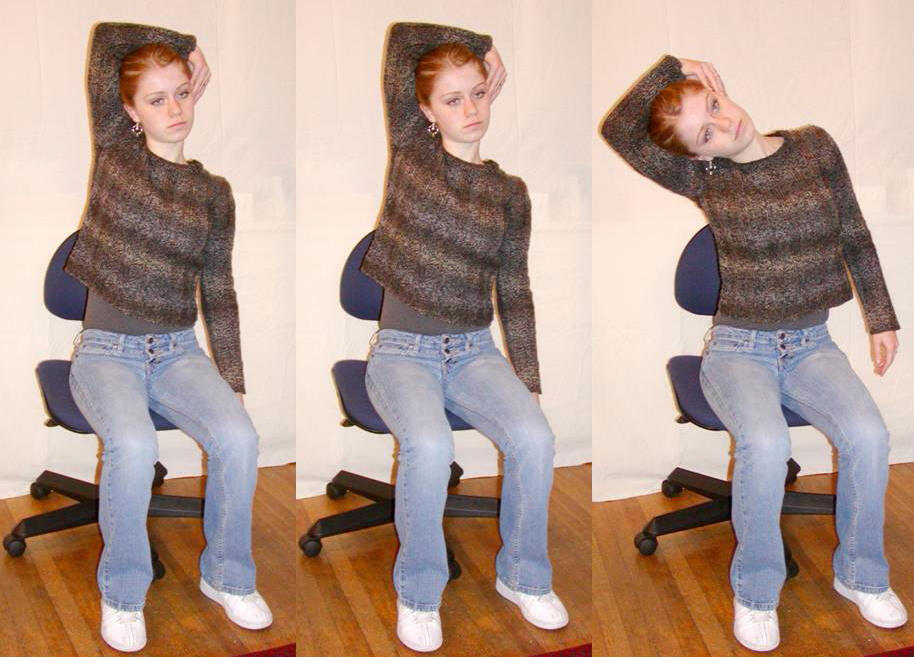
Figure 1. Illustration of side ways bending with hand holding ear.
Observe what your body is doing as it bends and comes back up to center. Notice the movements in your ribs, back and neck. Then drop your arm to your lap and relax. Make sure you continue to breathe diaphragmatically throughout the exercise.
Reach up with your left hand, pass it over the top of your head and hold on to your right ear. Repeat as above, this time bending to the right.
Reach up with your right hand and pass it over the top of your head, now holding onto your left ear. Then look to the right with your eyes and rotate your head to the right as if you are looking behind you. Return to center and repeat the movement a few times. Then drop your arm to your lap and relax for a few breaths as shown in Figure 2. 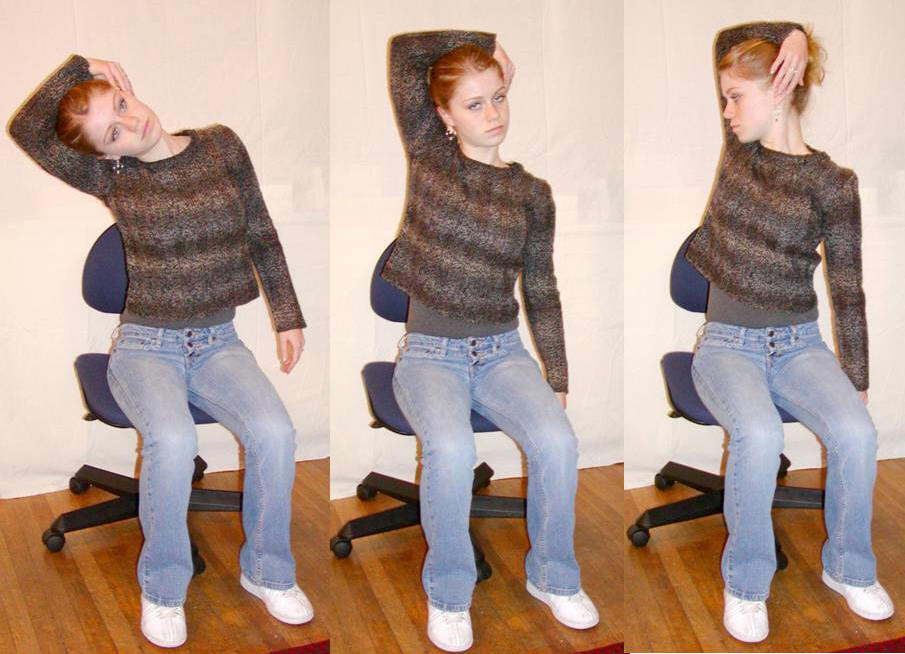 Figure 2. Illustration of rotational movement with hand holding ear.
Repeat the same rotating motion of your head to the right, except that now your eyes look to the left. Repeat this a few times, then drop your arm to your lap and relax for a few breaths.
Repeat the exercise except reach up with your left hand and pass it over the top of your head, and hold on to your right ear. Then look to the left with your eyes and rotate your head to the left as if you are looking behind you. Return to center and repeat a few times. Then drop your arms to your lap and relax for a few breaths.
Repeat the same rotating motion of your head to the left, except that your eyes look to the right. Repeat this a few times, then drop your arm to your lap and relax for a few breaths.
Post test: look to the right and gently turn your head and body as far as you can go. When you cannot go any further, look at that point on the wall. Gently rotate your head back to center, close your eyes, relax and notice the relaxing feelings in your neck, shoulders and back.
Did you rotate further than at the beginning of the exercise? More than 95% of participants report rotating significantly further as compared to the pretest.
For additional exercises on how to loosen your neck, shoulders, back, arms, hands, and legs, click on the link for the article, Improve health with movement: There is life after five or look at the somatic relaxation practices in part 3 of our book, Fighting Cancer-A Nontoxic Approach to Treatment.
[1] Adapted from a demonstration by Sharon Keane and developed by Ilana Rubenfeld
Prevent Stress Immobilization Syndrome
Posted: January 27, 2013 Filed under: Uncategorized | Tags: exercise, muscle tension, neck pain, repetitive sttrain injury, shoulder pain 7 Comments
Source unknown
Working at the computer, tablet or smartphone is often a pain in the neck. Young adults who are digital natives and work with computers and mobile phones experienced frequent pain, numbness or aches in their neck and more than 30% reported aches in their hip and lower back. In addition, women experienced almost twice as much aches in their necks than men (Korinen and Pääkkönen, 2011). Similarly findings have been reported previously when Peper and Gibney observed that most students at San Francisco State University, experienced some symptoms when working at their computer near the end of the semester. At work, many employees also experience exhaustion, neck, back and shoulder pains when working at the computer. Although many factors contribute to this discomfort such as ergonomics, work and personal stress, a common cause is immobility. To prevent stress immobility syndrome, implement some of the following practice.
- Every hour take a 5-minute break (studies at the Internal Revenue Service show that employees report significant reduction in symptoms without loss in productivity when they take a 5 minute break each hour).
- Take a short walk or do other movements instead of snacking when feeling tense or tired.
- Perform a stretch, strengthening, relaxation, or mobilization movement every 30 minutes.
- Install a computer reminder program to signal you to take a short stress break such as StressBreak™.
- Perform 1-2 second wiggle movements (micro-breaks) every 30 to 60 seconds such as dropping your hands to your lap as you exhale.
- Leave your computer station for the 15-minute mid-morning and mid-afternoon breaks.
- Eat lunch away from your computer workstation.
- Stand or walk during meetings.
- Drink lots of water (then, you’ll have to walk to the restroom).
- Change work tasks frequently during the day.
- Move your printer to another room so that you have to walk to retrieve your documents.
- Stand up when talking on the phone or when a co-worker stops by to speak with you.
When people implement these new habits, they experience significant decrease in symptoms and improvements in quality of life and health (Peper & Gibney, 2004; Wolever et al, 2011)
Change Illness Beliefs with Words, Biofeedback, and Somatic Feedback*
Posted: January 2, 2013 Filed under: Uncategorized | Tags: biofeedback, cancer, illness beliefs, mind-body 8 CommentsI never felt that thinking about my work affected my body. I was totally surprised to see my body’s reaction on the computer screen. I now realized how I contributed to my illness and could see other ways to change and improve my health. The feedback made the invisible visible, the undocumented documented.
Use of words, biofeedback and somatic feedback to transform illness beliefs. Many clients are unaware how much their thoughts and emotions affect their physiology. The numbers and graphs on the computer screen show how the body is responding. Seeing the changes in the physiological recording and the immediate feedback signals are usually accepted by the client as evidence, whereas the verbal comments made by a therapist might be denied as the therapist’s subjective opinion. The feedback is experienced as objective data—numbers and graphs ‘‘do not lie’’—which represents truth to the client. Clients seek biofeedback therapy because they believe the cause of illness is in their body, and then the biofeedback may demonstrate that emotions and cognitions influence their somatic illness patterns. This process has been labeled by Ian Wickramasekera (2003) as a ‘‘Trojan Horse’’ approach. Biofeedback and somatic feedback exercises provide effective tools for changing illness attributions and awaken the client to the impact of thoughts and emotions on physiology. Whether the feedback comes from a biofeedback device that records the covert physiological signal or is subjectively experienced through a somatic exercise, the self-experience is a powerful trigger for an ‘‘aha’’ experience—a realization that mind, body, and emotions are not separate (Wilson, Peper, & Gibney, 2004). Clinically, this approach can be used to facilitate changing illness beliefs and to motivate clients to begin changing their cognitive, emotional, and behavioral patterns. Clients begin to realize that they can be active participants in the healing process and that in many cases it is their mind-body life patterns that contribute to illness or health. For more information, case example and detailed description of a somatic feedback practice, download a pre-publication of our article, The Power of Words, Biofeedback, and Somatic Feedback to Impact Illness Beliefs.
*Adapted from: Peper, E., Shumay, D.M., & Moss, D. (2012). Change Illness Beliefs with Biofeedback and Somatic Feedback. Biofeedback. 40(4), 154–159.
Breathing: The Mind/Body Connection. Youtube interviews of Erik Peper, PhD by Larry Berkelhammer, PhD
Posted: December 19, 2012 Filed under: Breathing/respiration, Uncategorized | Tags: anxiety, asthma, biofeedback breathing, Breathing, heart rate variability, meditation, panic, relaxation, stress management 4 CommentsErik Peper, Respiration & Health
How we breathe is intimately connected to our state of health. We can speed up breathing to energize or slow it for a calming effect. Practice becoming more aware of the speed and depth of your breathing. Breathing diaphragmatically at 6 to 7 breaths per minute is regenerative. Breathing patterns alter physiological, psychological, and emotional processes. Conscious regulation of breathing can improve asthma, panic disorder and many other conditions. A simple change in breathing can induce symptoms or resolve them. Learn to observe breath-holding. Devices like Stress Eraser and Em-Wave teach healthy breathing at home. When we start taking charge there’s more hope. Focus on skills not pills.
Erik Peper, Mastery Through Conscious Breathing Practices
In this interview of Dr. Erik Peper, we discuss the power of Tumo breathing. This form of conscious breathing has been studied by Dr. Herbert Benson of Harvard and many other Western researchers. It is a special form of conscious respiration that increases metabolic rate and allows Buddhist monks and others who practice it to prove to themselves that they can use their minds to alter physiology. The value of such intense practices is that they allow us to gain mastery and the absolute knowledge that we have the ability to exert voluntary control over mental and physiological processes. Most Buddhist practices lead to the possibility of gaining a certain degree of mastery of consciousness.
Increase energy gains; decrease energy drains*
Posted: December 9, 2012 Filed under: Uncategorized | Tags: cancer, depression, energy 5 CommentsAre you full of pep and energy, ready to do more? Or do you feel drained and exhausted? After giving at the office, is there nothing left to give at home? Do you feel as if you are on a treadmill that will never stop, that more things feel draining than energizing?
Feeling chronically drained is often a precursor for illness and may contribute to errors; conversely, feeling energized enhances productivity and creativity and encourages health. An important aspect of staying healthy is that one’s daily activities are filled more with activities that contribute to our energy than with tasks and activities that drain our energy. Energy is the subjective sense of feeling alive and vibrant. An energy gain is an activity, task, or thought that makes you feel better and slightly more alive—those things we want to or choose to do. An energy drain is the opposite feeling—less alive and almost depressed—those things we have to or must do; often something that we do not want to do. Energy drains can be doing the dishes and feeling resentful that your partner or children are not doing them, or anticipating seeing a person whom you do not really want to see. An energy gain can be meeting a friend and talking or going for a walk in the woods, or finishing a work project. Energy drains and gains are always unique to the individual; namely, what is a drain for one can be a gain for another. The challenge is to identify your energy drains and gains and then explore strategies to decrease the drains and increase the gains. Use the following five step process to increase your energy:
- Monitor your energy drains and energy gains. Keep a log of events, activities, thoughts, or emotions that increase or decrease energy at home and at work.
- Identify common themes associated with energy drains and energy gains.
- Describe in behavioral detail how you will increase your energy gain and decrease the energy drains.
- Record your experiences on a daily log.
- After a week assess the impact of your practices.
1. Use the following chart to monitor your energy drains and gains at home and at work by using the following chart.
|
Energy Gains (Sources) |
Energy Drains |
2. Identify one energy gain that you will increase and one energy drain that you will decrease this week
|
Energy Gain (Source) |
Energy Drain |
3. Describe in detail how you will increase an energy gain and decrease an energy drain. Be so specific that it appears real and you can picture how, where, when, with whom, and under which situations you are performing it. Be sure to anticipate obstacles that may interfere with your plan and develop ways to overcome these obstacles.
Write out your detailed behavioral description for increasing an energy gain:
Write out your detailed behavioral description for decreasing an energy drain:
4. Record your experience on a daily log. By recording your experiences you can assess the efficacy of your changes.
- Day 1
- Day 2
- Day 3
- Day 4
- Day 5
- Day 6
- Day 7
5. After a week, review your daily log and ask yourself some of the following questions:
- What benefits occurred by increasing energy gains?
- What factors impeded increasing energy gains?
- What benefits occurred by decreasing energy drains?
- What factors impeded decreasing energy drains and how did you cope with that?
- What strategies did you use to remind yourself to decrease the energy drains and increase the energy gains?
- If you could have done the practice again, how would you have done it differently?
*Adapted from: Gorter, R. & Peper, E. (2011). Fighting Cancer-A Nontoxic Approach to Treatment. Berkeley: North Atlantic Books, 107-200.
Can multivitamins prevent cancer?
Posted: October 20, 2012 Filed under: Uncategorized | Tags: cancer, diet, nutrition, vitamins Leave a commentA multivitamin a day keeps the doctor away to prevent nutritional deficiency and indirectly reduce cancer risks. Although most previous research studies have not demonstrated whether vitamin supplements are useful in the prevention or the treatment of cancer, the recently published randomized control trial of 14,641 male physicians in the Journal of the American Medical Association demonstrated that a multivitamin a day significantly reduced the incidence of cancer. The participants started taking the vitamin or placebo at about age 50 and continued for eleven years. This study, Multivitamins in the Prevention of Cancer in Men- The Physicians’ Health Study II Randomized Controlled Trial, is different from most previous studies. It is one of the first randomized controlled trial in which the participants did not know whether they took a multivitamin or placebo daily. Even though the effect is small, the study finds that taking a multivitamin daily reduces cancer risk.
To promote health, take a multivitamin a day; however, the benefits gained by taking a multivitamin imply that:
- We are affluently malnutritioned as our daily western industrialized processed diet is deficient in nutrients that support our immune system and health. It would be better to eat an organic food diet with lots of vegetables and fruits. Even The President’s Cancer Panel Report, Reducing Environmental Cancer Risk: What We Can Do Now, published by the National Cancer Institute, National Institutes of Health, U.S. Department of Health and Human Services, recommends to consume to the “extent possible, food grown without pesticides or chemical fertilizers.” Eating an organic hunter and gatherer diet would include many other essential vitamins and minerals –some which we do not yet know—that are not included in a single multivitamin.
- Start eating a healthy diet from birth since it will have more impact to prevent cancer than adding a multivitamin a day at age 50. Most epidemiological studies have shown that a predominantly vegetable and fruit diet is associated with lower cancer rates.
- Implement a health promoting life style to support the immune system. Begin now by practicing stress management, incorporating exercise, performing self-healing strategies, and eating organic vegetable, fruits (no processed foods). For more suggestions see our book, Fighting Cancer-A Nontoxic Approach to Treatment.
Biofeedback and pain control. Two YouTube interviews of Erik Peper, PhD by Larry Berkelhammer, PhD
Posted: October 12, 2012 Filed under: Uncategorized | Tags: asthma, biofeedback, hope, pain, self-regulation, stress, stress management 1 CommentErik Peper, Biofeedback Builds Self-efficacy, Hope, Health, & Well-being
Interview with biofeedback pioneer Dr. Erik Peper on how biofeedback builds self-efficacy, hope, health and well-being. How to use the mind to improve physiological functioning and health. Skill-building to develop self-efficacy, self-empowerment, and hope. Evidence-based mental training to manage symptoms, self-regulate blood pressure, chronic pain & fatigue, cardiac dysrhythmias, digestion, and many other bodily processes.
Erik Peper, Pain Control Through Relaxation
This interview of Dr. Erik Peper explores the frontier of psychophysiological self-regulation. Included is conscious regulation of pain, blood pressure, and other physiological measures. We discuss how you can take control and consciously calm your sympathetic nervous system in order to attenuate pain. Autogenic Training, yogic disciplines, biofeedback, and other methods are mentioned as ways to use the mind to gain conscious control of cognitive, emotional, and physiological processes. For example, when we experience sudden pain, we automatically brace against it in the hope of resisting it. Paradoxically, this increases suffering. Autogenic Training and many other disciplines provide us with the skills to relax into any painful stimulus. Although it seems counterintuitive, learning to fully accept and relax into the pain allows us to take control over the pain, whereas trying to control it serves to increase the suffering. Another concept that is discussed in this video is that we can reduce pain and speed healing by extending loving self-care to any injury.
Adopt a power posture and change brain chemistry and probability of success
Posted: October 7, 2012 Filed under: Uncategorized | Tags: cortisol, posture, stress 3 CommentsLess than two minutes of body movement can increase or decrease energy level depending on which movement the person performs (Peper and Lin). Static posture has an even larger social impact—it affects how others see us and how we perform. Social psychologist Amy Cuddy, professor and researcher from Harvard Business School, has demonstrated that by adopting a posture of confidence for two minutes—even when you just fake it—significantly improves yourchances for success and your brain chemistry. The power position significantly increases testosterone and decreases cortisol levels in our brain. If you want to improve performance and success, watch Professor Amy Cuddy’s inspiring Ted talk (http://www.ted.com/talks/amy_cuddy_your_body_language_shapes_who_you_are.html)
Take charge of your energy level and depression with movement and posture
Posted: September 30, 2012 Filed under: Uncategorized | Tags: depression, energy level, exercise, posture 17 CommentsI felt depressed when I looked down walking slowly. I realized that I walk like that all the time. I really need to change my walking pattern. When doing opposite arm and leg skipping, I had more energy. Right away I felt happy and free. I automatically smiled. –Student
Hunched forward at the computer, collapsed in front of the TV, bent forward with an I-pad and smart phone while answering emails, updating Facebook, playing games, reading or texting—these are all habits that may affect our energy level. Students may also experience a decrease in energy level and concentration when they slouch in their seats.
The low tech solution is not caffeine or medications; it is episodic movement and upright posture. In the controlledresearch study published October 5, 2012 in the journal Biofeedback, Erik Peper, PhD of San Francisco State University and I-Mei Lin, PhD of Kaohsiung Medical University, Taiwan, showed that subjective energy level can quickly be increased.
In this study 110 participants rated their immediate subjective energy level and their general depression level. The participants either walked in a slouched position or engaged in opposite arm and leg skipping (see Figure 1).

Figure 1. Illustration of slouched walking (left) and opposite arm and leg skipping (right). Reproduced from Peper & Lin (2012).
Skipping even for even one minute significantly increased energy level and alertness for all subjects. On the other hand, walking in a slouched pattern reduced the energy level significantly for those participants who had high levels of depression as shown in Figure 2.

Figure 2. Self-rating of energy level for the top and bottom 20% of the students’ self-rating of depression. Reproduced from: Peper & Lin, (2012).
For people with a history of depression, their energy level may covertly increase or decrease depending upon posture and movements. When individuals have less energy, they feel that they can do less, and this feeling tends to increase depressive thinking. They also tend to label the lower energy state as the beginning of depression instead being tired. At the same time, the lower energy state tends to evoke depressive memories and thoughts which escalate the experience of depression. This process can be interrupted and reversed by shifting body posture and performing movement.
This study offers a strategy for people with depression to reverse conditioned cues associated with posture that evoke depressive thoughts and feelings. Wilson and Peper (2004) showed previously that ‘‘sitting collapsed’’ allowed easier access to hopeless, helpless, powerless, and negative memories than sitting upright and looking up. Posture appears to be aan overlooked aspect in the prevention of depression.
There is hope if you tend to become depressed and experience low energy. Numerous participants reported that after they performed opposite arm/leg skipping they did not want to walk in a slouched position. This suggests that this type of movement my act as a protective mechanism to avoid energy decrease and depression. Some participants with attention deficit disorders reported that after skipping they could focus their attention much better. I recommend being more aware of your body posture during the day and increasing your arm and leg skipping movements.
*Adapted from: Peper, E. & Lin, I-M. (2012). Increase or decrease depression-How body postures influence your energy level. Biofeedback, 40 (3), 126-130.
Cancer and what you can do. Youtube interviews of Erik Peper, PhD by Larry Berkelhammer, PhD
Posted: September 29, 2012 Filed under: Uncategorized | Tags: cancer, health, hyperthermia 1 CommentErik Peper, Fighting Cancer: A Nontoxic Approach to Treatment
Psychophysiologist Erik Peper, PhD, discusses the book he co-authored with cancer researcher Robert Gorter, MD. He describes a novel, promising, nontoxic treatment for cancer, the results of which, have been quite exciting. In line with the actual pathophysiological process of all disease, these authors view cancer as a failure of the immune system. This is because we all have cancer cells growing in us all the time, but a healthy immune system kills them off before they have a chance to make us sick. Dr. Peper teaches people how to live in such a way as to dramatically reduce the odds of ever getting cancer, and Dr. Gorter is the one who invented the method of curing cancer described in the book. This 3-month treatment, combining a dendritic cell treatment with artificial-induced hyperthermia has evidenced a 40 to 60 percent cure rate.
Erik Peper, Cancer, the Immune System, States of Mind, and Health
This interview points out the power of choice and intention to improve health and well-being. Terms like “have to” are deleterious to our health. According to Dr. Erik Peper: “Health is the ability to make choices.” People who are empowered to recognize choices from moment-to-moment are healthier than fatalistic people and healthier than people who use words like “should” and “have to.”
 the peper perspective