Understanding marketing to doctors, food waste and sugar consumption through humor
Posted: August 7, 2015 Filed under: Nutrition/diet, Uncategorized | Tags: diet, drugs, food, marketing, pharmaceutical industry, sugar Leave a commentThe Last Week Tonight Show with John Oliver is a superb presentation of the problems and solutions about our health and food systems. Using humor, John William Oliver hosts the weekly HBO program on Sundays at 11pm and provides superb documentation of the corruption and marketing strategies that often negatively affect our health, diet and budget.
For evidence based–yet humorous–reporting watch the following episodes;
Marketing to Doctors (HBO). Pharmaceutical companies spend billions of dollars marketing drugs to doctors (published on Feb 8, 2015).
Food Waste (HBO). Producers, sellers, and consumers waste tons of food. John Oliver discusses the shocking amount of food we don’t eat (published on Jul 19, 2015).
Sugar (HBO). Sugar. It’s in everything!
Is it good for us? Well, the sugar industry thinks so (published on Oct 26, 2014).
For additional information, see the following blogs:
Be aware of evolutionary/environmental traps
Over diagnosed: Should I have more tests?
What the food companies forgot to tell you: For the sake of profits we promote metabolic syndrome, obesity and diabetes
Posted: May 23, 2015 Filed under: Nutrition/diet, Uncategorized | Tags: diabetes, diet, metabolic syndrome, obesity 5 CommentsShould a five year old be responsible for being obese?
Drinking diet sodas increases the urge to eat more!
Sugar is more addicting than cocaine!
Calories from sugar are NOT the same as calories from other types of foods.

As you are reaching for another diet soda, low fat yogurt, or low calorie dessert, you are compromising your health by increasing the risk for metabolic syndrome, diabetes and obesity. The artificial sugar substitutes increase feeling of hunger and encourage you to eat more while the low fat foods are made more appetizing by adding sugar (Lustig, 2012; Lustig et al, 2012). As sugar is more addicting than cocaine (Ahmed et al, 2013; Lenoir et al, 2013), how can you assign personal responsibility to young child who is obese with the statement, “You are responsible for being fat and for eating too much sugar laced foods!” Watch the superb documentary, Fed Up, based upon impeccable science. It explores America’s obesity epidemic and the food industry’s role in aggravating it. It systematically shows that everything we’ve been told about food and exercise especially by the food industry and federal government for the past 30 years is dead wrong. The documentary can easily be viewed from streaming video services such as Google Play, Netflix, or Amazon Prime Instant Video.
For the impact of sugar on health and the myth of self-responsibility, watch the 2013 TEDxBermuda talk, Sugar–the elephant in the kitchen, by Robert Lustig, MD, Professor of Clinical Pediatrics, University of California, San Francisco.
The movie, Fed UP, and Professor Lustig’s 2013Ted talk serve as a call to action to take control of the foods we serve and eat. Support policies to promote food health:
- Increase local taxes on every soft drink sold and use the income to support public health.
- Demand that schools and public institutions serve children real food and not sugar laced fast foods.
- Support policies that prohibit sales of soft drinks to minors just as alcohol is prohibited to minors.
- Eliminate all soft drinks from public institutions and work sites just as smoking is prohibited.
References
Ahmed, S. H., Guillem, K., & Vandaele, Y. (2013). Sugar addiction: pushing the drug-sugar analogy to the limit. Current Opinion in Clinical Nutrition & Metabolic Care, 16(4), 434-439.http://journals.lww.com/co-clinicalnutrition/Abstract/2013/07000/Sugar_addiction___pushing_the_drug_sugar_analogy.11.aspx
Fed Up.(2014). American documentary film directed, written and produced by Stephanie Soechtig.http://fedupmovie.com/#/page/home
Fowler, S. P., Williams, K., Resendez, R. G., Hunt, K. J., Hazuda, H. P., & Stern, M. P. (2008). Fueling the Obesity Epidemic?Artificially Sweetened Beverage Use and Long‐term Weight Gain. Obesity, 16(8), 1894-1900.http://onlinelibrary.wiley.com/doi/10.1038/oby.2008.284/full
Lenoir, M., Serre, F., Cantin, L., & Ahmed, S. H. (2007). Intense sweetness surpasses cocaine reward. PloS one, 2(8), e698.http://journals.plos.org/plosone/article?id=10.1371/journal.pone.0000698
Lustig, R. H. (2012). Fat chance: beating the odds against sugar, processed food, obesity, and disease. Penguin.
Lustig, R. H., Schmidt, L. A., & Brindis, C. D. (2012). Public health: The toxic truth about sugar. Nature, 482(7383), 27-29.http://www.nature.com/nature/journal/v482/n7383/full/482027a.html
Update on Roundup® (glyphosate)-Now classified as probably carcinogenic to humans (Group 2A)
Posted: April 19, 2015 Filed under: Nutrition/diet, Uncategorized | Tags: cancer, glyphosate, pesticide Leave a commentMy previous blog, Are herbicides a cause for allergies, immune incompetence and ADHD? focused on the health risks associated with the herbicide Roundup® (glyphosate) as a possible contributing factor for allergies, immune incompetence and ADHD. The danger of using glyphosate may even be worse!
On March 20, 2015, the International Agency for Research on Cancer (IARC)–the specialized cancer agency of the World Health Organization–classified glyphosate as probably carcinogenic to humans (Group 2A). Thus, I strongly recommend avoiding glyphosate and other types of herbicide and pesticide contaminated foods. Use the precautionary principle and eat only organic foods.
The IARC defines the category Group 2A as follows: The agent is probably carcinogenic to humans. This category is used when there is limited evidence of carcinogenicity in humans and sufficient evidence of carcinogenicity in experimental animals. Limited evidence means that a positive association has been observed between exposure to the agent and cancer but that other explanations for the observations (called chance, bias, or confounding) could not be ruled out. This category is also used when there is limited evidence of carcinogenicity in humans and strong data on how the agent causes cancer.
Are herbicides a cause for allergies, immune incompetence and ADHD?
Posted: January 11, 2015 Filed under: Nutrition/diet, Uncategorized | Tags: ADHD, allergy, celiac disease, glyphosate, herbicide, Immune function, Roundup, Type 2 diabetes 10 CommentsA couple of customers reported that they could eat our baguette even though they were gluten intolerant. –Clerk at a bakery that sells organic baguettes
When I was a little boy, allergies almost never occurred. I remember only one boy in our class of 38 who had asthma and allergies. –71 year old male
Fruit flies fed on organic raisins, bananas, soy, and potatoes, lived significantly longer, had much higher fertility and survived longer after starvation than those fed non-organic foods. —From Chhabraet al, 2013). For more detail see: Live longer-Enhance fertility and increase stress resistance-Eat organic foods.
After a year of practicing stress management and changing to a totally organic food diet, to my own surprise my nut allergy totally disappeared. –-25 young woman (Peper, 2015).
Many people report being allergic to gluten, nuts, cat hair, etc, or have hay fever or some form of autoimmune disorder. In our 2014 survey 36% of 264 students at an urban university (average age 24.5 years) reported having allergies (Peper and Del Dosso, 2015 unpublished). Over the last forty years more and more people are reporting allergies. Allergies are often dismissed because they are not a serious—just uncomfortable and may limit what you eat or where you visit (e.g., I can’t eat a morning bun or I can’t visit my aunt because she has a cat). In rare cases it may trigger life-threatening allergic reactions (anaphylaxis). By injecting a single dose of epinephrine using an EpiPen,® it helps the body override the allergic reaction for a short period of time. This allows people who are suffering anaphylaxis some time to get emergency care. Epinephrine does NOT resolve allergic reaction. Other drugs, such as antihistamine and steroids, are required to suppress the reaction while the body metabolizes the allergen. This usually takes many hours and people typically have to stay in the hospital for 8-24 hours to be monitored for their safety.
Allergies and autoimmune illnesses have become so common that we forget that they may be markers of immune incompetence and may affect the ability of the body to optimize health. The increase in allergies is an early indicator that something harmful is affecting the body. People who have allergies, autoimmune illnesses, diabetes or other disorders are possibly the “canaries in the coal mine” for the rest of the population. In earlier times before carbon monoxide and other poisonous gasses could be measured with instruments, miner used a canary as a poisonous gas meter. If the canary died, the miners would exit the mine before they would die of the poisonous gasses.
There are many factors that contribute to the radical increase in asthma, rhinitis, allergies, Type 2 diabetes and autoimmune disorders. These include excessive hygiene, lack of breast feeding and introducing foreign foods too early in the first year of a baby’s life, ingestion of acetaminophen (Tylenol) by the pregnant mother and during the first year of baby’s life, low Omega 3 levels during pregnancy, increased exposure to plastics and other endocrine disruptors, stress, etc. Many of these factors are outside of our control; however, diet and the ingestion of residual herbicides and pesticides in food appear to be a major risk factors.
In the last thirty years there has been a radical change in our diet. The food may look and even taste the same, yet it is totally different. Almost all grains, corn, soy, processed foods, and meats contain low levels of Monsanta’s herbicide Roundup® and other herbicides and pesticides. Almost all grain, corn, soy and cotton are now genetically modified crops and herbicide tolerant to Roundup®.
Roundup® was first introduced in 1974 by Monsanto and is the most widely used herbicide for farm and urban use. The active ingredient is glyphosate with numerous other inert ingredients which may also be harmful to humans. According to the US Department of Agriculture, as of 2012, 99% of durum wheat, 97% of spring wheat has been treated with herbicides. It is also used on rice, seeds, alfalfa, dried beans and peas, sugar cane and sweet potatoes (Swanson et al, 2014). As Roundup® and equivalent herbicides are used more and more, numerous illnesses including food allergies have increased. For the correlation between celiac disease (gluten intolerance) and glyphosate use see Figure 1.
 Figure 1. The correlation between increase in celiac disease (gluten intolerance) and increase of the use of the herbicide glyphosate (Roundup®) on the genetically modified grain (From: Samsel, A., & Seneff, S. 2013).
Presently, more than 95% of all grain, corn and soy as well as cotton is genetically modified to be herbicide tolerant as shown in Figure 2.
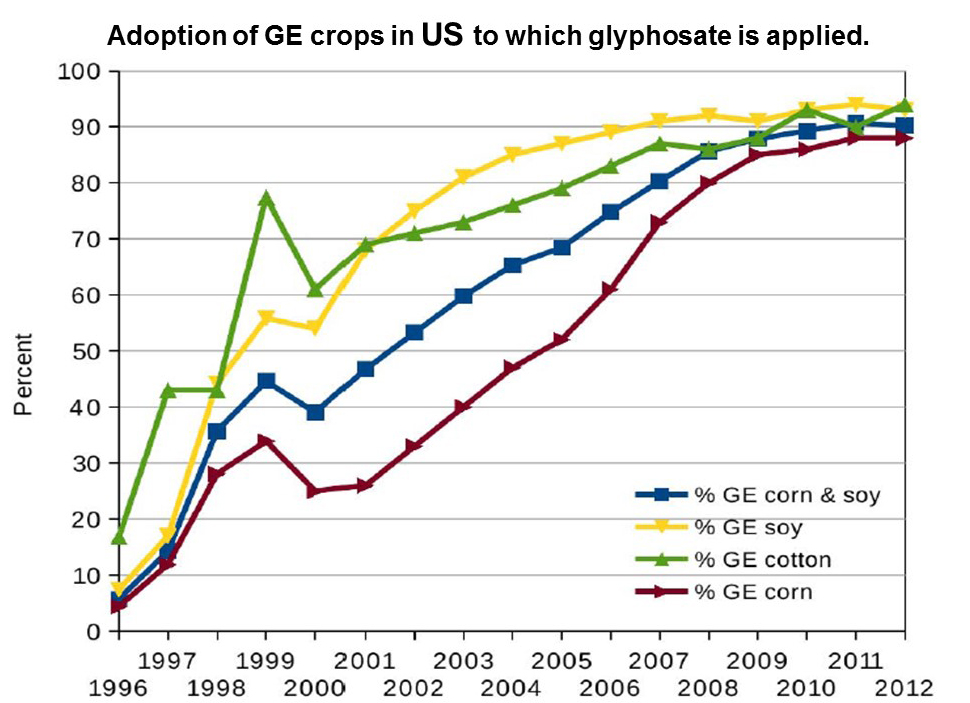
Figure 2. Adoption of GE crops in US to which glyphosate is applied. Reproduce with permission from: Swanson, N. L., Leu, A., Abrahamson, J., & Wallet, B. (2014). Genetically engineered crops, glyphosate and the deterioration of health in the United States of America. Journal of Organic Systems, 9(2), 6-37.
In the USA glyphosate is the most widely used herbicide and about 250 million pounds are applied to U.S farms and even lawns every year. In addition, the common wheat harvest protocol in the United States is to drench the wheat fields with Roundup® several days prior to harvesting. This allow crops to dry down for an earlier, easier and bigger harvest (Swanson et al, 2014; Sarah, 2014). Glyphosate and the many other herbicides and pesticides are in our food, animal fodder and thus in the meat, clothing, water supply and even air. Almost all human and animal food now contains low levels of glyphosate and its inert but poisonous additional ingredients which may impact our health.
The increased application of glyphosate with the increase of chronic diseases over the last 35 years correlates highly (great than 0.9) and is highly significant for obesity (R=0.96), diabetes (R=0.98), end stage renal disease death (R=0.97), Crohn’s disease and ulcerative colitis (R=0.94), death due to intestinal infection (R=0.97), autism in children (6-21 years) (R=0.99), deaths from senile dementia (R=0.99), and death from Alzheimer’s (R=0.93). Figure 3 and 4 shows the relationship between diabetes, autism and glyphosate.
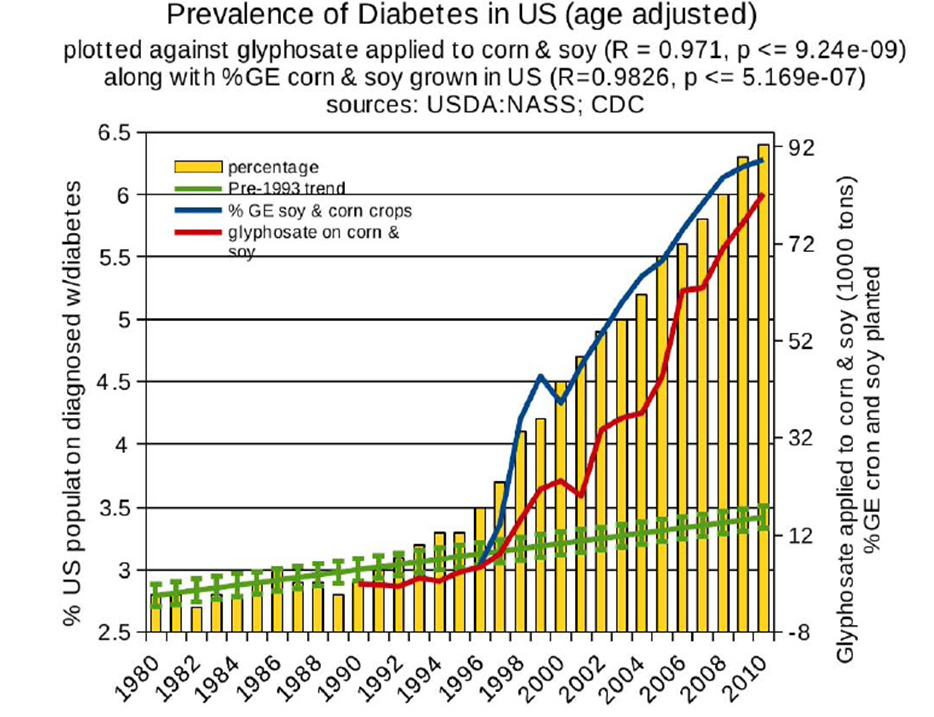
Figure 3. Correlation between age-adjusted diabetes prevalence and glyphosate applications and percentage of US corn and soy crops that are genetically engineered. Reproduce with permission from: Swanson, N. L., Leu, A., Abrahamson, J., & Wallet, B. (2014). Genetically engineered crops, glyphosate and the deterioration of health in the United States of America. Journal of Organic Systems, 9(2), 6-37.
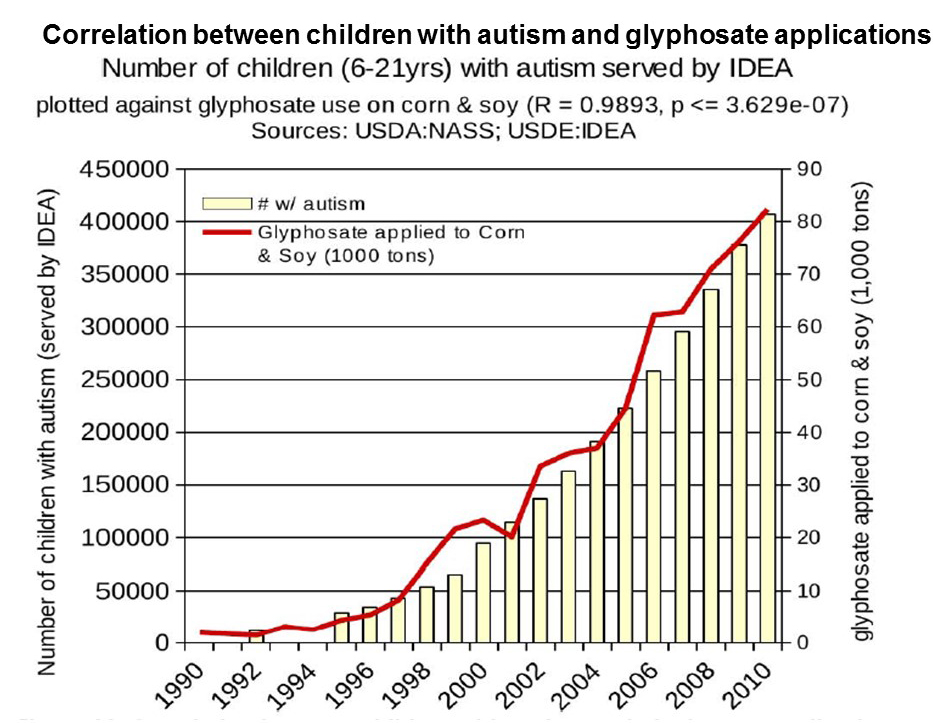 Figure 4. Correlation between children with autism and glyphosate applications. Reproduce with permission from: Swanson, N. L., Leu, A., Abrahamson, J., & Wallet, B. (2014). Genetically engineered crops, glyphosate and the deterioration of health in the United States of America. Journal of Organic Systems, 9(2), 6-37.
Correlations are not proof and similar correlations could be plotted between these illnesses and increased production of plastics, intake of high fructose corn syrup, computer use, cell phone use, antidepressant and ADHD medications. Correlations may suggest relationships that should be investigated.
Correlations may suggest possible relationship which should be investigated. It is very difficult to investigate the correlation because most people unknowingly have ingested glyphosate. When using naturalistic observations such as comparing people who eat organic versus non-organic foods, there are many other variables that could account for the differences.
Roundup® residues in food is harmful is from a biological perspective. The purpose of using glyphosate and its inert ingredients is to act as a herbicide and biocide to suppress weed growth and act as a drying agent to improve harvest. As human beings are biological organisms, glyphosate affects our cellular metabolism and especially our bacteria that live in our gut and are necessary for our health. As Samsel & Seneff, (2013) point out, ‘it kills the beneficial bacteria in our gut, leading to the steep rise in intestinal diseases.’ Specifically, Shehata et all (2012) found that “highly pathogenic bacteria as Salmonella Entritidis, Salmonella Gallinarum, Salmonella Typhimurium, Clostridium perfringens and Clostridium botulinum are highly resistant to glyphosate. However, most of beneficial bacteria such as Enterococcus faecalis, Enterococcus faecium, Bacillus badius, Bifidobacterium adolescentis and Lacto-bacillus spp. were found to be moderate to highly susceptible” (Swanson et al, 2014).
Given the very strong correlations of increased disease with increased use of Roundup®, the demonstrated evidence that glyphosate disrupts gut bacteria balance, cellular metabolic processes, kills human embryonic, placental and umbilical cord cells, and acts as endocrine disrupters, the recent decision by the International Agency for Research on Cancer (IARC) which is the specialized cancer agency of the World Health Organization that glyphosate is a possibly carcinogenic to humans (Group 2A), I strongly recommend avoiding glyphosate and other types of herbicide and pesticide contaminated foods. Use the precautionary principle and eat only organic foods.
If the radical increase of allergy and immune incompetence is linked to low level chronic exposure to glyphosate, than avoiding glyphosate and other pesticide and herbicide laced foods may reverse the allergy and immune incompetence. When people adapt an holistic lifestyle which includes stress management and eating organic foods, some report that their immune system became more competent and their allergies disappeared. For example, a 25 year old young woman who successfully reversed cervical dysplasia and eliminated high strains of HPV (her last Paps were normal and the HPV was gone) also found that her nut allergy disappeared (Peper, 2015). As she stated, “I was able to rid myself of a nut allergy that I developed when I was 19. I frequently had trouble breathing therefore I went to an allergist and they told me I had a nut allergy to peanuts (4 out of 4) and tree nuts (2 out of 4). This past July, knowing how truly healthy I had become and after noticing a little to no reaction when I accidentally consumed a nut, I decided to go back to the allergist. I got the test done, and no signs of a nut allergy came up. I believe it was due to this lifestyle change.”
In summary eat only organic foods when possible and follow the wisdom of numerous countries that have banned the use of Roundup®. This year, the Netherlands followed Russia, Tasmania, and Mexico to ban Roundup®. To understand more of the hidden dangers in our food supply from genetic engineering, herbicides and pesticides watch the following impressive videos by Robyn O’Brien presented at TEDxAustin 2011 and MIT researcher Dr. Stephanie Seneff describing in detail the politics and the harmful physiological impact of glyphosate.
References:
Chhabra R, Kolli S & Bauer JH (2013). Organically Grown Food Provides Health Benefits to Drosophila melanogaster. PLoS ONE 8(1): e52988. doi:10.1371/journal.pone.0052988
Peper, E. (2015). Thinking out of the box with biofeedback for the treatment of psychogenic non-epileptic seizures, vulvodynia, and CIN III carcinoma in situ cervical dysplasia. Paper accepted for the 46th Annual Meeting of the Association for Applied Psychophysiology and Biofeedback, Austin, Texas, March 11 – 14, 2015.
Peper, E. & Del Dosso, A. (2015 unpublished). Skipping breakfast a risk for blanking out on exams.
Samsel, A., & Seneff, S. (2013). Glyphosate, pathways to modern diseases II: Celiac sprue and gluten intolerance. Interdisciplinary toxicology, 6(4), 159-184.
Sarah (2014). The real reason wheat is toxic (it’s not the gluten). The Healthy Home Economist, November 13, 2014. Retrieved January 10, 2015 http://www.thehealthyhomeeconomist.com/real-reason-for-toxic-wheat-its-not-gluten/
Saw, L., Shumway, J., & Ruckart, P. (2011). Surveillance Data on Pesticide and Agricultural Chemical Releases and Associated Public Health Consequences in Selected US States, 2003–2007. Journal of medical toxicology, 7(2), 164-171. http://download.springer.com/static/pdf/604/art%253A10.1007%252Fs13181-011-0152-8.pdf?auth66=1421018047_4db65b4e5f0e0349a608560a6c1392e7&ext=.pdf
Shehata, A. A., Schrödl, W., Aldin, A. A., Hafez, H. M., & Krüger, M. (2013). The effect of glyphosate on potential pathogens and beneficial members of poultry microbiota in vitro. Current microbiology, 66(4), 350-358.
Swanson, N. L., Leu, A., Abrahamson, J., & Wallet, B. (2014). Genetically engineered crops, glyphosate and the deterioration of health in the United States of America. Journal of Organic Systems, 9(2), 6-37. http://www.organic-systems.org/journal/92/JOS_Volume-9_Number-2_Nov_2014-Swanson-et-al.pdf
What to eat? Low fat foods, high fat foods…..?
Posted: July 12, 2014 Filed under: Evolutionary perspective, Nutrition/diet, Uncategorized | Tags: cancer, diet, evolution, health, heart disease, vitamins 4 Comments
Meat for sale (tongue and liver) at a traditional market (photo by Erik Peper).
Should I eat vegetables or meats? Should it be steaks or organ meats such as liver, heart, sweet breads? What foods contributes most to heart disease or cancer? Should I change my diet or take medications to lower my cholesterol?
Despite the many years of research the data is not clear. Many public health dietary guidelines and recommendations were based upon flawed research, researchers’ bias and promoted by agribusiness. Starting in the 1950s there has been a significant change in the dietary habits from eating animal fats to plant based oils and fats. It is so much cheaper to produce plant based polyunsaturated salad or cooking oils (e.g. Wesson and Mazola) and hydrogenated hardened oils (e.g. margarine and Crisco) than animal fats (e.g., butter, beef tallow, and lard). Despite the many claims that lowering animal fat intake would reduce heart disease and possibly cancer, the claims are not supported by research data. It is true that consuming liquid plant based oils lowers the cholesterol, but with the possible exception of olive oil, polyunsaturated oils are associated with an increased cancer and death rates in large population studies (Multiple Risk Factor Intervention Trial Research Group,1982; Shaten, 1997).
 We assume that lowering cholesterol is healthy; however, it is usually a surrogate marker representing a hypothesized improvement in health. A short term apparent reduction in cholesterol levels or other illness markers may mask the long term harm. Only long term outcome studies which measure the total death rate– not just from one disease being studied but from all causes of death–provides the objective results. When looking at the results over a longer time period, there appears to be no correlation between fat intake and heart disease. In fact lowering fat intake seems to be associated with poorer long term health as described in the outstanding book, The Big Fat Surprise–Why Butter, Meat & Cheese Belong in a Healthy Diet, by the science writer, Nina Teichol. Her superb investigative reporting describes in detail the flawed and biased research that underpinned the United States Department of Agriculture (USDA) and the American Heart Association (AHA) recommendations to reduce animal fats and use more plant based oils.
What should I eat now?
Diet recommendations used to be simple: Reduce animal fat intake and eat more plants. Now, there are no simple recommendations because they may depend upon your genetics (e.g., digestion of milk depends whether you are lactose tolerant or intolerant), your epigenetics (e.g., maternal malnutrition during your embryological development is a major risk for developing heart disease in later life), your physical and social activities (e.g., exercise reduces the risk for many diseases), and environment. The recent popularity of the hunter and gatherer diet, often known as the paleo diet, is challenging–it may depends on your ancestors. What hunter and gatherers ate depended upon geography and availability of food sources. The Inuit’s diet in the Arctic consisted of 90% meat/fish diet while the !Kung Bushman’ diet from the Kalahari desert in Africa consisted of less than a 15% meat/fish diet as shown in Figure 1.

Figure 1. The food content of hunter gatherers varied highly depending on geography. From: Jabr, F. (2013). How to Really Eat Like a Hunter-Gatherer: Why the Paleo Diet Is Half-Baked. Scientific American, June 3.
Use common sense to make food choices.
- Eat only those foods which in the course of evolution have been identified as foods. This means eating a variety of plants based foods (fruits, tubers, leaves, stems, nuts, etc.) and more organ meats. Ask yourself what foods did your forefathers/mothers ate that supported survival and reproductive success. Carnivores usually ate the internal organs first and often would leave the muscles for scavengers.
- Eat like your great, great grandparents. They were not yet brainwashed by the profit incentives of agribusiness and pharmaceutical industry. For more information, read the outstanding books by Michael Pollan, The Omnivore’s Dilemma: A Natural History of Four Meals and In Defense of Food: An Eater’s Manifesto.
- If possible eat only organically grown/raised foods. Non organic foods usually contain low levels of pesticides, insecticides, antibiotics and hormones which increases the risk of cancer (Reuben, 2010). They may also also contain fewer nutrients such as essential minerals, vitamins, and antioxidants (Barański et al, 2014). The beneficial effects of organic foods have been challenging to demonstrate because it may take many years to show a difference. Preliminary data strongly suggests that organic foods as compared to non organic foods increases longevity, improves fertility and enhances survival during starvation (Chhabra, Kolli, & Bauer, 2013). For more information, see my blog, Live longer, enhance fertility and increase stress resistance: Eat Organic foods.
- Adapt the precautionary principle and assume that any new and artificially produced additives or chemically processed foods–most of the foods in boxes and cans in the central section of the supermarket–contain novel materials which have not been part of our historical dietary experience. These foods may be harmful over the long term and our bodies not yet know how to appropriately digest such foods such as trans fats (Kummerow, 2009).
- Be doubtful of dietary recommendations especially if you know of counter examples and exceptions. For example, the low fat diet recommendations could not explain the French or Swiss paradox (high butter and cheese intake and low heart disease rates). If examples exist, the popular dogma is incomplete or possibly wrong. Be skeptical about any health food claims. Ask who has funded the research, who decides whether a food can have a label that states “it is heart health” and can prevent a disease, and who would benefit if more of this food is sold.
My final comments on nutrition (source unknown).
- The Japanese eat very little fat and suffer fewer heart attacks than us.
- The Mexicans eat a lot of fat and suffer fewer heart attacks than us.
- The French eat lots of butter and drink alcohol and suffer fewer heart attacks than us.
- The Chinese drink very little red wine and suffer fewer heart attacks than us.
- The Italians drink a lot of red wine and suffer fewer heart attacks than us.
- The Germans drink a lot of beer and eat lots of sausages and fats and suffer fewer heart attacks than us.
Conclusion
Eat and drink what you like especially if you enjoy it with company…speaking English is apparently what kills you!
References:
Jabr, F. (2013). How to Really Eat Like a Hunter-Gatherer: Why the Paleo Diet Is Half-Baked. Scientific American, June 3.http://www.scientificamerican.com/article/why-paleo-diet-half-baked-how-hunter-gatherer-really-eat/
Kummerow, F. A. (2009). The negative effects of hydrogenated trans fats and what to do about them. Atherosclerosis, 205(2), 458-465.http://www.atherosclerosis-journal.com/article/S0021-9150%2809%2900208-1/abstract
Multiple Risk Factor Intervention Trial Research Group. (1982). Multiple risk factor intervention trial. JAMA: The Journal of the American Medical Association, 248(12), 1465-1477. http://jama.jamanetwork.com/article.aspx?articleid=377969
Pollan, M. (2006). The Omnivore’s Dilemma: A Natural History of Four Meals. New York: Penguin Press. ISBN: 1594200823
Pollan, M. (2009). In Defense of Food: An Eater’s Manifesto. New York: Penguin Press. ISBN: 978-0143114963
Reuben, S. H. (2010). Reducing environmental cancer risk: what we can do now. DIANE Publishing. http://deainfo.nci.nih.gov/advisory/pcp/annualReports/pcp08-09rpt/PCP_Report_08-09_508.pdf
Shaten, B. J., Kuller, L. H., Kjelsberg, M. O., Stamler, J., Ockene, J. K., Cutler, J. A., & Cohen, J. D. (1997). Lung cancer mortality after 16 years in MRFIT participants in intervention and usual-care groups. Annals of epidemiology, 7(2), 125-136. http://www.annalsofepidemiology.org/article/S1047-2797%2896%2900123-8/abstract
Teicholz, N. (2014). The big fat surprise-Why butter, meat & cheese belong in a healthy diet. New York: Simon & Schuster. ISBM 978-1-4516-2442-7 http://www.thebigfatsurprise.com/
Don’t poison yourself: Avoid foods with high pesticide residues
Posted: May 1, 2014 Filed under: Nutrition/diet, Uncategorized | Tags: diet, health, pesticides Leave a commentIs it worth to pay $3.49 for the organic strawberries while the non-organics are a bargain at $2.49?
Are there foods I should avoid because they have high pesticide residues?
The United States Department of Agriculture (USDA) and the United States Environmental Protection Agency (EPA) state that pesticide residues left in or on food are safe and non-toxic and have no health consequences. I have my doubts! Human beings accumulate pesticides just like tuna fish accumulates mercury—frequent ingesting of very low levels of pesticides residue may result in long term harmful effects and these long term risks have not been assessed. Most pesticides are toxic chemicals and were developed to kill agricultural pests — living organisms. The actual risk for chronic low level exposure is probably unknown; since, the EPA pesticide residue limits are a political compromise between scientific findings and lobbying from agricultural and chemical industries (Portney, 1992).
Organic diets expose consumers to fewer pesticides associated with human disease (Forman et al, 2012). In addition, preliminary studies have shown that GMO foods such as soy, potatoes, bananas and raisins reduces longevity, fertility and starvation tolerance in fruit flies (Chhabra et al, 2013)
Adopt the precautionary principle. As much as possible avoid the following foods that have high levels of residual pesticides as identified by the Environmental Working Group in their 2014 report.
Apples
Strawberries
Grapes
Celery
Peaches
Spinach
Sweet bell peppers
Nectarines-imported
Cucumbers
Cherry tomatoes
Snap peas-imported
Potatoes
Hot peppers
Blueberries-domestic
Lettuce
Kale/collard greens
For more details, see the Environmental Working Group report for the rankings of 48 foods listed from worst to best.
https://www.youtube.com/watch?feature=player_embedded&v=BfNQGd9BTK0
References:
Chhabra R, Kolli S, Bauer JH (2013) Organically Grown Food Provides Health Benefits to Drosophila melanogaster. PLoS ONE 8(1): e52988. doi:10.1371/journal.pone.0052988 http://www.plosone.org/article/info:doi%2F10.1371%2Fjournal.pone.0052988
Portney, P. R. (1992). The determinants of pesticide regulation: A statistical analysis of EPA decision making. The Journal of Political Economy, 100(1), 175-197.
Concered about food and health?
Posted: April 19, 2014 Filed under: Nutrition/diet, Uncategorized | Tags: agriculture, cooking, diabetes, diet, food, health Leave a commentIf you are concerned about food and health, watch Michael Pollan’s presentation, How Cooking Can Change Your Life. It is pragmatic and full of wisdom.
From Wisdom to Alzheimer’s: Are we poisoning ourselves with affluent malnutrition and sedentary life style?
Posted: December 14, 2013 Filed under: Exercise/movement, Nutrition/diet, self-healing, Uncategorized | Tags: Alzheimer, diet, evolution, exercise, health Leave a commentWise elders, grand parents or statesmen have been the traditional roles for aging adults. Older people were revered as the repository and sources of wisdom in many traditional cultures. Presently the development of aging into wisdom is being overshadowed by the specter of Alzheimer’s disease. Wisdom transforming into Alzheimer’s disease does not compute. How come that in slightly more than a century after it was first described by the neuropathologist Alois Alzheimer in 1906, the fear of contracting and possible having Alzheimer’s disease with the concurrent loss of cognitive and body functions is becoming a possibility? How could this have occurred?
Today more people are living to older ages; however, in traditional cultures some people also lived to very old age (the major increase in present day longevity is due to the elimination of infant and maternal mortality and medical treatment to survive trauma).
Is it possible that the prevention of Alzheimer’s will not be found in pharmaceutical treatment but in promoting organic food diet and movement? The research data is starting to find that our life style patterns are risk factors for Alzheimer’s. Changing lifestyle factors is a more promising treatment approach than drugs. A significant risk factor may be the confluence of a sedentary lifestyle and affluent malnutrition. Researchers are even reporting that the built up of the beta amyloid plaques in brains of people with Alzheimer’s disease is not the result of aging but the body’s attempt to cope with the influx of environmental and dietary poisons or decreases in essential foods or body activities.
Risk: Sedentary lifestyle-Too little exercise
Over the last hundred years–and rapidly accelerated in the last 30 years–we have transformed work into sitting. By sitting in front of a computer screen, we have created a new disease: Immobilization Syndrome. Lack of exercise is recognize as a major factor in numerous illnesses such as cardiovascular disease, obesity, and diabetes. Movement in many different forms reduces the risk of illness. Older people who exercise have a significant reduction in the risk of developing Alzheimer’s (Larson, 2006; Radak et al, 2010).
Regular movement lowers the risk. Even though there is overwhelming scientific evidence that movement and exercise are required for health, there is a disconnect with the medical and educational practices. Insurances will pay for medical treatment; however, they usually will not pay for prevention or exercise. At the same time physical education in schools is reduced or eliminated to reduce the risk of litigation (an injured child on the playground could sue the school). Children now spend most of their time in front of a screen while exercising their thumb and index fingers instead of playing and moving outdoors.
Risk: Affluent malnutrition-too much sugar and simple carbohydrates
Affluent malnutrition appears to be another risk factor. Recent findings suggests that the beta amyloids plagues, as the marker for Alzheimer’s in the brain, may be a protective response to the modulating insulin levels triggered by affluent malnutrition and sedentary life style. This disease has been labeled as type 3 diabetes by Associate Professor Suzanne de la Monte at Brown University (Steen et al, 2005). Namely, the disease occurs as the brain tissue becomes resistant to insulin.
Rats that are fed high-fructose corn syrup laced water experienced learning and memory problems in less than 6 weeks and became less responsive to insulin. At the same time if the animals were given omega 3 fatty acids, they appear to escape the cognitive decline. In other research rats developed Alzheimer like brain changes and became demented when Suzanne de la Monte interfered with how the rats brains respond to insulin (Trivedi, 2012).
Alois Alzheimer first described these abnormal protein structure in the brains a little more than a hundred years ago. At that time the European diet had increased sugar intake as shown in figure 1. While more recently there has been a significant increase in high fructose corn syrup as shown in figure 2.

Figure 1. Radical increase in sugar consumption in the last 200 years. From: http://blog.zestos.co.nz/2010/09/sugar-consumption-been-high-before.html

Figure 2. Increase in the type of sugar consumption in the last thirty years. From: http://blog.zestos.co.nz/2010/09/sugar-consumption-been-high-before.html
We are now becoming concerned with the Alzheimer’s disease as an upcoming epidemic. It cannot be just sugar; since, its consumption has been high since the beginning of the 20th century. A possible contributor could be the high-fructose corn syrup; however, it is most likely the interaction between reduced exercise and sugar.
Sugar set the stage for pathogenesis to occur in the brain and the absence of movement/exercise promotes and supports the pathogenesis. People continue to decrease movement: from walking or riding horses to sitting cars or standing on escalators and elevators; from doing physical housework to automated washing machines, driers and dishwashers; from preparing foods from raw materials to prepackaged foods; from filing and typing to computer work; from playing family games to watching TV and searching the net; from face to face communication to texting; etc.
We have separated from our biological evolutionary heritage. I am not surprised that Alzheimer’s disease and immobility and sugar are linked. Adopt the precautionary principle and assume that sugar and high-fructose corn syrup in conjunction with reduced movement (immobilization syndrome) is harmful.
As a reader, you will probably have to wait another 20 years before these findings have been scientifically proven against the overt and covert lobbying efforts of agribusiness and pharmaceutical industry. Remember it took 30 years to demonstrate that smoking was harmful. Begin to move and eat in concert with your evolutionary background (See Part III Self-care in Gorter and Peper, 2011).
Begin now!
Eat food not sugars! Eat the foods great grandparents would recognize as food as Michael Pollan (2009) describe in his superb book, In Defense of Food: An Eater’s Manifesto. Eat foods that have not been processed or adulterated by additives. Take charge by eating brain supporting foods such as organic vegetables, roots, fruits, nuts, fish, some organ meat, and eliminate all those sugary, fatty processed highly advertised fast foods.
Move and exercise! Get up and move every hour. Walk up the stairs instead of the escalator. Meet new people and move by going hiking, dancing, Tai Chi or yoga classes or volunteer by helping others.
References
Gorter, R. & Peper, E. (2011). Fighting Cancer-A Non Toxic Approach to Treatment. Berkeley: North Atlantic.
Larson, E.G., Wang, L., Bowen, J.D., McCormick, W. C., Teri, L., Crane, P., & Kukull, W. (2006). Exercise Is Associated with Reduced Risk for Incident Dementia among Persons 65 Years of Age and Older. Ann Intern Med, 144(2), 73-81.
Pollan, M. (2009). In Defense of Food: An Eater’s Manifesto. New York: Penguin Books.
Radak, Z., Hart. N., Sarga, L., Koltai, E., Atalay, M., Ohno, H., & Boldogh, I. (2010). Journal of Alzheimer’s Disease, 20(3), 777-83.
Steen, E., Terry, B.M. Rivera, E.J., Cannon, J.L., Neely, T.R., Tavares, R., Xu, X. J., Wands, J.R., & de al Monte, S. M. (2005). Impaired insulin and insulin-like growth factor expression and signaling mechanisms in Alzheimer’s disease-is this type 3 diabetes? Journal of Alzheimer’s Disease, 7(1), 53-80.
Trivedi, B. (2012). Eat your way to dementia. New Scientist, 215(2880), 32-37.
Live longer, enhance fertility and increase stress resistance: Eat organic foods
Posted: April 21, 2013 Filed under: Nutrition/diet, Uncategorized | Tags: diet, fertility, organic foods, pesticide, stress 12 CommentsHealth food advocates have long claimed that organic foods are better for your health because they have more nutrients and fewer pesticides than non organic or genetically modified grown foods. On the other hand, the USDA and agribusiness tend to claim that organically grown foods have no additional benefits. Until now, much of the published research appeared inconclusive and meta-analysis appeared to indicate that there are no health benefits from organic as compared to non organic foods although organic foods did reduce eczema in infants (Dangour et al, 2010).
Food studies that have demonstrated no benefits of organic farmed foods as compared to non-organic or genetically modified crops should be viewed with skepticism since many of these studies have been funded directly or indirectly by agribusiness. On the other hand, independently funded research studies have tended to demonstrate that organic foods are more beneficial than non-organic foods. Sadly, the United States Department of Agriculture (USDA) and agribusiness are highly interdependent as the USDA both regulates and promotes agricultural products. On the one hand the USDA’s mission is “To expand economic opportunity through innovation, helping rural America to thrive; to promote agriculture production” and on the other hand “Enhance food safety by taking steps to reduce the prevalence of food borne hazards from farm to table, improving nutrition and health by providing food assistance and nutrition education and promotion. (For more discussion on the conflict of interest between agribusiness and the USDA, see Michael Pollan’s superb books, The Omnivore’s Dilemma: A Natural History of Four Meals and In Defense of Food: An Eater’s Manifest).
Historically, most nutritional studies have investigated the nutritional difference or pesticide residue between organic and non-organically farmed. Many studies have shown that organic grown foods have significantly lower pesticide residues than non organic foods (Baker et al, 2002; Luc, 2006). Even though agribusiness and the USDA tend to state that the pesticide residues left in or on the food are safe and non-toxic and have no health consequences, I have my doubts. Human beings accumulate pesticides just like tuna fish accumulates mercury—frequent ingesting of very low levels of pesticides residue may result in long term harmful effects. One way to measure if there is an effect of organic, non organic or genetically modified grown foods or residual pesticides is to do a long term follow up and measure the impact over the lifespan of the organism. This is difficult with human beings; since, it would take 50 or more years to observe the long term effects. Nevertheless, the effects of organically grown foods versus non-organically grown foods upon lifespan, fertility and stress resistance has now been demonstrated with fruit flies.
The elegant research by Chhabra R, Kolli S, Bauer JH (2013) showed that when fruit flies were fed either organic bananas, potatoes, soy or raisins, they demonstrated a significant increase in longevity, fertility and stress resistance as compared to eating non-organic bananas, potatoes, soy and raisins. In this controlled study, the outcome data is stunning. Below are some of their results reproduced from their article, “Organically Grown Food Provides Health Benefits to Drosophila melanogaster.”

Figure 1. Longevity of D. melanogaster fed organic diets. Survivorship curves of female fruit flies fed diets made from extracts of potatoes, raisins, bananas or soybeans (grey: conventional food; black: organic food; statistically significant changes (p,0.005) are indicated by asterisks).Median survival times of flies on conventional and organics food sources, respectively, are: potatoes: 16 and 22 days (,38% longevity increase,p,0.0001); soybeans: 8 and 14 days (,75% longevity increase, p,0.0001).doi:10.1371/journal.pone.0052988.g001. Reproduced from Chhabra R, Kolli S, Bauer JH (2013).

Figure 2. Daily egg-laying of flies exposed to organic diets. Egg production of flies fed the indicated food was determined daily. Shown are the averages of biological replicates; error bars represent the standard deviation (grey: conventional food; black: organic food; statistically significant changes (p,0.005) are indicated by asterisks; p,0.0001 for all food types). doi:10.1371/journal.pone.0052988.g002. Reproduced from Chhabra R, Kolli S, Bauer JH (2013).

Figure 3. Starvation tolerance of flies raised on organic diets. Survivorship curves of female flies raised for 10 days on the indicated food sources. Flies were then transferred to starvation media and dead flies were counted twice daily (grey: conventional food; black: organic food; statistically significant changes (p,0.005) are indicated by asterisks). Median survival times of flies on conventional and organics food sources, respectively, are: potatoes: 6 and 24 hours (p,0.0001); bananas: 24 and 48 hours (p,0.0001). doi:10.1371/journal.pone.0052988.g003. Reproduced from Chhabra R, Kolli S, Bauer JH (2013)
This elegant study demonstrated the cumulative impact of organic versus non-organic food source upon survival fitness. It demonstrated that non-organic foods decreased the overall health of the organism which may be due to the lower levels of essential nutrients, presence of pesticides or genetic modified factors.
The take home message of their research is: If you are concerned about your health, want to live healthier and longer, improve fertility and resist stress, eat organically grown fruits and vegetable. Although this research was done with fruit flies and human beings are not fruit flies since we eat omnivorously, it may still be very relevant especially for children. As children grow the ingestion of non-organic foods may cause a very low level nutrient malnutrition coupled with an increased exposure to pesticides. The same concept can be extended to meats and fish. Eat only meat from free ranging animals that have been fed organic grown foods and not been given antibiotics or hormones to promote growth.
Bon appétit
.References
Baker, B.P., Benbrook, C.M., & Groth III, E., & Lutz, K. (2002). Pesticide residues in conventional, integrated pest management (IPM)-grown and organic foods: insights from three US data sets. Food Additives and Contaminants, 19(5) http://www.tandfonline.com/doi/abs/10.1080/02652030110113799
Chhabra R, Kolli S, Bauer JH (2013) Organically Grown Food Provides Health Benefits to Drosophila melanogaster. PLoS ONE 8(1): e52988. doi:10.1371/journal.pone.0052988 http://www.plosone.org/article/info:doi%2F10.1371%2Fjournal.pone.0052988
Dangour, A.D., Lock, K., Hayter, A., Aikenhead, A., Allen, E., Uauy, R. (2010). Nutrition related health effects of organic foods: a systematic review. Am J Clin Nutr, 92,203–210. http://ajcn.nutrition.org/content/92/1/203.short
Luc, C., Toepel, K., Irish, R., Fenske, R.A., Barr, D.B., & Bravo, R. (2006). Organic Diets Significantly Lower Children’s Dietary Exposure to Organophosphorus Pesticides. Environ Health Perspect, 114(2), 260–263. http://www.ncbi.nlm.nih.gov/pmc/articles/PMC1367841/
Pollan, M. (2009). In Defense of Food: An Eater’s Manifesto. New York: Penguin Press. ISBN: 978-0143114963
Pollan, M. (2006). The Omnivore’s Dilemma: A Natural History of Four Meals. New York: Penguin Press. ISBN: 1594200823
Epilepsy: New (old) treatment without drugs
Posted: March 10, 2013 Filed under: Nutrition/diet, self-healing, Uncategorized | Tags: biofeedback, diet, ketogenic diet, neurofeedback 11 CommentsNothing is so hard as watching a child having a seizure.
–Elizabeth A. Thiele, MD, PhD, professor of neurology at Harvard Medical School
Until recently, when people asked me, “What would I suggest as a non-toxic/non-invasive biofeedback approach for the treatment of epilepsy?” I automatically replied, “A combination of neurofeedback, behavioral analysis treatment, respiration training, a low glycemic diet, and stress management and if these did not work, medications.” I have now changed my mind!
Epilepsy is diagnosed if the person has two or more seizures. About one to two percent of the population is diagnosed with epilepsy and it is the most common neurological illness in children. Medication is usually the initial treatment intervention; however, in about one third of the people, the seizures will still occur despite the medications. In some cases, people -often without the support of their neurologist/healthcare provider–will explore other treatment strategies such as diet, respiration training, neurofeedback, behavioral control, diet, or traditional Chinese medicine.
It is ironic that one of the tools to diagnose epilepsy is recording the electroencephalography (EEG)– brain waves–of the person after fasting while breathing quickly (hyperventilating). For some, the combination of low blood sugar and hyperventilation will evoke epileptic wave forms in their EEG and can trigger seizures (hyperventilation when paired with low sugar levels tends to increase slow wave EEG which would promote seizure activity).
If hyperventilation and fluctuating blood sugar levels are contributing factors in triggering seizures, why not teach breathing control and diet control as the first non-toxic clinical intervention before medications are prescribed. This breathing approach has shown very promising clinical success. (For more details see the book, Fried, R. (1987). The Hyperventilation syndrome-Research and Clinical Treatment. Baltimore: The Johns Hopkins University Press).
Self-management should be the first clinical intervention and not the last. Similarly, neurofeedback– brain wave biofeedback–is another proven approach to reduce seizures. This approach was developed by Professor Maurice B. Sterman at UCLA and was based upon animal studies. He demonstrated that cats who were trained to increase sensory motor rhythm (SMR) in their EEG could postpone seizure onset when exposed to a neurotoxin that induced seizures. He then demonstrated that human beings with epilepsy could equally learn to control their EEG patterns and inhibit seizures. This approach, just as the breathing approach, is non-toxic and reduces seizures.
Underlying both these approaches is the concept of behavioral analysis to identify and interrupt the chained behavior that leads to a seizure. Namely, a stimulus (internal or external) triggers a cascading chain of neurological processes that eventually results in a seizure. Thus, if the person learns to identify and interrupt/divert this cascading chain, the seizure does not occur. From this perspective, respiration training and neurofeedback could be interpreted to interrupt this cascading process. Behavioral analyses includes all behaviors (movement, facial expressions, emotions, etc) which can be identified and then interrupted. As professors Joanne Dahl and Tobias Lundgren from Uppsala University in Sweden state, The behavior technology of seizure control provides low-cost, drug free treatment alternative for individual already suffering from seizures and the stigmatization of epilepsy.
Until recently, I would automatically suggest that people explore these self-control strategies as the first intervention in treatment of epilepsy and only medication for the last resort. Now, I have changed my mind. I suggest the ketogenic diet as the first step for the treatment of epilepsy in conjunction with the self-regulation strategies—medication should only be used if the previous strategies were unsuccessful.
A ketogenic diet has a 90% clinical success rates in children–even in patients with refractory seizures. This diet stabilizes blood sugar levels and is very low on simple carbohydrates, high in fat, some protein, and lots of vegetables (a ratio of 4 grams of fat to 1 gram of carbohydrates and protein). In adults, the success rates drops to about 50%. The lower success rate may be the result of the challenges in implementing these self-regulatory diet approaches. As Elizabeth A. Thiele, MD, PhD, professor of neurology at Harvard Medical School points out, dietary therapy is the most effective known treatment strategy for epilepsy. Even though, ketogenic diet is the most effective therapy, it is less likely to be prescribed than medications—there are no financial incentives; there are, however, many financial incentives for prescribing pharmaceuticals.
These lifestyle changes are very challenging to implement. They need to be taught and socially supported. Just telling people what to do does not often work. It is similar to learning to play a musical instrument. The person needs step by step coaching and social support which is an intensive educational approach. To learn more about the research underlying the ketogenic diet as the first level of intervention for epilepsy, watch Professor Thiele’s presentation from the 2012 Ancentral Health Symposium, Dietary Therapy: Role in Epilepsy and Beyond.
 the peper perspective