Hope for dry eyes and eye strain
Posted: March 2, 2026 Filed under: attention, behavior, Breathing/respiration, computer, digital devices, emotions, health, Pain/discomfort, relaxation, screen fatigue, self-healing, stress management, techstress, Uncategorized, vision, zoom fatigue | Tags: behavioral optometry, blinking, digital eye strain, dry eyes, eyes, ophthalmology, optometry, prarasympathetic regulation 1 CommentAdapted from: Peper, E., Yoshino, A., & Harvey, R. Hope for Dry eyes and Eye Strain: How Breathing-Blinking Patterns Influence Dry Eye.
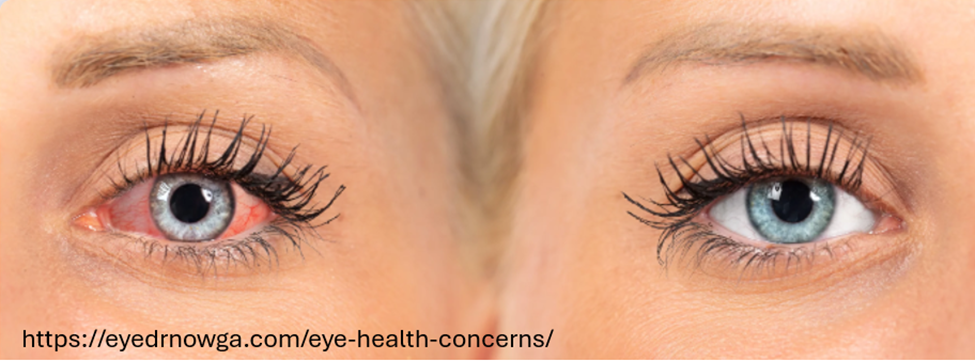
Many times during the day, I let my shoulders and face relax, and with each exhalation I feel the upper eyelids slightly dropping down at the same time as I am relaxing my jaw and mouth while sitting tall. I sense my tongue and throat sinking and feeling an increase in the space between my upper and lower molars. At the same time, I sense my eyes becoming soft and sinking down as my face muscle relax and are pulled down by gravity while sensing a gentle smile. My eyes are not trying to focus on anything. I continue to breathe slowly allowing a pause before inhaling and feel totally safe and at peace. While doing this, I sense moisture at the lower eyelids. After I have inhaled and as I exhale, I slowly open my eyes, and return to my work. My eyes feel slightly moist and as I blink, the eyelids glide smoothly over the corneal surface.
Background
Dry eyes and eye strain are far more common than most people realize. More than 50% of adults in the United States and Europe experience irritated or burning eyes, dryness, eye strain, headaches, tired or heavy eyes, sensitivity to bright light, and general eye discomfort (Wozniak et al., 2025). The prevalence increases with age and is higher among people who smoke, wear contact lenses, or spend excessive time looking at screens—typically more than six hours per day (Uchino et al,, 2013).
Prolonged, intense screen use—often referred to as digital eye strain or computer vision syndrome—occurs when people focus and concentrate, and the muscles involved with near vision contract and do not relax (Chu et al., 2014). During near vision, the ciliary muscles tighten around the lens to allow near focus, and the medial rectus muscles contract to converge the eyes. These muscles stay contracted and only relax when looking into the distance. This ongoing tension and increased sympathetic activation combined with reduced blinking decrease tearing, and contribute to dry eye symptoms because the tears are not able to provide adequate moisture. As a result, the eyes may become irritated, red and inflamed, which increases eye discomfort (Sheppard & Wolffsohn, 2018; Portello et al., 2012; Sheedy et al., 2003).
When someone is vigilant, fearful, or anticipates a threat, sympathetic activation increases (Ranti et al., 2020) and “eye blink are inhibited at precise moments in time so as to minimize the loss of visual information that occurs during a blink. The more important the visual information is to the viewer, the more likely he or she will be to inhibit blinking” (Ranti et al., 2020).
Without being aware, many people are in a chronic state of vigilance and unknowingly are scanning the world for threats to which they must react. Clinically, I often observe this when guiding clients in relaxation. For example, when I give the instruction, “Let me lift your hand,” some clients immediately lift their hand towards me. This nonverbal response suggests that they are constantly vigilant and are monitoring the world around them—always ready to act instead of trusting that they do not have to act and that the world is safe. In most cases, their breathing pattern tends to be shallow and thoracic.
Would it be possible that this ongoing vigilance,which increases sympathetic arousal contributes to the experience of dry eye syndrome? It could be one factor explaining why women have a higher incidence of dry eye disease as well as anxiety than men since the world is often less safe for women, and they breathe more thoracically and less diaphragmatically (abdominally) than men. Shallow chest breathing is also associated with increased in anxiety (Fugl-Meyer, 1974; Mendes et al., 2020; Wilhelm et al., 2001; Banushi eat al., 2023; McLean et al., 2011; Jalnapurkar, et al., 2018).
Note: The risk of dry eye can also be further increased by a wide range of medical conditions and medications, such as diabetes; glaucoma and glaucoma medications; allergies; autoimmune diseases; arthritis; thyroid disease; high cholesterol; acne treatments; antihistamines; antidepressants; and a history of refractive surgery, conjunctival infections, or corneal abrasions. Dry eye also occurs more frequently in women (Mohamed et al., 2024).
What is usually recommended to resolve dry eyes
The primary and effective first-line treatment to reduce the symptoms of dry eye disease is the use of artificial tears (lubricating eye drops) to provide relief (Maity et al., 2025). Another recommendation to reduce eye strain associated with computer use is to implement the 20/20/20 rule developed by the American Optometric Association–take a 20-second break every 20 minutes and look at something 20 feet away (AOA, 2026). Although the 20/20/20 practice can reduce eye strain and momentarily reduce some of the symptoms associated with dry eye disease especially if the eyes are closed, how we orient, breathe and look may contribute to the experience of dry eye discomfort.
Experience how to evoke dry eyes
Sit comfortably, look around, and observe how your eyes feel. Close your eyes. Now imagine there is a threat. Take a very quick gasp through an open mouth by inhaling into your upper chest and keep breathing very shallowly and irregularly. At the same time, open your eyes wide while being vigilant and looking for danger. Simultaneously, tense your body, inclining it slightly backward as if trying to avoid something. Do not blink, as you may miss the potential threat approaching you (adapted from Lemeignan et al., 1990; Bloch, 2017). A sample physiological recording of this pattern is shown in Figure 1.
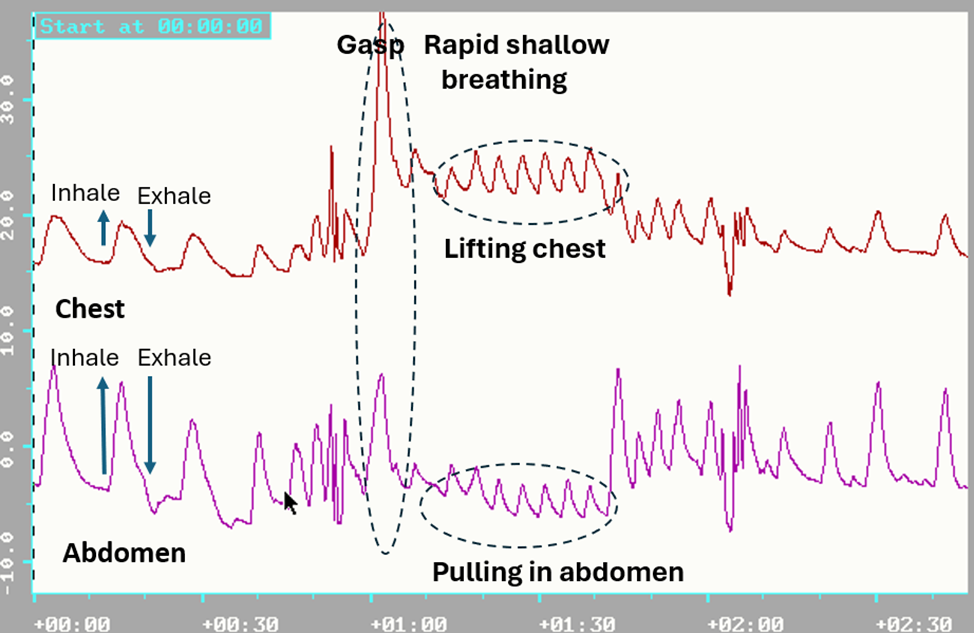
Figure 1. Breathing pattern in response to a threat; a rapid gasp into the chest and pulling the abdomen in to protect while breathing shallowly and rapidly.
Most participants report that almost immediately they feel their eyes getting cooler and after 15 seconds, drier. This facial, breathing, and posture pattern is an exaggeration of the somatic expression of fear that is evoked when we are vigilant and feel unsafe, and it increases sympathetic arousal (Kalawski, 2020).
In most cases, this pattern is automatic, and occurs without awareness, and increases sympathetic activity (Narkiewicz et al., 2006). On the other hand, slow diaphragmatic breathing tends to reduce sympathetic activity (Harada et al., 2014; Lehrer & Gevirtz, 2014). Clinically, the vigilance pattern can often be observed as a person slightly lifts and expands their chest during inhalation and drops and constricts it during exhalation, while breathing shallowly and rapidly without any abdomen expansion or constriction. It is often punctuated with brief breath holding and a reduced blinking rate during concentration.
To investigate these observations more systematically, we compared the practice of gasping while opening the eyes with gentle exhalation while opening the eyes—a pattern that may reduce sympathetic activation and alter the subjective sensation of eye dryness.
Participants: 13 males and 13 females; average age, 39 years
Procedure: While sitting comfortably with their eyes closed, participants were guided through the following two practices:
1.Gasp while opening the eyes
Sit comfortably and look around and observe how your eyes feel. Now close your eyes. Now imagine there is a threat. Take a very quick gasp through an open mouth by inhaling into your upper chest and keep breathing very shallowly and irregularly. At the same time, open your eyes wide while being vigilant and looking for danger. Simultaneously, tense your body, inclining it slightly backward as if trying to avoid something. Do not blink, as you may miss the potential threat approaching you. Repeat three times.
2. Gentle exhalation while opening the eyes
Sit comfortably and look around and observe how your eyes feel. Now close your eyes. Breathe comfortably and inhale by allowing your abdomen to extend and widen while feeling your eyes sinking in their sockets and becoming softer as you gently start exhaling. While gently exhaling, begin to open your eyes very slowly, looking down through your eyelashes without caring what you see, allowing your jaw and face muscles to relax and feeling a slight smile. When you feel the urge to inhale, allow your eyes to close and let your abdomen expand as you inhale slowly. Repeat three times.
After these two practices, the participants filled out a short assessment questionnaire in which they rated how their eyes felt on a scale from -5 (dry), 0 (normal), to 5 (moist/tearing), and rated which eye-opening procedure allowed their eyes to be more relaxed and moist.
Results
92.3% of the participants reported that opening their eyes during exhalation significantly increased eye relaxation and moisture, as shown in Figure 2. A one-way analysis of variance (ANOVA) revealed a significant difference between the inhale condition (M = −0.19, n = 26) and the exhale condition (M = 1.00, n = 25), F(1, 49) = 9.65, p = .003. The experience of eye irritation was correlated (r = 0.64) with the self-rating of experiencing anxiety and fear during the last three months.
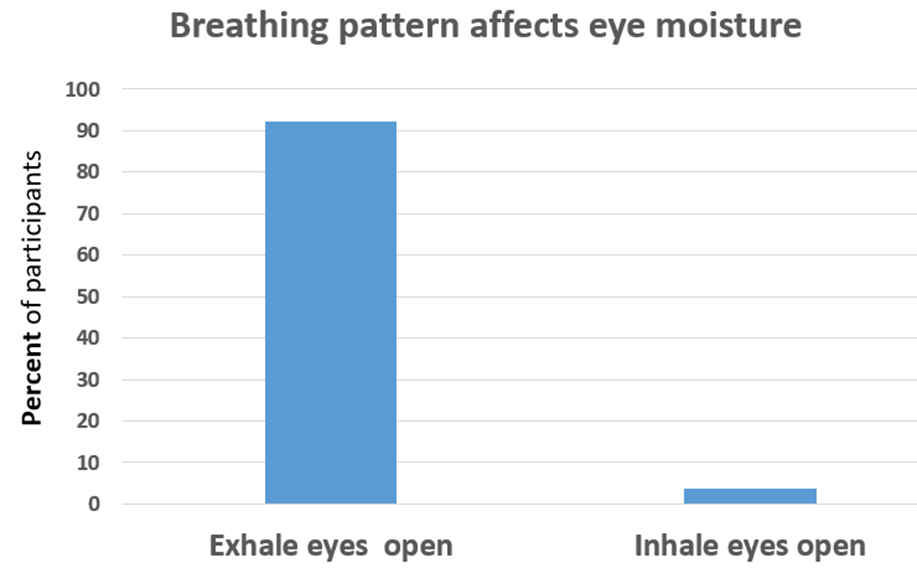
Figure 2. Gently opening the eyes during exhalation increases the experience of moisture and relaxation in the eyes.
Discussion
The results suggest that increased moisture and eye relaxation could be evoked by changing breathing-blinking patterns. Nearly all participants experienced an increase in tearing and eye relaxation; however, long-term benefits most likely occur if the person implements this practice many times during the day. By changing the breathingg-blink pattern and peacefully looking at the world with a smile, one would decrease sympathetic arousal and increase parasympathetic activity. This approach should be taught as the first self-care intervention to reduce eye irritation.
Recommendations to decrease dry eye and improve eye health
- Experience how the two different breathing and eye-opening practices described above affect your eye dryness or moistness.
- When you sense the first onset of minimal eye discomfort or when looking at screens on your computer or cellphone, implement the following practice for about 10 to 15 seconds. Allow your eyelids to close. Be aware of the sensations in your eyes, let your face and jaw relax as if they are being pulled down by gravity while sensing the eyes becoming soft and sinking into their sockets. Breathe diaphragmatically by allowing the abdomen to expand when you inhale. While gently exhaling, slowly open your eyes slightly while looking down with a gentle smile and sensing the moisture beginning to occur in the eyes. Repeat twice.
- During the day, implement the 20/20/20 vision-regeneration practice (every 20 minutes, take a 20-second break and look at something 20 feet away without caring what you see), as shown in Figure 3.
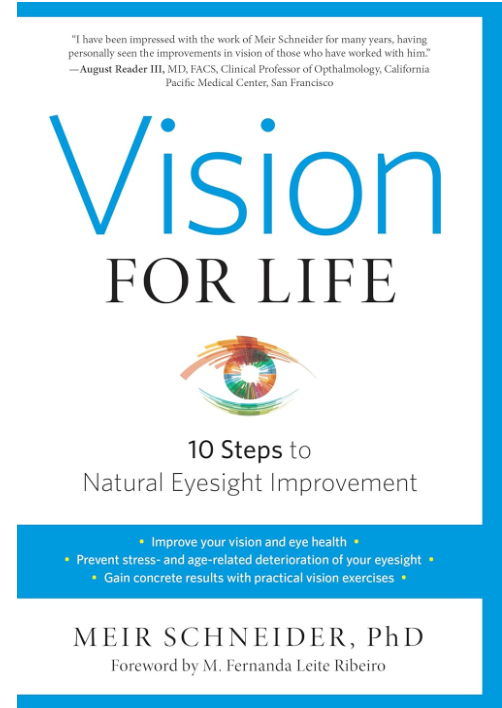
- Read and incorporated the many practices described in the superb book, Vision for Life; Ten Steps to Natural Eye Improvement, by Meir Schneider (2012).
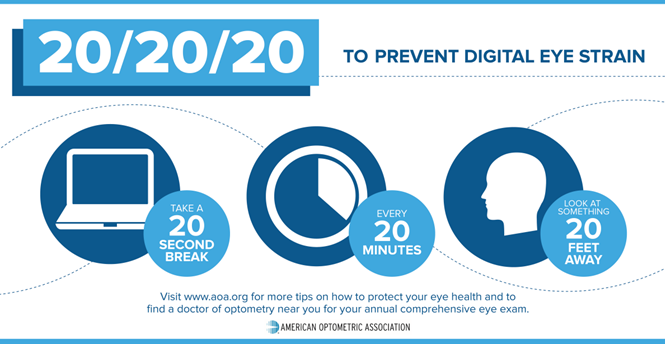
Figure 3. The 20/20/20 rule poster to prevent eye strain (AOA, 2026).
Do these practices many times and be aware of the sensations in your eyes and face. This passive awareness, in conjunction with slower breathing, tends to reduce sympathetic arousal and increase parasympathetic activity, which facilitates increased tearing. As one participant reported when she practiced this:
What a surprise it was when I closed my eyes and breathed slowly and diaphragmatically, and then, as I began to exhale, I very slowly began to open my eyes while looking down and through my eyelashes, while feeling my eyes sink into their sockets. Tearing occurred spontaneously, and my eyes felt lubricated. What a relief. It provided hope that I could help myself instead of only depending on lubricating eye drops whenever my eyes felt dry and irritated.
Two books to maintain and improve vision and reduce techstress
Vision for Life: Ten Steps to Natural Eye Improvement by Meir Schneider (2016) offers many strategies you can immediately incorporate into your daily life to improve and restore your vision. It provides guidelines on how to reverse developing vision issues before they cause damage and how to remedy existing problems, including near- and far-sightedness, lazy eye, as well as more serious conditions such as cataracts, glaucoma, optic neuritis, detached retinas and retinal tears, macular degeneration, and retinitis pigmentosa.
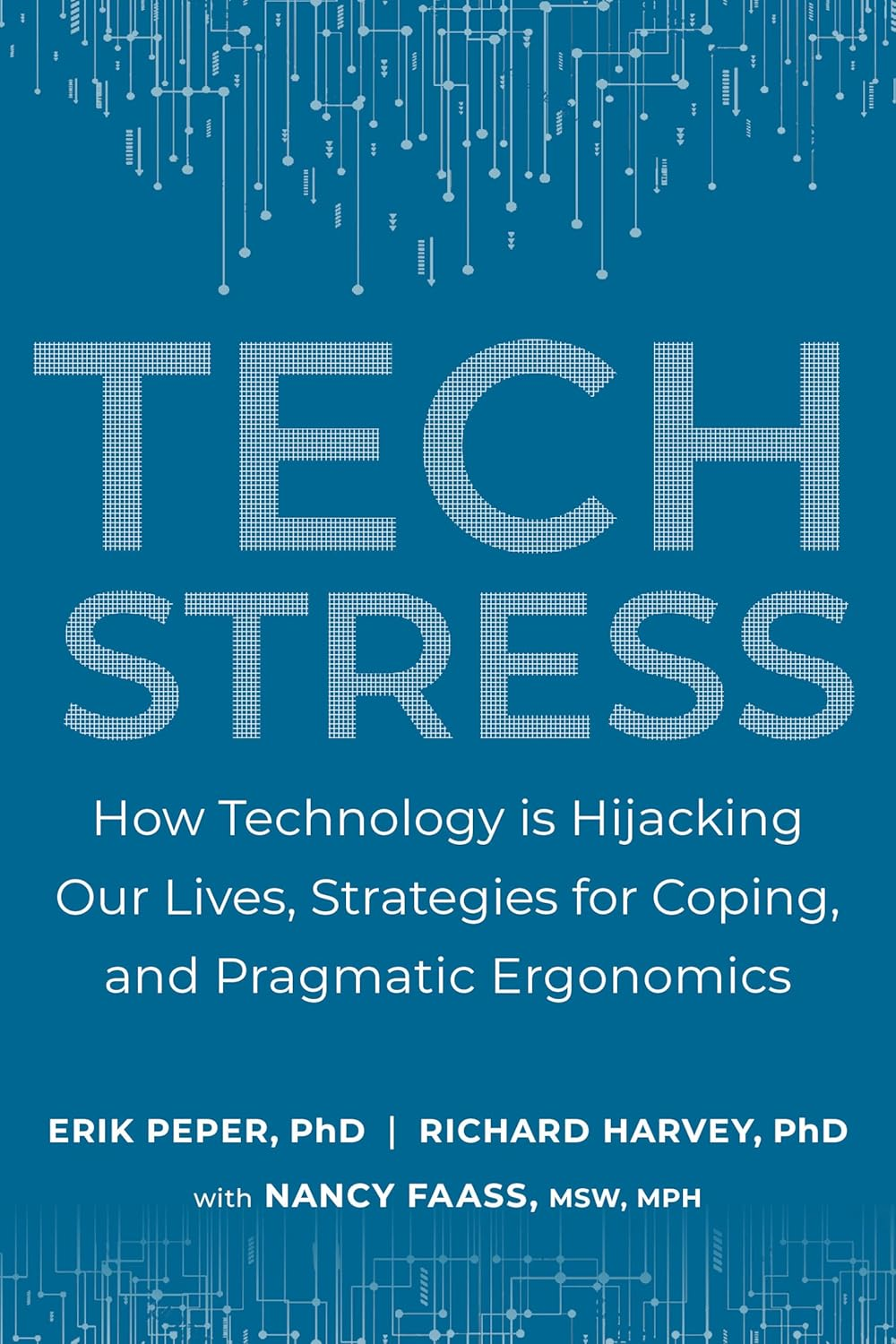
TechStress: How Technology is Hijacking our Lives, Strategies for Coping, and Pragmatic Ergonomics by Erik Peper, Richard Harvey, and Nancy Faass (2020) offers practical tools to avoid the evolutionary traps that trip us up and address the problems associated with technological overuse. It includse effective strategies and practices that individuals can use to optimize their workspace, reduce physical strain, correct posture, and improve vision. It provides fresh insights on reducing stress and enhancing health.
Additional blogs that offer strategies to improve vision
References
AOA. (2026). 20/20/20/ to prevent digital eyes strain. American Optometric Association. https://www.aoa.org/AOA/Images/Patients/Eye%20Conditions/20-20-20-rule.pdf
Banushi, B., Brendle, M., Ragnhildstveit, A., Murphy, T., Moore, C., Egberts, J., & Robison, R. (2023). Breathwork interventions for adults with clinically diagnosed anxiety disorders: A scoping review. Brain Sciences, 13(2), 256. https://doi.org/10.3390/brainsci13020256
Bloch, S. (2017). Alba Emoting: A scientific method for emotional induction. Scotts Valley, CA: CreateSpace Independent Publishing Platform. https://www.amazon.com/Alba-Emoting-Scientific-Emotional-Induction/dp/154254884
Chu, C.A., Rosenfield, M., Portello, J.K. (2014). Blink patterns: reading from a computer screen versus hard copy. Optom Vis Sci., 91(3),297-302. https://doi.org/10.1097/OPX.0000000000000157
Craig, J. P., Nichols, K. K., Akpek, E. K., et al. (2017). TFOS DEWS II definition and classification report. The Ocular Surface, 15(3), 276–283. https://doi.org/10.1016/j.jtos.2017.05.008
Dartt, D. A. (2009). Neural regulation of lacrimal gland secretory processes: Relevance in dry eye diseases. Progress in Retinal and Eye Research, 28(3), 155–177. https://doi.org/10.1016/j.preteyeres.2009.04.003
Fugi-Meyer, A.R. (1974). Relative respiratory contribution of the rib cage and the abdomen in males and females with special regard to posture. Respiration, 31(3), 240–251. https://doi.org/10.1159/000193113
Harada, D., Asanoi, H., Takagawa, J., Ishise, H., Ueno, H., Oda, Y., Goso, Y., Joho, S., & Inoue, H. (2014). Slow and deep respiration suppresses steady-state sympathetic nerve activity in patients with chronic heart failure: from modeling to clinical application. American Journal of Physiology-Heart and Circulatory Physiology, 307(8), H1159–H1168. https://doi.org/10.1152/ajpheart.00109.2014
Jalnapurkar, I., Allen, M., & Pigott, T. (2018). Sex differences in anxiety disorders: A review. Journal of Psychiatry, Depression & Anxiety, 4, 011. https://doi.org/10.24966/PDA-0150/100011
Kalawski, J.P. (2020) The Alba Method and the Science of Emotions. Integr. Psych. Behav. 54, 903–919. https://doi.org/10.1007/s12124-020-09525-4
Lehrer, P. M., & Gevirtz, R. (2014). Heart rate variability biofeedback: How and why does it work? Frontiers in Psychology, 5, Article 756. https://www.ncbi.nlm.nih.gov/pmc/articles/PMC4104929/
Lemeignan, M., Guitart, L., & Bloch, S. (1990). Autonomic differentiation of emotional effector pattern of 6 basic emotions. Proceedings of the Fifth International Congress of Psychophysiology, Budapest, July 9–14, 199
Maity, M., Allay, M. B., Ali, M. H., Basu, S., & Singh, S. (2025). Effect of different artificial tears on tear film parameters in dry eye disease. Optometry and Vision Science, 102(1), 37–43. https://doi.org/10.1097/OPX.0000000000002206
McLean, C. P., Asnaani, A., Litz, B. T., & Hofmann, S. G. (2011). Gender differences in anxiety disorders: Prevalence, course of illness, comorbidity and burden of illness. Journal of Psychiatric Research, 45(8), 1027–1035. https://doi.org/10.1016/j.jpsychires.2011.03.006
Mendes, L. P. S., Vieira, D. S. R., Gabriel, L. S., Ribeiro-Samora, G. A., Dornelas de Andrade, A., Brandão, D. C., Goes, M. C., Fregonezi, G. A. F., Britto, R. R., & Parreira, V. F. (2020). Influence of posture, sex, and age on breathing pattern and chest wall motion in healthy subjects. Brazilian Journal of Physical Therapy, 24(3), 240–248. https://doi.org/10.1016/j.bjpt.2019.02.007
Mohamed, Z., Alrasheed, S., Abdu, M., & Allinjawi, K. (2024). Dry eye disease prevalence and associated risk factors among the Middle East population: A systematic review and meta-analysis. Cureus, 16(9), e70522. https://doi.org/10.7759/cureus.70522
Narkiewicz, K., van de Borne, P., Montano, N., Hering, D., Kara, T., & Somers, V. K. (2006). Sympathetic neural outflow and chemoreflex sensitivity are related to spontaneous breathing rate in normal men. Hypertension, 47(1), 51–55. https://doi.org/10.1161/01.HYP.0000197613.47649.0
Peper, E., Harvey, R., & Faass, N. (2020). TechStress: How Technology is Hijacking our Lives, Strategies for Coping, and Pragmatic Ergonomics, North Atlantic Books. https://www.amazon.com/Beyond-Ergonomics-Prevent-Fatigue-Burnout/dp/158394768X
Portello, J.K., Rosenfield, M., Bababekova, Y., et al. (2012). Computer-related visual symptoms in office workers. Ophthalmic and Physiological Optics, 32, 375–82. https://doi.org/10.1111/j.1475-1313.2012.00925.x
Ranti, C., Jones, W., Klin, A. et al. Blink Rate Patterns Provide a Reliable Measure of Individual Engagement with Scene Content. Sci Rep 10, 8267 (2020). https://doi.org/10.1038/s41598-020-64999-x
Schneider, M. (2016). Vision for Life: Ten Steps to Natural Eye Improvement. North Atlantic Books. https://www.amazon.com/Vision-Life-Revised-Eyesight-Improvement/dp/1623170087
Sheedy, J.E., Hayes, J.N., & Engle, J.(2003). Is all asthenopia the same? Optom Vis Sci, 80, 732–9. https://doi.org/10.1097/00006324-200311000-00008
Sheppard, A. L., & Wolffsohn, J. S. (2018). Digital eye strain: prevalence, measurement and amelioration. BMJ open Ophthalmology, 3(1), e000146. https://doi.org/10.1136/bmjophth-2018-000146
Stern, M. E., Gao, J., Siemasko, K. F., Beuerman, R. W., & Pflugfelder, S. C. (2004). The role of the lacrimal functional unit in the pathophysiology of dry eye. Experimental Eye Research, 78(3), 409–416. https://doi.org/10.1016/j.exer.2003.09.003
Swamynathan, S. K., & Wells, A. (2020). Conjunctival goblet cells: Ocular surface functions, disorders that affect them, and the potential for their regeneration. The Ocular Surface, 18(1), 19–26. https://doi.org/10.1016/j.jtos.2019.11.005
Uchino, M., Yokoi, N., Uchino, Y., Dogru, M., Kawashima, M., Komuro, A., Sonomura, Y., Kato, H., Kinoshita, S., Schaumberg, D.A., & Tsubota, K. (2013). Prevalence of Dry Eye Disease and its Risk Factors in Visual Display Terminal Users: The Osaka Study. American Journal of Ophthalmology, 156(4), 759-766.e1, https://doi.org/10.1016/j.ajo.2013.05.040
The epidemiology of dry eye disease: report of the Epidemiology Subcommittee of the International Dry Eye WorkShop (2007). Ocul Surf. , 5(2), 93-107. https://doi.org/10.1016/s1542-0124(12)70082-4
Wilhelm, F. H., Gevirtz, R., & Roth, W. T. (2001). Respiratory dysregulation in anxiety, functional cardiac, and pain disorders: Assessment, phenomenology, and treatment. Behavior Modification, 25(4), 513–545. https://doi.org/10.1177/0145445501254003
Wozniak, P., et al. (2025, September 12–16). Dry eye symptoms, severity, treatment and unmet needs: An analysis of the United States of America and a multinational snapshot (NESTS Study) [Poster presentation]. 43rd Congress of the European Society of Cataract and Refractive Surgeons (ESCRS), Copenhagen, Denmark. https://www.sciencedaily.com/releases/2025/09/250914205829.htm
Ziemssen, F., & Ruprecht, K. W. (2005).Autonomic dysfunction in dry eye syndrome. Ophthalmologe, 102(8), 744–749. https://doi.org/10.1007/s00347-005-1169-1
Resolve Eyestrain and Screen Fatigue
Posted: June 29, 2020 Filed under: Breathing/respiration, computer, digital devices, ergonomics, Exercise/movement, health, laptops, Neck and shoulder discomfort, Pain/discomfort, relaxation, stress management, Uncategorized, vision | Tags: blurry vision, computer vision syndrome, dry eyes, eyestrain, near vision stress, zoom fatigue 13 CommentsAdapted from: Peper, E., Harvey, R. & Faass, N. (2020). TechStress: How Technology is Hijacking Our Lives, Strategies for Coping, and Pragmatic Ergonomics. Berkeley: North Atlantic Books.

Forty percent of adults and eighty percent of teenagers report experiencing significant visual symptoms (eyestrain, blurry vision, dry eyes, headaches, and exhaustion) during and immediately after viewing electronic displays. These ‘technology-associated overuse’ symptoms are often labeled as digital eyestrain or computer vision syndrome (Rosenfield, 2016; Randolph & Cohn, 2017). Even our distant vision may be affected— after working in front of a screen for hours, the world looks blurry. At the same time, we may experience an increase in neck, shoulders and back discomfort. These symptoms increase as we spend more hours looking at computer screens, laptops, tablets, e-readers, gaming consoles, and cellphones for work, taking online classes, watching streaming videos for entertainment, and keeping connected with friends and family (Borhany et al, 2018; Turgut, 2018; Jensen et al, 2002).
Eye, head, neck, shoulder and back discomfort are partly the result of sitting too long in the same position and attending to the screen without taking short physical and vision breaks, moving our bodies and looking at far objects every 20 minutes or so. The obvious question is, “Why do we stare at and are captured by, the screen?” Two answers are typical: (1) we like the content of what is on the screen; and, (2) we feel compelled to watch the rapidly changing visual scenes.
From an evolutionary perspective, our sense of vision (and hearing) evolved to identify predators who were hunting us, or to search for prey so we could have a nice meal. Attending to fast moving visual changes is linked to our survival. We are unaware that our adaptive behaviors of attending to a visual or auditory signals activate the same physiological response patterns that were once successful for humans to survive–evading predictors, identifying food, and discriminating between friend or foe. The large and small screen (and speakers) with their attention grabbing content and notifications have become an evolutionary trap that may lead to a reduction in health and fitness (Peper, Harvey & Faass, 2020).
Near vision stress
To be able to see the screen, the eyes need to converge and accommodate. To converge, the extraocular muscles of the eyes tighten; to focus (accomodation), the ciliary muscle around the lens tighten to increase the curvature of the lens. This muscle tension is held constant as long as we look at the screen. Overuse of these muscles results is near vision stress that contributes to computer vision syndrome, development of myopia in younger people, and other technology-associated overuse syndromes (Sherwin et al, 2012; Enthoven et al, 2020).
Continually overworking the visual muscles related to convergences increases tension and contributes to eyestrain. While looking at the screen, the eye muscles seldom have the chance to relax. To function effectively, muscles need to relax /regenerate after momentary tightening. For the eye muscles to relax, they need to look at the far distance– preferably objects green in color. As stated earlier, the process of distant vision occurs by relaxing the extraocular muscles to allow the eyes to diverge along with relaxing the ciliary muscle to allow the lens to flatten. In our digital age, where screen of all sizes are ubiquitous, distant vision is often limited to the nearby walls behind a screen or desk which results in keeping the focus on nearby objects and maintaining muscular tension in the eyes.
As we evolved, we continuously alternated between between looking at the far distance and nearby areas for food sources as well as signals indicating danger. If we did not look close and far, we would not know if a predator was ready to attack us. Today we tend to be captured by the screens. Arguably, all media content is designed to capture our attention such as data entry tasks required for employment, streaming videos for entertainment, reading and answering emails, playing e-games, responding to text notifications, looking at Instagram and Snapchat photos and Tiktok videos, scanning Tweets and using social media accounts such as Facebook. We are unaware of the symptoms of visual stress until we experience symptoms. To illustrate the physiological process that covertly occurs during convergence and accommodation, do the following exercise.
Sit comfortably and lift your right knee a few inches up so that the foot is an inch above the floor. Keep holding it in this position for a minute…. Now let go and relax your leg.
A minute might have seemed like a very long time and you may have started to feel some discomfort in the muscles of your hip. Most likely, you observed that when you held your knee up, you most likely held your breath and tightened your neck and back. Moreover, to do this for more than a few minutes would be very challenging.
Lift your knee up again and notice the automatic patterns that are happening in your body.
For muscles to regenerate they need momentary relaxation which allows blood flow and lymph flow to occur. By alternately tensing and relaxing muscles, they can work more easily for longer periods of time without experiencing fatigue and discomfort (e.g., we can hike for hours but can only lift our knee for a few minutes).
Solutions to relax the eyes and reduce eye strain
- Reestablish the healthy evolutionary pattern of alternately looking at far and near distances to reduce eyestrain, such as:
- Look out through a window at a distant tree for a moment after reading an email or clicking link.
- Look up and at the far distance each time you have finished reading a page or turn the page over.
- Rest and regenerate your eyes with palming. While sitting upright, place a pillow or other supports under our elbows so that your hands can cover your closed eyes without tensing the neck and shoulders.
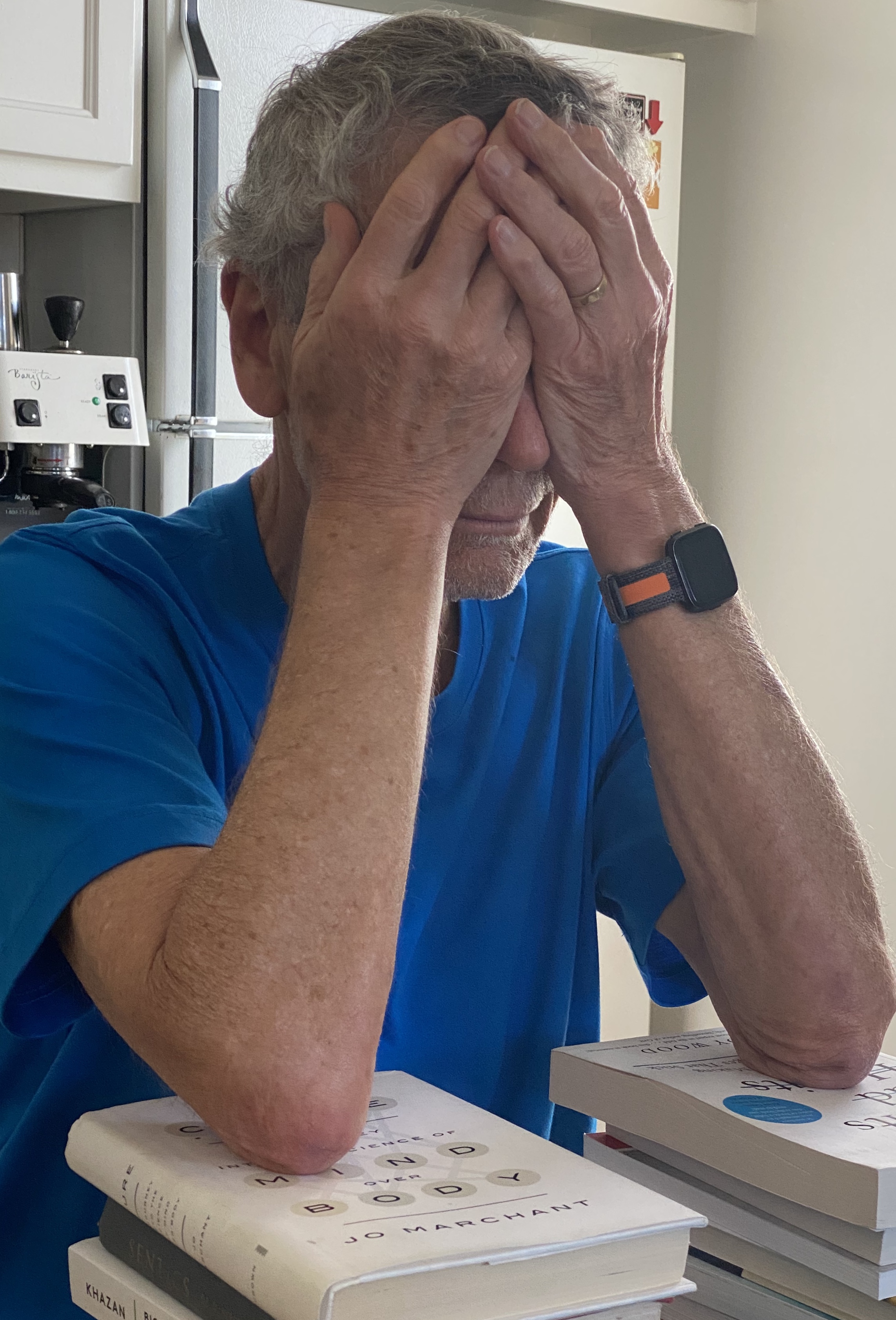
- Cup the hands so that there is no pressure on your eyeballs, allow the base of the hands to touch the cheeks while the fingers are interlaced and resting your forehead.
- Close your eyes, imagine seeing black. Breathe slowly and diaphragmatically while feeling the warmth of the palm soothing the eyes. Feel your shoulders, head and eyes relaxing. Palm for 5 minutes while breathing at about six breaths per minute through your nose. Then stretch and go back to work.
Palming is one of the many practices that improves vision. For a comprehensive perspective and pragmatic exercises to reduce eye strain, maintain and improve vision, see the superb book by Meir Schneider, PhD., L.M.T., Vision for Life, Revised Edition: Ten Steps to Natural Eyesight Improvement.
Increased sympathetic arousal
Seeing the changing stimuli on the screen evokes visual attention and increases sympathetic arousal. In addition, many people automatically hold their breath when they see novel visual or hear auditory signals; since, they trigger a defense or orienting response. At the same time, without awareness, we may tighten our neck and shoulder muscles as we bring our nose literally to the screen. As we attend and concentrate to see what is on the screen, our blinking rate decreases significantly. From an evolutionary perspective, an unexpected movement in the periphery could be a snake, a predator, a friend or foe and the body responds by getting ready: freeze, fight or flight. We still react the same survival responses. Some of the physiological reactions that occur include:
- Breath holding or shallow breathing. These often occur the moment we receive a text notification, begin concentrating and respond to the messages, or start typing or mousing. Without awareness, we activate the freeze, flight and fight response. By breath holding or shallow breathing, we reduce or limit our body movements, effectively becoming a non-moving object that is more difficult to see by many animal predators. In addition, during breath holding, hearing become more acute because breathing noises are effectively reduced or eliminated.
- Inhibition of blinking. When we blink it is another movement signal that in earlier times could give away our position. In addition, the moment we blink we become temporarily blind and cannot see what the predator could be doing next.
- Increased neck, shoulder and back tension. The body is getting ready for a defensive fight or avoidance flight.
Experience some of these automatic physiological responses described above by doing the following two exercises.
Eye movement neck connection: While sitting up and looking at the screen, place your fingers on the back of the neck on either side of the cervical spine just below the junction where the spine meets the skull.
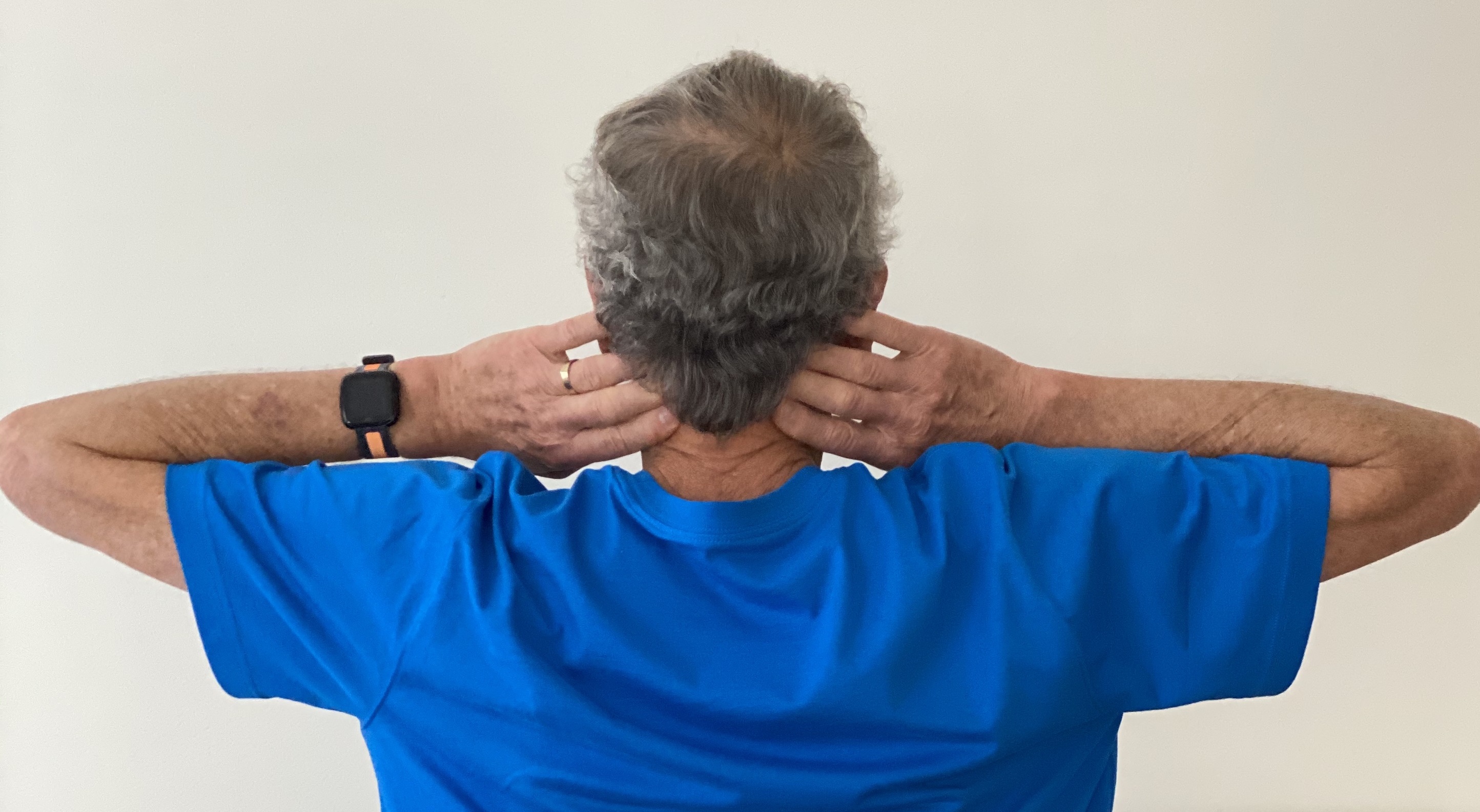
Feel the muscles of neck along the spine where they are attaching to the skull. Now quickly look to the extreme right and then to the extreme left with your eyes. Repeat looking back and forth with the eyes two or three times.
What did you observe? Most likely, when you looked to the extreme right, you could feel the right neck muscles slightly tightening and when you looked the extreme left, the left neck muscles slightly tightening. In addition, you may have held your breath when you looked back and forth.
Focus and neck connection: While sitting up and looking at the screen, place your fingers on the back of the neck as you did before. Now focus intently on the smallest size print or graphic details on the screen. Really focus and concentrate on it and look at all the details.
What did you observe? Most likely, when you focused on the text, you brought your head slightly forward and closer to the screen, felt your neck muscles tighten, and possibly held your breath or started to breathe shallowly.
As you concentrated, the automatic increase in arousal, along with the neck and shoulder tension and reduced blinking contributes to developing discomfort. This can become more pronounced after looking at screens to detailed figures, numerical data, characters and small images for hours (Peper, Harvey & Tylova, 2006; Peper & Harvey, 2008; Waderich et al, 2013).
Staying alert, scanning and reacting to the images on a computer screen or notifications from text messages, can become exhausting. in the past, we scanned the landscape, looking for information that will help us survive (predators, food sources, friend or foe) however today, we react to the changing visual stimuli on the screen. The computer display and notifications have become evolutionary traps since they evoke these previously adaptive response patterns that allowed us to survive.
The response patterns occur mostly without awareness until we experience discomfort. Fortunately, we can become aware of our body’s reactions with physiological monitoring which makes the invisible visible as shown in the figure below (Peper, Harvey & Faass, 2020).

Representative physiological patterns that occur when working at a computer, laptop, tablet or cellphone are unnecessary neck and shoulder tension, shallow rapid breathing, and an increase in heart rate during data entry. Even when the person is resting their hands on the keyboard, forearm muscle tension, breathing and heart rate increased.
Moreover, muscle tension in the neck and shoulder region also increased, even when those muscles were not needed for data entry task. Unfortunately, this unnecessary tension and shallow breathing contributes to exhaustion and discomfort (Peper, Harvey & Faass, 2020).
With biofeedback training, the person can learn to become aware and control these dysfunctional patterns and prevent discomfort (Peper & Gibney, 2006; Peper et, 2003). However, without access to biofeedback monitoring, assume that you respond similarly while working. Thus, to prevent discomfort and improve health and performance, implement the following.
- Practice breathing lower and slower to reduce sympathetic activation. Every few minutes remember to breathe slowly in and out through the nose. See the following blogs for more detailed instructions:
- Blink many times. Blink each time you click on a link, after typing a paragraph or after entering a few numbers.
- Get up, move, stretch and wiggle.
- Every few minutes do a small movement such as rotating your shoulders, dropping your hands to your lap.
- Every twenty minutes get up, stretch and walk around to reduce the chronic muscle tension.
- Install the free Stretch Break software on your computer or laptop to remind you to stretch… and then shows you how. Download free version from: https://stretchbreak.com/.
- Use small portable muscle biofeedback devices to learn awareness of the covert muscle tension and how to work without unnecessary muscle tension. For detailed training procedures see the free downloadable book by Erik Peper and Katherine Gibney, Muscle Biofeedback at the Computer- A Manual to Prevent Repetitive Strain Injury (RSI) by Taking the Guesswork out of Assessment, Monitoring and Training.
Finally, for a comprehensive overview based on an evolutionary perspective that explains why TechStress develops, why digital addiction occurs. and what can be done to prevent discomfort and improve health and performance, see our new book by Erik Peper, Richard Harvey and Nancy Faass, Tech Stress-How Technology is Hijack our Lives, Strategies for Coping and Pragmatic Ergonomics.

References
Peper, E. & Gibney, K. (2006). Muscle Biofeedback at the Computer- A Manual to Prevent Repetitive Strain Injury (RSI) by Taking the Guesswork out of Assessment, Monitoring and Training. The Biofeedback Federation of Europe. Download free PDF version of the book: http://bfe.org/helping-clients-who-are-working-from-home/
Schneider, M. (2016). Vision for Life, Revised Edition: Ten Steps to Natural Eyesight Improvement. Berkeley: North Atlantic Books. https://self-healing.org/shop/books/vision-for-life-2nd-ed
Turgut, B. (2018). Ocular Ergonomics for the Computer Vision Syndrome. Journal Eye and Vision, 1(2).
Are LED screens harming you?
Posted: June 18, 2016 Filed under: Uncategorized | Tags: blue light, dry eyes, health, myopia, stress management, vision, visual stress 7 Comments
Sleep has become more and more elusive since checking my cellphone in bed.
Ouch, my eyes hurt when I flipped the light switch on and the room was flooded with light.
After working on my computer screen, the world looked blurry.
At night, the intense blue white LED headlights blinded me unlike the normal incandescent headlights.
My eyes become irritated and dry after looking at the computer screen.
More and more people are myopic and wear contacts lenses.
Many older people are suffering from macular degeneration and may go blind.
Migraine pain significantly decreased when a person looks at soft green light and significantly increased when looking at bright white light (Hamzelou, 2016). .
Vision problems are becoming more and more frequent. More and more children are near sighted and need vision correction while macular degeneration–a major cause of blindness for older adults–is becoming more prevalent (Fan et al, 2004: Lee et al, 2002;
Faber et al, 2015; Schneider, 2016). As we look ahead into the future, a new epidemic is starting to roll in—compromised vision. Major culprits include:
- Near visual stress caused by looking intensely at surfaces or objects one to two feet away such as computer screens, tablets and cell phones inhibits the eyes to relax and increases near sightedness (Fernández-Montero et al, 2015).
- Absence of visual relaxation and shifting focus from close to far distance. This ongoing increased focus decreases blinking rate and exhausts the eyes.
- Absence of looking at the green coloring of vegetation that historically predominated our visual environment–a color that is relaxing for the eyes and body especially when looked from a distance.
- Sleep suppression and disturbance caused working/reading/watching the LED screens (computer screen, tablet, cell phone, TV, or e-readers such as Amazon Kindle Fire or any tablet) before going to bed (Tosini et al, 2016). The blue light component produced by the LED screen suppresses melatonin production and interferes with sleep onset.
- Extreme variation in light intensity damages the retina. The pupil which normally contracts to protect the retina as light intensity increases is too slow to respond to the sharp changes in light intensity. This is very similar to looking at the sun during a solar eclipse without eye protection. The intense sun light literally will burn/damage the retina and can induce blindness.
- Harmful exposure of the blue light component of the LED screens or light bulbs may increase inflammation and damage to the macular area of the retina. This is often labeled as toxic blue light with a wavelength of 415-455nm (Roberts, 2011).
The light that illuminates our visual world and how our world conditions us to use our eyes is totally different from how our eyes evolved over the last million years. Although our present life is far removed from our evolutionary past, our evolutionary past is embedded within us and controls much of our biology and psychology. Consider how we used to live for millennia.
I look up and see vultures circling. It is not too far. I rapidly walk in the direction. I have a sense where the possible food source could be. As I walk I alternately look at the distance and close at the ground and scrubs. I continually scan the environment. Although there are shadows where I look the light is of somewhat similar intensity unless I look directly at the sun. While doing tasks I focus ahead where I will plant my feet or at my food or objects my hands are manipulating. I alternately shift from foreground to background. As I look in the distance and the many green plants, my eyes relax.
In the morning, the natural light wakes me. The bright morning light wakes me, I stretch and move. As the day progresses the light becomes brighter, then at sunset the light becomes softer and the yellow orange red spectrum predominates.
Whether we lived twenty thousand years ago in caves or communities, or two hundred years ago in small houses in cities or farms, sunlight illuminated our world. The sun light warm us, is necessary for vitamin D production and controls our biological circadian rhythms. The sun light and sometime the moonlight provided the only source of illumination. Generally, we woke up with the light and went to sleep when the light disappeared. For thousands of years human beings have attempted to bring light to the darkness to reduce danger. Light produced by fire for cooking and protection against predators, and some form of oil lamps to provide minimal illumination. These light sources were predominantly red and yellow. It was only with the application of gas and electrical illumination that lights could become brighter. Usually the light transitions were slow and gentle which allowed the ciliary muscles of the iris to contract thus making the pupil much smaller and reduce the influx of light to the retina and thereby protected the retina from excessive fluctuating light intensity.
Exposure to light in the evening or night is very recent in evolutionary terms. For hundreds of thousands of years the night was dark as we hid away in caves to avoid predators. And, the darkness allowed our eyes to regenerate. Only in the last few thousand years did candles or oil lamps with their yellow orange light illuminate the dark. The fear of the dark is primordial– in the dark we were the prey. During those prehistoric times, our fear was reduced by huddling together for warmth and safety as we slept. These days, while sleeping we turn on a night light to feel safe or allow us to see in case we have to get up. For many of us, darkness still feels unsafe since as babies the fear was amplified as we slept alone in a crib without feeling the tactile signals of safety provided by direct human contact.
Now most people live and work indoors and we are no longer exposed to direct or indirect sun light. Instead, we can illuminate our work and personal world twenty four hours a day and total darkness is elusive. Even when I close the shades in my bedroom, the blinking light of the smartphone charger, and the headlights of the cars passing by penetrate the darkness. While entering a dark room, we throw the switch and the room instantly is flooded with light. This instant transition to full light pains the eyes as the eyes struggle to adapt by closing the iris. The retina was already impacted. This may be one of the covert factors that contribute to the development of macular degeneration?
Historically, we mainly looked at reflected light and almost never at the light source such as the sun. Now we predominantly look directly into the light source of the light bulb, TV, computer, laptop, e-readers and smart phone screens. We are unaware that the light we see is not the same type of light as natural sun light. It still appears white; however, it is an illusion. We live most of our lives indoors illuminated by incandescent, fluorescent and LED light sources. These lights have limited spectrums and may lead to light malnutrition and blue light poisoning.
The most recent change has been the use of light-emitting diode (LED)–an electronic semiconductor device that emits light when an electric current passes through it. This is the process of flat TV, computer, tablet, cellphone screens and LED light bulbs. These bulbs are highly energy efficient and thus are being installed everywhere but are a significant health hazard which is described superbly and in detail at the end of the article by architect and lighting expert Milena Simeonova, www.lighting4health.com
What can you do to protect your eyes and improve your vision?
Use your eyes as much as possible as we did through most of our evolutionary history which means:
- Read and implement the practices described in the superb book, Vision for Life: Ten Steps to Natural Eyesight Improvement., by Meir Schneider which has helped thousands of people maintain and improve their vision.
- Take many vision breaks and look away from your screen. If possible look at the far distance and green plants and trees to relax your eyes.
- Do NOT use LED e-reader; instead, use e-readers that can be read by reflective light such as Amazon Kindle Paperwhite eReader.
- Block direct intense light sources. Arrange them so that they illuminate the walls and you only see gradual light gradients of reflective light.
- Install warm LED light (particularly for evening time) which have much less damaging blue light.
- Install software such on your computer that automatically adjusts your screen’s color-temperature depending on the time of day and your location. Thus, when the sun sets, the colors of the screen change and become more yellow, orange, and red thereby reducing the transmitted blue light I(Robinson, 2015).
–Mac, Windows, and Linux computers: f.flux is a free app (https://justgetflux.com/).
–Android or iPhones: install a “blue light filter” app.
–For additional free apps to protect your eyes from too bright screen light at night, see: http://sometips.wersjatestowa.eu/how-to-protect- eyes-from-too-bright-screen-light-especially-at-night/
- Spent as much time as possible looking at far distances with soft green light backgrounds.
- Encourage children to play outside and do not allow young children to entertain themselves with screen time especially as the eyes are developing (see my 2011 blog: Screens will hurt your children).
- Limit screen time and increase movement and physical activity time.
- Blink and blink more and relax your eyes. When visually stressed, blinking is inhibited because you do not want to miss the tiger who potentially could attack you. That is our evolutionary response pattern; however, there are no life threatening tigers around, thus allow yourself to blink. Do the following exercise to experience how your eyes change depending how you open and close them.
How to increase stressed dry eyes:
Sit comfortably and let your eyes be closed and breathe. Then exhale and when ready to inhale, inhale rapidly into your upper chest while opening your eyes wide as if fearful and frightened. Repeat a second time and then keep holding your eyes wide open as if looking for danger.
Observe what happened. Most people report that the front of their eyes felt slightly cooler as if a slight breeze was going over the cornea, and the eyes (cornea) are drier.
How to increase relaxed moist eyes:
Sit comfortably and let your eyes be closed and breathe. While breathing allow your abdomen to expand when you inhale and gently constrict when you exhale as if the lungs are a balloon in your abdomen. When ready, inhale while keeping the shoulders relaxed and the eyes still closed and then gently begin to exhale and very slowly and softly open your eyes slightly while looking down peacefully and content. Just as a mother may look down upon their baby in her arms with a slight smile. Repeat a second time and gently open your eyes slightly as the exhalation has started and is softly flowing.
Observe what happened. Most people report that their eyes became softer, more relaxed with increased of the beginning of a tear beginning to fill the front of the cornea.
You have a choice! You can mobilize health or continue to risk your vision. Adapt the precautionary principle and act now. See the in-depth description of the potential harm of LED lights described by architect and lighting designer Milena Simeonova who helps people stay healthy by applying natural light patterns inside buildings (www.lighting4health.com).
LED Lighting and Blue Light Hazard
By Milena Simeonova, Architect, MS in Lighting LRC, IES, LC
When TVs, computers, tablets, and mobile devices are used in the evening hours, the cool LED light emanating from the screens, shifts the body onset for melatonin production, pushing back our bed time by 1-1.5hr or later. You may think that’s not bad, if you have to study for exams or deliver this final project. Think twice when disrupting the circadian system and depriving your body of normal sleep hours. It is a recipe for initiating illness. Watch the superb TEDxCambridge 2011 lecture, A Sleep Epidemic, by Charles Szeisler, PhD, MD from Harvard Medical School (https://www.youtube.com/watch?v=p4UxLpoNCxU)
Science has discovered that Blue light suppresses melatonin (the sleep hormone), and can either regulate or deregulate our circadian system (bio-clock), disrupting our sleep during the night, and lowering our performance during the day. It affects our normal body function that is synchronized with the daylight-night cycle as shown in Figure 1. If this cycle is disrupted, poor health follows in the form of heart disease, cancer, depression, obesity, etc. Figure 1: Double plot (2 x 24 hours.) of typical daily rhythms of body temperature, melatonin, cortisol, and alertness in humans for a natural 24-hour light/dark cycle. Our circadian system regulates the body’s endocrine and hormonal production; these functions are synchronized with the cycle of day-night in Nature. A healthy body starts producing melatonin at about 7pm and melatonin (sleep hormone) peaks at 12am-3am. From: van Bommel, W. J. M. & van den Beld, G. J. (2003). Lighting for work: visual and biological effects. Philips Lighting. p.7.
What about the change from incandescent to LED light in the room? With LED lighting, the Blue Light Hazard has increased, particularly from high output cool LED light fixtures with clear lens. LED lighting is produced from a Blue LED chip combined with warm phosphors; think of it as a Blue spike with a warm tail (see Figure 2). The trouble with the Blue spike is that it peaks at about 430nm-440nm, and science has found that light below the 440nm wavelength frequency, results in macular degeneration in older people (Roberts, 2001). For more detail, see Chemistry Professor Joan E. Roberts from Fordham University presentation, How does the spectrum of light affects the human health? http://www.be-exchange.org/media/ByLightofDay_Presentation.compressed-1.pdf
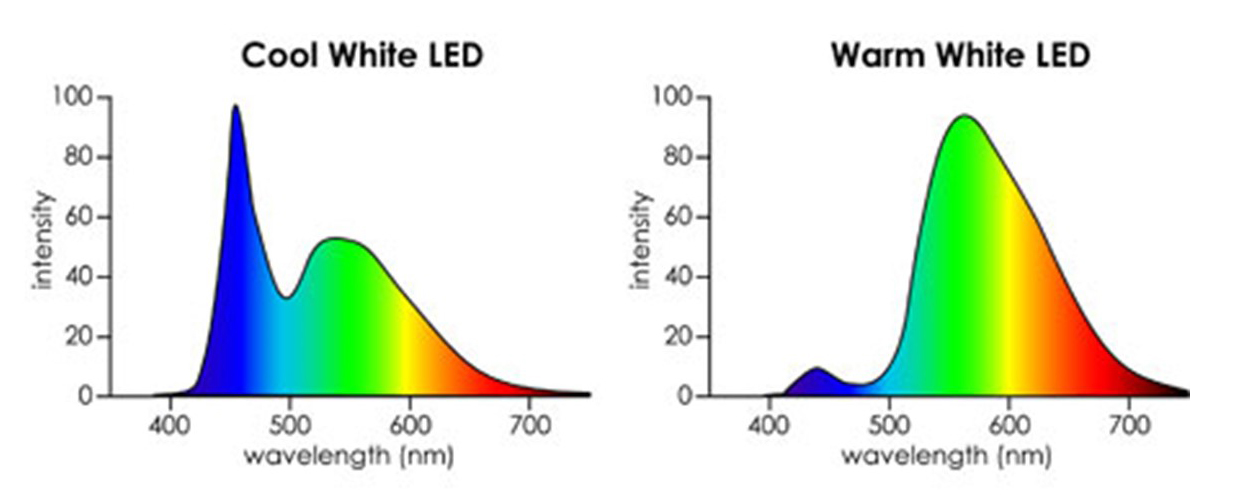 Figure 2: Actual measurements with LED Spectrometer of color tuning LED light source. On the left is cool LED light with big Blue light spike (big output of Blue light) and a small warm tail of phosphors. On the right is a warm LED light with decreased Blue Light output. From: Floroiu, V.A. (2015). The ABCs of truly energy efficient LED lighting. https://www.linkedin.com/pulse/abcs-truly-energy-efficient-led-lighting-victor-adrian-floroiu
The health risk is even greater for younger eyes (ages 20-40) because the older eyes are more protected with the natural aging of the eye lens that is thickening and yellowing, which in turn scatters Blue light and protects the eye retina from energy absorption. In contrast, the younger eyes allow 2-3 times more transmittance of Blue light, resulting in higher ocular oxidation and greater risk of retinal photo-degradation (Hammond et al, 2014). Thus in a room lighted with cool LED lighting (above 4000K), there will be a lot of Blue light that can be damaging to the eye retina. This is particularly true, when eyes have direct exposure to high output LED fixtures that are non-dimmable.
This is just the tip of the iceberg, as LED lighting has other potential health issues, such as flicker that is barely discernible at full light output, but increases when dimming the lights; or the spatial flicker resulting from the gazing along bright LED lights in a room; or the multi-fringed or multiple shadows of a single object, projected from the multiple LED chips in a fixture, that is unnatural and not observed in Nature. It is important to choose LED lighting that maintains human health. (See: https://www.greenbiz.com/blog/2010/01/21/pendulum-energy-efficiency-and-importance-human-factors)
Interactive and dynamic lighting are also on the rise, and will have unintended effects on the Autonomous Nervous System (ANS) with over-stimulating the Sympathetic neural system, disrupting the balance of arousal and rest that is needed for people to stay healthy.
How can we protect our health? For now, use 4000K LED light for daytime, use warmer lights 3000K and below for the evening hours; use as night light warm or amber color light; get blue light filter apps for your screens; dim your room lights in the evening, use LED lights that have a diffuse lens, shade to soften the light beam; aim LED lights to the ceiling or wall surfaces, and away from the eyes; and best of all – get plenty of healthy daylight during the day.
The mechanism of Blue Light Hazard (BLH). Blue light also known as “cool” light, has a high frequency of oscillation, high excitation of its light particles or photons. The “blue” photons have smaller mass, and carry significantly higher energy than the red light photons, blue photons can create oxidative photodegradation in ocular tissues, and suppress effectively melatonin and disrupt sleep even at very low level.
The colors of a rainbow illustrate the visible Light Spectrum. Each color represents a specific light frequency, vibrational energy, wavelength, and excitation. Light wavelength can be for the benefit or to the detriment of human health, depending on the dosage or length of exposure to the particular wavelength of light; and depending on the timing or when exposured to light.
Visible light spectrum ranges from 360 nm to 760 nm wavelengths; with Red light (620-750 nm) having the longer wavelength and smaller excitation, and Blue light (420-490 nm) having a short wavelength with high frequency (more pulses/time).
Contact information for Milena Simeonova, Architect, MS in Lighting LRC, IES, LC
1658 8th Avenue, San Francisco, California 94122, USA
T: 415-684-2770 Light4Health, www.lighting4health.com
References:
Hamzelou, J. (2016). Green light eases migraine pain – but we don’t know why. New Scientist. 19 May 2016. https://www.newscientist.com/article/2089062-green-light-found-to-ease-the-pain-of-migraine/
Faber, C., Jehs, T., Juel, H. B., Singh, A., Falk, M. K., Sørensen, T. L., & Nissen, M. H. (2015). Early and exudative age‐related macular degeneration is associated with increased plasma levels of soluble TNF receptor II. Acta ophthalmologica, 93(3), 242-247.
Fernández-Montero, A., Olmo-Jimenez, J. M., Olmo, N., Bes-Rastrollo, M., Moreno-Galarraga, L., Moreno-Montañés, J., & Martínez-González, M. A. (2015). The impact of computer use in myopia progression: A cohort study in Spain. Preventive medicine, 71, 67-71.
Hammond, B. R., Johnson, B. A., & George, E. R. (2014). Oxidative photodegradation of ocular tissues: beneficial effects of filtering and exogenous antioxidants. Experimental eye research, 129, 135-150.
Roberts, D. (2011). Artificial Lighting and the Blue Light Hazard. Posted in: Daily Living. Retrieved June 18, 2016.
Roberts, J. E. (2001). Ocular phototoxicity. Journal of Photochemistry and Photobiology B: Biology, 64(2), 136-143.
Robinson, M. (2015). This app has transformed my nighttime computer use. TechInsider, Oct. 28, 2015. http://www.techinsider.io/flux-review-2015-10
Schneider, M. (2016). Vision for Life: Ten Steps to Natural Eyesight Improvement. Berkeley, CA: North Atlantic Books. ISBN-13: 978-1623170080
 the peper perspective