A token raise for some JPMorgan Chase employees: Jamie Dimon earns more in three hours that what his employees earn in a whole year
Posted: July 13, 2016 Filed under: Uncategorized | Tags: economics, income inequality Leave a comment“How can you live with yourself, Jami Dimon, when you earn more in three hours work than what your employees earn in a whole year?”
 From: http://www.123rf.com/stock-photo/poverty.html?mediapopup=17337014
Today in a remarkable New York Times op-ed, “Why We’re Giving Our Employees a Raise,” by Jamie Dimon, chairman and chief executive of JPMorgan Chase, appeared to address the economic inequality. As stated in the op-ed, “Over the next three years, we will raise the minimum pay for 18,000 employees to between $12 and $16.50 an hour for full-time, part-time and new employees, depending on geographic and market factors.
A pay increase is the right thing to do. Wages for many Americans have gone nowhere for too long. Many employees who will receive this increase work as bank tellers and customer service representatives. Above all, it enables more people to begin to share in the rewards of economic growth.”
These words seem to announce a new corporate responsibility and that Wall Street and that the upper 1% have finally recognized that the other 99% are suffering. The facts are different when looking at the actual data. The salary for these 18,000 employees will increase from $10.15 to between $12 and $16.50 an hour, an average increase of 40% to $14.25 per hour over a three year period. Each of these employee works an average of 30 hours a week and their annual salary–assuming that they work 52 weeks a year–will increase from $15,834 to $22,230. This looks like a great raise; however, it does not even cover the average rent for a one bedroom apartment in San Francisco at $3500 per month ($42,000 per year) or in New York at $2700 per month ($32,400 per year). Although it will cover the rent for a one bedroom apartment in Chicago at $1757 per month ($21,084 per year). It would leave $146 for all other expenses incurred during the year.
Although 18,000 employees is a large number, it is only a small percentage of the bank’s 235,000 employees. Do most of the others employees continue to work for poverty wages?
The actual cost to JPMorgan and Chase for this gracious socially responsible raise is slightly more than 115 million dollars ($115,128,000) per year). It will reduce JPMorgan and Chase 24.44 billion dollar profit for 2015 by less than 0.5%. Yes, you read it correctly, the profit last year was 24.4 billion dollars.
All of a sudden, it is not such a generous offer especially since Jamie Dimon received a 35% raise this year–an increase from $20 million to $27 million dollars. This means his annual pay is more than 1200 times that of these lucky employees who will receive a raise. This means he earns in less than three hours what these employee slave for during the whole year. That is obscene!
Thus, do not be taken in by Jamie Dimon’s caring and humanistic op-ed. See it as it is, a self-serving corporate gesture that obscures the actual transfer of wealth from the employees to the top 1%.
Watch “Wi-fried” and implement the precautionary principle*
Posted: July 5, 2016 Filed under: Uncategorized | Tags: brain cancer, cellphones, health, microwaves, precautionary principle, wireless Leave a comment
From: https://16164-presscdn-0-13-pagely.netdna-ssl.com/wp-content/uploads/2015/09/CellRadiation.png

From: http://media.portland.indymedia.org/images/2012/03/414397.jpg
The exponential increase in environmental exposure to electromagnetic radiation (microwaves) from wireless devices and Wi-Fi (e.g., routers, smartphones, tablets and any device that uses wireless connections) will probably cause harm. From an evolutionary perspective, this is the first time in human history that we are continuously bombarded by massive increases in microwave radiation–a totally new experience for our body. It is not be surprising that wireless radiation could increase the risk of cancer (Davis, 2010; Knudson, 2016). Why wait 30 plus years until the definitive studies have been completed. Use the precautionary principle and assume that microwave radiation is harmful until proven otherwise.
Watch the superb Australian Broadcasting Company (ABC) program. “Wi-Fried,” by Dr. Maryanne Demasi, the presenter and producer of this documentary who investigated whether wireless devices and Wi-Fi could be harmful to health. She has a doctorate in medical research and worked for a decade as a researcher at the Royal Adelaide Hospital. Instead of being applauded for her courage in airing this controversial issue, she was suspended from on-air broadcasts and the program was removed from the ABC website.
This action to stifle debate appears to be a repeat of the tobacco industry techniques smear campaign which began in the 1950s. At that time the tobacco industry claimed there was not enough evidence to show that smoking was a risk factor for health (Brandt, 2012). To protect tobacco’s profits, the industry supported many researchers and journalists to disparage and discredit ethical scientists and journalists who researched and reported on the health risks of smoking. Make up your own mind and watch the unofficial version of the now deleted 29-minute documentary,”Wi-Fried,” It has been posted on Vimeo (https://vimeo.com/155864822).
References
*I thank Dr. Joel Joel M. Moskowitz for sharing this information. Website: http://www.saferemr.com Facebook: http://www.facebook.com/SaferEMR
News Releases: http://pressroom.prlog.org/jmm716/ Twitter: @berkeleyprc
Are LED screens harming you?
Posted: June 18, 2016 Filed under: Uncategorized | Tags: blue light, dry eyes, health, myopia, stress management, vision, visual stress 7 Comments
Sleep has become more and more elusive since checking my cellphone in bed.
Ouch, my eyes hurt when I flipped the light switch on and the room was flooded with light.
After working on my computer screen, the world looked blurry.
At night, the intense blue white LED headlights blinded me unlike the normal incandescent headlights.
My eyes become irritated and dry after looking at the computer screen.
More and more people are myopic and wear contacts lenses.
Many older people are suffering from macular degeneration and may go blind.
Migraine pain significantly decreased when a person looks at soft green light and significantly increased when looking at bright white light (Hamzelou, 2016). .
Vision problems are becoming more and more frequent. More and more children are near sighted and need vision correction while macular degeneration–a major cause of blindness for older adults–is becoming more prevalent (Fan et al, 2004: Lee et al, 2002;
Faber et al, 2015; Schneider, 2016). As we look ahead into the future, a new epidemic is starting to roll in—compromised vision. Major culprits include:
- Near visual stress caused by looking intensely at surfaces or objects one to two feet away such as computer screens, tablets and cell phones inhibits the eyes to relax and increases near sightedness (Fernández-Montero et al, 2015).
- Absence of visual relaxation and shifting focus from close to far distance. This ongoing increased focus decreases blinking rate and exhausts the eyes.
- Absence of looking at the green coloring of vegetation that historically predominated our visual environment–a color that is relaxing for the eyes and body especially when looked from a distance.
- Sleep suppression and disturbance caused working/reading/watching the LED screens (computer screen, tablet, cell phone, TV, or e-readers such as Amazon Kindle Fire or any tablet) before going to bed (Tosini et al, 2016). The blue light component produced by the LED screen suppresses melatonin production and interferes with sleep onset.
- Extreme variation in light intensity damages the retina. The pupil which normally contracts to protect the retina as light intensity increases is too slow to respond to the sharp changes in light intensity. This is very similar to looking at the sun during a solar eclipse without eye protection. The intense sun light literally will burn/damage the retina and can induce blindness.
- Harmful exposure of the blue light component of the LED screens or light bulbs may increase inflammation and damage to the macular area of the retina. This is often labeled as toxic blue light with a wavelength of 415-455nm (Roberts, 2011).
The light that illuminates our visual world and how our world conditions us to use our eyes is totally different from how our eyes evolved over the last million years. Although our present life is far removed from our evolutionary past, our evolutionary past is embedded within us and controls much of our biology and psychology. Consider how we used to live for millennia.
I look up and see vultures circling. It is not too far. I rapidly walk in the direction. I have a sense where the possible food source could be. As I walk I alternately look at the distance and close at the ground and scrubs. I continually scan the environment. Although there are shadows where I look the light is of somewhat similar intensity unless I look directly at the sun. While doing tasks I focus ahead where I will plant my feet or at my food or objects my hands are manipulating. I alternately shift from foreground to background. As I look in the distance and the many green plants, my eyes relax.
In the morning, the natural light wakes me. The bright morning light wakes me, I stretch and move. As the day progresses the light becomes brighter, then at sunset the light becomes softer and the yellow orange red spectrum predominates.
Whether we lived twenty thousand years ago in caves or communities, or two hundred years ago in small houses in cities or farms, sunlight illuminated our world. The sun light warm us, is necessary for vitamin D production and controls our biological circadian rhythms. The sun light and sometime the moonlight provided the only source of illumination. Generally, we woke up with the light and went to sleep when the light disappeared. For thousands of years human beings have attempted to bring light to the darkness to reduce danger. Light produced by fire for cooking and protection against predators, and some form of oil lamps to provide minimal illumination. These light sources were predominantly red and yellow. It was only with the application of gas and electrical illumination that lights could become brighter. Usually the light transitions were slow and gentle which allowed the ciliary muscles of the iris to contract thus making the pupil much smaller and reduce the influx of light to the retina and thereby protected the retina from excessive fluctuating light intensity.
Exposure to light in the evening or night is very recent in evolutionary terms. For hundreds of thousands of years the night was dark as we hid away in caves to avoid predators. And, the darkness allowed our eyes to regenerate. Only in the last few thousand years did candles or oil lamps with their yellow orange light illuminate the dark. The fear of the dark is primordial– in the dark we were the prey. During those prehistoric times, our fear was reduced by huddling together for warmth and safety as we slept. These days, while sleeping we turn on a night light to feel safe or allow us to see in case we have to get up. For many of us, darkness still feels unsafe since as babies the fear was amplified as we slept alone in a crib without feeling the tactile signals of safety provided by direct human contact.
Now most people live and work indoors and we are no longer exposed to direct or indirect sun light. Instead, we can illuminate our work and personal world twenty four hours a day and total darkness is elusive. Even when I close the shades in my bedroom, the blinking light of the smartphone charger, and the headlights of the cars passing by penetrate the darkness. While entering a dark room, we throw the switch and the room instantly is flooded with light. This instant transition to full light pains the eyes as the eyes struggle to adapt by closing the iris. The retina was already impacted. This may be one of the covert factors that contribute to the development of macular degeneration?
Historically, we mainly looked at reflected light and almost never at the light source such as the sun. Now we predominantly look directly into the light source of the light bulb, TV, computer, laptop, e-readers and smart phone screens. We are unaware that the light we see is not the same type of light as natural sun light. It still appears white; however, it is an illusion. We live most of our lives indoors illuminated by incandescent, fluorescent and LED light sources. These lights have limited spectrums and may lead to light malnutrition and blue light poisoning.
The most recent change has been the use of light-emitting diode (LED)–an electronic semiconductor device that emits light when an electric current passes through it. This is the process of flat TV, computer, tablet, cellphone screens and LED light bulbs. These bulbs are highly energy efficient and thus are being installed everywhere but are a significant health hazard which is described superbly and in detail at the end of the article by architect and lighting expert Milena Simeonova, www.lighting4health.com
What can you do to protect your eyes and improve your vision?
Use your eyes as much as possible as we did through most of our evolutionary history which means:
- Read and implement the practices described in the superb book, Vision for Life: Ten Steps to Natural Eyesight Improvement., by Meir Schneider which has helped thousands of people maintain and improve their vision.
- Take many vision breaks and look away from your screen. If possible look at the far distance and green plants and trees to relax your eyes.
- Do NOT use LED e-reader; instead, use e-readers that can be read by reflective light such as Amazon Kindle Paperwhite eReader.
- Block direct intense light sources. Arrange them so that they illuminate the walls and you only see gradual light gradients of reflective light.
- Install warm LED light (particularly for evening time) which have much less damaging blue light.
- Install software such on your computer that automatically adjusts your screen’s color-temperature depending on the time of day and your location. Thus, when the sun sets, the colors of the screen change and become more yellow, orange, and red thereby reducing the transmitted blue light I(Robinson, 2015).
–Mac, Windows, and Linux computers: f.flux is a free app (https://justgetflux.com/).
–Android or iPhones: install a “blue light filter” app.
–For additional free apps to protect your eyes from too bright screen light at night, see: http://sometips.wersjatestowa.eu/how-to-protect- eyes-from-too-bright-screen-light-especially-at-night/
- Spent as much time as possible looking at far distances with soft green light backgrounds.
- Encourage children to play outside and do not allow young children to entertain themselves with screen time especially as the eyes are developing (see my 2011 blog: Screens will hurt your children).
- Limit screen time and increase movement and physical activity time.
- Blink and blink more and relax your eyes. When visually stressed, blinking is inhibited because you do not want to miss the tiger who potentially could attack you. That is our evolutionary response pattern; however, there are no life threatening tigers around, thus allow yourself to blink. Do the following exercise to experience how your eyes change depending how you open and close them.
How to increase stressed dry eyes:
Sit comfortably and let your eyes be closed and breathe. Then exhale and when ready to inhale, inhale rapidly into your upper chest while opening your eyes wide as if fearful and frightened. Repeat a second time and then keep holding your eyes wide open as if looking for danger.
Observe what happened. Most people report that the front of their eyes felt slightly cooler as if a slight breeze was going over the cornea, and the eyes (cornea) are drier.
How to increase relaxed moist eyes:
Sit comfortably and let your eyes be closed and breathe. While breathing allow your abdomen to expand when you inhale and gently constrict when you exhale as if the lungs are a balloon in your abdomen. When ready, inhale while keeping the shoulders relaxed and the eyes still closed and then gently begin to exhale and very slowly and softly open your eyes slightly while looking down peacefully and content. Just as a mother may look down upon their baby in her arms with a slight smile. Repeat a second time and gently open your eyes slightly as the exhalation has started and is softly flowing.
Observe what happened. Most people report that their eyes became softer, more relaxed with increased of the beginning of a tear beginning to fill the front of the cornea.
You have a choice! You can mobilize health or continue to risk your vision. Adapt the precautionary principle and act now. See the in-depth description of the potential harm of LED lights described by architect and lighting designer Milena Simeonova who helps people stay healthy by applying natural light patterns inside buildings (www.lighting4health.com).
LED Lighting and Blue Light Hazard
By Milena Simeonova, Architect, MS in Lighting LRC, IES, LC
When TVs, computers, tablets, and mobile devices are used in the evening hours, the cool LED light emanating from the screens, shifts the body onset for melatonin production, pushing back our bed time by 1-1.5hr or later. You may think that’s not bad, if you have to study for exams or deliver this final project. Think twice when disrupting the circadian system and depriving your body of normal sleep hours. It is a recipe for initiating illness. Watch the superb TEDxCambridge 2011 lecture, A Sleep Epidemic, by Charles Szeisler, PhD, MD from Harvard Medical School (https://www.youtube.com/watch?v=p4UxLpoNCxU)
Science has discovered that Blue light suppresses melatonin (the sleep hormone), and can either regulate or deregulate our circadian system (bio-clock), disrupting our sleep during the night, and lowering our performance during the day. It affects our normal body function that is synchronized with the daylight-night cycle as shown in Figure 1. If this cycle is disrupted, poor health follows in the form of heart disease, cancer, depression, obesity, etc. Figure 1: Double plot (2 x 24 hours.) of typical daily rhythms of body temperature, melatonin, cortisol, and alertness in humans for a natural 24-hour light/dark cycle. Our circadian system regulates the body’s endocrine and hormonal production; these functions are synchronized with the cycle of day-night in Nature. A healthy body starts producing melatonin at about 7pm and melatonin (sleep hormone) peaks at 12am-3am. From: van Bommel, W. J. M. & van den Beld, G. J. (2003). Lighting for work: visual and biological effects. Philips Lighting. p.7.
What about the change from incandescent to LED light in the room? With LED lighting, the Blue Light Hazard has increased, particularly from high output cool LED light fixtures with clear lens. LED lighting is produced from a Blue LED chip combined with warm phosphors; think of it as a Blue spike with a warm tail (see Figure 2). The trouble with the Blue spike is that it peaks at about 430nm-440nm, and science has found that light below the 440nm wavelength frequency, results in macular degeneration in older people (Roberts, 2001). For more detail, see Chemistry Professor Joan E. Roberts from Fordham University presentation, How does the spectrum of light affects the human health? http://www.be-exchange.org/media/ByLightofDay_Presentation.compressed-1.pdf
 Figure 2: Actual measurements with LED Spectrometer of color tuning LED light source. On the left is cool LED light with big Blue light spike (big output of Blue light) and a small warm tail of phosphors. On the right is a warm LED light with decreased Blue Light output. From: Floroiu, V.A. (2015). The ABCs of truly energy efficient LED lighting. https://www.linkedin.com/pulse/abcs-truly-energy-efficient-led-lighting-victor-adrian-floroiu
The health risk is even greater for younger eyes (ages 20-40) because the older eyes are more protected with the natural aging of the eye lens that is thickening and yellowing, which in turn scatters Blue light and protects the eye retina from energy absorption. In contrast, the younger eyes allow 2-3 times more transmittance of Blue light, resulting in higher ocular oxidation and greater risk of retinal photo-degradation (Hammond et al, 2014). Thus in a room lighted with cool LED lighting (above 4000K), there will be a lot of Blue light that can be damaging to the eye retina. This is particularly true, when eyes have direct exposure to high output LED fixtures that are non-dimmable.
This is just the tip of the iceberg, as LED lighting has other potential health issues, such as flicker that is barely discernible at full light output, but increases when dimming the lights; or the spatial flicker resulting from the gazing along bright LED lights in a room; or the multi-fringed or multiple shadows of a single object, projected from the multiple LED chips in a fixture, that is unnatural and not observed in Nature. It is important to choose LED lighting that maintains human health. (See: https://www.greenbiz.com/blog/2010/01/21/pendulum-energy-efficiency-and-importance-human-factors)
Interactive and dynamic lighting are also on the rise, and will have unintended effects on the Autonomous Nervous System (ANS) with over-stimulating the Sympathetic neural system, disrupting the balance of arousal and rest that is needed for people to stay healthy.
How can we protect our health? For now, use 4000K LED light for daytime, use warmer lights 3000K and below for the evening hours; use as night light warm or amber color light; get blue light filter apps for your screens; dim your room lights in the evening, use LED lights that have a diffuse lens, shade to soften the light beam; aim LED lights to the ceiling or wall surfaces, and away from the eyes; and best of all – get plenty of healthy daylight during the day.
The mechanism of Blue Light Hazard (BLH). Blue light also known as “cool” light, has a high frequency of oscillation, high excitation of its light particles or photons. The “blue” photons have smaller mass, and carry significantly higher energy than the red light photons, blue photons can create oxidative photodegradation in ocular tissues, and suppress effectively melatonin and disrupt sleep even at very low level.
The colors of a rainbow illustrate the visible Light Spectrum. Each color represents a specific light frequency, vibrational energy, wavelength, and excitation. Light wavelength can be for the benefit or to the detriment of human health, depending on the dosage or length of exposure to the particular wavelength of light; and depending on the timing or when exposured to light.
Visible light spectrum ranges from 360 nm to 760 nm wavelengths; with Red light (620-750 nm) having the longer wavelength and smaller excitation, and Blue light (420-490 nm) having a short wavelength with high frequency (more pulses/time).
Contact information for Milena Simeonova, Architect, MS in Lighting LRC, IES, LC
1658 8th Avenue, San Francisco, California 94122, USA
T: 415-684-2770 Light4Health, www.lighting4health.com
References:
Hamzelou, J. (2016). Green light eases migraine pain – but we don’t know why. New Scientist. 19 May 2016. https://www.newscientist.com/article/2089062-green-light-found-to-ease-the-pain-of-migraine/
Faber, C., Jehs, T., Juel, H. B., Singh, A., Falk, M. K., Sørensen, T. L., & Nissen, M. H. (2015). Early and exudative age‐related macular degeneration is associated with increased plasma levels of soluble TNF receptor II. Acta ophthalmologica, 93(3), 242-247.
Fernández-Montero, A., Olmo-Jimenez, J. M., Olmo, N., Bes-Rastrollo, M., Moreno-Galarraga, L., Moreno-Montañés, J., & Martínez-González, M. A. (2015). The impact of computer use in myopia progression: A cohort study in Spain. Preventive medicine, 71, 67-71.
Hammond, B. R., Johnson, B. A., & George, E. R. (2014). Oxidative photodegradation of ocular tissues: beneficial effects of filtering and exogenous antioxidants. Experimental eye research, 129, 135-150.
Roberts, D. (2011). Artificial Lighting and the Blue Light Hazard. Posted in: Daily Living. Retrieved June 18, 2016.
Roberts, J. E. (2001). Ocular phototoxicity. Journal of Photochemistry and Photobiology B: Biology, 64(2), 136-143.
Robinson, M. (2015). This app has transformed my nighttime computer use. TechInsider, Oct. 28, 2015. http://www.techinsider.io/flux-review-2015-10
Schneider, M. (2016). Vision for Life: Ten Steps to Natural Eyesight Improvement. Berkeley, CA: North Atlantic Books. ISBN-13: 978-1623170080
Health: Belonging to a tribe
Posted: June 4, 2016 Filed under: Uncategorized | Tags: community, depression, evolution, health, PTSD, suicide Leave a commentHow come rampage killings occur in affluent or upper middle class communities and in rural towns with low crime rate and not in high crime urban neighborhoods?
How come that most rampage shootings by a lone gunman continue to increase since the 1980’s?
How come suicide is extremely high in most modern societies (e.g., USA) while extremely low in traditional tribal societies?
How come the depression and anxiety rates in wealthy countries are eight times that of poor countries?
How come people in countries with the largest income disparity such as the United States have the highest lifelong risk of develop depression as compared to countries with the smallest income disparity?
How come babies feel scared at night?
How come when people reflect back at their suffering during war it was simultaneous the worsts and the best of times?
How come after 9/11 or other major crisis, suicide and crime rates went down?
How come post-traumatic stress disorder (PTSD) is significantly higher for the rear based troops who suffer relatively few casualties as compared to the front line troops who engage in actual combat?
How come Israel Defense Forces have a very low PTSD rate compared to the USA military forces?
How come the elderly and so many people feel isolated, lonely and sad?
How come the streets and parks are covered with litter and buildings and surfaces are covered with graffiti?
The answers may not reside within the individual but in our pathological individualistic culture. Through millions of years of evolution, we were a clan–a tribe. And, as a tribe, we were mutually dependent and supportive. This is our biological and social DNA–we are social interdependent beings. The common theme underlying the questions above is that we are disconnected from others and our community. We are living apart from our evolutionary background where living together as tribe allowed us to survive and prosper for thousands of generations. When we are part of a community and are welcomed back after experiencing trauma, depression, anxiety, violence, PTSD, and even littering is significantly lower.
The importance of community, being part of tribe, is superbly described by New York Times bestselling author, Sebastian Junger, in his book, Tribe-On Homecoming and Belonging. This is a must read book to understand the hidden pathology created by our modern economic inequality American culture that worships the individual affluence over the common good. It suggests that we must return to our evolutionary origins, radically reduce economic inequality, work on community wide projects to enhance the common good, and actively participate in rebuilding our tribe. Being a meaningful part of a tribe can be much more healing than ingesting a profit based pharmaceutical drug for depression and PTSD. Let us support the common good over the individual increase in wealth.

As the poet John Donne wrote in 1624:
No man is an island,
Entire of itself,
Every man is a piece of the continent,
A part of the main.
If a clod be washed away by the sea,
Europe is the less.
As well as if a promontory were.
As well as if a manor of thy friend’s
Or of thine own were:
Any man’s death diminishes me,
Because I am involved in mankind,
And therefore never send to know for whom the bell tolls;
It tolls for thee.
Thought provoking essays: Aeon Magazine
Posted: June 2, 2016 Filed under: Uncategorized | Tags: essays, health 1 CommentEach day, I look forward to opening the email from Aeon Magazine which lists the titles of three essays, ideas or video clips. Immediately I click on one of titles that captivate me and read, watch or save it for a later. The essays are superbly written and cover philosophy, science, psychology, health society, technology and culture. As stated on their website, “Aeon has been publishing some of the most profound and provocative thinking on the web. It asks the biggest questions and finds the freshest, most original answers, provided by world-leading authorities on science, philosophy and society.”
The online Aeon Magazine is a remarkable source of well-thought out concepts and ideas. Below are a few of the recent articles that captured me.
Soon we will see ‘chrono-’ attached to every form of medicine | Aeon Essays
Does evolution explain the social antipathy to refugees? | Aeon Essays
Your brain does not process information and it is not a computer | Aeon Essays
To receive the daily email, sign up at https://aeon.co/
Keep cellphones and tablets away from your body–they cause cancer
Posted: May 31, 2016 Filed under: Uncategorized | Tags: cancer, cellphones, glioma, radiation, see: Leave a commentThe preliminary finding of the 25 million dollar peer-reviewed study by the National Toxicology Program (NTP), overseen by the National Institutes of Health. found that cellphone communications frequencies at 900 megahertz increased cancer rates in male rats. Although the official report will not be released until 2017, the data concurs with the 2011 World Health Organization finding that cellphone radiation was a group 2B possible carcinogen. This study showed that the telecommunication industry’s claim “there is no risk” hold no water and is similar to the initial tobacco industry’s claim that “smoking did not cause cancer.” Although the harmful effects are probably small, they are a risk factor!
We are the first generation that is covertly and chronically exposed to radio frequency radiatio (RFR). The long term effects are still partially unknown. Who knows what the future effects will be for children whose brains and bodies are still developing while being exposed the cellphone/tablet radio frequency radiation for hours a day. Remember,the RFR is similar to the radar beam–albeit at a lower intensity–used to cook your food in your microwave oven.
I strongly recommend to adapt the precautionary principle and assume that cellphones could be harmful. Thus, keep cellphones and tablets away from your body. Put them in your purse, attaché case, or backpack. Use speaker phone or blue tooth earphones and microphone to talk. When not in use, put it on airplane mode to reduce long term exposure to RFR. For more recommendation see: https://peperperspective.com/2013/04/27/keep-mobile-phones-tablets-or-laptops-away-from-your-body-wireless-devices-may-cause-harm/
Read the detailed analysis by Joel Moskowitz, Ph.D. Director, Center for Family & Community Health, School of Public Health, University of California, Berkeley, CA, which has been reprinted with permission below from http://www.saferemr.com/2016/05/national-toxicology-progam-finds-cell.html
Monday, May 30, 2016 by Joel Moskowitz, PhD.
National Toxicology Program Finds Cell Phone Radiation Causes Cancer
SPIN vs FACT: National Toxicology Program report on cancer risk from cellphone radiation
The National Toxicology Program (NTP) of the National Institutes of Health reported partial findings from their $25 million study of the cancer risk from cellphone radiofrequency radiation (RFR). Controlled studies of rats showed that RFR caused two types of tumors, glioma and schwannoma. The results “…could have broad implications for public health.”
A factsheet on the NTP study that summarizes some biased statements, or “Spin,” about the study that tend to create doubt about data quality and implications, as well as “Facts” from decades of previous research is available at http://bit.ly/NTPspinfacts.
 According to the NTP report:
“Given the widespread global usage of mobile communications among users of all ages, even a very small increase in the incidence of disease resulting from exposure to RFR [radiofrequency radiation] could have broad implications for public health.”
Overall, thirty of 540 (5.5%), or one in 18 male rats exposed to cell phone radiation developed cancer. In addition,16 pre-cancerous hyperplasias were diagnosed. Thus, 46 of 540, or one in 12 male rats exposed to cell phone radiation developed cancer or a pre-cancerous lesion as compared to none of the 90 unexposed male rats. The two types of cancer examined in the exposed rats were glioma and schwannoma. Both types have been found in human studies of cell phone use.
In the group exposed to the lowest intensity of cell phone radiation (1.5 watts/kilogram or W/kg), 12 of 180, or one in 15 male rats developed cancer or a pre-cancerous lesion.
This latter finding has policy implications for the FCC’s current cell phone regulations which allow cell phones to emit up to 1.6 W/kg at the head or near the body (partial body Specific Absorption Rate or SAR).
The NTP study is likely a “game-changer” as it proves that non-ionizing, radiofrequency radiation can cause cancer without heating tissue.
The results of the study reinforce the need for more stringent regulation of radiofrequency radiation and better disclosure of the health risks associated with wireless technologies — two demands made by the International EMF Scientist Appeal — a petition signed by 220 scientists who have published research on the effects of electromagnetic radiation.
Along with other recently published studies on the biologic and health effects of cell phone radiation, the International Agency for Research on Cancer of the World Health Organization should now have sufficient data to reclassify radiofrequency radiation from “possibly carcingogenic” to “probably carcinogenic in humans.”
The risk of cancer increased with the intensity of the cell phone radiation whereas no cancer was found in the sham controls—rats kept in the same apparatus but without any exposure to cell phone radiation.
In contrast to the male rats, the incidence of cancer in female rats among those exposed to cell phone radiation was not statistically significant. Overall, sixteen of 540 (3.0%), or one in 33 female rats exposed to cell phone radiation developed cancer or a pre-cancerous lesion as compared to none of the 90 unexposed females. The NTP has no explanation for the sex difference. The researchers pointed out that none of the human epidemiology studies has analysed the data by sex.
The researchers believe that the cancers found in this experimental study were caused by the exposure to cell phone radiation as none of the control animals developed cancer. The researchers controlled the temperature of the animals to prevent heating effects so the cancers were caused by a non-thermal mechanism.
One of two types of second-generation (2G) cell phone technology, GSM and CDMA, were employed in this study. The frequency of the signals was 900 MHz. The rats were exposed to cell phone radiation every 10 minutes followed by a 10-minute break for 18 hours, resulting in nine hours a day of exposure over a two-year period. Both forms of cell phone radiation were found to increase cancer risk in the male rats.
For each type of cell phone radiation, the study employed four groups of 90 rats — a sham control group that was not exposed to radiation, and three exposed groups. The lowest exposure group had a SAR of 1.5 W/kg which is within the FCC’s legal limit for partial body SAR exposure (e.g., at the head) from cell phones. The other exposure groups had SARs of 3 and 6 W/kg.
Glioma is a common type of brain cancer in humans. It affects about 25,000 people per year in the U.S. and is the most common cause of cancer death in adults 15-39 years of age. Several major studies have found increased risk of glioma in humans associated with long-term, heavy cell phone use.
In humans, schwannoma is a nonmalignant tumor that grows in Schwann cells that cover a nerve which connects to the brain. Numerous studies have found an increased risk of this rare tumor in heavy cell phone users. In the rat study, malignant schwannoma was found in Schwann cells in the heart.
For more information about the NTP study see http://bit.ly/govtfailure.
For references to the research that found increased risk of malignant and nonmalignant tumors among long-term cell phone users see http://bit.ly/WSJsaferemr.
The NTP report is available at http://bit.ly/NTPcell1.
Triumph and failure of medicine: When Breath Becomes Air by Paul Kalanithi
Posted: May 5, 2016 Filed under: Uncategorized | Tags: cancer, death, dying, stress 5 CommentsWhen Breath Becomes a remarkable first-person memoir by neurosurgeon Paul Kalanithi that follows his transformation from being an outstanding neurosurgeon and scientist to being a patient diagnosed with stage lV lung cancer. It shares in detail the challenges of the patient doctor relationship and the eventuality of facing death. It is a must book to read to understand the intense training that physicians undergo to reach the top of their profession. It also explores in detail the challenges facing patients and all of us when death stares us in the face.

Dr. Kalanithi’s drive was to be the preeminent neurosurgeon and scientist. When diagnosed with stage IV cancer, he receives the best scientific treatment at Stanford University Medical Center. His stellar treatment also illustrates medicine’s disregard of the healing process and how the patient may contribute to his own healing process. Even though the initial diagnosis appeared hopeless; nevertheless, he responded well to the cancer treatment. It is at this point the superb scientific Western medical approach failed him. The failure was the medical culture of the hospital, his oncologists, and most importantly his own lack of somatic awareness. He did not listen to his own body crying out: “I am exhausted.”
When reading the book, I was shocked to realize how little he appeared to appreciate factors that suppressed the immune system. He continued to be stressed to the extreme through working, working and working. After the initial recovery, he went back to the same pattern which had preceded the initial illness instead of respecting the biological regeneration process so that he could support the recovery of his immune system. He totally focused on performing surgery without listen to the needs of his own body.
When he initially recovered from the cancer after the disease had regressed, he decided, “I would push myself to return to the OR (operating room). Why? Because I could.” After a month, he was again operating at nearly a full load. As he stated almost every evening he ended his days “exhausted beyond measure, muscle on fire, Coming home each night, I would scarf down a handful of pain pills, then crawl into bed.”
He was dedicated to his career and patient care. However, he did not listen to his own exhaustion. When reading this part in the book, I sadly predicted that his cancer would return with vengeance and that he would die. Although there are many causes of cancer and many treatments, in the end one component that may facilitate surviving cancer is the patient supporting his own functional immune system
Why was this brilliant neurosurgeon, his colleagues, and his physicians, so disconnected from common sense? After trauma ,the body needs time to regenerate and recover. Having meaningful work and relationships is important; however, pushing yourself to exhaustion in pursuit of professional is a prescription for illness.
Whatever happened to the well documented knowledge that ongoing excessive stress without time to regenerate is a predictable risk factor for illness and even death? High stress is associated with poorer survival in patients with cancer. (Chida et al, 2008; Denaro et, 2014). How come the medical staff was unaware of the concept of “Karoshi” a Japanese word invented in 1978 which means death from overwork (International Labor Organization, 2013).
Possibly, this disconnect from common sense is embedded in medical training in which residents and interns work 24 hours or longer shifts. With the drive and pride to perform at any time, medical staff are trained to disregard the signals of their own body. One cannot burn the midnight oil indefinitely with incurring consequences. Do we really want our doctors, those to whom we entrust our very lives, living and working on the knife-edge of exhaustion?
Possible medicine need to encourage and support common sense such as a regular life style, exercise, healthy diet, and social support (see the book Fighting Cancer by Robert Gorter and Erik Peper, 2011). I hope that by reading Dr. Kalanithi’s remarkable book, it will encourage you to listen to yourself and nurture the self-healing potential of the body. Hopefully, the future medical prescription, instead of offering high technology and pharmaceutical solutions, will also respect and support the intrinsic self-healing processes of the body. Possibly the future prescription will read: have 8 hours sleep, take time to regenerate, learn relaxation skills, have regular meals, and nurture social connections.
References:
Case Study: Karoshi: Death from overwork (2013). International Labour Organization. http://www.ilo.org/safework/info/publications/WCMS_211571/lang–en/index.htm
Chida, Y., Hamer, M., Wardle, J., & Steptoe, A. (2008). Do stress-related psychosocial factors contribute to cancer incidence and survival?. Nature clinical practice Oncology, 5(8), 466-475.
Gorter, R. & Peper, E. (2011). Fighting Cancer-A None Toxic Approach to Treatment. Berkeley: North Atlantic. ISBN: 978-1583942482
Kalanithi, P. (2016). When Breath Becomes Air. New York: Random House http://www.amazon.com/When-Breath-Becomes-Paul-Kalanithi/dp/081298840X/ref=sr_1_1?s=books&ie=UTF8&qid=1462475949&sr=1-1&keywords=when+breath+becomes+air
Allow natural breathing with abdominal muscle biofeedback [1, 2]
Posted: April 26, 2016 Filed under: Breathing/respiration, self-healing, Uncategorized | Tags: abdominal breathing, biofeedback, EMG, Muscle feedback, respiration 7 CommentsWhen I allowed my lower abdomen to expand during inhalation without any striving and slightly constrict during exhalation, breathing was effortless. At the end of exhalation, I just paused and then the air flowed in without any effort. I felt profoundly relaxed and safe. With each effortless breath my hurry-up sickness dissipated.
Effortless breathing from a developmental perspective is a whole body process previously described by the works of Elsa Gindler, Charlotte Selver and Bess M. Mensendieck (Brooks, 1986; Bucholtz, 1994; Gilbert 2016, Mensendieck, 1954). These concepts underlie the the research and therapeutic approach of Jan van Dixhoorn (2008, 2014) and is also part of the treatment processes of Mensendieck/Cesar therapists (Profile Mensendeick) . During inhalation the body expands and during exhalation the body contracts. While sitting or standing, during exhalation the abdominal wall contracts and during inhalation the abdominal wall relaxes. This whole body breathing pattern is often absent in clients who tend to lift their chest and do not expand or sometimes even constrict their abdomen when they inhale . Even if their breathing includes some abdominal movement, often only the upper abdomen above the belly button moves while the lower abdomen shows limited or no movement. This may be associated with physical and emotional discomfort such as breathing difficulty, digestive problems, abdominal and pelvic floor pains, back pain, hyper vigilance, and anxiety. (The background, methodology to monitor and train with muscle biofeedback, and pragmatic exercises are described in detail in our recent published article, Peper, E., Booiman, A.C, Lin, I-M, Harvey, R., & Mitose, J. (2016). Abdominal SEMG Feedback for Diaphragmatic Breathing: A Methodological Note. Biofeedback. 44(1), 42-49.)
Some of the major factors that contribute to the absence of abdominal movement during breathing are (Peper et, 2015):
- ‘Designer jean syndrome’ (the modern girdle): The abdomen is constricted by a waist belt, tight pants or slimming underwear such as Spanx and in former days by the corset as shown in Figure 1 (MacHose & Peper, 1991; Peper & Tibbitts, 1994).
- Self-image: The person tends to pull his or her abdomen inward in an attempt to look slim and attractive.
- Defense reaction: The person unknowingly tenses the abdominal wall –a flexor response-in response to perceived threats (e.g., worry, external threat, loud noises, feeling unsafe). Defense reactions are commonly seen in clients with anxiety, panic or phobias.
- Learned disuse: The person covertly learned to inhibit any movement in the abdominal wall to protect themselves from experiencing pain because of prior abdominal injury or surgery (e.g., hernia or cesarean), abdominal pain (e.g., irritable bowel syndrome, dysmenorrhea, vulvodynia, pelvic floor pain, low back pain).
- Inability to engage abdominal muscles because of the lack of muscle tone.
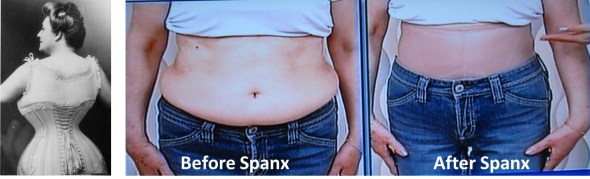 Figure 1. How clothing constricts abdominal movement. Previously it was a corset as shown on the left and now it is Spanx or very tight clothing which restricts the waist.
Whether the lower abdominal muscles are engaged or not (either by chronic tightening or lack of muscle activation), the resultant breathing pattern tends to be more thoracic, shallow, rapid, irregular and punctuated with sighst. Over time participants may not able to activate or relax the lower abdominal muscles during the respiratory cycle. Thus it is no longer involved in whole body movement which can usually be observed in infants and young children.
In our published paper by Peper, E., Booiman, A.C, Lin, I-M, Harvey, R., & Mitose, J. (2016), we describe a methodology to re-establish effortless whole body breathing with the use of surface electromyography (SEMG) recorded from the lower abdominal muscles (external/ internal abdominal oblique and transverse abdominis) and strategies to teach engagement of these lower abdominal muscles. Using this methodology, the participants can once again learn how to activate the lower abdominal muscles to flatten the abdominal wall thereby pushing the diaphragm upward during exhalation. Then, during inhalation they can relax the muscles of the abdominal wall to expand the abdomen and allow the diaphragm to descend as shown in Figure 2.
 Figure 2. Correspondence between respiratory strain gauge changes and SEMG activity during breathing. When the person exhales, the lower abdominal SEMG activity increases and when the person inhales the SEMG decreases.
The published article discusses the factors that contribute to the breathing dysregulation and includes guidelines for using SEMG abdominal recording. It describes in detail–with illustrations–numerous practices such as tactile awareness of the lower abdomen, active movements such as pelvic rocking and cats and dogs exercises that people can practice to facilitate lower abdominal breathing. One of these practices, Sensing the lower abdomen during breathing, is developed and described by Annette Booiman, Mensendieck therapist
Sensing the lower abdomen during breathing
The person place their hands below their belly button with the outer edge of hands resting on the groin. During inhalation, they practice bringing their lower abdomen/belly into their hands so that the person can feel the lower abdomen expanding. During exhalation, they pull their lower abdomen inward and away from their palms as shown in Figure 3.

Figure 3. Hands placed below the belly button to sense the movement of the lower abdomen.
Lower abdominal SEMG feedback is useful in retraining breathing for people with depression, rehabilitation after pregnancy, abdomen or chest surgery (e.g., Cesarean surgery, hernia, or appendectomy operations), anxiety, hyperventilation, stress-related disorders, difficulty to become pregnant or maintain pregnancy, pelvic floor problems, headache, low back pain, and lung diseases. As one participant reported:
“Biofeedback might be the single thing that helped me the most. When I began to focus on breathing, I realized that it was almost impossible for me since my body was so tightened. However, I am getting much better at breathing diaphragmatically because I practice every day. This has helped my body and it relaxes my muscles, which in turn help reduce the vulvar pain.”
REFERENCES
Mensendieck, B.M. (1954). Look better, feel better. Pymble, NSW, Australia: HarperCollins.
van Dixhoorn, J. (2008). Whole body breathing. Biofeedback. 3I(2), 54-58
Gilbert, C. (2016). Working with breathing , some early influences. Paper presented at the 47th Annual Meeting of the Association for Applied Psychophysiology and Biofeedback, Seattle WA, March 9-12, 2016.
1. Adapted from: Peper, E., Booiman, A., Lin, I-M, Harvey, R., & Mitose, J. (2016). Abdominal SEMG Feedback for Diaphragmatic Breathing: A Methodological Note. Biofeedback. 44(1), 42-49.
2. .I thank Annette Booiman for her constructive feedback in writing this blog.
Increase energy*
Posted: April 1, 2016 Filed under: self-healing, stress management, Uncategorized | Tags: cognitive therapy, energy level, health, Holistic health, stress management 2 CommentsAre you full of pep and energy, ready to do more? Or do you feel drained and exhausted? After giving at the office, is there nothing left to give at home? Do you feel as if you are on a treadmill that will never stop, that more things feel draining than energizing?
Feeling chronically drained is often a precursor for illness; conversely, feeling energized enhances productivity and encourages health. An important aspect of staying healthy is that one’s daily activities are filled more with activities that contribute to our energy than with tasks and activities that drain our energy. Similarly, Dr. John Gottman and colleagues have discovered that marriages prosper when there are many more positive appreciations communicated by each partner than negative critiques.
Energy is the subjective sense of feeling alive and vibrant. An energy gain is an activity, task, or thought that makes you feel better and slightly more alive—those things we want to or choose to do. An energy drain is the opposite feeling—less alive and almost depressed—those things we have to or must do; often something that we do not want to do. In almost all cases, it is not that we have to, should, or must do, it is a choice. Remember, even though you may say, “I have to study.” It is a choice. You can choose not to study and choose to drop out of school. Similarly, when you say, “I have to do the dishes,” it is still a choice. You can choose to do the dishes or let the dirty dishes pile up and just use paper plates.
Energy drains and gains are always unique to the individual; namely, what is a drain for one can be a gain for another. Energy drains can be doing the dishes and feeling resentful that your partner or children are not doing them, or anticipating seeing a person whom you do not really want to see. An energy gain can be meeting a friend and talking or going for a walk in the woods, or finishing a work project.
When patients with cancer start exploring what they truly would like to do and start acting on their unfulfilled dreams, a few experience that their health improves as documented by Dr. Lawrence LeShan in his remarkable book, Cancer as a Turning Point. So often our lives are filled with things that we should do versus want to do. In some cases, the lives we created are not the ones we wanted but the result of self-doubt and worry, “If I did do this, my family and friends won’t like me”, or “I am not sure I will be successful so I will do something that is safe.” Just ask yourself the question when you woke up this morning and most mornings this week, “How did you feel?” Did you felt happy and looking forward to the day?
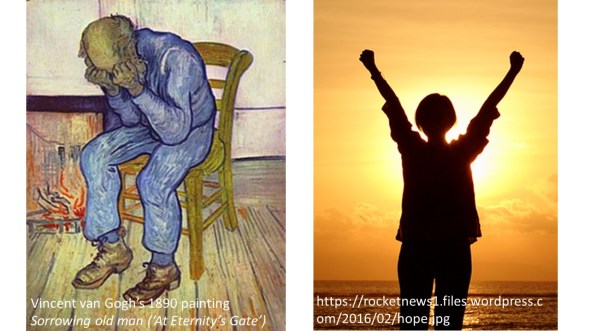
Explore strategies to decrease the drains and increase the energy gains. Use the following exercise to increase your energy:
- For one week monitor your energy drains and energy gains. Monitor events, activities, thoughts, or emotions that increase or decrease energy at home and at work. For example some drains can include cleaning bathroom, cooking another meal, or talking to a family member on the phone, while gains can be taking a walk, talking to a friend, completing a work task. Be very honest, just note the events that change your energy level.
- After the week look over your notes and identify at least one activity that drains your energy and one activity that increases your energy
- Develop a strategy to decrease one of the energy drains. Be very specific how, where, when, with whom, and which situations decreasing the tasks that drain your energy. As you think about it, anticipate obstacles that may interfere with reducing your drains and develop new ways to overcome these obstacles such as trading tasks with others (I will cook if you clean the bathroom), setting time limits, giving yourself positive reward after finishing the task (a cup of tea, a text or phone message to a close friend, watching a video in the evening).
- Develop new ways how you can increase energy gains such as doing exercise, completing a task.
- Each day implement the behavior to reduce one less energy drain and increase one energy gain and observe what happens.
Initially it may seem impossible, many students and clients report that the practice made them aware, increased their energy, and they had more control over their lives than they thought. It also encouraged them to explore the question, “What is it that you really want to do?” So often we do energy drains because of convention, habit and fear which makes us feel powerless and suppresses our immune system thereby increasing the risk of illness. In observing the energy drains and energy gains, it may give the person a choice. Sometimes, the choice is not changing the tasks but how we think about it. Many of the things we do are not MUSTs; they are choices. I do the work at my job because I choose to benefits of earning money.
How your internal language impacts your energy**
Sit and think of something that you feel you have to do, should do, or must do. Something you slightly dread such as cleaning the dishes, doing a math assignment. While sitting say to yourself, “I have to do, should do, or must do_______________.” Keep repeating the phrase for a minute.
Then change your internal phrase and instead say one of the following phrases, “I choose to do,” “I look forward to doing,” or “I choose not to do _________.” Keep repeating the phrase for a minute.
Now compare how you felt. Almost all people feel slight less energy and more depressed when they are thinking, “I have to do,” “should do”, or must do”. While when they shifted the phrase to, “I choose to,” “I look forward to doing,” or “I choose not to do it,” they feel lighter, more expanded and more optimistic. When university students practice this change of language during the week, they find it was easier to start and complete their homework tasks.
Watch your thoughts; they become words.
Watch your words; they become actions.
Watch your actions; they become habits.
Watch your habits; they become character.
Watch your character; it becomes your destiny.
– Frank Outlaw
References
Gottman, J.M. & Silver, N. (2015). The Seven Principles for Making Marriage Work. New York: Harmony.
LeShan, L. (1999). Cancer as a Turning Point. New York: Plume
*Adapted from: Peper, E. (2016). Increase energy. Western Edition. April, pp4. http://thewesternedition.com/admin/files/magazines/WE-April-2016.pdf
**Adapted from: Gorter, R. & Peper, E. (2011). Fighting Cancer-A Nontoxic Approach to Treatment. Berkeley: North Atlantic Books, 107-200.
 the peper perspective
