Do self-healing first
Posted: May 27, 2019 Filed under: behavior, Breathing/respiration, emotions, Exercise/movement, health, mindfulness, Neck and shoulder discomfort, Nutrition/diet, Pain/discomfort, placebo, relaxation, self-healing, stress management, surgery, Uncategorized 2 Comments
“I am doing very well, and I am very healthy. The vulvodynia symptoms have never come back. Also,my stomach (gastrointestinal discomfort) has gotten much, much better. I don’t really have random pain anymore, now I just have to be watchful and careful of my diet and my exercise, which are all great things!” —A five-year follow-up report from a 28-year-old woman who had previously suffered from severe vulvodynia (pelvic floor pain).
Numerous clients and students have reported that implementing self-healing strategies–common sense suggestions often known as “grandmother’s therapy”—significantly improves their health and find that their symptoms decreased or disappeared (Peper et al, 2014). These educational self-healing approaches are based upon a holistic perspective aimed to reduce physical, emotional and lifestyle patterns that interfere with healing and to increase those life patterns that support healing. This may mean learning diaphragmatic breathing, doing work that give you meaning and energy, alternating between excitation and regeneration, and living a life congruent with our evolutionary past.
If you experience discomfort/symptoms and worry about your health/well-being, do the following:
- See your health professional for diagnosis and treatment suggestions.
- Ask what are the benefits and risks of treatment.
- Ask what would happen if you if you first implemented self-healing strategies before beginning the recommended and sometimes invasive treatment?
- Investigate how you could be affecting your self-healing potential such as:
- Lack of sleep
- Too much sugar, processed foods, coffee, alcohol, etc.
- Lack of exercise
- Limited social support
- Ongoing anger, resentment, frustration, and worry
- Lack of hope and purpose
- Implement self-healing strategies and lifestyle changes to support your healing response. In many cases, you may experience positive changes within three weeks. Obviously, if you feel worse, stop and reassess. Keep a log and monitor what you do so that you can record changes.
This self-healing process has often been labeled or dismissed as the “placebo effect;” however, the placebo effect is the body’s natural self-healing response (Peper & Harvey, 2017). It is impressive that many people report feeling better when they take charge and become active participants in their own healing process. A process that empowers and supports hope and healing. When participants change their life patterns, they often feel better. Their health worries and concerns become reminders/cues to initiate positive action such as:
- Practicing self-healing techniques throughout the day (e.g., diaphragmatic breathing, self-healing imagery, meditation, and relaxation)
- Eating organic foods and eliminating processed foods
- Incorporating daily exercise and movement activities
- Accepting what is and resolving resentment, anger and fear
- Taking time to regenerate
- Resolving stress
- Focusing on what you like to do
- Be loving to yourself and others
For suggestions of what to do, explore some of the following blogs that describe self-healing practices that participants implemented to improve or eliminate their symptoms.
Acid reflux (GERD) https://peperperspective.com/2018/10/04/breathing-reduces-acid-reflux-and-dysmenorrhea-discomfort/
Dyspareunia https://peperperspective.com/2017/03/19/enjoy-sex-breathe-away-the-pain/
Epilepsy https://peperperspective.com/2013/03/10/epilepsy-new-old-treatment-without-drugs/
Irritability/hangry https://peperperspective.com/2017/10/06/are-you-out-of-control-and-reacting-in-anger-the-role-of-food-and-exercise/
Hot flashes and premenstrual symptoms https://peperperspective.com/2015/02/18/reduce-hot-flashes-and-premenstrual-symptoms-with-breathing/
Internet addiction https://peperperspective.com/2018/02/10/digital-addiction/
Irritable bowel syndrome (IBS) https://peperperspective.com/2017/06/23/healing-irritable-bowel-syndrome-with-diaphragmatic-breathing/
Math and test anxiety https://peperperspective.com/2018/07/03/do-better-in-math-dont-slouch-be-tall/
Neck stiffness https://peperperspective.com/2017/04/06/freeing-the-neck-and-shoulders/
Neck tension https://peperperspective.com/2019/05/21/relieve-and-prevent-neck-stiffness-and-pain/
Posture and mood https://peperperspective.com/2017/11/28/posture-and-mood-implications-and-applications-to-health-and-therapy/
Psoriasis https://peperperspective.com/2013/12/28/there-is-hope-interrupt-chained-behavior/
Surgery https://peperperspective.com/2018/03/18/surgery-hope-for-the-best-but-plan-for-the-worst/
Trichotillomania (hair pulling) https://peperperspective.com/2015/03/07/interrupt-chained-behaviors-overcome-smoking-eczema-and-hair-pulling/
Vulvodynia https://peperperspective.com/2015/09/25/resolving-pelvic-floor-pain-a-case-report/
References
Anxiety, lightheadedness, palpitations, prodromal migraine symptoms? Breathing to the rescue!
Posted: March 24, 2019 Filed under: behavior, Breathing/respiration, emotions, health, Pain/discomfort, relaxation, Uncategorized | Tags: anxiety, aura, diaphragmatic breathing, dizzyness, light headedness, migraine, prodrome, symptom prescription 7 Comments
I quickly gasped twice and a sharp pain radiated up my head and into my eye. I shifted to slow breathing and it faded away.
I felt anxious and became aware of my heart palpitations at the end of practicing 70% exhalation for 30 seconds. I was very surprised how quickly my anxiety was triggered when I changed my breathing pattern.
Breathing is the body/mind/emotion/spirit interface which is reflected in our language with phrases such as a sigh of relief, all choked up, breathless, full of hot air, waiting with bated breath, inspired or expired, all puffed up, breathing room, or it takes my breath away. The colloquial phrases reflect that breathing is more than gas exchange and may have the following effects.
- Changes the lymph and venous blood return from the abdomen (Piller, Leduc, & Ryan, 2006). The downward movement of the diaphragm with the corresponding expansion of the abdomen occurs during inhalation as well as slight relaxation of the pelvic floor. The constriction of the abdomen and slight tightening of the pelvic floor causing the diaphragm to go upward and allows exhalation. This dynamic movement increases and decreases internal abdominal and thoracic pressures and acts a pump to facilitate the venous and lymph return from the abdomen. In many people this dynamic pumping action is reduced because the abdomen does not expand during inhalation as it is constricted by tight clothing (designer jean syndrome), holding the abdomen in to maintain a slim self-image, tightening the abdomen in response to fear, or the result of learned disuse to reduce pain from abdominal surgery, gastrointestinal disorders, or abdominal insults (Peper et al, 2015).
- Increases spinal disk movement. Effortless diaphragmatic breathing is a whole body process and associated with improved functional movement (Bradley, & Esformes, 2014). The spine slightly flexes when we exhale and extends when we inhale which allows dynamic disk movement unless we sit in a chair.
- Communicates our emotional state as our breathing patterns reflect our emotional state. When we are anxious or fearful the breath usually quickens and becomes shallow while when we relax the breath slows and the movement is more in the abdomen (Homma, & Masoka, 2008).
- Evokes, maintains, inhibits symptoms or promotes healing. Breathing changes our physiology, thoughts and emotions. When breathing slowly to about 6 breaths a minute, it may enhance heart rate variability and thereby increase sympathetic and parasympathetic balance (Lehrer & Gevirtz, 2014; Moss & Shaffer, 2017).
Can breathing trigger symptoms?
A fifty-five year old woman asked for suggestions what she could do to prevent the occurrence of episodic prodrome and aura symptoms of visual disturbances and problems in concentration that would signal the onset of a migraine. In the past, she had learned to control her migraines with biofeedback; however, she now experienced these prodromal sensation more and more frequently without experiencing the migraine. As she was talking, I observed that she was slightly gasping before speaking with shallow rapid breathing in her chest.
To explore whether breathing pattern may contribute to evoke, maintain or amplify symptoms, the following two behavioral breathing challenges can suggest whether breathing is a factor: Rapid fearful gasping or 70% exhalation.
Behavioral breathing challenge: Rapid fearful gasping
Take a rapid fearful gasp when inhaling as if your feel scared or fearful. Let the air really quickly come in and repeat two or three times as described in the video. Then describe what you experienced.
If you became aware of the onset of a symptom or that the symptom intensified, then your dysfunctional breathing patterns (e.g., gasping, breath holding or shallow chest breathing) may contribute to development or maintenance of these symptoms. For many people when they gasp–a big rapid inhalation as if they are terrified–it may evoke their specific symptom such as a pain sensation in the back of the eye, slight pain in the neck, blanking out, not being able to think clearly, tightness and stiffness in their back, or even an increase in achiness in their joints (Peper et al, 2016).
To reduce or avoid triggering the symptom, breathe diaphragmatically without effort; namely each time you gasp, hold your breath or breathe shallowly, shift to effortless diaphragmatic breathing.
The above case of the woman with the prodromal migraine symptoms, she experienced visual disturbances and fuzziness in her head after the gasping. This experience allowed her to realize that her breathing style could be a contributing in triggering her symptoms. When she then practiced slow diaphragmatic breathing for a few breaths her symptoms disappeared. Hopefully, if she replaces gasping and shallow breathing with effortless diaphragmatic breathing then there is a possibility that her symptoms may no longer occur.
Behavioral breathing challenge: 70% exhalation
While sitting, breathe normally for a minute. Now change your breathing pattern so that you exhale only 70% or your previous inhaled air. Each time you exhale, exhale only 70% of the inhaled volume. If you need to stop, just stop, and then return to this breathing pattern again by exhaling only 70 percent of the inhaled volume of air. After 30 seconds, let go and breathe normally as guided by the video clip. Observe what happened?
In our research study with 35 volunteers, almost all participants experienced an increase in arousal and symptoms such as lightheadedness, dizziness, anxiety, breathless, neck and shoulder tension after 30 seconds of incomplete exhalation as shown in Figure 1 and Table 1 (Peper and MacHose, 1993).
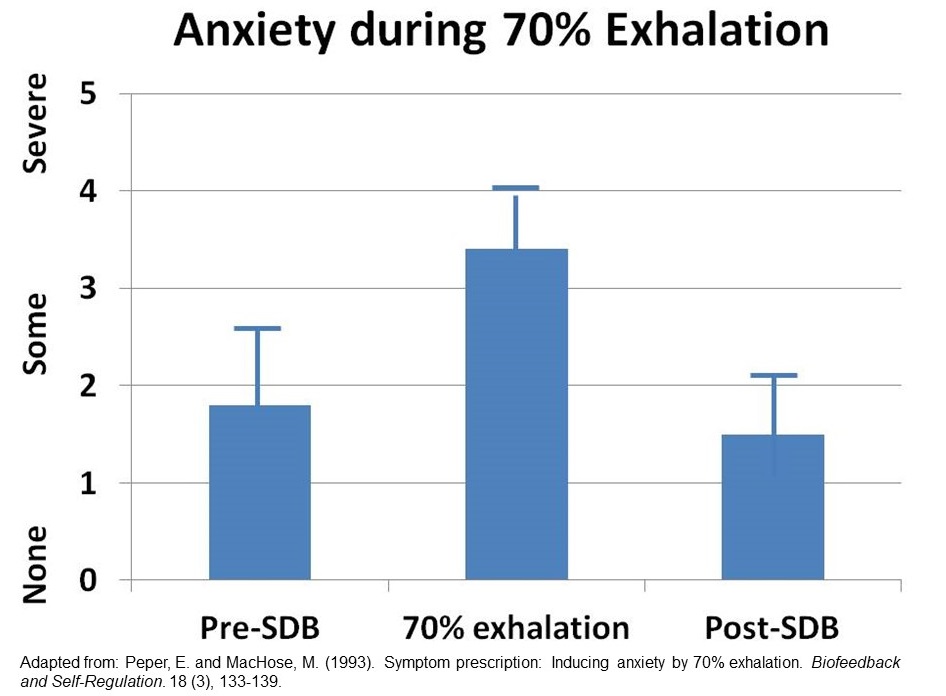
Figure 1. Increase in anxiety evoked by 70% exhalation.

Table 1. Symptoms experienced after exhalation 70%.
Although these symptoms may be similar to those evoked by hyperventilation and overbreathing, they are probably not caused by the reduction of end-tidal carbon dioxide (CO2). The apparent decrease in end-tidal PCO2 is cause by the room air mixing with the exhaled air and not a measure of end-tidal CO2 (Peper and Tibbets, 1992). Most likely the symptoms are associated by the shallow breathing that occurs when we were scared or terrified.
People who have a history of anxiety, panic, nervousness and tension as compared to those who report low anxiety tend to report more symptoms when exhaling 70% of inhaled air for 30 seconds. If this practice evoked symptoms, then changing the breathing patterns to slower diaphragmatic breathing may be a useful self-regulation strategy to optimize health.
These two behavior breathing challenges are useful demonstrations for students and clients that breathing patterns can influence symptoms. By experiencing ON and OFF control over their symptoms with breathing, the person now knows that breathing can affect their health and well being.
BLOGS WITH INSTRUCTIONS FOR LEARNING EFFORTLESS DIAPHRAGMATIC BREATHING
https://peperperspective.com/2017/11/17/breathing-to-improve-well-being/
https://peperperspective.com/2018/10/04/breathing-reduces-acid-reflux-and-dysmenorrhea-discomfort/
https://peperperspective.com/2015/02/18/reduce-hot-flashes-and-premenstrual-symptoms-with-breathing/
https://peperperspective.com/2017/03/19/enjoy-sex-breathe-away-the-pain/
REFERENCES
Lehrer, P.M. & Gevirtz, R. (2014). Heart rate variability biofeedback: how and why does it work? Frontiers in Psychology, 5
Listen to Hidden Brain
Posted: January 31, 2019 Filed under: behavior, emotions, health, Uncategorized | Tags: anthropology, economics, psychology, sociology Leave a comment Each time when I commute with BART to San Francisco State University, I put on my sound cancelling headphones to block out the screeching sounds of the wheels scrapping against the rails and listen to the superb pod cast, Hidden Brain. This podcast is hosted by NPR social science correspondent Shankar Vedantam and links research from psychology and neurobiology with findings from economics, anthropology, and sociology, among other field
It uses science and storytelling to reveal the unconscious patterns that drive human behavior, and the biases that shape our choices (text adapted from: Hidden Brain.
I continue to be surprised by the remarkable knowledge presented in a storytelling format that is “a conversation about life’s unseen patterns.” As I listen, the commute time disappears and I have a front row seat to an outstanding podcast.
Biofeedback, breathing and health
Posted: November 17, 2018 Filed under: Breathing/respiration, emotions, health, mindfulness, posture, relaxation, stress management, Uncategorized | Tags: resentment 3 CommentsIn the video interview recorded at the 2018 Conference of the New Psychology Association, Jagiellonian University, Krakow, Poland, Erik Peper, PdD, defines biofeedback and suggests three simple breathing and imagery approaches that we can all apply to reduce pain, resentment and improve well-being.
Experience how thoughts affect body with lemon imagery*
Posted: July 25, 2018 Filed under: behavior, Breathing/respiration, emotions, relaxation, self-healing, Uncategorized | Tags: autonomic nervous system, Holistic health, Imagery, mind-body, salivation, visualization 2 CommentsMost of us are aware that thoughts affect our body; however, we often overlook the impact of this effect. To demonstrate the power of visualization, participants are guided through a lemon imagery. In a study with 131 college students, 94% report an increase in salivation which is a parasympathetic nervous system response. The participants now know–not believe–that visualization affects physiology. Once salivation has been experienced, participants may apply other visualization techniques to change their physiology and behavior. Through visualization we communicate with our autonomic nervous system which can provide a matrix for self-healing and enhanced performance. In addition, the guided practice shows that almost everyone holds their breath when asked to tighten their muscles and some people have difficulty relaxing after tightening. Once aware, the person can and continue to breathe and relax the muscles. Enjoy the guided exercise, Mindbody connection: Lemon Imagery.
*I thank Paul Godina, Jung Lee and Lena Stampfli for participating in the videos.
Adapted from Peper, E., Gibney, K.H. & Holt. C. (2002). Make Health Happen: Training Yourself to Create Wellness. Dubuque, IA: Kendall-Hunt
Do better in math: Don’t slouch-Be tall!
Posted: July 3, 2018 Filed under: ADHD, behavior, digital devices, emotions, Exercise/movement, Neck and shoulder discomfort, posture, stress management, Uncategorized | Tags: cognitive performance, math performance, stereotype threat response, test anxiety 4 Comments“When I saw the exam questions, I blanked out and slouched in defeat. Then I shifted to an erect/tall position and took a diaphragmatic breath. All of a sudden I remembered the answer.” College student
Anticipating that math is difficult, experiencing test anxiety, blanking out on exams, or being scared when asked to give class presentation are common experiences of many students. Their thoughts include, “I am not good enough,” “What will the other students think,” “I am embarrassed and can’t remember what to say,” or “I only thought of the correct answer after it was all over.” Many students report some test anxiety: 32% report severe test anxiety, fear of math and blanking out on exams while less than 10 percent report minimal test anxiety, fear of math and blanking out on exams.
When students anticipate that they will perform poorly on an exam or class presentation, they tend to sit in a slouched or collapsed position, coincident with feelings of powerlessness, hopelessness and defeat. This posture not only communicates to others that they are powerless and defeated, it also decreases their self-esteem, mood and cognitive performance. In previous research, Tsai et al (2016) and Peper et al (2017) observed that when participants sat in a slouched posture, they could access hopeless, helpless, powerless and defeated memories much more easily than when they sat in the upright/erect position. In the upright position it was much easier to access positive and empowering memories. For numerous participants they also experienced being captured and flooded by emotions associated with defeat and hopelessness when they slouched. These feelings and memories associated with a slouched posture may affect how we feel and perform. Nair et al (2015) found that adopting an upright seated posture in the face of stress can maintain self-esteem, reduce negative mood, and increase positive mood as compared to a slumped posture. Furthermore, sitting upright increases rate of speech and reduces self-focus.” Posture may also affect our hormone levels. Harvard Social Psychologist Amy Cuddy has reported that sitting in a slouched posture (powerless position) decreased testosterone (the hormone associated dominance and assertiveness) and increased cortisol (the hormone associated with stress) and performance on a stressor test (Cuddy, 2012; Carney et al, 2010).
This blog points out how posture significantly impacts math performance especially for students who have test anxiety, are fearful of math, and blank out on exams and is adapted from our published research article, Peper, E., Harvey, R., Mason, L., & Lin, I-M. (2018). Do better in math: How your body posture may change stereotype threat response. NeuroRegulation, 5(2), 67-74
In our study 125 university students participated. Half the students sat in an erect position while the other half sat in a slouched position and were asked to mentally subtract 7 serially from 964 for 30 seconds. They then reversed the positions before repeating the math subtraction task beginning at 834. They rated the math task difficulty on a scale from 0 (none) to 10 (extreme).
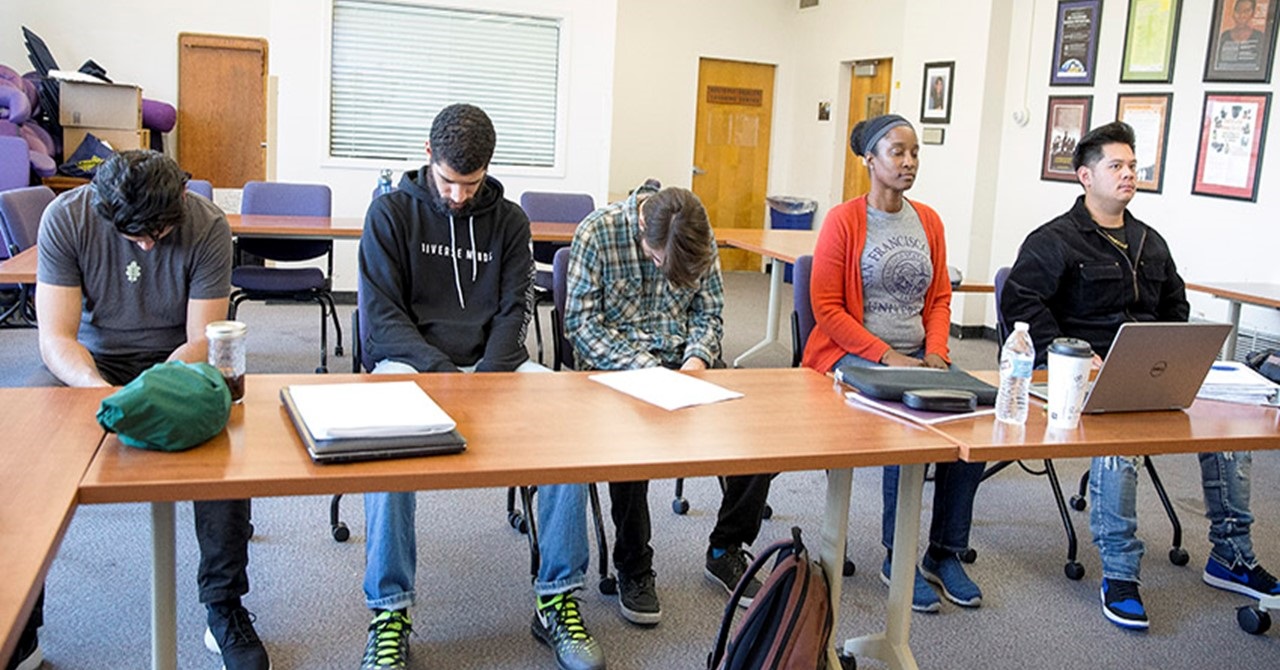 Figure 1. Sitting in a collapsed position and upright position (photo from: http://news.sfsu.edu/news-story/good-posture-important-physical-and-mental-health)
The students rated the mental math significantly more difficult while sitting slouched than while sitting erect as shown in Figure 2.
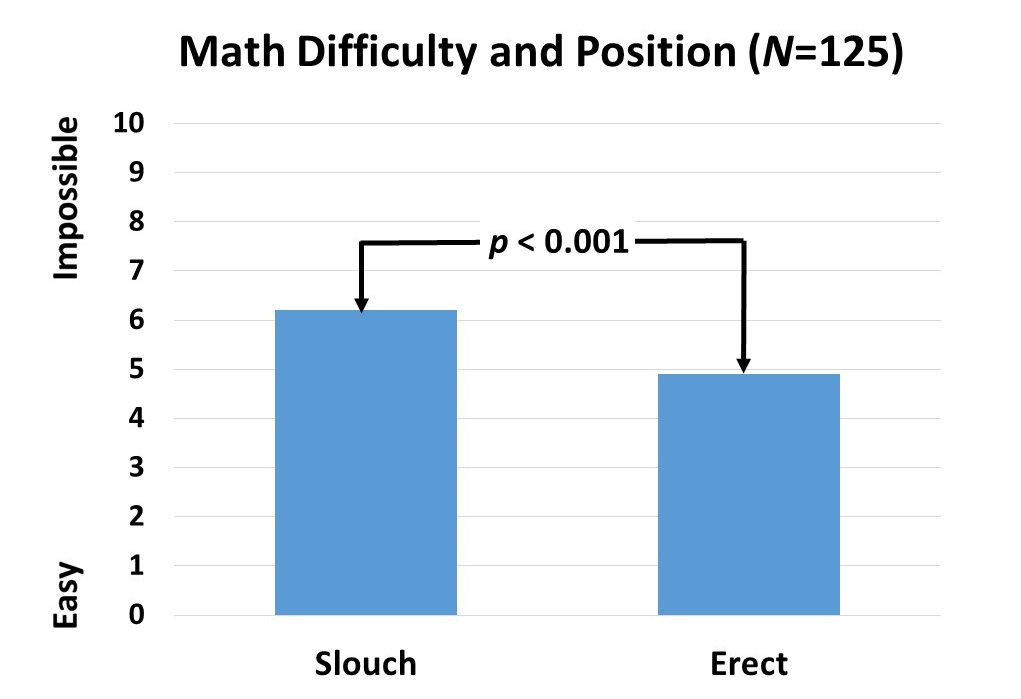 Figure 2. The subjective rating of difficulty in performing the serial 7 math subtraction when sitting in a collapsed or upright position.
For the students with the lowest 30% test anxiety, math difficulty and blanking out scores, there was no significant difference between slouched and erect positions in mental math performance. More importantly, students with the highest 30% test anxiety, math difficulty and blanking out scores rated the math task significantly more difficult and some could not do it at all and blanked out in the slouched position as compared to the erect position as shown in Figure 3.
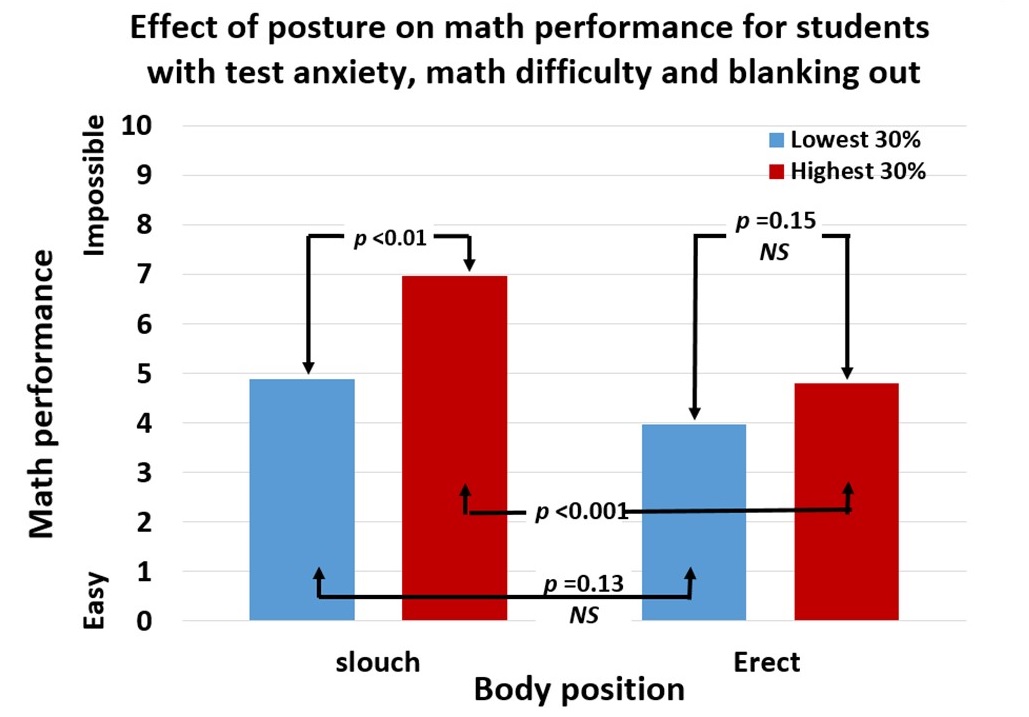 Figure 3. Effect of posture on math performance for students with test anxiety, math difficulty and blanking out.
The students with the highest test anxiety, math difficulty and blanking out scores also reported significantly more somatic symptoms as compared with those with the lowest scores as shown in Figure 4.
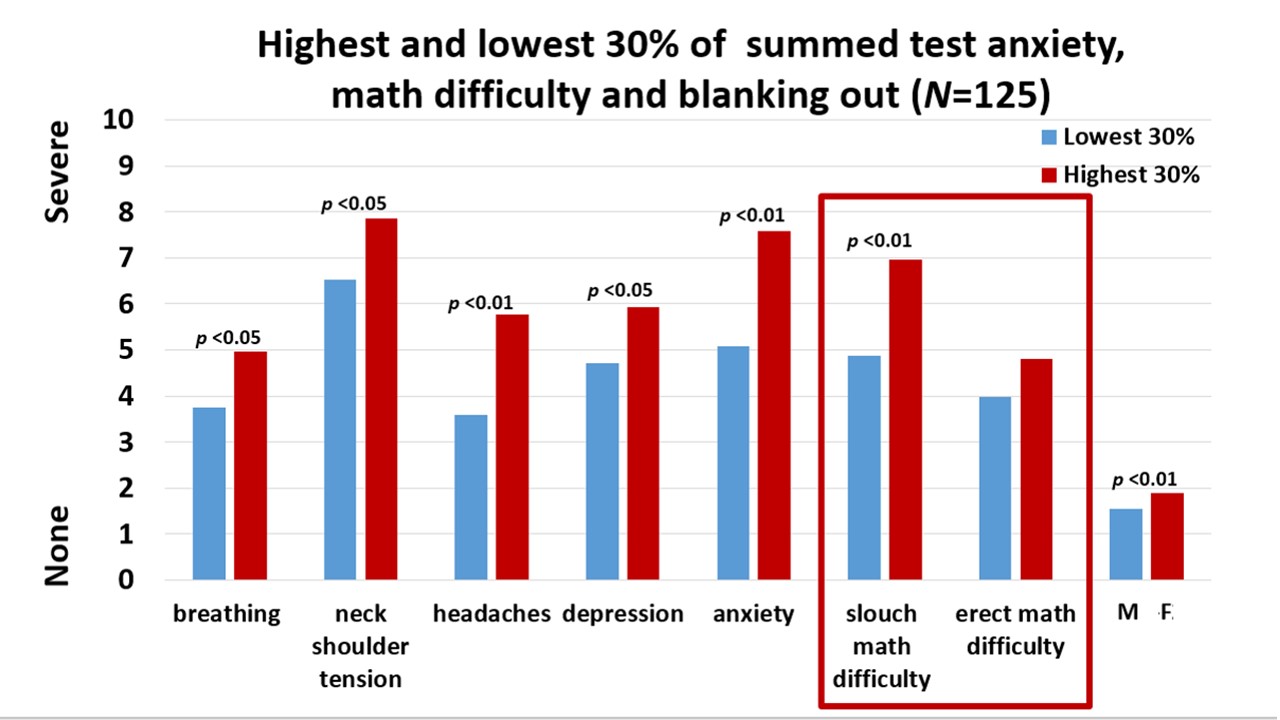 Figure 4. Self-reported symptoms associated with the highest and lowest 30% of summed test anxiety, math difficulty and blanking out.
Discussion
Posture affects mental math and inhibit abstract thinking. By incorporating posture changes clinicians and teachers may help students improve performance. The slouched position was associated with increased difficulty in performing a math subtraction task for 15 seconds, especially for students reporting higher test anxiety, math difficulty and blanking out on exams. In contrast, slouched position had no significant effect on students who reported that they were not stressed about performance. For participants who report higher test anxiety, math difficulty and blanking out they also reported significant increase in breathing difficulty, neck and shoulder tension, headaches, depression and anxiety. Most likely, the students attribute physiological reactions such as increased heart rate and breathing changes negatively, which amplifies their negative self-perception and exacerbates their anxiety symptoms which then may inhibit their cognitive ability to perform on math tasks.
The slouched position combined with the somatic symptoms activate are part of the a “defense reaction.” The slouch posture evokes a classically conditioned response to protect oneself under conditions of perceived physical threat. The activation of this defense pattern is associated with reduced levels of abstract thinking and frontal cortical deactivation as observed in this study. This biological defense response is triggered when the person expects the situation to be ‘dangerous’ and include conditions of social-evaluative threat. By changing posture to an erect/upright posture appears to inhibit the defense reaction; thus, the person may perform better on cognitive tasks.
Summary
Head-upright/erect postures may make it easier to access ‘positive and empowering’ thoughts and memories, thereby helping students, especially those who are anxious or fearful of math and blank-out during exams, Anxious students who also slouch may benefit from training with a posture feedback devices such as the UpRight Go™[1]. We recommend that students use posture feedback to become aware of the situations that are associated with slouching, such as ergonomic factors (looking down at the screen), being tired, or having depressive thoughts or feeling of powerless and defeat.
The moment students experience the feedback that they are slouching, they become aware and have the option to shift to an upright posture and perform interventions to counter the factors that caused the slouching. These interventions included ergonomic changes of their computer or laptop, transforming self-critical thoughts to empowering thoughts, or taking a break or performing movements. When students practice these interventions for four weeks, they report an increase of confidence, decrease in stress levels and an improvement in health and performance (Colombo et al, 2017; Harvey et al, in press). Equally important is to teach the participants self-regulation strategies such as slower breathing, heart rate variability training, and muscle relaxation to reduce symptoms. The training needs to be generalized and practiced at home, school or work.
We recommend that students guide themselves through the posture positions as described in this research while performing mental math to experience how posture impacts performance. This experiential practice may increase motivation to be tall since the participant can now have a choice based upon self-experience.
Take home message echoes what your mother said, “Don’t slouch. Sit up tall!”
- If you feel secure and safe, posture has little to no effect on performance–you can be collapsed or slouched.
- If you are anxious and fearful, sitting tall/erect may improve your performance.
- If you want to become aware when you slouch, posture feedback from a wearable posture feedback device such as an UpRight Go can provide vibration feedback each time you slouch. The feedback can be the reminder to sit tall and change your thoughts.
- If you automatically slouch while working at the computer or sitting in chair, change your furniture so that you sit in an upright position while studying or watching digital devices.
- If you experience significant somatic symptoms (e.g., headaches, breathing difficulty, neck and shoulder tension, or depression and anxiety) learn self-regulation skills such as slower diaphragmatic breathing and heartrate variability training in conjunction with transforming negative self-talk to positive self-talk to improve performance.
Changing posture may also impact other areas of one’s life besides improving math performance as illustrated by the report from a mother of ten-year old boy.
”At the moment I am trying to be aware of the situation in front of me rather that reacting to it. For example, yesterday my son who is 10 had a bad mood and I did not know what had happened, and he at first refused to tell me. Because I was aware of the posture information I could help him open up by making him change his posture without knowing. He became more open and told me what had happened earlier and I could help him move forward.”
REFERENCES
Cuddy, A. (2012). Your body language shapes who you are. Technology, Entertainment, and Design (TED) Talk, available at: www.ted.com/talks/amy_cuddy_your_body_language_shapes_who_you_are
Harvey, R., Mason, L., Joy, M., & Peper, E. (in press). Effect of Posture Feedback Training on Health, Applied Psychophysiology and Biofeedback.
[1] UpRight Go is produced by Upright Technologies. LTD, Ha’atzmaut 56, Yehud 5630425, Israel https://www.uprightpose.com
Timing affects health and productivity
Posted: March 10, 2018 Filed under: behavior, education, emotions, Evolutionary perspective, Uncategorized | Tags: behavioral economics, chronobiology, emotions, mood, performance, productivity Leave a commentHave you experienced that your attentions is more focused in the morning than late afternoon?
Have you wondered what is the best time in the day to have a job interview?
Is it better to have an operation in the morning or in the afternoon?
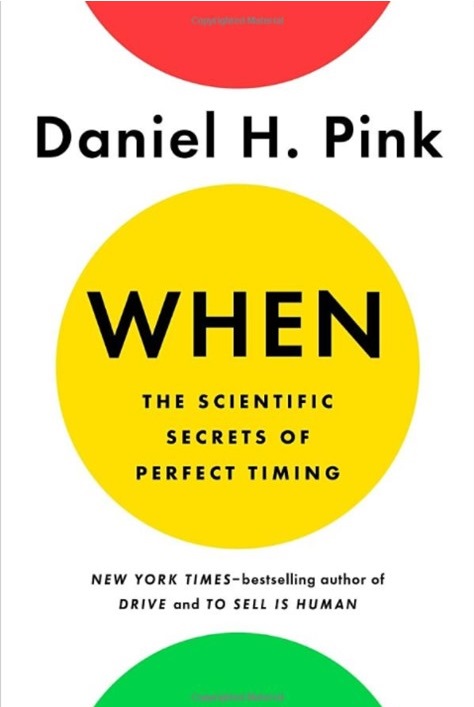
These and many other questions are explored in the superb book by Daniel Pink, When-The scientific secrets of perfect timing. This book reviews the literature of chronobiology, psychology, and behavior economics and describes the effect of time of day on human behavior. For example, students do significantly better if they take math tests in the morning than late afternoon or parolees have a much higher chance of being paroled early morning or right after the judge has taken a break than before lunch or late afternoon. Read Pink’s book or watch his JCCSF presentation and use the information to change your own timing patterns to optimize your health and performance.
Behave: The biology of humans at our best and worst
Posted: February 24, 2018 Filed under: behavior, emotions, Evolutionary perspective, Pain/discomfort, Uncategorized | Tags: compassion, evil, goodness 2 CommentsHow can people be so caring and sometimes cruel? What are the evolutionary, genetic, epigenetic, developmental, familial, tribal, community and cultural determinants that allow human beings to be heroic and give their own life for others or be killers and unbelievably cruel. Stanford biology professor Robert Sapolsky‘s book, Behave: The Biology of Humans at Our Best and Worst, explores what drives human behavior. It is a remarkable tour de force to explore and explain why we do as we do. Watch his February 6, 2018 lecture at the Jewish Community Center of San Francisco.
https://www.jccsf.org/arts-ideas/ondemand/2017-2018-season/robert-sapolsky/

 the peper perspective