Managing Blood Sugar: Lifestyle Changes for Better Health
Posted: May 25, 2026 Filed under: ADHD, attention, behavior, cancer, Evolutionary perspective, healing, health, lifestyle, Nutrition/diet, self-healing, Uncategorized | Tags: AIC, carbohydrate, continous glucose monitoring, diet, exhaustion, glucose, insulin, metabolic disease, obesity, sugar, ultra-processed foods Leave a comment
It was 4:45 p.m., and I was looking forward to swimming. I briskly walked the eight blocks from my house to the heated outdoor city pool. The pool is unusual—100 feet long instead of the standard 25 yards—and I enjoy the rhythm of swimming lap after lap.
I arrived just as the sign flipped from Closed to Open. I quickly changed into my bathing suit, locked my clothes in a metal locker, took a short shower, and jumped into the lane. The sun was still out, and only one other swimmer shared my lane. I felt energized and expected to complete my usual forty laps.
However, after about eighteen laps, my energy suddenly disappeared. There was nothing left in the tank. I swam to the side, pulled myself slowly onto the pool deck, and even slowly and unsteadily walked to the men’s locker room. I sat down on the bench feeling shaky, weak, and exhausted. This was not ordinary fatigue. After resting for several minutes, I slowly showered, dressed, and walked home with heavy, almost uncoordinated legs.
As I reflected on the experience, I remembered something similar that had happened two weeks earlier. Around 5 p.m, I had taken my son’s dog for a brisk walk. Again, I began energized, walking quickly, and then suddenly felt drained and sweaty. When I returned home, all I could do was sit down and recover.
What happened
Reflecting back, I realized that both cases I had eaten sweets—cake one time and a large chocolate chip cookie the other about two hours earlier Most likely, the rapidly absorbed sugars and refined carbohydrates caused a sharp increase in blood glucose, followed by a significant insulin response (Ludwig & Ebbeling, 2018). During exercise, my muscles then demanded additional glucose, and my blood sugar may have dropped rapidly enough to trigger symptoms of reactive hypoglycemia: shakiness, sweating, weakness, and fatigue (Morales-Brown, 2025, June 12).
The process is more complex than simply “sugar highs” and “crashes.” Carbohydrates are broken .break down into glucose during digestion, which begins in the mouth. Chewing breaks down food physically, while the enzyme amylase in saliva starts the chemical breakdown by splitting starches into sugars (Peyrot des Gachons & Breslin, 2016). This raises blood glucose levels, which stimulates insulin release from the pancreas. Insulin helps move glucose from the bloodstream into cells. In some people—especially those developing insulin resistance or prediabetes—the insulin response may overshoot, leading to a later drop in blood glucose. Exercise can amplify this effect because active muscles rapidly consume glucose for energy (American Diabetes Association, 2024).
This experience was a wake-up call for me because my hemoglobin A1C is 5.7%, the lower threshold for prediabetes. Hemoglobin A1C reflects average blood glucose levels over approximately the previous three months (American Diabetes Association, 2026).
Like many people, I enjoy and am even addicted to bread, potatoes, pastries, and sweets. Looking back, the subtle changes began during COVID. Before the pandemic, I spent much of the day teaching in person, walking across campus, moving, and interacting with students. During lockdown, I sat for hours teaching online. My physical activity during the day dramatically decreased while my eating habits did not significantly change.
When we are inactive, excess sugars and refined carbohydrates are less likely to be immediately used by muscles for fuel. Instead, repeated spikes in blood glucose and insulin can contribute over time to insulin resistance, weight gain, metabolic dysfunction, and increased inflammation (Ludwig & Ebbeling, 2018).
Although my episodes were minor, they reminded me that lifestyle patterns especially eating ultra-processed foods can increase the risk for chronic diseases such as type 2 diabetes, cardiovascular disease, obesity, and some cancers and dementia (Lane et al., 2024; Menegassi & Vinciguerra, 2025). The scientific literature strongly links obesity, insulin resistance, and type 2 diabetes with increased risk for several cancers, including colorectal and postmenopausal breast cancer (Peper et al., 2026; Scully et al., 2021: Lauby-Secretan et al., 2016). Ultra-processed foods and sugar-sweetened beverages are also associated with increased risk for obesity and metabolic disease; moreover, cancer survivors who consume higher amounts of ultra processed foods face a significantly increased risk of both all-cause and cancer-specific mortality (Hall et al., 2019; Bonaccio et al., 2026). However, cancer is multifactorial, and no single food alone “causes” cancer. Rather, long-term dietary patterns, inactivity, obesity, chronic inflammation, genetics, environmental exposures, sleep, and stress all interact together ( Marino et al., 2024; Dalamaga et al., 2026; Peper et al., 2026).
What to do
The encouraging news is that these processes are often reversible.
Weight, hunger, blood sugar fluctuations, and even A1C are not fixed. They can improve significantly through lifestyle changes. Research consistently shows that reducing ultra-processed foods, lowering intake of refined carbohydrates and sugary beverages, increasing fiber-rich vegetables, improving sleep, reducing stress, and exercising regularly can improve insulin sensitivity and metabolic health (Bird & Hawley, 2017; Vaezi et al., 2025; American Diabetes Association, 2024; Peper et al., 2026).
For many people, continuous glucose monitors (CGMs) can provide powerful real-time feedback (Ehrhardt & Zaghal, 2020). Seeing how specific foods affect your glucose levels can increase awareness and motivate healthier choices. Often, we do not realize how dramatically a muffin, fruit juice, or bowl of white rice may affect blood sugar until we see the data on the screen.
The goal is not perfection or rigid dieting. Instead, it is learning to observe how your body responds and gradually shifting toward foods that support stable energy, satiety, and long-term health.
Before making major dietary changes, watch the superb interview with Dr. David Unwin, a British physician known for his work using lower-carbohydrate dietary approaches to help patients improve type 2 diabetes and metabolic health. His clinical work demonstrates that many patients can significantly improve blood sugar control and sometimes reduce medications through lifestyle changes (Unwin et al., 2020). The video, The Sugar Doctor’s Warning: The “Healthy” Foods Quietly Destroying Your Body! – Dr. David Unwin, is from the podcast, The Diary of a CEO with Steven Bartlett.
The Link Between Diet, Lifestyle, and Cancer Risk: Steps You Can Take
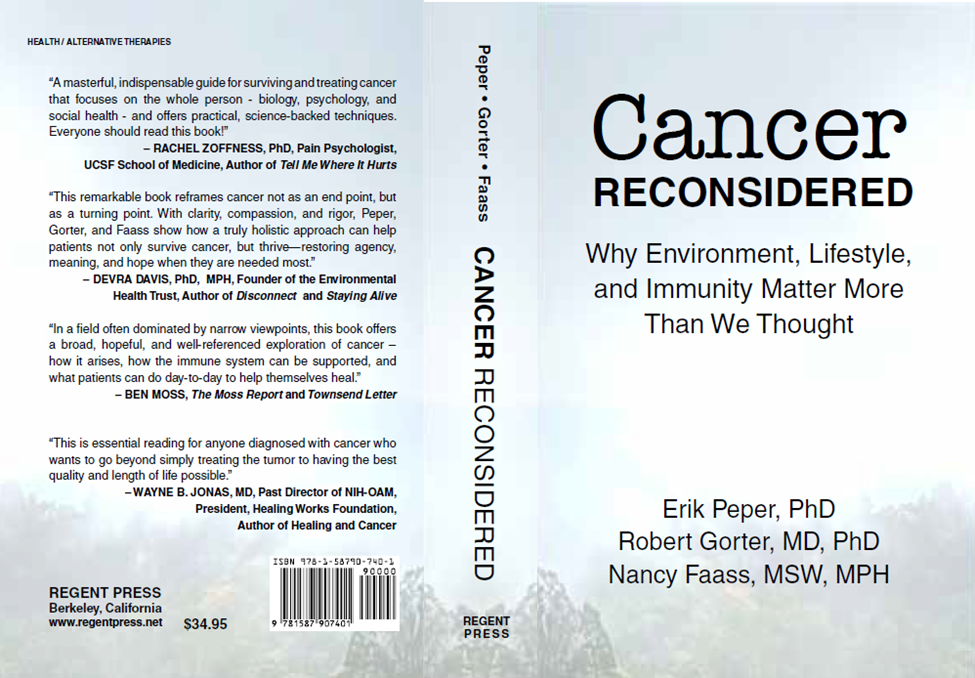
Read the new book, Cancer Reconsidered: Why Environment, Lifestyle, and Immunity Matter More than We Thought, by Erik Peper, Robert Gorter, and Nancy Faass. It explore the many of the lifestyle factors that can increase cancer risk—or help protect against it. The book brings together an extraordinary range of scientific research to illuminate how everyday habits and modern lifestyles influence cancer risk and healing. Drawing from both conventional medicine and integrative approaches, the authors thoughtfully examine the many factors involved in cancer causation while offering hopeful, evidence-based strategies for supporting recovery and restoring health.
What makes this book especially compelling is that it goes far beyond reviewing the science. It translates research into practical, everyday actions people can use to support healing and improve quality of life. At its heart is lifestyle medicine—the recognition that stress management, hope, physical activity, nourishing foods, supportive relationships, community, and resilience during times of crisis profoundly affect health and well-being. The book also offers a detailed and highly practical discussion of sugar metabolism and explains how continuous glucose monitoring sensors (CGMS) with the smartphone app can help people directly observe how specific foods and daily habits influence their blood sugar levels. Instead of relying on abstract nutrition advice, readers learn how to become active investigators of their own health.
Throughout the book, the message is empowering: our daily habits, social connections, attitudes, and environment may influence health as much as—if not more than—genetics alone. The book is available from Amazon: https://www.amazon.com/Cancer-Reconsidered-Environment-Lifestyle-Immunity/dp/1587907402
Listen to the in-depth discussion of this blog created with Google NotebookLM
Addition relevant blogs
References
American Diabetes Association. (2026). Blood glucose and exercise. American Diabetes Association. Retrieved May 24, 2026, from https://diabetes.org/health-wellness/fitness/blood-glucose-and-exercise
American Diabetes Association. (2024). Standards of care in diabetes—2024. Diabetes Care, 47(Suppl. 1). https://diabetesjournals.org/care/issue/47/Supplement_1
Bonaccio, M., Di Castelnuovo, A., Costanzo, S., Ruggiero, E., Esposito, S., Panzera, T., Di Costanzo, G., De Curtis, A., Magnacca, S., Cerletti, C., Donati, M. B., de Gaetano, G., & Iacoviello, L., for the Moli-sani Study Group. (2026). Ultra-processed food and mortality among long-term cancer survivors from the Moli-sani Study: Prospective findings and analysis of biological pathways. Cancer Epidemiology, Biomarkers & Prevention, 35(4), 664–674. https://doi.org/10.1158/1055-9965.EPI-25-0808
Dalamaga, M., Rozani, S., & Petropoulou, D. (2026). Why is colorectal cancer occurring earlier? Metabolic dysfunction, underrecognized carcinogens, and emerging controversies. Current Obesity Reports, 15(1), 24. https://doi.org/10.1007/s13679-026-00700-z
Ehrhardt, N., & Al Zaghal, E. (2020). Continuous glucose monitoring as a behavior modification tool. Clinical Diabetes, 38(2), 126–131. https://doi.org/10.2337/cd19-0037
Hall, K. D., Ayuketah, A., Brychta, R., Cai, H., Cassimatis, T., Chen, K. Y., Chung, S. T., Costa, E., Courville, A., Darcey, V., Fletcher, L. A., Forde, C. G., Gharib, A. M., Guo, J., Howard, R., Joseph, P. V., McGehee, S., Ouwerkerk, R., Raisinger, K., … Zhou, M. (2019). Ultra-processed diets cause excess calorie intake and weight gain: An inpatient randomized controlled trial. Cell Metabolism, 30(1), 67–77. https://doi.org/10.1016/j.cmet.2019.05.008
Lane, M. M., Gamage, E., Du, S., Ashtree, D. N., McGuinness, A. J., Gauci, S., Baker, P., Lawrence, M., Rebholz, C. M., Srour, B., Touvier, M., Jacka, F. N., O’Neil, A., Segasby, T., & Marx, W. (2024). Ultra-processed food exposure and adverse health outcomes: Umbrella review of epidemiological meta-analyses. BMJ, 384, e077310. https://doi.org/10.1136/bmj-2023-077310
Lauby-Secretan, B., Scoccianti, C., Loomis, D., Grosse, Y., Bianchini, F., & Straif, K. (2016). Body fatness and cancer—Viewpoint of the IARC Working Group. New England Journal of Medicine, 375(8), 794–798. https://doi.org/10.1056/NEJMsr1606602
Ludwig, D. S., & Ebbeling, C. B. (2018). The carbohydrate-insulin model of obesity: Beyond “calories in, calories out.” JAMA Internal Medicine, 178(8), 1098–1103. https://doi.org/10.1001/jamainternmed.2018.2933
Marino, P., Mininni, M., Deiana, G., Marino, G., Divella, R., Bochicchio, I., Giuliano, A., Lapadula, S., Lettini, A. R., & Sanseverino, F. (2024). Healthy lifestyle and cancer risk: Modifiable risk factors to prevent cancer. Nutrients, 16(6), 800. https://doi.org/10.3390/nu16060800
Menegassi, B., & Vinciguerra, M. (2025). Ultraprocessed food and risk of cancer: Mechanistic pathways and public health implications. Cancers, 17(13), 2064. https://doi.org/10.3390/cancers17132064
Morales-Brown, P. (2025, June 12). What is reactive hypglycemia. Medical News Today. Accessed May 24, 2026. https://www.medicalnewstoday.com/articles/reactive-hypoglycemia
Peper, E., Gorter, R., & Faass, N. (2026). Cancer reconsidered: Why environment, lifestyle, and immunity matter more than we thought. Biofeedback Health. https://www.amazon.com/Cancer-Reconsidered-Environment-Lifestyle-Immunity/dp/1587907402
Peyrot des Gachons, C., & Breslin, P. A. S. (2016). Salivary amylase: Digestion and metabolic syndrome. Current Diabetes Reports, 16, 102. https://doi.org/10.1007/s11892-016-0794-7
Scully, T., Ettela, A., LeRoith, D., & Gallagher, E. J. (2021). Obesity, type 2 diabetes, and cancer risk. Frontiers in Oncology, 10, 615375. https://doi.org/10.3389/fonc.2020.615375
Unwin, D., Khalid, A. A., Unwin, J., Crocombe, D., Delon, C., Martyn, K., Hasan, M., & Tobin, S. D. (2020). Insights from a general practice service evaluation supporting a lower carbohydrate diet in patients with type 2 diabetes mellitus and prediabetes: A secondary analysis of routine clinic data including HbA1c, weight and prescribing over 6 years. BMJ Nutrition, Prevention & Health, 3(2), 285–294. https://doi.org/10.1136/bmjnph-2020-000072
Vaezi, S., Freeling, J. L., de Vargas, B. O., Weidauer, L., Shoemaker, M. E., Sanders, W. M., & Dey, M. (2025). Impacts of minimally-processed omnivorous vs lacto-ovo-vegetarian diets on insulin sensitivity, lipid profile, and adiposity in older adults: Secondary findings from a randomized crossover feeding trial. Clinical Nutrition, 55, 90–103. https://doi.org/10.1016/j.clnu.2025.10.010
Are food companies responsible for the epidemic in diabetes, cancer, dementia and chronic disease and do their products need to be regulated like tobacco? Is it time for a class action suit?
Posted: July 15, 2023 Filed under: behavior, cancer, Evolutionary perspective, health, Nutrition/diet, self-healing | Tags: dementia, diabetes, diet, high fructose corn syrup, mortality, obsity, smoking, sugar, ultra-processed foods, UPF 5 CommentsAdapted from: Peper, E. & Harvey, R. (2024). Are Food Companies Responsible for the Epidemic in Diabetes, Cancer, Dementia and Chronic Disease and Do Their Products Need to Be Regulated Like Tobacco? Is It Time for a Class Action Suit? Thownsend Letter-the examiner of alternative medicine. https://www.townsendletter.com/e-letter-26-ultra-processed-foods-and-health-issues/
Erik Peper, PhD and Richard Harvey, PhD

Why are one third of young Americans becoming obese and at risk for diabetes?
Why are heart disease, cancer, and dementias occurring earlier and earlier? Is it genetics, environment, foods, or lifestyle?
Is it individual responsibility or the result of the quest for profits by agribusiness and the food industry?
Like the tobacco industry that sells products regulated because of their public health dangers, is it time for a class action suit against the processed food industry? The argument relates not only to the regulation of toxic or hazardous food ingredients (e.g., carcinogenic or obesogenic chemicals) but also to the regulation of consumer vulnerabilities. Addressing vulnerabilities to tobacco products include regulations such as how cigarette companies may not advertise their products for sale within a certain distance from school grounds.
Is it time to regulate nationally the installation of vending machines on school grounds selling sugar-sweetened beverages? Students have sensitivity to the enticing nature of advertised, and/or conveniently available consumable products such as ‘fast foods’ that are highly processed (e.g., packaged, preserved and practically imperishable). Whereas ‘processed foods’ have some nutritive value, and may technically pass as ‘nutritious’ food, the quality of processed ‘nutrients’ can be called into question. For the purpose of this blog other important questions to raise relate to ingredients which, alone or in combination, may contribute to the onset of or, the acceleration of a variety of chronic health outcomes related to various kinds of cancers, cardiovascular diseases, and diabetes.
It may be an over statement to suggest that processed food companies are directly responsible for the epidemic in diabetes, cancer, dementia and chronic disease and need to be regulated like tobacco. On the other hand, processed food companies should become much more regulated than they are now.
More than 80 years ago, smoking was identified as a significant factor contributing to lung cancer, heart disease and many other disorders. In 1964 the Surgeon Generals’ report officially linked smoking to deaths of cancer and heart disease (United States Public Health Service, 1964). Another 34 years pased before California prohibited smoking in restaurants in 1998 and, eventually inside all public buildings. The harms of smoking tobacco products were well known, yet many years passed with countless deaths and suffering which could have been prevented before regulation of tobacco products took place. Reviewing historical data there is about a 20 year delay (e.g., a whole generation) before death rates decrease in relation to when regulations became effective and smoking rates decreased, as shown in figure 1.

Figure 1. The relationship between smoking and lung cancer. Reproduced by permission from Roser, M. (2021). Smoking: How large of a global problem is it? And how can we make progress against it? Our world in data.
During those interim years before government actions limited smoking more effectively, tobacco companies hid data regarding the harmful effects of smoking. Arguably, the ‘Big Tobacco’ industry paid researchers to publish data which could confuse readers about tobacco product harm. There is evidence of some published articles suggesting that the harm of cigarette smoking was a hoax– all for the sake of boosting corporate profits (Bero, 2005).
Now we are experiencing a similar problem with the processed food industry. It has been suggested that alongside smoking and vaping, opioid use, a sedentary ‘couch potato’ lifestyle, and lack of exercise, ultra-processed food (UPF) that we eat severely affects our health.
Ultra-processed foods, which for many constitutes a majority of calories ranging from 55% to over 80% of the food they eat, contain chemical additives that trick the tastebuds, mouth and eventually our brain to desire those processed foods and eat more of them (Srour et al., 2022).
What are ultra-processed foods? Any foods that your great grandmother would not recognize as food. This includes all soft drinks, highly processed chips, additives, food coloring, stabilizers, processed proteins, etc. Even oils such as palm oil, canola oil, or soybean are ultra processed since they heated, highly processed with phosphoric acid to remove gums and waxes, neutralized with chemicals, bleached, and deodorized with high pressure steam (van Tulleken, 2023).
The data is clear! Since the 1970s obesity and inflammatory disease have exploded after ultra-processed foods became the constituents of the modern diet as shown in figure 2.
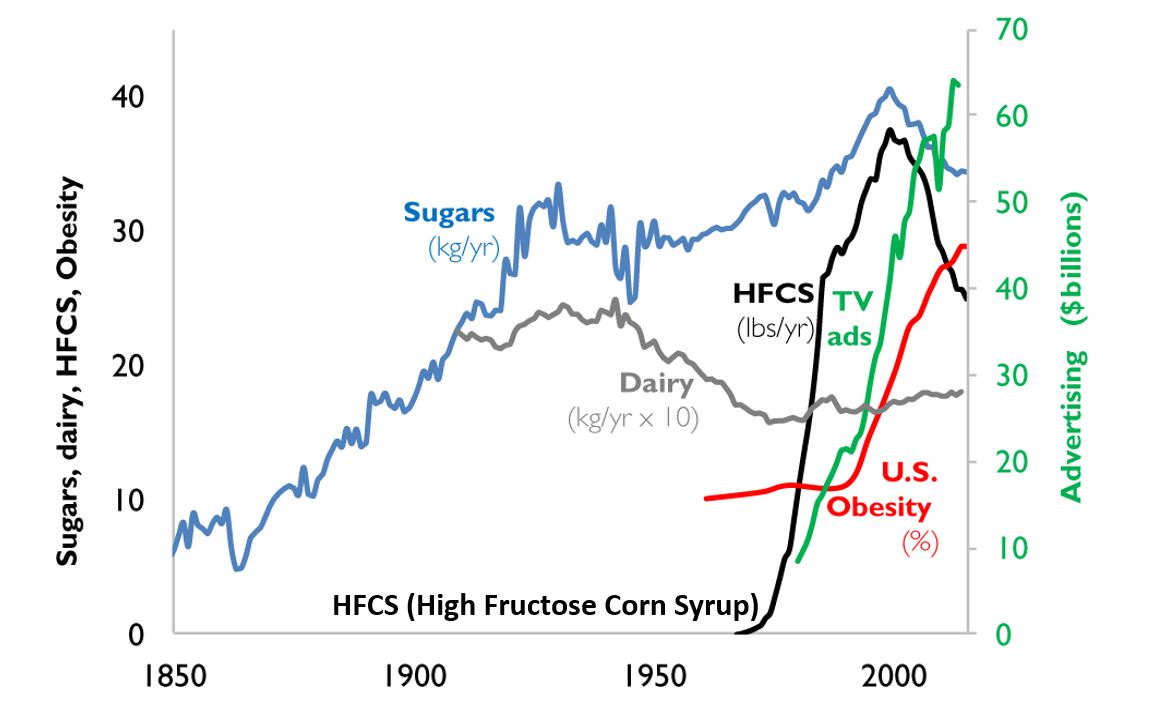
Figure 2. A timeline from 1850 to 2000 reflects the increase in use of refined sugar and high fructose corn syrup (HFCS) to the U.S. diet, together with the increase in U.S. obesity rate. The data for sugar, dairy and HFCS consumption per capita are from USDA Economic Research Service (Johnson et al., 2009) and reflects historical estimates before 1967 (Guyenet et al., 2017). The obesity data (% of U.S. adult population) are from the Robert Wood Johnson Foundation’s Trust for America’s Health. (stateofobesity.org). Total U.S. television advertising data are from the World Advertising Research Center (www.warc.com). The vertical measure (y–axis) for kilograms per year (kg/yr) on the left covers all data except advertising expenditures, which uses the vertical measure for advertising on the right. Reproduced by permission from Bentley et al, 2018.
This graph clearly shows a close association between the years that high fructose corn syrups (HFCS) were introduced into the American diet and an increase in TV advertising with corresponding increase in obesity. HFCS is an ultra-processed food and is a surrogate marker for all other ultra-processed foods. The best interpretation is that ultra-processed foods, which often contain HFCS, are a causal factor of the increase in obesity, and diabetes and in turn are risk factors for heart disease, cancers and dementias.
Ultra-processed foods are novel from an evolutionary perspective.
The human digestive system has only recently encountered sources of calories which are filled with so many unnatural chemicals, textures and flavors. Ultra-processed foods have been engineered, developed and product tested to increase the likelihood they are wanted by consumers and thereby increase sales and profits for the producers. These foods contain the ‘right amount’ processed materials to evoke the taste, flavor and feel of desired foods that ‘trick’ the consumer it eat them because they activate evolutionary preference for survival. Thus, these ultra-processed foods have become an ‘evolutionary trap’ where it is almost impossible not to eat them. We eat the food because it capitalized on our evolutionary preferences even though doing so is ultimately harmful for our health (for a detailed discussion on evolutionary traps, see Peper, Harvey & Faass, 2020).
An example is a young child wanting the candy while waiting with her parents at the supermarket checkout line. The advertised images of sweet foods trigger the cue to eat. Remember, breast milk is sweet and most foods in nature that are sweet in taste, provide calories for growth and survival and are not harmful. Calories are essential of growth. Thus, we have no intrinsic limit on eating sweets unlike foods that taste bitter.
As parents, we wish that our children (and even adults) have self-control and no desire to eat the candy or snacks that is displayed at eye level (eye candy) especially while waiting at the cashier. When reflecting about food advertising and the promotion of foods that are formulated to take advantage of ‘evolutionary traps’, who is responsible? Is it the child, who does not yet have the wisdom and self-control or, is it the food industry that ultra-processes the foods and adds ingredients into foods which can be harmful and then displays them to trigger an evolutionary preference for food that have been highly processed?
Every country that has adapted the USA diet of ultra-processed foods has experienced similar trends in increasing obesity, diabetes, cardiovascular disease, etc. The USA diet is replacing traditional diets as illustrated by the availability of Coca-Cola. It is sold in over 200 countries and territories (Coca-Cola, 2023).
An increase in ultra-processed foods by 10 percent was associated with a 25 percent increase in the risk of dementia and a 14 per cent increase in the risk of Alzheimers’s (Li et al., 2022). More importantly, people who eat the highest proportion of their diet in ultra-processed foods had a 22%-62% increased risk of death compared to the people who ate the lowest proportion of processed foods (van Tulleken, 2023). In the USA, counties with the highest food swamp scores (the availability of fast food outlets in a county) had a 77% increased odds of high obesity-related cancer mortality (Bevel et al., 2023). The increase risk has also been observed for cardiovascular disease, coronary heart disease, cerebrovascular disease and all cause mortality as is shown in figure 3 (Srour et al., 2019; Rico-Campà et al., 2019).

Figure 3. Association between consumption of ultra-processed foods and all cause mortality. Reproduced from Rico-Campà et al, 2019.
The harmful effects of UPF holds up even when correcting for the amount of sugars, carbohydrates or fats in the diet and controlling for socio economic variables.
The logic that underlies this perspective is based upon the writing by Nassim Taleb (2012) in his book, Antifragile: Things That Gain from Disorder (Incerto). He provides an evolutionary perspective and offers broad and simple rules of health as well as recommendations for reducing UPF risk factors:
- Assume that anything that was not part of our evolutionary past is probably harmful.
- Remove the unnatural/unfamiliar (e.g. smoking/ e-cigarettes, added sugars, textured proteins, gums, stabilizers (guar gum, sodium alginate), emulsifiers (mono-and di-glycerides), modified starches, dextrose, palm stearin, and fats, colors and artificial flavoring or other ultra-processed food additives).
What can we do?
The solutions are simple and stated by Michael Pollan in his 2007 New York Times article, “Eat food. Not too much. Mostly Plants.” Eat foods that your great grandmother would recognize as foods (Pollan, 2009). Do not eat any of the processed foods that fill a majority of a supermarket’s space.
- Buy only whole organic natural foods and prepare them yourself.
- Request that food companies only buy and sell non-processed foods.
- Demand government action to tax ultra-processed food and limit access to these foods. In reality, it is almost impossible to expect people to choose healthy, organic foods when they are more expensive and not easily available in the American ‘food swamps and deserts’ (the presence of many fast food outlets or the absence of stores that have fresh produce and non-processed foods). We do have a choice. We can spend more money now for organic, health promoting foods or, pay much more later to treat illness related to UPF.
- It is time to take our cues from the tobacco wars that led to regulating tobacco products. We may even need to start class action suits against producers and merchants of UPF for causing increased illness and premature morbidity.
For more background information and the science behind this blog, read, the book, Ultra-processed people, by Chris van Tulleken.

Look at the following blogs for more background information.
References
Bentley, R.A., Ormerod, P. & Ruck, D.J. (2018). Recent origin and evolution of obesity-income correlation across the United States. Palgrave Commun 4, 146. https://doi.org/10.1057/s41599-018-0201-x
Bero, L. A. (2005). Tobacco Industry Manipulation of Research. Public Health Reports (1974-), 120(2), 200–208. http://www.jstor.org/stable/20056773
Bevel, M.S., Tsai, M., Parham, A., Andrzejak, S.E., Jones, S., & Moore, J.X. (2023). Association of Food Deserts and Food Swamps With Obesity-Related Cancer Mortality in the US. JAMA Oncol. 9(7), 909–916. https://doi.org/10.1001/jamaoncol.2023.0634
Coca-Cola. (2023). More on Coca-Cola. Accessed July 14, 2023. https://www.coca-cola.co.uk/our-business/faqs/how-many-countries-sell-coca-cola-is-there-anywhere-in-the-world-that-doesnt
Johnson, R.K., Appel, L.J., Brands, M., Howard, B.V., Lefevre, M., Lustig, R.H., Sacks, F., Steffen, L.M., & Wylie–Rosett, J. (2009). Dietary sugars intake and cardiovascular health: a scientific statement from the American Heart Association. Circulation, 120(10), 1011–1020. https://doi.org/10.1161/CIRCULATIONAHA.109.192627
Li, H., Li, S., Yang, H., et al, 2022. Association of ultraprocessed food consumption with the risk of dementia: a prospective cohort study. Neurology, 99, e1056-1066. https://doi.org/10.1212/WNL.0000000000200871
Peper, E., Harvey, R. & Faass, N. (2020). TechStress: How Technology is Hijacking Our Lives, Strategies for Coping, and Pragmatic Ergonomics. Berkeley: North Atlantic Books, pp 18-22, 151. https://www.amazon.com/Beyond-Ergonomics-Prevent-Fatigue-Burnout/dp/158394768X/ref=sr_1_1?crid=1U9Y82YO4DKKP&keywords=erik+peper&qid=1689372466&sprefix=erik+peper%2Caps%2C187&sr=8-1
Pollan, M. (2007). Unhappy meals. The New York Times Magazine. https://www.nytimes.com/2007/01/28/magazine/28nutritionism.t.html
Pollan, M. (2009). Food Rules: An Eater’s Manual. New York: Penguin Books. https://www.amazon.com/Food-Rules-Eaters-Michael-Pollan/dp/014311638X/ref=tmm_pap_swatch_0?_encoding=UTF8&qid=1689373484&sr=8-2
Rico-Campà, A., Martínez-González, M. A., Alvarez-Alvarez, I., de Deus Mendonça, R., Carmen de la Fuente-Arrillaga, C., Gómez-Donoso, C., & Bes-Rastrollo, M. (2019). Association between consumption of ultra-processed foods and all cause mortality: SUN prospective cohort study. BMJ; 365: l1949 https://doi.org/10.1136/bmj.l1949
Roser, M. (2021).Smoking: How large of a global problem is it? And how can we make progress against it? Our world in data. Assessed July 13, 2023. https://ourworldindata.org/smoking-big-problem-in-brief
Srour, B., Fezeu, L.K., Kesse-Guyot, E.,Alles, B., Mejean, C…(2019). Ultra-processed food intake and risk of cardiovascular disease: prospective cohort study (NutriNet-Santé) BMJ,365:l1451. https://doi.org/10.1136/bmj.l1451
Srour, B., Kordahi, M. C., Bonazzi, E., Deschasaux-Tanguy, M., Touvier, M., & Chassaing, B. (2022). Ultra-processed foods and human health: from epidemiological evidence to mechanistic insights. The Lancet Gastroenterology & Hepatology. https://doi.org/10.1016/S2468-1253(22)00169-8
Taleb, N. N. (2012). Antifragile: Things That Gain from Disorder (Incerto). New York: Random House Publishing Group. (Kindle Locations 5906-5908). https://www.amazon.com/Antifragile-Things-Disorder-ANTIFRAGILE-Hardcover/dp/B00QOJ6MLC/ref=sr_1_4?crid=3BISYYG0RPGW5&keywords=Antifragile%3A+Things+That+Gain+from+Disorder+%28Incerto%29&qid=1689288744&s=books&sprefix=antifragile+things+that+gain+from+disorder+incerto+%2Cstripbooks%2C158&sr=1-4
Van Tulleken, C. (2023). Ultra-processed people. The science behind food that isn’t food. New Yoerk: W.W. Norton & Company. https://www.amazon.com/gp/product/1324036729/ref=ox_sc_act_title_1?smid=ATVPDKIKX0DER&psc=1
United States Public Health Service. (1964). The 1964 Report on Smoking and Health. United States. Public Health Service. Office of the Surgeon General. https://profiles.nlm.nih.gov/spotlight/nn/catalog?f%5Bexhibit_tags%5D%5B%5D=smoking
 the peper perspective