Managing Blood Sugar: Lifestyle Changes for Better Health
Posted: May 25, 2026 Filed under: ADHD, attention, behavior, cancer, Evolutionary perspective, healing, health, lifestyle, Nutrition/diet, self-healing, Uncategorized | Tags: AIC, carbohydrate, continous glucose monitoring, diet, exhaustion, glucose, insulin, metabolic disease, obesity, sugar, ultra-processed foods Leave a comment
It was 4:45 p.m., and I was looking forward to swimming. I briskly walked the eight blocks from my house to the heated outdoor city pool. The pool is unusual—100 feet long instead of the standard 25 yards—and I enjoy the rhythm of swimming lap after lap.
I arrived just as the sign flipped from Closed to Open. I quickly changed into my bathing suit, locked my clothes in a metal locker, took a short shower, and jumped into the lane. The sun was still out, and only one other swimmer shared my lane. I felt energized and expected to complete my usual forty laps.
However, after about eighteen laps, my energy suddenly disappeared. There was nothing left in the tank. I swam to the side, pulled myself slowly onto the pool deck, and even slowly and unsteadily walked to the men’s locker room. I sat down on the bench feeling shaky, weak, and exhausted. This was not ordinary fatigue. After resting for several minutes, I slowly showered, dressed, and walked home with heavy, almost uncoordinated legs.
As I reflected on the experience, I remembered something similar that had happened two weeks earlier. Around 5 p.m, I had taken my son’s dog for a brisk walk. Again, I began energized, walking quickly, and then suddenly felt drained and sweaty. When I returned home, all I could do was sit down and recover.
What happened
Reflecting back, I realized that both cases I had eaten sweets—cake one time and a large chocolate chip cookie the other about two hours earlier Most likely, the rapidly absorbed sugars and refined carbohydrates caused a sharp increase in blood glucose, followed by a significant insulin response (Ludwig & Ebbeling, 2018). During exercise, my muscles then demanded additional glucose, and my blood sugar may have dropped rapidly enough to trigger symptoms of reactive hypoglycemia: shakiness, sweating, weakness, and fatigue (Morales-Brown, 2025, June 12).
The process is more complex than simply “sugar highs” and “crashes.” Carbohydrates are broken .break down into glucose during digestion, which begins in the mouth. Chewing breaks down food physically, while the enzyme amylase in saliva starts the chemical breakdown by splitting starches into sugars (Peyrot des Gachons & Breslin, 2016). This raises blood glucose levels, which stimulates insulin release from the pancreas. Insulin helps move glucose from the bloodstream into cells. In some people—especially those developing insulin resistance or prediabetes—the insulin response may overshoot, leading to a later drop in blood glucose. Exercise can amplify this effect because active muscles rapidly consume glucose for energy (American Diabetes Association, 2024).
This experience was a wake-up call for me because my hemoglobin A1C is 5.7%, the lower threshold for prediabetes. Hemoglobin A1C reflects average blood glucose levels over approximately the previous three months (American Diabetes Association, 2026).
Like many people, I enjoy and am even addicted to bread, potatoes, pastries, and sweets. Looking back, the subtle changes began during COVID. Before the pandemic, I spent much of the day teaching in person, walking across campus, moving, and interacting with students. During lockdown, I sat for hours teaching online. My physical activity during the day dramatically decreased while my eating habits did not significantly change.
When we are inactive, excess sugars and refined carbohydrates are less likely to be immediately used by muscles for fuel. Instead, repeated spikes in blood glucose and insulin can contribute over time to insulin resistance, weight gain, metabolic dysfunction, and increased inflammation (Ludwig & Ebbeling, 2018).
Although my episodes were minor, they reminded me that lifestyle patterns especially eating ultra-processed foods can increase the risk for chronic diseases such as type 2 diabetes, cardiovascular disease, obesity, and some cancers and dementia (Lane et al., 2024; Menegassi & Vinciguerra, 2025). The scientific literature strongly links obesity, insulin resistance, and type 2 diabetes with increased risk for several cancers, including colorectal and postmenopausal breast cancer (Peper et al., 2026; Scully et al., 2021: Lauby-Secretan et al., 2016). Ultra-processed foods and sugar-sweetened beverages are also associated with increased risk for obesity and metabolic disease; moreover, cancer survivors who consume higher amounts of ultra processed foods face a significantly increased risk of both all-cause and cancer-specific mortality (Hall et al., 2019; Bonaccio et al., 2026). However, cancer is multifactorial, and no single food alone “causes” cancer. Rather, long-term dietary patterns, inactivity, obesity, chronic inflammation, genetics, environmental exposures, sleep, and stress all interact together ( Marino et al., 2024; Dalamaga et al., 2026; Peper et al., 2026).
What to do
The encouraging news is that these processes are often reversible.
Weight, hunger, blood sugar fluctuations, and even A1C are not fixed. They can improve significantly through lifestyle changes. Research consistently shows that reducing ultra-processed foods, lowering intake of refined carbohydrates and sugary beverages, increasing fiber-rich vegetables, improving sleep, reducing stress, and exercising regularly can improve insulin sensitivity and metabolic health (Bird & Hawley, 2017; Vaezi et al., 2025; American Diabetes Association, 2024; Peper et al., 2026).
For many people, continuous glucose monitors (CGMs) can provide powerful real-time feedback (Ehrhardt & Zaghal, 2020). Seeing how specific foods affect your glucose levels can increase awareness and motivate healthier choices. Often, we do not realize how dramatically a muffin, fruit juice, or bowl of white rice may affect blood sugar until we see the data on the screen.
The goal is not perfection or rigid dieting. Instead, it is learning to observe how your body responds and gradually shifting toward foods that support stable energy, satiety, and long-term health.
Before making major dietary changes, watch the superb interview with Dr. David Unwin, a British physician known for his work using lower-carbohydrate dietary approaches to help patients improve type 2 diabetes and metabolic health. His clinical work demonstrates that many patients can significantly improve blood sugar control and sometimes reduce medications through lifestyle changes (Unwin et al., 2020). The video, The Sugar Doctor’s Warning: The “Healthy” Foods Quietly Destroying Your Body! – Dr. David Unwin, is from the podcast, The Diary of a CEO with Steven Bartlett.
The Link Between Diet, Lifestyle, and Cancer Risk: Steps You Can Take
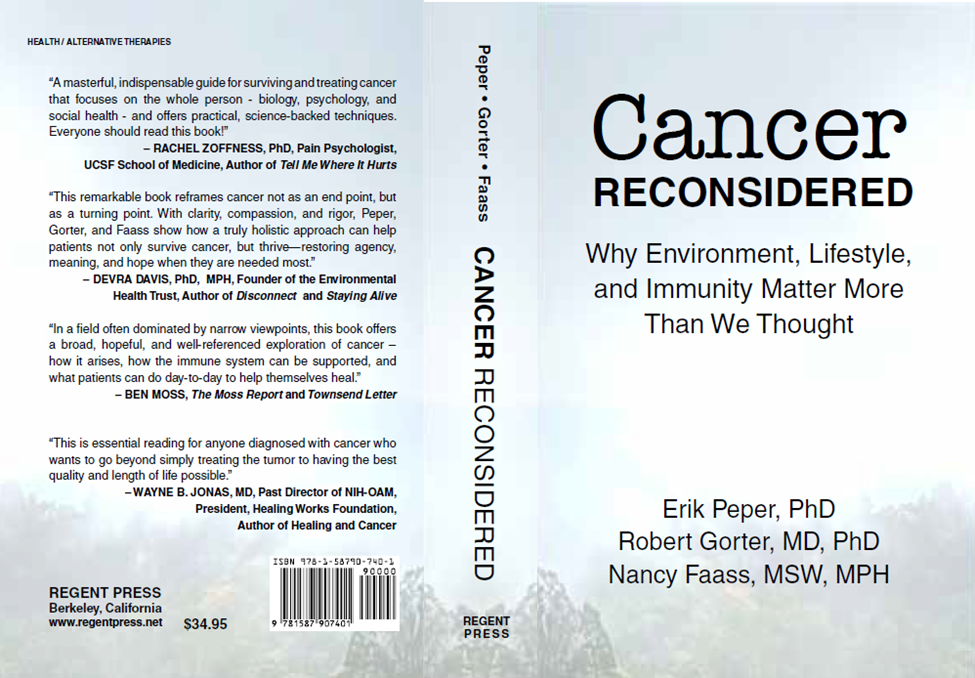
Read the new book, Cancer Reconsidered: Why Environment, Lifestyle, and Immunity Matter More than We Thought, by Erik Peper, Robert Gorter, and Nancy Faass. It explore the many of the lifestyle factors that can increase cancer risk—or help protect against it. The book brings together an extraordinary range of scientific research to illuminate how everyday habits and modern lifestyles influence cancer risk and healing. Drawing from both conventional medicine and integrative approaches, the authors thoughtfully examine the many factors involved in cancer causation while offering hopeful, evidence-based strategies for supporting recovery and restoring health.
What makes this book especially compelling is that it goes far beyond reviewing the science. It translates research into practical, everyday actions people can use to support healing and improve quality of life. At its heart is lifestyle medicine—the recognition that stress management, hope, physical activity, nourishing foods, supportive relationships, community, and resilience during times of crisis profoundly affect health and well-being. The book also offers a detailed and highly practical discussion of sugar metabolism and explains how continuous glucose monitoring sensors (CGMS) with the smartphone app can help people directly observe how specific foods and daily habits influence their blood sugar levels. Instead of relying on abstract nutrition advice, readers learn how to become active investigators of their own health.
Throughout the book, the message is empowering: our daily habits, social connections, attitudes, and environment may influence health as much as—if not more than—genetics alone. The book is available from Amazon: https://www.amazon.com/Cancer-Reconsidered-Environment-Lifestyle-Immunity/dp/1587907402
Listen to the in-depth discussion of this blog created with Google NotebookLM
Addition relevant blogs
References
American Diabetes Association. (2026). Blood glucose and exercise. American Diabetes Association. Retrieved May 24, 2026, from https://diabetes.org/health-wellness/fitness/blood-glucose-and-exercise
American Diabetes Association. (2024). Standards of care in diabetes—2024. Diabetes Care, 47(Suppl. 1). https://diabetesjournals.org/care/issue/47/Supplement_1
Bonaccio, M., Di Castelnuovo, A., Costanzo, S., Ruggiero, E., Esposito, S., Panzera, T., Di Costanzo, G., De Curtis, A., Magnacca, S., Cerletti, C., Donati, M. B., de Gaetano, G., & Iacoviello, L., for the Moli-sani Study Group. (2026). Ultra-processed food and mortality among long-term cancer survivors from the Moli-sani Study: Prospective findings and analysis of biological pathways. Cancer Epidemiology, Biomarkers & Prevention, 35(4), 664–674. https://doi.org/10.1158/1055-9965.EPI-25-0808
Dalamaga, M., Rozani, S., & Petropoulou, D. (2026). Why is colorectal cancer occurring earlier? Metabolic dysfunction, underrecognized carcinogens, and emerging controversies. Current Obesity Reports, 15(1), 24. https://doi.org/10.1007/s13679-026-00700-z
Ehrhardt, N., & Al Zaghal, E. (2020). Continuous glucose monitoring as a behavior modification tool. Clinical Diabetes, 38(2), 126–131. https://doi.org/10.2337/cd19-0037
Hall, K. D., Ayuketah, A., Brychta, R., Cai, H., Cassimatis, T., Chen, K. Y., Chung, S. T., Costa, E., Courville, A., Darcey, V., Fletcher, L. A., Forde, C. G., Gharib, A. M., Guo, J., Howard, R., Joseph, P. V., McGehee, S., Ouwerkerk, R., Raisinger, K., … Zhou, M. (2019). Ultra-processed diets cause excess calorie intake and weight gain: An inpatient randomized controlled trial. Cell Metabolism, 30(1), 67–77. https://doi.org/10.1016/j.cmet.2019.05.008
Lane, M. M., Gamage, E., Du, S., Ashtree, D. N., McGuinness, A. J., Gauci, S., Baker, P., Lawrence, M., Rebholz, C. M., Srour, B., Touvier, M., Jacka, F. N., O’Neil, A., Segasby, T., & Marx, W. (2024). Ultra-processed food exposure and adverse health outcomes: Umbrella review of epidemiological meta-analyses. BMJ, 384, e077310. https://doi.org/10.1136/bmj-2023-077310
Lauby-Secretan, B., Scoccianti, C., Loomis, D., Grosse, Y., Bianchini, F., & Straif, K. (2016). Body fatness and cancer—Viewpoint of the IARC Working Group. New England Journal of Medicine, 375(8), 794–798. https://doi.org/10.1056/NEJMsr1606602
Ludwig, D. S., & Ebbeling, C. B. (2018). The carbohydrate-insulin model of obesity: Beyond “calories in, calories out.” JAMA Internal Medicine, 178(8), 1098–1103. https://doi.org/10.1001/jamainternmed.2018.2933
Marino, P., Mininni, M., Deiana, G., Marino, G., Divella, R., Bochicchio, I., Giuliano, A., Lapadula, S., Lettini, A. R., & Sanseverino, F. (2024). Healthy lifestyle and cancer risk: Modifiable risk factors to prevent cancer. Nutrients, 16(6), 800. https://doi.org/10.3390/nu16060800
Menegassi, B., & Vinciguerra, M. (2025). Ultraprocessed food and risk of cancer: Mechanistic pathways and public health implications. Cancers, 17(13), 2064. https://doi.org/10.3390/cancers17132064
Morales-Brown, P. (2025, June 12). What is reactive hypglycemia. Medical News Today. Accessed May 24, 2026. https://www.medicalnewstoday.com/articles/reactive-hypoglycemia
Peper, E., Gorter, R., & Faass, N. (2026). Cancer reconsidered: Why environment, lifestyle, and immunity matter more than we thought. Biofeedback Health. https://www.amazon.com/Cancer-Reconsidered-Environment-Lifestyle-Immunity/dp/1587907402
Peyrot des Gachons, C., & Breslin, P. A. S. (2016). Salivary amylase: Digestion and metabolic syndrome. Current Diabetes Reports, 16, 102. https://doi.org/10.1007/s11892-016-0794-7
Scully, T., Ettela, A., LeRoith, D., & Gallagher, E. J. (2021). Obesity, type 2 diabetes, and cancer risk. Frontiers in Oncology, 10, 615375. https://doi.org/10.3389/fonc.2020.615375
Unwin, D., Khalid, A. A., Unwin, J., Crocombe, D., Delon, C., Martyn, K., Hasan, M., & Tobin, S. D. (2020). Insights from a general practice service evaluation supporting a lower carbohydrate diet in patients with type 2 diabetes mellitus and prediabetes: A secondary analysis of routine clinic data including HbA1c, weight and prescribing over 6 years. BMJ Nutrition, Prevention & Health, 3(2), 285–294. https://doi.org/10.1136/bmjnph-2020-000072
Vaezi, S., Freeling, J. L., de Vargas, B. O., Weidauer, L., Shoemaker, M. E., Sanders, W. M., & Dey, M. (2025). Impacts of minimally-processed omnivorous vs lacto-ovo-vegetarian diets on insulin sensitivity, lipid profile, and adiposity in older adults: Secondary findings from a randomized crossover feeding trial. Clinical Nutrition, 55, 90–103. https://doi.org/10.1016/j.clnu.2025.10.010
Grandmother Therapy: A Common-Sense Approach to Health and Wellness
Posted: July 24, 2024 Filed under: ADHD, attention, behavior, education, Evolutionary perspective, Exercise/movement, Nutrition/diet, Pain/discomfort, relaxation, self-healing | Tags: anxiety, depression, epilepsy, exhaustion, grandmother therapy, health, insomnia, life style change, mental-health, therapy 1 CommentErik Peper, PhD and Angelika Sadar, MA

In today’s fast-paced world, college students and young adults often struggle with various health issues. From anxiety and depression to ADHD and epilepsy, these challenges can significantly impact their daily lives. But what if the solution to many of these problems lies in something as simple as “Grandmother Therapy”?
What is Grandmother Therapy? Grandmother Therapy is all about going back to basics and establishing healthy lifestyle habits. It’s the common-sense approach that our grandmothers might have suggested: regular sleep patterns, balanced nutrition, increased social connections, and regular physical activity.
The Problem: Many college students:
- Skip breakfast before their first class
- Rely on fast food and sugary stimulants
- Have irregular sleep schedules
- Spend excessive time on gaming and social media
The Medical Approach: Often, the quick solution is medication:
- Depression? Take antidepressants.
- Insomnia? Use sleeping pills.
- Anxiety? Try anti-anxiety medication.
- ADHD? Prescribe Ritalin or similar drugs.
While these treatments may help manage symptoms, they often overlook the underlying lifestyle factors contributing to these issues.
The Grandmother Therapy Approach:
- Establish regular sleep patterns
- Adopt healthy eating habits
- Increase social connections
- Incorporate regular physical activity
- Reduce gaming and social media use
Case Study #1: The Power of Sleep
This illustrates the simple intervention of having a bedtime routine. A college student in a holistic health class complained that she was tired most of the time and had difficulty focusing her attention and continuously drifted off in class.
Here is her reported sleep schedule:
- last night I went to bed at 3am and woke up 7;
- the day before, I went to bed at 1pm and woke up at 6,
- two nights before, I went to bed at 4pm and woke up at 10 am.
Holistic treatment approach:
Set a sleep schedule: she was provided with information about the importance of having a regular pattern of sleep and waking. Namely, go to bed at the same time and get up 8 hours later. She agreed to do an experiment for a week to go to bed at 12 and wake up at 8m. To her surprise, she felt so much more energized and could pay attention in class during the week of the experiment.
Case Study #2: Beyond Seizures: A Holistic Approach to Treating Psychogenic Nonepileptic Seizures
This case study highlights the importance of a comprehensive, lifestyle-based approach to treating psychogenic nonepileptic seizures (PNES). It follows a 24-year-old male student initially diagnosed with intractable epilepsy, experiencing over 10 seizures per week that didn’t respond to medication.
Key points:
1. Initial misdiagnosis: Despite normal MRI and EEG results, the client was initially treated for epilepsy.
2. Limited assessment: Traditional medical evaluations focused solely on seizure descriptions and diagnostics, overlooking crucial lifestyle factors.
3. Comprehensive evaluation: A psychophysiological assessment revealed high sympathetic arousal, including rapid breathing, sweaty palms, and muscle tension.
4. Lifestyle factors: The client’s diet consisted of high-glycemic fast foods, excessive caffeine, alcohol, and daily marijuana use. He also had significant student debt and a history of abdominal surgery.
Holistic treatment approach:
– Dietary changes: Switching to unprocessed, low-glycemic foods and increasing vegetable and fruit intake
– Breathing techniques: Learning and practicing slow diaphragmatic breathing
– Stress management: Addressing underlying stressors and practicing relaxation techniques
– Supplements: Adding omega-3 and multivitamins to support brain health
Remarkable results: Within four months, the patient became seizure-free, reduced marijuana use significantly, and decreased medication dosage.
Summary
These cases underscore the potential of integrating lifestyle modifications and stress management techniques in treating attention, anxiety and even psychogenic nonepileptic seizures; offering hope for patients who don’t respond to traditional treatments alone. Before turning to medication or complex treatments, consider the power of Grandmother Therapy. By addressing fundamental lifestyle factors, we can often improve our health and well-being significantly. Remember, sometimes the most effective solutions are the simplest ones.
The Challenges of Simplicity: While Grandmother Therapy may seem straightforward, its simplicity can make it challenging to implement. It requires commitment and a willingness to change long-standing habits.
Implement many Life Style Changes at once: Recommending one change at the time is logical; however, participants will more likely experience rapid benefits and are more motivated to continue when they change multiple lifestyle factors at once.
Call to Action: Are you struggling with health issues? Try implementing some aspects of Grandmother Therapy in your life. Implement changes and see how they impact your overall well-being.
Please let us know your experience with implementing Grandmother Therapy.
See the following blogs for more background information
Reactivate your second heart
Posted: June 14, 2021 Filed under: behavior, computer, digital devices, ergonomics, Evolutionary perspective, Exercise/movement, health, Pain/discomfort, posture, screen fatigue, self-healing, zoom fatigue | Tags: blood clots, blood flow, calf muscle, cardiovascular disease, deep vein thrombosis, edema, exhaustion, Sitting disease, tired legs, Type 2 diabetes 6 CommentsMonica Almendras and Erik Peper
Adapted from: Almendras, M. & Peper, E. (2021). Reactivate your second heart. Biofeedback, 49(4), 99-102. https://doi.org/10.5298/1081-5937-49.04.07
Have you ever wondered why after driving long distances or sitting in a plane for hours your feet and lower leg are slightly swollen (Hitosugi, Niwa, & Takatsu, 2000)? It is the same process by which soldiers standing in attention sometimes faint or why salespeople or cashiers, especially those who predominantly stand most of the day, have higher risk of developing varicose veins. By the end of the day, they feel that their legs being heavy and tired? In the vertical position, gravity is the constant downward force that pools venous blood and lymph fluid in the legs. The pooling of the blood and reduced circulation is a contributing factor why airplane flights of four or more hours increases the risk for developing blood clots-deep vein thrombosis (DVT) (Scurr, 2002; Kuipers et al., 2007). When blood clots reaches the lung, they can cause a pulmonary embolisms that can be fatal. In other cases, they may even travel to the brain and cause strokes.[1]
Sitting without moving the leg muscles puts additional stress on your heart, as the blood and lymph pools in the legs. Tightening and relaxing the calf muscles can prevent the pooling of the blood. The inactivity of your calf muscles does not allow the blood to flow upwards. The episodic contractions of the calf muscles squeezes the veins and pumps the venous blood upward towards the heart as illustrated in figure 1. Therefore, it is important to stand, move, and walk so that your calf muscle can act as a second heart (Prevosti, April 16, 2020).

Figure 1. Your calf muscles are your second heart! The body is engineered so that when you walk, the calf muscles pump venous blood back toward your heart. Reproduced by permission from Dr. Louis Prevosti of the Center for Vein Restoration (https://veinatlanta.com/your-second-heart/).
To see the second heart in action watch the YouTube video, Medical Animation Movie on Venous Disorders, by the Sigvaris Group Europe (2017).
If you stand too long and experienced slight swelling of the legs, raise your feet slightly higher than the head, to help drain the fluids out of the legs. Another way to reduce pooling of fluids and prevent blood clots and edema is to wear elastic stockings or wrap the legs with intermittent pneumatic compression (IPC) devices that periodically compresses the leg (Zhao et al., 2014). You can also do this by performing foot rotations or other leg and feet exercises. The more the muscle of the legs and feet contract and relax, the more are the veins episodically compressed which increases venous blood return. Yet in our quest for efficiency and working in front of screens, we tend to sit for long time-periods.
Developing sitting disease
Have you noticed how much of the time you sit during the day? We sit while studying, working, socializing and entertaining in front of screens. This sedentary behavior has significantly increased during the pandemic (Zheng et al, 2010). Today, we do not need to get up because we call on Amazon’s Alexa, Apple’s Siri or Google’s Hey Google to control timers, answer queries, turn on the lights, fan, TV, and other home devices. Everything is at our fingertips and we have finally become The Jetsons without the flying cars (an American animated sitcom aired in the 1960s). There is no need to get up from our seat to do an activity. Everything can be controlled from the palm of our hand with a mobile phone app.
With the pandemic, our activities involve sitting down with minimum or no movement at all. We freeze our body’s position in a scrunch–a turtle position–and then we wonder why we get neck, shoulder, and back pains–a process also observed in young adults or children. Instead of going outside to play, young people sit in front of screens. The more we sit and watch screens, the poorer is our mental and physical health (Smith et al., 2020; Matthews et al., 2012). We are meant to move instead of sitting in a single position for eight or more hours while fixating our attention on a screen.
The visual stimuli on screen captures our attention, whether it is data entry, email, social media, or streaming videos (Peper, Harvey & Faass, 2020). While at the computer, we often hold up our index finger on the mouse and wait with baited breath to react. Holding this position and waiting to click may look harmless; however, our right shoulder is often elevated and raised upward towards our ear. This bracing pattern is covert and contributes to the development of discomfort. The moment your muscles tighten, the blood flow through the muscle is reduced (Peper, Harvey, & Tylova, 2006). Muscles are most efficient when they alternately tighten and relax. It is no wonder that our body starts to scream for help when feeling pain or discomfort on our neck, shoulders, back and eyes.
Why move?

Figure 2a and 2b Move instead of sit (photos source: Canva.com).
The importance of tightening and then relaxing muscles is illustrated during walking. During the swing phase of walking, the hip flexor muscles relax, tighten, relax again, tighten again, and this is repeated until the destination is reached. It is important to relax the muscles episodically for blood flow to bring nutrients to the tissue and remove the waste product. Most people can walk for hours; however, they can only lift their foot from the floor (raise their leg up for a few minutes) till discomfort occurs.
Movement is what we need to do and play is a great way to do it. Dr. Joan Vernikos (2016) who conducted seminal studies in space medicine and inactivity physiology investigated why astronauts rapidly aged in space and lost muscle mass, bone density and developed a compromised immune system. As we get older, we are hooked on sitting, and this includes the weekends too. If you are wondering how to separate from your seat, there are ways to overcome this. In the research to prevent the deterioration caused by simulating the low gravity experience of astronauts, Dr. Joan Vernikos (2021) had earthbound volunteers lie down with the head slightly lower than the feet on a titled bed. She found that standing up from lying down every 30-minutes was enough to prevent the deterioration of inactivity, standing every hour was not enough to reverse the degeneration. Standing stimulated the baroreceptors in the neck and activated a cardiovascular response for optimal health (Vernikos, 2021).
We have forgotten something from our evolutionary background and childhood, which is to play and move around. When children move around, wiggle, and contort themselves in different positions, they maintain and increase their flexibility. Children can jump and move their arms up, down, side to side, forward, and backward. They do this every day, including the weekends.
When was the last time you played with a child or like a child? As an adult, we might feel tired to play with a child and it can be exhausting after staring at the screen all day. Instead of thinking of being tired to play with your child, consider it as a good workout. Then you and your child bond and hopefully they will also be ready for a nap. For you, not only do you move around and wake up those muscles that have not worked all day, you also relax the tight muscles, stretch and move your joints. Do playful activities that causes the body to move in unpredictable fun ways such as throwing a ball or roleplaying being a different animal. It will make both of you smile–smiling helps relaxation and rejuvenates your energy.
It is not how much exercise you do, it is how long you sit. The longer you sit without activating your second heart the more are you at risk for cardiovascular disease and diabetes independent of how much exercise you do (Bailey et al., 2019).
Use it or lose it! Activate your calves!
- Interrupt sitting at your desk/computer every 30-minutes by getting up and walking around.
- Stand up and walk around when using your phone.
- Organize walking meetings instead of sitting around a table.
- Invest in a sit-stand desk while working at the computer. While working, alternate positions. There should be a balance between standing and sitting, because too much of one can lead to problems. By taking a short standing up break to let your blood pump back to the heart is beneficial to avoid health problems. Exercise alone, a fancy new ergonomic chair or expensive equipment is not enough to be healthy, it is important to add those mini breaks in between (Buckley et al, 2015).
For a holistic perspective to stay healthy while working with computers and cellphones, see the comprehensive book by Peper, Harvey and Faass (2020), TechStress: How Technology is Hijacking Our Lives, Strategies for Coping, and Pragmatic Ergonomics.
References
Buckley, J.P., Hedge, A., Yates, T., et al. (2015). The sedentary office: an expert statement on the growing case for change towards better health and productivity British Journal of Sports Medicine, 49, 1357-1362.
Prevosti, L. (2020, April 16). Your second heart. https://veinatlanta.com/your-second-heart/
Vernikos, J. (2021, February 25). Much ado about standing. Virtual Ergonomic Summit. American Posture Institute. https://api.americanpostureinstitute.com/virtual-ergonomics-summit-free-ticket?r_done=1
[1] We even wonder if excessive sitting during the COVID-19 pandemic is a hidden risk factor of the rare negative side effects of blood clots in the brain, that can occur with the AstraZeneca and Johnson and Johnson coronavirus vaccine (Mahase, 2021).
 the peper perspective