Breathing to improve well-being
Posted: November 17, 2017 Filed under: Breathing/respiration, Exercise/movement, Neck and shoulder discomfort, Pain/discomfort, self-healing, stress management, Uncategorized | Tags: anxiety, Breathing, health, mindfulness, pain, respiration, stress 9 CommentsBreathing affects all aspects of your life. This invited keynote, Breathing and posture: Mind-body interventions to improve health, reduce pain and discomfort, was presented at the Caribbean Active Aging Congress, October 14, Oranjestad, Aruba. www.caacaruba.com
The presentation includes numerous practices that can be rapidly adapted into daily life to improve health and well-being.
Yes, fresh organic food is better!
Posted: October 27, 2017 Filed under: Nutrition/diet, self-healing | Tags: farming, Holistic health, longevity, non-organic foods, nutrition, organic foods, pesticides 16 Comments
Is it really worthwhile to spent more money on locally grown organic fruits and vegetables than non-organic fruits and vegetables? The answer is a resounding “YES!” Organic grown foods have significantly more vitamins, antioxidants and secondary metabolites such as phenolic compounds than non-organic foods. These compounds provide protective health benefits and lower the risk of cancer, cardiovascular disease, type two diabetes, hypertension and many other chronic health conditions (Romagnolo & Selmin, 2017; Wilson et al., 2017; Oliveira et al., 2013; Surh & Na, 2008). We are what we eat–we can pay for it now and optimize our health or pay more later when our health has been compromised.
The three reasons why fresh organic food is better are:
- Fresh foods lengthen lifespan.
- Organic foods have more vitamins, minerals, antioxidants and secondary metabolites than non-organic foods.
- Organic foods reduce exposure to harmful neurotoxic and carcinogenic pesticide and herbicides residues.
Background
With the advent of chemical fertilizers farmers increased crop yields while the abundant food became less nutritious. The synthetic fertilizers do not add back all the necessary minerals and other nutrients that the plants extract from the soil while growing. Modern chemical fertilizers only replace three components–Nitrogen, Phosphorus and Potassium–of the hundred of components necessary for nutritious food. Nitrogen (N) which promotes leaf growth; Phosphorus (P which development of roots, flowers, seeds, fruit; and Potassium (K) which promotes strong stem growth, movement of water in plants, promotion of flowering and fruiting. These are great to make the larger and more abundant fruits and vegetables; however, the soil is more and more depleted of the other micro-nutrients and minerals that are necessary for the plants to produce vitamins and anti-oxidants. Our industrial farming is raping the soils for quick growth and profit while reducing the soil fertility for future generations. Organic farms have much better soils and more soil microbial activity than non-organic farm soils which have been poisoned by pesticides, herbicides, insecticides and chemical fertilizers (Mader, 2002; Gomiero et al, 2011). For a superb review of Sustainable Vs. Conventional Agriculture see the web article: https://you.stonybrook.edu/environment/sustainable-vs-conventional-agriculture/
1. Fresh young foods lengthen lifespan. Old foods may be less nutritious than young food. Recent experiments with yeast, flies and mice discovered that when these organisms were fed old versus young food (e.g., mice were diets containing the skeletal muscle of old or young deer), the organisms’ lifespan was shortened by 18% for yeast, 13% for flies, and 13% for mice (Lee et al., 2017). Organic foods such as potatoes, bananas and raisins improves fertility, enhances survival during starvation and decreases long term mortality for fruit flies(Chhabra et al, 2013). See Live longer, enhance fertility and increase stress resistance: Eat organic foods. https://peperperspective.com/2013/04/21/live-longer-enhance-fertility-and-increase-stress-resistance-eat-organic-foods/
In addition, eating lots of fruits and vegetables decreases our risk of dying from cancer and heart disease. In a superb meta-analysis of 95 studies, Dr. Dagfinn Aune from the School of Public Health, Imperial College London, found that people who ate ten portions of fruits and vegetable per day were a third less likely to die than those who ate none (Aune et al, 2017). Thus, eat lots of fresh and organic fruits and vegetables from local sources that is not aged because of transport.
2. Organic foods have more vitamins, minerals, antioxidants and secondary metabolites than non-organic foods. Numerous studies have found that fresh organic fruits and vegetables have more vitamins, minerals, antioxidants, and secondary metabolites than non-organic ones. For example, organic tomatoes contain 57 per cent more vitamin C than non-organic ones (Oliveira et al 2013) or organic milk has more beneficial polyunsaturated fats non-organic milk (Wills, 2017; Butler et al, 2011). Over the last 50 years key nutrients of fruits and vegetables have declined. In a survey of 43 crops of fruits and vegetables, Davis, Epp, & Riordan, (2004) found a significant decrease of vitamins and minerals in foods grown in the 1950s as compared to 1999 as shown in Figure 1 (Lambert, 2015).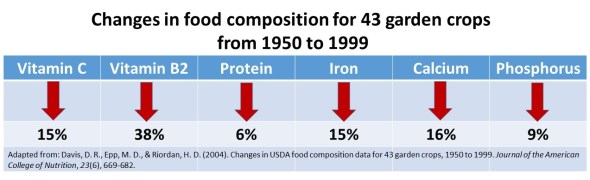
Figure 1. Change in vitamins and minerals from 1950 to 1999. From: Davis, D. R., Epp, M. D., & Riordan, H. D. (2004). Changes in USDA food composition data for 43 garden crops, 1950 to 1999. Journal of the American College of Nutrition, 23(6), 669-682.
3, Organic foods reduce exposure to harmful neurotoxic and carcinogenic pesticide and herbicides residues. Even though, the United States Department of Agriculture (USDA) and the United States Environmental Protection Agency (EPA) state that pesticide residues left in or on food are safe and non-toxic and have no health consequences, I have my doubts! Human beings accumulate pesticides just like tuna fish accumulates mercury—frequent ingesting of very low levels of pesticide and herbicide residue may result in long term harmful effects and these long term risks have not been assessed. Most pesticides are toxic chemicals and were developed to kill agricultural pests — living organisms. Remember human beings are living organisms. The actual risk for chronic low level exposure is probably unknown; since, the EPA pesticide residue limits are the result of a political compromise between scientific findings and lobbying from agricultural and chemical industries (Portney, 1992). Organic diets expose consumers to fewer pesticides associated with human disease (Forman et al, 2012).
Adopt the precautionary principle which states, that if there is a suspected risk of herbicides/pesticides causing harm to the public, or to the environment, in the absence of scientific consensus, the burden of proof that it is not harmful falls on those recommending the use of these substances (Read & O’Riordan, 2017). Thus, eat fresh locally produced organic foods to optimize health.
References
Butler, G. Stergiadis, s., Seal, C., Eyre, M., & Leifert, C. (2011). Fat composition of organic and conventional retail milk in northeast England. Journal of Dairy Science. 94(1), 24-36.http://dx.doi.org/10.3168/jds.2010-3331
Davis, D. R., Epp, M. D., & Riordan, H. D. (2004). Changes in USDA food composition data for 43 garden crops, 1950 to 1999. Journal of the American College of Nutrition, 23(6), 669-682. http://www.chelationmedicalcenter.com/!_articles/Changes%20in%20USDA%20Food%20Composition%20Data%20for%2043%20Garden%20Crops%201950%20to%201999.pdf
Lambert, C. (2015). If Food really better from the farm gate than super market shelf? New Scientist.228(3043), 33-37.
Oliveira, A.B., Moura, C.F.H., Gomes-Filho, E., Marco, C.A., Urban, L., & Miranda, M.R.A. (2013). The Impact of Organic Farming on Quality of Tomatoes Is Associated to Increased Oxidative Stress during Fruit Development. PLoS ONE, 8(2): e56354. https://doi.org/10.1371/journal.pone.0056354
Read, R. and O’Riordan, T. (2017). The Precautionary Principle Under Fire. Environment-Science and policy for sustainable development. September-October. http://www.environmentmagazine.org/Archives/Back%20Issues/2017/September-October%202017/precautionary-principle-full.html
Romagnolo, D. F. & Selmin, O.L. (2017). Mediterranean Diet and Prevention of Chronic Diseases. Nutr Today. 2017 Sep;52(5):208-222. doi: 10.1097/NT.0000000000000228. https://www.ncbi.nlm.nih.gov/pubmed/29051674
Wills, A. (2017). There is evidence organic food is more nutritious. New Scientist,3114, p53.
Wilson, L.F., Antonsson, A., Green, A.C., Jordan, S.J., Kendall, B.J., Nagle, C.M., Neale, R.E., Olsen, C.M., Webb, P.M., & Whiteman, D.C. (2017). How many cancer cases and deaths are potentially preventable? Estimates for Australia in 2013. Int J Cancer. 2017 Oct 6. doi: 10.1002/ijc.31088. https://www.ncbi.nlm.nih.gov/pubmed/28983918
Are you out of control and reacting in anger? The role of food and exercise
Posted: October 6, 2017 Filed under: Uncategorized | Tags: anger, diet, emotional control, exercise, food, heart rate, Holistic health 2 Comments
Fuming in anger, exploding in rage, shaking in fear, or trembling with anxiety, what can you do? How can you control your emotions and what can you do if you are reacting to a friend or colleague who is out of control? There are many useful self-directed approaches and traditional advice such as, “Count to 10 before you speak,” ”Sleep on it before acting on the decision you have made,” “Practice stress reduction techniques such as mindfulness meditation,” “Leave the situation,” or “Wait 24 hours before clicking “send” on an angry email response.”
These suggestions aim to reduce the strong negative emotions which could cause people to lash out at or totally withdraw from the perceived threat. Under perceived threat, we may react defensively and impulsively to protect ourselves. During those times we may say the meanest things to hurt the person as a substitute for inflicting actual physical harm.
In almost most cases when angry or frightened we may react automatically. Thus having skills to recognize and interrupt the escalating cycle of negative emotions can facilitate resolving conflicts. These skills allow us to react more cool headed, rationally, and recognize how our responses would impact other people and prevent future blow back from our excessive emotional response. It could also interrupt an escalating argument. Despite our best efforts, it is often difficult to change our emotional reaction especially when we feel threatened, hungry and tired.
Emotion regulation as described by Professor James Gross, Professor of Psychology at Stanford University, consists of 1) awareness that there is a need for an unhelpful emotion to be regulated such as noticing an increase in heart rate or worry, 2) selecting a strategy to regulate the emotion such as thinking about positive memories such as a loving grandparent or practicing breathing, 3) implementing and acting on this strategy which means doing the strategy at that moment when we don’t want to and all our impulses are saying “I am right, don’t change,” and 4) constant follow-up to check if what we are doing is effective and if not, what needs to be improved (Gross, 213).
This approach can be very effective and may work even better by combining multiple strategies instead of only one technique. The more skills you have and practiced the easier it becomes to master motional regulation. Sometimes, psychological behavioral approaches may underestimate the role of biological factors such as diet, exhaustion and exercise that underlie emotional regulation.
Think of a four-year child throwing a temper tantrum. As a parent, it not useful to discuss with the child what is going on. Each suggestion may increase the tantrum. Instead the parent thinks, “My child is exhausted or hungry” (how many tantrums don’t occur when the child stays up after bed time or just before dinner?). The millennium’s phrase, “hangry,” is the combination of hunger and anger.
The knowledge that food may prevent or reduce conflict is reflected in the cultural wisdom of most countries except the USA. In the Middle East you are offered tea and sweets before buying a small rug at the bazaar; in Japan or China, you are invited to a meal before beginning a business transaction. The food and may slightly raise your blood glucose levels and encourage digestion which triggers a physiological state that is the opposite of that triggered by anger or fear. It may also evoke positives feelings associated with eating such as family gatherings and parties. As the food and drink are a gift, it may allow you to perceive the other person more positively. Thus, it is easier to be collegial and react more positively in challenging situations. The influence of rest and food has also been observed in Judicial rulings. Judges are much more likely to accept prisoners’ requests for parole at the beginning of the session–right after breakfast or lunch–than later in the session (Danzier, Levav & Avnaim-Pesso, 2011).
What can you do?
One useful mental strategy when you are out of control is to remind yourself that you are acting like a four-year-old child who is having a tantrum. Begin in the same way as you would with a four-year-old: take time out, eat some food, and get rest. Then in the clear light of the next day, after having eating a nutritious breakfast– not just a cup of coffee with a muffin–discuss and resolve what happened the day before that triggered the outburst. Similarly, when another person is out of control, do not to take it personally, he/she may be a momentary acting like four-year-old.
Keep in mind, whatever other people said or did during an outburst, they may have responded automatically because they experienced their survival being threatened. Remember, how in a past moment of anger, you have said something very hurtful? At the moment the words left your mouth, you wished you could have reeled them back in as you realized that it would be almost impossible to repair the damage.
From a biological perspective you were hijacked by the amygdala which is part of our emotional brain (Goleman, 2006). The amygdala processes information 22 milliseconds earlier than the rational brain and acts protectively before our rational brain, the neocortex, can assess the situation and respond. This reaction occurs because the information signals “we are in danger” and evokes the automatic defense reaction as shown Figure 1.
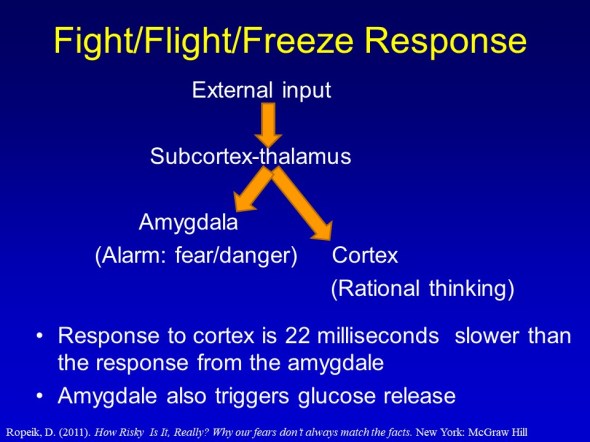
Figure 1. Triggering of a defense reaction is 22 milliseconds quicker from the amygdala than from the cortex. Thus we sometimes react without recognizing the consequences (adapted from Ropeik, 2011)
Implement the cultural wisdom of eating together first and then discussing business or challenging issues. Do not send negative messages by email or mail since that allows people to react asynchronously without having the social feedback to modulate their emotions.
Self-regulation of unhelpful emotions is challenging because negative emotions trigger the body’s defense reactions to prepare it for flight and fight. At that point, it is more and more difficult to perceive the long term consequences of our action– our only goal is to survive. Even our cognitions change and we tend to interpret any information more negatively and may assume harmful intent. The more we are captured by our emotions, the more challenging is it to implement emotional self-regulation strategies.
Once the defense reaction has been activated, it is not the time to resolve conflict. Dr. Gottman and colleagues at the Seattle Love lab, discovered that when couples argued and their heartrate went over a hundred (a possible biological marker of sympathetic activation) arguments could escalate. If the person whose heart rate went up spontaneously took a time out and did self-soothing, the couple had a lower divorce rate and higher marital happiness than those couples who continue the arguments (Gottman & Gottman, 2008).
One of the effective ways to begin emotion regulation is to leave the situation and first complete the fight/flight defense reaction. If possible, this means interrupting whatever you are doing and exercise vigorously. After you have done a vigorous workout, emotional regulation is much easier as the ruminating thoughts have decreased or stopped.
Complete the alarm reaction with exercise
When you are upset take a break. If possible, take a time out and exercise to complete the fight/flight response that was activated by the negative emotions. This is not always possible in a business or social gathering; instead, excuse yourself and go to the bathroom. In the bathroom do the following five-minute exercise that was taught by Rinpoche Tarthang Tulku of the Nyingma tradition of Tibetan Buddhism as an approach to stop ruminating thoughts as shown in Figure 2.

Stand on your toes with the heels touching each other and lifted off the floor with your knees bent. Place your
hands on your sides, breathe slowly and deeply. Do this next to wall to reach with your hand to steady you if you lose your balance. Stay in this position for as long as 5 minutes. Do not straighten up, keep squatting.
In a very short time your attention will be drawn and captured by the burning sensation in your thighs. Continue. After five minutes stop, shake your legs and relax.
After this exercise your thoughts have stopped and continue with the more cognitive approach of emotional self-regulation or return to the meeting. Warming: Do not do this if you have hip, knee or ankle difficulty.
Use heart rate biofeedback to signal you that you may be losing control.
Wear a heart rate monitor to signal you when your heart rate increases twenty to thirty beats above your personal baseline rate during a discussion or conflict. Use that feedback to stop and take time out and implement self-regulation practices such as exercise, breathing or meditation to allow your arousal to decrease. When feeling more calm, return to the meeting.
Summary
Food and exercise are powerful tools to augment emotional self-regulation and health. In our research, Lena Stampfli and I have observed that many students who miss meals, have an unhealthy diet, do not the exercise, are sometimes irritable and experience difficulty in concentration. When San Francisco State University students implemented a four-week self-healing project as part of a class experience, the students who changed their eating behavior (eating breakfast, not skipping meals, reducing caffeine and simple carbohydrates and increase proteins, fats and fresh vegetables) and implemented daily physical exercise (e.g., yoga, jogging, and dancing), reported significant improvements in their energy level, fewer emotion outbursts and improved quality of life. They report some of the following:
“I thought I did not particularly like exercising and eating healthy, but when it is over I feel like I am on cloud nine!… I started to look forward to doing my exercises.” –A.M.
“I started to eat breakfast, I started biking to work and did a few [meditation] exercises before bed… I felt happier and more have energy to get through the day.” –C.B.
“I have learned that letting go of what no longer serves me allow room for healing and opportunities for growth… I can only imagine what years of healthy living could do for my well-being.” –K.S.
*I thank Pardis Miri, PhD, for her constructive comments.
The blog was adapted from Peper, E. (2017). Emotional control through mindfulness as path to mental health? Western Edition HP Journal. October. http://thewesternedition.com/admin/files/magazines/WE-October-2017.pdf
References
Goleman, D. (2006). Emotional intelligence. New York: Bantam.
Gross, James J., ed. (2013). Handbook of emotion regulation. New York, Guilford publications.
Treat yourself to a different point of view: Malcolm Gladwell’s podcasts-Revisionist History
Posted: October 2, 2017 Filed under: Uncategorized | Tags: history, thinking Leave a comment
Each time I listen to one of Malcolm Gladwell’s podcasts, Revisionist History, I experience a veil lifting from my eyes. He reminds me that what I accept without question may not be correct. Malcolm Gladwell is an English Canadian and author of five books including The Tipping Point: How Little Things Can Make a Big Difference, Outliers: The Story of Success, and David and Goliath: Underdogs, Misfits, and the Art of Battling Giants. More recently he is the host of the podcast Revisionist History. His podcasts are goldmine of information. In every episode he re-examines something from the past or present—an event, a person, an idea, even a song—and asks whether we got it right the first time. He brings clarity to topics such as art, basketball, education, financial investment, and philanthropy. His “out of the box” perspective lead me continuously to say, This really makes sense! I wish I thought of that!
Treat yourself and listing to Malcom Gladwell’s podcasts, Revisionist History, It is a journey through the overlooked and the misunderstood. For season 1 and 2 see: http://revisionisthistory.com/about
First do no harm: Listen to Freakonomics Radio Episodes Bad Medicine
Posted: September 3, 2017 Filed under: Uncategorized | Tags: health, Medicine, pharmaceuticals, placebo, treatment 1 Comment
How come up to 250,000 people a year die of medical errors and is the third leading cause of death in the USA (Makary & Daniel, 2016)?
Why are some drugs recalled after years of use because they did more harm than good?
How come arthroscopic surgery continues to be done for osteoarthritis of the knee even though it is no more beneficial than mock surgery (Moseley et al, 2002)?
How come women have more negative side effects from Ambien and other sleep aids than men?
Is it really true that the average new cancer drug costs about $100,000 for treatment and usually only extends the life of the selected study participants by about two months (Szabo, 2017; Fojo, Mailankody, & Lo, 2014)?
“It is simply no longer possible to believe much of the clinical research that is published, or to rely on the judgment of trusted physicians or authoritative medical guidelines. I take no pleasure in this conclusion, which I reached slowly and reluctantly over my two decades as an editor of the New England Journal of Medicine”—Dr. Marcia Angell, longtime Editor in Chief of the New England Medical Journal (Angell, 2009).
Medical discoveries have made remarkable improvements in our health. The discovery of insulin in 1921 by Canadian physician Frederick Banting and medical student Charles H. Best allowed people with Type 1 Diabetes to live healthy productive lives (Rosenfeld, 2002). Cataract lens replacement surgery is performed more than three million times per year and allows millions of people to see better even though a few patients have serious side negative side effects. And, there appears to be new hope for cancer. The FDA on August 30, 2017, approved a new individualized cancer treatment that uses genetically engineered cells from a patient’s immune system to produce remissions in 83 percent of the children and young adults who have relapsed after undergoing standard treatment for B cell acute lymphoblastic leukemia. (FDA August 30, 2017). The one-time treatment for this breakthrough cancer drug for patients who respond costs $475,000 according to the manufacturer Novartis. Yet, it will be years before we know if there are long term negative side effects.
The cost of this treatment is much more than the average cost of $100,000 for newly developed and approved cancer drugs which at best extend the life of highly selected patients on the average by two months; however, when they used with more typical Medicare patients, these drugs often offer little or no increased benefits (Szabo, 2017; Freakonomics Radio episode Bad Medicine, Part 2: (Drug) Trials and Tribulations).
As the health care industry is promising new screening, diagnostic and treatment approaches especially through direct-to-consumer advertising, they may not always be beneficial and, in some cases, may cause harm. The only way to know if a diagnostic or treatment procedure is beneficial is to do long term follow-up; namely, did the treated patients live longer, have fewer complications and better quality of life than the non-treatment randomized control patients. Just because a surrogate illness markers such as glucose level for type 2 Diabetes or blood pressure for essential hypertension decrease in response to treatment, it does not always mean that the patients will have fewer complications or live longer.
To have a better understanding of the complexity and harm that can occur from medical care, listen to the following three Freakonomics Radio episodes titled Bad Medicine.
Freakonomics Radio episode Bad Medicine, Part 1: The story of 98.6. We tend to think of medicine as a science, but for most of human history it has been scientific-ish at best. In the first episode of a three-part series, we look at the grotesque mistakes produced by centuries of trial-and-error, and ask whether the new era of evidence-based medicine is the solution. http://freakonomics.com/podcast/bad-medicine-part-1-story-98-6/
Freakonomics Radio episode Bad Medicine, Part 2: (Drug) Trials and Tribulations. How do so many ineffective and even dangerous drugs make it to market? One reason is that clinical trials are often run on “dream patients” who aren’t representative of a larger population. On the other hand, sometimes the only thing worse than being excluded from a drug trial is being included. http://freakonomics.com/podcast/bad-medicine-part-2-drug-trials-and-tribulations/
Freakonomics Radio episode, Bad Medicine, Part 3: Death by Diagnosis. By some estimates, medical error is the third-leading cause of death in the U.S. How can that be? And what’s to be done? Our third and final episode in this series offers some encouraging answers. http://freakonomics.com/podcast/bad-medicine-part-3-death-diagnosis/
References
Angell M. Drug companies and doctors: A story of corruption. January 15, 2009. The New York Review of Books 56. Available: http://www.nybooks.com/articles/archives/2009/jan/15/drug-companies-doctorsa-story-of-corruption/. Accessed 24, November, 2016.
FDA approval brings first gene therapy to the United States, August 30, 2017. https://www.fda.gov/newsevents/newsroom/pressannouncements/ucm574058.htm
Makary, M. A., & Daniel, M. (2016). Medical error-the third leading cause of death in the US. BMJ: British Medical Journal (Online), 353. Listen to his BMJ medical talk: https://soundcloud.com/bmjpodcasts/medical-errorthe-third-leading-cause-of-death-in-the-us
Rosenfeld, L. (2002). Insulin: discovery and controversy. Clinical chemistry, 48(12), 2270-2288. http://clinchem.aaccjnls.org/content/48/12/2270
Szabo, L. (201, February 9). Dozens of new cancer drugs do little to improve survival. Kaiser Health News. Downloaded September 3, 2017. https://www.usatoday.com/story/news/nation/2017/02/09/new-cancer-drugs-do-little-improve-survival/97712858/
Hurricane Harvey: Wake-up call for tax reform and government regulation to improve equality for all citizens
Posted: August 31, 2017 Filed under: Uncategorized | Tags: floods, Hurricane Harvey, legislation, taxes Leave a comment
Hurricane Harvey was not preventable; however, researchers have predicted this flooding scenario for years. The severe damage was partly caused by the failure of local, state and federal government regulations and planning. It was the lack of governmental oversight and absence of regulations that allowed floodplain to be transformed into corporate profit centers by building houses and industrial buildings.
In Houston two inches of rain will automatically cause flooding and somewhere in Harris County and major flooding has occurred about every two years. Despite the repeated flooding, legislators avoided implementing meaningful flood control regulations such as prohibiting building on floodplains, having more green space for water drainage, or implementing building codes that require flood proof buildings. If you live in an earthquake zone, building codes demand that the structure can resist earthquake damage. Why not have similar rules for buildings on a flood plains? To build a flood proof structure on a flood plain does not take rocket science. All you have to do is build it on on stilts so that the ground floor is free to flood without damage.

Such building code regulations would increase the cost to the developer, reduce profitability and increase taxes. Instead, developers and corporations reaped the immediate profits through legal bribery to politicians (contributions to election campaigns) to block rules and regulations. They thereby transferred the preventable flood loss to the individual home owners. Similarly, the explosion at the Arkema plant near Crosby, Texas, occurred when the plant lost its refrigeration as its backup power supply was flooded. It was a failure of planning and regulations– It is so much cheaper to put the emergency power supply on the ground floor than high enough to prevent flooding. This is similar to the 2011 Fukushima Daiichi nuclear disaster–flooding of the emergency power supply which pumped the water to cool the reactors.
Eventually, it will be the American tax payer who will pay for the Hurricane Relief Package. Already FEMA reported that 95,745 people in Texas have been approved for emergency assistance. The agency has so far disbursed about $57 million to citizens in Texas and this is only the beginning.
As in all disasters, the lower and middle economic classes will disproportionately suffer. They are already living from paycheck to paycheck and have limited resources to recover. It is the role of Government to provide help to allow recovery. Yet, this is counter to the prevailing philosophy of the Republican party as illustrated by more than 20 Texan representatives and senators, including Senator John Cornyn and Ted Cruz, who voted against the $50.5 billion 2013 Hurricane Sandy Relief Package for the victims of Superstorm Sandy that impacted New York and New Jersey. They are now trying to rewrite their scandalous voting record by claiming that they voted against the 2013 Relief Package because it was “full of pork” — A patent lie. The actual data as summarized by Linda Qui in the New York Times’ fact check article, Was 2013 Hurricane Sand Relief Package full of Pork.” points out that the Congressional Congressional Quarterly analysis said that $17 billion in the bill went toward immediate aid for Sandy victims while $33.5 billion was for “near- and long-term assistance and mitigation” of damage from future disasters. See the superb article https://www.nytimes.com/2017/08/30/us/politics/hurricane-sandy-relief-fact-check.html?hpw&rref=politics&action=click&pgtype=Homepage&module=well-region®ion=bottom-well&WT.nav=bottom-well
It is the government’s role to help all citizens regardless of race, age, gender and political preference. It is ironic that the Republican Texan legislators who all voted against the 2013 Hurricane Sandy Relief Package will now need those New York and New Jersey legislators’ support to pass an estimate $150 billion Hurricane Harvey Relief act. Part of me thinks, Senator Cruz and Cornyn, you got what you deserved. How do you dare to ask other legislators to support a Texas Hurricane Harvey Recovery Act when you previously voted against helping others. Also, you have consistently supported ways to shrink government, reduce taxes on the rich, reduced rules and regulations that were created to protect people. Luckily, not everyone is like you. The lawmakers from the New York-New Jersey region are not as callous and have already stated they will support help. As Republican Rep. Peter King of New York wrote in a tweet directed at Cruz., “I won’t abandon Texas the way Ted Cruz did New York.”
The damage caused by Hurricane Harvey reminds us that no one is an island and we all need each other’s support in time of crisis. The role of government is to help all people in need and create regulations to prevent a similar harm from reoccurring. Government rules and regulations are citizens’ only protection against corporate greed.
The upcoming tax reform debate and legislation is an opportunity to demonstrate that the well-being of all citizens is more important than increasing the wealth of the super rich and corporations who avoid paying taxes by holding their profits offshore. It means increasing the tax revenues to pay for infrastructure repair and reduce economic inequality. The tax reform bill will need to increase the taxes on affluent citizens and reduce corporate tax loopholes. Reducing taxes on the rich and corporations, the mantra of “Republican Trickle down economics,” has predominantly benefited the super affluent and reduced the prosperity of average Americans.
Hurricane Harvey disaster as a wake-up call to demand that the government is for the people and by the people and demonstrate that its role is to mitigate and prevent disasters and improve the quality of life of every citizen.
Contact your legislators and demand that they:
- Support Hurricane Harvey Relief funds
- Work on the Tax Reform Legislation that increases the taxes on the rich, reduces corporate tax loopholes
- Create legislation to protect individuals against corporate greed which means more industry regulations and infrastructure improvement.
Finally, remember the role of government is NOT to create rules and regulations to maximize immediate profits, it is to provide a future so that our great grandchildren have more equally and better productive and healthier lives. If only the government, designers and builders of the houses in Houston had acted by this creed, flooding would have been a challenge but almost all people could have ridden out the storm at home.
Enhance Yoga with Biofeedback*
Posted: August 6, 2017 Filed under: Uncategorized | Tags: asana, awareness, biofeedback, Breathing, electromyography, meditation, posture, yoga Leave a commentHow can you demonstrate that yoga practices are beneficial?
How do you know you are tightening the correct muscles or relaxing the muscle not involved in the movement when practicing asanas?
How can you know that the person is mindful and not sleepy or worrying when meditating?
How do you know the breathing pattern is correct when practicing pranayama?
The obvious answer would be to ask the instructor or check in with the participant; however, it is often very challenging for the teacher or student to know. Many participants think that they are muscularly relaxed while in fact there is ongoing covert muscle tension as measured by electromyography (EMG). Some participants after performing an asana, do not relax their muscles even though they report feeling relaxed. Similarly, some people practice specific pranayama breathing practice with the purpose of restoring the sympathetic/parasympathetic system; however, they may not be doing it correctly. Similarly, when meditating, a person may become sleepy or their attention wanders and is captured by worries, dreams, and concerns instead of being present with the mantra. These problems may be resolved by integrating bio- and neurofeedback with yoga instruction and practice. Biofeedback monitors the physiological signals produced by the body and displays them back to the person as shown in Figure 1.
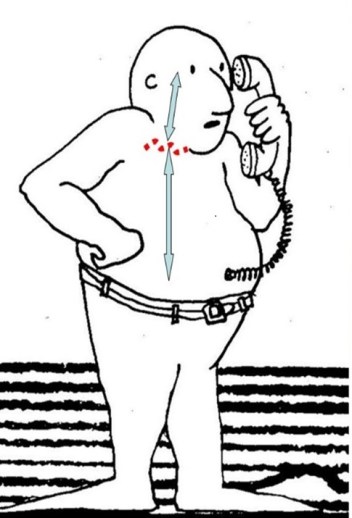
Figure 1: Biofeedback is a methodology by which the participant receives ongoing feedback of the physiological changes that are occurring within the body. Reproduced with permission from Peper et al, 2008.
With the appropriate biofeedback equipment, one can easily record muscle tension, temperature, blood flow and pulse from the finger, heart rate, respiration, sweating response, posture alignment, etc.** Neurofeedback records the brainwaves (electroencephalography) and can selectively feedback certain EEG patterns. In most cases participants are unaware of subtle physiological changes that can occur. However, when the physiological signals are displayed so that the person can see or hear the changes in their physiology they learn internal awareness that is associated with these physiological changes and learn mastery and control. Biofeedback and neuro feedback is a tool to make the invisible, visible; the unfelt, felt and the undocumented, documented.
Biofeedback can be used to document that a purported yoga practice actually affects the psychophysiology. For example, in our research with the Japanese Yogi, Mr. Kawakami, who was bestowed the title “Yoga Samrat’ by the Indian Yoga Culture Federation in 1983, we measured his physiological responses while breathing at two breaths a minute as well as when he inserted non-sterilized skewers through his tongue tongue (Arambula et al, 2001; Peper et al, 2005a; Peper et al, 2005b). The physiological recordings confirmed that his Oxygen saturation stayed normal while breathing two breaths per minute and that he did not trigger any physiological arousal during the skewer piercing. The electroencephalographic recordings showed that there was no response or registration of pain. A useful approach of using biofeedback with yoga instruction is to monitor muscle activity to measure whether the person is performing the movement appropriately. Often the person tightens the wrong muscles or performs with too much effort, or does not relax after performing. An example of recording muscle tension as shown in Figure 2.
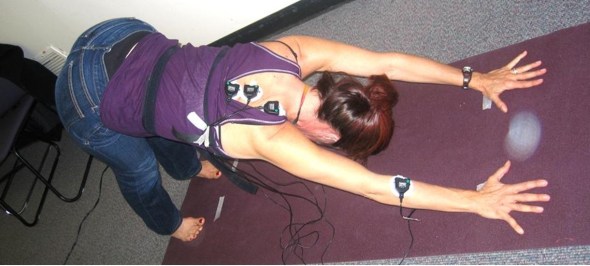
Figure 2: Recording the muscle tension with Biograph Infinity while performing an asana.
In our research it is clear that many people are unaware that they tighten muscles. For example, Mcphetridge et al, (2011) showed that when participants were asked to bend forward slowly to touch their toes and then hang relaxed in a forward fold, most participants reported that they were totally relaxed in their neck. In actuality, they were not relaxed as their neck muscles were still contracting as recorded by electromyography (EMG). After muscle biofeedback training, they all learned to let their neck muscles be totally relaxed in the hanging fold position as shown in Figure 3 & 4.
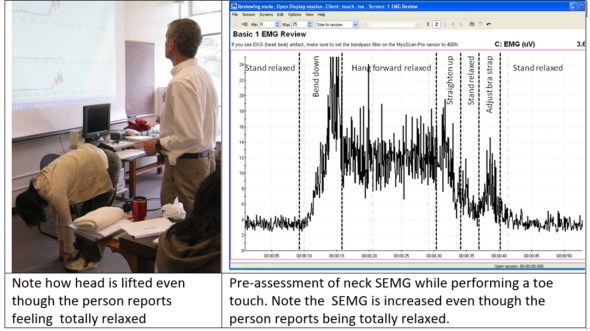
Figure 3: Initial assessment of neck SEMG while performing a toe touch. Reproduced from Harvey, E. & Peper, E. (2011).
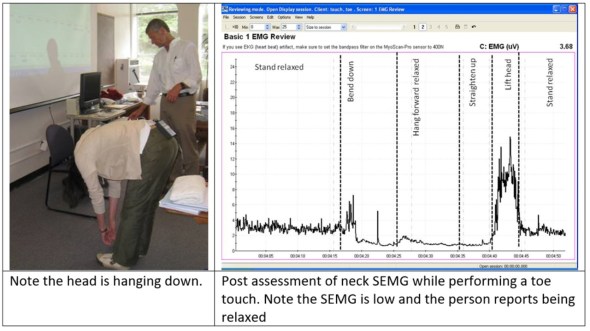
Figure 4: Toe touch after feedback training. The neck is now relaxed; however, the form is still not optimum. . Reproduced from Harvey, E. & Peper, E. (2011).
Thus, muscle feedback is a superb tool to integrate with teaching yoga so that participants can perform asanas with least amount of inappropriate tension and also can relax totally after having tightened the muscles. Biofeedback can similarly be used to monitor body posture during meditation. Often participants become sleepy or their attention drifts and gets captured by imagery or worries. When they become sleepy, they usually begin to slouch. This change in body position can be readily be monitored with a posture feedback device. The UpRight,™ (produced by Upright Technologies, Ltd https://www.uprightpose.com/) is a small sensor that is placed on the upper or lower spine and connects with Bluetooth to the cell phone. After calibration of erect and slouched positions, the device gives vibratory feedback each time the participant slouches and reminds the participant to come back to sitting upright as shown in Figure 5.
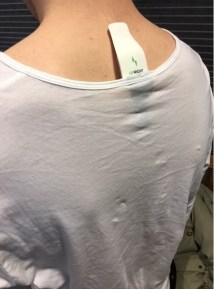
Figure 5: UpRigh™ device placed on the upper spine to provide feedback during meditation. Each time person slouches which often occurs when they become sleepy or loose meditative focus, the device provides feedback by vibrating.
Alternatively, the brainwaves patterns (electroencephalography could be monitored with neurofeedback and whenever the person drifts into sleep or becomes excessively aroused by worry, neurofeedback could remind the person to be let go and be centered. Finally, biofeedback can be used with pranayama practice. When a person is breathing approximately six breaths per minute heart rate variability can increase. This means that during inhalation heart rate increases and during exhalation heart rate decreases. When the person breathes so that the heart rate variability increases, it optimizes sympathetic/parasympathetic activity. There are now many wearable biofeedback devices that can accurately monitor heart rate variability and display the changes in heart rate as modulated by breathing.
Conclusion: Biofeedback is a useful strategy to enhance yoga practice as it makes the invisible visible. It allows the teacher and the student to become aware of the dysfunctional patterns that may be occurring beneath awareness.
References
*Reprinted from: Peper, E. (2017). Enhancing Yoga with Biofeedback. J Yoga & Physio.2(2).*55584. DOI: 10.19080/JYP.2017.02.555584
**Biofeedback and neurofeedback takes skill and training. For information on certification, see http://www.bcia.org Two useful websites are:
Sitting disease is the new health hazard
Posted: July 29, 2017 Filed under: Uncategorized | Tags: exercise, health, posture, sitting 11 Comments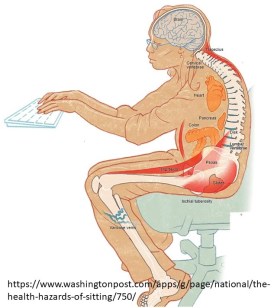 Sedentary behavior is the new norm as most jobs do not require active movement. Sitting in a car instead of walking, standing on the escalator instead of walking up the stairs, using an electric mixer instead of whipping the eggs by hand, sending a text instead of getting up and talking to a co-worker in the next cubicle, buying online instead of walking to the brick and mortar store, watching TV shows, streaming movies, or playing computer games instead of socializing with actual friends, are all examples how the technological revolution has transformed our lives. The result is sitting disease which we belief can mitigate by daily exercise.
The research data is very clear– exercise does not totally reverse the health risks of sitting. In the NIH-AARP Diet and Health Study, researchers Matthews and colleagues (Matthews et al, 2012) completed an 8.5 year follow up on 240,819 adults (aged 50–71 year) who at the beginning baseline surveys did not report any cancer, cardiovascular disease, or respiratory disease.
The 8.5 year outcome data showed that the time spent in sedentary behaviors such as sitting and watching TV was positively correlated with an increased illness and death rates as shown in Figure 1. More disturbing, moderate vigorous exercises does not totally reverse the health risks of sitting and watching television (Matthews et al, 2012).
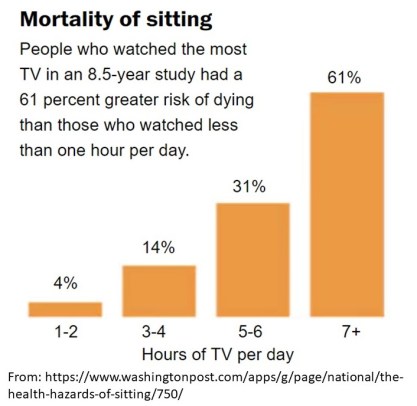
Figure 1. The more you sit the higher the risk of mortality even if you if you attempt to mitigate the effect with moderate vigorous exercise (Matthews et al, 2012). From: https://www.washingtonpost.com/apps/g/page/national/the-health-hazards-of-sitting/750/
The harmful impact of sedentary behavior and simple ways to improve health have been superbly described and illustrated by Bonnie Berkowitz and Patterson Clark (2014), in their January 20, 2014, Washington Post article, The health hazards of sitting, Their one page poster should be posted on the office walls and given to all clients. http://www.washingtonpost.com/wp-srv/special/health/sitting/Sitting.pdf
As they point out, sitting disease increases the risk of heart disease, diabetes, colon cancer, muscle degeneration especially weaker abdominal muscles and gluteus muscles, back pain and reduced hip flexibility, poor circulation in the legs which may cause edema in the ankles and deep vein thrombosis, osteoporosis, strained neck, shoulder and back pain. The effects are not only physical. Sitting reduces subjective energy level and attention as our brain becomes more and more sleepy.
The solution is both very simple and challenging. To reduce the risks, do less sedentary behavior and sitting and do more physical movement during the day. Continuously interrupt sitting with standing and movement. After sitting at the computer for 30 minutes, get up and move. Even skipping in place for 30 seconds, significantly will increase your energy and mood (Peper and Lin, 2012). There are many ways to remind and support yourself and others to move. For example, use reminder programs on the computer such as StretchBreakTM to remind you to get up and stretch. Employees who do episode movements, report fewer symptoms and have more energy (Peper & Harvey, 2008). As one of the employees state after implementing the break program, “There is life after five.” Meaning he was no longer exhausted when he finished work.
Although challenging, wean yourself away from the addicting digital screen and being a couch potato at home. At those moments when you feel drained and all you want to do is veg out by watching another TV series, go for a walk. After walking for 20 minutes, in most cases your energy will have returned and your low mood has been transformed to see new positive option. Plan the walks with neighbors and friends who provide the motivation to pull you out of your funk and go out.

References:
Berkowitz, B. & Clark, P. (Jan 20, 2014). The health hazard of sitting. The Washington Post. Retrieved July 29, 2017.https://www.washingtonpost.com/apps/g/page/national/the-health-hazards-of-sitting/750/
Matthews, C. E., George, S. M., Moore, S. C., Bowles, H. R., Blair, A., Park, Y., … Schatzkin, A. (2012). Amount of time spent in sedentary behaviors and cause-specific mortality in US adults. The American Journal of Clinical Nutrition, 95(2), 437–445. http://doi.org/10.3945/ajcn.111.019620
Exercise: Improve your health, mood, and cognitive function
Posted: July 22, 2017 Filed under: Uncategorized | Tags: depression, exercise, health, hypertension, mood, Sitting disease 1 CommentThrough millions of years, movement was part of our biological necessity.. Movement was necessary to hunt, to escape predators, to explore and to find a mate. Organisms developed a brain (nervous system) to coordinate movement as eloquently explain by neuroscientist Daniel Wolpert in his 2011 TED talk, The Real Reasons for Brains.
It is only recently that we limit movement by sitting, driving, taking the escalator, or controlling equipment that performs the actual physical labor. We interfere with our evolutionary developed physiology when we reduce or even eliminate movement for the sake of efficiency. Lack of movement, “sitting disease”, is a significant contributor and causal factor in illness. It also increases the stress response, negative mood and depression and reduces cognitive activity. Take charge and reduce illness when you integrate purposeful exercise (walking, running, dancing, etc.) into your life style.

Exercise is the most effective behavioral technique for self-regulation of mood in healthy people as summarized in the superb article, The Effects of Acute Exercise on Mood, Cognition, Neurophysiology, and Neurochemical Pathways: A Review, Dr. Julia C. Basso and Wendy A. Suzuki of the Center for Neural Science, New York University, New York, NY, USA. The robust research findings show that acute exercise improves mood, significantly reduces depression, tension, anger, fatigue, and confusion. In addition, acute exercise improves symptoms associated with psychological disorders such as depression, anxiety, schizophrenia, and post-traumatic stress disorder. Exercise decreases the risk of type 2 diabetes, coronary heart disease and stress-related blood pressure response by inhibiting the sympathetic nervous system response to stress. For a detailed summary, see the blogs, What is the best single thing we can do for our health and Healthy movement is the new aging.
Finally, the authors also review the relevant neurophysiological, and neurochemical processes that are affected by exercise. What is most interesting are the findings that “acute exercise primarily enhances executive functions dependent on the prefrontal cortex including attention, working memory, problem solving, cognitive flexibility, verbal fluency, decision making, and inhibitory control. These positive changes have been demonstrated to occur with very low to very high exercise intensities, with effects lasting for up to two hours after the end of the exercise bout.”
As the authors state, “We show that the three most consistent cognitive/behavioral effects of a single bout of exercise in humans are improved executive functions, enhanced mood states, and decreased stress levels.”
Even though the findings are clear that movement/exercise is a powerful “drug” to improve our health, most health professionals focus on sitting treatment and prescribing pharmaceutical agents. Possibly, a treatment session should start with fun physical exercise and followed by therapy. Remember, if you feel blah, have lower energy, feel frustrated or irritated, get up and move. Movement and exercise will change your mood. You will experience what Peper and Lin (2012), have shown that less than minute of skipping in place will significantly improve your subjective energy level and mood. Get up and skip in place, then observe how much better you feel. Then sit again read the article by Dr. Julia C. Basso and Wendy A. Suzuki, http://content.iospress.com/download/brain-plasticity/bpl160040?id=brain-plasticity%2Fbpl160040
Healing irritable bowel syndrome with diaphragmatic breathing*
Posted: June 23, 2017 Filed under: Breathing/respiration, self-healing | Tags: abdominal pain, diaphragmatic breathing, food intolerances, health, Holistic health, IBS, irritable bowel syndrome, pain, recurrent abdominal pain, self-care, SIBO, stress, thoracic breathing 30 CommentsErik Peper, Lauren Mason and Cindy Huey
This blog was adapted and expanded from: Peper, E., Mason, L., & Huey, C. (2017). Healing irritable bowel syndrome with diaphragmatic breathing. Biofeedback. 45(4), 83-87. DOI: 10.5298/1081-5937-45.4.04 https://biofeedbackhealth.files.wordpress.com/2018/02/a-healing-ibs-published.pdf
After having constant abdominal pain, severe cramps, and losing 15 pounds from IBS, I found myself in the hospital bed where all the doctors could offer me was morphine to reduce the pain. I searched on my smart phone for other options. I saw that abdominal breathing could help. I put my hands on my stomach and tried to expand it while I inhaled. All that happened was that my chest expanded and my stomach did not move. I practiced and practiced and finally, I could breathe lower. Within a few hours, my pain was reduced. I continued breathing this way many times. Now, two years later, I no longer have IBS and have regained 20 pounds.
– 21-year old woman who previously had severe IBS
Irritable bowel syndrome(IBS) affects between 7% to 21% of the general population and is a chronic condition. The symptoms usually include abdominal cramping, discomfort or pain, bloating, loose or frequent stools and constipation and can significantly reduce the quality of life (Chey et al, 2015). A precursor of IBS in children is called recurrent abdominal pain (RAP) which affects between 0.3 to 19% of school children (Chitkara et al, 2005). Both IBS and RAP appear to be functional illnesses, as no organic causes have been identified to explain the symptoms. In the USA, this results in more than 3.1 physician visits and 5.9 million prescriptions written annually. The total direct and indirect cost of these services exceeds $20 billion (Chey et al, 2015). Multiple factors may contribute to IBS, such as genetics, food allergies, previous treatment with antibiotics, severity of infection, psychological status and stress. More recently, changes in the intestinal and colonic microbiome resulting in small intestine bacterial overgrowth are suggested as another risk factor (Dupont, 2014).
Generally, standard medical treatments (reassurance, dietary manipulation and of pharmacological therapy) are often ineffective in reducing abdominal IBS and other abdominal symptoms (Chey et al, 2015), while complementary and alternative approaches such as relaxation and cognitive therapy are more effective than traditional medical treatment (Vlieger et, 2008). More recently, heart rate variability training to enhance sympathetic/ parasympathetic balance appears to be a successful strategy to treat functional abdominal pain (FAB) in children (Sowder et al, 2010). Sympathetic/parasympathetic balance can be enhanced by increasing heart rate variability (HRV), which occurs when a person breathes at their resonant frequency which is usually between 5-7 breaths per minute. For most people, it means breathing much slower, as slow abdominal breathing appears to be a self-control strategy to reduce symptoms of IBS, RAP and FAP.
This article describes how a young woman healed herself from IBS with slow abdominal breathing without any therapeutic coaching, reviews how slower diaphragmatic breathing (abdominal breathing) may reduce symptoms of IBS, explores the possibility that breathing is more than increasing sympathetic/parasympathetic balance, and suggests some self-care strategies to reduce the symptoms of IBS.
Healing IBS-a case report
After being diagnosed with Irritable Bowel Syndrome her Junior year of high school, doctors told Cindy her condition was incurable and could only be managed at best, although she would have it throughout her entire life. With adverse symptoms including excessive weight loss and depression, Cindy underwent monthly hospital visits and countless tests, all which resulted in doctors informing her that her physical and psychological symptoms were due to her untreatable condition known as IBS, of which no one had ever been cured. When doctors offered her what they believed to be the best option: morphine, something Cindy describes now as a “band-aid,” she was left feeling discouraged. Hopeless and alone in her hospital bed, she decided to take matters into her own hands and began to pursue other options. From her cell phone, Cindy discovered something called “diaphragmatic breathing,” a technique which involved breathing through the stomach. This strategy could help to bring warmth to the abdominal region by increasing blood flow throughout abdomen, thereby relieving discomfort of the bowel. Although suspicious of the scientific support behind this method, previous attempts at traditional western treatment had provided no benefit to recovery; therefore, she found no harm in trying. Lying back flat against the hospital bed, she relaxed her body completely, and began to breathe. Immediately, Cindy became aware that she took her breath in her chest, rather than her stomach. Pushing out all of her air, she tried again, this time gasping with inhalation. Delighted, she watched as air flooded into her stomach, causing it to rise beneath her hands, while her chest remained still. Over time, Cindy began to develop more awareness and control over her newfound strategy. While practicing, she could feel her stomach and abdomen becoming warmer. Cindy shares that for the first time in years, she felt relief from pain, causing her to cry from happiness. Later that day, she was released from the hospital, after denying any more pain medication from doctors.
Cindy continues to practice her diaphragmatic breathing as much as she can, anywhere at all, at the sign of pain or discomfort, as well as preventatively prior to what she anticipates will be a stressful situation. Since beginning her practice, Cindy says that her IBS is pretty much non-existent now. She no longer feels depressed about her situation due to her developed ability to manage her condition. Overall, she is much happier. Moreover, since this time two years ago, Cindy has gained approximately 20 pounds, which she attributes to eating a lot more. In regard to her success, she believes it was her drive, motivation, and willingness to dedicate herself fully to the breathing practice which allowed for her to develop skills and prosper. Although it was not natural for her to breathe in her stomach at first, a trait which she says she often recognizes in others, Cindy explains it was due to necessity which caused her to shift her previously-ingrained way of breathing. Upon publicly sharing her story with others for the first time, Cindy reflects on her past, revealing that she experienced shame for a long time as she felt that she had a weird condition, related to abnormal functions, which no one ever talks about. On the experience of speaking out, she affirms that it was very empowering, and hopes to encourage others coping with a situation similar to hers that there is in fact hope for the future. Cindy continues to feel empowered, confident, and happy after taking control of her own body, and acknowledges that her condition is a part of her, something of which she is proud.
Watch the in-depth interview with Cindy Huey in which she describes her experience of discovering diaphragmatic breathing and how she used this to heal herself of IBS
Video 1. Interview with Cindy Huey describing how she healed herself from IBS.
Background perspective
“Why should the body digest food or repair itself, when it will be someone else’s lunch” (paraphrased from Sapolsky (2004), Why zebras do not get ulcers).
From an evolutionary perspective, we were prey and needed to be on guard (vigilant) to the presence of predators. In the long forgotten past, the predators were tigers, snakes, and the carnivore for whom we were food as well as other people. Today, the same physiological response pathways are still operating, except that the pathways are now more likely to be activated by time urgency, work and family conflict, negative mental rehearsal and self-judgment. This is reflected in the common colloquial phrases: “It makes me sick to my stomach,” “I have no stomach for it,” “He is gutless,” “It makes me queasy,” “Butterflies in my stomach,” “Don’t get your bowels in uproar,” “Gut feelings’, or “Scared shitless.”
Whether conscious or unconscious, when threatened, our body reacts with a fight/flight/freeze response in which the blood flow is diverted from the abdomen to deep muscles used for propulsion. This results in peristalsis being reduced. At the same time the abdomen tends to brace to protect it from injury. In almost all cases, the breathing patterns shift to thoracic breathing with limited abdominal movement. As the breathing pattern is predominantly in the chest, the person increases the risk of hyperventilation because the body is ready to run or fight.
In our clinical observations, people with IBS, small intestine bacterial overgrowth (SIBO), abdominal discomfort, anxiety and panic, and abdominal pain tend to breathe more in their chest, and when asked to take breathe, they tend to inhale in their upper chest with little or no abdominal displacement. Almost anyone who experiences abdominal pain tends to hold the abdomen rigid as if the splinting could reduce the pain. A similar phenomenon is observed with female students experiencing menstrual cramps. They tend to curl up to protect themselves and breathe shallowly in their chest instead of slowly in their abdomen, a body pattern which triggers a defense reaction and inhibits regeneration. If instead they breathe slowly and uncurl they report a significant decrease in discomfort (Gibney & Peper, 2003).
Paradoxically, this protective stance of bracing the abdomen and breathing shallowly in the chest increases breathing rate and reduces heart rate variability. It reduces and inhibits blood and lymph flow through the abdomen as the defensive posture evokes the physiology of fight/flight/freeze. The reduction in venous blood and lymph flow occurs because the ongoing compression and expansion in the abdomen is inhibited by the thoracic breathing and, moreover, the inhibition of diaphragmatic breathing. It also inhibits peristalsis and digestion. No wonder so many of the people with IBS report that they are reactive to some foods. If the GI track has reduced blood flow and reduced peristalsis, it may be less able to digest foods which would affect the bacteria in the small intestine and colon. We wonder if a risk factor that contributes to SIBO is chronic lack of abdominal movement and bracing.
Slow diaphragmatic abdominal breathing to establish health
“Digestion and regeneration occurs when the person feels safe.”
Effortless, slow diaphragmatic breathing occurs when the diaphragm descends and pushes the abdominal content downward during inhalation, which causes the abdomen to become bigger. As the abdomen expands, the pelvic floor relaxes and descends. During exhalation, the pelvic floor muscles tighten slightly, lifting the pelvic floor and the transverse and oblique abdominal muscles contract and push the abdominal content upward against the diaphragm, allowing the diaphragm to relax and go upward, pushing the air out. The following video, 3D view of the diaphragm, from www.3D-Yoga.com by illustrates the movement of the diaphragm.
Video 2. 3D view of diaphragm by sohambliss from www.3D-Yoga.com,
This expansion and constriction of the abdomen occurs most easily if the person is extended, whether sitting or standing erect or lying down, and the waist is not constricted. If the arches forward in a protected pattern and the spine is flexed in a c shape, it would compress the abdomen; instead, the body is long and the abdomen can move and expand during inhalation as the diaphragm descends (see figure 1). If the person holds their abdomen tight or it is constricted by clothing or a belt, it cannot expand during inhalation. Abdominal breathing occurs more easily when the person feels safe and expanded versus unsafe or fearful and collapsed or constricted.
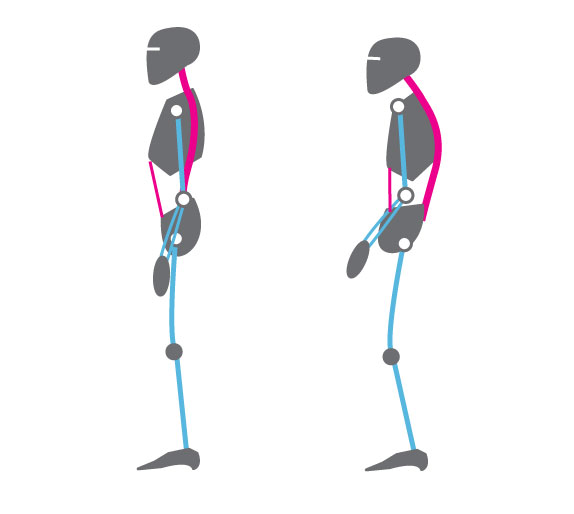
Figure 1. Erect versus collapsed posture note that there is less space for the abdomen to expand in the protective collapsed position. Reproduced by permission from: Clinical Somatics (http://www.clinicalsomatics.ie/
When a person breathes slower and lower it encourages blood and lymph flow through the abdomen. As the person continues to practice slower, lower breathing, it reduces the arousal and vigilance. This is the opposite state of the flight, fight, freeze response so that blood flow is increased in abdomen, and peristalsis re-occurs. When the person practices slow exhalation and breathing and they slightly tighten the oblique and transverse abdominal muscles as well as the pelvic floor and allow these muscles to relax during inhalation. When they breathe in this pattern effortless they, they often will experience an increase in abdominal warmth and an initiation of abdominal sounds (stomach rumble or borborygmus) which indicates that peristalsis has begun to move food through the intestines (Peper et al., 2016). For a detailed description see https://peperperspective.com/2016/04/26/allow-natural-breathing-with-abdominal-muscle-biofeedback-1-2/
What can you do to reduce IBS
There are many factors that cause and effect IBS, some of which we have control over and some which are our out of our control, such as genetics. The purpose of proposed suggestions is to focus on those things over which you have control and reduce risk factors that negatively affect the gastrointestinal track. Generally, begin by integrating self-healing strategies that promote health which have no negative side effects before agreeing to do more aggressive pharmaceutical or even surgical interventions which could have negative side effects. Along the way, work collaboratively with your health care provider. Experiment with the following:
- Avoid food and drinks that may irritate the gastrointestinal tract. These include coffee, hot spices, dairy products, wheat and many others. If you are not sure whether you are reacting to a food or drink, keep a detailed log of what you eat and drink and how you feel. Do self-experimentation by eating or drinking the specific food by itself as the first food in the morning. Then observe how you feel in the next two hours. If possible, eat only organic foods that have not been contaminated by herbicides and pesticides (see: https://peperperspective.com/2015/01/11/are-herbicides-a-cause-for-allergies-immune-incompetence-and-adhd/).
- Identify and resolve stressors, conflicts and problems that negatively affect you and drain your energy. Keep a log to identify situations that drain or increase your subjective energy. Then do problem solving to reduce those situations that drain your energy and increase those situations that increase your energy. For a detailed description of the practice see https://peperperspective.com/2012/12/09/increase-energy-gains-decrease-energy-drains/
Often the most challenging situations that we cannot stomach are those where we feel defeated, helpless, hopeless and powerless or situations where we feel threatened– we do not feel safe. Reach out to other both friends and social services to explore how these situations can be resolved. In some cases, there is nothing that can be done except to accept what is and go on.
- Feel safe. As long as we feel unsafe, we have to be vigilant and are stressed which affects the GI track. Explore the following:
- What does safety mean for you?
- What causes you to feel unsafe from the past or the present?
- What do you need to feel safe?
- Who can offer support that you feel safe?
Reflect on these questions and then explore and implement ways by which you can create feeling more safe.
- Take breaks to regenerate. During the day, at work and at home, monitor yourself. Are you pushing yourself to complete tasks. In a 24/7 world with many ongoing responsibilities, we are unknowingly vigilant and do not allow ourselves to rest and relax to regenerate. Do not wait till you feel tired or exhausted. Stop earlier and take a short break. The break can be a short walk, a cup of tea or soup, or looking outside at a tree. During this break, think about positive events that have happened or people who love you and for whom you feel love. When you smile and think of someone who loves you, such as a grandparent, you may relax and for that moment as you feel safe which allows regeneration to begin.
- Observe how you inhale. Take a deep breath. If you feel you are moving upward and becoming a little bit taller, your breathing is wrong. Put one hand on your lower abdomen and the other on your chest and take a deep breath. If you observe your chest lifted upward and stomach did not expand, your breathing is wrong. You are not breathing diaphragmatically. Watch the following video, The correct way to breathe in, on how to observe your breathing and how to breathe diaphragmatically.
- Learn diaphragmatic breathing. Take time to practice diaphragmatic breathing. Practice while lying down and sitting or standing. Let the breathing rate slow down to about six breaths per minute. Exhale to the count of four and then let it trail off for two more counts, and inhale to the count of three and let it trail for another count. Practice this sitting and lying down (for more details on breathing see: https://peperperspective.com/2014/09/11/a-breath-of-fresh-air-improve-health-with-breathing/.
- Sitting position. Exhale by feeling your abdomen coming inward slightly for the count of four and trailing off for the count of two, then allow the lower ribs to widen, abdomen expand–the whole a trunk expands–as you inhale while the shoulders stay relaxed for a count of three. Allow it to trail off for one more count before you again begin to exhale. Be gentle, do not rush or force yourself. Practice this slower breathing for five minutes. Focus more on the exhalation and allowing the air to just flow in. Give yourself time during the transition between inhalation and exhalation.
- Lying down position. While lying on your back, place a two to five-pound weight such as a bag of rice on your stomach as shown in Figure 2.

Figure 2. Lying down and practicing breathing with two to five-pound weight on stomach (reproduced by permission from Gorter and Peper, 2011.
As you inhale push the weight upward and also feel your lower ribs widen. Then allow exhalation to occur by the weight pushing the abdominal content down which pushes the diaphragm upward. This causing the breath to flow out. As you exhale, imagine the air flowing out through your legs as if there were straws inside your legs. When your attention wanders, smile and bring it back to imagining the air flowing down your legs during exhalation. Practice this for twenty minutes. Many people report that during the practice the gurgling in their abdomen occurs which is a sign that peristalsis and healing is returning.
- Observe and change your breathing during the day. Observe your breathing pattern during the day. Each time you hold your breath, gasp or breathe in your chest, interrupt the pattern and substitute slow diaphragmatic breathing for the next five breaths. Do this the whole day long. Many people observe that when they think of stressor or are worried, they hold their breath or shallow breathe in the chest. If this occurs, acknowledge the worry and focus on changing your breathing. This does not mean that you dismiss the concern, instead for this moment you focus on breathing and then explore ways to solve the problem.
If you observed that under specific circumstance you held your breath or breathed shallowly in your chest, then whenever you anticipate that the same event will occur again, begin to breathe diaphragmatically. To do this consistently is very challenging and most people report that initially they only seem to breathe incorrectly. It takes practice, practice and practice—mindful practice– to change. Yet those who continue to practice often report a decrease in symptoms and feel more energy and improved quality of life.
Summary
Changing habitual health behaviors such as diet and breathing can be remarkably challenging; however, it is possible. Give yourself enough time, and practice it many times until it becomes automatic. It is no different from learning to play a musical instrument or mastering a sport. Initially, it feels impossible, and with lot of practice it becomes more and more automatic. We continue to be impressed that healing is possible. Among our students at San Francisco State University, who practice their self-healing skills for five weeks, approximately 80% report a significant improvement in their health (Peper et al., 2014).
* This blog was adapted and expanded from: Peper, E., Mason, L., & Huey, C. (2017). Healing irritable bowel syndrome with diaphragmatic breathing. Biofeedback. 45(4), 83-87. DOI: 10.5298/1081-5937-45.4.04 https://biofeedbackhealth.files.wordpress.com/2018/02/a-healing-ibs-published.pdf
References
Chey, W. D., Kurlander, J., & Eswaran, S. (2015). Irritable bowel syndrome: a clinical review. Jama, 313(9), 949-958.
Chitkara, D. K., Rawat, D. J., & Talley, N. J. (2005). The epidemiology of childhood recurrent abdominal pain in Western countries: a systematic review. American journal of Gastroenterology, 100(8), 1868-1875.
Dupont, H. L. (2014). Review article: evidence for the role of gut microbiota in irritable bowel syndrome and its potential influence on therapeutic targets. Alimentary pharmacology & therapeutics, 39(10), 1033-1042.
Gibney, H.K. & Peper, E. (2003). Taking control: Strategies to reduce hot flashes and premenstrual mood swings. Biofeedback, 31(3), 20-24.
Gorter, R. & Peper, E. (2011). Fighting Cancer-A NonToxic Approach to Treatment. Berkeley: North Atlantic.
Peper, E., Booiman, A., Lin, I-M, Harvey, R., & Mitose, J. (2016). Abdominal SEMG Feedback for Diaphragmatic Breathing: A Methodological Note. Biofeedback. 44(1), 42-49.
Peper, E., Lin, I-M, Harvey, R., Gilbert, M., Gubbala, P., Ratkovich, A., & Fletcher, F. (2014). Transforming chained behaviors: Case studies of overcoming smoking, eczema and hair pulling (trichotillomania). Biofeedback, 42(4), 154-160.
Sapolsky, R. (2004). Why Zebras Don’t Get Ulcers. New York: Owl Books
Sowder, E., Gevirtz, R., Shapiro, W., & Ebert, C. (2010). Restoration of vagal tone: a possible mechanism for functional abdominal pain. Applied psychophysiology and biofeedback, 35(3), 199-206.
Vlieger, A. M., Blink, M., Tromp, E., & Benninga, M. A. (2008). Use of complementary and alternative medicine by pediatric patients with functional and organic gastrointestinal diseases: results from a multicenter survey. Pediatrics, 122(2), e446-e451.
 the peper perspective