Exploring the pain-brain-breathing connection
Posted: August 30, 2025 Filed under: attention, behavior, Breathing/respiration, cognitive behavior therapy, education, emotions, healing, meditation, Pain/discomfort, placebo, self-healing, Uncategorized | Tags: deliberate harm Leave a commentIf you’re curious about how the mind and body interplay in shaping pain—or looking for real, actionable techniques grounded in research listen to this episode of the Heart Rate Variability Podcast, Matt Bennett interviews Dr. Erik Peper about his article and blogpost Pain – There Is Hope. The conversation takes listeners beyond the common perception of pain as merely a physical response. It is a balanced mix of scientific depth and real-life applications, especially valuable for anyone interested in self-healing, holistic health, or understanding mind-body medicine. Moreover, it explains how pain is shaped by posture, breathing, mindset, and emotional context. Finally, it provides practical strategies to shift the pain experience, offering an uplifting and science-backed blend of understanding and hope.
If you find this helpful, let me know! And feel free to share it with friends and post it on your social channels so more people can benefit.
Blogs that complement this interview
If you want to explore further, check out the companion blog posts I hve created to expand on the themes from this discussion. These blogs highlight practical strategies, scientific insights, and everyday applications.
Healing from the Inside Out: How Your Mind–Body Shapes Pain
Posted: June 9, 2025 Filed under: attention, behavior, Breathing/respiration, CBT, emotions, healing, health, mindfulness, Pain/discomfort, placebo, self-healing, Uncategorized | Tags: health, meditation, mental-health, mindfulness, Sufism, yoga 2 CommentsAdapted from Peper, E., Booiman, A. C., & Harvey, R. (2025). Pain-There is Hope. Biofeedback, 53(1), 1-9. http://doi.org/10.5298/1081-5937-53.01.16
Pain is more than a physical sensation—it’s shaped by our breath, thoughts, emotions, and beliefs. A striking example: a four-year-old received a vaccination with no pain, revealing the disconnect between what science knows about pain relief and what’s practiced.
The article highlights five key ways to reduce pain:
- Exhale during the painful moment – This activates the parasympathetic nervous system, calming the body. A yogi famously demonstrated this by pushing skewers through his tongue without bleeding or feeling pain.
- Create a sense of safety – Feeling secure can lessen pain and speed healing. Sufi mystics have shown this by pushing knives through their chest muscles without long-term damage, often healing rapidly.
- Distract the mind – Shifting focus can ease discomfort.
- Reduce anticipation – Fear of pain often amplifies it.
- Explore the personal meaning of pain – Understanding what pain symbolizes can shift how we experience it.
The blog also explores how the body regulates pain through mechanisms which influence inflammation and pain signals. In the end, hope, trust, and acceptance, along with mindful breathing, healing imagery, and meaningful engagement, emerge as powerful tools not just to reduce pain—but to promote true healing.
Listen to the AI generated podcast created from this article by Google NotebookLM
I took my four-year-old daughter to the pediatrician for a vaccination. As the nurse prepared to administer the shot in her upper arm. I instructed my daughter to exhale while breathing, understanding that this technique could influence her perception of pain. Despite my efforts, my daughter did not follow my instructions. At that point, the nurse interjected and said, “Please sit in front of your daughter.” Then turned to my daughter and said, “Do you see your father’s curly hair? Do you think you could blow the curls to move them back and forth?” My daughter thought this playful game was fun! As she blew at my hair, the curls moved back and forth while the nurse administered the injection. My daughter was unaware that she had received the shot and felt no pain.
My experience as a father and as a biofeedback practitioner was enlightening–it demonstrated the difference between theoretical knowledge of breathing techniques associated with pain perception and practical applications of clinical skills used by a pediatric nurse practitioner while administering an injection with children. An obvious question raised is: What processes are involved in the perception of pain?
There are many factors influencing pain perception, such as physical/physiological, behavioral and psychological/emotional factors related to the injection as described by St Clair-Jones et al., (2020). Physical and physiological considerations include device type such as needle gauge size as well as formulation volume and ingredients (e.g., adjuvants, pH, buffers), fluid viscosity, temperature, as well as possible sensitivity to coincidental exposures associated with an injection (e.g., sensitivity to latex exam gloves or some other irritant in the injection room).
There are overlapping physical and behavioral-related moderators that include weight and body fat composition, proclivity towards movements (e.g., activity level or ‘squirminess’), as well as co-morbid factors such as whether the person has body sensitization due to rheumatoid arthritis and/or fibromyalgia, for example. Other behavioral factors include a clinician selecting the injection site, along with the angle, speed or duration of injection. Psychological influences center around patient expectations including injection-anxiety or needle phobia, pain catastrophizing, as well as any nocebo effects such as white-coat hypertension.
Although the physical, behavioral and psychological categories allow for considering many physical and physiological factors (e.g., product-related factors), behavioral factors (e.g., injection-related behaviors) and psychological factors (e.g., person-related psychological attitudes, beliefs, cognitions and emotions), this article focuses on a figurative recipe for success associated with benefits of simple breathing to reduce pain perceptions.
Of the many categories of consideration related to pain perceptions, following are five key ‘recipe ingredients’ that contributed to a relatively painless experience:
- Exhaling During Painful Stimuli: Exhaling during a painful stimulus can activate parts of the parasympathetic nervous system leading to promotion of self-healing.
- Creating a Sense of Safety: Ensuring that the child feels safe and secure is crucial in managing pain. My lack of worry and concern and the nurse’s gentle and engaging approach created a comforting environment for my daughter.
- Using Distraction: Distraction techniques, such as focusing on the movement of the curls of the hair served to redirect my daughter’s attention away from the anticipated pain.
- Reducing Anticipation of Pain: My daughter’s previous visits were always enjoyable and as a parent, I was not anxious and was looking forward to the pediatrician visit and their helpful advice.
- Understanding the Personal Meaning of Pain: The approach taken by the nurse allowed the injection to be perceived as a non-event, thereby minimizing the psychological impact of the pain.
Exhaling During Painful Stimuli
Exhaling during painful stimuli facilitates a reduction in discomfort through several physiological mechanisms. During exhalation the parasympathetic nervous system is activated, which slows the heart rate and promotes relaxation, regeneration, reduces anxiety, and may counteract the effects of pain (Magnon et al., 2021). Breathing moderation of discomfort is observable through heart rate variability associated with slow, resonant breathing patterns, where heart rate increases with inhalation and decreases with exhalation (Lehrer & Gevirtz, 2014; Steffen et al., 2017). Physiological studies show that slow, resonant breathing at approximately six breaths per minute for adults, and a little faster for young children, causes the heart rate to increase during inhalation and decrease during exhalation, as illustrated in Figure 1.

Figure 1. Changes in heart rate as modulated by slower breathing at about six breaths per minute
One can experience how breathing affects discomfort when taking a cold shower under two conditions: As the cold water hits your skin: (1) gasping and holding your breath versus (2) exhaling slowly as the cold water hits you. Most people will report that slowly exhaling feels less uncomfortable, though they may still prefer a warm shower.
An Exercise for Use During Medical Procedures: Paring the procedure with inhalation and exhalation
A simple breathing technique can be used to reduce the experience of pain during a procedure or treatment, or during uncomfortable movement post-injury or post-surgery. Physiologically, inhalation tends to increase heart rate and sympathetic activation while exhalation reduces heart rate and increases parasympathetic activity. Often inhalation increases tension in the body, while during exhalation, one tends to relax and let go. The goal is to have the patient practice longer and slower breathing so that a procedure that might be uncomfortable is initiated during the exhalation phase. Applications of long, slow breathing techniques include having blood drawn, insertion of acupuncture needles in tender points, or movement that causes discomfort or pain. Slowly breathing is helpful in reducing many kinds of discomfort and pain perceptions (Joseph et al., 2022; Jafari et al., 2020).
Implementing the technique of exhaling during painful experiences can be deceptively simple yet challenging. When initially practicing this technique, the participants often try too hard by quickly inhaling and exhaling as the pain stimulus occurs. The effective technique involves allowing the abdomen to expand while inhaling, then allowing exhaled air to flow out while simultaneously relaxing the body and smiling slightly, and initiating the painful procedure only after about 25 percent of the air is exhaled.
Some physiological mechanisms that explain how slow breathing influences on pain perceptions have focused on baroreceptors that are mechanically sensitive to pressure and breathing dynamics. According to Suarez-Roca et al. (2021, p 29): “Several physiological factors moderate the magnitude and the direction of baroreceptor modulation of pain perception, including: (a) resting systolic and diastolic AP, (b) pain modality and dimension, (c) type of activated vagal afferent, and (d) the presence of a chronic pain condition It supports the parasympathetic activity that exert an anti-inflammatory influence, whereas the sympathetic activity is mostly pro-inflammatory. Although there are complex physiological interactions between cardiorespiratory systems, arterial pressure and baroreceptor sensitivity that influence pain perceptions, this report focuses on simpler reminders, such as creating a sense of safety for people as a result of better breathing techniques.
Creating a Sense of Safety
My young daughter did not know what to expect and totally trusted me and I was relaxed because the purpose was to enhance my daughter’s future health by giving her a vaccination to prevent being sick at a future time. Often, a parent’s anxiety is contagious to the child since expectations and emotional states influence the experience of medical procedures and pain (Sullivan et al., 2021). For my daughter, the nurse’s calm and confident demeanor contributed to a safe and reassuring environment. As a result, she was more engaged in a playful distraction, blowing at my hair, rather than focusing on the impending shot. This observation underscores an important psychological principle: when individuals do not anticipate pain and feel safe, they are more likely to experience surprise rather than distress. Conversely, anticipation of pain can amplify the perception of discomfort.
For instance, many people have experienced heightened anxiety at the dentist, where they may feel the pain of the needle before it is inserted. Anticipation evocates a past memory of pain that triggers a defensive reaction, increasing sympathetic arousal and sharpening awareness of potential danger. By providing the experience of feeling of safety, parents, caretakers, and medical professionals can play a crucial role in reducing the perceived pain of medical interventions.
Using Distraction
It is inherently difficult to attend to two tasks simultaneously; thus, focusing one’s attention on one task often diminishes awareness of pain and other stimuli (Rischer et al., 2020). For instance, when the nurse asked my daughter to see if she could blow hard enough to make the curls move back and forth, this task captured her attention in a fun and multisensory way. She was engaged visually by the movement of the curls, audibly by the sound of the rushing air, physically by the act of exhalation, and cognitively by following the instructions. Additionally, her success in moving the curls reinforced the activity as a positive and enjoyable experience.
In contrast, it is challenging to allow oneself to be distracted when anticipating discomfort, as numerous cues can continuously refocus attention on the procedure that may induce pain. This experience is akin to attempting to tickle oneself, which typically fails to elicit laughter due to the predictability and lack of external stimulation. Most of us have experienced how challenging it is to be self-directive and not focus on the sensations during dental procedures as discussed in the overview of music therapy for use in dentistry by Bradt and Teague (2018). The challenges are illustrated by my own experience during a dental cleaning
During a dental cleaning, I often attempt to distract myself by mentally visualizing the sensation of breathing down my legs while repeating an internal mantra or evoking joyful memories. Despite these efforts, I frequently find myself attending to the sound of the ultrasonic probe and the sensations in my mouth. To manage this distraction more effectively, I have found that external interventions such as listening to music or an engaging audio story through earphones is more beneficial.
From this perspective, we wished that the dentist could implement an external intervention by collaborating with a massage therapist to provide a simultaneous foot massage during the teeth cleaning. This dual stimulation would offer enough competing sensations to divert attention from the dental procedure to the comfort of the foot massage.
Reducing Anticipation of Pain
A crucial factor in the experience of pain is the anticipation and expectation of discomfort, which is often shaped by previous experiences (Henderson et al., 2020; Reicherts et al., 2017). When encountering a novel experience, we might interpret the sensations as novel rather than painful. Similar phenomena can be observed in young children when they fall or get hurt on the playground. They may initially react with surprise or shock and may look for their caretaker. Depending the reaction of their caregiver, they may begin to cry or they might cry briefly, stop and resume playing.
Conversely, the anticipation of pain can heighten sensitivity to any stimuli, causing them to be automatically perceived as painful. Anticipatory responses function as a form of mental rehearsal, where the body responds in a manner similar to the actual experience of pain. For example, Peper, et al. (2015) showed that when a pianist imagined playing the piano, her forearm flexor and extensor muscles exhibited slight contractions, even though there was no observable movement in her arm and the pianist was unaware of these contractions (see Figure 2).

Figure 2. The covert SEMG increase in forearm SEMG as the participant imagined playing the piano (reproduced by permission from Peper et al., 2015).
These kind of muscle reactions are also visible in sportsmen. For example, while mentally racing a lap on a motorbike, the arm muscles act like as if the person is racing in the dust of the circuit (Booiman 2018). The blood flow (BVP) and blood vessels are reacting even quicker than muscle tension on thoughts and expected (negative) experiences.
These findings underscore how anticipatory responses can mirror actual physical experiences, providing insights into how anticipation and expectancy can modify pain perception (Henderson et al., 2020). Understanding these mechanisms allows for the development of interventions aimed at managing pain through the modification of expectations and the introduction of distraction techniques.
The Personal Meaning of Pain (adapted from Peper, 2015)
The personal meaning of pain is a complex construct that varies significantly based on context and individual perception. For example, consider the case of a heart attack. Initially, the person might experience chest pain and dismiss it, which can be attributed to societal norms where people are conditioned to ignore pain. However, once the pain is assumed or diagnosed to be a heart attack, the same pain may become terrifying as it may signify the potential for life-threatening consequences. Following bypass surgery, the pain might actually be worse, but it is now reframed positively as a sign of the surgery’s success and a symbol of hope for survival. Thus, the meaning of pain evolves from one of fear to one of reassurance and recovery.
This notion that pain is defined by the context in which it occurs is crucial (Carlino et al., 2014). For instance, childbirth, despite being intensely painful, is understood within the context of a natural and temporary process that leads to the birth of a child. This perception is often reinforced nonverbally by a supportive midwife or doula. It may be helpful if the midwife or doula has given birth herself. Without words she communicates, “This is an experience that you can transcend, just as I did.” Psychologically/emotionally, the pain serves a higher purpose, to deliver a child into the world, which may also make the pain more bearable. There is a reward, namely the child. In addition, women who have had training and information about the process of childbirth have a significant faster delivery (about 2 hours faster).
Piercing the body without reporting pain or bleeding
To further illustrate this concept, Peper et al. (2006) and Kakigi et al. (2005) physiologically monitored the experiences of a Japanese Yogi Master, Mitsumasa Kawakami,who performed voluntary body piercing with unsterilized skewers, as depicted in Figure 3 (Peper, 2015).

Figure 3. Demonstration Japanese Yogi Master, Mitsumasa Kawakami, voluntary piercing the tongue and neck with unsterilized skewers while experiencing no pain, bleeding or infection (reproduced by permission from Peper et al., 2006).
See the video recording of tongue piercing study recorded November 11, 2000, at the annual Biofeedback Society Meeting of California, Monterey, CA, https://youtu.be/f7hafkUuoU4 (Peper & Gunkelman, 2007).
Despite the visual discomfort of seeing this procedure, physiological data from pulse, EEG and breathing patterns revealed that the yogi did not experience pain. During the piercing, his heart rate was elevated, his electrodermal activity was low and unresponsive, and his EEG showed predominant alpha waves, indicating a state of focused meditation rather than pain. This study suggests that conscious self-regulation, rather than dissociation, can be employed to control attention and responsiveness to painful stimuli and possibly benefit individuals with chronic pain (Peper et al., 2005).
A similar phenomenon was observed among a spiritual gathering of Kasnazani Sufi initiates in Amman, Jordan and physiologically monitored during demonstrations as part of a scientific meeting. The Kasnazani order is a branch of Sufism that has gained widespread popularity in Iraq and Iran, particularly among the Kurdish population. What sets the Kasnazani order apart is its inclusive approach—it welcomes both Sunni and Shia Muslims, making no distinction between them. During spiritual gatherings, some followers perform acts that might seem extreme to outsiders: piercing their bodies. These acts are seen as expressions of deep spiritual devotion and are performed in a state believed to be beyond normal physical sensation. With the permission of their Sheikh Mohammed Abdul Kareem Kasnazani, they pierced their face, neck arms, or chest and reported no pain or bleeding and heal quickly, as shown in Figure 4.
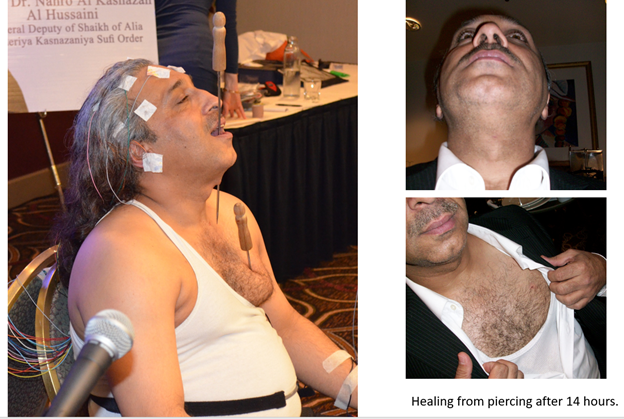
Figure 4. Voluntary piercing and with unsterilized skewers by Sufi initiates and subsequent tissue healing after 14 hours.
See the video recording of the actual piercing study organized by Erik Peper and Howard Hall with Thomas Collura recording the QEEG at the 2013 Annual Scientific Meeting of the Association for Applied Psychophysiology and Biofeedback, Portland, OR (Peper & Hall, 2013; Collura et al., 2014), https://www.youtube.com/watch?v=56nLZyG87oc
What Factors Decrease the Experience of Pain and Promote Rapid Healing with the Absence of Bleeding?
In the case of the Kasnazani Sufis, they framed their experience as a normal, spiritual phenomenon that occurs in a setting of religious faith and total trust in their spiritual leader (Hall, 2011). The Sufis reported that they had permission and support from their master, Sheikh Mohammed Abdul Kareem Kasnazani. Thus, they felt totally safe and protected—they had no doubt they could experience the piercing with reasonable composure and that their bodies would totally heal. Even if pain occurred, it was not to be feared but part of the process. The experience may be modulated by the psychological context of the group, the drumming, and the chanting. The phenomenon was not simply a matter of belief; they knew that healing would occur because they had seen it many times in the past. The knowledge that healing would occur rapidly was transmitted as a felt sense in the group that this is possible and following the expected normal pattern.
The most impressive finding was that the physiology markers (heart rate, skin conductance, and breathing) were normal and there was no notable change (Booiman et al., 2015; Peper & Hall, 2013) and the QEEG indicated the inhibition of pain (Collura et al., 2014).
Clinical implications
These observations underscore that the context of pain—whether through personal meaning, spiritual belief, or communal support—can significantly alter its perception and management. This concept is also reflected in clinical settings, where a lack of diagnosis or acknowledgment of pain can exacerbate suffering. An isolated individual, alone at night with the physical sensation of pain, may find the pain tremendously stressful, which tends to intensify the experience. In this situation, there are concerns about the future: “It may get worse, it will not go away, I’m going to die from this, maybe I’ll die alone,” and the worry continues.
If one can let go of these thoughts, breathe through the pain, relax the muscles and experience a feeling of hope, the pain is often reduced. On the other hand, focusing on the pain may intensify it. On the other hand, the meaning of pain implies survival or hope as sometimes is observed in injured soldiers. In context of the hospital setting: “I have survived and I am safe.”
What are the implications of these experiences in clinical settings in which the patient is in constant pain and yet has not received an accurate diagnosis? Or, in cases in which the patient has a diagnosis, such as fibromyalgia, but treatment has not reduced the pain significantly? Experiencing pain or illness that goes undiagnosed, and/or that is not acknowledged, may increase the level of stress and tension, which can contribute to more pain and discomfort. As long as we are resentful/angry/resigned to the pain or especially to the event that we believe has caused the pain, the pain often increases. Another way to phrase this is that chronic sympathetic arousal increases the sensitivity to pain and reduces healing potential (Kyle & McNeil, 2014).
Acknowledgement means having an accurate diagnosis, validating that the pain experience is legitimate and that it is not psychosomatic (imagined), because that simply makes the experience of pain worse. Once the patient has a more accurate diagnosis, treatment may be possible.
When one has constant, chronic, or unrelenting pain, this evokes hopelessness and the patient is more likely to get depressed (Sheng et al., 2017; Meda et al., 2022). The question is, What can be done? The first step for the patients is to acknowledge to themselves that it does not mean that the situation is unsolvable. It is important to focus on other options for diagnosis and treatment and take one’s own lead in the healing/recovery process. We have observed that a creative activity that uses the signals of pain to evoke images and thoughts to promote healing may reduce pain (Peper et al., 2022). Pain awareness may be reduced when the person initiates actions that contribute to improving the well-being of others.
Overall, pain appears to decrease when a person accepts without resignation what has happened or is happening. A useful practice that may change the pain experience is to do an appreciation practice. Namely, appreciate what that part of the body has done for you and how so often in the past you may have abused it. For example, if you experience hip pain, each time you are aware of the pain, thank the hip for all the work it has done for you in the past and how often you may have neglected it. Keep thanking it for how it has supported you.
Pain often increases when the person is resentful or wished that what has happened had not happened (Burns et al., 2011). If the person can accept where they are and focus on the new opportunities and new goals can achieve, pain may still occur; however, the quality is different. Focus on what you can do and not on what you cannot do. See Janine Shepherd’s 2012 empowering TED talk, “A broken body isn’t a broken person.”
Conclusion
The primary lessons from studying the yogi and the Sufis are the concepts that a sense of safety, acceptance, and purpose can transform the experience of pain. Expressing confidence in a patient’s recovery prospects places the focus on their ability to recover. Incorporating these elements into clinical care may offer new avenues for addressing chronic pain and improving patient outcomes (Booiman & Peper, 2021).
We propose the first step is to create an atmosphere of hope, trust and safety and to emphasize the improvements made (even small ones). Then master effortless breathing to increase slow diaphragmatic breathing and teach clients somato-cognitive techniques to refocus their attention during painful stimuli (mindfulness) (Pelletier & Peper, 1977; Peper et al., 2022). Using the slow breathing as the overlearned response would facilitate the recovery and regeneration following the painful situation. To develop mastery and be able to apply it under stressful situations requires training and over-learning. Yoga masters overlearned these skills with many years of meditation. With mastery, patients may learn to abort the escalating cycle of pain, worry, exhaustion, more pain, and hopelessness by shifting their attention and psychophysiological responses. In clinical practice, strategies such as hypnotic induction, multisensory distraction, self-healing visualizations, and mindfulness techniques can be employed to manage pain. A foundational principle is that healing is promoted when the participant feels safe and accepted, experiences suffering without blame, and looks forward to life with meaning and purpose.
Acknowledgement
We thank Mitsumasa Kawakami, Sheikh Mohammed Abdul Kareem Kasnazani, and Safaa Saleh for their generous participation in this research and I thank our research collegues Thomas Collura, Howard Hall and Jay Gunkelman for their support and collaboration.
References
Booiman, A.C. (2018) Posture corrections and muscle control can prevent arm pump during motocross, a case study. Beweegreden, 14(3), 24–27. https://www.researchgate.net/publication/382853342
Booiman, A. C. & Peper, E. (2021) De pijnbeleving van Kaznazanisoefi’s, wat kan de fysiotherapeut daarvan leren? Physios Vol 13 (3) pp. 32–35. https://www.physios.nl/tijdschrift/editie/artikel/t/de-pijnbeleving-van-kaznazani-soefi-s-wat-kan-de-fysiotherapeut-daarvan-leren
Booiman, A., Peper, E., Saleh, S., Collura, T., & Hall, H. (2015). Soefi piercing een andere kijk op pijnervaring en pijnmanagement. https://biofeedbackhealth.files.wordpress.com/2011/01/soefi-en-pijn-management-08-12-20131.pdf
Bradt. J. & Teague, A. (2018). Music interventions for dental anxiety. Oral Diseases, 24(3), 300–306. https://doi.org/10.1111/odi.12615
Burns, J.W., Quartana, P., & Bruehl, S. (2011). Anger suppression and subsequent pain behaviors among chronic low back pain patients: moderating effects of anger regulation style. Annals of Behavioral Medicine, 42(1), 42–54. https://doi.org/10.1007/s12160-011-9270-4
Carlino, E., Frisaldi, E., & Benedetti, F. (2014). Pain and the context. Nature Reviews Rheumatology, 10(6), 348–355. https://doi.org/10.1038/nrrheum.2014.17
Collura, T. F., Hall, H., & Peper, E. (2014). A Sufi self-piercing analyzed with EEG and sLORETA. Applied Psychophysiology and Biofeedback, 39(3–4), 293–293. https://brainmaster.com/wp-content/uploads/2020/08/AAPB_BOS05_2015_Pain_Controll.pdf
Hall, H. (2011). Sufism and healing. In Neuroscience, Consciousness and Spirituality (pp. 263–278). Springer Netherlands. https://doi.org/10.1007/978-94-007-2079-4_16
Henderson, L. A., Di Pietro, F., Youseff, A. M. , Lee, S., Tam, S., Akhter, R., Mills, E.P., Murray, G. M., Peck, C.C., & Macey, P.M. (2020). Effect of expectation on pain processing: A psychophysics and functional MRI analysis. Frontiers in Neuroscience, 14. https://doi.org/10.3389/fnins.2020.00006
Jafari, H., Gholamrezaei, A., Franssen, M., Van Oudenhove, L., Aziz, Q., Van den Bergh, O., Vlaeyen, J. W. S., & Van Diest, I. (2020). The Journal of Pain, 21(9–10), 1018−1030. https://doi.org/10.1016/j.jpain.2019.12.010
Joseph, A. E., Moman, R. N., Barman, R. A., Kleppel, D. J., Eberhart, N. D., Gerberi, D. J., Murad, M. H., & Hooten, W. M. (2022). Effects of slow deep breathing on acute clinical pain in adults: A systematic review and meta-analysis of randomized controlled trials. Journal of Evidence-Based Integrative Medicine, 27, 2515690X221078006. https://doi.org/10.1177/2515690X221078006
Kakigi, R. Nakata, H., Inui, K., Hiroe,N. Nagata, O., Honda, M., Tanaka, S., Sadato, N. & Kawakami, M. (2005). Intracerebral pain processing in a Yoga Master who claims not to feel pain during meditation. European Journal of Pain. 9(5), 581–581. https://doi.org/10.1016/j.ejpain.2004.12.006
Kyle, B. N., & McNeil, D. W. (2014). Autonomic arousal and experimentally induced pain: a critical review of the literature. Pain Research Management, 19(3),159–167. https://doi.org/10.1155/2014/536859
Lehrer, P. & Gevirtz R. (2014). Heart rate variability biofeedback: How and why does it work? Frontiers in Psychology, 5,756. https://doi.org/10.3389/fpsyg.2014.00756
Magnon, V., Dutheil, F. & Vallet, G. T. (2021). Benefits from one session of deep and slow breathing on vagal tone and anxiety in young and older adults. Scientific Reports, 11, 19267. https://doi.org/10.1038/s41598-021-98736-9
Meda, R. T., Nuguru, S .P., Rachakonda, S., Sripathi, S., Khan, M. I., & Patel, N. (2022). Chronic paininduced depression: A review of prevalence and management. Cureus,14(8):e28416. https://doi.org/10.7759/cureus.28416
Pelletier, K. R. and Peper, E. (1977). Developing a biofeedback model: Alpha EEG as a means for pain control. International Journal of Clinical and Experimental Hypnosis, 24(4), 361–371. https://doi.org/10.1080/00207147708415991
Peper, E. (2015). Pain as a contextual experience. Townsend Letter—The Examiner of Alternative Medicine, 388, 63–66. https://www.researchgate.net/profile/Erik-Peper/publication/284721706_Pain_as_a_contextual_experience/links/5657483908ae1ef9297bab71/Pain-as-a-contextual-experience.pdf
Peper, E., Cosby, J., & Almendras, M. (2022). Healing chronic back pain. NeuroRegulation, 9(3), 164–172. https://doi.org/10.15540/nr.9.3.164
Peper, E. & Gunkelman, J. (2007). Tongue piercing by a yogi: QEEG observations and implications for pain control and health. Presented at the 2007 meeting of the Biofeedback Society of California. https://www.researchgate.net/publication/382394304_Tongue_Piercing_by_a_Yogi_QEEG_Observations_and_Implications_for_Pain_Control_and_Health
Peper, E. & Hall, H. (2013). What is possible: A discussion, physiological recording and actual demonstration in voluntary pain control by Kasnazani Sufis. Presented at the 44st Annual Meeting of the Association for Applied Psychophysiology and Biofeedback. Portland, OR.
Peper, E., Kawakami, M., Sata, M. & Wilson, V.S. (2005). The physiological correlates of body piercing by a yoga master: Control of pain and bleeding. Subtle Energies & Energy Medicine Journal, 14(3), 223–237. https://biofeedbackhealth.org/wp-content/uploads/2011/01/366-663-1-sm.pdf
Peper, E., Nemoto, S., Lin, I-M., & Harvey, R. (2015). Seeing is believing: Biofeedback a tool to enhance motivation for cognitive therapy. Biofeedback, 43(4), 168–172. https://doi.org/10.5298/1081-5937-43.4.03
Peper, E., Wilson, V.E., Gunkelman, J., Kawakami, M. Sata, M., Barton, W. & Johnston, J. (2006). Tongue piercing by a yogi: QEEG observations. Applied Psychophysiology and Biofeedback. 34(4), 331–338. https://doi.org/10.1007/s10484-006-9025-3
Reicherts, P., Wiemer, J., Gerdes, A.B.M., Schulz, S.M., Pauli, P., & Wieser, M.J. (2017). Anxious anticipation and pain: The influence of instructed vs conditioned threat on pain. Social Cognitive and Affective Neuroscience, 12(4), 544–554. https://doi.org/10.1093/scan/nsw181
Rischer, K. M., González-Roldán, A. M., Montoya, P., Gigl, S., Anton, F., & van der Meulen, M. (2020). Distraction from pain: The role of selective attention and pain catastrophizing. European Journal of Pain, 24(10),1880–1891. https://doi.org/10.1002/ejp.1634
Sheng, J., Liu, S., Wang, Y., Cui, R., & Zhang, X. (2017). The link between depression and chronic pain: Neural mechanisms in the brain. Neural Plasticity, 9724371. https://doi.org/10.1155/2017/9724371
Shepherd, J. (2012). A broken body isn’t a broken person. TEDxKC. Accessed July 19, 2024. https://www.ted.com/talks/janine_shepherd_a_broken_body_isn_t_a_broken_person?subtitle=en
Steffen, P.R., Austin, T., DeBarros, A., & Brown, T. (2017). The impact of resonance frequency breathing on measures of heart rate variability, blood pressure, and mood. Frontiers in Public Health, 5, 222. https://doi.org/10.3389/fpubh.2017.00222
St Clair-Jones, A., Prignano, F., Goncalves, J., Paul, M., & Sewerin, P. (2020). Understanding and minimising injection-site pain following subcutaneous administration of biologics: A narrative review. Rheumatology and therapy, 7, 741–757. https://doi.org/10.6084/m9.figshare.13034609
Suarez-Roca, H., Mamoun, N., Sigurdson, M. I., & Maixner, W. (2021). Baroreceptor modulation of the cardiovascular system, pain, consciousness, and cognition. Comprehensive Physiology, 11(2), 1373. https://doi.org/10.1002/cphy.c190038
Sullivan, V., Sullivan, D. H. & Weatherspoon, D. (2021). Parental and child anxiety perioperatively: Relationship, repercussions, and recommendations. Journal of PeriAnesthesia Nursing, 36(3), 305–309. https://doi.org/10.1016/j.jopan.2020.08.015
Wilber, K. (1997). An integral theory of consciousness. Journal of Consciousness Studies, 4(1), 71–92. https://www.ingentaconnect.com/content/imp/jcs/1997/00000004/00000001/748
Use the power of your mind to transform health and aging
Posted: February 18, 2025 Filed under: attention, behavior, cancer, CBT, cognitive behavior therapy, COVID, education, health, meditation, mindfulness, Pain/discomfort, placebo, stress management, Uncategorized | Tags: health, imimune function, longevity, mental-health, mind-body, nutrition, Reframing, wellness Leave a commentMost of the time when I drive or commute by BART, I listen to podcasts (e.g., Freakonomics, Hidden Brain, this podcast will kill you, Science VS, Huberman Lab). although many of the podcasts are highly informative; , rarely do I think that everyone could benefit from it. The recent podcast, Using your mind to control your health and longevity, is an exception. In this podcast, neuroscientist Andrew Huberman interviews Professor Ellen Langer. Although it is three hours and twenty-two minute long, every minute is worth it (just skip the advertisements by Huberman which interrupts the flow). Dr. Langer delves into how our thoughts, perceptions, and mindfulness practices can profoundly influence our physical well-being.
She presents compelling evidence that our mental states are intricately linked to our physical health. She discusses how our perceptions of time and control can significantly impact healing rates, hormonal balance, immune function, and overall longevity. By reframing our understanding of mindfulness—not merely as a meditative practice but as an active, moment-to-moment engagement with our environment—we can harness our mental faculties to foster better health outcomes. The episode also highlights practical applications of Dr. Langer’s research, offering insights into how adopting a mindful approach to daily life can lead to remarkable health benefits. By noticing new things and embracing uncertainty, individuals can break free from mindless routines, reduce stress, and enhance their overall quality of life. This podcast is a must-listen for anyone interested in the profound connection between mind and body. It provides valuable tools and perspectives for those seeking to take an active role in their health and well-being through the power of mindful thinking. It will change your perspective and improve your health. Listen to or watch the interview:
Youtube: https://www.youtube.com/watch?v=QYAgf_lfio4

Useful blogs to reduce stress
Be Skeptical: Finding and Evaluating Online Health Resources
Posted: October 22, 2023 Filed under: Evolutionary perspective, healing, health, Nutrition/diet, placebo | Tags: advertising, clinial trialslinical efficacy, critical thinking, efficacy, health information, mobile apps, online resources, research methodology, social media 2 CommentsAdapted from: Peper, E. & Harvey, R. (2023). Be skeptical: Finding and evaluating online health resources. Townsend Letters. The Examiner of Alternative Medicine, October 21, 2023. https://www.townsendletter.com/e-letter-20-evaluate-sources-to-make-informed-choices/
Erik Peper, PhD, BCB and Richard Harvey, PhD

Source: https://live.staticflickr.com/65535/48445803437_726b61e3d1_b.jpg
An unprecedented flood of information is available today at our fingertips in the form of cell phone apps, news stories, blog posts, social media feeds, advertisements, websites, videos, and audio resources. Artificial intelligence (AI) applications such as ChatGPT are also capable of curating health and wellness information all proclaiming to optimize our health or treat our illnesses. This article provides strategies to determine how to trust the information. It offers strategies for assessing information, reasons to have a skeptical perspective, suggestions for finding credible resources and includes a framework to identify beneficial health information, which may be used for improving activities of daily living. The recommendations are based upon an evolutionary perspective in which anything that was not part of our evolutionary past should be viewed with healthy skepticism.
“It is simply no longer possible to believe much of the clinical research that is published, or to rely on the judgment of trusted physicians or authoritative medical guidelines. I take no pleasure in this conclusion, which I reached slowly and reluctantly over my two decades as an editor of The New England Journal of Medicine.” —Dr. Marcia Angell (2009), the first woman editor of the highly respected New England Journal of Medicine.
How to make sense of the flood of health information
An unprecedented flood of health information is available today proclaiming useful information to optimize our health or treat our illnesses, A simple question is, “How do we know which information is accurate?” To what extent do we trust the information in an era of fake news, commercial health apps trying to sell us things, and news stories from publishers and media conglomerates that are dependent on advertising revenues? This article offers strategies for assessing information, reasons to have a skeptical perspective, and suggestions for finding relevant and accurate information.
Skepticism about health information takes many forms including ‘conspiracy theories’ about vaccines such as when people claim a SARS-COVID-19 vaccine will kill you, to when people doubt the efficacy of HIV or similar vaccines. Several authors have suggested political as well as individual personality factors which explain conspiratorial skepticism about health information, most commonly about vaccines (Crescenzi-Lanna, Valente, Cataldi, & Martire, 2023; Koinig, & Kohler, 2021; Putois, & Helms,. 2022). This article takes a broader view of health information skepticism, focusing on perspective building as well as asking relevant, accurate and meaningful questions about health care decisions.
Take a skeptical perspective and ask, “What is the evidence that the product, procedure, or treatment is going to be effective for me compared to others?” The answer could appear obvious: published peer-reviewed systematic meta-analyses of double blind, randomized, controlled trials describing specific products or procedures. However, the answer is more complex. In numerous cases, finding relevant reports can be challenging. In some cases, it may be unethical or impossible to run double blind, randomized, controlled trials to detect the scope of effectiveness or generalize the finding from animal studies to human beings. For example, surgery cannot be evaluated in a double-blind study. (Would you really want your surgeon not to be aware of what he/she was doing?). Although treatment effectiveness can be studied using a matched comparison or a control group receiving mock surgery, in those cases the surgeon would still be aware of the procedure.
The Challenges of Assessing Clinical Efficacy
It is challenging to know what actually contributes to the beneficial outcomes as well as how to measure the outcome. Some of the factors that affect the outcomes include:
Placebo interactions: Intrinsic to all procedures are placebo and nocebo components. In some cases the direct benefit effects of a drug or procedure demonstrated in a randomized controlled trial may still not be due solely to the direct effects of the drug or procedure, but rather due to positive indirect effects triggered by the placebo response to non-specific side effects (Peper and Harvey, 2017).
Lack of evidence is not proof that it does not work. Lack of replicable evidence for some cases implies that a positive response will not occur in all cases. Unfortunately, commercial interests may bias interpretations of research studies when the efforts to replicate a study had limitations in the first place, or the replication efforts did not retain transferable conditions to the next study. In other words, ‘ceteris paribus’ may not apply as all things are not always equal during replication studies. Similarly, individual differences that are outliers or extreme values during a study (e.g. positive benefit from placebo) can be ‘explained away’ with statistics because statistics may also skew the interpretations based on the biases of the researchers.
Clinical trials are very expensive. The average clinical trial for a new therapeutic agent, 2015–2017, was $48 million dollars (Moore et al., 2020). The cost of achieving Food and Drug Administration (FDA) approval is so high that it is often out of reach for small companies. It is no wonder that most clinical trials are funded by the pharmaceutic industry and only for those drugs for which they foresee significant profits. The estimated research and development investment to bring a new medicine to market is estimated to range between $314 million to $2.8 billion (Wouters et al, 2020). To be financially viable, this usually means that drugs must be used by a large consumer base and ideally be taken for the rest of the individual’s life. Non-drug approaches may be less profitable, so without a profit incentive, investigations of non-drug efficacy accumulates less evidence compared to multi-million dollar trials.
Human beings are not rats, mice, or monkeys. The findings from animal studies in numerous studies provide some useful insights into the effects of medications or procedures on living organisms. Unfortunately, many results from animal studies could not be replicated in humans or, the findings may not apply to human beings. The basic assumption that animal studies could mimic human studies may not be valid since almost all test animals are not typical of normal animals, implying test animals are ‘abnormal’ in terms of results. For example, the animals such as rats are usually housed in small cages 24 hours a day which is analogous to a human being held in solitary confinement without social contact or ability to move for a lifetime. Thus, their physiology and their response to interventions are often different from healthy free ranging animals (Shaw, 2023).
Even when animal studies show that the medications are not harmful, they could be harmful for some human beings. For example, thalidomide was approved for use in Germany, so doctors prescribed it to treat morning sickness in pregnant women. However, in humans Thalidomide interfered with embryonic and fetal development in ways not observed in rodent tests (Tantibanchachai & Yang, 2019).
Statistical significance may not indicate meaningful clinical improvement. Many clinical studies demonstrate that the studied interventions have contributed to improvement. However, does the improvement make a quality of life (QOL) difference and/or clinically relevant difference for the person? For example, a successful study that demonstrated lowering of patients’ systolic pressure by 5 mm from 175 mm/Hg to 170mm/Hg may be statistically significant, but is not clinically meaningful, since, a resting systolic blood pressure of 170 mm/Hg is still a cause for concern.
Similarly, in the recent systematic review by Arciero et al. (2021) of approved oncology therapies, 40% of Food and Drug Administration (FDA)-approved as well as 58% of European Medicine Agency (EMA)-approved indications had published QOL evidence. However, only 6% of FDA- and 11% of EMA-approved indications had clinically meaningful improvements in QOL beyond minimally clinically relevant differences. This means that medication therapies are often approved without demonstrating Quality of Life improvement for the long term.
Statistics which describe how large an effect is may be referred to as an ‘effect size estimate, which is a better index of efficacy compared to other statistics such as a difference in statistical mean values. The effect size can be assessed by using various statistics such as Cohen’s d-statistic (Mean A minus Mean B divided by pooled standard deviation; Cohen, 1988)[i].
Number of people need to be treated for one person to benefit. Effect size calculation estimates the average number of people in a trial needing treatment so that one of them experiences benefit. This statistic can be referred to as the number needed to treat (NNT) (Mendes et al., 2017). To calculate the NNT, divide 1 by the control event rate (CER) minus the treatment event rate (TER) or 1/CER-TER. For example, the number patients needed to be treated for five years with cholesterol lowering (e.g., statin drugs) medications to prevent one coronary heart disease event ranges from 53 (high risk group) to 146 (low risk group) (Rossignol et al., 2018). This means that many of the participants could experience negative side effects related to the medications while only one participant benefits from the prevention of a heart attack.
Focus on short-term versus long-term benefits. Many studies measure outcomes under highly controlled conditions of a study and are conducted for a relatively short time period—often for less than 3 months. However, effects that may be beneficial in the short term may not be beneficial or may even be harmful in the long term. For example, opioid medications are very useful in the short term to alleviate intense pain. However, over time, drug dependency may develop, contributing to addiction, inability to function, or death. Shockingly, opioid-related deaths in the U.S. numbered more than 100,000 people in 2022 (CDC, 2022).
Benefits do not enhance quality of life. If the data indicate benefits of treatment, do the interventions improve quality of life and not simply prolong life for a few days, weeks, or months? Does the patient or client value quality of life over quantity of days lived (e.g., ”palliative care with shorter life, but some relief from pain and suffering versus prolonged life with pain and suffering”)?
Results may only apply to a select group. Biochemical individuality means that each person is unique to some degree, differing genetically, biochemically, and physiologically. Similarly, responses vary widely to medical procedures, medications, and other substances. A common example is alcohol sensitivity— the genetic predisposition to metabolizing alcohol breakdown— manifesting in highly visible facial flushing which occurs in 47%-85% of Asians and 3%-29% of Caucasians (Chan, 1986). In the context of medicine, individual differences that influence clinical outcomes include genetic predisposition, as well as age, gender, income, education level, job status, geographic region (e.g., climate and food sources) and other demographic factors, individually or in combination.
Consider that many interventions and medications have only been tested on narrowly defined subgroups such college students (true of most psychological studies), or men (true for most pharmaceuticals since women could be pregnant or in different phases of their menstrual cycle). The promise of personalized or ‘precision’ medicine will likely advance in the coming years, making medications more tailored to individual differences based on age, sex, and other demographic factors.
There is no free lunch. Similar to the concept of short-term versus long-term benefits, when a drug offers a quick improvement, it may be effective, but may cause long-term harm. A representative example is the use of high-dose and multi-doses of anabolic steroids to increase muscle mass and athletic performance. There is a potential cost: “High and multi-doses of anabolic steroids used for athletic enhancement can lead to serious and irreversible organ damage” (Maravelias, et al., 2005).
Risks of hazardous exposures and risks associated with the treatment. Could the procedure or medication result in loss or harm? Given bio-individuality, there can be broad “variability” in response and outcome, which depends on the vulnerability of a given individual (their adaptive capacity) and the risks involved. Additionally, there are sometimes important variables that have not been investigated deliberately because those important variables complicate interpretation, and or, there may be important variables that are missed The most obvious example of omission is when animal studies were or are conducted exclusively on male animals because interpreting results can be more complicated given female reproductive hormones. Beside sex variables other important variables that may be missed include covert illnesses and co-morbidities which are unknown at the time of the study. Taken together, studies which oversimplify variables may make it difficult interpret the results for individuals.
Below is a set of images relevant to climate change and farming, depicting the relationship between the exposure to hazards of systemic climate change and the vulnerabilities, sensitivities, and adaptive capacities of individuals and the community (Wilhelmi and Hayden, 2016).

Use “Uncommon” Sense
The attractive look and feel of a website are not evidence of accuracy or credibility. Rather, good design simply means it was developed by a skilled web designer or that the client paid a great deal of money to have it created. It does not make the content valid. The comments of Yucha (2002) and Yucha and Montgomery (2008) remind readers to increase literacy regarding ”health claims” made on websites, especially a commercial website intended to sell products or services.
Evaluating dietary supplements. If you’re thinking about using a dietary supplement, check the recommendations from reliable sources. Make it a point to purchase a reputable brand, since some supplements contain ingredients not listed on the label. In addition, they may interact with medications or other supplements. Share and discuss all your supplements you are taking with your healthcare provider. For example, vitamin E acts as anticoagulants and may increase clotting time and bleeding especially if one is taking “blood thinners.”
Follow the money. Ask who would financially benefit from the product or service? For example, physicians increase their referrals for lab testing, MRIs (Magnetic Resonance Images), or other diagnostic procedures if they have ownership in those testing centers or, if they receive significant reimbursement for those services, although there is no evidence that patients benefit more (Bishop et al, 2010).
Beware of advertised claims. Most highly advertised drugs are largely no better at treating a disease than generic medication or other options (Patel et al., 2023). Pharmaceutical companies in 2021 spend $6.88 billion for direct to consumer advertising (Faria, 2023). The advertisement suggests that their branded medication is better; however, generics are about 80% cheaper and have the same active ingredient and are similar in their action (AAM, 2020).
If the claims seem unbelievable, they are probably are unbelievable. If it is too good to be true, it probably is not true. Historically, Thomas Lupton (1580) wrote a thoughtful inquiry about religion and utopian societies, introducing a skeptics point of view, describing people and societies that are ”too good to be true.” Modern skeptics consider the preponderance of evidence based on scientific replicability (the replication of findings in subsequent clinical trials) as proof of what they believe to be true.

Source: Indiana University of Pennsylvania, last accessed March 3, 2023 https://www.iup.edu/instructional-design/images/assessment.jpg
Assessing Online Information
What do we know about the accuracy of online health information? A skeptical viewpoint is that bias exists in sources of information from a wide range of commercial, organizational, governmental and educational institutions (identified by ending with .com, .org, .gov and .edu, respectively). Most all institutions set out to prove their own bias; however, people working in educational institutions by and large require their investigators go through a peer-review process, so they tend to be more trusted as sources of information. Commercial, organizational, and governmental institutions all have biased perspectives. However, they are less likely to reveal their biases, simply stating that “a study was conducted” without providing enough information who funded the study or the importance of positive results to achieve academic recognition.
“A lot of what is published is incorrect … much of the scientific literature, perhaps half, may simply be untrue. Afflicted by studies with small sample sizes, tiny effects, invalid exploratory analyses, and flagrant conflicts of interest, together with an obsession for pursuing fashionable trends of dubious importance, science has taken a turn towards darkness.” Dr. Richard Horton (2015), Editor-in-Chief of The Lancet.
Be skeptical of university or published research findings that are directly or indirectly funded/influenced by industry or commercial sources. Government research published in highly respected scientific journals may not be replicable because the investigations were narrowly designed to favor a particular bias. For example, industries that produce pharmaceuticals and medical devices, as well as agribusinesses that produce tobacco and sugar products, have been accused of a ”profit-first” bias (Bruening, 2019; Hill et al., 2019). These industries often support studies conducted by “independent” researchers at universities. However, grant funding quickly disappears if the findings are negative which may affect the career of the researcher because many university faculty positions and promotions depend upon the faculty member’s ability to garner grants.
Compare US safety guidelines to those of the EU. In many cases, the acceptable values are different. The safety limits for herbicide and pesticide residues in foods are often much lower in the EU than in the US (e.g., safer with lower exposure levels). For example, the US allows six times as much residue of the pesticide, Round-Up, with a toxic ingredient, glyphosate, in foods consumed in the American diet (Tano, 2016). The USA allows this higher exposure even though about half of the human gut microbiota are vulnerable to glyphosate exposure (Puigbo et al., 2022). A skeptical view of research could adapt a precautionary principle such as “if you think it could cause harm then do not use it until proven safe.”
Government guidelines and directions may not always be accurate. For example, after 9/11 the CDC initially announced that the particulate dust from the World Trade Center collapse was not harmful The CDC made this claim without any data, in efforts to reassure the public. In fact, the dust was harmful. More recently, some of the politicization of the CDC COVID-19 recommendations have raised questions. For example at the beginning of the pandemic, the CDC publicly recommended “If you are NOT sick: You do not need to wear a facemask unless you are caring for someone who is sick (and they are not able to wear a facemask)” which suggested that masks were not necessary. (McReynolds, 2020). Most likely, the statement was made so that more masks would be available for medical workers. The statement would have engendered more trust if the CDC had stated, Masks are useful; however, please make your own, since the medical-grade n95 masks are in very short supply and needed to protect the frontline health professionals who are most at risk.
The National Personal Protective Technology Laboratory (NPPTL) describes the types of masks needed to protect medical and other types of workers such as fire fighters, where the numbers represent the percentage of particulates filtered (e.g., 95%, 99%, 100%) and the letters represent the types of particles (e.g., N = not resistant to oils, R = resistant to oils and, P = strongly resistant to oils). Other countries have similar mask standards, where a N95 mask in the United States (i.e., N95; NIOSH-42 CRF 84) is equivalent to masks in Europe (FFP2; EN149-2001), China (KN95; GB2626-2019), Australia (P2; AS/NZ 1716-2012), Korea (KF94; KMOEL 2017-64), Japan (DS2; JMIHLW 214-2018) and, Brazil (PFF2; ABNT/NBR 13.698.2011). The reason for including the technical details about masks is to remind the reader that both governments as well as other sources of health information may hide some of the information about potentials for loss or harm behind lots of technical details, so knowing how to compare information becomes relevant when making health decisions.
Patient population in the research study may not represent the average patient (referred to as Berkson’s bias). Research study subjects may have multiple co-morbidities or may all be healthy young males. In either case, they may not be representative of the general patient population nor of individuals (Westreich, 2012).
The data does not discuss or excludes outliers? Positive findings, even in randomized, placebo-controlled studies, mean that the treatment approach is more beneficial than the control condition. In almost all cases, some participants respond extremely well and some very poorly, often referred to as statistical outliers. What is usually not reported are the characteristic of the ‘super responders’ or ‘non-responders.’ Have more trust in studies that provide a full range or a wider range of information about the positive and negative responders, rather than simply reporting about the average response.
The research review is highly selective. Meta-analyses and review articles evaluate the outcomes of multiple research studies. However, typically they include only well designed randomized controlled trials. In many of these studies, 95% of the published articles are excluded because they did not fit the narrow criteria of the randomized selection. Thus, these meta-analyses may exclude conditions under which the treatment approach would be highly beneficial to a specific set of people. When the meta-analyses identify the studies that are excluded and why, it is possible to learn of the biases of the meta-analyses.
Funding for research or clinical trials favors products or technologies which can be patented, commercialized and support industry profits. There is extensive funding for new drug development for the treatment of COVID-19 or hypertension, but limited funding for diet or lifestyle changes that could optimize the immune system. If a product or drug is beneficial however not patentable, it is unlikely that a pharmaceutical company will further develop and market it because competitors could easily produce it. For example, pharmaceutical companies do not advertise vitamin D3 supplements because it is not patent protected even though a preponderance of independent research has clearly demonstrated that the incidence of symptoms following metastatic cancer diagnosis is reduced with vitamin D3 supplements (Chandler et al., 2020).
Be aware of the revolving door. The top administrators of numerous US regulating agencies such as the Food and Drug Administration (FDA) and the US Department of Agriculture (USDA) are often rewarded with well-paying jobs in the pharmaceutical, healthcare, and agribusiness industries after leaving jobs in the US government. For example,
- Scott Gottleib, MD was head of the FDA 2017-2019 before leaving the government in 2019 and then has been a board member of Pfizer pharmaceuticals as independent director. (https://www.pfizer.com/people/leadership/board_of_directors/scott_gottlieb-md).
- Stephen Han was the FDA commissioner under President Trump and approved the emergency use of the Moderna vaccine. Six months later, he quit and joined Flagship Pioneering, the firm behind Moderna. (https://www.fiercebiotech.com/biotech/six-months-after-granting-moderna-covid-19-eua-ex-fda-commish-joins-biotech-s-founding).
- Joby Youn, who served as chief of staff to former U.S. Department of Agriculture Secretary Sonny Perdue, went on to work for the American Farm Bureau Federation. (McVan, 2022).
A skeptical question to be raised is to what extent does the promise of well-paying jobs impact the decisions of administrators who are in charge of regulating industries that may offer a high paying job in the future. Would you avoid antagonizing those companies thereby risk a future financial windfall? Similar conflicts of interest may be at play in other industries. For example, Boeing’s close relationship with the Federal Aviation Administration (FAA) by giving initial approval of Boeing 737 Max airplane that may have contributed to the two fatal airplane crashes (Cassidy, 2020).
Use critical thinking and don’t rely solely on the first internet search results resources when making decisions about your health. Many commercial companies (e.g., internet resources ending with ‘.com’) will pay to be on the first page of an internet search. Consider using more advanced internet search results that access ‘scholarly’ information, often available from ‘.edu’ sources. Consult with your health care provider when you are considering complementary health care approaches if you have a medical condition. Remember that some health providers may have personal biases as well as financial incentives in keeping you as their patient. Request evidence on which the provider is making their judgements and be sure to discuss the following two kinds of questions: (1) What are the risks, costs and benefit as well as potential for loss or harm? (2) Does the product or service interfere with other treatments? If not, then do what you think is useful. At worst, all you will lose is money.

Source: http://library.med.utah.edu/blog/eccles/files/2011/08/logoHealthLiteracy.png
Finding Health Information on the Internet
The following guidelines have been adapted from an online paper from the National Center for Complementary and Integrative Health (NCCIH) entitled, Finding and Evaluating Online Resources. The text in italic is reproduced directly from the online paper (NCCIH, 2023).
“Your search for published and online health information may start at a known, trusted site, but after following several links, you may find yourself on an unfamiliar site. Can you trust this site? Here are some key questions you need to ask.”
When checking online sources of health information, ask the following questions:
Who operates and pays for the website? Can you trust them? Any reliable health-related website should make it easy for you to learn who is responsible for the site. You should be able to find out who runs a website and its purpose on the “About Us” page. For example, on the NCCIH Website, each major page identifies NCCIH and, because NCCIH is part of the NIH, provides a link to the NIH home page.
Does the site sell advertising? Or Why does the site or app exist? Is it sponsored by a company that sells dietary supplements, markets drugs, provides other product, or services? Confirm any information you find on a site that sells products with an independent site that is not a commercial site.
What is the source of the information? Many health or medical sites post information collected from other websites or sources, and that information should be identified. For example, the Health Topics A-Z page on the NCCIH site provides links to documents that NCCIH did not create—but names the sources of the documents.
How do you know if the information is accurate? Is it based on scientific research? The site should describe the evidence (such as articles in medical journals) on which the material is based. Opinions or advice should be clearly set apart from information that is evidence-based (based on research results). For example, if a site discusses health benefits you can expect from a treatment, look for references to scientific research that clearly support what is said. Keep in mind that testimonials, anecdotes, unsupported claims, and opinions are not the same as objective, evidence-based information. [It is important to remember that this does not mean that it is incorrect; it just may mean the appropriate study was not done as there was no funding for it.]
Is the content a sales pitch masquerading as a news report? Some of these reports are reliable, but others are confusing, conflicting, misleading, or missing important information. For insight on how to evaluate news stories about health, wellness, and complementary therapies, visit our interactive module Know the Science: The Facts About Health News Stories.
Has the information been reviewed by experts? You can be more confident in the quality of medical information on a website if health experts reviewed it. Some websites have an editorial board that reviews content. Others put the names and credentials of reviewers in an Acknowledgments section near the end of the page and declare any conflict of interest. [Yet, even this is challenging as stated in the previous quotes by the Lancet journal editor-in-chief Horton. Thus having sign-off by someone with an advanced degree may not guarantee veracity.]
How current is the information? When was the information written or reviewed? Outdated medical information can be misleading or even dangerous. Responsible health websites review and update much of their content on a regular basis. Content such as news reports or meeting summaries that describe an event usually is not updated. To find out whether information is outdated, look for a date on the page (it’s often near the bottom). [However, old information does not mean that it is incorrect. Information from the past may be valid and even fundamental and foundational. Sometimes an older medication may be more effective; however, it is no longer recommended because it has outlasted the time period of its patent protection and, the pharmaceutical company has created a slightly new variation which may or may not be more effective.]
What is the website or smartphone app promising or offering? When claims seem too good to be true, the claims probably are not true.
Useful websites for information resources. Start with one of these organized collections of quality resources suggested by the University of Utah (2023):
- Google Scholar ( https://scholar.google.com/ ) provides access to many peer-reviewed resources.
- MedlinePlus, (https://medlineplus.gov/) sponsored by the National Library of Medicine, which is part of the National Institutes of Health (NIH)
- healthfinder.gov, sponsored by the Office of Disease Prevention and Health Promotion in the U.S. Department of Health and Human Services.
- National Center for Complementary and Integrative Health (NCCIH), (https://www.nccih.nih.gov/) the Federal Government’s lead agency for scientific research on complementary and integrative health approaches. Keep in mind that many integrative health and complementary techniques have not been assessed because of a lack of research and funding, however, the procedures can be highly beneficial. The absence of controlled studies does not mean the absence of benefit.
- Follow NCCIH on Facebook, Twitter, Pinterest, and Instagram. These accounts are updated and managed by NCCIH and provide the latest resources on a variety of complementary health approaches.
- For information on dietary supplements, visit the NIH Office of Dietary Supplements website (https://ods.od.nih.gov/factsheets/list-all/). [Remember that many of the dietary values were initially identified as the minimum value to prevent the develop of the vitamin deficiency disease. This value may only prevent an obvious disease. It may not be the appropriate value for optimum health. Most of the data was based on healthy young Caucasian males and the values may not be accurate for women, other age groups, or genetic phenotypes and most likely need to be significantly higher.]
Finding Health Information on Social Media
Credible sources of health information may be found on some social media websites. One suggestion by Kington et al., (2021) is to apply the ‘CRAP’ test developed originally by librarian Molly Beestrum at Northwestern University using four major considerations labeled: “Currency/Credibility, Reliability, Authority, and Purpose/Point of View.” Also, consider the following:
- Check the sponsor’s website. Health information on social networking sites is often very brief. For more information, go to the sponsoring organization’s website. On Twitter, look for a link to the website in the header; on Facebook, look in the About section.
- Verify that social media accounts are what they claim to be. Some social networking sites have a symbol that an account has been verified. For example, Twitter uses a blue badge but people now pay fee for this badge. Is it really verified or only demonstrates that the person paid a fee. Use the link from the organization’s official website to go to its social networking sites.
Finding Health Information on Mobile Health Apps
The National Academy of Medicine (NAM, 2023) builds on the Kington et al. (2021) article about identifying credible sources of health information. Some of the reminders suggested in the NAM website (cf. https://nam.edu/identifying-credible-sources-of-health-information-in-social-media-principles-and-attributes/) are paraphrased below:
There are thousands of mobile apps (a software program you access using your phone or other mobile device) that provide health information you can read on your mobile devices. Almost 20 percent of smartphone owners had at least one health app on their phones in 2012. Keep these things in mind when using a mobile health app:
- The content of most apps is not written or reviewed by medical experts. The information could be inaccurate and unsafe. In addition, the information you enter when using an app may not be secure in terms of protecting personal or private health information (PHI) . [Even if the content is written by medical experts, remember they most likely got paid for it or received university grants from these companies.]
- There is little research on the benefits, risks, and the impact of apps as a source of health information. For example, the ketogenic diet has been found to improve certain medical conditions such as intractable epilepsy. However, for individuals who tend to put weight on easily with a high fat diet, the sudden versus gradual use of a ketogenic diet may be potentially harmful and could shorten lifespan.
- How secure is the technology?It’s not always easy to know what personal information on an app will accessed by third parties or how personal information will be stored or transferred in an unsecure manner.
- Consider the source. Before you download an app, find out if the store you get the app from says who created it. Don’t trust the app if contact or website information for the creator isn’t available. Health apps created by Government agencies can be found by visiting: Centers for Disease Control and Prevention.
- What is the site’s policy about linking to other sites? Some sites don’t link to any other sites, some link to any site that asks or pays for a link, and others link only to sites that meet certain criteria. You may be able to find information on the site about its linking policy. (For example, NCCIH’s linking policy is available on the NCCIH Website Information and Policies page.) Unless the site’s linking policy is strict, don’t assume that the sites that it links to are reliable. You should evaluate the linked sites just as you would any other site that you’re visiting for the first time.
- How does the site collect and handle personal information? Today, most websites track what pages you’re looking at. They may also ask you to “subscribe” or “become a member.” Any credible site collecting this kind of information should tell you exactly what it will and won’t do with your information.
- Will they sell your data? Many commercial sites sell aggregated data about their users’ demographics to other companies (for example, information such as the percentage of their users that are men over 40 or under 25). In some cases, they may collect and reuse information that’s “personally identifiable,” such as your ZIP Code, gender, and birth date. Read any privacy policy or similar language on the site, and don’t sign up for anything you don’t fully understand. You can find NICCIH’s privacy policy on the NCCIH website.
- Is the site encrypted? See if the address (URL) for the site starts with “https://” instead of “http://.” Sites that use HTTPS (Secure Hyper Text Transfer Protocol) are encrypted, less likely to be hacked, and more likely to protect your privacy.
- Can you communicate with the owner of the website? You should always be able to contact the site owner if you run across problems or have questions or feedback. If the site hosts online discussion forums or message boards, the site should explain the terms of use.
Are You Reading News or Advertising?
The Federal Trade Commission (FTC) has warned the public about fake online news sites. The site may look real, but is actually an advertisement. The site may use the logos of legitimate news organizations or similar names and web addresses. To get you to sign up for whatever they’re selling, they may describe an “investigation” into the effectiveness of the product. But everything is fake: there is no reporter, no news organization, and no investigation. Only the links to a sales site are real. Fake news sites have promoted questionable products, including weight loss products, work-at-home opportunities, and debt reduction plans. You should suspect that a news site may be fake if it:
- Endorses a product. Real news organizations generally don’t do this.
- Only quotes people who say good things about the product (includes only positive reader comments, and you can’t add a comment of your own).
- Presents research findings that seem too good to be true. (If something seems too good to be true, it usually is too good to be true.)
- Contains links to a sales site.
Use common sense and incorporate an Evolutionary Perspective in making decisions
To make sense of the flood of information use critical thinking and ask yourself whether the claims make sense in context of human evolution. Over millions of years of evolution, nature has “performed” ongoing experiments through natural selection to improve reproductive fitness. As (Talib, 2014) stated, “It [is] an insult to Mother Nature to override her programmed reactions unless we [have] a good reason to do so, backed by proper empirical testing to show that we humans can do better; the burden of evidence falls on us humans.”

Source: https://www.publicdomainpictures.net/pictures/130000/velka/darwin-evolution.jpg
How can we improve health with some simple procedures or drugs when nature has experimented for millions of years. Adapt the rules to maintain health as described by Talib (2014) in the book, Antifragile: Things That Gain from Disorder (2014), summarized with the following points:
- Anything that was not part of our evolutionary past should be viewed with healthy skepticism. There is a good possibility that it is harmful, because there has not been sufficient time for humanity to adapt genetically to the new variation. For example, the addition of altered trans fats to commercially available foods, which are not recognized by the human immune system and a result, can promote inflammation, cardiovascular disease, and cancer.
- We do not need evidence of harm to claim that a drug or an unnatural procedure involves potential risk. Take a cautionary approach with a healthy dose of skepticism. If possible then wait until more evidence is discovered. If evidence of harm does not exist, that does not mean harm does not exist.
- Only resort to medical techniques when the health payoff is very large (i.e., to save a life). Does the intervention exceed its potential harm, in cases such as emergency surgery or a lifesaving medicine (e.g., penicillin).
Take charge of your health—talk with your health care providers about any complementary health approaches you use. Together, you can make shared, well-informed decisions.
Key Background Source material for the NCCIH (2023) article, “Finding and Evaluating Online Resources“
- Albrecht, U.V., Von Jan, U., & Praman, O..(2013). Standard reporting for medical apps. Studies in Health Technology and Informatics. 190, 201-203. https://pubmed.ncbi.nlm.nih.gov/23823422/
- Office of Dietary Supplements. How to Evaluate Health Information on the Internet: Questions and Answers. Office of Dietary Supplements website. Accessed July 10, 2023 https://ods.od.nih.gov/HealthInformation/How_To_Evaluate_Health_Information_on_the_Internet_Questions_and_Answers.aspx
- Plaza, I, Demarzo, M.M., Herrera-Mercadal, P., et al. (2013). Mindfulness-based mobile applications: literature review and analysis of current features. JMIR mHealth and uHealth, 1(2), e24. https://doi.org/10.2196/mhealth.2733
- Subhi, Y., Bube, S.H., Rolskov Bojsen, S., et al. (2015). Expert involvement and adherence to medical evidence in medical mobile phone apps: a systematic review. JMIR mHealth and uHealth, 3(3),e79. https://doi.org/10.2196/mhealth.4169
Recommended sources for the NIH (2023) article, “Finding and Evaluating Online Resources“
- Boulos, M.N., Brewer, A.C., Karimkhani, C., et al. (2014). Mobile medical and health apps: state of the art, concerns, regulatory control and certification. Online Journal of Public Health Informatics, 5(3), 229. https://doi.org/10.5210/ojphi.v5i3.4814. eCollection 2014
- Buying health products and services online. Federal Trade Commission website. Accessed July 10, 2023 https://consumer.ftc.gov/articles/0023-buying-health-products-services-online
- Carissoli, C., Villani, D., & Riva. G. (2015). Does a meditation protocol supported by a mobile application help people reduce stress? Suggestions from a controlled pragmatic trial. Cyberpsychology, Behavior and Social Networking, 8(1), :46-53. https://doi.org/10.1089/cyber.2014.0062
- Comprar productos y servicios para la salud en internet. Federal Trade Commission website. Accessed July 10, 2023 https://consumidor.ftc.gov/articulos/s0023-comprar-productos-y-servicios-para-la-salud-en-internet
- How to Spot Fake Online Reviews. Consumer Reports website. Accessed July 10, 2023. https://www.consumerreports.org/money/customer-reviews-ratings/how-to-spot-fake-online-reviews-a1345282053/
- Find quality resources. HealthIT.gov website. Accessed July 10, 2023. https://www.healthit.gov/topic/health-it-resources
- Mani, M., Kavanagh, D.J., Hides, L., et al. (2015). Review and evaluation of mindfulness-based iPhone apps. JMIR mHealth and uHealth, I(3), e82. https://doi.org/10.2196/mhealth.4328
- Marcano Belisario, J.S., Huckvale, K., Greenfield, G., et al. (2016). Smartphone and tablet self management apps for asthma. Cochrane Database of Systematic Reviews. (11) :CD010013. https://doi.org/10.1002/14651858.CD010013.pub2
- Martínez-Pérez, B., de la Torre-Díez, I., & López-Coronado, M. (2015). Privacy and security in mobile health apps: a review and recommendations. Journal of Medical Systems, 39(1), 181. https://doi.org/10.1007/s10916-014-0181-3
- Wallace, L.S. & Dhingra, L.K. (2014). A systematic review of smartphone applications for chronic pain available for download in the United States. Journal of Opioid Management, 10(1), 63-68. https://doi.org/10.5055/jom.2014.0193
References
- AAM (2020). 2020 Report: Generic Drug and Biosimilars Access and Savings in the U.S.,” Association for Accessible Medicines, last accessed March 3, 2023,
https://accessiblemeds.org/2020-Access-Savings-Report - Angell, M. (2009). Drug companies & doctors: A story of corruption. The New York Review of Books, 56(1), 8-12. http://www.nybooks.com/articles/2009/01/15/drug-companies-doctorsa-story-of-corruption/
- Arciero, V., Delos Santos, S., Koshy, L., et al. (2021). Assessment of Food and Drug Administration– and European Medicines Agency–Approved Systemic Oncology Therapies and Clinically Meaningful Improvements in Quality of Life: A Systematic Review. JAMA Netw Open, 4(2):e2033004. https://doi.org/10.1001/jamanetworkopen.2020.33004
- Benbrook, C.M. (2016). Trends in glyphosate herbicide use in the United States and globally. Environ Sci Eur, 28(3). https://doi.org/10.1186/s12302-016-0070-0
- Bishop, T.F., Federman, A.D., Ross, J.S. (2010). Laboratory test ordering at physician offices with and without on-site laboratories. J Gen Intern Med.25(10, 1057-63. https://doi.org/10.1007/s11606-010-1409-7
- Bruening, Z. L. (2019). Profits over People: Flaws in Regulating the Pharmaceutical Industry and Controlled Substances (Doctoral dissertation, Utica College). https://www.proquest.com/openview/ae5178804f2e7a86bd2cf0db62ee2854/1?pq-origsite=gscholar&cbl=18750&diss=y
- Cassidy, J. (2020). How Boeing and the F.A.A. Created the 737 MAX Catastrophe, The New Yorker, September 17, 2020. https://www.newyorker.com/news/our-columnists/how-boeing-and-the-faa-created-the-737-max-catastrophe
- CDC Center for Disease Control and Prevention (May11, 2022). U.S. Overdose Deaths In 2021 Increased Half as Much as in 2020 – But Are Still Up 15%, last accessed 12/12/2022. https://www.cdc.gov/nchs/pressroom/nchs_press_releases/2022/202205.htm
- Chan, A.W. (1986). Racial differences in alcohol sensitivity. Alcohol Alcohol. 21(1), 93-104. https://pubmed.ncbi.nlm.nih.gov/2937417/
- Chandler, P.D., Chen, W.Y., Ajala, O.N., et al. (2020). Effect of Vitamin D3 Supplements on Development of Advanced Cancer: A Secondary Analysis of the VITAL Randomized Clinical Trial. JAMA Netw Open, 3(11):e2025850. https://doi.org/10.1001/jamanetworkopen.2020.25850
- Cohen, J. (1988). Statistical power analysis for the behavioral sciences. 2nd ed. New York: Routledge. https://doi.org/10.4324/9780203771587
- Crescenzi-Lanna, L., Valente, R., Cataldi, S., & Martire, F. (2023). Predictors of young people’s anti-vaccine attitudes in the context of the COVID-19 pandemic. Public Understanding of Science, 09636625231179830. https://doi.org/10.1177/09636625231179830
- Faria, J. (2023). Pharama DTC ad spend in the U.S. 2012-2021. Statista, last accessed March 2, 2023. https://www.statista.com/statistics/686906/pharma-ad-spend-usa/#:~:text=The%20pharmaceutical%20industry%20in%20the,invested%20into%20big%20pharma%20ads.
- Hill, J. A., Agewall, S., Baranchuk, A., Booz, G. W., Borer, J. S., Camici, P. G., … & Vrints, C. (2019). Medical misinformation: Vet the message!. Journal of the American Heart Association, 8(3), e011838. https://doi.org/10.1161/JAHA.118.011838
- Horton, R. (2015). Offline: What is medicine’s 5 sigma? The Lancet, 385(9976), 1380.
https://doi.org/10.1016/S0140-6736(15)60696-1 - Kington, R. S., Arnesen, S., Chou, W. Y. S., Curry, S. J., Lazer, D., & Villarruel, A. M. (2021). Identifying credible sources of health information in social media: Principles and attributes. NAM perspectives, 2021. https://doi.org/10.31478/202107a
- Koinig, I., & Kohler, S. (2021). On the Relationship Between Skepticism Towards and Reactance to Health Messages: The Special Case of Online Communication on Tick-Borne Encephalitis. Frontiers in Communication, 6, 170. https://doi.org/10.3389/fcomm.2021.737800
- Lupton, Thomas (1580). Siuqila too good, to be true : omen : though so at a vewe yet all I tolde you is true, I vpholde you, now cease to aske why? for I can not lye : herein is shewed by way of dialogue, the wonderful maners of the people of Mauqsun, with other talke not friuolous. Printed at London: By H. Bynneman, dwelling in Thames Streate, neere vnto Baynards Castell, 1580. https://www.amazon.com/Siuqila-too-good-true-vpholde/dp/1171274114
- Maravelias, C., Dona, A., Stefanidou, M., & Spiliopoulou, C. (2005). Adverse effects of anabolic steroids in athletes: A constant threat. Toxicology Letters, 158(3), 167-175. https://doi.org/10.1016/j.toxlet.2005.06.005
- McReynolds, T. (2020). CDC: An about face on face masks? Last accessed February 22, 2023. https://www.aaha.org/publications/newstat/articles/2020-03/cdc-an-about-face-on-face-masks/
- Mcvan, M. (2022), In Washington, agricultural policymakers circulate among Farm Bureau, USDA and industry. Missouri Independent, September 6, 2022. https://missouriindependent.com/category/energy-environment/
- Mendes, D., Alves, C., & Batel-Marques, F. (2017). Number needed to treat (NNT) in clinical literature: an appraisal. BMC Med, 15(1), 112. https://doi.org/10.1186/s12916-017-0875-8
- Moore, T.J., Heyward, J., Anderson, G., & Alexander, G.C. (2020). Variation in the estimated costs of pivotal clinical benefit trials supporting the US approval of new therapeutic agents, 2015-2017: a cross-sectional study. BMJ Open. Jun 11;10(6):e038863. https://doi.org/10.1136/bmjopen-2020-038863
- National Academy of Medicine, Identifying Credible Sources of Health Information, last accessed July 5, 2023. https://nam.edu/identifying-credible-sources-of-health-information-in-social-media-principles-and-attributes/
- NCCIH (2023). National Center for Complementary and Integrative Health. Finding and Evaluating Online Resources, Last accessed February 22, 2023. https://www.nccih.nih.gov/health/finding-and-evaluating-online-resources?nav=govd
- Patel, N.G., Hwang , T.J., Woloshin, S., & Kesselheim, A.S. (2023). Therapeutic Value of Drugs Frequently Marketed Using Direct-to-Consumer Television Advertising, 2015 to 2021. JAMA Netw Open, 6(1):e2250991. https://doi.org/10.1001/jamanetworkopen.2022.50991
- Peper, E. & Harvey, R. (2017). The fallacy of the placebo controlled clinical trials: Are positive outcomes the result indirect treatment side effects? NeuroRegulation. 4(3–4,102–113.https://doi.org/10.15540/nr.4.3-4.102
- Perrier, E. T., Armstrong, L. E., Bottin, J. H., Clark, W. F., Dolci, A., Guelinckx, I., … & Péronnet, F. (2021). Hydration for health hypothesis: a narrative review of supporting evidence. European journal of nutrition, 60(3), 1167-1180. https://doi.org/10.1007/s00394-020-02296-z
- Puigbò, P., Leino, L. I., Rainio, M. J., Saikkonen, K., Saloniemi, I., & Helander, M. (2022). Does Glyphosate Affect the Human Microbiota?. Life, 12(5), 707. https://doi.org/10.3390/life12050707
- Putois, O., & Helms, J. (2022). The Role of Denial in Vaccine Skeptics and “Anti-vax” Blame: A Psychodynamic Approach. Frontiers in Psychology, 13, 886368. https://doi.org/10.3389/fpsyg.2022.886368
- Rossignol, M., Labrecque, M., Cauchon, M., Breton, M., & Poirier, P. (2018). Number of patients needed to prescribe statins in primary cardiovascular prevention: mirage and reality, Family Practice, 35(4), 376-382. https://doi.org/10.1093/fampra/cmx124
- Shaw, S. (2023 February 18). The case for free-range lab mice. The New Yorker. Last accessed March 1, 2023. https://www.newyorker.com/culture/annals-of-inquiry/the-case-for-free-range-lab-mice
- Talib, N. N. (2014). Antifragile: Things That Gain from Disorder (Incerto). New York: Random House. https://www.amazon.com/Antifragile-Things-That-Disorder-Incerto/dp/0812979680#:~:text=Antifragile%20is%20a%20standalone%20book,world%20we%20don’t%20understand.
- Tano, B. The Layman’s Guide to Integrative Immunity. Integrative Medical Press; 2016. https://www.amazon.com/Laymans-Guide-Integrative-Immunity-Discover/dp/0983419299
- Tantibanchachai, C, & Yang, J. (2019). Studies of thalidomide’s effects on rodent embryos from 1962-2008. The Embryo Project Encyclopedia. https://embryo.asu.edu/pages/studies-thalidomides-effects-rodent-embryos-1962-2008
- Westreich, D. (2012). Berkson’s bias, selection bias, and missing data. Epidemiology (Cambridge, Mass.), 23(1), 159. https://doi.org/10.1097/EDE.0b013e31823b6296
- Wilhelmi, O. & Hayden, M. (2016). Reducing vulnerability to extreme heat through interdisciplinary research and stakeholder engagement. In Extreme Weather, Health, and Communities (pp. 165-186). Springer, Cham. https://convergence.unc.edu/wp-content/uploads/sites/381/2017/03/wilhelmi-hayden_2016_reducing-vuln-to-extreme-heat-interdiscip-research-stakeholder-engagement.pdf
- Wouters, O. J., McKee, M., & Luyten, J. (2020). Estimated Research and Development Investment Needed to Bring a New Medicine to Market, 2009-2018. JAMA, 323(9), 844-853. https://doi.org/10.1001/jama.2020.1166
- Yucha, C. B. (2002). Problems inherent in assessing biofeedback efficacy studies. Applied psychophysiology and biofeedback, 27(1), 99-106. https://doi.org/10.1023/a:1014528622061
- Yucha, C., & Montgomery, D. (2008). Evidence-based practice in biofeedback and neurofeedback. Wheat Ridge, CO: AAPB. https://www.advantagehcs.com/wp-content/uploads/2018/11/EvidenceBasedYuchaMontgomeryW.pdf
[i]This is a measure of size of the association as measured by as statistic such as Cohen’ d; namely, if it is small–although statistically significant– it probably would not be clinically meaningful. Cohen (1988) suggested a ”d” statistic (e.g. Cohen’s d) comparing the group differences (e.g. treatment group vs. comparison group change scores; [M2 – M1]) divided by the standard deviation of both groups [square root of SD1+SD2]/2], interpreting moderate effects between 0.50 and 0.79 and larger effects above 0.80. Treatment group vs comparison group effects are also estimated by examining percentages. Relative risk ratio or odds ratio is a single number that reflects the increased or decreased risk. For example, a doubled risk would be expressed as a relative risk of 2. Risk decreased by 50% would be expressed as RR 0.5. This number is calculated as the percent of people with clinically meaningful outcomes divided by percent of people without clinically meaningful outcomes. This provides a ‘relative’ estimate of effectiveness, where a ratio close to 1 indicates no difference between treatment and comparison groups, and ratios greater than 3 to 1 (e.g. treatment group was twice as effective as comparison group) are considered moderate effects and 4 to 1 are considered larger effects.
About the Authors
Erik Peper’s teaching and research focuses on self-healing strategies, illness prevention, the effects of posture and respiration, and how to use biofeedback and wearable devices. Each year he mentors undergraduate student researchers to create and complete studies that are presented at scientific meetings. He is an international authority on biofeedback and self-regulation and author of scientific articles and books such as Make Health Happen, Fighting Cancer-A Nontoxic Approach to Treatment, and Biofeedback Mastery. His most recent co-authored book is, TechStress: How Technology is Hijacking Our Lives, Strategies for Coping, and Pragmatic Ergonomics. He publishes the blog, The Peper Perspective–ideas on illness, health and well-being (peperperspective.com). In 2013 was received the Biofeedback Distinguished Scientist Award in recognition of outstanding career & scientific contributions from the Association for Applied Psychophysiology.
Richard Harvey has a Ph.D. for the UC Irvine Social Ecology program. His research includes developing stress-reduction interventions which promote psychological courage and hardiness. Before teaching at SF State, he was a research fellow at the UC Irvine Transdisciplinary Tobacco Use Research Center for five years, developed and ran the UC Irvine Counseling Center Biofeedback and Stress Management Program, and worked as a Maternal, Child and Adolescent Health Research Analyst in Orange County. He is the co-chair of the American Public Health Association, Alternative and Complementary Health Practices Special Interest Group, as well as a board member of the Biofeedback Society of California and the San Francisco Psychological Association. He has published in the areas of biofeedback, stress and computer-related disorders, tobacco cessation, and the psychology of hardiness and courage.
Copyright © 2023 Townsend Letter
Do self-healing first
Posted: May 27, 2019 Filed under: behavior, Breathing/respiration, emotions, Exercise/movement, health, mindfulness, Neck and shoulder discomfort, Nutrition/diet, Pain/discomfort, placebo, relaxation, self-healing, stress management, surgery, Uncategorized 2 Comments
“I am doing very well, and I am very healthy. The vulvodynia symptoms have never come back. Also,my stomach (gastrointestinal discomfort) has gotten much, much better. I don’t really have random pain anymore, now I just have to be watchful and careful of my diet and my exercise, which are all great things!” —A five-year follow-up report from a 28-year-old woman who had previously suffered from severe vulvodynia (pelvic floor pain).
Numerous clients and students have reported that implementing self-healing strategies–common sense suggestions often known as “grandmother’s therapy”—significantly improves their health and find that their symptoms decreased or disappeared (Peper et al, 2014). These educational self-healing approaches are based upon a holistic perspective aimed to reduce physical, emotional and lifestyle patterns that interfere with healing and to increase those life patterns that support healing. This may mean learning diaphragmatic breathing, doing work that give you meaning and energy, alternating between excitation and regeneration, and living a life congruent with our evolutionary past.
If you experience discomfort/symptoms and worry about your health/well-being, do the following:
- See your health professional for diagnosis and treatment suggestions.
- Ask what are the benefits and risks of treatment.
- Ask what would happen if you if you first implemented self-healing strategies before beginning the recommended and sometimes invasive treatment?
- Investigate how you could be affecting your self-healing potential such as:
- Lack of sleep
- Too much sugar, processed foods, coffee, alcohol, etc.
- Lack of exercise
- Limited social support
- Ongoing anger, resentment, frustration, and worry
- Lack of hope and purpose
- Implement self-healing strategies and lifestyle changes to support your healing response. In many cases, you may experience positive changes within three weeks. Obviously, if you feel worse, stop and reassess. Keep a log and monitor what you do so that you can record changes.
This self-healing process has often been labeled or dismissed as the “placebo effect;” however, the placebo effect is the body’s natural self-healing response (Peper & Harvey, 2017). It is impressive that many people report feeling better when they take charge and become active participants in their own healing process. A process that empowers and supports hope and healing. When participants change their life patterns, they often feel better. Their health worries and concerns become reminders/cues to initiate positive action such as:
- Practicing self-healing techniques throughout the day (e.g., diaphragmatic breathing, self-healing imagery, meditation, and relaxation)
- Eating organic foods and eliminating processed foods
- Incorporating daily exercise and movement activities
- Accepting what is and resolving resentment, anger and fear
- Taking time to regenerate
- Resolving stress
- Focusing on what you like to do
- Be loving to yourself and others
For suggestions of what to do, explore some of the following blogs that describe self-healing practices that participants implemented to improve or eliminate their symptoms.
Acid reflux (GERD) https://peperperspective.com/2018/10/04/breathing-reduces-acid-reflux-and-dysmenorrhea-discomfort/
Dyspareunia https://peperperspective.com/2017/03/19/enjoy-sex-breathe-away-the-pain/
Epilepsy https://peperperspective.com/2013/03/10/epilepsy-new-old-treatment-without-drugs/
Irritability/hangry https://peperperspective.com/2017/10/06/are-you-out-of-control-and-reacting-in-anger-the-role-of-food-and-exercise/
Hot flashes and premenstrual symptoms https://peperperspective.com/2015/02/18/reduce-hot-flashes-and-premenstrual-symptoms-with-breathing/
Internet addiction https://peperperspective.com/2018/02/10/digital-addiction/
Irritable bowel syndrome (IBS) https://peperperspective.com/2017/06/23/healing-irritable-bowel-syndrome-with-diaphragmatic-breathing/
Math and test anxiety https://peperperspective.com/2018/07/03/do-better-in-math-dont-slouch-be-tall/
Neck stiffness https://peperperspective.com/2017/04/06/freeing-the-neck-and-shoulders/
Neck tension https://peperperspective.com/2019/05/21/relieve-and-prevent-neck-stiffness-and-pain/
Posture and mood https://peperperspective.com/2017/11/28/posture-and-mood-implications-and-applications-to-health-and-therapy/
Psoriasis https://peperperspective.com/2013/12/28/there-is-hope-interrupt-chained-behavior/
Surgery https://peperperspective.com/2018/03/18/surgery-hope-for-the-best-but-plan-for-the-worst/
Trichotillomania (hair pulling) https://peperperspective.com/2015/03/07/interrupt-chained-behaviors-overcome-smoking-eczema-and-hair-pulling/
Vulvodynia https://peperperspective.com/2015/09/25/resolving-pelvic-floor-pain-a-case-report/
References
Optimize success: Enrich treatment with placebo-the body’s own natural healing response*
Posted: May 2, 2019 Filed under: behavior, health, Pain/discomfort, placebo, surgery, Uncategorized 2 CommentsWhen randomized controlled studies of pharmaceuticals or surgery find that the treatment is no more effective than the placebo, the authors conclude that surgery or drugs have no therapeutic value (Moseley et al, 2002; Jonas et al, 2015). Even though the patients may have gotten better, the researchers often do not explore questions such as, why did some of the patients improve just with the placebo treatment; what are the components of the placebo process; and, how can clinicians integrate placebo components into their practice to enhance the body’s own natural healing response.
To explore these topics further, listen to Shankar Vedantam’s outstanding podcast, A Dramatic Cure, from the NPR program, Hidden Brain-A conversation about life’s unseen patterns. Also, read the background materials on the website https://www.npr.org/2019/04/29/718227789/all-the-worlds-a-stage-including-the-doctor-s-office
 Placebo effects can be a powerful healing strategy as demonstrated by numerous research studies that have persuasively explored the central features of the placebo effect. The research has found that the more dramatic and impressive the procedure, the more powerful the placebo effect. For example, branded medicine with brightly colored packaging is more effective than generic medicine in plain boxes, an injection of a saline or sugar solution is more effective than taking a sugar pill, and placebo surgery is more effective than simply receiving an injection (Branthwaite & Cooper, 1981; Colloca & Benedetti, 2005). For a detailed exploration of placebo, nocebo and the important role of active placebo, see the blog, How effective is treatment? The importance of active placebos.
To see the effect of the placebo in action, watch the well-known British stage hypnotist and illusionist, Derren Brown’s video, Fear and Faith (https://www.youtube.com/watch?v=hfDlfhHVvTY). He magically weaves together a narrative that addresses the powerful influences of the natural, physical, and clinical environment and language used during a ‘therapeutic’ interaction. He shows how the influences of role modeling, the words that increase hope, trust and social compliance, and other covert factors promote healing. It uses the cover of a drug trial to convince various members of the public to overcome their fears using a placebo medicine called “Rumyodin” (which is a made-up name of a fake pharmaceutical) and demonstrates that the limits of experience are the limits of your belief.
This blog post serves as a reminder to ask ourselves as educators and therapists, ‘what can I do to include placebo enhancing components into my practice so that my clinical and educational outcomes are more effective?’ Explore ways to optimize your clinical environment, language use during ‘therapeutic’ interactions, and role modeling to increase hope, trust and social compliance and thereby optimize your clients’ own natural healing response.
Watch the video: Fear and Faith
References:
*I thank Richard Harvey, PhD., for his constructive feedback and James Fadiman, PhD., for reminding me to reframe the term placebo into “the body’s natural healing response.”
Relive memory to create healing imagery
Posted: February 15, 2019 Filed under: behavior, health, placebo, relaxation, self-healing, Uncategorized | Tags: conditioning, Imagery, Pavlov, visualization 4 Comments
This blog describes a structured imagery that evokes past memories of joy and health and integrates them into a relaxation practice to support healing. First, a look at the logic for the practice and then the process of creating your own personal imagery script. A sample audio file is included as a model for creating your MP3 file. The blog is adapted from Peper, E., Gibney, K.H. & Holt. C. (2002). Make Health Happen: Training Yourself to Create Wellness. Dubuque, IA: Kendall-Hunt.
“I enjoyed regressing back into my childhood, remembered playing in the rain, making paper sailboats with my brother…. Placing my fingers in a bowl of water and stroking a paper sailboat enabled me to participate in the total experience… I felt tingling sensations all over my body, like tiny bundles of energy exploding inside of me. By the end of the week the simple word “rain” could induce these sensations inside my whole being.”–Student
Daydreaming! We all know how to do it. When we daydream, we feel, sense, hear, and taste our daydream—the image becomes tangible, as if we are living it. A well-developed relaxation image can also include colors, scents, sounds, flavors, temperature, and so forth. Evoking a past memory image of wholeness may contribute significant to healing, as illustrated in Pavlov’s experience with controlled conditioning and with self-healing.
THE POWER OF CONDITIONING
Pavlov’s experience
Most of us are probably familiar with the classical conditioning experiment of the famous Russian physiologist, Ivan Pavlov, who taught dogs to salivate on cue when they heard a bell ring—even when no food was provided. Pavlov accomplished this by giving the dogs food immediately after ringing a bell. Eventually, the dogs became conditioned to expect the food with the bell and simply hearing the bell ring would induce salivation (shown in Figure 1).

Figure 1. The process of classical conditioning. (Figure adapted from: https://opentextbc.ca/introductiontopsychology/chapter/7-1-learning-by-association-classical-conditioning/)
The conditioning effects of imagery can have an effect on health as well as physiology as reflected in an anecdote told by Theodore Melnechuk about Ivan Pavlov. As an old man, he became quite ill with heart disease and his doctors had no hope of curing him. They took his family aside and told them that the end was near. Pavlov himself, however, was not disheartened. He asked the nurse who was caring for him to bring him a bowl of warm water with a little dirt or mud in it. All day, as he lay in bed, he dabbled one hand in the water, with a dreamy, faraway look on his face. His family was quite sure that he had taken leave of his wits and would die soon. However, the next morning he announced that he felt fine, ate a large breakfast, and sat out in the sun awhile. By the end of the day, when the doctor came to check on him, there was no trace of the heart condition. When asked to explain what he had done, he said that he had reasoned that if he could recall a time when he was completely carefree and happy, it might have some healing benefit for him. As a young boy, he used to spend his summers playing with his friends in a shallow swimming hole in a nearby river. The memory of the warm, slightly muddy water was delightful to him. With his knowledge of the power of conditioned stimuli, he reasoned that having a physical reminder of that water might help him evoke that experience and those blissful feelings, and bring some of those memories into the present time. Using this strategy, he harnessed positive memory and the associated emotions that evoked the associated body changes to bring about his healing.
Conditioned Behaviors
We all performs many conditioned behaviors every day. Some of these behaviors can have implications for our health and wellness. There may be aspects of allergic reactions that are conditioned. For example, the literature reports that a woman who was allergic to roses developed a severe allergic reaction to a very realistic-looking paper rose, even though she was not allergic to paper. Her body reacted as if the paper rose was real. (McKenzie, 1886; Vits et al, 2011).
Conditioning can also affect our immune system. When rats were injected with a powerful immune-suppressing drug, while being fed saccharin-flavored water, their immune function showed an immediate drop. After the drug and saccharine water were paired a number of times, the rats were then given just the saccharin water and a harmless injection of salt water. Their immune cells responded exactly as if they had received the drug! The reverse ability, increasing immune cell function, has been shown to be influenced through conditioning (Ader, Cohen & Felten, 1995; Ader and Cohen, 1993).
Belief can also play a role in these scenarios. Bernie Siegel, MD,(2011) has recounted the story of a woman scheduled for chemotherapy who was first given a saline solution, and cautioned that it could cause hair loss. Although this is an unlikely result of a saline injection, given her belief, her hair fell out.
Actions, thoughts, and images affect our physiology.
We often anticipate, react, and form conclusions with incomplete information. Thoughts and images affect our physiology and even our immune system. Re-evoking a positive memory and living in that memory could potentially improve your health. In a remarkable study by a Harvard psychologist, Ellen Langer, eight men in their 70s lived together for one week, recreating aspects of the world that they had experienced more than 20 years earlier. They were instructed to act as they had in 1959, while the control group was instructed to focus entirely on the present time.
In the experimental group, all the physical cues were reminiscent of the culture twenty years earlier. Black and white television and magazines were from 1959. There were no mirrors to remind them of their current age—only photos on the wall of their younger selves. After a week in which the participants acted as if they were younger and the cues around them evoked their younger selves, 63% of the experimental group had improved their cognitive performance as compared with 44% of the control group. Among participants in the experimental group, even their physical health had improved. Independent raters who looked at the before and after pictures of these participants rated their appearance a little younger than the photos taken before the experiment (Langer, 2009; Grierson, 2014; Friedman, 2015). It is possible that by acting and thinking younger, we actually stay younger!
The limits of our belief are the limits of our experience. This concept underlies the remarkable power of placebo. If one believes a drug or a procedure is helpful, that can have a powerful healing effect (Peper & Harvey, 2017; also see the blog, How effective is treatment? The importance of active placebos).
CREATE YOUR OWN VISUALIZATION
Begin by remembering a time when you felt happy, healthy, and whole. Draw inspiration from Pavlov, who evoked happy memories from his childhood, apparently dramatically changing his health. To develop your personal visualization, set aside the time to recreate a healing memory. Remember a time in your life when you felt healthy and joyous (possibly from your childhood). For some, this might be time in nature or with your family or with friends.
Once you remember the event, re-experience it as if you were there right now. Evoke as many senses as possible. Think of the memory and any associations such as an old teddy bear, a shell from the beach, a favorite song, a certain perfume or some other tangible aspect of the experience. The goal is to recreate the experience as if it was current reality. Olfactory and gustatory cues can be especially powerful. If possible include the actual objects and cues associated with that memory—articles, pictures, music, songs, fragrances, or even food.
Sounds, scents, or touching and objects from that era of your life can deepen your ability to recreate and experience the quality of that memory—to actually be in the memory. These sensory reminders will help to evoke the memory and increase the felt experience. You might find it helpful to review Ellen Langer’s experiment, recreating an environment from twenty years earlier. The actual cues will deepen the experience, just as aromas often evoke specific memories and emotions.
The underlying principle is that memories are associated with conditioned stimuli that evoke the physiological state(s) in the body present when the memory was created.
Once you have created a vivid memory that engenders a sense of wholeness, develop a detailed description of your memory to help you evoke that experience. (For some, the memory calls up a timeless setting—relaxing on a warm beach, sitting in front of the fire on a winter evening, or sailing on a calm day. For others, the sense of trust may be associated with a specific person—someone you love—being with your grandmother, helping your mother bake a cake, or going fishing with your dad.). As you recreate the experience, engage all your senses (images, fragrance, tastes, textures, sounds, kinetics). Stay in your image: see it, smell it, taste it, touch it, hear it, be it and allow the experience to deepen.
Begin by writing up your imagery. Then record the introduction the structured relaxation and follow it with a description that evokes the memory as an MP3 audiofile. Use the following three-step process to create the script for your personal relaxation.
- Describe a time in your past when you felt joy, peace, love, or a sense of integration and wholeness.
_________________________________________________________________
_________________________________________________________________
- Identify the specific cues or stimuli associated with that memory.
_________________________________________________________________
_________________________________________________________________
- Write out a detailed description that will evoke your personal memory.
_________________________________________________________________
_________________________________________________________________
_________________________________________________________________
_________________________________________________________________
CREATING YOUR AUDIO FILE
In this approach, there are three components to your script: first, a relaxation practice to ease you into your visualization, then the visualization of your memory, closing with a brief script that brings you back into the present moment.
Begin the recording with progressive relaxation—use your favorite process for relaxing, or apply the script included here.
Generally tense the muscles for about 5 to 8 seconds and let go for 15 to 20 seconds as indicated by the …. inthe script. While tightening and relaxing the muscles, sense the muscle sensations with passive attention. Tense only the muscles that you are instructed to tighten and continue to breathe while tensing and relaxing the muscles. If your attention wanders, gently bring it back to feeling the sensations in the specific muscles that you are instructed to tighten or relax.
First, find a comfortable position for relaxation… To fully relax your face, squeeze your eyes shut tight, press your lips and teeth together, and wrinkle up your nose… feel the tightness in your whole face… Now let it go completely and relax… Allow your face to soften, feel the eyes sinking in their sockets, and your breath to flow effortlessly in and out…
Tense both arms by making fists, and extend them straight ahead, while continuing to breathe deeply… study the tension… Now relax and let your arms drop as if you were a rag doll… To relax your shoulders, hunch them toward your ears and tighten your neck, while keeping the rest of your body loose and relaxed… Continue to breathe easily… Allow your shoulders to drop… Feel the weight of your arms… Feel the relaxation flowing from your shoulders, down your arms into your hands and out your fingers…
Now your stomach. Then let go and relax… Arch your back and feel the tightness in the back. Let go and relax….Allow your body to sink comfortably into the surface on which you are resting… Finally, tighten your butt, thighs, calves, and feet by pressing your heels down into the surface where you are lying, curling your toes and squeezing your knees together… Feel the tension as you continue to breathe, keeping your upper body relaxed… Now let go and relax… Allow relaxation to flow through your legs… Be aware of the sensations of letting go…
Feel the deepening relaxation, the calmness and the serenity… Feel each exhalation flowing down and through your arms, chest, and legs… Let the feelings of relaxation and heaviness deepen as you relax more… Notice the developing sense of inner peace… a calm indifference to external events… Let the feelings of relaxation, calmness, and serenity deepen for a few minutes. After a few minutes, evoke your memory of wholeness.
Insert your imagery script here.
Finish with the brief closing script
Allow yourself to just stay in this special place all your own… and know that you can return to this peaceful sanctuary any time you choose to do so. When you are ready to release the imagery, take a deep breath, gently stretch your body, and open your eyes.
Record these this whole script on your cell phone as an MP3 file.
When you record, it often takes a few tries before the pacing is correct. You may find it helpful to listen to the following audio file as a model for to create your own.
LISTENING TO YOUR VISUALIZATION
Create a sanctuary for yourself by turning off your cellphone, adjusting the heat to a comfortable temperature, and ensuring that you will have uninterrupted quiet time for 20 to 30 minutes. Loosen any constricting clothing or jewelry, your glasses, and so on. Settle into a comfortable chair, bed, or setting where you can easily relax. Enjoy letting yourself drift into and relive the memory experience.
Many participants report that this practice is an exceptionally relaxing and nurturing experience, one that supports regeneration. You’ll probably find that the more you practice, the more the relaxation deepens. You may find it helpful to keep notes and observe how you feel after each practice. Although it may feel strange to listen to your own voice, most people find that after a while it becomes more comfortable. After listening to it for a few times, you may want to rerecord the script. Finally, generalize this practice by smiling and evoking the memory scene as much as you desire during the day.
Additional strategies to enhance the relaxation
- Have a massage or take a warm shower or soak and then do the practice. Compare your level of relaxation afterwards to the result of using the audio alone.
- Practice gentle stretches to loosen tight muscles or “shake out” your arms and legs just before doing your relaxation practice.
- Draw or paint the relaxing image or actually go to the location where your memory occurred (if possible) and do your practice. Or practice outdoors in the most relaxing place you can find. Nature can be a great healer.
- Create an atmosphere that helps to evoke and augment your relaxation image (e.g., play background music or use fragrances that you associated with the image).
Common challenges
- Inability to evoke a memory of wholeness. When this occurs, it is as if one draws a blank. This is common, especially if one has experienced abuse or feels depressed. In that case, use the image presented in the script or make one up and create a totally imaginary peaceful image.
- Positive memories of wholeness evoke a bitter/sweet feeling. This occurs when images of wholeness include a loved one who has passed on or who is no longer in your life. On the one hand, this may call up strongly positive feelings, but it may evoke a sense of loss and sadness. If this occurs, simply chose a different memory or create a different script. Let the memory of loss go. Accept your experience and your feelings as much as possible, and know that at least you have been loved. For your image, it may be easier to focus on a natural setting you love—one you associate with peace and tranquility.
- Lack of experience with places in nature. Some people have only urban experiences and find nature alien. See what comes up for you. Does your favorite memory as a city kid recall a day of freedom on your bike or skateboarding, or an afternoon with your playmates? Perhaps you have treasured memories as a teen or an adult of long walks in the city or time spent with close friends. You also have the option of creating new images such as sitting by a fireplace, in a walled garden, or some other scene of peace and safety.
- Difficulty using progressive relaxation. If you’re having trouble isolating a muscle: touch it, stroke it with your hands, and then tense it fully (without strain) and feel the tension in your hands; feel the difference with your hands as you let go of the tension. Or, you may tighten only as much as is needed to feel the tension.
- The desire to stay in the imagery and not wanting to return to reality. If the imagery is much more pleasant than the present, use this process as a stimulus to reorganize your life and set new goals and priorities.
References
Ader, R. & Cohen, N. (1993). Psychoneuroimmunology, Conditioning,_and_Stress. Annual Review of Psychology, 44(1), 53-85.
Ader, R., Cohen, N. and Felten, D. (1995) Psychoneuroimmunology: Interactions between the Nervous System and the Immune System. The Lancet, 345, 99-103.
https://doi.org/10.1016/S0140-6736(95)90066-7
Friedman, L. F. (2015). A radical experiment tried to make old people young again–and the results were astonishing . https://www.businessinsider.com/ellen-langers-reversing-aging-experiment-2015-4
Grierson, B. (2014). What if age is nothing more than a mind-set? New York Times Magazine. October 22.
Langer, E. (2009). Counterclockwise: Mindful Health and the Power of Possibility . New York: Ballantine Books.
McKenzie, J. (1886). The production of the so-called rose effect by means of an artificial rose, with remarks and historical notes. Am. J. Med. Sci. 91, 45–57
Peper, E., Gibney, K.H. & Holt. C. (2002). Make Health Happen: Training Yourself to Create Wellness . Dubuque, IA: Kendall-Hunt. ISBN-13: 978-0787293314
Peper, E. & Harvey, R. (2017). The fallacy of placebo controlled clinical trials: Are positive outcomes the result of indirect treatment side effects? NeuroRegulation. 4(3–4), 102–113. doi:10.15540/nr.4.3-4.102
Siegel, B. (2011, May). Remarkable recoveries. Retrieved from: http://berniesiegelmd.com/resources/articles/remarkable-recoveries/
Vits, S., Cesko, E., Enck, P., Hillen, U., Schadendorf, D., & Schedlowski, M. (2011). Behavioural conditioning as the mediator of placebo responses in the immune system. Philosophical Transactions: Biological Sciences, 366(1572), 1799–1807. http://www.jstor.org/stable/23035535
Surgery: Hope for the best and plan for the worst!
Posted: March 18, 2018 Filed under: Pain/discomfort, placebo, self-healing, stress management, surgery, Uncategorized | Tags: anesthesia, hernia, iatrogenic illness, technology, urinary retention 20 CommentsAdapted from: Peper, E. Surviving and preventing medical errors. (2019). Townsend Letter-The Examiner of Alternative Medicine. 429, 63-69. https://townsendletter.com/surviving-and-preventing-medical-errors-peper/
The purpose of this blog is to share what I have learned from a cascade of medical errors that happen much more commonly than surgeons, hospitals, or health care providers acknowledge and is the third leading cause of death in the US (Makary, M.A. & Daniel, M., 2016). My goal here is to provide a few simple recommendations to reduce these errors.

It is now two years since my own surgery—double hernia repair by laparoscopy. The recovery predicted by my surgeon, “In a week you can go swimming again,” turned out to be totally incorrect.
Six weeks after the surgery, I was still lugging a Foley catheter with a leg collection bag that drained my bladder. I had swelling due to blood clots in the abdominal area around my belly button, severe abdominal cramping, and at times, overwhelming spasms. For six weeks my throat was hoarse following the intubation. Instead of swimming, hiking, walking, working, and making love with my wife, I was totally incapacitated, unable to work, travel, or exercise. I had to lie down every few hours to reduce the pain and the spasms.
Instead of going to Japan for a research project, I had to cancel my trip. Rather than teaching my class at the University, I had another faculty member teach for me. I am a fairly athletic guy—I swim several times a week, bike the Berkeley hills, and hiked. Yet after the surgery, I avoided even walking in order to minimize the pain. I moved about as if I were crippled. Now two years later, I finally feel healthy again.
How come my experiences were not what the surgeon promised?
All those who cared for me during this journey were compassionate individuals, committed to doing their best, including the emergency staff, the nurses, my two primary physicians, my surgeon, and my urologist. However, given the personal, professional, and economic cost to me and my family, I feel it is important to assess where things went wrong. The research literature makes it clear that my experience was by no means unique, so I have summarized some of the most important factors that contributed to these unexpected complications, following “simple arthroscopic surgery.”
- Underestimating the risk. Although the surgeon suggested that the operation would be very low risk with no complications, the published research data does not support his optimistic statement and misrepresented the actual risk. Complications for laparoscopic surgery range from 15% to as high as 38% or higher, depending on the age of the patient and how well they do with general anesthesia (Vigneswaran et al, 2015; Neumayer et al, 2004; Perugini & Callery, 2001). Experienced surgeons who have done more than 250 laparoscopic surgeries have a lower complication rate. However, a 2011 Cochran review points out that there is theoretically a higher risk that intra-abdominal organs will be injured during a laparoscopic procedure (Sauerland, 2011). In addition, bilateral laparoscopic hernia repair has significantly higher risk than single sided laparoscopic hernia repair for post-operative urinary retention (Blair et al, 2016). My experience is not an outlier–it is more common.
- Inappropriate post-operative procedures. In my case I was released directly after waking up from general anesthesia without checking to determine whether I could urinate or not. The medical staff and facility should never have released me, since older males have a 30% or higher probability that urinary retention will occur after general anesthesia. However, it was a Friday afternoon and the staff probably wanted to go home since the facility closes at 5:30 pm. This landed me in the Emergency Room.
- Medical negligence. In my case the surgeon recommended that I have my bladder in the emergency room emptied and then go home. That was not sufficient, and my body still was not working properly, requiring a second visit to the ER and the insertion of a Foley catheter. Following the second ER visit, the surgeon removed the catheter in his office in the late afternoon and did not check to determine whether I could urinate or not. This resulted in a third ER visit.
- Medical error. On my third visit to the emergency room, the nurse made the error of inflating the Foley catheter balloon when it was in the urethra (rather than the bladder) which caused tearing and bleeding of the urethra and possible irritation to the prostate.
- Drawbacks of the ER as the primary resource for post-surgical care. Care is not scheduled for the patient’s needs, but rather based on a triage system. In my case I had to wait sometimes two hours or more until a catheter could be inserted. The wait kept increasing the urine volume which expanded and irritated the bladder further.
- A medical system that does not track treatment outcomes. Without good follow-up and long-term data, no one is accountable or responsible.
- A reimbursement system that rewards lower up-front costs. The system favors quick outpatient surgeries without factoring in the long-term costs and harm of the type I experienced.
Assuming the best and not planning for the worst.
Can I trust the health care provider’s statement that the procedure is low risk and that the recovery will go smoothly?
The typical outcome of a medical procedure or surgery may be significantly worse than generally reported by hospitals or medical staff. In many cases there is no systematic follow-up nor data on outcomes and complications, thus no one knows the actual risks.
In the United States medical error results in at least 98,000 unnecessary deaths each year and 1,000,000 excess injuries (Weingart et al, 2000; Khon et al, 2000). The Institute of Medicine reported in 2012 that one-third of hospitalized patients are harmed during their stay (Ferguson, 2012; Institute of Medicine, 2012).
One should also be intelligently skeptical about positive claims for any specific study—it is important to know whether the study has been replicated with other populations and not just a particular group of patients.
To quote Dr. Marcia Angell (2009), the first woman editor of the highly respected New England Journal of Medicine, “It is simply no longer possible to believe much of the clinical research that is published, or to rely on the judgment of trusted physicians or authoritative medical guidelines. I take no pleasure in this conclusion, which I reached slowly and reluctantly over my two decades as an editor of The New England Journal of Medicine.”
The evidence for many procedures and medications is surprisingly limited
- Research studies frequently select specific subsets of patients. They may exclude many patients who have other co-morbidities.
- Clinical trials may demonstrate statistical significance without providing clinically meaningful results. For example, between 2009 and 2013 all most all cancer drugs that were approved for treatment in Europe showed upon follow-up no clear evidence that they improved survival or quality of life for patients (Davis et al, 2017; Kim & Prasad, 2015).
- Pharmaceuticals are tested only against a passive placebo. In some cases, the patient’s positive response may actually be the placebo effect, due to physical sensations induced by the medication or its side effects, thus inspiring hope that the drug is working (Peper and Harvey, 2017).
- Negative side effects are significantly underreported. The data depend on self-report by both the patient and the health care provider.
Many published studies on the positive clinical outcome of pharmaceuticals are suspect. As Dr. Richard Horton (2015), Editor-in-Chief of The Lancet, wrote in 2015, “A lot of what is published is incorrect … much of the scientific literature, perhaps half, may simply be untrue. Afflicted by studies with small sample sizes, tiny effects, invalid exploratory analyses, and flagrant conflicts of interest, together with an obsession for pursuing fashionable trends of dubious importance, science has taken a turn towards darkness.”
Most studies, including those on surgery, lack long-term follow-up.
The apparent short-term benefits may be not beneficial in the long term or may even be harmful. For example, doctors and patients are convinced that SSRIs (serotonin re-uptake inhibitors—antidepressants such as Paxil and Prozac) are beneficial, with resulting global sales in 2011 of $11.9 billion. However, when all the research data were pooled, metanalysis showed that these drugs are no more effective than placebo for the treatment of mild to moderate depression and increase suicides significantly among young adults (Fournier et all, 2010; Kirsch, 2014).
Consider long-term follow-up in my case: the surgeon will report a successful surgery, despite the fact that it took me almost two years to recover fully. (I did not die during surgery and left in seemingly good shape.). Although I called him numerous times for medical guidance during my complications, the outpatient surgical facility will report no complications since I was not transferred from that facility during the surgery to a hospital for continuing care. My insurance carrier that paid the majority of the medical bills recorded the invoices as separate unrelated events: one surgery/one bill, but three separate bills for the emergency room, an additional visit to my primary care physician to check my abdomen when my surgeon did not return my call, and the ongoing invoices from the urologist. They all reported success because the iatrogenic events were not linked to the initial procedure in the data base.
In my case, following surgery, I had to go to the emergency room on three separate occasions due to post-operative urinary retention, placing me at risk of permanent detrusor muscle damage. For more than 18 months, I was under the care of a urologist.
Over the past two years, my symptoms have included gastrointestinal inflammation, spasms, and abdominal bulging, which are only now disappearing. Even my posture has changed. I am now working to reverse the automatic flexing at the hips and leaning forward which I covertly learned to reduce the abdominal discomfort. This level of discomfort and dysfunction are new to me. Reading the research on laparoscopy, I realized that excessive internal bruising, large hematomas, and internal adhesions are fairly common with this type of surgery. However, soft tissue injuries are difficult to confirm with imaging techniques.
My complications were also a direct result of inappropriate post-surgical recommendations and treatment. The symptoms were further compounded by faulty patient discharge procedures performed by the outpatient surgical facility. Since this was my first general anesthesia, I had no idea that I would be one of the people whose outcome were not what the surgeon had predicted. Thus, hope for the best, but plan for the worst.
SCHEDULING MEDICAL PROCEDURES
The following are recommendations may help reduce post-surgical or medical procedure complications.
- Schedule elective medical procedures or surgery early the morning and in the middle of the week. Do not schedule procedures on Mondays, Fridays, or in the afternoon. Procedures performed in the afternoon have significant increase in complications and errors. Anesthesia complications, for example, are four times higher in the afternoon than in the morning (Wright et al, 2006). Our biological rhythms affect our ability to attend and focus. In the morning most people are able to concentrate better than in the afternoon (Pink, 2018).
- Avoid weekends. Procedures performed on weekends (as compared to those done in the middle of the week) increase the risk of complications or dying. For example, babies born on the weekend have a 9.2% higher infant mortality than those born during the week, while those born on Tuesdays have the lowest death rate (Palmer et al, 2015). It is possible that on Mondays medical staff are recovering from weekend binging, while on Fridays they are tired and looking forward to the weekend? If elective procedures are done on a Friday and complications arise, the emergency room is the only option, as the medical staff may not be available over the weekend. In my case the procedure was done on a Friday, and I left the surgical outpatient facility at 2 pm. When complications occurred, it was after 5:30 pm—phone support from the advice nurse and the surgeon on call were my only option until the following Monday. Thus, I had to go the emergency room late Friday evening and again the next evening because of urinary retention, with a long delay in a busy waiting room. Since, I wasn’t bleeding or having a heart attack, that meant I had to wait, wait and wait, which significantly aggravated my specific problem.
- Schedule medical procedures at least one or two weeks before any holiday. Do not schedule surgery just before or during holidays. Medical staff also take holidays and may not available. In my case, I scheduled the procedure the Friday before Thanksgiving because I thought I would have a week of recovery during my Thanksgiving break from teaching. This meant that medical staff were less available and more involved in their holiday planning.
- Schedule procedures so that you are released early in the day. This can allow you to return to the facility in case complications arise. I was released at 2 pm and the complications did not occur until early evening. The facility was closed, so the only option was the ER. When possible, schedule medical procedures or surgery in a facility that is able to provide post-operative care after 5 pm.
- Do not schedule elective procedures during the month of July in an academic teaching hospital. During this month mortality increases and efficiency of care decreases because of the end of the academic year and subsequent changeover to new personnel (Young et al, 2011). Medical school graduates with limited clinical experience begin their residencies and experienced house staff are replaced with new trainees. This is known as the July effect in the U.S. and Killing season in the United Kingdom. During the month of July in any given year, fatal medication errors, for example, increase by 10% at teaching hospitals, but not at neighboring hospitals which do not experience this turnover in medical personnel (Phillips & Barker, 2010).
- Have procedures performed at a medical facility in which the health care professional has no financial interest—take economics out of the equation. When health care practitioners have financial interest in a facility, they tend to order more tests and procedures than health care providers who have no financial interests (Bishop et al, 2010). In my case the surgeon had a financial interest in the outpatient surgical facility where I received surgery. Had I had the operation across the street in the hospital where the surgeon also operates, I probably would not have been released early, avoiding the problems in follow-up care.
STRATEGIES TO OPTIMIZE OUTCOMES AND HEALTH
Organize your support system. Assume that recovery could be more difficult then promised.
Before your procedure, ask family members, friends, and neighbors to be prepared to help. If you did not need them, thank them for their willingness to help. In my case I did not plan for complications, thus my wife was my entire support system, especially for the first three weeks when I was unable to do anything except rest and cope. I was very fortunate to have numerous family, friends, and colleagues who offered their expertise to help me understand what was going on and who assumed my responsibilities when needed.[1]
- Bring an advocate to your appointments. Have your advocate/friend keep notes and ask questions, especially if the health care provider is a respected authority and you are suffering, exhausted, and/or anxious. Record any detailed instructions you must follow at home as a video or audio file on your cell phone or write them down (be sure to ask the health provider for permission). Under stress one may not be able to fully process instructions from the health care provider.
- Make a list of questions and concerns before seeing your health care provider. Talk to your partner and close friends and ask them if there are questions or concerns that you should raise with your provider.
- Ask for more information when tests or procedures are proposed (Robin, 1984).
- Why do you recommend this particular test/procedure/intervention for me and what are the major benefits?
- What are the risks and how often do they occur, in your experience and in the research literature?
- What will you do if the treatment is not successful?
- Ask your provider if there is anything that you should or should not do to promote healing. As much as possible, ask for advice on specific efforts you can make. General statements without instructions such as, “Relax” or “Don’t worry,” are not helpful unless the practitioner teaches you specific skills to relax or to interrupt worrisome thoughts. Many health professionals do not have the time to teach you these types of skills. In many cases the provider may not be able to recommend documented peer-reviewed self-care strategies. Often they imply—and they can be correct—that the specific medical treatment is the only thing that will make you better. In my case I did not find any alternative procedures that would reverse a hernia, although there may be habitual postural and movement patterns that could possibly prevent the occurrence of a hernia (Bowman, 2016). Being totally dependent upon the medical procedure may leave you feeling powerless, helpless, and prone to worry. In most cases there are things you can do to optimize self- healing.
- Think outside the box. Explore other forms of self-care that could enhance your healing. Initiate self-care action instead of waiting passively. By taking the initiative, you gain a sense of control, which tends to enhance your immune system and healing potential. Do anything that may be helpful, as long as it is not harmful. In my case, future medical options to resolve urinary retention could include additional medications or even surgery. Researching the medical literature, there were a number of studies showing that certain herbs in traditional Chinese medicine and Ayurveda medicine could help to reduce prostate inflammation and possibly promote healing. Thus, I began taking three different herbal substances for which there was documented scientific literature. I also was prescribed herbal tea to sooth the bladder. Additionally, I reduced my sugar and caffeine intake to lower the risk of bladder irritation and infection.
- Collaborate with your health care provider. Let your provider know the other approaches you are using. Report any interventions such as vitamins, herbs, Chinese medicine. Ask if they know of any harm that could occur. In most cases there is no harm. The health care professional may just think it is a waste of time and money. However, if you find it helpful, if it gives you control, if it makes you less anxious, and if it is not harmful, it may be beneficial. What do you have to lose?
- Assume that all the health care professionals are committed to improving your health to the best of their ability. Yet at times professionals are now so specialized that they focus only on their own discipline and not the whole person. In their quest to treat the specific problem, they may lose sight of other important aspects of care. Thus, hope for the best, but plan for the worst.
PREPARING FOR SURGERY
Assume that the clinical staff will predict a more positive outcome than that reported in the medical literature. In most cases, especially in the United States, there is no systematic follow-up data since many post-surgical complications are resolved at another location. In addition, many studies are funded by medical companies which have a vested interest and report only the positive outcomes. The companies tend not to investigate for negative side-affects, especially if the iatrogenic effects occur weeks, months, or years after the procedure. This has also been observed in the pharmaceutical companies sponsoring studies for new medications.
Generally, when independent researchers investigated medical procedures they found the complication rate three-fold higher than the medical staff reported. For example, for endoscopic procedures such colonoscopies, doctors reported only 31 complications from 6,383 outpatient upper endoscopies and 11,632 outpatient colonoscopies. The actual rate was 134 trips to the emergency room and 76 hospitalizations. This discrepancy occurred because the only incidents reported involved patients who went back to their own doctors. It did not capture those patients who sought help at other locations or hospitals (Leffler et al, 2010).
The data are even worse for patients who are hospitalized; in the U.S. 20% of patients who leave the hospital return within a month while in England, 7% of those leaving the hospital return within a month (Krumholz, 2013).
- Ask about possible complications that could arise, the symptoms, and what the physician would do if they occurred. Do not assume the health professional will have the time to explain or know all the possible complications. In my case when the surgeon removed the catheter at 4 pm during my second emergency room visit, I had to ask, “What would happen if I still cannot urinate?” Again, the emergency room was the only answer. However, I know now that he could have taught me simple self-catherization which would have eliminated the long waiting in the emergency room, the excessive stretching of the bladder and the subsequent emergency room medical error on my third visit to the ER. It would also have reduced the medical costs by a thousand-fold.
- Get a second opinion. In my case, the surgeon came highly recommended, is very experienced, and has done many hernia repairs. I trusted his judgement that I needed a bilateral hernia repair although I only felt the bulging in the right inguinal area and did not feel bulging or sensations in the left inguinal area. Despite my feeling of trust, I should have asked for a second independent opinion just to be sure. In many moments of despair when suffering the significant complications, I even started to wonder if the bilateral laparoscopic surgical repair was really necessary or just done to increase the income of the surgeon and the outpatient surgical facility in which he had a financial interest. My surgery resulted in large hematomas, irritation of internal organs, and possible damage to the GI track. This type of complication did not occur for a close friend who had a single-sided hernia repair by the same surgeon in a hospital where the surgeon had no financial interests.
- Request medical personnel who are highly experienced in the intervention. Mortality and complications rates are significantly lower for practitioners who have done the procedure at least 250 times.
- Don’t assume the worst but be prepared for the worst. Ask your health care provider about the various side effects of surgery, including the worst things that could happen, and then develop a pre-emptive plan.
The most common problems associated with surgery and general anesthesia include:
- Urinary retention. Following general anesthesia, neural enervation to the bladder and gastrointestinal tract are often affected. The general risk for postoperative urinary retention (POUR) for all types of surgeries ranges from 7% to 52% (Tammela et al, 1986; Petros et al, 1990; Petros et al, 1991; Gonullu et al, 1993; Tammela, 1995). For patients who have surgery for hernia repair 24.4% will experience postoperative urinary retention (Keita et al, 2005)—one in four. The risk for older males is even higher (Blair et al, 2017). Do not leave the medical unit until you have urinated or have a Foley catheter inserted with a leg bag and appropriate follow-up managed by a urologist. In my case, neither the surgeon nor the outpatient hospital checked to determine whether I could urinate—they just discharged me the moment I was conscious. Discharging a patient who has had general anesthesia without checking to determine whether they can urinate goes against all medical guidelines and standard hospital policies and constitutes malpractice. As this was my first surgery, I had no idea that urinary retention could occur. Thus, I did not recognize the symptoms nor did the advice nurse or the surgeon when called for advice before I checked into the emergency room.
- Expect constipation and plan to eat a high roughage diet that supports bowel movements. In case bowel function is slow in resuming, you may want to have on hand simple over-the-counter supplements such as magnesium capsules, psyllium husks, and aloe vera juice or gel, all available at any health food store. Liquid magnesium citrate (GoLytely® solution available at drug stores), can be useful, but tends to be a little stressful to take. Check these over-the-counter supplements with your provider to avoid supplement-drug interaction.
- Infection. Many patients pickup hospital-induced infections (nosocomial infections). In my case, I after four weeks with a Foley catheter, I got a mild bladder infection and had to control it with antibiotics. While in the hospital, avoid direct physical contact with other patients and staff, wash and rewash your hands. Remember medical staff tend are less attentive and wash their hands 10% less in the afternoons than in morning. Ask the medical staff to thoroughly wash their hands before they examine you. If you do get an infection, contact your medical provider immediately.
ACTION STEPS
- Pace yourself. Assume that recovery could be slower than promised. Although your body may appear to be healed, in many cases your vitality could be significantly reduced for a number of months, and you will probably feel much more fatigued in the evening. The recovery from general anesthesia has been compared to recovery from a head-on car collision.
- Identify your support system in case you cannot take care of yourself initially. Organize family and friends to help you. In my case, for the first two weeks I did not have the energy to do anything for myself—the overwhelming abdominal spasms and the three episodes in the ER had drained my energy. I was very lucky that I had my family and friends to help me. For the first few weeks I was so distracted by the pain and discomfort that I did not drive or take care of myself.
- Have a plan in case you need to go to the Emergency Room in the evening. Know its location and have someone who can take you.
- Assume that you will probably have an extensive wait in the ER unless you are desperately ill. Do not try to “tough it out.” Be totally honest about your level of pain, so you can get the best possible care. In my case, I had horrible abdominal pain and spasms with urinary retention, but still acted as if I were okay. When the admitting nurse asked me how I felt, I rated my discomfort as a 5 on a scale from 0 to 10. In my mind I compared the pain with that I had experienced after a skiing accident, which was much worse. What I had forgotten was that the ER is triage system, so I had to wait and wait and wait, which was phenomenally uncomfortable.
- In the ER, ask which medical specialist can follow up with you if further issues develop. A general hospital usually has specialists on call. In my case, if I had requested care from a specialist, I would have been treated directly by a urologist. I would not have had to follow the advice of the surgeon who said, “When you go to Emergency Room, have them empty the bladder and then go home.” Almost all urologists would have recommended keeping the Foley catheter in for a few days to allow the side effects of the anesthesia and the trauma caused by the bladder expansion to ameliorate and then test whether urination was possible.
- Have a medical advocate with you at all times who can observe that the procedures are done correctly. There is a four-fold increase in errors during the evenings and nights as compared to the morning. The more medical staff is multi-tasking, the more likely they will make errors. Have the medical personnel explain any procedure before they perform it—why and how they will do the procedure and what you will experience. You also need to know if they are experienced in that particular procedure? If the answers do not make sense, stop them and ask for another staff member.
- In the ER, record the instructions on your phone. Have medical staff explain and demonstrate to you and your support person what you will need to do at home. Then repeat the instructions back to them to be certain you have it right.
- Remind yourself that errors can occur. In my case, during the third ER visit for urinary retention, the nurse delayed the anchoring of the catheter and it had slipped down into the urethra. As she began to pump, I could feel my urethra tearing and I alerted her to stop. This was immediately followed by another procedural error on her part, so I had to again alert her to stop, which she finally did. All this occurred at 1 am in the morning. As the patient, I had to take charge at a time when I was totally exhausted. As the nurse retreated, I was left sitting on the gurney waiting for someone to come and follow-up. I waited and waited and when I finally stood up, the catheter dropped out and I began bleeding.
Lesson learned: hope for the best but prepare for the worst. In my situation, after eight weeks and numerous visits to the urologist, he removed the catheter. He did this at 8:30 in the morning. This way I could go home and in case something happened, I could go back to his office for further care. Before leaving the office, I planned for the worst. I asked what would happen if I could not urinate later in the evening and requested that he give me a few catheters, so if problems developed, I could catheterize myself.
The urologist gave me the catheters and explained how to use them, although I did not actually practice on myself. Still, I felt better prepared. During the day, I become more and more optimistic because I had no problems; however, at 2 am I woke up unable to urinate. For the next hour, I felt very anxious about inserting the catheter, since I had never done it myself. Finally, my discomfort overcame my anxiety. To my surprise, it was easy. After waiting a few minutes, I removed the catheter and went to bed feeling much more comfortable. The next morning after breakfast and a cup of coffee, I found that my body was working fine without the catheter.
Had I not planned for the worst, I would have once again gone to the Emergency Room and probably waited for hours, risking a repeat of tremendous discomfort and irritation. This simple planning reduced my medical cost more than a thousand-fold from $1700 for the emergency room to $2 for some single-use catheters.
References
Angell, M. (2009). Drug companies & doctors: A story of corruption. The New York Review of Books, 56(1), 8-12. http://www.nybooks.com/articles/2009/01/15/drug-companies-doctorsa-story-of-corruption/
Bishop, T.F., Federman, A.D., & Ross, J.S. (2010). Laboratory test ordering at physician offices with and without on-site laboratories, Journal of Gen Intern Med, 25(10)m 1057-1063. doi: 10.1007/s11606-010-1409-7
Blair, A.B., Dwarakanath, A., Mehta, A., Liang, H., Hui, X., Wyman, C., Ouanes, J.P.P., & Nguyen, H.T. (2017). Postoperative urinary retention after inguinal hernia repair: a single institution experience. Hernia, 21(6), 895-900.
Bowman, K. (2016). Diastasis Recti: The whole-body solution to abdominal weakness and separation. Propriometrics Press: Carlsborg, WA 98324
Davis, C., Naci, N., Gurpinar, E., Poplavska, E., Pinto, A., Aggarwal, A. (2017). Availability of evidence of benefits on overall survival and quality of life of cancer drugs approved by European Medicines Agency: retrospective cohort study of drug approvals 2009-13. BMJ, 2017; j4530 DOI: 10.1136/bmj.j4530
Ferguson, T. B. (2012). The Institute of Medicine Committee report “best care at lower cost: the path to continuously learning health care”. Circulation: Cardiovascular Quality and Outcomes, 5(6), e93-e94. http://jama.jamanetwork.com/article.aspx?articleid=185157
Fournier, J. C., DeRubeis, R. J., Hollon, S. D., Dimidjian, S., Amsterdam, J. D., Shelton, R. C., & Fawcett, J. (2010). Antidepressant drug effects and depression severity: a patient-level meta-analysis. JAMA, 303(1), 47-53.
Gönüllü, N. N., Gönüllü, M., Utkan, N. Z., Dülger, M., Gökgöz, S., & Karsli, B. (1993). Postoperative retention of urine in general surgical patients. The European journal of surgery= Acta chirurgica, 159(3), 145-147.
Horton, R. (2015). Offline: What is medicine’s 5 sigma? The Lancet, 385(9976), 1380. http://www.thelancet.com/journals/lancet/article/PIIS0140-6736%2815%2960696-1/fulltext?rss%3Dyes
Institute of Medicine’s Infographic, accompanying their 2012 report, Best Care at Lower Cost, at http://www.iom.edu/Reports/2012/Best-Care-at-Lower-Cost-The-Path-to-Continuously-Learning-Health-Care-in-America/Infographic.aspx
Keita, H., Diouf, E., Tubach, F., Brouwer, T., Dahmani, S., Mantz, J., & Desmonts, J. M. (2005). Predictive factors of early postoperative urinary retention in the postanesthesia care unit. Anesthesia & Analgesia, 101(2), 592-596.
Kim, C. & Prasad, V. (2015). Cancer drugs approved on the basis of a surrogate end point and subsequent overall survival-An analysis of 5 Years of US Food and Drug Administration approvals. JAMA Intern Med,175(12):1992-1994. doi:10.1001/jamainternmed.2015.5868
Kirsch, I. (2014). The emperor’s new drugs: medication and placebo in the treatment of depression. In Placebo (pp. 291-303). Springer Berlin Heidelberg.
Kohn, L. T., Corrigan, J. M., & Donaldson, M. S. (Eds.). (2000). To err is human: building a safer health system (Vol. 6). National Academies Press. http://www.ncbi.nlm.nih.gov/books/NBK221671/
Krumholz, H. M. (2013). Post-hospital syndrome—an acquired, transient condition of generalized risk. New England Journal of Medicine, 368(2), 100-102. http://www.nejm.org/doi/full/10.1056/NEJMp1212324
Leffler, D.A, Kheraj, R., Garud, S., Neeman, N., Nathanson, L.A., Kelly, C.P., Sawhney, M., Landon, B., Doyle, R., Rosenberg, S., & Aronson, M. (2010). The incidence and cost of unexpected hospital use after scheduled outpatient endoscopy. Arch Intern Medicine, 170(19), 1752-1757. http://archinte.jamanetwork.com/article.aspx?articleid=226125
Makary, M.A. & Daniel, M. (2016). Medical error–the third leading cause of death in the US. British Medical Journal, 353:i2139
Neumayer, L., Giobbie-Hurder, A., Jonasson, O., Fitzgibbons Jr, R., Dunlop, D., Gibbs, J., & Henderson, W. (2004). Open mesh versus laparoscopic mesh repair of inguinal hernia. New England Journal of Medicine, 350(18), 1819-1827. http://academicdepartments.musc.edu/surgery/education/resident_info/journal_club/09-10/April-inguinal.pdf
Palmer, W. L., Bottle, A., & Aylin, P. (2015). Association between day of delivery and obstetric outcomes: observational study. BMJ, 351, h5774. http://www.bmj.com/content/bmj/351/bmj.h5774.full.pdf
Peper, E. & Harvey, R. (2017). The fallacy of the placebo controlled clinical trials: Are positive outcomes the result indirect treatment side effects? NeuroRegulation. 4(3–4):102–113 2017 doi:10.15540/nr.4.3-4.102
Perugini, R. A., & Callery, M. P. (2001). Complications of laparoscopic surgery. http://www.ncbi.nlm.nih.gov/books/NBK6923/?report=reader
Petros, J. G., & Bradley, T. M. (1990). Factors influencing postoperative urinary retention in patients undergoing surgery for benign anorectal disease. The American Journal of Surgery, 159(4), 374-376.
Petros, J. G., Rimm, E. B., Robillard, R. J., & Argy, O. (1991). Factors influencing postoperative urinary retention in patients undergoing elective inguinal herniorrhaphy. The American Journal of Surgery, 161(4), 431-433.
Phillips, D. P., & Barker, G. E. (2010). A July spike in fatal medication errors: a possible effect of new medical residents. Journal of General Internal Medicine, 25(8), 774-779. https://www.ncbi.nlm.nih.gov/pmc/articles/PMC2896592/
Pink, D.H. (2018). When: The Scientific Secrets of Perfect Timing. New York: Riverhead Books, ISBN-13: 978-0735210622
Robins, E.D. (1984). Matter of Life & Death: Risks vs. Benefits of Medical Care. New York: W.H. Freeman and Company.
Sauerland, S., Walgenbach, M., Habermalz, B., Seiler, C. M., & Miserez, M. (2011). Laparoscopic versus open surgical techniques for ventral or incisional hernia repair. The Cochrane Library.
Tammela, T. (1994). Postoperative urinary retention–why the patient cannot void. Scandinavian Journal of Urology and Nephrology. Supplementum, 175, 75-77.
Tammela, T., Kontturi, M., & Lukkarinen, O. (1986). Postoperative urinary retention: I. Incidence and predisposing factors. Scandinavian Journal of Urology and Nephrology. 20(3), 197-201.
Vigneswaran, Y., Gitelis, M., Lapin, B., Denham, W., Linn, J., Carbray, J., & Ujiki, M. (2015). Elderly and octogenarian cohort: Comparable outcomes with nonelderly cohort after open or laparoscopic inguinal hernia repairs. Surgery, 158(4), 1137-1144.
Weingart, S. N., Wilson, R. M., Gibberd, R. W., & Harrison, B. (2000). Epidemiology of medical error. BMJ: British Medical Journal, 320(7237), 774. http://www.ncbi.nlm.nih.gov/pmc/articles/PMC1117772/
Wright, M.D., Philips-Bute, B., Mark, J.B., Stafford-Smith, M., Grichnik, K.P., Andregg, B.C., & Taekman, J.M. (2006). Time of day effects on the incidence of anesthetic adverse events. Quality and Safety in Health Care. 15(4): 258–263.doi: 10.1136/qshc.2005.017566
Young, J. Q., Ranji, S. R., Wachter, R. M., Lee, C. M., Niehaus, B., & Auerbach, A. D. (2011). “July effect”: impact of the academic year-end changeover on patient outcomes: a systematic review. Annals of Internal Medicine, 155(5), 309-315. http://www.girardslaw.com/library/July_Effect_Annals_of_Internal_Medicine.pdf
[1] I think my family, friends and colleagues (Karen Peper, Norihiro Muramatsu, Richard Harvey, David Wise, Annette Booiman, Lance Nagel and many others) who generously supported me during this journey.
How effective is treatment? The importance of active placebos
Posted: December 16, 2017 Filed under: Pain/discomfort, placebo, self-healing, stress management, Uncategorized | Tags: Active placebo, Clinical trials, expectancy, hope, nocebo, passive placebo, placebo 3 CommentsAdapted by Erik Peper and Richard Harvey from: Peper, E. & Harvey, R. (2017). The fallacy of the placebo-controlled clinical trials: Are positive outcomes the result of “indirect” treatment effects? NeuroRegulation, 4(3–4), 102–113. http://dx.doi.org/10.15540/nr.4.3-4.102
How come some drugs or medical procedures are initially acclaimed to be beneficial and later ineffective or harmful and withdrawn from the market?
How come some patients with a cancer diagnosis experience symptom remission after receiving a placebo medication? Take the case of Mr. Wright. Several decades ago Dr. Klopher (1957) described Mr. Wright as a patient who had a generalized and far advanced malignancy in the form of a lymphosarcoma with an estimated life expectancy of less than two weeks. Following the diagnosis Mr. Wright read a newspaper article about a promising experimental cancer medication called Krebiozen and requested that he receive the latest treatment. Soon after receiving the drug, Mr. Wright had a complete remission of cancer symptoms with no signs of the deadly tumor. For over two months after receiving the new promising drug, Krebiozen, Mr. Wright engaged in a normal life and was even able to fly his own plane at 12,000 feet. After a promising introduction to the medication, Mr. Wright subsequently read another newspaper article which proved the new medication to be a useless, inert preparation. Confused and demoralized, the results of the wonder drug did not last and his symptoms returned. When the final AMA announcement was published “Nationwide tests show Krebiozen to be a worthless drug in treatment of cancer,” his symptoms became acute and he died within two days (Klopher, 1957).
The term placebo loosely translates as ‘I shall please you’ can be contrasted with the term nocebo which loosely translates as ‘I shall harm you’ when referring to exposure to a sham medication, treatment or procedure that results a positive outcome (placebo response), or a negative outcome (nocebo response), respectively. The responses a person has reflect a complex interaction between many processes. For example, when studying a placebo or nocebo response we measure internal psychological processes, measured in terms of a person’s self-reported attitudes, beliefs, cognitions and emotions; behavioral processes, measured overtly by observations of a person’s actions; and, physiological processes, measured more or less directly with instruments such as heart rate monitors, or biochemical analyses. Most relevant is that a person’s beliefs about the placebo (or nocebo) medication, treatment or procedure leads to predictable positive (or negative) behaviors and physiological benefits or harms.
The case of Mr. Wright illustrates that we may underestimate the positive power of the placebo or, the negative power of the nocebo, where Mr. Wright’s belief about the medication’s benefits first interacted in a positive way (placebo) with his behaviors (e.g. engaging in daily activities including flying an airplane) as well as his physiology (e.g. cancer remission) and unfortunately later, in a negative way (nocebo) interacting with his physiology (e.g. cancer return) contributing to his death.
The placebo response can be very powerful and healing. For example, watch the very dramatic demonstration of how the placebo response can be optimized in Derren Brown’s BBC video Fear and Faith Placebo https://www.youtube.com/watch?v=y2XHDLuBZSw).
Placebo and nocebo effects are found in all therapeutic transactions when the communications between therapist and patient reflect embedded beliefs about the treatment. For example, patients have faith in clinician’s knowledge and belief that a prescribed medication is going to be effective at treating their symptoms, which then reinforces the patient’s belief in the medication, increasing indirect, embedded placebo effects, above and beyond any direct effects from the medication. The indirect effects of placebo responses have been most studied with medications; however, placebo effects are also studied in non-drug therapies. The research on placebo effects has demonstrated time and time again that when patients expect that the drug, surgery, or other therapeutic technique to be beneficial, then the patients tend to benefit more from the treatment.
The expectancy that the treatment will be effective at reducing symptoms is overtly, and covertly communicated by the health care professional during patient interactions, as well as by drug companies through direct to consumer advertising, and social media. The implied message is that the drug or procedure will improve symptoms, recovery or improve quality of life. On the other hand, if you do not do take the drug or do the procedure, your health will be compromised. For example, if you have high cholesterol, then take a statin drug to prevent the consequences of high cholesterol such as a heart attack or stroke. The implied message is that if you do not take it, you will die significantly sooner. Statins lower the risk for heart attacks; however, the benefits may be over stated. For people without prior heart disease, 60 people will have to take statins for 5 years to prevent 1 heart attack and 268 people to prevent 1 stroke. During the same time period 1 in 10 will experience muscle damage and 1 in 50 develop diabetes (theNNT, 2017 November).
If placebo and nocebo can have significant effects on medical outcome, how do you know if the treatment benefits are due to the direct effects of a drug or procedure or due to any indirect placebo effects or a combination of both?
The randomized controlled trial (RCT) is considered the gold standard method to determine the effectiveness of a drug or procedure. The ideal study would be a double blind, randomized, placebo controlled clinical trial in which neither the practitioner nor the patient would know who is getting what condition. For example, blinding implies the placebo group would receive a pill that appears identical to a ‘real’ pill, except the placebo has pharmacological ingredients. Similarly, a patient may receive an ‘exploratory’ surgery in which anesthesia is given and the skin is cut however the no further actual internal surgery occurs because the surgeon determined further internal surgery was unnecessary. Although, it is not possible to perform a double blind surgery study, the patient may be totally unaware whether an internal surgery had occurred.
Peper and Harvey (2017) point out that the positive findings of an ‘effective’ treatment are not always the results of the direct effects of medications and may be more attributable to indirect placebo responses. For example, patients may attribute the ‘effectiveness’ of the treatment to their experience of ‘non-directed’ treatment side effects that include: the post-surgical discomfort which signals to the patient that the procedure was successful, or a dry mouth and constipation that were caused by the antidepressant medication, which signals to the person that the trial medication or procedure-related medication is working (Bell, Rear, Cunningham, Dawnay, & Yellon, 2014; Stewart-Williams & Podd, 2004).
Just imagine the how pain can evoke totally different reactions. If you recently had a heart attack and then later experienced pain and cramping in the chest, you automatically may feel terrified as you could interpret the pain as another heart attack. The fear response to the pain may increase pathology and inhibit healing (a nocebo response). On the other hand, after bypass surgery, you may also experience severe pain when you move your chest. In this case, you interpret the pain as a sign that the bypass surgery was successful, which then reduces fear and reinforces the belief that you have survived a life threatening situation and will continue healing (placebo response).
Many research studies employ a placebo control, however what is less typical is a double-blind study using an ‘active’ placebo (Enck, Bingel, Schedlowski, & Rief, 2013). Less than 0.5% of all placebo studies include an active placebo group. (Shader, 2017; Jensen et al, 2017).
Unfortunately, a typical ‘placebo controlled’ study design is problematic for distinguishing the direct from any indirect (covert) placebo effects that occur within the study as shown in Figure 1.
 Figure 1. Normal (passive) placebo control group controls and experimental group. What is not assessed are placebo benefits induced by the medication/treatment induced side effects.
With a passive placebo, there is no way to know if the observed benefits are from the medication/medical procedure, or from the placebo/self-healing response triggered by the medication/medical procedure (or both combined, or neither the placebo or medical procedure). The best way to know if the treatment is actually beneficial is to use an ‘active’ placebo instead of a passive placebo.
An active placebo builds on a patient’s attributions about a medication or medical procedure. For example, a patient may be told by a clinician that feeling any side effects such as insomnia, a racing heart or, experiencing a warm flushing feeling will let them know the medication is working, so the patient becomes conditioned to expect the medication is working when they feel or experience side effects. Whereas a passive (inert) placebo such as a sugar pill will have effects that are extremely subtly felt or experienced, an active placebo will have effects that are more overtly felt or experienced. Examples of active placebos include administering low doses of caffeine or niacin that have effects which may be felt internally however which do not have the same effects as the medication. When a patient is told they may have side effects from the medication that include felt changes in heart rate or a flushing feeling, the patient attributes the changes they feel to a medication they believe will bring about benefits, even though the changes are rightfully attributed to the caffeine or niacin in the active placebo.
An active placebo triggers observed and felt body changes which do not affect the actual illness. For surgical procedures, an ‘active’ placebo control would be a sham/mock surgery in which the patient would undergo the same medical procedure (e.g. external surgery incision) without continuing some internal surgical procedure (Jonas et al, 2015). In numerous cases of accepted surgery, such as the Vineberg procedure (Vineburg & Miller, 1951) for angina, or arthroscopic knee surgery for treating osteoarthritis, the clinical benefits of a sham/mock surgery were just as successful as the actual surgery. Similar studies suggest the clinical benefits were solely (or primarily) due directly to the placebo response (Beecher, 1961; Cobb et al, 1959; Moseley et al, 2002).
To persuasively demonstrate that a treatment or therapeutic procedure is effective it should incorporate a study design using an active placebo arm as shown in Figure 2. Figure 2. Active placebo control group controls for the normal placebo benefits plus those placebo benefits induced by the medication/treatment induced side effects.
Some treatments may be less effective then claimed because they were not compared to an active placebo, which could be one of the reasons why so many medical and psychological studies cannot be replicated. The absence of ‘active’ placebo controls may also be a factor explaining why some respected authorities have expressed some doubt about published scientific medical research results. Following are two quotes that illustrate such skepticism.
“Much of the scientific literature, perhaps half, may simply be untrue.” —Richard Horton, editor-in-chief of the Lancet (Horton, 2015).
“It is simply no longer possible to believe much of the clinical research that is published, or to rely on the judgment of trusted physicians or authoritative medical guidelines. I take no pleasure in this conclusion, which I reached slowly and reluctantly over my two decades as an editor of the New England Journal of Medicine” —Dr. Marcia Angell, longtime Editor in Chief of the New England Medical Journal (Angell, 2009).
There are a variety of questions to ask before agreeing on a procedure or before taking medication
A quick way to ask whether a medication or medical treatment effectiveness is the result of placebo components is to ask the following questions:
- Have there been successful self-care or behavioral approaches beyond surgical or pharmaceutical treatments that have demonstrated effectiveness? When successful treatments are reported, then questions are raised whether pharmaceutical or surgical outcomes are also attributable to the result of placebo effects. On the other hand, if there a no successful self-care approaches, then the benefits may be more due to the direct therapeutic effect of a surgical procedure or medication.
- Has the procedure been compared to an active placebo control? If not, then to what extent it is possible that the results of the surgical or pharmaceutical therapy could be attributed to a placebo response instead of directly to the medication or surgery?
- What are the long term benefits and complication rates of the medication, treatment or procedure? When benefits are low and risks of the procedure are high, explore the risks associated with ‘watchful waiting’ (Colloca, Pine, Ernst, Miller & Grillon, 2016; Thomas et al, 2014; Taleb, 2012).
Unfortunately, most clinical studies that includes pharmaceuticals and/or surgery do not test their medication, surgery against an ‘active’ placebo. Whenever possible, enquire whether an active placebo was used to determine the degree of effectiveness of the proposed treatment or procedure. Fortunately, the design of ‘active’ placebo-controlled studies is very possible for anyone interested in comparing the effectiveness of medications, treatments and procedures in various settings, from hospitals and clinics to university classrooms and individual homes.
In summary, the benefits of the treatment must significantly outweigh any risks of negative treatment side effects. Short-term treatment benefits need to be balanced by any long-term benefits. Unfortunately, short-term benefits may lead to significant, long-term harm such as in the use of some medications (e.g. sleep medications, opioid pain killers) that result in chronic dependency and which lead to a significant increase in morbidity and mortality of many kinds. We suggest that more medications and other procedures are tested against an active placebo to investigate whether the medication or procedure is actually effective.
For a detailed analysis and discussion of placebo and the importance of active placebo see our article, Peper, E. & Harvey, R. (2017). The fallacy of the placebo-controlled clinical trials: Are positive outcomes the result of “indirect” treatment effects? NeuroRegulation, 4(3–4), 102–113. http://dx.doi.org/10.15540/nr.4.3-4.102
References:
Angell M. Drug companies and doctors: A story of corruption. January 15, 2009. The New York Review of Books 56. Available: http://www.nybooks.com/articles/archives/2009/jan/15/drug-companies-doctorsa-story-of-corruption/. Accessed 24, November, 2016.
Beecher, H. K. (1961). Surgery as placebo: A quantitative study ofbias. JAMA, 176(13), 1102–1107. http://dx.doi.org/10.1001/jama.1961.63040260007008
Bell, R. M., Rear, R., Cunningham, J., Dawnay, A., & Yellon, D. M. (2014). Effect of remote ischaemic conditioning on contrast-induced nephropathy in patients undergoing elective coronary angiography (ERICCIN): rationale and study design of a randomised single-centre, double-blind placebo-controlled trial. Clinical Research in Cardiology, 103(3), 203-209. http://dx.doi.org/10.1007/s00392-013-0637-3
Cobb, L. A., Thomas, G. I., Dillard, D. H., Merendino, K. A., & Bruce, R. A. (1959). An evaluation of internal-mammary-artery ligation by a double-blind technic. New England Journal of Medicine, 260(22), 1115–1118. http://dx.doi.org/10.1056/NEJM195905282602204
Colloca, L., Pine, D. S., Ernst, M., Miller, F. G., & Grillon, C. (2016). Vasopressin boosts placebo analgesic effects in women: A randomized trial. Biological Psychiatry, 79(10), 794–802. http://dx.doi.org/10.1016/j.biopsych.2015.07.019
Derren Brown’s BBC video Fear and Faith Placebo https://www.youtube.com/watch?v=y2XHDLuBZSw
Enck, P., Bingel, U., Schedlowski, M., & Rief, W. (2013). The placebo response in medicine: minimize, maximize or personalize?. Nature reviews Drug discovery, 12(3), 191-204. http://dx.doi.org/10.1038/nrd3923
Horton, R. (2015). Offline: What is medicine’s 5 sigma. The Lancet, 385(9976), 1380. http://www.thelancet.com/pdfs/journals/lancet/PIIS0140-6736%2815%2960696-1.pdf
Jensen, J. S., Bielefeldt, A. Ø., & Hróbjartsson, A. (2017). Active placebo control groups of pharmacological interventions were rarely used but merited serious consideration: A methodological overview. Journal of Clinical Epidemiology. https://doi.org/10.1016/j.jclinepi.2017.03.001
Jonas, W. B., Crawford, C., Colloca, L., Kaptchuk, T. J., Moseley, B., Miller, F. G., & Meissner, K. (2015). To what extent are surgery and invasive procedures effective beyond a placebo response? A systematic review with meta-analysis of randomised, sham controlled trials. BMJ open, 5(12), e009655. http://dx.doi.org/10.1136/bmjopen-2015-009655
Klopfer, B., (1957). Psychological Variables in Human Cancer, Journal of Projective Techniques, 21(4), 331–340. http://www.tandfonline.com/doi/abs/10.1080/08853126.1957.10380794
Moseley, J. B., O’Malley, K., Petersen, N. J., Menke, T. J., Brody, B. A., Kuykendall, D. H., … Wray, N. P. (2002). A controlled trial of arthroscopic surgery for osteoarthritis of the knee. The New England Journal of Medicine. 347(2), 81–88. http://dx.doi.org/10.1056 /NEJMoa013259
Peper, E. & Harvey, R. (2017). The fallacy of the placebo-controlled clinical trials: Are positive outcomes the result of “indirect” treatment effects? NeuroRegulation, 4(3–4), 102–113. http://dx.doi.org/10.15540/nr.4.3-4.102
Shader, R. I. (2017). Placebos, Active Placebos, and Clinical Trials. Clinical Therapeutics, 39(3), 451–454. http://dx.doi.org/10.1016/j.clinthera.2017.02.001
Stewart-Williams, S., & Podd, J. (2004). The placebo effect: dissolving the expectancy versus conditioning debate. Psychological bulletin, 130(2), 324. http://dx.doi.org/10.1037/0033-2909.130.2.324
Taleb, N. N. (2012). Antifragile: Things that gain from disorder. Random House.
TheNNT (2017, November). http://www.thennt.com/nnt/statins-for-heart-disease-prevention-without-prior-heart-disease/
Thomas, R., Williams, M., Sharma, H., Chaudry, A., & Bellamy, P. (2014). A double-blind, placebo-controlled randomised trial evaluating the effect of a polyphenol-rich whole food supplement on PSA progression in men with prostate cancer—the UK NCRN Pomi-T study. Prostate Cancer and Prostatic Diseases, 17(2), 180–186. http://dx.doi.org/10.1038/pcan.2014.6
Vineberg, A., & Miller, G. (1951). Treatment of coronary insufficiency. Canadian Medical Association Journal, 64(3), 204. https://www.ncbi.nlm.nih.gov/pmc/articles/PMC1821866/pdf/canmedaj00654-0019.pdf
 the peper perspective