Resolving a chronic headache with posture feedback and breathing
Posted: January 4, 2022 Filed under: behavior, Breathing/respiration, computer, digital devices, ergonomics, health, laptops, Neck and shoulder discomfort, Pain/discomfort, posture, relaxation, self-healing, stress management, Uncategorized | Tags: Desktop feedback app, headache, migraine 37 Comments| Adapted from Peper, E., Covell, A., & Matzembacker, N. (2021). How a chronic headache condition became resolved with one session of breathing and posture coaching. NeuroRegulation, 8(4), 194–197. https://doi.org/10.15540/nr.8.4.194 |

This blog describes the process by which a 32 year old woman student’s chronic headaches that she had since age eighteen was resolved in a single coaching session. The student suffered two or three headache per week a week which initially began when she was eighteen after using digital devices and encouraged her to slouch as she looked down. Although she describes herself as healthy, she reported having high level of anxiety and occasional depression. She self-medicated with 2 to 10 Excedrin tablets a week. It is possible that the chronic headaches could partially be triggered by caffeine withdrawal which get resolved by taking more Excedrins (Greben et al., 1980) since Excedrin contains 65 mg of caffeine as well as 250 mg of Acetaminophen which can be harmful to liver function (Bauer et al., 2021).
The behavioral coaching intervention
During the first day in class, the student approached the instructor and she shared that she had a severe headache. During their conversation, the instructor noticed that she was breathing in her chest without abdominal movement, her shoulders were held tight, her posture slightly slouched and her hands were cold. As she was unaware of her body responses, the instructor offered to guide her through some practices that may be useful to reduce her headache. The same strategies could also be useful for the other students in the class; since, headaches, anxiety, zoom fatigue, neck and shoulder tension, abdominal discomfort, and vision problems are common and have increased as people spent more time in front of screens (Charles et al., 2021; Ahmed et al., 2021; Bauer, 2021; Kuehn, 2021; Peper et al., 2021 ).
These symptoms may occur because of bad posture, neck and shoulder tension, shallow chest breathing, stress and social isolation (Elizagaray-Garcia et al., 2020; Schulman, 2002). When people become aware of their dysfunctional somatic patterns and change their posture, breathing pattern, internal language and implement stress management techniques, they often report a reduction in symptoms such as irritable bowel syndrome, acid reflux, neck and shoulder tension, or anxiety (Peper et al, 2017a; Peper et al, 2016a). Sometimes, a single coaching session can be sufficient to improve health.
Working hypothesis: The headaches were most likely tension headaches and not migraines and may be the result of chronic neck and shoulder tension which was maintained during chest breathing and the slouched head forward body posture. If she could change her posture, relax her neck and shoulders, and breathe diaphragmatically so that the lower abdomen widen during inhalation, most likely her shoulder and neck tension would decrease. Therefore, by changing posture from a slouched to upright position combined with slower diaphragmatic breathing, the muscle tension would be reduced and the headaches would decrease.
Breathing and posture changes
She was encouraged to sit upright so that the abdomen had space to expand (Peper et al., 2020). In addition, she needed to loosen the clothing around her waist to provide room for her abdomen to expand during inhalation instead of her chest lifting (MacHose & Peper, 1991). Allowing abdominal expansion can be challenging for many paticipants since they are self-conscious about their body image, as well holding their stomach in as an unconscious learned response to avoid pain after having had abdominal surgery, or as an automatic protective response to threat (Peper et al., 2015). The upright position also allowed her to sit tall and erect in which the back of head reaches upward towards the ceiling while relaxing and feeling gravity pulling her shoulders downward and at the same time relaxing her hips and legs.
With guided verbal and tactile coaching, she learned to master slower diaphragmatic breathing in which she gently and slowly exhaled by making a sound of pssssssst (exhaling through pursed lips) which tends to activate the transverse and oblique abdominal muscles and slightly tighten the pelvic floor muscles so that her lower abdomen would slightly constrict at the end of the exhalation (Peper et al., 2016). Then, by allowing the lower abdomen and pelvic floor relax so that the abdomen could expand in 360 degrees, inhalation occurred.
While practicing the slower breathing in this relaxed upright position, she was instructed to sense/imagine feeling a flow of down and through her arms and out her hands as she exhaled (as if the air could flow through straws down her arms). After a few minutes, she felt her headache decrease and noticed that her hands had warmed. After this short coaching intervention, she went back to her seat in class and continued to practice the relaxed effortless breathing while sitting upright and allowing her shoulders to melt downward.
The use of muscle feedback to demonstrate residual covert muscle tension
During class session, she volunteered to have her trapezius muscle monitored with electromyography (EMG). The EMG indicated that her muscles were slightly tense even though she reported feeling relaxed. With a few minutes of EMG biofeedback exploration, she discovered that she could relax her shoulder muscles by feeling them being heavy and melting.
Implementing home practice with a posture app
As part of the class homework, she was assigned a self-study for two weeks with the posture feedback app, Dario Desktop. The app uses the computer/laptop camera to monitor posture and provides visual feedback in a small window on the computer screen and/or an auditory signal each time she slouches as shown in Figure 1.

Figure 1. Posture feedback to signal to participant that the person is slouching.
To observe the effect of the posture breathing training, she monitored her symptoms for three days without feedback and then installed the posture feedback application on her laptop to provide feedback whenever she slouched. The posture feedback reminded her to practice better posture during the day while working on her computer and also do a few stretches or shift to standing when using the computer for an extended period of time. Each time the feedback signal indicated she slouched, she would sit up and change her posture, breathe lower and slower and relax her shoulders.
She also monitored what factors triggered the slouching. In additionally, she added daily reminders to her phone to remind her of her posture and to stretch and stand after each hour of studying. After two weeks she recorded her symptoms for three days for the post assessment without posture feedback.
Results
The chronic headache condition which had been present for fourteen years disappeared and she has not used any medication since the first day of class. She reported after two weeks that her shoulder and back discomfort/pain, depression, anxiety and lack of motivation decreased as shown in Figure 2. At the fourteen week follow up, she continues to have no headaches and has not used any medication.

Figure 2. Changes in symptoms after implementing posture feedback for two weeks.
She used the desktop posture app every time she opened her laptop at home as often as 3-5 times per day (roughly 2-6 hours).In addition, when she felt beginning of discomfort or thought she should take medication, she would adjust her posture and breathe. While using the app, she identified numerous factors that were associated with slouching as shown in Figure 3.

Figure 3. Behaviors associated with slouching.
Discussion
The decrease in depression, anxiety and increase in motivation may be the direct result of posture change; since, a slouched position tends to increase hopeless, helpless and powerless thoughts while the upright position tends to increase subjective felt energy and easier access to empowering and positive thoughts (Peper et al., 2017b; Veenstra et al., 2017; Wilson & Peper, 2004; Tsai et al., 2016). Most likely, a major factor that contributed to the elimination of her headaches was that she implemented changes in her behavior. One major factor was using posture feedback tool at home to remind her to sit tall and relax her shoulders while practicing slower diaphragmatic breathing. As she noted, “Although it was distracting to be reminded all the time about my posture, it did decrease my neck pain. With the pain reduction, I was able to sit at the computer longer and felt more motivated.”
The combination of slower lower abdominal breathing with the upright posture reversed her protective/defensive body position (tightening the muscle in the lower abdomen and pelvic floor and pressing the knees together while curling the shoulder forward for protection). The upright posture creates a position of empowerment and trust by which the lower abdomen could expand which supported health and regeneration. In addition, the upright posture allowed easier access to positive thoughts and reduced recall of hopeless, powerless, defeated memories. It is also possible that caffeine withdrawal was a co-factor in evoking headaches (Küçer, 2010). By eliminating the medication containing caffeine, she also eliminated the triggering of the caffeine withdrawal headaches.
This case example suggests that health care providers first rule out any pathology and then teach behavioral self-healing strategies that the clients can implement instead of immediately prescribing medications. These interventions could include slower and lower diaphragmatic breathing, upright posture feedback, muscle biofeedback training, hear rate variability training, stress management, cognitive behavior therapy and facilitating health promoting lifestyles modifications such as regular sleep, exercise and healthier diet. When students implement these behavioral changes as part of a five week self-healing program, many report significant decreases in symptoms such as headaches, anxiety, neck and shoulder pain, and gastrointestinal distress (Peper et al., 2016a).
Watch April Covell describe her experience with the self-healing approach to eliminate her chronic headaches.
See the following blogs for additional instructions how to breathe diaphragmatically.
References
Ahmed, S., Akter, R., Pokhrel, N. et al. (2021). Prevalence of text neck syndrome and SMS thumb among smartphone users in college-going students: a cross-sectional survey study. J Public Health (Berl.) 29, 411–416. https://doi.org/10.1007/s10389-019-01139-4
Bauer, A.Z., Swan, S.H., Kriebel, D. et al. (2021). Paracetamol use during pregnancy — a call for precautionary action. Nat Rev Endocrinol . https://doi.org/10.1038/s41574-021-00553-7
Charles, N. E., Strong, S. J., Burns, L. C., Bullerjahn, M. R., & Serafine, K. M. (2021). Increased mood disorder symptoms, perceived stress, and alcohol use among college students during the COVID-19 pandemic. Psychiatry research, 296, 113706. https://doi.org/10.1016/j.psychres.2021.113706
Elizagaray-Garcia, I., Beltran-Alacreu, H., Angulo-Díaz, S., Garrigós-Pedrón, M., Gil-Martínez, A. (2020). Chronic Primary Headache Subjects Have Greater Forward Head Posture than Asymptomatic and Episodic Primary Headache Sufferers: Systematic Review and Meta-analysis. Pain Med, 21(10):2465-2480. https://doi.org/10.1093/pm/pnaa235
Greden, J.F., Victor, B.S., Fontaine, P., & Lubetsky, M. (1980). Caffeine-Withdrawal Headache: A Clinical Profile. Psychosomatics, 21(5), 411-413, 417-418. https://doi.org/10.1016/S0033-3182(80)73670-8
Küçer, N. (2010). The relationship between daily caffeine consumption and withdrawal symptoms: a questionnaire-based study. Turk J Med Sci, 40(1), 105-108. https://doi.org/10.3906/sag-0809-26
Kuehn, B.M. (2021). Increase in Myopia Reported Among Children During COVID-19 Lockdown. JAMA, 326(11),999. https://doi.org/10.1001/jama.2021.14475
MacHose, M. & Peper, E. (1991). The effect of clothing on inhalation volume. Biofeedback and Self-Regulation 16, 261–265 (1991). https://doi.org/10.1007/BF01000020
Peper, E., Booiman, A., Lin, I-M, Harvey, R., & Mitose, J. (2016). Abdominal SEMG Feedback for Diaphragmatic Breathing: A Methodological Note. Biofeedback. 44(1), 42-49. https://doi.org/10.5298/1081-5937-44.1.03
Peper, E., Gilbert, C.D., Harvey, R. & Lin, I-M. (2015). Did you ask about abdominal surgery or injury? A learned disuse risk factor for breathing dysfunction. Biofeedback. 34(4), 173-179. https://doi.org/10.5298/1081-5937-43.4.06
Peper, E., Lin, I-M., Harvey, R., & Perez, J. (2017b). How posture affects memory recall and mood. Biofeedback. 45 (2), 36-41. https://doi.org/10.5298/1081-5937-45.2.01
Peper, E., Mason, L., Harvey, R., Wolski, L, & Torres, J. (2020). Can acid reflux be reduced by breathing? Townsend Letters-The Examiner of Alternative Medicine, 445/446, 44-47. https://www.townsendletter.com/article/445-6-acid-reflux-reduced-by-breathing/
Peper, E., Mason, L., Huey, C. (2017a). Healing irritable bowel syndrome with diaphragmatic breathing. Biofeedback. (45-4). https://doi.org/10.5298/1081-5937-45.4.04
Peper, E., Miceli, B., & Harvey, R. (2016a). Educational Model for Self-healing: Eliminating a Chronic Migraine with Electromyography, Autogenic Training, Posture, and Mindfulness. Biofeedback, 44(3), 130–137. https://doi.org/10.5298/1081-5937-44.3.03
Peper, E., Wilson, V., Martin, M., Rosegard, E., & Harvey, R. (2021). Avoid Zoom fatigue, be present and learn. NeuroRegulation, 8(1), 47–56. https://doi.org/10.15540/nr.8.1.47
Schulman, E.A. (2002). Breath-holding, head pressure, and hot water: an effective treatment for migraine headache. Headache, 42(10), 1048-50. https://doi.org/10.1046/j.1526-4610.2002.02237.x
Tsai, H. Y., Peper, E., & Lin, I. M.* (2016). EEG patterns under positive/negative body postures and emotion recall tasks. NeuroRegulation, 3(1), 23-27. https://doi.org/10.15540/nr.3.1.23
Veenstra, L., Schneider, I.K., & Koole, S.L. (2017). Embodied mood regulation: the impact of body posture on mood recovery, negative thoughts, and mood-congruent recall. Cogntion and Emotion, 31(7), 1361-1376. https://doi.org/10.1080/02699931.2016.1225003
Wilson, V.E. and Peper, E. (2004). The effects of upright and slumped postures on the generation of positive and negative thoughts. Applied Psychophysiology and Biofeedback, 29(3), 189–195. https://doi.org/10.1023/b:apbi.0000039057.32963.34
Get Well & Stay Well: Technology’s effect on our mind and body with Wayne Jonas, MD and Erik Peper, PhD
Posted: December 3, 2021 Filed under: behavior, computer, ergonomics, health, laptops, Neck and shoulder discomfort, Pain/discomfort, posture, screen fatigue, stress management, zoom fatigue Leave a comment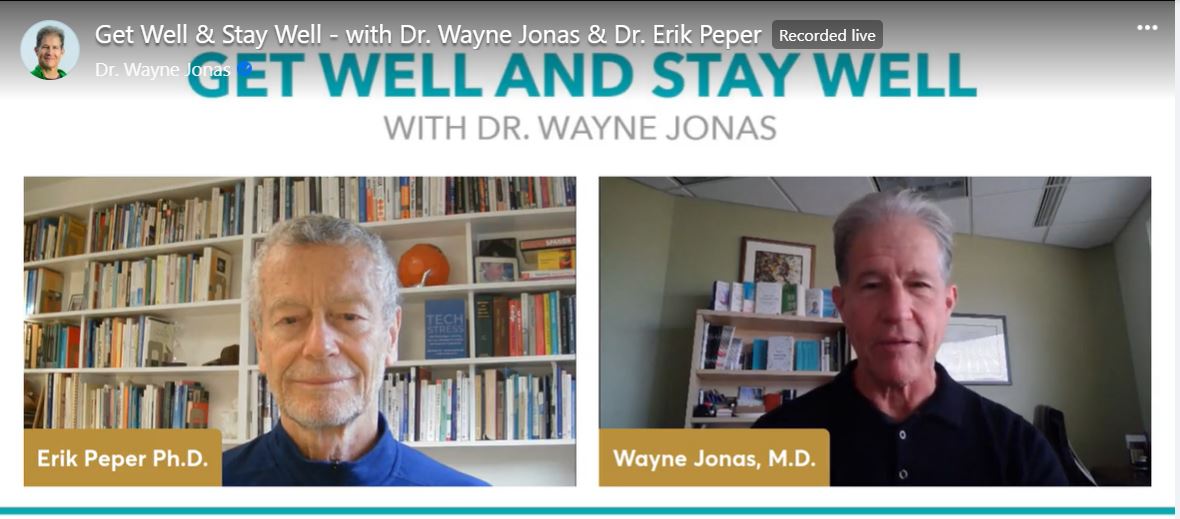
Enjoy the conversations, Get Well & Stay Well, with Wayne Jonas, MD, Former Director NIH Office of Alternative Medicine, and Erik Peper, PhD of San Francisco State University (SFSU) recorded November 30, 2021. They discuss technology’s effect on our mind and body and holistic approaches to managing stress and pain from chronic illness. Have patience when you watch the video–it takes 5 seconds for the program to begin. Click on the link to watch: https://fb.watch/9Cbkw9GZw8/
For more information, see the following blogs:
Rest Rusts: Increase dynamic movement to improve health
Posted: September 16, 2021 Filed under: behavior, computer, ergonomics, Evolutionary perspective, Exercise/movement, health, laptops, Neck and shoulder discomfort, Pain/discomfort, posture, screen fatigue, zoom fatigue | Tags: dynamic movement, static postures 2 CommentsIn hunting and gathering cultures, alternating movement patterns was part of living and essential for health. This shift from dynamic movement to static or awkward positions is illustrated in Figure 1.

Figure 1. The shift from dynamic movement to immobility and near vision as illustrated by the Hadzabe men in Tanzania returning from a hunt to our modern immobilized work and pleasure positions (Reproduced by permission from Peper, Harvey & Faass, 2020).
Dynamic movement promotes blood and lymph circulation and reduces static pressures. At present times our work and leisure activities increase immobility and static positions as we predominantly have shifted to a sitting immobilized position. This significantly increases musculoskeletal discomfort, cardiovascular disease, diabetes etc. The importance of movement as a factor to enhance health is illustrated in the recent findings of 2110 middle aged participants who were followed up for ten years. Those who took approximately 7000 steps per day or more experienced significantly lower mortality rates compared with participants taking fewer than 7000 steps per day (Paluch et al., 2021). Just having the head forward while looking at the cellphone significantly increases the forces on the muscles holding the head up as illustrated in Figure 2.

Figure 2. The head-forward position puts as much as sixty pounds of pressure on the neck muscles and spine (reproduced by permission from Dr. Kenneth Hansaraj, 2014).
For background and recommendations on what how to reduce static positions, look at our book, TechStress-How technology is hijacking our lives, strategies for coping and pragmatic ergonomics. and the superb article, Static postures are harmful – dynamic postures at work are key to musculoskeletal health, published by the European Agency for Safety and Health at Work (EU-OSHA, Sept 16, 2021) and reproduced below.
Static postures are harmful – dynamic postures at work are key to musculoskeletal health
Our bodies are built for movement – it’s a central part of maintaining a healthy musculoskeletal system and the less we move, the more chance we have of developing health issues including musculoskeletal disorders (MSDs), type 2 diabetes, cardiovascular disease, cancer and more. However, the negative effects of sedentary work can be mitigated by paying attention to the postures we adopt when we work.
Whether workers are standing or seated while working, maintaining a good ergonomic posture is essential when it comes to preventing MSDs. Poor or awkward postures put unnecessary strain on the musculoskeletal system and, over time, can cause the deterioration of muscle fibres and joints.
Poor or awkward postures include those which involve parts of the body not being in their natural position. More muscular effort is needed to maintain unnatural postures, which increases the energy used by the body and can cause fatigue, discomfort and pain. Unnatural postures also put strain on tendons, ligaments and nerves, which increases the risk of injury. For example, the risk of neck pain increases when the neck is rotated more than 45 degrees for more than 25% of the working day.
These postures, including slouching, rotation of the forearms, or prolonged periods of sitting or standing in the same spot, can cause pain in the lower back and upper limbs. The risk increases when combined with repetitive work, static muscle load, or the need to apply force or reach. And even natural or good postures maintained for any length of time become uncomfortable and eventually painful. Everyone has experienced stiffness after being in the same position for any length of time.
What do we mean by ‘good posture’?
For workers, especially those in sedentary jobs such as office work, factory work or driving, it is important to recognise and adopt good postures. A good posture should be comfortable and allow the joints to be naturally aligned. The segments of our body can be divided into three cross-sectional anatomical planes: the sagittal plane, which concerns bending forwards and backwards; the frontal plane, which concerns bending sideways; and finally the transverse plane, which refers to rotation or twisting of the body parts. A good posture is one that ensures that all three of these planes are set at neutral positions as much as possible, in that the worker is not leaning backwards, forwards or to any particular side, and their limbs and torso are not rotated or twisted. Adopting neutral postures will help to lessen the strain on the worker’s muscles, tendons and skeletal system, and reduces the risk of them causing or aggravating an MSD.
In practice, workers can consider the following checklist to ensure that they’re standing or sitting in a neutral position:
- Keep the neck vertical and the back in an upright position.
- Ensure the elbows are below the chest and avoid having to reach excessively.
- Keep the shoulders relaxed and use back and arm rests where possible and ensure that they are adjusted to the size and shape of the worker.
- Avoid rotating the forearms or excessively moving the wrists.
- Ensure that any work tools can be held comfortably, and that clothing doesn’t restrain or prevent movement.
- Allow room to comfortably move the legs and feet and avoid frequent kneeling or squatting.
- Ensure that long periods of standing or sitting in the same posture can be broken up.
Employers can assist workers in adopting good postures by communicating checklists such as this one, and by promoting physical activity where possible, encouraging the fair rotation of tasks between employees to avoid them consistently making repetitive movements, and ensuring that workers have the capacity to take regular breaks.
Why our next posture is the best posture
However, maintaining a good posture at all times is not enough to reduce the risk of MSDs, and can even be harmful. Static postures, even if ergonomic, are still a risk factor if over-used. Our body requires movement and variety, which is why the best approach is to use a variety of ergonomic postures in rotation, breaking up long periods of static working with stretching, exercise, and movement. This is known as adopting ‘dynamic positions’.
It is important not only for workers who spend much of their day seated, but also for workers who primarily stand – such as factory workers in assembly lines. In both cases, sitting and standing are not opposites. The opposite of both is movement. Changing postures between sitting and standing is not sufficient for any worker – the working environment must still offer ways of varying their postures and incorporating movement into their daily working routines. What’s more, if standing work cannot be avoided, workers do not need lots of space in order to adopt dynamic positions in a healthy way. Blood flow propulsion mechanisms can still work correctly even if the worker is only moving around in one square metre. However it is still the case that they should have a break after 30 minutes of standing.
Work should therefore not only facilitate good postures, but ensure that good, ergonomic postures are also dynamic. Switching between sitting, standing and moving while ensuring that the musculoskeletal frame is not under any unnecessary tension can help sedentary workers avoid the onset of MSDs and other health problems. For more information visit the priority area on sedentary work.
References
EU-OSHA. (September 16, 2021). Static postures are harmful – dynamic postures at work are key to musculoskeletal health. https://healthy-workplaces.eu/en/media-centre/news/static-postures-are-harmful-dynamic-postures-work-are-key-musculoskeletal-health?
Hansraj, K. K. (2014). Assessment of Stresses in the Cervical Spine Caused by Posture and Position of the Head. Surgical Technology International, 25, 277–79. https://pubmed.ncbi.nlm.nih.gov/25393825/
Paluch, A.E., Gabriel, K.P., Fulton, J.E., et al.(2021). Steps per Day and All-Cause Mortality in Middle-aged Adults in the Coronary Artery Risk Development in Young Adults Study. JAMA Netw Open, 4(9):e2124516. https://doi.org/10.1001/jamanetworkopen.2021.24516
Peper, E., Harvey, R. & Faass, N. (2020). TechStress-How Technology is Hijacking our Lives, Strategies for Coping and Pragmatic Ergonomics. Berkeley: North Atlantic books. https://www.penguinrandomhouse.com/books/232119/tech-stress-by-erik-peper-phd/
Reactivate your second heart
Posted: June 14, 2021 Filed under: behavior, computer, digital devices, ergonomics, Evolutionary perspective, Exercise/movement, health, Pain/discomfort, posture, screen fatigue, self-healing, zoom fatigue | Tags: blood clots, blood flow, calf muscle, cardiovascular disease, deep vein thrombosis, edema, exhaustion, Sitting disease, tired legs, Type 2 diabetes 6 CommentsMonica Almendras and Erik Peper
Adapted from: Almendras, M. & Peper, E. (2021). Reactivate your second heart. Biofeedback, 49(4), 99-102. https://doi.org/10.5298/1081-5937-49.04.07
Have you ever wondered why after driving long distances or sitting in a plane for hours your feet and lower leg are slightly swollen (Hitosugi, Niwa, & Takatsu, 2000)? It is the same process by which soldiers standing in attention sometimes faint or why salespeople or cashiers, especially those who predominantly stand most of the day, have higher risk of developing varicose veins. By the end of the day, they feel that their legs being heavy and tired? In the vertical position, gravity is the constant downward force that pools venous blood and lymph fluid in the legs. The pooling of the blood and reduced circulation is a contributing factor why airplane flights of four or more hours increases the risk for developing blood clots-deep vein thrombosis (DVT) (Scurr, 2002; Kuipers et al., 2007). When blood clots reaches the lung, they can cause a pulmonary embolisms that can be fatal. In other cases, they may even travel to the brain and cause strokes.[1]
Sitting without moving the leg muscles puts additional stress on your heart, as the blood and lymph pools in the legs. Tightening and relaxing the calf muscles can prevent the pooling of the blood. The inactivity of your calf muscles does not allow the blood to flow upwards. The episodic contractions of the calf muscles squeezes the veins and pumps the venous blood upward towards the heart as illustrated in figure 1. Therefore, it is important to stand, move, and walk so that your calf muscle can act as a second heart (Prevosti, April 16, 2020).

Figure 1. Your calf muscles are your second heart! The body is engineered so that when you walk, the calf muscles pump venous blood back toward your heart. Reproduced by permission from Dr. Louis Prevosti of the Center for Vein Restoration (https://veinatlanta.com/your-second-heart/).
To see the second heart in action watch the YouTube video, Medical Animation Movie on Venous Disorders, by the Sigvaris Group Europe (2017).
If you stand too long and experienced slight swelling of the legs, raise your feet slightly higher than the head, to help drain the fluids out of the legs. Another way to reduce pooling of fluids and prevent blood clots and edema is to wear elastic stockings or wrap the legs with intermittent pneumatic compression (IPC) devices that periodically compresses the leg (Zhao et al., 2014). You can also do this by performing foot rotations or other leg and feet exercises. The more the muscle of the legs and feet contract and relax, the more are the veins episodically compressed which increases venous blood return. Yet in our quest for efficiency and working in front of screens, we tend to sit for long time-periods.
Developing sitting disease
Have you noticed how much of the time you sit during the day? We sit while studying, working, socializing and entertaining in front of screens. This sedentary behavior has significantly increased during the pandemic (Zheng et al, 2010). Today, we do not need to get up because we call on Amazon’s Alexa, Apple’s Siri or Google’s Hey Google to control timers, answer queries, turn on the lights, fan, TV, and other home devices. Everything is at our fingertips and we have finally become The Jetsons without the flying cars (an American animated sitcom aired in the 1960s). There is no need to get up from our seat to do an activity. Everything can be controlled from the palm of our hand with a mobile phone app.
With the pandemic, our activities involve sitting down with minimum or no movement at all. We freeze our body’s position in a scrunch–a turtle position–and then we wonder why we get neck, shoulder, and back pains–a process also observed in young adults or children. Instead of going outside to play, young people sit in front of screens. The more we sit and watch screens, the poorer is our mental and physical health (Smith et al., 2020; Matthews et al., 2012). We are meant to move instead of sitting in a single position for eight or more hours while fixating our attention on a screen.
The visual stimuli on screen captures our attention, whether it is data entry, email, social media, or streaming videos (Peper, Harvey & Faass, 2020). While at the computer, we often hold up our index finger on the mouse and wait with baited breath to react. Holding this position and waiting to click may look harmless; however, our right shoulder is often elevated and raised upward towards our ear. This bracing pattern is covert and contributes to the development of discomfort. The moment your muscles tighten, the blood flow through the muscle is reduced (Peper, Harvey, & Tylova, 2006). Muscles are most efficient when they alternately tighten and relax. It is no wonder that our body starts to scream for help when feeling pain or discomfort on our neck, shoulders, back and eyes.
Why move?

Figure 2a and 2b Move instead of sit (photos source: Canva.com).
The importance of tightening and then relaxing muscles is illustrated during walking. During the swing phase of walking, the hip flexor muscles relax, tighten, relax again, tighten again, and this is repeated until the destination is reached. It is important to relax the muscles episodically for blood flow to bring nutrients to the tissue and remove the waste product. Most people can walk for hours; however, they can only lift their foot from the floor (raise their leg up for a few minutes) till discomfort occurs.
Movement is what we need to do and play is a great way to do it. Dr. Joan Vernikos (2016) who conducted seminal studies in space medicine and inactivity physiology investigated why astronauts rapidly aged in space and lost muscle mass, bone density and developed a compromised immune system. As we get older, we are hooked on sitting, and this includes the weekends too. If you are wondering how to separate from your seat, there are ways to overcome this. In the research to prevent the deterioration caused by simulating the low gravity experience of astronauts, Dr. Joan Vernikos (2021) had earthbound volunteers lie down with the head slightly lower than the feet on a titled bed. She found that standing up from lying down every 30-minutes was enough to prevent the deterioration of inactivity, standing every hour was not enough to reverse the degeneration. Standing stimulated the baroreceptors in the neck and activated a cardiovascular response for optimal health (Vernikos, 2021).
We have forgotten something from our evolutionary background and childhood, which is to play and move around. When children move around, wiggle, and contort themselves in different positions, they maintain and increase their flexibility. Children can jump and move their arms up, down, side to side, forward, and backward. They do this every day, including the weekends.
When was the last time you played with a child or like a child? As an adult, we might feel tired to play with a child and it can be exhausting after staring at the screen all day. Instead of thinking of being tired to play with your child, consider it as a good workout. Then you and your child bond and hopefully they will also be ready for a nap. For you, not only do you move around and wake up those muscles that have not worked all day, you also relax the tight muscles, stretch and move your joints. Do playful activities that causes the body to move in unpredictable fun ways such as throwing a ball or roleplaying being a different animal. It will make both of you smile–smiling helps relaxation and rejuvenates your energy.
It is not how much exercise you do, it is how long you sit. The longer you sit without activating your second heart the more are you at risk for cardiovascular disease and diabetes independent of how much exercise you do (Bailey et al., 2019).
Use it or lose it! Activate your calves!
- Interrupt sitting at your desk/computer every 30-minutes by getting up and walking around.
- Stand up and walk around when using your phone.
- Organize walking meetings instead of sitting around a table.
- Invest in a sit-stand desk while working at the computer. While working, alternate positions. There should be a balance between standing and sitting, because too much of one can lead to problems. By taking a short standing up break to let your blood pump back to the heart is beneficial to avoid health problems. Exercise alone, a fancy new ergonomic chair or expensive equipment is not enough to be healthy, it is important to add those mini breaks in between (Buckley et al, 2015).
For a holistic perspective to stay healthy while working with computers and cellphones, see the comprehensive book by Peper, Harvey and Faass (2020), TechStress: How Technology is Hijacking Our Lives, Strategies for Coping, and Pragmatic Ergonomics.
References
Buckley, J.P., Hedge, A., Yates, T., et al. (2015). The sedentary office: an expert statement on the growing case for change towards better health and productivity British Journal of Sports Medicine, 49, 1357-1362.
Prevosti, L. (2020, April 16). Your second heart. https://veinatlanta.com/your-second-heart/
Vernikos, J. (2021, February 25). Much ado about standing. Virtual Ergonomic Summit. American Posture Institute. https://api.americanpostureinstitute.com/virtual-ergonomics-summit-free-ticket?r_done=1
[1] We even wonder if excessive sitting during the COVID-19 pandemic is a hidden risk factor of the rare negative side effects of blood clots in the brain, that can occur with the AstraZeneca and Johnson and Johnson coronavirus vaccine (Mahase, 2021).
You heard it before. Now do it! Three tips to reduce screen fatigue
Posted: February 27, 2021 Filed under: behavior, ergonomics, Exercise/movement, health, Pain/discomfort, posture, relaxation, screen fatigue, Uncategorized, vision, zoom fatigue 4 CommentsMonica Almendras and Erik Peper

For almost a year, we have managed to survive this pandemic. As we work in front of screen many people experience screen fatigue (Bailenson, 2021). The tiredness, achiness and depressive feelings have many causes such as sitting disease, reduced social contact, constantly looking at the screen for work, education, socializing, and entertaining, and the increased stress from family illness and economic insecurity. The result is that many people experience low energy, depression, loneliness, anxiety, neck, shoulder, back pain at the end of the day (Son, Hegde, Smith, Wang, & Sasangohar, 2020; Peper & Harvey, 2018).
Yet there is hope to reduce discomfort and increase by implementing simple tips.
Take breaks and take more breaks by getting up from your chair and moving. Taking breaks helps us to clear our minds and it interrupts any ongoing rumination we may have going on. Doing this helps a person be more productive at work or when studying, and at the same time it helps retain more information (Peper, Harvey, & Faass, 2020; Kim, Park, & Headrick, 2018). How many of you reading this actually take a short break at least once during work? We stay in the same sitting position for long periods of time, even holding off to go to the restroom. We tell ourselves ‘one more minute’ or ‘I’ll just finish this and then I’ll go”. Sounds familiar? We know it is not healthy and yet, we continue doing it.
Solution: Set a reminder every twenty minutes to take a short break. Download a program on your computer that will remind you to take a break such as Stretch Break (www.stretchbreak.com). Every twenty minutes a window will pop up on your computer reminding you to stretch. It gives you simple exercises for you to move around and wiggle as shown in figure 1. You can say it breaks the spell from staying frozen in one position in front of your screen. The best part is that yet is free to download on your computer. What more can you ask for?

Figure 1. Stretch break window that pops up on your computer to remind you to stretch.
Stop slouching in front of the screen. We tend to gaze downwards to our device and slouch, which creates tension on our neck and shoulders ((Peper, Lin, Harvey, & Perez, 2017). And yet, we still wonder why people suffer from neck-shoulder pain and headaches. It is time to make a transformation from slouching and feeling aches and pains, to an upright posture to be free of pain.
Solution: Use an UpRight Go 2 device on your upper back or neck is a great way to remind you that you are slouching (Harvey, Peper, Mason, & Joy, 2020). The UpRight is linked via Bluetooth to the App on the mobile phone, and once you calibrate it to an upright posture, you will see and feel a vibrate when you slouch. For people who are on the computer for long hours, this will help you to be aware of your posture.
If wearing a small device on your back is not your cup of tea, or perhaps it is not in your budget at the moment. There is a solution for this, and that means you can download the UpRight Desktop App on your computer or laptop (Chetwynd, Mason, Almendras, Peper, & Harvey, 2020). The desktop version uses the camera from your computer or laptop to monitor your posture; however, at the camera cannot simultaneous be in use with another program such as ZOOM. This version provides immediate feedback through the graphic on the screen as well as, an adjustable auditory signal when you slouch as shown in Figure 2. It is also free to download, and it is available for PC and Mac (https://www.uprightpose.com/desktop-app/).

Figure 2. Posture feedback app. When slouching, the app provides immediate feedback through the graphic on the screen (the posture of figure turns red) and/or an adjustable auditory sound (from: Chetwynd, Mason, Almendras, Peper, & Harvey, 2020)
Relax your eyes and look away from the screen. Many people struggle with dry eyes and eyestrain from looking at the screen for extended time periods. We log out from work, meetings, and class; to staring at the television, tablets, and mobile phones on our free time. It is a nonstop cycle of looking at the screen, while our poor eyes never have a single break. To look at the screen, we tightened our extraocular muscles and ciliary muscles; and the result is near-vision stress (Peper, 2021).
SOLUTION: The solution to relax the eyes and reduce eyestrain will not be to buy new eyeballs online. Instead, here are three easy and free things to reestablish good eyeball health. These were adapted from the superb book, Vision for life: Ten steps for natural eyesight improvement, by Meir Schneider, PhD.
- Look out through a window at a distance tree for a moment after reading an email or clicking a link
- Look up at a distant tree and focus at the details of the branches and leaves each time you have finished a page from a book or eBook.
- Rest and regenerate your eyes with palming (Peper, 2021). To do palming, all you need to do is sit upright, place an object under your elbows (pillow or books) to avoid tensing the neck and shoulders, and cover the eyes with your hands (see figure 3). Cup your hands to avoid pressure on your eyes and with your eyes closed, imagine seeing blackness while breathing slowing from your diaphragm. For five minutes, feel how your shoulders, head, and eyes are relaxing, while doing six breaths per minutes through your nose. Once your five minutes are up, stretch or wiggle around before returning to your work. For detailed instructions, see the YouTube video, Free Webinar by Meir Schneider: May 6, 2019.

Figure 3. Position for palming.
Implement these tips as an experiment for a week and note how it affects you. Many people report that after three weeks, they experience less pain and more energy. By taking charge of your own computer work patterns, you have taken a first e first step into transforming your health.
REFERENCES
Bailenson, J. N. (2021). Nonverbal Overload: A Theoretical Argument for the Causes of Zoom Fatigue. Technology, Mind, and Behavior, 2(1). https://doi.org/10.1037/tmb0000030
Chetwynd, J., Mason, L., Almendras, M., Peper, E., & Harvey, R. (2020). “Posture awareness training.” Poster presented at the 51st Annual meeting of the Association for Applied Psychophysiology and Biofeedback. https://doi.org/10.13140/RG.2.2.20194.76485
Harvey, R., Peper, E., Mason, L., & Joy, M. (2020). “Effect of posture feedback training on health”. Applied Psychophysiology and Biofeedback. 45(3). https://DOI.org/10.1007/s10484-020-09457-0
Kim, S., Park, Y., & Headrick, L. (2018). Daily micro-breaks and job performance: General work engagement as a cross-level moderator. Journal of Applied Psychology, 103(7), 772–786. https://doi.org/10.1037/apl0000308
Peper, E. & Harvey, R. (2018). Digital addiction: increased loneliness, depression, and anxiety. NeuroRegulation. 5(1),3–8. doi:10.15540/nr.5.1.3 https://www.neuroregulation.org/article/view/18189/11842
Peper, E., Lin, I-M., Harvey, R., & Perez, J. (2017). How posture affects memory recall and mood. Biofeedback.45 (2), 36-41. https://doi.org/10.5298/1081-5937-45.2.01
Peper, E. (2021). “Resolve eyestrain and screen fatigue.” Well Being Journal,.30, Winter 2021 https://www.researchgate.net/publication/345123096_Resolve_Eyestrain_and_Screen_Fatigue
Schneider, M. (2019. YouTube video Free Webinar by Meir Schneidere: May 6, 2019.
Son. C., Hegde, S., Smith, A., Wang, X., & Sasangohar, F. (2020). Effects of COVID-19 on College Students’ Mental Health in the United States: Interview Survey Study. J Med Internet Res, 22(9):e21279 https://doi.org/10.2196/21279
Tips to Reduce Zoom Fatigue
Posted: November 15, 2020 Filed under: behavior, computer, digital devices, ergonomics, Exercise/movement, health, laptops, Neck and shoulder discomfort, Pain/discomfort, self-healing, stress management, Uncategorized, vision 1 CommentAdapted from the book, TechStress: How Technology
is Hijacking our Lives, Strategies for Coping and Pragmatic Ergonomics, by Erik Peper, Richard Harvey and Nancy Faass.

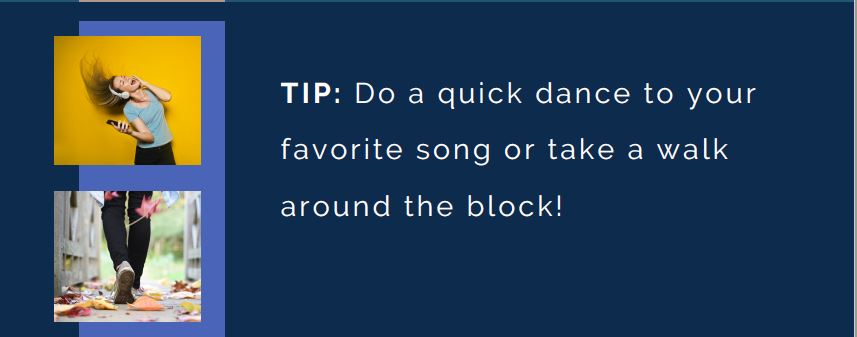
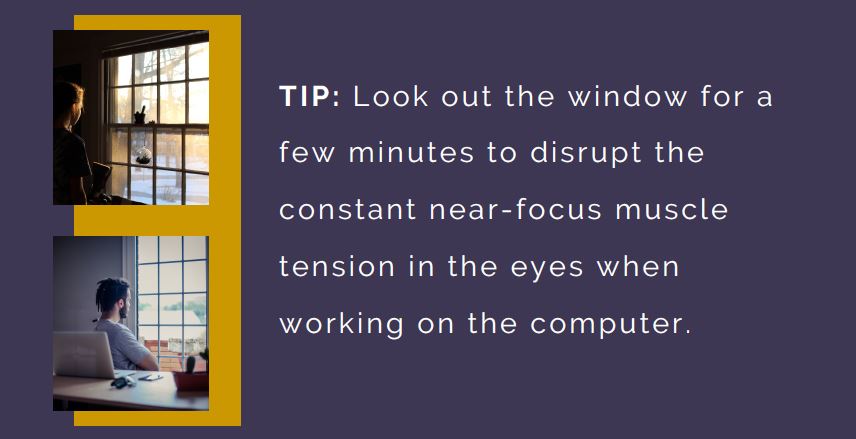


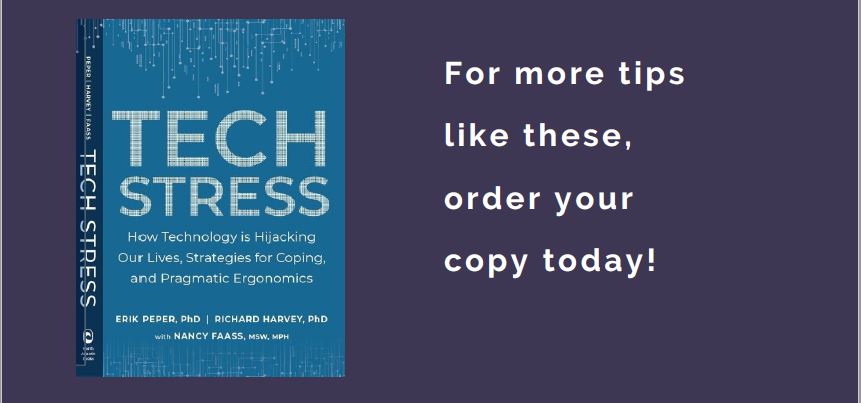
Peper, E., Harvey, R., & Faass, N. (2020), TechStress-How Technology is Hijacking our Lives, Strategies for Coping and Pragmatic Ergonomics. Berkeley, CA: North Atlantic Books.
Inna Khazan, PhD, interviews the authors of TechStress
Posted: August 18, 2020 Filed under: behavior, computer, digital devices, ergonomics, Evolutionary perspective, Exercise/movement, health, laptops, Neck and shoulder discomfort, Pain/discomfort, posture, stress management, Uncategorized, vision Leave a commentGo behind the screen and watch Inna Khazan, PhD, faculty member at Harvard Medical School and author of Biofeedback and mindfulness in everyday life: Practical solutions for improving your health and performance, interview Erik Peper, PhD and Richard Harvey, PhD. coauthors of the new book, TechStress-How Technology is Hijacking our Lives, Strategies for Coping and Pragmatic Ergonomics.
Dr. Inna Khazan interviews Dr. Erik Peper about his new book Tech Stress. We talk about some of the ways in which technology overuse affects our health and what we can do about it.
Dr. Inna Khazan interviews Dr. Rick Harvey about his new book Tech Stress, the way technology overuse can affect adults and children, and what we can do about it.
Ways to reduce TechStress
Posted: August 13, 2020 Filed under: ADHD, behavior, computer, digital devices, emotions, ergonomics, Evolutionary perspective, Exercise/movement, health, Neck and shoulder discomfort, Nutrition/diet, Pain/discomfort, posture, relaxation, self-healing, stress management, Uncategorized 5 CommentsWe are excited about our book, TechStress-How Technology is Hijacking our Lives, Strategies for Coping and Pragmatic Ergonomics, that was published August 25, 2020.
Evolution shapes behavior — and as a species, we’ve evolved to be drawn to the instant gratification, constant connectivity, and the shiny lights, beeps, and chimes of our ever-present devices. In earlier eras, these hardwired evolutionary patterns may have set us up for success, but today they confuse our instincts, leaving us vulnerable and stressed out from fractured attention, missed sleep, skipped meals, aches, pains, and exhaustion and often addicted to our digital devices.
Tech Stress offers real, practical tools to avoid evolutionary pitfalls programmed into modern technology that trip us up. You will find a range of effective strategies and best practices to individualize your workspace, reduce physical strain, prevent sore muscles, combat brain drain, and correct poor posture. The book also provides fresh insights on reducing psychological stress on the job, including ways to improve communication with coworkers and family.
Although you will have to wait to have the book delivered to your home, you can already begin to implement ways to reduce physical discomfort, zoom/screen fatigue and exhaustion. Have a look the blogs below.
How evolution shapes behavior
How to optimize ergonomics
Cartoon ergonomics for working at the computer and laptop
Hot to prevent and reduce neck and shoulder discomfort
Why do I have neck and shoulder discomfort at the computer?
Relieve and prevent neck stiffness and pain
How to prevent screen fatigue and eye discomfort
Resolve Eyestrain and Screen Fatigue
How to improve posture and prevent slouching
“Don’t slouch!” Improve health with posture feedback
How to improve breathing and reduce stress
Anxiety, lightheadedness, palpitations, prodromal migraine symptoms? Breathing to the rescue!
How to protect yourself from EMF
Cell phone radio frequency radiation increases cancer risk

Available from: https://www.penguinrandomhouse.com/books/232119/tech-stress-by-erik-peper-phd/
Why do I have neck and shoulder discomfort at the computer?
Posted: July 23, 2020 Filed under: behavior, computer, digital devices, ergonomics, Exercise/movement, laptops, Neck and shoulder discomfort, Pain/discomfort, posture, Uncategorized 8 CommentsAdapted from the upcoming book, TechStress: How Technology is Hijacking Our Lives, Strategies for Coping, and Pragmatic Ergonomics, by Erik Peper, Richard Harvey and Nancy Faass.
While working in front of screens, many of us suffer from Zoom/screen fatigue, iNeck, shoulder and back discomfort, tired eyes, exhaustion and screen addiction (Peper, 2020; Fosslien & Duffy, 2020; So, Cheng & Szeto, 2017; Peper & Harvey, 2018). As we work, our shoulders and forearms tense and we are often not aware of this until someone mentions it. Many accept the discomfort and pain as the cost of doing work–not realizing that it may be possible to work without pain.
Observe how you and coworkers work at the computer, laptop or cellphone. Often we bring our noses close to the screen in order to the text more clearly and raise our shoulders when we perform data entry and use the mouse. This unaware muscle tension can be identified with physiological recording of the muscles electrical activity when they contract (electromyography) (Peper & Gibney, 2006; Peper, Harvey & Tylova, 2006). In most cases, when we rest our hands on our laps the muscle tension is low but the moment we even rest our hands on the keyboard or when we begin to type or mouse, our muscles may tighten, as shown in Figure 1. The muscle activity will also depend on the person’s stress level, ergonomic arrangement and posture.
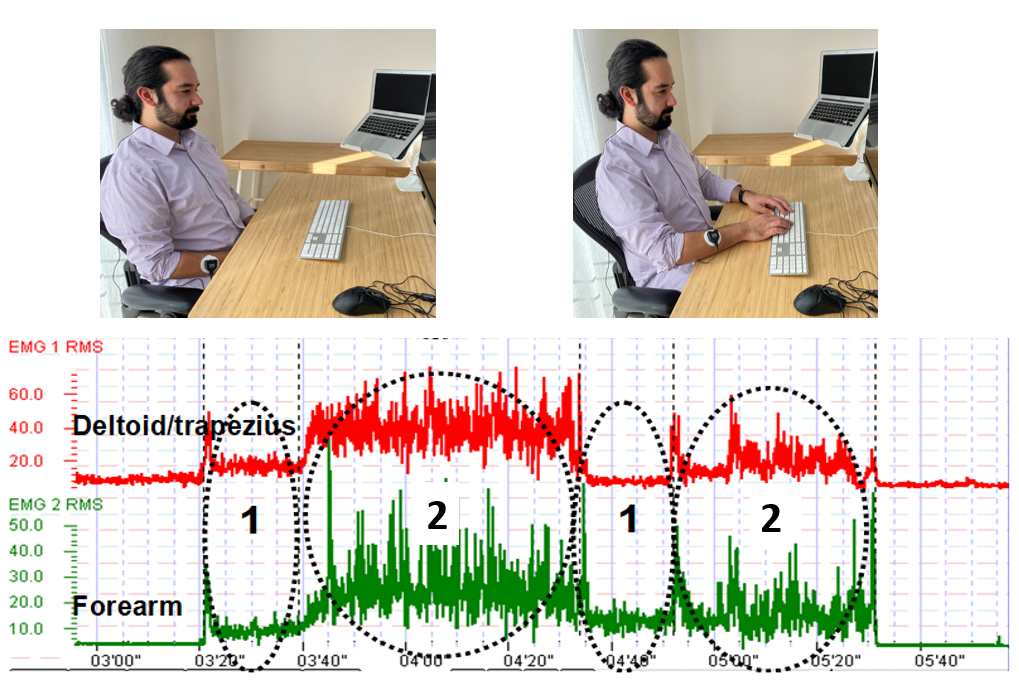 Figure 1. Muscle tension from the shoulder and forearm increased without any awareness when the person rested their hands on the keyboard (Rest Keyboard) and during typing and mousing. The muscles only relaxed when the hands were resting on their lap (Rest Lap) (reproduced by permission from Peper, Harvey, and Faass, 2020).
Stop reading from your screen and relax your shoulders. Did you feel them slightly drop and relax?
If you experienced this release of tension and relaxation in the shoulders, then you were tightening your shoulders muscles without awareness. It is usually by the end of the day that we experience stiffness and discomfort. Do the following exercise as guided by the video or described in the text below to experience how discomfort and pain develop by maintaining low-level muscle tension.
While sitting, lift your right knee two inches up so that the foot is about two inches away from the floor. Keep holding the knee up in this position. Did you notice your breathing stopped when you lifted your knee? Are you noticing increasing tension and discomfort or even pain? How much longer can you lift the knee up?
Let go, relax and observe how the discomfort dissipates.
Reasons for the discomfort
The discomfort occurred because your muscles were contracted, which inhibited the blood and lymph flow through the tissue. When your muscles contracted to lift your knee, the blood flow in those muscles was reduced. Only when your muscles relaxed could enough blood flow occur to deliver nutrients and oxygen as well as remove the waste products of metabolism (Wan et al, 2017). From a physiological perspective, muscles work most efficiently when they alternately contract and relax. For example, most people can walk without discomfort since their muscles contract and relax with each step. However, you could hold your knee up for a few minutes before experiencing discomfort in those same muscles.
How to prevent discomfort.
To prevent discomfort and optimize health, apply the same concept of alternating tensing and relaxing to your neck, shoulder, back and arm muscles while working. Every few minutes move your arms and shoulders and let them relax. Interrupt the static sitting position with movement. If you need reminders to get up and move your body during the workday or long periods sitting in front of a device, you can download and install the free app, StretchBreak.
For more information, read and apply the concepts described in our upcoming book, TechStress: How Technology is Hijacking Our Lives, Strategies for Coping, and Pragmatic Ergonomics. The book explains why TechStress develops, why digital addiction occurs, and what you can do to prevent discomfort, improve health and enhance performance. Order the book from Amazon and receive it August 25th. Alternatively, sign up with the publisher and receive a 30% discount when the book is published August 25th. https://www.northatlanticbooks.com/shop/tech-stress/
References
Peper, E. & Gibney, K. H. (2006). Muscle Biofeedback at the Computer: A Manual to Prevent Repetitive Strain Injury (RSI) by Taking the Guesswork out of Assessment, Monitoring and Training. Amersfoort: The Netherlands: Biofeedback Foundation of Europe. ISBN 0-9781927-0-2. Free download of the the book: http://bfe.org/helping-clients-who-are-working-from-home/
Wan, J. J., Qin, Z., Wang, P. Y., Sun, Y., & Liu, X. (2017). Muscle fatigue: general understanding and treatment. Experimental & molecular medicine, 49(10), e384. https://doi.org/10.1038/emm.2017.194
 the peper perspective