Reflections on the increase in Autism, ADHD, anxiety and depression: Part 2- Exposure to neurotoxins and ultra-processed foods
Posted: June 30, 2024 Filed under: ADHD, attention, behavior, CBT, digital devices, education, emotions, Evolutionary perspective, health, mindfulness, neurofeedback, Nutrition/diet, Uncategorized | Tags: ADHD, anxiety, depression, diet, glyphosate, herbicide, herbicites, mental-health, neurofeedback, pesticides, supplements', ultraprocessed foods, vitamins 4 CommentsAdapted from: Peper, E. & Shuford, J. (2024). Reflections on the increase in Autism, ADHD, anxiety and depression: Part 2- Exposure to neurotoxins and ultra-processed foods. NeuroRegulation, 11(2), 219–228. https://doi.org/10.15540/nr.11.2.219
Look at your hand and remember that every cell in your body including your brain is constructed out the foods you ingested. If you ingested inferior foods (raw materials to be built your physical structure), then the structure can only be inferior. If you use superior foods, you have the opportunity to create a superior structure which provides the opportunity for superior functioning. -Erik Peper
Summary
Mental health symptoms of attention deficit hyperactivity disorder (ADHD), Autism, anxiety and depression have increased over the last 15 years. An additional risk factor that may affect mental and physical health is the foods we eat. Even though, our food may look and even taste the same as compared to 50 years ago, it contains herbicide and pesticide residues and often consist of ultra-processed foods. These foods (low in fiber, and high in sugar, animal fats and additives) are a significant part of the American diet and correlate with higher levels of inattention and hyperactivity in children with ADHD. Due to affluent malnutrition, many children are deficient in essential vitamins and minerals. We recommend that before beginning neurofeedback and behavioral treatments, diet and lifestyle are assessed (we call this Grandmother therapy assessment). If the diet appears low in organic foods and vegetable, high in ultra-processed foods and drinks, then nutritional deficiencies should be assessed. Then the next intervention step is to reduce the nutritional deficiencies and implement diet changes from ultra-processed foods to organic whole foods. Meta-analysis demonstrates that providing supplements such as Vitamin D, etc. and reducing simple carbohydrates and sugars and eating more vegetables, fruits and healthy fats during regular meals can ameliorate the symptoms and promote health.
The previous article and blog, Reflections on the increase in Autism, ADHD, anxiety and depression: Part 1-bonding, screen time, and circadian rhythms, pointed out how the changes in bonding, screen time and circadian rhythms affected physical and mental health (Peper, 2023a; Peper, 2023b). However, there are many additional factors including genetics that may contribute to the increase is ADHD, autism, anxiety, depression, allergies and autoimmune illnesses (Swatzyna et al., 2018). Genetics contribute to the risk of attention deficit hyperactivity disorder (ADHD); since, family, twin, and adoption studies have reported that ADHD runs in families (Durukan et al., 2018; Faraone & Larsson, 2019). Genetics is in most cases a risk factor that may or may not be expressed. The concept underlying this blog is that genetics loads the gun and environment and behavior pulls the trigger as shown in Figure 1.

Figure 1. Interaction between Genetics and Environment
The pandemic only escalated trends that already was occurring. For example, Bommersbach et al (2023) analyzed the national trends in mental health-related emergency department visits among USA youth, 2011-2021. They observed that in the USA, Over the last 10 years, the proportion of pediatric ED visits for mental health reasons has approximately doubled, including a 5-fold increase in suicide-related visits. The mental health-related emergency department visits increased an average of 8% per year while suicide related visits increased 23.1% per year. Similar trends have reported by Braghieri et al (2022) from the National Survey on Drug Use and Health as shown in Figure 2.

Figure 2. Mental health trends in the United States by age group in 2008–2019. The data come from the National Survey on Drug Use and Health. Reproduced with permission from Braghieri, Luca and Levy, Ro’ee and Makarin, Alexey, Social Media and Mental Health (July 28, 2022) https://ssrn.com/abstract=3919760 or http://dx.doi.org/10.2139/ssrn.3919760
The trends reported from this data shows an increase in mental health illnesses for young people ages 18-23 and 24-29 and no changes for the older groups which could be correlated with the release of the first iPhone 2G on June 29, 2007. Thus, the Covid 19 pandemic and social isolation were not THE CAUSE but an escalation of an ongoing trend. For the younger population, the cellphone has become the vehicle for personal communication and social connections, many young people communicate more with texting than in-person and spent hours on screens which impact sleep (Peper, 2023a). At the same time, there are many other concurrent factors that may contributed to increase of ADHD, autism, anxiety, depression, allergies and autoimmune illnesses.
Without ever signing an informed consent form, we all have participated in lifestyle and environmental changes that differ from that evolved through the process of evolutionary natural selection and promoted survival of the human species. Many of those changes in lifestyle are driven by demand for short-term corporate profits over long-term health of the population. As exemplified by the significant increase in vaping in young people as a covert strategy to increase smoking (CDC, 2023) or the marketing of ultra-processed foods (van Tulleken, 2023).
This post focusses how pesticides and herbicides (exposure to neurotoxins) and changes in our food negatively affects our health and well-being and is may be another contributor to the increase risk for developing ADHD, autism, anxiety and depression. Although our food may look and even taste the same compared to 50 years ago, it is now different–more herbicide and pesticide residues and is often ultra-processed. lt contains lower levels of nutrients and vitamins such as Vitamin C, Vitamin B2, Protein, Iron, Calcium and Phosphorus than 50 years ago (Davis et al, 2004; Fernandez-Cornejo et al., 2014). Non-organic foods as compared to organic foods may reduce longevity, fertility and survival after fasting (Chhabra et al., 2013).
Being poisoned by pesticide and herbicide residues in food
Almost all foods, except those labeled organic, are contaminated with pesticides and herbicides. The United States Department of Agriculture reported that “Pesticide use more than tripled between 1960 and 1981. Herbicide use increased more than tenfold (from 35 to 478 million pounds) as more U.S. farmers began to treat their fields with these chemicals” (Fernandez-Cornejo, et al., 2013, p 11). The increase in herbicides and pesticides is correlated with a significant deterioration of health in the United States (Swanson, et al., 2014 as illustrated in the following Figure 3.


Figure 3. Correlation between Disease Prevalence and Glyphosate Applications (reproduced with permission from Swanson et al., 2014.
Although correlation is not causation and similar relationships could be plotted by correlating consumption of ultra-refined foods, antibiotic use, decrease in physical activity, increase in computer, cellphone and social media use, etc.; nevertheless, it may suggest a causal relationship. Most pesticides and herbicides are neurotoxins and can accumulate in the person over time this could affect physical and mental health (Bjørling-Poulsen et al., 2008; Arab & Mostaflou, 2022). Even though the United States Environmental Protection Agency (EPA) has determined that the residual concentrations in foods are safe, their long-term safety has not been well established (Leoci & Ruberti, 2021). Other countries, especially those in which agribusiness has less power to affect legislation thorough lobbying, and utilize the research findings from studies not funded by agribusiness, have come to different conclusions…
For example, the USA allows much higher residues of pesticides such as, Round-Up, with a toxic ingredient glyphosate (0.7 parts per million) in foods than European countries (0.01 parts per million) (Wahab et al., 2022; EPA, 2023; European Commission, 2023) as is graphically illustrated in figure 4.

Figure 4: Percent of Crops Sprayed with Glyphosate and Allowable Glyphosate Levels in the USA versus the EU
The USA allows this higher exposure than the European Union even though about half of the human gut microbiota are vulnerable to glyphosate exposure (Puigbo et al., 2022). The negative effects most likely would be more harmful in a rapidly growing infant than for an adult. Most likely, some individuals are more vulnerable than others and are the “canary in mine.” They are the early indicators for possible low-level long-term harm. Research has shown that fetal exposure from the mother (gestational exposure) is associated with an increase in behaviors related to attention-deficit/hyperactivity disorders and executive function in the child when they are 7 to 12 years old (Sagiv et al., 2021). Also, organophosphate exposure is correlated with ADHD prevalence in children (Bouchard et al., 2010). We hypothesize this exposure is one of the co-factors that have contributed to the decrease in mental health of adults 18 to 29 years.
At the same time as herbicides and pesticides acreage usage has increased, ultra-processed food have become a major part of the American diet (van Tulleken, 2023). Eating a diet high in ultra-processed foods, low in fiber, high sugar, animal fats and additives has been associated with higher levels of inattention and hyperactivity in children with ADHD; namely, high consumption of sugar, candy, cola beverages, and non-cola soft drinks and low consumption of fatty fish were also associated with a higher prevalence of ADHD diagnosis (Ríos-Hernández et al., 2017).
In international studies, less nutritional eating behaviors were observed in ADHD risk group as compared to the normal group (Ryu et al., 2022). Artificial food colors and additives are also a public health issue and appear to increase the risk of hyperactive behavior (Arnold et al., 2012). In a randomized double-blinded, placebo controlled trial 3 and 8/9 year old children had an increase in hyperactive behavior for those whose diet included extra additives (McCann et al., 2007). The risk may occur during fetal development since poor prenatal maternal is a critical factor in the infants neurodevelopment and is associated with an increased probability of developing ADHD and autism (Zhong et al., 2020; Mengying et al., 2016).
Poor nutrition even affects your unborn grandchild
Poor nutrition not only affects the mother and the developing fetus through epigenetic changes, it also impacts the developing eggs in the ovary of the fetus that can become the future granddaughter (Wilson, 2015). At birth, the baby has all of her eggs. Thus, there is a scientific basis for the old wives tale that curses may skip a generation. Providing maternal support is even more important since it affects the new born and the future grandchild. The risk may even begin a generation earlier since the grandmother’s poor nutrition as well as stress causes epigenetic changes in the fetus eggs. Thus 50% of the chromosomes of the grandchild were impacted epigenetically by the mother’s and grandmother’s dietary and health status .
Highly processed foods
Highly refined foods have been processed to remove many of their nutrients. These foods includes white bread, white rice, pasta, and sugary drinks and almost all the fast foods and snacks. These foods are low in fiber, vitamins, and minerals, and they are high in sugars, unhealthy fats, and calories. In addition, additives may have been added to maximize taste and mouth feel and implicitly encourage addiction to these foods. A diet high in refined sugars and carbohydrates increases the risk of diabetes and can worsen the symptoms of ADHD, autism, depression, anxiety and increase metabolic disease and diabetes (Woo et al., 2014; Lustig, 2021; van Tulleken, 2023). Del-Ponte et al. (2019) noted that a diet high in refined sugar and saturated fat increased the risk of symptoms of ADHD, whereas a healthy diet, characterized by high consumption of fruits and vegetables, would protect against the symptoms.
Most likely, a diet of highly refined foods may cause blood sugar to spike and crash, which can lead to mood swings, irritability, anxiety, depression and cognitive decline and often labeled as “hangryness” (the combination of anger and hunger) (Gomes et al., 2023; Barr et al., 2019). At the same time a Mediterranean diet improves depression significantly more than the befriending control group (Bayles et al., 2022). In addition, refined foods are low in essential vitamins and minerals as well as fiber. Not enough fiber can slow down digestion, affect the human biome, and makes it harder for the body to absorb nutrients. This can lead to nutrient deficiencies, which can contribute to the symptoms of ADHD, autism, depression, and anxiety. Foods do impact our mental and physical health as illustrated by foods that tend to reduce depression (LaChance & Ramsey, 2018; MacInerney et al., 2017). By providing appropriate micronutrients such as minerals (Iron, Magnesium Zinc), vitamins (B6, B12, B9 and D), Omega 3s (Phosphatidylserine) and changing our diet, ADHD symptoms can be ameliorated.
Many children with ADHD, anxiety, depression are low on essential vitamins and minerals. For example, low levels of Omega-3 fatty acids and vitamin D may be caused by eating ultra-refined foods, fast foods, and drinking soft drink. At the same time, the children are sitting more in indoors in front of the screen and thereby have lower sun exposure that is necessary for the vitamin D production.
“Because of lifestyle changes and sunscreen use, about 42% of Americans are deficient in vitamin D. Among children between 1 to 11 years old, an estimated 15% have vitamin D deficiency. And researchers have found that 17% of adolescents and 32% of young adults were deficient in vitamin D.” (Porto and Abu-Alreesh, 2022).
Reduced sun exposure is even more relevant for people of color (and older people); since, their darker skin (increased melanin) protects them from ultraviolet light damage but at the same time reduces the skins production of vitamin D. Northern Europeans were aware of the link between sun exposure and vitamin D production. To prevent rickets (a disease caused by vitamin D deficiency) and reduce upper respiratory tract infections the children were given a tablespoon of cod liver oil to swallow (Linday, 2010). Cod liver oil, although not always liked by children, is more nutritious than just taking a Vitamin D supplements. It is a whole food and a rich source of vitamin A and D as well as containing a variety of Omega 3 fatty acids (eicosapentaenoic acid (EPA) (USDA, 2019).
Research studies suggest that ADHD can be ameliorated with nutrients, and herbs supplements (Henry & CNS, 2023). Table 1 summarizes some of the nutritional deficits observed and the reduction of ADHD symptoms when nutritional supplements were given (adapted from Henry, 2023; Henry & CNS, 2023).
| Nutritional deficits observed in people with ADHD | Decrease in ADHD symptoms with nutritional supplements |
| Vitamin D: In meta-analysis with a total number of 11,324 children, all eight trials reported significantly lower serum concentrations of 25(OH)D in patients diagnosed with ADHD compared to healthy controls. (Kotsi et al, 2019) | After 8 weeks children receiving vitamin D (50,000 IU/week) plus magnesium (6 mg/kg/day) showed a significant reduction in emotional problems as observed in a randomized, double blind, placebo-controlled clinical trial (Hemamy et al., 2021). |
| Iron: In meta-analysis lower serum ferritin was associated with ADHD in children (Wang et al., 2017) and the mean serum ferritin levels are lower in the children with ADHD than in the controls (Konofal et al., 2004). | After 12 weeks of supplementation with Iron (ferrous sulfate) in double-blind, randomized placebo-controlled clinical trial, clinical trials symptoms of in children with ADHD as compared to controls were reduced (Tohidi et al., 2021; Pongpitakdamrong et all, 2022). |
| Omega 3’s: Children with ADHD are more likely to be deficient in omega 3’s than children without ADHD (Chang et al., 2017). | Adding Omega-3 supplements to their diet resulted in an improvement in hyperactivity, impulsivity, learning, reading and short term memory as compared to controls in 16 randomized controlled trials including 1514 children and young adults with ADHD (Derbyshire, 2017) |
| Magnesium: In meta-analysis, subjects with ADHD had lower serum magnesium levels compared with to their healthy controls (Effatpahah et al., 2019) | 8 weeks of supplementation with Vitamin D and magnesium caused a significant decrease in children with conduct problems, social problems, and anxiety/shy scores (Hemamy et al., 2020). |
| Vitamin B2, B6, B9 and B12deficiency has been found in many patients with Attention Deficit and Hyperactivity Disorder (Landaas et al, 2016; Unal et al., 2019). | Vitamin therapy appears to reduce symptoms of ADHD and ASD (Poudineh et al., 2023; Unal et al., 2019). An 8 weeks supplementing with Vitamin B6 and magnesium decreased hyperactivity and hyperemotivity/aggressiveness. When supplementation was stopped, clinical symptoms of the disease reappeared in few weeks (Mousain-Bosc et al., 2006). |
Table 1. Examples of vitamin and mineral deficiencies associated with symptoms of ADHD and supplementation to reduction of ADHD symptoms.
Supplementation of vitamins and minerals in many cases consisted of more than one single vitamin or mineral. For an in-depth analysis and presentation, see the superb webinar by Henry & CNS (2023): https://divcom-events.webex.com/recordingservice/sites/divcom-events/recording/e29cefcae6c1103bb7f3aa780efee435/playback? (Henry & CNS, 2023).
Whole foods are more than the sum of individual parts (the identified individual constituents/nutrients). The process of digestion is much more complicated than ingesting simple foods with added vitamins or minerals. Digestion is the interaction of many food components (many of which we have not identified) which interact and affect the human biome. A simple added nutrient can help; however, eating whole organic foods it most likely be healthier. For example, whole-wheat flour is much more nutritious. Whole wheat is rich in vitamins B-1, B-3, B-5, riboflavin, folate well as fiber while refined white flour has been bleached and stripped of fiber and nutrients to which some added vitamins and iron are added.
Recommendation
When working with clients, follow Talib’s principles as outlined in Part 1 by Peper (2023) which suggests that to improve health first remove the unnatural which in this case are the ultra-processed foods, simple carbohydrates, exposure to pesticides and herbicides (Taleb, 2014). The approach is beneficial for prevention and treatment. This recommendation to optimize health is both very simple and very challenging. The simple recommendation is to eat only organic foods and as much variety as possible as recommended by Professor Michael Pollan in his books, Omnivore’s Dilemma: A Natural History of Four Meals and Food Rules (Pollan, 2006; Pollan, 2011).
Do not eat foods that contain herbicides and pesticide residues or are ultra-processed. Although organic foods especially vegetable and fruits are often much more expensive, you have choice: You can pay more now to optimize health or pay later to treat disease. Be safe and not sorry. This recommendation is similar to the quote, “Let food be thy medicine and medicine be thy food,” that has been attributed falsely since the 1970s to Hippocrates, the Greek founder of western medicine (5th Century, BC) (Cardenas, 2013).
There are many factors that interfere with implementing these suggestions; since, numerous people live in food deserts (no easy access to healthy unprocessed foods ) or food swamps (a plethora of fast food outlets) and 54 million Americans are food insecure (Ney, 2022). In addition, we and our parents have been programmed by the food industry advertising to eat the ultra- processed foods and may no longer know how to prepare healthy foods such as exemplified by a Mediterranean diet. Recent research by Bayles et al (2022) has shown that eating a Mediterranean diet improves depression significantly more than the befriending control group. In addition, highly processed foods and snacks are omnipresent, often addictive and more economical.
Remember that clients are individuals and almost all research findings are based upon group averages. Even when the data implies that a certain intervention is highly successful, there are always some participants for whom it is very beneficial and some for whom it is ineffective or even harmful. Thus, interventions need to be individualized for which there is usually only very limited data. In most cases, the original studies did not identify the characteristics of those who were highly successful or those who were unsuccessful. In addition, when working with specific individuals with ADHD, anxiety, depression, etc. there are multiple possible causes.
Before beginning specific clinical treatment such as neurofeedback and/or medication, we recommend the following:
- “Grandmother assessment” that includes and assessment of screen time, physical activity, outdoor sun exposure, sleep rhythm as outlined in Part 1 by Peper (2023). Then follow-up with a dietary assessment that investigates the prevalence of organic/non organic foods, ingestion of fast foods, ultra-processed foods, soft drinks, high simple carbohydrate and sugar, salty/sugary/fatty snacks, fruits, vegetables, and eating patterns (eating with family or by themselves in front of screens). Be sure to include an assessment of emotional reactivity and frequency of irritability and “hangryness”.
- If the assessment suggest low level of organic whole foods and predominance of ultra- refined foods, it may be possible that the person is deficient in vitamins and minerals. Recommend that the child is tested for the vitamin deficiencies. If vitamin deficiencies identified, recommend to supplement the diet with the necessary vitamins and mineral and encourage eating foods that naturally include these substances (Henry & CNS, 2023). If there is a high level of emotional reactivity and “hangryness,” a possible contributing factor could be hypoglycemic rebound from a high simple carbohydrate (sugar) intake or not eating breakfast combined with hyperventilation (Engel et al., 1947; Barr et al., 2019). Recommend eliminating simple carbohydrate breakfast and fast food snacks and substitute organic foods that include complex carbohydrates, protein, fats, vegetables and fruit. Be sure to eat breakfast.
- Implement “Grandmother Therapy”. Encourage the family and child to change their diet to eating a whide variety of organic foods (vegetables, fruits, some fish, meat and possibly dairy) and eliminate simple carbohydrates and sugars. This diet will tend to reduce nutritional deficits and may eliminate the need for supplements.
- Concurrent with the stabilization of the physiology begin psychophysiological treatment strategies such as neurofeedback biofeedback and cognitive behavior therapy.
Relevant blogs
Author Disclosure
Authors have no grants, financial interests, or conflicts to disclose.
References
Arnold, L, Lofthouse, N., & Hurt, E. (2012). Artificial food colors and attention-deficit/hyperactivity symptoms: conclusions to dye for. Neurotherapeutics, 9(3), 599-609. https://doi.org/10.1007/s13311-012-0133-x
Arab, A. & Mostafalou, S. (2022). Neurotoxicity of pesticides in the context of CNS chronic diseases. International Journal of Environmental Health Research, 32(12), 2718-2755. https://doi.org/10.1080/09603123.2021.1987396
Barr, E.A., Peper, E., & Swatzyna, R.J. (2019). Slouched Posture, Sleep Deprivation, and Mood Disorders: Interconnection and Modulation by Theta Brain Waves. NeuroRegulation, 6(4), 181–189. https://doi.org/10.15540/nr.6.4.181
Bayes. J., Schloss, J., Sibbritt, D. (2022). The effect of a Mediterranean diet on the symptoms of depression in young males (the “AMMEND: A Mediterranean Diet in MEN with Depression” study): a randomized controlled trial. Am J Clin Nutr. 116(2), 572-580. https://doi.org/10.1093/ajcn/nqac106
Bjørling-Poulsen, M., Andersen, H.R. & Grandjean, P. Potential developmental neurotoxicity of pesticides used in Europe. Environ Health 7, 50 (2008). https://doi.org/10.1186/1476-069X-7-50
Bommersbach, T.J., McKean, A.J., Olfson, M., Rhee, T.G. (2023). National Trends in Mental Health–Related Emergency Department Visits Among Youth, 2011-2020. JAMA, 329(17):1469–1477. https://doi.org/10.1001/jama.2023.4809
Bouchard, M.F., Bellinger, D.C., Wright, R.O., & Weisskopf, M.G. (2010). Attention-deficit/hyperactivity disorder and urinary metabolites of organophosphate pesticides. Pediatrics, 125(6), e1270-7. https://doi.org/10.1542/peds.2009-3058
Braghieri, L., Levy, R., & Makarin, A. (2022). Social Media and Mental Health (July 28, 2022). Available at SSRN: https://ssrn.com/abstract=3919760 or http://dx.doi.org/10.2139/ssrn.3919760
Cardenas, D. (2013). Let not thy food be confused with thy medicine: The Hippocratic misquotation. e-Spen Journal, 8(6), 3260-3262. https://doi.org/10.1016/j.clnme.2013.10.002
CDC, (2023). Quick Facts on the Risks of E-cigarettes for Kids, Teens, and Young Adults. CDC. Centers for Disease Control and Prevention. Accessed September 23, 2023. https://www.cdc.gov/tobacco/basic_information/e-cigarettes/Quick-Facts-on-the-Risks-of-E-cigarettes-for-Kids-Teens-and-Young-Adults.html
Chang, J.C., Su, K.P., Mondelli, V. et al. Omega-3 Polyunsaturated Fatty Acids in Youths with Attention Deficit Hyperactivity Disorder: a Systematic Review and Meta-Analysis of Clinical Trials and Biological Studies. Neuropsychopharmacol. 43, 534–545. https://doi.org/10.1038/npp.2017.160
Chhabra, R., Kolli, S., & Bauer, J.H. (2013). Organically Grown Food Provides Health Benefits to Drosophila melanogaster. PLoS ONE, 8(1): e52988. https://doi.org/10.1371/journal.pone.0052988
Davis, D. R., Epp, M. D., & Riordan, H. D. (2004). Changes in USDA food composition data for 43 garden crops, 1950 to 1999. Journal of the American College of Nutrition, 23(6), 669-682. https://doi.org/10.1080/07315724.2004.10719409
Derbyshire, E. (2017). Do Omega-3/6 Fatty Acids Have a Therapeutic Role in Children and Young People with ADHD? J Lipids. 6285218. https://doi.org/10.1155/2017/6285218
Del-Ponte, B., Quinte, G.C., Cruz, S., Grellert, M., & Santos, I. S. Dietary patterns and attention deficit/hyperactivity disorder (ADHD): A systematic review and meta-analysis. Journal of Affective Disorders, 252, 160-173. https://doi.org/10.1016/j.jad.2019.04.061
Durukan, İ., Kara, K., Almbaideen, M., Karaman, D., & Gül, H. (2018). Alexithymia, depression and anxiety in parents of children with neurodevelopmental disorder: Comparative study of autistic disorder, pervasive developmental disorder not otherwise specified and attention deficit-hyperactivity disorder. Pediatrics International, 60(3), 247–253. https://doi.org/10.1111/ped.13510
Effatpanah, M., Rezaei, M., Effatpanah, H., Effatpanah, Z., Varkaneh, H.K., Mousavi. S.M., Fatahi, S., Rinaldi, G., & Hashemi, R. (2019). Magnesium status and attention deficit hyperactivity disorder (ADHD): A meta-analysis. Psychiatry Res, 274, 228-234. https://doi.org/10.1016/j.psychres.2019.02.043
Engel, G.L., Ferris, E.B., & Logan, M. (1947). Hyperventilation; analysis of clinical symptomatology. Ann Intern Med, 27(5), 683-704. https://doi.org/10.7326/0003-4819-27-5-683
EPA. (2023). Glyphosate. United States Environmental Protection Agency. Accessed April 1, 2023. https://www.epa.gov/ingredients-used-pesticide-products/glyphosate
European Commission. (2023). EU legislation on MRLs.Food Safety. Assessed April 1, 2023. https://food.ec.europa.eu/plants/pesticides/maximum-residue-levels/eu-legislation-mrls_en#:~:text=A%20general%20default%20MRL%20of,e.g.%20babies%2C%20children%20and%20vegetarians
Faraone, S.V. & Larsson, H. (2019). Genetics of attention deficit hyperactivity disorder. Mol Psychiatry, 24(4), 562-575. https://doi.org/10.1038/s41380-018-0070-0
Fernandez-Cornejo, J. Nehring, R, Osteen, C., Wechsler, S., Martin, A., & Vialou, A. (2014). Pesticide use in the U.S. Agriculture: 21 Selected Crops, 1960-2008. Economic Information Bulletin Number 123, United State Department of Agriculture. https://www.ers.usda.gov/webdocs/publications/43854/46734_eib124.pdf
Gomes, G. N., Vidal, F. N., Khandpur. N., et al. (2023). Association Between Consumption of Ultraprocessed Foods and Cognitive Decline. JAMA Neurol, 80(2),142–150. https://doi.org/10.1001/jamaneurol.2022.4397
Hemamy, M., Heidari-Beni, M., Askari, G., Karahmadi, M., & Maracy, M. (2020). Effect of Vitamin D and Magnesium Supplementation on Behavior Problems in Children with Attention-Deficit Hyperactivity Disorder. Int J Prev Med, 11(1), 4. https://doi.org/10.4103/ijpvm.IJPVM_546_17
Henry, K. (2023). An Integrative Medicine Approach to ADHD. Rupa Health. Accessed September 30, 2023. https://www.rupahealth.com/post/an-integrative-medicine-approach-to-adhd
Henry, K. & CNS, L.A. (2023). Natural treatments for ADHD. Webinar Presentation by IntegrativePractitioner.com and sponsored by Rupa Health, June 6, 2023 https://divcom-events.webex.com/recordingservice/sites/divcom-events/recording/e29cefcae6c1103bb7f3aa780efee435/playback?
Hemamy, M., Pahlavani, N., Amanollahi, A. et al. (2021). The effect of vitamin D and magnesium supplementation on the mental health status of attention-deficit hyperactive children: a randomized controlled trial. BMC Pediatr, 21, 178. https://doi.org/10.1186/s12887-021-02631-1
Konofal, E., Lecendreux, M., Arnulf, I., & Mouren, M. (2004). Iron Deficiency in Children With Attention-Deficit/Hyperactivity Disorder. Arch Pediatr Adolesc Med, 158(12), 1113–1115. https://doi.org/10.1001/archpedi.158.12.1113
Kotsi, E., Kotsi, E. & Perrea, D.N. (2019). Vitamin D levels in children and adolescents with attention-deficit hyperactivity disorder (ADHD): a meta-analysis. ADHD Atten Def Hyp Disord, 11, 221–232. https://doi.org/10.1007/s12402-018-0276-7
LaChance, L.R. & Ramsey, D. (2018). Antidepressant foods: An evidence-based nutrient profiling system for depression. World J Psychiatr, 8(3): 97-104. World J Psychiatr., 8(3): 97-104. https://doi.org/10.5498/wjp.v8.i3.97
Landaas, E.T., Aarsland, T.I., Ulvik, A., Halmøy, A., Ueland. P.M., & Haavik, J. (20166). Vitamin levels in adults with ADHD. BJPsych Open, 2(6), 377-384. https://doi.org/10.1192/bjpo.bp.116.003491
Linday, L.A. (2010). Cod liver oil, young children, and upper respiratory tract infections. J Am Coll Nutr, 29(6), 559-62. https://doi.org/10.1080/07315724.2010.10719894
Leoci, R. & Ruberti, M. (2021) Pesticides: An Overview of the Current Health Problems of Their Use. Journal of Geoscience and Environment Protection, 9, 1-20. https://doi.org/10.4236/gep.2021.98001
Lustig, R.H. (2021). Metaboical: The lure and the lies of processed food, nutrition, and modern medicine. New York: Harper Wave. https://www.amazon.com/Metabolical-processed-poisons-people-planet/dp/1529350077
MacInerney, E. K., Swatzyna, R. J., Roark, A. J., Gonzalez, B. C., & Kozlowski, G. P. (2017). Breakfast choices influence brainwave activity: Single case study of a 12-year-old female. NeuroRegulation, 4(1), 56–62. https://doi.org/10.15540/nr.4.1.56
McCann, D., Barrett, A., Cooper, A., Crumpler, D., Dalen, L., Grimshaw, K., et al. (2007). Food additives and hyperactive behavior in 3-year old and 8/9-year-old children in the community: a randomized, double-blinded, placebo-controlled trial. Lancet, 370(9598), 1560-1567. https://doi.org/10.1016/S0140-6736(07)61306-3
Mengying, L.I, Fallin, A, D., Riley,A., Landa, R., Walker, S.O., Silverstein, M., Caruso, D., et al. (2016). The Association of Maternal Obesity and Diabetes With Autism and Other Developmental Disabilities. Pediatrics, 137(2), e20152206. https://doi.org/10.1542/peds.2015-2206
Mousain-Bosc, M., Roche, M., Polge, A., Pradal-Prat, D., Rapin, J., & Bali, J.P. (2006). Improvement of neurobehavioral disorders in children supplemented with magnesium-vitamin B6. I. Attention deficit hyperactivity disorders. Magnes Res. 19(1), 46-52. https://pubmed.ncbi.nlm.nih.gov/16846100/#:~:text=In%20almost%20all%20cases%20of,increase%20in%20Erc%2DMg%20values.
Ney, J. (2022). Food Deserts and Inequality. Social Policy Data Lab. Updated: Jan 24, 2022. Accessed September, 23, 2023. https://www.socialpolicylab.org/post/grow-your-blog-community
Peper, E. (2023a). Reflections on the increase in Autism, ADHD, anxiety and depression: Part 1-bonding, screen time, and circadian rhythms. the peperperspective July 2, 2023. Accessed august 8, 2024, https://peperperspective.com/2023/07/04/reflections-on-the-increase-in-autism-adhd-anxiety-and-depression-part-1-bonding-screen-time-and-circadian-rhythms/
Peper, E. (2023b). Reflections on the increase in Autism, ADHD, anxiety and depression: Part 1-bonding, screen time, and circadian rhythms. NeuroRegulation, 10(2), 134-138. https://doi.org/10.15540/nr.10.2.134
Pollan, M. (2006). Omnivore’s Dilemma: A Natural History of Four Meals and Food Rules. New York Penguin Press. https://www.amazon.com/Omnivores-Dilemma-Natural-History-Meals/dp/1594200823/ref=tmm_hrd_swatch_0?_
Pollan, M. (2011). Food rules. New York Penguin Press. https://www.amazon.com/Food-Rules-Eaters-Michael-Pollan/dp/B00VSBILFG/ref=tmm_hrd_swatch_0?
Pongpitakdamrong, A., Chirdkiatgumchai, V., Ruangdaraganon, N., Roongpraiwan, R., Sirachainan, N., Soongprasit, M., & Udomsubpayakul, U. (2022). Effect of Iron Supplementation in Children with Attention-Deficit/Hyperactivity Disorder and Iron Deficiency: A Randomized Controlled Trial. Journal of Developmental & Behavioral Pediatrics, 43(2), 80-86., https://doi.org/10.1097/DBP.0000000000000993
Porto, A. & Abu-Alreesh, S. (2022). Vitamin D for babies, children & adolescents. Health Living. Healthychildren.org. Accessed September 24, 2023. https://www.healthychildren.org/English/healthy-living/nutrition/Pages/vitamin-d-on-the-double.aspx#
Poudineh, M., Parvin, S., Omidali, M., Nikzad, F., Mohammadyari, F., Sadeghi Poor Ranjbar, F., F., Nanbakhsh, S., & Olangian-Tehrani, S. (2023). The Effects of Vitamin Therapy on ASD and ADHD: A Narrative Review. CNS & Neurological Disorders – Drug Targets (Formerly Current Drug Targets – CNS & Neurological Disorders), (22), 5, 2023, 711-735. https://doi.org/10.2174/1871527321666220517205813
Puigbò, P., Leino, L. I., Rainio, M. J., Saikkonen, K., Saloniemi, I., & Helander, M. (2022). Does Glyphosate Affect the Human Microbiota?. Life, 12(5), 707. https://doi.org/10.3390/life12050707
Ríos-Hernández, A., Alda, J.A., Farran-Codina, A., Ferreira-García, E., & Izquierdo-Pulido, M. (2017). The Mediterranean Diet and ADHD in Children and Adolescents. Pediatrics, 139(2):e20162027. https://doi.org/10.1542/peds.2016-2027
Ryu, S.A., Choi, Y.J., An, H., Kwon, H.J., Ha, M., Hong, Y.C., Hong, S.J., & Hwang, H.J. (2022). Associations between Dietary Intake and Attention Deficit Hyperactivity Disorder (ADHD) Scores by Repeated Measurements in School-Age Children. Nutrients, 14(14), 2919. https://doi.org/10.3390/nu14142919
Sagiv, S.K., Kogut, K., Harley, K., Bradman, A., Morga, N., & Eskenazi, B. (2021). Gestational Exposure to Organophosphate Pesticides and Longitudinally Assessed Behaviors Related to Attention-Deficit/Hyperactivity Disorder and Executive Function, American Journal of Epidemiology, 190(11), 2420–2431. https://doi.org/10.1093/aje/kwab173
Swanson, N.L., Leu, A., Abrahamson, J., & Wallet, B. (2014). Genetically engineered crops, glyphosate and the deterioration of health in the United States of America. Journal of Organic Systems, 9(2), 6-17. https://www.organic-systems.org/journal/92/JOS_Volume-9_Number-2_Nov_2014-Swanson-et-al.pdf
Swatzyna, R. J., Boutros, N. N., Genovese, A. C., MacInerney, E. K., Roark, A. J., & Kozlowski, G. P. (2018). Electroencephalogram (EEG) for children with autism spectrum disorder: Evidential considerations for routine screening. European Child & Adolescent Psychiatry, 28(5), 615–624. https://doi.org/10.1007/s00787-018-1225-x
Taleb, N. N. (2014). Antifragile: Things That Gain from Disorder (Incerto). New York: Random House Publishing Group. https://www.amazon.com/Antifragile-Things-That-Disorder-Incerto/dp/0812979680/ref=tmm_pap_swatch_0
Tohidi, S., Bidabadi, E., Khosousi, M.J., Amoukhteh, M., Kousha, M., Mashouf, P., Shahraki, T. (2021). Effects of Iron Supplementation on Attention Deficit Hyperactivity Disorder in Children Treated with Methylphenidate. Clin Psychopharmacol Neurosci, 19(4), 712-720. https://doi.org/10.9758/cpn.2021.19.4.712
Unal, D. Çelebi, F., Bildik,H.N., Koyuncu, A., & Karahan, S. (2019). Vitamin B12 and haemoglobin levels may be related with ADHD symptoms: a study in Turkish children with ADHD, Psychiatry and Clinical Psychopharmacology, 29(4), 515-519. https://doi.org/10.1080/24750573.2018.1459005
USDA. (2019). Fish oil, cod liver. FoodData Central. USDA U.S> Department of Agriculture. Published 4/1/2019. Accessed September 24, 2024. https://fdc.nal.usda.gov/fdc-app.html#/food-details/173577/nutrients
Van Tulleken, C. (2023). Ultra-Processed People. The Science Behind Food That Isn’t Food. New York: W.W. Norton & Company. https://www.amazon.com/Ultra-Processed-People-Science-Behind-Food/dp/1324036729/ref=asc_df_1324036729/?
Wahab, S., Muzammil, K., Nasir, N., Khan, M.S., Ahmad, M.F., Khalid, M., Ahmad, W., Dawria, A., Reddy, L.K.V., & Busayli, A.M. (2022). Advancement and New Trends in Analysis of Pesticide Residues in Food: A Comprehensive Review. Plants (Basel), 11(9), 1106. https://doi.org/10.3390/plants11091106
Wang. Y., Huang, L., Zhang, L., Qu, Y., & Mu, D. (2017). Iron Status in Attention-Deficit/Hyperactivity Disorder: A Systematic Review and Meta-Analysis. PLoS One, 12(1):e0169145. https://doi.org/10.1371/journal.pone.0169145
Wilson, L. (2015). Mothers, beware: Your lifestyle choices will even affect your grandkids.
News Corp Australia Network. Accessed Jun 24, 2024. https://www.news.com.au/lifestyle/parenting/kids/mothers-beware-your-lifestyle-choices-will-even-affect-your-grandkids/news-story/3f326f457546cfb32af5c409f335fb56
Woo, H.D.,; Kim, D.W., Hong, Y.-S., Kim, Y.-M.,Seo, J.-H.,; Choe, B.M., Park, J.H.,; Kang, J.-W., Yoo, J.-H.,; Chueh, H.W., et al. (2014). Dietary Patterns in Children with Attention Deficit/Hyperactivity Disorder (ADHD). Nutrients, 6, 1539-1553. https://doi.org/10.3390/nu6041539
Zhong, C., Tessing, J., Lee, B.K., Lyall, K. Maternal Dietary Factors and the Risk of Autism Spectrum Disorders: A Systematic Review of Existing Evidence. Autism Res,13(10),1634-1658. https://doi.org/10.1002/aur.2402
Are food companies responsible for the epidemic in diabetes, cancer, dementia and chronic disease and do their products need to be regulated like tobacco? Is it time for a class action suit?
Posted: July 15, 2023 Filed under: behavior, cancer, Evolutionary perspective, health, Nutrition/diet, self-healing | Tags: dementia, diabetes, diet, high fructose corn syrup, mortality, obsity, smoking, sugar, ultra-processed foods, UPF 4 CommentsAdapted from: Peper, E. & Harvey, R. (2024). Are Food Companies Responsible for the Epidemic in Diabetes, Cancer, Dementia and Chronic Disease and Do Their Products Need to Be Regulated Like Tobacco? Is It Time for a Class Action Suit? Thownsend Letter-the examiner of alternative medicine. https://www.townsendletter.com/e-letter-26-ultra-processed-foods-and-health-issues/
Erik Peper, PhD and Richard Harvey, PhD

Why are one third of young Americans becoming obese and at risk for diabetes?
Why are heart disease, cancer, and dementias occurring earlier and earlier? Is it genetics, environment, foods, or lifestyle?
Is it individual responsibility or the result of the quest for profits by agribusiness and the food industry?
Like the tobacco industry that sells products regulated because of their public health dangers, is it time for a class action suit against the processed food industry? The argument relates not only to the regulation of toxic or hazardous food ingredients (e.g., carcinogenic or obesogenic chemicals) but also to the regulation of consumer vulnerabilities. Addressing vulnerabilities to tobacco products include regulations such as how cigarette companies may not advertise their products for sale within a certain distance from school grounds.
Is it time to regulate nationally the installation of vending machines on school grounds selling sugar-sweetened beverages? Students have sensitivity to the enticing nature of advertised, and/or conveniently available consumable products such as ‘fast foods’ that are highly processed (e.g., packaged, preserved and practically imperishable). Whereas ‘processed foods’ have some nutritive value, and may technically pass as ‘nutritious’ food, the quality of processed ‘nutrients’ can be called into question. For the purpose of this blog other important questions to raise relate to ingredients which, alone or in combination, may contribute to the onset of or, the acceleration of a variety of chronic health outcomes related to various kinds of cancers, cardiovascular diseases, and diabetes.
It may be an over statement to suggest that processed food companies are directly responsible for the epidemic in diabetes, cancer, dementia and chronic disease and need to be regulated like tobacco. On the other hand, processed food companies should become much more regulated than they are now.
More than 80 years ago, smoking was identified as a significant factor contributing to lung cancer, heart disease and many other disorders. In 1964 the Surgeon Generals’ report officially linked smoking to deaths of cancer and heart disease (United States Public Health Service, 1964). Another 34 years pased before California prohibited smoking in restaurants in 1998 and, eventually inside all public buildings. The harms of smoking tobacco products were well known, yet many years passed with countless deaths and suffering which could have been prevented before regulation of tobacco products took place. Reviewing historical data there is about a 20 year delay (e.g., a whole generation) before death rates decrease in relation to when regulations became effective and smoking rates decreased, as shown in figure 1.

Figure 1. The relationship between smoking and lung cancer. Reproduced by permission from Roser, M. (2021). Smoking: How large of a global problem is it? And how can we make progress against it? Our world in data.
During those interim years before government actions limited smoking more effectively, tobacco companies hid data regarding the harmful effects of smoking. Arguably, the ‘Big Tobacco’ industry paid researchers to publish data which could confuse readers about tobacco product harm. There is evidence of some published articles suggesting that the harm of cigarette smoking was a hoax– all for the sake of boosting corporate profits (Bero, 2005).
Now we are experiencing a similar problem with the processed food industry. It has been suggested that alongside smoking and vaping, opioid use, a sedentary ‘couch potato’ lifestyle, and lack of exercise, ultra-processed food (UPF) that we eat severely affects our health.
Ultra-processed foods, which for many constitutes a majority of calories ranging from 55% to over 80% of the food they eat, contain chemical additives that trick the tastebuds, mouth and eventually our brain to desire those processed foods and eat more of them (Srour et al., 2022).
What are ultra-processed foods? Any foods that your great grandmother would not recognize as food. This includes all soft drinks, highly processed chips, additives, food coloring, stabilizers, processed proteins, etc. Even oils such as palm oil, canola oil, or soybean are ultra processed since they heated, highly processed with phosphoric acid to remove gums and waxes, neutralized with chemicals, bleached, and deodorized with high pressure steam (van Tulleken, 2023).
The data is clear! Since the 1970s obesity and inflammatory disease have exploded after ultra-processed foods became the constituents of the modern diet as shown in figure 2.
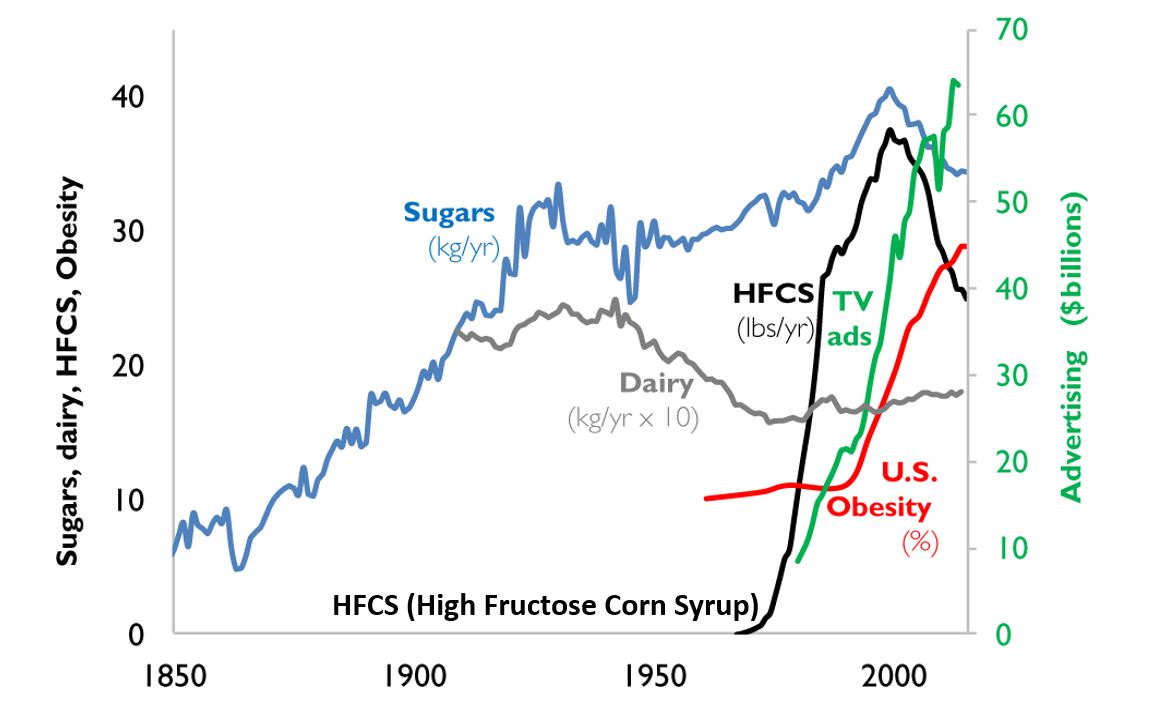
Figure 2. A timeline from 1850 to 2000 reflects the increase in use of refined sugar and high fructose corn syrup (HFCS) to the U.S. diet, together with the increase in U.S. obesity rate. The data for sugar, dairy and HFCS consumption per capita are from USDA Economic Research Service (Johnson et al., 2009) and reflects historical estimates before 1967 (Guyenet et al., 2017). The obesity data (% of U.S. adult population) are from the Robert Wood Johnson Foundation’s Trust for America’s Health. (stateofobesity.org). Total U.S. television advertising data are from the World Advertising Research Center (www.warc.com). The vertical measure (y–axis) for kilograms per year (kg/yr) on the left covers all data except advertising expenditures, which uses the vertical measure for advertising on the right. Reproduced by permission from Bentley et al, 2018.
This graph clearly shows a close association between the years that high fructose corn syrups (HFCS) were introduced into the American diet and an increase in TV advertising with corresponding increase in obesity. HFCS is an ultra-processed food and is a surrogate marker for all other ultra-processed foods. The best interpretation is that ultra-processed foods, which often contain HFCS, are a causal factor of the increase in obesity, and diabetes and in turn are risk factors for heart disease, cancers and dementias.
Ultra-processed foods are novel from an evolutionary perspective.
The human digestive system has only recently encountered sources of calories which are filled with so many unnatural chemicals, textures and flavors. Ultra-processed foods have been engineered, developed and product tested to increase the likelihood they are wanted by consumers and thereby increase sales and profits for the producers. These foods contain the ‘right amount’ processed materials to evoke the taste, flavor and feel of desired foods that ‘trick’ the consumer it eat them because they activate evolutionary preference for survival. Thus, these ultra-processed foods have become an ‘evolutionary trap’ where it is almost impossible not to eat them. We eat the food because it capitalized on our evolutionary preferences even though doing so is ultimately harmful for our health (for a detailed discussion on evolutionary traps, see Peper, Harvey & Faass, 2020).
An example is a young child wanting the candy while waiting with her parents at the supermarket checkout line. The advertised images of sweet foods trigger the cue to eat. Remember, breast milk is sweet and most foods in nature that are sweet in taste, provide calories for growth and survival and are not harmful. Calories are essential of growth. Thus, we have no intrinsic limit on eating sweets unlike foods that taste bitter.
As parents, we wish that our children (and even adults) have self-control and no desire to eat the candy or snacks that is displayed at eye level (eye candy) especially while waiting at the cashier. When reflecting about food advertising and the promotion of foods that are formulated to take advantage of ‘evolutionary traps’, who is responsible? Is it the child, who does not yet have the wisdom and self-control or, is it the food industry that ultra-processes the foods and adds ingredients into foods which can be harmful and then displays them to trigger an evolutionary preference for food that have been highly processed?
Every country that has adapted the USA diet of ultra-processed foods has experienced similar trends in increasing obesity, diabetes, cardiovascular disease, etc. The USA diet is replacing traditional diets as illustrated by the availability of Coca-Cola. It is sold in over 200 countries and territories (Coca-Cola, 2023).
An increase in ultra-processed foods by 10 percent was associated with a 25 percent increase in the risk of dementia and a 14 per cent increase in the risk of Alzheimers’s (Li et al., 2022). More importantly, people who eat the highest proportion of their diet in ultra-processed foods had a 22%-62% increased risk of death compared to the people who ate the lowest proportion of processed foods (van Tulleken, 2023). In the USA, counties with the highest food swamp scores (the availability of fast food outlets in a county) had a 77% increased odds of high obesity-related cancer mortality (Bevel et al., 2023). The increase risk has also been observed for cardiovascular disease, coronary heart disease, cerebrovascular disease and all cause mortality as is shown in figure 3 (Srour et al., 2019; Rico-Campà et al., 2019).

Figure 3. Association between consumption of ultra-processed foods and all cause mortality. Reproduced from Rico-Campà et al, 2019.
The harmful effects of UPF holds up even when correcting for the amount of sugars, carbohydrates or fats in the diet and controlling for socio economic variables.
The logic that underlies this perspective is based upon the writing by Nassim Taleb (2012) in his book, Antifragile: Things That Gain from Disorder (Incerto). He provides an evolutionary perspective and offers broad and simple rules of health as well as recommendations for reducing UPF risk factors:
- Assume that anything that was not part of our evolutionary past is probably harmful.
- Remove the unnatural/unfamiliar (e.g. smoking/ e-cigarettes, added sugars, textured proteins, gums, stabilizers (guar gum, sodium alginate), emulsifiers (mono-and di-glycerides), modified starches, dextrose, palm stearin, and fats, colors and artificial flavoring or other ultra-processed food additives).
What can we do?
The solutions are simple and stated by Michael Pollan in his 2007 New York Times article, “Eat food. Not too much. Mostly Plants.” Eat foods that your great grandmother would recognize as foods (Pollan, 2009). Do not eat any of the processed foods that fill a majority of a supermarket’s space.
- Buy only whole organic natural foods and prepare them yourself.
- Request that food companies only buy and sell non-processed foods.
- Demand government action to tax ultra-processed food and limit access to these foods. In reality, it is almost impossible to expect people to choose healthy, organic foods when they are more expensive and not easily available in the American ‘food swamps and deserts’ (the presence of many fast food outlets or the absence of stores that have fresh produce and non-processed foods). We do have a choice. We can spend more money now for organic, health promoting foods or, pay much more later to treat illness related to UPF.
- It is time to take our cues from the tobacco wars that led to regulating tobacco products. We may even need to start class action suits against producers and merchants of UPF for causing increased illness and premature morbidity.
For more background information and the science behind this blog, read, the book, Ultra-processed people, by Chris van Tulleken.

Look at the following blogs for more background information.
References
Bentley, R.A., Ormerod, P. & Ruck, D.J. (2018). Recent origin and evolution of obesity-income correlation across the United States. Palgrave Commun 4, 146. https://doi.org/10.1057/s41599-018-0201-x
Bero, L. A. (2005). Tobacco Industry Manipulation of Research. Public Health Reports (1974-), 120(2), 200–208. http://www.jstor.org/stable/20056773
Bevel, M.S., Tsai, M., Parham, A., Andrzejak, S.E., Jones, S., & Moore, J.X. (2023). Association of Food Deserts and Food Swamps With Obesity-Related Cancer Mortality in the US. JAMA Oncol. 9(7), 909–916. https://doi.org/10.1001/jamaoncol.2023.0634
Coca-Cola. (2023). More on Coca-Cola. Accessed July 14, 2023. https://www.coca-cola.co.uk/our-business/faqs/how-many-countries-sell-coca-cola-is-there-anywhere-in-the-world-that-doesnt
Johnson, R.K., Appel, L.J., Brands, M., Howard, B.V., Lefevre, M., Lustig, R.H., Sacks, F., Steffen, L.M., & Wylie–Rosett, J. (2009). Dietary sugars intake and cardiovascular health: a scientific statement from the American Heart Association. Circulation, 120(10), 1011–1020. https://doi.org/10.1161/CIRCULATIONAHA.109.192627
Li, H., Li, S., Yang, H., et al, 2022. Association of ultraprocessed food consumption with the risk of dementia: a prospective cohort study. Neurology, 99, e1056-1066. https://doi.org/10.1212/WNL.0000000000200871
Peper, E., Harvey, R. & Faass, N. (2020). TechStress: How Technology is Hijacking Our Lives, Strategies for Coping, and Pragmatic Ergonomics. Berkeley: North Atlantic Books, pp 18-22, 151. https://www.amazon.com/Beyond-Ergonomics-Prevent-Fatigue-Burnout/dp/158394768X/ref=sr_1_1?crid=1U9Y82YO4DKKP&keywords=erik+peper&qid=1689372466&sprefix=erik+peper%2Caps%2C187&sr=8-1
Pollan, M. (2007). Unhappy meals. The New York Times Magazine. https://www.nytimes.com/2007/01/28/magazine/28nutritionism.t.html
Pollan, M. (2009). Food Rules: An Eater’s Manual. New York: Penguin Books. https://www.amazon.com/Food-Rules-Eaters-Michael-Pollan/dp/014311638X/ref=tmm_pap_swatch_0?_encoding=UTF8&qid=1689373484&sr=8-2
Rico-Campà, A., Martínez-González, M. A., Alvarez-Alvarez, I., de Deus Mendonça, R., Carmen de la Fuente-Arrillaga, C., Gómez-Donoso, C., & Bes-Rastrollo, M. (2019). Association between consumption of ultra-processed foods and all cause mortality: SUN prospective cohort study. BMJ; 365: l1949 https://doi.org/10.1136/bmj.l1949
Roser, M. (2021).Smoking: How large of a global problem is it? And how can we make progress against it? Our world in data. Assessed July 13, 2023. https://ourworldindata.org/smoking-big-problem-in-brief
Srour, B., Fezeu, L.K., Kesse-Guyot, E.,Alles, B., Mejean, C…(2019). Ultra-processed food intake and risk of cardiovascular disease: prospective cohort study (NutriNet-Santé) BMJ,365:l1451. https://doi.org/10.1136/bmj.l1451
Srour, B., Kordahi, M. C., Bonazzi, E., Deschasaux-Tanguy, M., Touvier, M., & Chassaing, B. (2022). Ultra-processed foods and human health: from epidemiological evidence to mechanistic insights. The Lancet Gastroenterology & Hepatology. https://doi.org/10.1016/S2468-1253(22)00169-8
Taleb, N. N. (2012). Antifragile: Things That Gain from Disorder (Incerto). New York: Random House Publishing Group. (Kindle Locations 5906-5908). https://www.amazon.com/Antifragile-Things-Disorder-ANTIFRAGILE-Hardcover/dp/B00QOJ6MLC/ref=sr_1_4?crid=3BISYYG0RPGW5&keywords=Antifragile%3A+Things+That+Gain+from+Disorder+%28Incerto%29&qid=1689288744&s=books&sprefix=antifragile+things+that+gain+from+disorder+incerto+%2Cstripbooks%2C158&sr=1-4
Van Tulleken, C. (2023). Ultra-processed people. The science behind food that isn’t food. New Yoerk: W.W. Norton & Company. https://www.amazon.com/gp/product/1324036729/ref=ox_sc_act_title_1?smid=ATVPDKIKX0DER&psc=1
United States Public Health Service. (1964). The 1964 Report on Smoking and Health. United States. Public Health Service. Office of the Surgeon General. https://profiles.nlm.nih.gov/spotlight/nn/catalog?f%5Bexhibit_tags%5D%5B%5D=smoking
Useful resources about breathing, phytonutrients and exercise
Posted: June 30, 2021 Filed under: behavior, Breathing/respiration, cancer, Evolutionary perspective, health, Nutrition/diet, self-healing, Uncategorized | Tags: diet, exercise, immune system, nasal breathing, phytonutrients, respiration 1 Comment
Dysfunctional breathing, eating highly processed foods, and lack of movement contribute to development of illnesses such as cancer, diabetes, cardiovascular disease and many chronic diseases. They also contributes to immune dysregulation that increases vulnerability to infectious diseases, allergies and autoimmune diseases. If you wonder what breathing patterns optimize health, what foods have the appropriate phytonutrients to support your immune system, or what the evidence is that exercise reduces illness and promotes longevity, look at the following resources.
Breath: the mind-body connector that underlies health and illness
Read the outstanding article by Martin Petrus (2021). How to breathe.
https://psyche.co/guides/how-to-breathe-your-way-to-better-health-and-transcendence
You are the food you eat
Watch the superb webinar presentation by Deanna Minich, MS., PHD., FACN, CNS, (2021) Phytonutrient Support for a Healthy Immune System.
Movement is life
Explore the summaries of recent research that has demonstrated the importance of exercise to increase healthcare saving and reduce hospitalization and death.
Improve your health: Lower your carbs
Posted: January 25, 2018 Filed under: Evolutionary perspective, Exercise/movement, Nutrition/diet, self-healing, Uncategorized | Tags: diet, metabolic syndrome, obesity, Type 2 diabetes 8 Comments
How come there is no disease caused by the absence of carbohydrates? This simple observation suggests that carbohydrates are not necessary for health and are not an essential food in our evolutionary history. This is different from vitamin C or other essential nutrients whose absence will cause scurvy and eventually death.
From an evolutionary perspective, simple carbohydrates, especially sugars and high-fructose corn syrup, are significant contributing factors to the increasing epidemic of obesity, type 2 diabetes, metabolic syndrome, coronary heart disease and many autoimmune disorders. The recommended nutritional guideline of the last forty years to reduce fats and increase carbohydrates were not based upon good science but on ideology influenced by agribusiness and the sugar industry (La Berge, 2008). The recommendations were WRONG AND HARMFUL (Taubes, 2016; see also: https://peperperspective.com/2017/02/18/read-the-case-against-sugar/). It may explains why the obesity epidemic is not caused by eating or drinking too many calories but the eating the wrong type of calories; namely, those found in simple carbohydrates and overly processed foods. The increase in obesity appears highly correlated with the US low-fat diet recommendations published in 1977 as shown in figure 1.
 Figure 1. Increase in U.S. obesity begins after the publication of the U.S. recommendations to eat a low-fat diet. Reproduced from National Center for Health Statistics (US). Health, United States, 2008: With Special Feature on the Health of Young Adults. Hyattsville (MD): National Center for Health Statistics (US); 2009 Mar. Chartbook
The harmful effects of the simple high carbohydrate diet amplified with a decrease in physical activity interacts with your genetics. People, with a family risk factors of metabolic syndrome (type 2 diabetes) can improve their health by eating a low carbohydrate diet with lots of vegetables, fruit and fats.
Watch the superb video lectures by Professor Timothy Noakes, an emeritus professor of exercise and sports science at the University of Cape Town and by Gary Taubes, science writer and author of The case against sugar. It may shift your perspective and improve your health.
Reference:
La Berge, A. F. (2008). How the ideology of low fat conquered America. Journal of the History of Medicine and Allied Sciences, Volume 63, Issue 2, 1 April 2008, Pages 139–177, https://doi.org/10.1093/jhmas/jrn001
National Center for Health Statistics (US). Health, United States, 2008: With Special Feature on the Health of Young Adults. Hyattsville (MD): National Center for Health Statistics (US); 2009 Mar. Chartbook
Taubes, G. (2016). The Case Against Sugar. Portobello Books. ISBN 978-0-307-70164-0
Are you out of control and reacting in anger? The role of food and exercise
Posted: October 6, 2017 Filed under: Uncategorized | Tags: anger, diet, emotional control, exercise, food, heart rate, Holistic health 2 Comments
Fuming in anger, exploding in rage, shaking in fear, or trembling with anxiety, what can you do? How can you control your emotions and what can you do if you are reacting to a friend or colleague who is out of control? There are many useful self-directed approaches and traditional advice such as, “Count to 10 before you speak,” ”Sleep on it before acting on the decision you have made,” “Practice stress reduction techniques such as mindfulness meditation,” “Leave the situation,” or “Wait 24 hours before clicking “send” on an angry email response.”
These suggestions aim to reduce the strong negative emotions which could cause people to lash out at or totally withdraw from the perceived threat. Under perceived threat, we may react defensively and impulsively to protect ourselves. During those times we may say the meanest things to hurt the person as a substitute for inflicting actual physical harm.
In almost most cases when angry or frightened we may react automatically. Thus having skills to recognize and interrupt the escalating cycle of negative emotions can facilitate resolving conflicts. These skills allow us to react more cool headed, rationally, and recognize how our responses would impact other people and prevent future blow back from our excessive emotional response. It could also interrupt an escalating argument. Despite our best efforts, it is often difficult to change our emotional reaction especially when we feel threatened, hungry and tired.
Emotion regulation as described by Professor James Gross, Professor of Psychology at Stanford University, consists of 1) awareness that there is a need for an unhelpful emotion to be regulated such as noticing an increase in heart rate or worry, 2) selecting a strategy to regulate the emotion such as thinking about positive memories such as a loving grandparent or practicing breathing, 3) implementing and acting on this strategy which means doing the strategy at that moment when we don’t want to and all our impulses are saying “I am right, don’t change,” and 4) constant follow-up to check if what we are doing is effective and if not, what needs to be improved (Gross, 213).
This approach can be very effective and may work even better by combining multiple strategies instead of only one technique. The more skills you have and practiced the easier it becomes to master motional regulation. Sometimes, psychological behavioral approaches may underestimate the role of biological factors such as diet, exhaustion and exercise that underlie emotional regulation.
Think of a four-year child throwing a temper tantrum. As a parent, it not useful to discuss with the child what is going on. Each suggestion may increase the tantrum. Instead the parent thinks, “My child is exhausted or hungry” (how many tantrums don’t occur when the child stays up after bed time or just before dinner?). The millennium’s phrase, “hangry,” is the combination of hunger and anger.
The knowledge that food may prevent or reduce conflict is reflected in the cultural wisdom of most countries except the USA. In the Middle East you are offered tea and sweets before buying a small rug at the bazaar; in Japan or China, you are invited to a meal before beginning a business transaction. The food and may slightly raise your blood glucose levels and encourage digestion which triggers a physiological state that is the opposite of that triggered by anger or fear. It may also evoke positives feelings associated with eating such as family gatherings and parties. As the food and drink are a gift, it may allow you to perceive the other person more positively. Thus, it is easier to be collegial and react more positively in challenging situations. The influence of rest and food has also been observed in Judicial rulings. Judges are much more likely to accept prisoners’ requests for parole at the beginning of the session–right after breakfast or lunch–than later in the session (Danzier, Levav & Avnaim-Pesso, 2011).
What can you do?
One useful mental strategy when you are out of control is to remind yourself that you are acting like a four-year-old child who is having a tantrum. Begin in the same way as you would with a four-year-old: take time out, eat some food, and get rest. Then in the clear light of the next day, after having eating a nutritious breakfast– not just a cup of coffee with a muffin–discuss and resolve what happened the day before that triggered the outburst. Similarly, when another person is out of control, do not to take it personally, he/she may be a momentary acting like four-year-old.
Keep in mind, whatever other people said or did during an outburst, they may have responded automatically because they experienced their survival being threatened. Remember, how in a past moment of anger, you have said something very hurtful? At the moment the words left your mouth, you wished you could have reeled them back in as you realized that it would be almost impossible to repair the damage.
From a biological perspective you were hijacked by the amygdala which is part of our emotional brain (Goleman, 2006). The amygdala processes information 22 milliseconds earlier than the rational brain and acts protectively before our rational brain, the neocortex, can assess the situation and respond. This reaction occurs because the information signals “we are in danger” and evokes the automatic defense reaction as shown Figure 1.

Figure 1. Triggering of a defense reaction is 22 milliseconds quicker from the amygdala than from the cortex. Thus we sometimes react without recognizing the consequences (adapted from Ropeik, 2011)
Implement the cultural wisdom of eating together first and then discussing business or challenging issues. Do not send negative messages by email or mail since that allows people to react asynchronously without having the social feedback to modulate their emotions.
Self-regulation of unhelpful emotions is challenging because negative emotions trigger the body’s defense reactions to prepare it for flight and fight. At that point, it is more and more difficult to perceive the long term consequences of our action– our only goal is to survive. Even our cognitions change and we tend to interpret any information more negatively and may assume harmful intent. The more we are captured by our emotions, the more challenging is it to implement emotional self-regulation strategies.
Once the defense reaction has been activated, it is not the time to resolve conflict. Dr. Gottman and colleagues at the Seattle Love lab, discovered that when couples argued and their heartrate went over a hundred (a possible biological marker of sympathetic activation) arguments could escalate. If the person whose heart rate went up spontaneously took a time out and did self-soothing, the couple had a lower divorce rate and higher marital happiness than those couples who continue the arguments (Gottman & Gottman, 2008).
One of the effective ways to begin emotion regulation is to leave the situation and first complete the fight/flight defense reaction. If possible, this means interrupting whatever you are doing and exercise vigorously. After you have done a vigorous workout, emotional regulation is much easier as the ruminating thoughts have decreased or stopped.
Complete the alarm reaction with exercise
When you are upset take a break. If possible, take a time out and exercise to complete the fight/flight response that was activated by the negative emotions. This is not always possible in a business or social gathering; instead, excuse yourself and go to the bathroom. In the bathroom do the following five-minute exercise that was taught by Rinpoche Tarthang Tulku of the Nyingma tradition of Tibetan Buddhism as an approach to stop ruminating thoughts as shown in Figure 2.

Stand on your toes with the heels touching each other and lifted off the floor with your knees bent. Place your
hands on your sides, breathe slowly and deeply. Do this next to wall to reach with your hand to steady you if you lose your balance. Stay in this position for as long as 5 minutes. Do not straighten up, keep squatting.
In a very short time your attention will be drawn and captured by the burning sensation in your thighs. Continue. After five minutes stop, shake your legs and relax.
After this exercise your thoughts have stopped and continue with the more cognitive approach of emotional self-regulation or return to the meeting. Warming: Do not do this if you have hip, knee or ankle difficulty.
Use heart rate biofeedback to signal you that you may be losing control.
Wear a heart rate monitor to signal you when your heart rate increases twenty to thirty beats above your personal baseline rate during a discussion or conflict. Use that feedback to stop and take time out and implement self-regulation practices such as exercise, breathing or meditation to allow your arousal to decrease. When feeling more calm, return to the meeting.
Summary
Food and exercise are powerful tools to augment emotional self-regulation and health. In our research, Lena Stampfli and I have observed that many students who miss meals, have an unhealthy diet, do not the exercise, are sometimes irritable and experience difficulty in concentration. When San Francisco State University students implemented a four-week self-healing project as part of a class experience, the students who changed their eating behavior (eating breakfast, not skipping meals, reducing caffeine and simple carbohydrates and increase proteins, fats and fresh vegetables) and implemented daily physical exercise (e.g., yoga, jogging, and dancing), reported significant improvements in their energy level, fewer emotion outbursts and improved quality of life. They report some of the following:
“I thought I did not particularly like exercising and eating healthy, but when it is over I feel like I am on cloud nine!… I started to look forward to doing my exercises.” –A.M.
“I started to eat breakfast, I started biking to work and did a few [meditation] exercises before bed… I felt happier and more have energy to get through the day.” –C.B.
“I have learned that letting go of what no longer serves me allow room for healing and opportunities for growth… I can only imagine what years of healthy living could do for my well-being.” –K.S.
*I thank Pardis Miri, PhD, for her constructive comments.
The blog was adapted from Peper, E. (2017). Emotional control through mindfulness as path to mental health? Western Edition HP Journal. October. http://thewesternedition.com/admin/files/magazines/WE-October-2017.pdf
References
Goleman, D. (2006). Emotional intelligence. New York: Bantam.
Gross, James J., ed. (2013). Handbook of emotion regulation. New York, Guilford publications.
Our food is not the same as 50 years ago
Posted: December 1, 2016 Filed under: Nutrition/diet, Uncategorized | Tags: diet, food, glyphosate, health, herbicides, immune system, nutrients 11 CommentsOur food should be our medicine and our medicine should be our food.– Hippocrates
Agribusiness appears to have overlooked Hippocrates’ advice in the quest for profits and quantity over quality. Over the last 50 years key nutrients of fruits and vegetables have declined. In a survey of 43 crops of fruits and vegetables, Davis, Epp, & Riordan, (2004) found a significant decrease of vitamins and minerals in foods grown in the 1950s as compared to now as shown in Figure 1 (Lambert, 2015).
Figure 1. Change in vitamins and minerals from 1950 to 1999. From: Davis, D. R., Epp, M. D., & Riordan, H. D. (2004). Changes in USDA food composition data for 43 garden crops, 1950 to 1999. Journal of the American College of Nutrition, 23(6), 669-682.
Not only are there fewer nutrients present in our fruits and vegetables, it is also laced/contaminated with pesticides and herbicides such as glyphosate. Glyphosate is the weedkiller, Roundup, produced by Monsanto and is now found in almost all non-organic foods as shown in Figure 2.
Figure 2. Example of foods tested for the presence of glyphosate. Reproduced with permission from https://s3.amazonaws.com/media.fooddemocracynow.org/images/FDN_Glyphosate_FoodTesting_Report_p2016.pdf
We are ingesting very low levels of glyphosate in most of our foods which may contribute to the development of illness. On March 20, 2015, the International Agency for Research on Cancer (IARC)–the specialized cancer agency of the World Health Organization–classified glyphosate as probably carcinogenic to humans (Group 2A). Glyphosate also affects our immune system and the healthy bacteria in our gut. Thus, I strongly recommend avoiding glyphosate and other types of herbicide and pesticide contaminated foods. By eating an organic food diet you can reduce pesticide and herbicide exposure by 90%. Unless you eat only organic foods, you will ingest more pesticides and herbicides at levels unacceptable by the European Union standards as shown in Figure 3.

Figure 3. Different allowable daily intake levels of glyphosate in the European Union as compared to the United States. Reproduced with permission from https://s3.amazonaws.com/media.fooddemocracynow.org/images/FDN_Glyphosate_FoodTesting_Report_p2016.pdf
Read the article Glyphosate: Unsafe on any plate: Alarming levels of Monstao’s gyphosate found in popular American foods. It describes the scientific evidence that at even at ultra-low levels of glyphosate e.g. 0.1 parts per billions (ppb) harm to human health could begin and how much of the foods contain glyphosate. The Executive Summary is reproduced with permission below:
Executive Summary
A leading FDA-registered food safety testing laboratory has found extremely high levels of the pesticide glyphosate in some of America’s most popular food products. Glyphosate, the active ingredient in Monsanto’s Roundup, is the most heavily used chemical weedkiller in food and agricultural production in human history, as a result of the widespread adoption of genetically engineered crops now grown on more than 175 million acres in the United States (U.S.) and more than 440 million acres around the globe.
New scientific evidence shows that probable harm to human health could begin at ultra-low levels of glyphosate e.g. 0.1 parts per billions (ppb). Popular foods tested for glyphosate measured between 289.47 ppb and at levels as high as 1,125.3 ppb. The testing and analysis was performed by Anresco Laboratories, San Francisco, an FDA registered laboratory that has performed expert food safety testing since 1943.
The laboratory found that well-known products tested for glyphosate, Original Cheerios, for example, measured levels as high as 1,125.3 ppb. Other high levels of glyphosate were found in familiar products such as Oreos, Doritos, and Ritz Crackers, among 29 foods tested. Currently, U.S. regulators allow a very high level of daily glyphosate residue in America’s food. The acceptable daily intake (ADI) limit is set at 1.75 milligrams per kilogram of bodyweight per day (written 1.75 mg/kg bw/day) in the U.S., versus a more cautious 0.3 mg/kg bw/day in the European Union. Tolerances have been set through the submission of corporate-sponsored studies and industry influence on the regulatory process.
New research shows that Roundup causes liver and kidney damage in rats as reflected in changes in the functions of 4,000 genes at only 0.05 parts per billion (ppb) glyphosate equivalent indicating damage.2 Additional studies have found that levels as low as 10 ppb can have toxic effects on the livers of fish and cause significant damage to the livers and kidneys of rats at 700 ppb, which is the allowable level of glyphosate found in U.S. drinking water.
Credible independent, peer-reviewed scientific evidence now shows that the levels of harm to human health could begin at the ultra-low levels of 0.1 parts per billion (ppb) of glyphosate. These groundbreaking new findings that one of the most iconic cereals in U.S. contains levels as high as 1,125.3 ppb should be a wake-up call for all Americans regarding unacceptable levels of pesticide residues in our nation’s food. These findings are especially troubling, considering that the latest independent scientific evidence, during which a team of international scientists re-evaluated the same data previously used by regulators, calls for a much lower ADI to be set at 0.025 mg/ kg of bodyweight per day or “12 times lower than the ADI”6 currently set in Europe and 70 times lower than the level currently allowed by the EPA in the United States. It’s important for individuals and parents to understand that glyphosate contamination cannot be removed by washing and is not broken down by cooking or baking. Glyphosate residues can remain stable in food for a year or more, even if the foods are frozen or processed.
The testing and analysis was performed at the request of FOOD DEMOCRACY NOW!, in coordination with THE DETOX PROJECT, which gathered additional scientific evidence from around the world and included a compendium of independent research on glyphosate that contains Anresco Laboratory’s findings. Based on this new information, FOOD DEMOCRACY NOW! is calling for a federal investigation into the likely harmful effects of glyphosate on human health and the environment and is also seeking an investigation into the relationships between the regulators and the regulated industries, which has resulted in the public being exposed to levels of glyphosate which scientific studies show can be damaging to human health.
The complete article with references can be downloaded from: https://s3.amazonaws.com/media.fooddemocracynow.org/images/FDN_Glyphosate_FoodTesting_Report_p2016.pdf
References:
Davis, D. R., Epp, M. D., & Riordan, H. D. (2004). Changes in USDA food composition data for 43 garden crops, 1950 to 1999. Journal of the American College of Nutrition, 23(6), 669-682. https://doi.org/10.1080/07315724.2004.10719409
Lambert, C. (2015). If Food really better from the farm gate than super market shelf? New Scientist.228(3043), 33-37.
Doctor Mike Evans: What’s the Best Diet? Healthy Eating 101
Posted: September 24, 2015 Filed under: Nutrition/diet, Uncategorized | Tags: diet, exercise, food, health 1 CommentA healthy diet is much more than just focusing on a single food. People focus so often on adding one type of food or eliminating another such as, “Don’t eat ice cream!”, “Eat chia seeds.” “No red meat.” In almost all cases, it is not just one thing, instead a healthy diet is embedded in awareness and healthy life style choices. Watch the superb common sense white board video presentation by Doctor Mike Evans, What’s the Best Diet? Healthy Eating 101. In this short presentation, he summarizes the best practices known. Implement his approach and your health will significantly improve.
Understanding marketing to doctors, food waste and sugar consumption through humor
Posted: August 7, 2015 Filed under: Nutrition/diet, Uncategorized | Tags: diet, drugs, food, marketing, pharmaceutical industry, sugar Leave a commentThe Last Week Tonight Show with John Oliver is a superb presentation of the problems and solutions about our health and food systems. Using humor, John William Oliver hosts the weekly HBO program on Sundays at 11pm and provides superb documentation of the corruption and marketing strategies that often negatively affect our health, diet and budget.
For evidence based–yet humorous–reporting watch the following episodes;
Marketing to Doctors (HBO). Pharmaceutical companies spend billions of dollars marketing drugs to doctors (published on Feb 8, 2015).
Food Waste (HBO). Producers, sellers, and consumers waste tons of food. John Oliver discusses the shocking amount of food we don’t eat (published on Jul 19, 2015).
Sugar (HBO). Sugar. It’s in everything!
Is it good for us? Well, the sugar industry thinks so (published on Oct 26, 2014).
For additional information, see the following blogs:
Be aware of evolutionary/environmental traps
Over diagnosed: Should I have more tests?
What the food companies forgot to tell you: For the sake of profits we promote metabolic syndrome, obesity and diabetes
Posted: May 23, 2015 Filed under: Nutrition/diet, Uncategorized | Tags: diabetes, diet, metabolic syndrome, obesity 5 CommentsShould a five year old be responsible for being obese?
Drinking diet sodas increases the urge to eat more!
Sugar is more addicting than cocaine!
Calories from sugar are NOT the same as calories from other types of foods.

As you are reaching for another diet soda, low fat yogurt, or low calorie dessert, you are compromising your health by increasing the risk for metabolic syndrome, diabetes and obesity. The artificial sugar substitutes increase feeling of hunger and encourage you to eat more while the low fat foods are made more appetizing by adding sugar (Lustig, 2012; Lustig et al, 2012). As sugar is more addicting than cocaine (Ahmed et al, 2013; Lenoir et al, 2013), how can you assign personal responsibility to young child who is obese with the statement, “You are responsible for being fat and for eating too much sugar laced foods!” Watch the superb documentary, Fed Up, based upon impeccable science. It explores America’s obesity epidemic and the food industry’s role in aggravating it. It systematically shows that everything we’ve been told about food and exercise especially by the food industry and federal government for the past 30 years is dead wrong. The documentary can easily be viewed from streaming video services such as Google Play, Netflix, or Amazon Prime Instant Video.
For the impact of sugar on health and the myth of self-responsibility, watch the 2013 TEDxBermuda talk, Sugar–the elephant in the kitchen, by Robert Lustig, MD, Professor of Clinical Pediatrics, University of California, San Francisco.
The movie, Fed UP, and Professor Lustig’s 2013Ted talk serve as a call to action to take control of the foods we serve and eat. Support policies to promote food health:
- Increase local taxes on every soft drink sold and use the income to support public health.
- Demand that schools and public institutions serve children real food and not sugar laced fast foods.
- Support policies that prohibit sales of soft drinks to minors just as alcohol is prohibited to minors.
- Eliminate all soft drinks from public institutions and work sites just as smoking is prohibited.
References
Ahmed, S. H., Guillem, K., & Vandaele, Y. (2013). Sugar addiction: pushing the drug-sugar analogy to the limit. Current Opinion in Clinical Nutrition & Metabolic Care, 16(4), 434-439.http://journals.lww.com/co-clinicalnutrition/Abstract/2013/07000/Sugar_addiction___pushing_the_drug_sugar_analogy.11.aspx
Fed Up.(2014). American documentary film directed, written and produced by Stephanie Soechtig.http://fedupmovie.com/#/page/home
Fowler, S. P., Williams, K., Resendez, R. G., Hunt, K. J., Hazuda, H. P., & Stern, M. P. (2008). Fueling the Obesity Epidemic?Artificially Sweetened Beverage Use and Long‐term Weight Gain. Obesity, 16(8), 1894-1900.http://onlinelibrary.wiley.com/doi/10.1038/oby.2008.284/full
Lenoir, M., Serre, F., Cantin, L., & Ahmed, S. H. (2007). Intense sweetness surpasses cocaine reward. PloS one, 2(8), e698.http://journals.plos.org/plosone/article?id=10.1371/journal.pone.0000698
Lustig, R. H. (2012). Fat chance: beating the odds against sugar, processed food, obesity, and disease. Penguin.
Lustig, R. H., Schmidt, L. A., & Brindis, C. D. (2012). Public health: The toxic truth about sugar. Nature, 482(7383), 27-29.http://www.nature.com/nature/journal/v482/n7383/full/482027a.html
Be aware of evolutionary/ecological traps
Posted: May 16, 2015 Filed under: Uncategorized | Tags: ADHD, diabetes, diet, evolution, exercise, health 6 Comments
Dead bird on Midway Island in the North Pacific, 2000 miles from any other islands. The bird mistook attractive coloring of plastics that float in the ocean as food. From: https://www.youtube.com/watch?v=dtJFiIXp5Bo

Being captured by a digital device. From: http://images.gameskinny.com/gameskinny/c9689c75994e58a03dbc5e489d346e55.jpg
How come birds on Midway Island are dying?
How come your son keeps playing computer games even after he said he would stop?
How come you ate all the French fries and the dessert even though you promised yourself to reduce your calorie intake?
How come you procrastinated and did not get up from the couch to exercise?
How come you watched pornography?
The usual answer is absence of will, self-control or self-discipline. The person is automatically blamed for making poor life choices. If you had more self-worth than you would not let yourself get obese, addicted to computer games, or watch pornography. Blaming the victim is easy, however, there are other factors that underlie the person’s covert/unconscious choices. Many of these illness producing behaviors (e.g., overeating, playing the computer games, sitting and sitting) are responses to external cues that in prehistoric times promoted survival, reproduction and health. To respond rapidly and appropriately to those cues offered a reproductive advantages while not reacting would reduce your survival. In many cases there are no upper limits to turn off our responses to these cues because the more the person responded to those cues the more was there a reproductive advantage. Now, however, our adaptive preferences have become maladaptive because the cues that trigger the same behaviors lead to lower fitness and illness (Schlaepfer et al, 2002; Robertson et al, 2013). The cues have become evolutionary/ecological traps!
Some of the recent evolutionary/ecological traps include:
Vigilance for survival. While playing a computer games, the person rapidly responds and continuously experiences immediate rewards (e.g., successful shooting the target, points, next game level). This process activates the same survival mechanisms that hunter used for thousands of generations. A visual or auditory stimuli represents sources of food or danger (a game animal to hunt for food, an attack by a predator or an enemy). The visual/auditory cue captures the person’s attention and if the person reacts to that cue he would probably survive. On the other hand, if he did not react, he may not survive and reproduce. In our modern world, similar stimuli now hijack the neurological pathways that in earlier times supported survival. Over activation of these pathways is a cofactor in the development of ADHD and other disorders (Peper, 2014). For a superb discussion of how cellphones, computers, gaming and social medial are changing our brains, read Dr. Mari Swingle’s new book, i-Minds (Swingle, 2015)
Energy for survival: Eating carbohydrate/sugary and fat foods are necessary for survival as humans constantly searched for energy sources to support life. Breast milk and almost any fruit that is sweet contain calories and supports growth. If the food was bitter it was usually harmful. For most of our evolutionary past, we would eat as much as possible because food was scarce. There was no evolutionary advantage to limit food intake as the stored calories would supply enough calories to survive during periods of famine. In our modern world, our survival mechanisms have been hijacked by advertising and the oversupply of foods which contribute to the epidemic of obesity and diabetes.
Being a couch potato and not moving again is again survival mechanism. In a prehistoric world with limited food supply, the less movement (the fewer calories you burned), the longer you could survive. You would move when you needed to build shelter or search for food. Again in a world where shelter and food are often abundant, there is no intrinsic mechanism to initiate movement.
Sexual arousal for reproduction: Men are often captured by pornography. They can watch for hours and feel aroused. The whole porn industry is based upon hijacking our sexual drive for reproduction.
Our brain does not discriminate between actual visual and auditory stimuli, imagined or film/video images. Until the late 19th century everything we saw and heard was real. Only in the 20th century could we produce images and sounds that appeared real. These film, TV , and the ever present digital displays activate the same neurophysiological pathways as when the stimuli were actually real. A scene on a digital screen triggers the same biological pathways and responses that for thousands of generations supported survival. If we did not respond we would not have survived. If you have any doubt, watch a scary horror movie and check how you feel afterwards. You may feel more scared, your sleep may be disturbed, your heart rate increased, and you probably interpreted any noise around you as possible danger. Thus, cues in the environment may become evolutionary/ecological traps in the same way that birds on Midway Island in the North Pacific, 2000 miles from any other islands, mistook the attractive coloring of plastics as food. See: https://www.youtube.com/watch?v=dtJFiIXp5Bo. Should the birds be blamed because they have no self-control?
What can you do!
Recognize that modern industries for the sake of profits have hijacked our cues that had evolved to aid survival (Kemp, 2014).
Recognize that not reacting to product cues means inhibiting the intrinsic biological triggered survival responses. Yes, it is possible not react to the stimuli and demonstrate self-control; however, it is not only a problem of will. It is a problem that our cues have been hijacked and tricked for commercial profit.
Society may need to protect its own populations from commercial exploitation of evolutionary/ecological traps. A young child is automatically drawn to the visual stimuli on a smartphone and tablet which parents use to quiet the child during dinner. In this process they are activating the pre-wired biological pathways that captured attention for survival. By over activating these pathways, the brain is changing in response to this activation which increases the risk of developing ADHD, autism, and mood deregulation including anxiety, depression, and anger management, and other forms of addictive behavior (Swingle, 2015). In addition, school performance and memory retention are reduced when students take notes using their keyboard or read text from digital screens (OCallaghan, 2014). It will take the family and society to limit the availability of these cues until self-control has been developed. Similarly, the availability of cheap calories in large food portions, sugars in soft drinks and sugar and fats in snacks, need to be limited if the epidemic of obesity and diabetes is to be reversed.
It may be unreasonable to think that people can easily interrupt their biological responses to cues that have been created to increase profits. We need to take collective responsibility and limit the availability of commercially augmented evolutionary traps and cues in the same way we need to limit the plastic in the ocean so that the birds at Midway Island may be able survive. Without respecting our evolutionary past, our future may not be different from those Midway Island birds.
References
Kemp, C. (2014). Trapped!. New Scientist, 221(2960), 43-45
OCallaghan, T. (2014). Goodbye, paper: What we miss when we read on screen. New Scientist.224 (2993). 41-43.
Peper, E. (2014). Support Healthy Brain Development: Implications for Attention Deficit/Hyperactivity Disorder. Psychophysiology Today, 9(1), 4‐15.
Robertson, B. A., Rehage, J. S., & Sih, A. (2013). Ecological novelty and the emergence of evolutionary traps. Trends in ecology & evolution, 28(9), 552-560.
Swingle, M.K. (2015). i-Minds. Portland, OR: Inkwaterpress.com ISBN-13 978-1-62901-213-1
Schlaepfer, M. A., Runge, M. C., & Sherman, P. W. (2002). Ecological and evolutionary traps. Trends in Ecology & Evolution, 17(10), 474-480.
 the peper perspective