Freedom of movement with the Alexander Technique
Posted: April 26, 2022 Filed under: behavior, computer, digital devices, education, emotions, ergonomics, Exercise/movement, healing, health, Pain/discomfort, posture, screen fatigue, self-healing, stress management, Uncategorized | Tags: Alexander Technique, back pain, neck and shoulder pain, somatics 3 CommentsErik Peper and Elyse Shafarman
After taking Alexander Technique lessons I felt lighter and stood taller and I have learned how to direct myself differently. I am much more aware of my body, so that while I am working at the computer, I notice when I am slouching and contracting. Even better, I know what to do so that I have no pain at the end of the day. It’s as though I’ve learned to allow my body to move freely.
The Alexander Technique is one of the somatic techniques that optimize health and performance (Murphy, 1993). Many people report that after taking Alexander lessons, many organic and functional disorders disappear. Others report that their music or dance performances improve. The Alexander Technique has been shown to improve back pain, neck pain, knee pain walking gait, and balance (Alexander technique, 2022; Hamel, et al, 2016; MacPherson et al., 2015; Preece, et al., 2016). Benefits are not just physical. Studying the technique decreases performance anxiety in musicians and reduces depression associated with Parkinson’s disease (Klein, et al, 2014; Stallibrass et al., 2002).
Background
The Alexander Technique was developed in the late 19th century by the Australian actor, Frederick Matthias Alexander (Alexander, 2001). It is an educational method that teaches students to align, relax and free themselves from limiting tension habits (Alexander, 2001; Alexander technique, 2022). F.M Alexander developed this technique to resolve his own problem of becoming hoarse and losing his voice when speaking on stage.
Initially he went to doctors for treatment but nothing worked except rest. After resting, his voice was great again; however, it quickly became hoarse when speaking. He recognized that it must be how he was using himself while speaking that caused the hoarseness. He understood that “use” was not just a physical pattern, but a mental and emotional way of being. “Use” included beliefs, expectations and feelings. After working on himself, he developed the educational process known as the Alexander Technique that helps people improve the way they move, breathe and react to the situations of life.
The benefits of this approach has been documented in a large randomized controlled trial of one-on-one Alexander Technique lessons which showed that it significantly reduced chronic low back pain and the benefits persisted a year after treatment (Little, et al, 2008). Back pain as well as shoulder and neck pain often is often related to stress and how we misuse ourselves. When experiencing discomfort, we quickly tend to blame our physical structure and assume that the back pain is due to identifiable structural pathology identified by X-ray or MRI assessments. However, similar structural pathologies are often present in people who do not experience pain and the MRI findings correlate poorly with the experience of discomfort (Deyo & Weinstein, 2001; Svanbergsson et al., 2017). More likely, the causes and solutions involve how we use ourselves (e.g., how we stand, move, or respond to stress). A functional approach may include teaching awareness of the triggers that precede neck and back tension, skills to prevent the tensing of those muscles not needed for task performance, resolving psychosocial stress and improving the ergonomic factors that contribute to working in a stressed position (Peper, Harvey & Faass, 2020). Conceptually, how we are use ourselves (thoughts, emotions, and body) affects and transforms our physical structure and then our physical structure constrains how we use ourselves.

Watch the video with Alexander Teacher, Elyse Shafarman, who describes the Alexander Technique and guides you through practices that you can use immediately to optimize your health while sitting and moving.
See also the following posts:
References
Alexander, F.M. (2001). The Use of the Self. London: Orion Publishing. https://www.amazon.com/Use-Self-F-M-Alexander/dp/0752843915
Alexander technique. (2022). National Health Service. Retrieved 19 April, 2022/. https://www.nhs.uk/conditions/alexander-technique/
Deyo, R.A. & Weinstein, J.N. (2001). Low back pain. N Engl J Med., 344(5),363-70. https://doi.org/10.1056/NEJM200102013440508
Hamel, K.A., Ross, C., Schultz, B., O’Neill, M., & Anderson, D.I. (2016). Older adult Alexander Technique practitioners walk differently than healthy age-matched controls. J Body Mov Ther. 20(4), 751-760. https://doi.org/10.1016/j.jbmt.2016.04.009
Klein, S. D., Bayard, C., & Wolf, U. (2014). The Alexander Technique and musicians: a systematic review of controlled trials. BMC complementary and alternative medicine, 14, 414. https://doi.org/10.1186/1472-6882-14-414
Little, P. Lewith, W G., Webley, F., Evans, M., …(2008). Randomised controlled trial of Alexander technique lessons, exercise, and massage (ATEAM) for chronic and recurrent back pain. BMJ, 337:a884. https://doi.org/10.1136/bmj.a884
MacPherson, H., Tilbrook, H., Richmond, S., Woodman, J., Ballard, K., Atkin, K., Bland, M., et al. (2015). Alexander Technique Lessons or Acupuncture Sessions for Persons With Chronic Neck Pain: A Randomized Trial. Ann Intern Med, 163(9), 653-62. https://doi.org/10.7326/M15-0667
Murphy, M. (1993). The Future of the Body. New York: Jeremy P. Tarcher/Perigee.
Preece, S.J., Jones, R.K., Brown, C.A. et al. (2016). Reductions in co-contraction following neuromuscular re-education in people with knee osteoarthritis. BMC Musculoskelet Disord 17, 372. https://doi.org/10.1186/s12891-016-1209-2
Stallibrass, C., Sissons, P., & Chalmers. C. (2002). Randomized controlled trial of the Alexander technique for idiopathic Parkinson’s disease. Clin Rehabil, 16(7), 695-708. https://doi.org/10.1191/0269215502cr544oa
Svanbergsson, G., Ingvarsson, T., & Arnardóttir RH. (2017). [MRI for diagnosis of low back pain: Usability, association with symptoms and influence on treatment]. Laeknabladid, 103(1):17-22. Icelandic. https://doi.org/10.17992/lbl.2017.01.116
Tuomilehto, J., Lindström, J., Eriksson, J.G., Valle, T.T., Hämäläinen, H., Ilanne-Parikka, P., Keinänen-Kiukaanniemi, S., Laakso, M., Louheranta, A., Rastas, M., et al. (2001). Prevention of type 2 diabetes mellitus by changes in lifestyle among subjects with impaired glucose tolerance. N. Engl. J. Med., 344, 1343–1350. https://doi.org/10.1056/NEJM200105033441801
Uusitupa, Mm, Khan, T.A., Viguiliouk, E., Kahleova, H., Rivellese, A.A., Hermansen, K., Pfeiffer, A., Thanopoulou, A., Salas-Salvadó, J., Schwab, U., & Sievenpiper. J.L. (2019). Prevention of Type 2 Diabetes by Lifestyle Changes: A Systematic Review and Meta-Analysis. Nutrients, 11(11)2611. https://doi.org/10.3390/nu11112611
A breath of fresh air: Breathing and posture to optimize health
Posted: April 3, 2022 Filed under: behavior, Breathing/respiration, CBT, cognitive behavior therapy, emotions, ergonomics, Exercise/movement, health, mindfulness, Neck and shoulder discomfort, Pain/discomfort, posture, self-healing, stress management, Uncategorized | Tags: respiration 2 CommentsMost people breathe 22,000 breaths per day. We tend to breathe more rapidly when stressed, anxious or in pain. While a slower diaphragmatic breathing supports recovery and regeneration. We usually become aware of our dysfunctional breathing when there are problems such as nasal congestion, allergies, asthma, emphysema, or breathlessness during exertion. Optimal breathing is much more than the absence of symptoms and is influenced by posture. Dysfunctional posture and breathing are cofactors in illness. We often do not realize that posture and breathing affect our thoughts and emotions and that our thoughts and emotions affect our posture and breathing. Watch the video, A breath of fresh air: Breathing and posture to optimize health, that was recorded for the 2022 Virtual Ergonomics Summit.
Support the healing process: Be a gardener not a mechanic
Posted: January 9, 2022 Filed under: Uncategorized 4 Comments
Six years ago, I had a bilateral hernia repair, the surgeon was highly recommended and recognized as an expert in his field. Although the surgery was a mechanical success, the failure of the post-operative care resulted in severe urinary retention, multiple emergency room visits, and ongoing urinary difficulties. Six weeks after the surgery, I was still lugging a Foley catheter with a leg collection bag that drained my bladder. The surgeon had stated I could be back doing physical activities with a week (Peper, 2019). From my perspective the surgeon was a mechanic and not a gardener. The moment the mechanical structure was fixed in surgery, he had completed his work even if post-surgical complications arose.
Being a mechanic in medicine is an important role. The concept of being a mechanics is not limited to surgery, it can be applied to any treatment strategy when the practitioner focuses narrowly only on the presenting issue. A broken bone > align and put on a cast; hip pain due to the breakdown of cartilage > hip replacement surgery; depression > prescribe antidepressant medication; diabetes > prescribe medications to reduce blood sugar; hypertension > -prescribe anti-hypertensive medication; pain > prescribe opioids, etc. In many cases, healing is much more than mechanical interventions, it often includes post-operative care, exploring factors that may have contributed to disease onset, and retraining such as ongoing physical therapy for hip replacement surgery or teaching stress management, exercise, diet and lifestyle changes for people with diabetes.
Much of healing, especially for the treatment of chronic conditions, needs much more than a mechanical intervention. For example, type 2 diabetes, depression, or hypertension are triggered and maintained to a large extent by socio-economics inequalities and stressful lifestyles. Treatment needs to focus on healing and reduce the factors that created or now maintains the illness and support those factors that enhance healing. This is similar to the role of a gardener. Once planted, a successful gardener needs to be aware of, and support, all the factors that facilitate the plants growth (enough sunlight at the right time, appropriate watering and fertilizer, soil conditions, etc.).
These concepts are discussed in the superb article by Gavin Francis, MD and seminal book by Wayne Jonas, MD that describes how medicine needs to change and incorporate an holistic perspective to support and nurture the healing process.
Superb article by Gavin Francis, MD: ‘We need to respect the process of healing’: a GP on the overlooked art of recovery. (Francis, 2022)
Seminal book by Wayne Jonas, MD: How healing works (Jonas, 2018).
Additional resource to optimize health and healing when needing surgery
References
Gavin, F. (2022). ‘We need to respect the process of healing’: a GP on the overlooked art of recovery. The Guardian. https://www.theguardian.com/world/2022/jan/04/we-need-to-respect-the-process-of-healing-a-gp-on-the-overlooked-art-of-recovery
Jonas, W. (2018). How healing works. New York: Lorena Jones Books
Peper, E. Surviving and preventing medical errors. (2019). Townsend Letter-The Examiner of Alternative Medicine. 429, 63-69. https://www.townsendletter.com/article/429-surviving-and-preventing-medical-errors/
Resolving a chronic headache with posture feedback and breathing
Posted: January 4, 2022 Filed under: behavior, Breathing/respiration, computer, digital devices, ergonomics, health, laptops, Neck and shoulder discomfort, Pain/discomfort, posture, relaxation, self-healing, stress management, Uncategorized | Tags: Desktop feedback app, headache, migraine 37 Comments| Adapted from Peper, E., Covell, A., & Matzembacker, N. (2021). How a chronic headache condition became resolved with one session of breathing and posture coaching. NeuroRegulation, 8(4), 194–197. https://doi.org/10.15540/nr.8.4.194 |

This blog describes the process by which a 32 year old woman student’s chronic headaches that she had since age eighteen was resolved in a single coaching session. The student suffered two or three headache per week a week which initially began when she was eighteen after using digital devices and encouraged her to slouch as she looked down. Although she describes herself as healthy, she reported having high level of anxiety and occasional depression. She self-medicated with 2 to 10 Excedrin tablets a week. It is possible that the chronic headaches could partially be triggered by caffeine withdrawal which get resolved by taking more Excedrins (Greben et al., 1980) since Excedrin contains 65 mg of caffeine as well as 250 mg of Acetaminophen which can be harmful to liver function (Bauer et al., 2021).
The behavioral coaching intervention
During the first day in class, the student approached the instructor and she shared that she had a severe headache. During their conversation, the instructor noticed that she was breathing in her chest without abdominal movement, her shoulders were held tight, her posture slightly slouched and her hands were cold. As she was unaware of her body responses, the instructor offered to guide her through some practices that may be useful to reduce her headache. The same strategies could also be useful for the other students in the class; since, headaches, anxiety, zoom fatigue, neck and shoulder tension, abdominal discomfort, and vision problems are common and have increased as people spent more time in front of screens (Charles et al., 2021; Ahmed et al., 2021; Bauer, 2021; Kuehn, 2021; Peper et al., 2021 ).
These symptoms may occur because of bad posture, neck and shoulder tension, shallow chest breathing, stress and social isolation (Elizagaray-Garcia et al., 2020; Schulman, 2002). When people become aware of their dysfunctional somatic patterns and change their posture, breathing pattern, internal language and implement stress management techniques, they often report a reduction in symptoms such as irritable bowel syndrome, acid reflux, neck and shoulder tension, or anxiety (Peper et al, 2017a; Peper et al, 2016a). Sometimes, a single coaching session can be sufficient to improve health.
Working hypothesis: The headaches were most likely tension headaches and not migraines and may be the result of chronic neck and shoulder tension which was maintained during chest breathing and the slouched head forward body posture. If she could change her posture, relax her neck and shoulders, and breathe diaphragmatically so that the lower abdomen widen during inhalation, most likely her shoulder and neck tension would decrease. Therefore, by changing posture from a slouched to upright position combined with slower diaphragmatic breathing, the muscle tension would be reduced and the headaches would decrease.
Breathing and posture changes
She was encouraged to sit upright so that the abdomen had space to expand (Peper et al., 2020). In addition, she needed to loosen the clothing around her waist to provide room for her abdomen to expand during inhalation instead of her chest lifting (MacHose & Peper, 1991). Allowing abdominal expansion can be challenging for many paticipants since they are self-conscious about their body image, as well holding their stomach in as an unconscious learned response to avoid pain after having had abdominal surgery, or as an automatic protective response to threat (Peper et al., 2015). The upright position also allowed her to sit tall and erect in which the back of head reaches upward towards the ceiling while relaxing and feeling gravity pulling her shoulders downward and at the same time relaxing her hips and legs.
With guided verbal and tactile coaching, she learned to master slower diaphragmatic breathing in which she gently and slowly exhaled by making a sound of pssssssst (exhaling through pursed lips) which tends to activate the transverse and oblique abdominal muscles and slightly tighten the pelvic floor muscles so that her lower abdomen would slightly constrict at the end of the exhalation (Peper et al., 2016). Then, by allowing the lower abdomen and pelvic floor relax so that the abdomen could expand in 360 degrees, inhalation occurred.
While practicing the slower breathing in this relaxed upright position, she was instructed to sense/imagine feeling a flow of down and through her arms and out her hands as she exhaled (as if the air could flow through straws down her arms). After a few minutes, she felt her headache decrease and noticed that her hands had warmed. After this short coaching intervention, she went back to her seat in class and continued to practice the relaxed effortless breathing while sitting upright and allowing her shoulders to melt downward.
The use of muscle feedback to demonstrate residual covert muscle tension
During class session, she volunteered to have her trapezius muscle monitored with electromyography (EMG). The EMG indicated that her muscles were slightly tense even though she reported feeling relaxed. With a few minutes of EMG biofeedback exploration, she discovered that she could relax her shoulder muscles by feeling them being heavy and melting.
Implementing home practice with a posture app
As part of the class homework, she was assigned a self-study for two weeks with the posture feedback app, Dario Desktop. The app uses the computer/laptop camera to monitor posture and provides visual feedback in a small window on the computer screen and/or an auditory signal each time she slouches as shown in Figure 1.

Figure 1. Posture feedback to signal to participant that the person is slouching.
To observe the effect of the posture breathing training, she monitored her symptoms for three days without feedback and then installed the posture feedback application on her laptop to provide feedback whenever she slouched. The posture feedback reminded her to practice better posture during the day while working on her computer and also do a few stretches or shift to standing when using the computer for an extended period of time. Each time the feedback signal indicated she slouched, she would sit up and change her posture, breathe lower and slower and relax her shoulders.
She also monitored what factors triggered the slouching. In additionally, she added daily reminders to her phone to remind her of her posture and to stretch and stand after each hour of studying. After two weeks she recorded her symptoms for three days for the post assessment without posture feedback.
Results
The chronic headache condition which had been present for fourteen years disappeared and she has not used any medication since the first day of class. She reported after two weeks that her shoulder and back discomfort/pain, depression, anxiety and lack of motivation decreased as shown in Figure 2. At the fourteen week follow up, she continues to have no headaches and has not used any medication.

Figure 2. Changes in symptoms after implementing posture feedback for two weeks.
She used the desktop posture app every time she opened her laptop at home as often as 3-5 times per day (roughly 2-6 hours).In addition, when she felt beginning of discomfort or thought she should take medication, she would adjust her posture and breathe. While using the app, she identified numerous factors that were associated with slouching as shown in Figure 3.

Figure 3. Behaviors associated with slouching.
Discussion
The decrease in depression, anxiety and increase in motivation may be the direct result of posture change; since, a slouched position tends to increase hopeless, helpless and powerless thoughts while the upright position tends to increase subjective felt energy and easier access to empowering and positive thoughts (Peper et al., 2017b; Veenstra et al., 2017; Wilson & Peper, 2004; Tsai et al., 2016). Most likely, a major factor that contributed to the elimination of her headaches was that she implemented changes in her behavior. One major factor was using posture feedback tool at home to remind her to sit tall and relax her shoulders while practicing slower diaphragmatic breathing. As she noted, “Although it was distracting to be reminded all the time about my posture, it did decrease my neck pain. With the pain reduction, I was able to sit at the computer longer and felt more motivated.”
The combination of slower lower abdominal breathing with the upright posture reversed her protective/defensive body position (tightening the muscle in the lower abdomen and pelvic floor and pressing the knees together while curling the shoulder forward for protection). The upright posture creates a position of empowerment and trust by which the lower abdomen could expand which supported health and regeneration. In addition, the upright posture allowed easier access to positive thoughts and reduced recall of hopeless, powerless, defeated memories. It is also possible that caffeine withdrawal was a co-factor in evoking headaches (Küçer, 2010). By eliminating the medication containing caffeine, she also eliminated the triggering of the caffeine withdrawal headaches.
This case example suggests that health care providers first rule out any pathology and then teach behavioral self-healing strategies that the clients can implement instead of immediately prescribing medications. These interventions could include slower and lower diaphragmatic breathing, upright posture feedback, muscle biofeedback training, hear rate variability training, stress management, cognitive behavior therapy and facilitating health promoting lifestyles modifications such as regular sleep, exercise and healthier diet. When students implement these behavioral changes as part of a five week self-healing program, many report significant decreases in symptoms such as headaches, anxiety, neck and shoulder pain, and gastrointestinal distress (Peper et al., 2016a).
Watch April Covell describe her experience with the self-healing approach to eliminate her chronic headaches.
See the following blogs for additional instructions how to breathe diaphragmatically.
References
Ahmed, S., Akter, R., Pokhrel, N. et al. (2021). Prevalence of text neck syndrome and SMS thumb among smartphone users in college-going students: a cross-sectional survey study. J Public Health (Berl.) 29, 411–416. https://doi.org/10.1007/s10389-019-01139-4
Bauer, A.Z., Swan, S.H., Kriebel, D. et al. (2021). Paracetamol use during pregnancy — a call for precautionary action. Nat Rev Endocrinol . https://doi.org/10.1038/s41574-021-00553-7
Charles, N. E., Strong, S. J., Burns, L. C., Bullerjahn, M. R., & Serafine, K. M. (2021). Increased mood disorder symptoms, perceived stress, and alcohol use among college students during the COVID-19 pandemic. Psychiatry research, 296, 113706. https://doi.org/10.1016/j.psychres.2021.113706
Elizagaray-Garcia, I., Beltran-Alacreu, H., Angulo-Díaz, S., Garrigós-Pedrón, M., Gil-Martínez, A. (2020). Chronic Primary Headache Subjects Have Greater Forward Head Posture than Asymptomatic and Episodic Primary Headache Sufferers: Systematic Review and Meta-analysis. Pain Med, 21(10):2465-2480. https://doi.org/10.1093/pm/pnaa235
Greden, J.F., Victor, B.S., Fontaine, P., & Lubetsky, M. (1980). Caffeine-Withdrawal Headache: A Clinical Profile. Psychosomatics, 21(5), 411-413, 417-418. https://doi.org/10.1016/S0033-3182(80)73670-8
Küçer, N. (2010). The relationship between daily caffeine consumption and withdrawal symptoms: a questionnaire-based study. Turk J Med Sci, 40(1), 105-108. https://doi.org/10.3906/sag-0809-26
Kuehn, B.M. (2021). Increase in Myopia Reported Among Children During COVID-19 Lockdown. JAMA, 326(11),999. https://doi.org/10.1001/jama.2021.14475
MacHose, M. & Peper, E. (1991). The effect of clothing on inhalation volume. Biofeedback and Self-Regulation 16, 261–265 (1991). https://doi.org/10.1007/BF01000020
Peper, E., Booiman, A., Lin, I-M, Harvey, R., & Mitose, J. (2016). Abdominal SEMG Feedback for Diaphragmatic Breathing: A Methodological Note. Biofeedback. 44(1), 42-49. https://doi.org/10.5298/1081-5937-44.1.03
Peper, E., Gilbert, C.D., Harvey, R. & Lin, I-M. (2015). Did you ask about abdominal surgery or injury? A learned disuse risk factor for breathing dysfunction. Biofeedback. 34(4), 173-179. https://doi.org/10.5298/1081-5937-43.4.06
Peper, E., Lin, I-M., Harvey, R., & Perez, J. (2017b). How posture affects memory recall and mood. Biofeedback. 45 (2), 36-41. https://doi.org/10.5298/1081-5937-45.2.01
Peper, E., Mason, L., Harvey, R., Wolski, L, & Torres, J. (2020). Can acid reflux be reduced by breathing? Townsend Letters-The Examiner of Alternative Medicine, 445/446, 44-47. https://www.townsendletter.com/article/445-6-acid-reflux-reduced-by-breathing/
Peper, E., Mason, L., Huey, C. (2017a). Healing irritable bowel syndrome with diaphragmatic breathing. Biofeedback. (45-4). https://doi.org/10.5298/1081-5937-45.4.04
Peper, E., Miceli, B., & Harvey, R. (2016a). Educational Model for Self-healing: Eliminating a Chronic Migraine with Electromyography, Autogenic Training, Posture, and Mindfulness. Biofeedback, 44(3), 130–137. https://doi.org/10.5298/1081-5937-44.3.03
Peper, E., Wilson, V., Martin, M., Rosegard, E., & Harvey, R. (2021). Avoid Zoom fatigue, be present and learn. NeuroRegulation, 8(1), 47–56. https://doi.org/10.15540/nr.8.1.47
Schulman, E.A. (2002). Breath-holding, head pressure, and hot water: an effective treatment for migraine headache. Headache, 42(10), 1048-50. https://doi.org/10.1046/j.1526-4610.2002.02237.x
Tsai, H. Y., Peper, E., & Lin, I. M.* (2016). EEG patterns under positive/negative body postures and emotion recall tasks. NeuroRegulation, 3(1), 23-27. https://doi.org/10.15540/nr.3.1.23
Veenstra, L., Schneider, I.K., & Koole, S.L. (2017). Embodied mood regulation: the impact of body posture on mood recovery, negative thoughts, and mood-congruent recall. Cogntion and Emotion, 31(7), 1361-1376. https://doi.org/10.1080/02699931.2016.1225003
Wilson, V.E. and Peper, E. (2004). The effects of upright and slumped postures on the generation of positive and negative thoughts. Applied Psychophysiology and Biofeedback, 29(3), 189–195. https://doi.org/10.1023/b:apbi.0000039057.32963.34
Healing from paralysis-Music (toning) to activate health
Posted: November 22, 2021 Filed under: behavior, Breathing/respiration, emotions, healing, health, mindfulness, stress management, Uncategorized | Tags: chakra, chanting, music therapy, paralysis, quadriplegia, singing, Toning 8 CommentsMadhu Anziani and Erik Peper

In April 2009, Madhu Anziani, just one month prior to graduation from San Francisco State University with a degree in Jazz/World music performance, fell two stories and broke C5 and C7 vertebras. He became a quadriplegic (tretraplegia) and could not breathe, talk, move his arms and legs and was incontinent. He also could not remember anything about the accident because of retrograde amnesia. Even though he was paralyzed and the medical staff suggested that he focussed on how to live well as a quadriplegic, he transcended his paralysis and the prognosis and is now a well-known vocal looping arts and ceremonial song leader/composer.
His recovery against all odds provides hope that growth and healing is possible when the mind and spirit focus on possibilities and not on limitations. Alongside physical thereapy he utilized energy healing and toning/sound vibrations to recover mobility. Toning, the vocalization of an elonggated monotonous vowel sound susteained for a number of minutes tends to vibrate specific areas in the body where the chakras are located (Crowe & Scovel, 1996; Goldman, 2017). Toning compared to mindfulness meditation reduces intrusive thoughts and mind wandering. It also increases body vibration sensations and heart rate variability much more than mindfulness practice (Peper et al, 2019). The body vibrations induced by toning and music could be one of the mechanisms by which recovery can occur at an accelerated rate as it allows the person’s passive awareness and sustained attention to feel the paralyzed body and yet be relaxed in the present without judgement.
Watch Madhu’s inspirational presentation as part of the Holistic Health Lecture Series by the Institute for Holistic Health Studies, San Francisco State University. In this presentation, he describes the process of recovery and guides the viewer through toning practices to evoke quieting of mind, bliss within the heart, and a healing state of being.
For an additional discussion and guided practice in toning, see the blog, Toning quiets the mind and increases HRV more quickly than mindfulness practice.
Madu Anziani is a sound healer who endured being a tetraplegic (paralysis affecting all four
limbs) and used sound and energy healing to recover mobility. He is a SFSU graduate and most
well-known as a vocal looping artist and ceremonial song leader/composer.
http://www.firstwasthesound.com
http://madhu.bandcamp.co
REFERENCES:
Goldman, J. (2017). The 7 Secrets of Sound Healing. Carlsbad, CA: Hay House Inc.
Digital fatigue and what to do
Posted: July 22, 2021 Filed under: Uncategorized 6 CommentsErik Peper, PhD and Monica Almendras
The article was adapted from the recent book, How Technology is Hijacking our Lives, Strategies for Coping and Pragmatic Ergonomics, and was originally published on the Big Q https://www.thebigq.org/2021/08/02/why-do-we-have-zoom-fatigue-and-what-can-we-do-about-it/
Why is it that after studying, working, entertaining and socializing at the computer screen or looking at texts, Instagram, Facebook, Tiktok or responding to notifications on the cellphone, we often feel exhausted (zoom fatigue) and experience neck, back and shoulders discomfort, or eye irritation? Time disappears as we surf the web and go down the rabbit hole by clicking on one and then another link or responding to social media. As time flies, we tend to be unaware that our muscles tighten, our breathing become shallow and quicker, our blinking rates decreases and our posture slouches forward as we bring our nose close to the screen to see the text more clearly.
Become aware what happens when you do the following experiential practices
Observe what happens when you mouse
Sit comfortable in an erect posture as if you are in front of your computer and hold a small object that you can use to simulate mousing to the side of the keyboard. With an actual mouse (or the sham mouse), pretend to draw the letters of your name and your street address backward, right to left. Be sure each letter is very small (less than half an inch in height). After drawing each letter, right click. Draw the letters and numbers as quickly as possible without making any mistakes for fifteen seconds. Stop and observe what happened in your body.
If you are like almost all participants you tightened your neck and shoulders, stiffened your trunk, held your breath and most did not blink. All this occurred without awareness. Over time, this covert tension can contribute to discomfort, soreness, pain, or eventual injury.
Observe the effect of low static muscle tension
You probably felt discomfort in the muscles of your hip. As you lifted your knee up, you most likely also held your breath and tightened your neck and back. Holding your muscles in a static position for more than a few minutes creates discomfort. Yet, when you walk you use the same muscles and usually do not experience discomfort. The main difference is that during walking you sequentially tighten and relax these muscles. Each time the muscle relaxes, blood flow is restored to remove the waste produces of metabolism and supply nutrients and oxygen to the muscle tissue. For more information, see the blog, Reactivate your second heart.
From the evolutionary perspective, people typically shifted between sitting, walking, and moving in varied ways during specified forms of labor which tends to tighten and relax different muscles. Therefore, incorporate dynamic movement’ during the day: Stand up, wiggle and move several times an hour. To avoid sitting disease, install a break reminder program such as StretchBreak on your computer or other digital devices. When people implement taking breaks, they report having much more energy at the end of the day. As one participant stated: “There is now life after five”. What he meant was that at the end of the day when he got home, he still had energy to other things.
Observe how breathing and opening eyes affect tearing
Inhale with a gasp as you open your eyes. Close your eyes, then exhale and inhale with a gasp as if you are surprised and at the same time open your eyes then look as if you are quickly responding to a notification. Repeat one or two time and be sure to open your eyes wide the moment you gasp as you inhale
Exhale and slowly open your eyes. Close your eyes, then inhale by allowing your abdomen to expand and begin exhaling and slowly open your eyes. Repeat one or two more times as you open your eyes midway through the exhalation, while your shoulders relax. What did you experience?
Most likely when you opened your eyes while exhaling you found that your eyes felt more relaxed with more tearing moisture in the eyes, while gasping and looking the eyes felt tense and more dry. In most cases when we focus without awareness intensely at the screen we create eye tension. Thus, practice blinking by resting and closing your eyes then gently open your eyes as you exhale and then looking at the far distance relax the muscles of the eyes. For detailed instructions see the blog, Are you encouraging your child to get into accidents or even blind when growing up?
We are usually unaware that our bodies respond automatically and that these patterns occur covertly and totally without awareness while working at the computer or responding to texts. We only notice when symptoms of discomfort occur. Fortunately, it is possible to monitor the degree of muscle tension with an electromyograph (EMG). The unaware muscle tension can be identified by physiological recording of the electrical activity produced when they contract. With biofeedback and coaching people can learn to become aware of the covert tension and as shown in Figure 1.
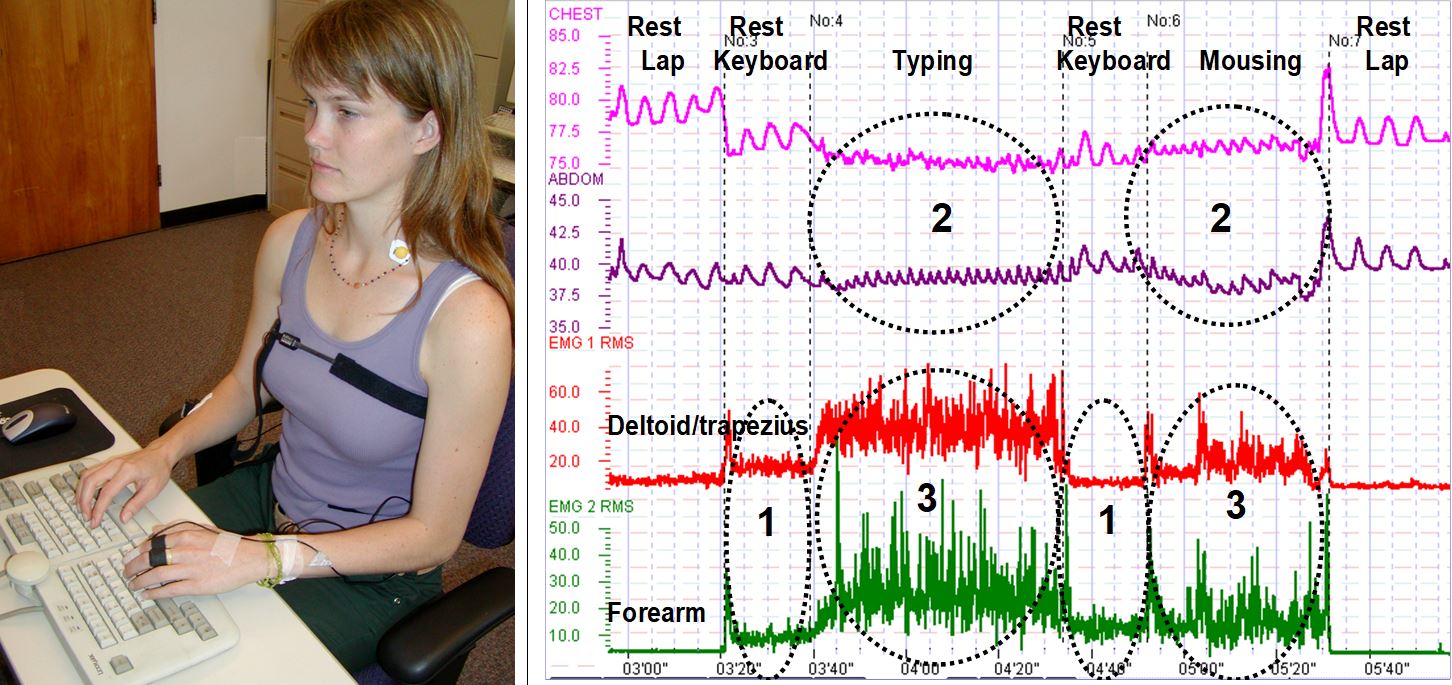
Figure 1. A representative recording of a person working at the computer. Note the following: 1) forearm and shoulder (deltoid/trapezius) muscle tension increased as the person rests her hands on the keyboard without typing; 2) respiration rate increased during typing and mousing; 3) shoulder muscle tension increased during typing and mousing; and, 4) there were no rest periods in the shoulder muscles as long as the fingers are either resting, typing, or mousing. Reproduced by permission from Peper & Harvey, 2008.
Even though the physiological recording showed increase tension when the hands were resting on the keyboard, the person reported being relaxed. The person was also not aware that her neck and shoulder muscles stayed contracted without any momentary rest and recovery periods nor that her breathing rate and heart rate significantly increased. The covert muscle activity and shallow breathing will also interact with the person’s stress level, as well as ergonomic equipment use and the posture throughout the day. Similarly, we tend to be unaware that we slouch which would increase neck and back tension as well as, affect breathing as illustrated in figure 2.
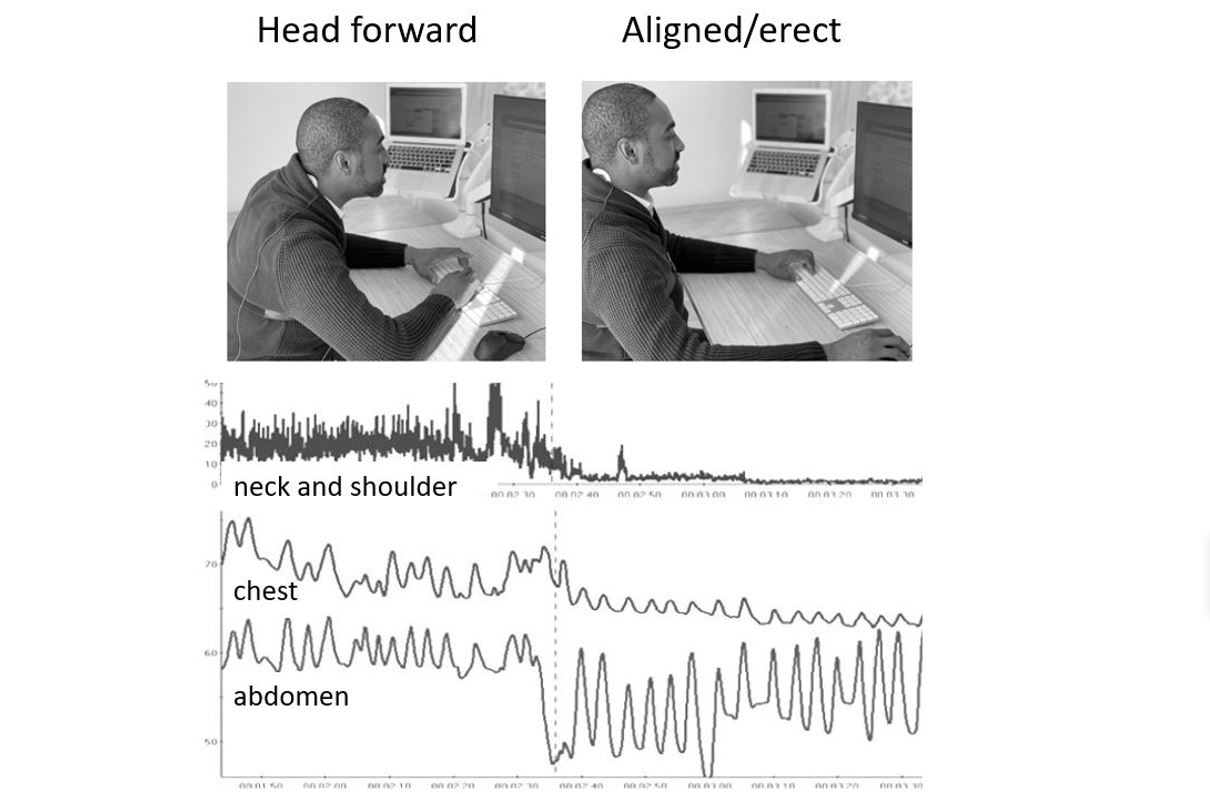
Figure 2. The effect of slouching on neck and shoulder muscle tension and breathing. Reproduced by permission from Peper, E., Harvey, R. and Faass, N. (2020). TechStress-How Technology is Hijacking our Lives, Strategies for Coping and Pragmatic Ergonomics, Berkeley, CA. North Atlantic Books.
Maintaining and optimizing health at the computer means re-envisioning our relationship with technology—reclaiming health, happiness, and sanity in a plugged-in world. We have the ability to control everything from our mobile phones without needing to get up from our seat. Work, social life and online learning all involve the mobile phone or some type of smart devices. A convenient little device that is supposed to simplify our lives has actually trapped us into a vicious cycle of relying on it for every single thing we must do. We spend most of our day being exposed to digital displays on our smartphones, computers, gaming consoles, and other digital devices, immersing ourselves in the content we are viewing. From work related emails or tasks, to spending our free time looking at the screen for texting, playing games, and updating social media sites on a play-by-play of what we are eating, wearing, and doing. A typical thing to do on our devices is to click on one hyperlink after the other and create a vicious cycle in which we are trapped for hours until we realize we need to move. As we do this, we are unaware how much time has frittered away without actually doing anything productive and then, we realize we have wasted another day.
Transform digital fatique into digital health (adapted from https://news.sfsu.edu/news-story/professors-share-tips-healthy-tech-usage-during-pandemic)
Get up and move
About every 20 minutes, stand up and move your body. Consider doing a quick dance to a favorite song or taking a walk around the block. “It will feel silly, yet actively moving is one of the quickest energizers,” Stretching and moving will also relax those muscles that you tense constantly when working at a desk. Think you’ll forget to take a break? Install the free Stretch Break app as a great tool to remind you. For more background information, see the blog, Sitting disease is the new health hazard.
Blink and look far off
Our blinking rate significantly decreases while looking at a screen, which contributes to eye strain. A good way to address this is by blinking every time you click on a hyperlink or after you finish typing a paragraph. To relax the eyes, look at the far distance. “Looking out into the distance disrupts constant near-focus muscle tension in the eyes.” For more suggestions, see the blog, Resolve Eyestrain and Screen Fatigue.
Avoid phones and screens right before bed
Many people use their phones before bed, which can make it more difficult to sleep. Take a break from your phone half an hour or more before bedtime. Electronic screens emit blue light, which can send a signal to your brain that it’s daytime. This suppresses your body’s production of the hormone melatonin, which helps your body know when it’s time to sleep. In addition, keeping up with social media and watching digital media tends to be thought-provoking or anxiety-inducing may stimulate the mind and promote wakefulness. For more suggestions, see the blog, Are LED screens harming you?
Optimize ergonomics
Make sure your computer setup is ergonomically friendly. Your desktop keyboard should be positioned so that your forearms are a few inches above your waist. The top of your screen should be around eyebrow level, which should naturally cause your eyes to look slightly downward at the screen.
Unfortunately, using a laptop or a phone causes people to look down in an unhealthy way that can make them slouch and induce neck or back pain. The solution is to get an external keyboard along with a laptop stand. Getting an external monitor can also help. For more detailed suggestions, see the blogs, Cartoon ergonomics for working at the computer and laptop and Reduce TechStress at Home.
Sit erect and stop slouching
As we work at the computer, we unknowingly tend to slouch which increases the risk of neck and shoulder discomfort and evoking thoughts and feelings. Take control of your slouching with a posture feedback device and app such as UpRight Go [3] that reminds you when you slouch as shown in Figure 3. Each time you the device signals you that you slouch, sit up straight, move, breathe, and think of a positive thought. For more suggestions, see the blog, “Don’t slouch!” Improve health with posture feedback.
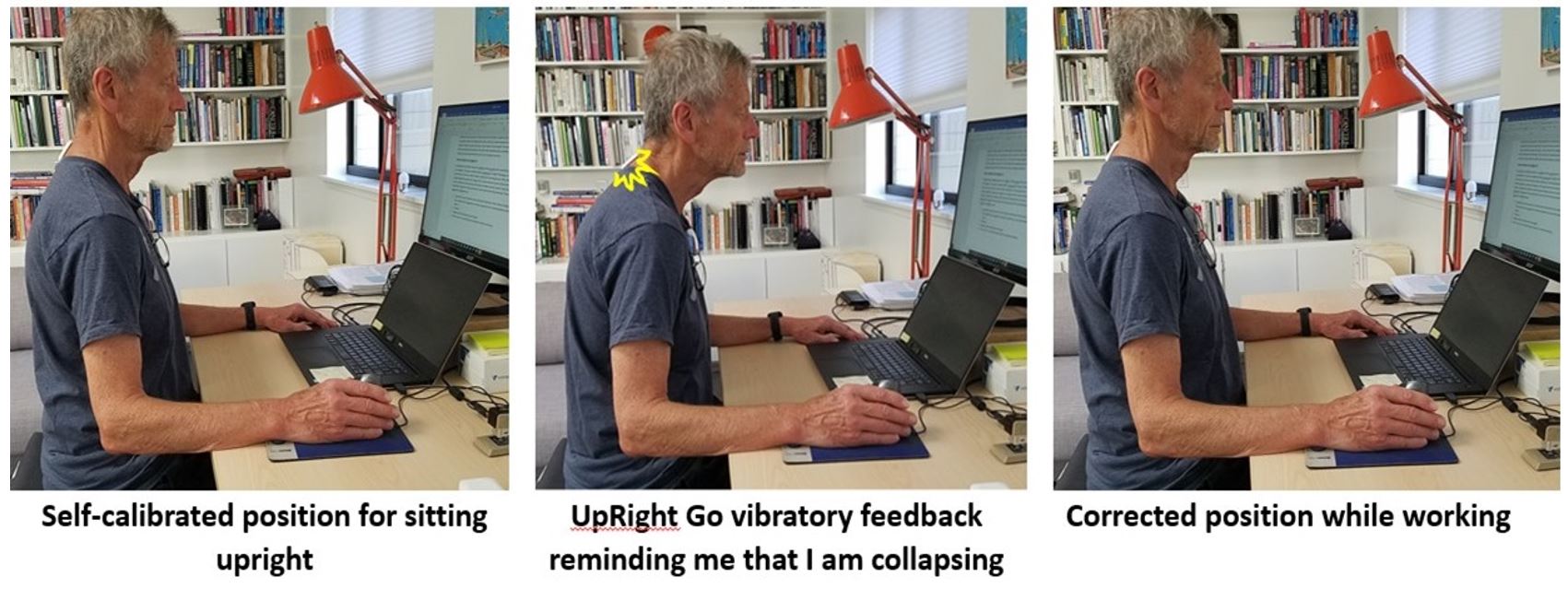
Figure 3. Using posture feedback to become aware of slouching. Reproduced by permission from Peper, E., Harvey, R. and Faass, N. (2020). TechStress-How Technology is Hijacking our Lives, Strategies for Coping and Pragmatic Ergonomics, Berkeley, CA. North Atlantic Books.
Practice slow diaphragmatic breathing
Breathe deeply and slowly to restore a natural rhythm. As we work, we tend to breathe more shallowly, which increases anxiety and our heart rate. To counteract this, take three deep breaths for five seconds, then exhale very slowly for six seconds. For more instructions on slower diaphragmatic breathing, see the blog, Healing irritable bowel syndrome with diaphragmatic breathing.
Give undivided attention and be present
Phones have become so ingrained in our lives that we use them constantly throughout the day. Harvey stresses that people should make a conscious effort to limit phone usage, especially when socializing. When we respond to a phone notification during a Zoom hangout with friends or while talking to our family members, people may feel dismissed. This often increases a sense of social isolation, so give people your total attention when interacting with them. For more suggestions, see the blog, Configure your brain to learn and avoid Zoom fatigue.
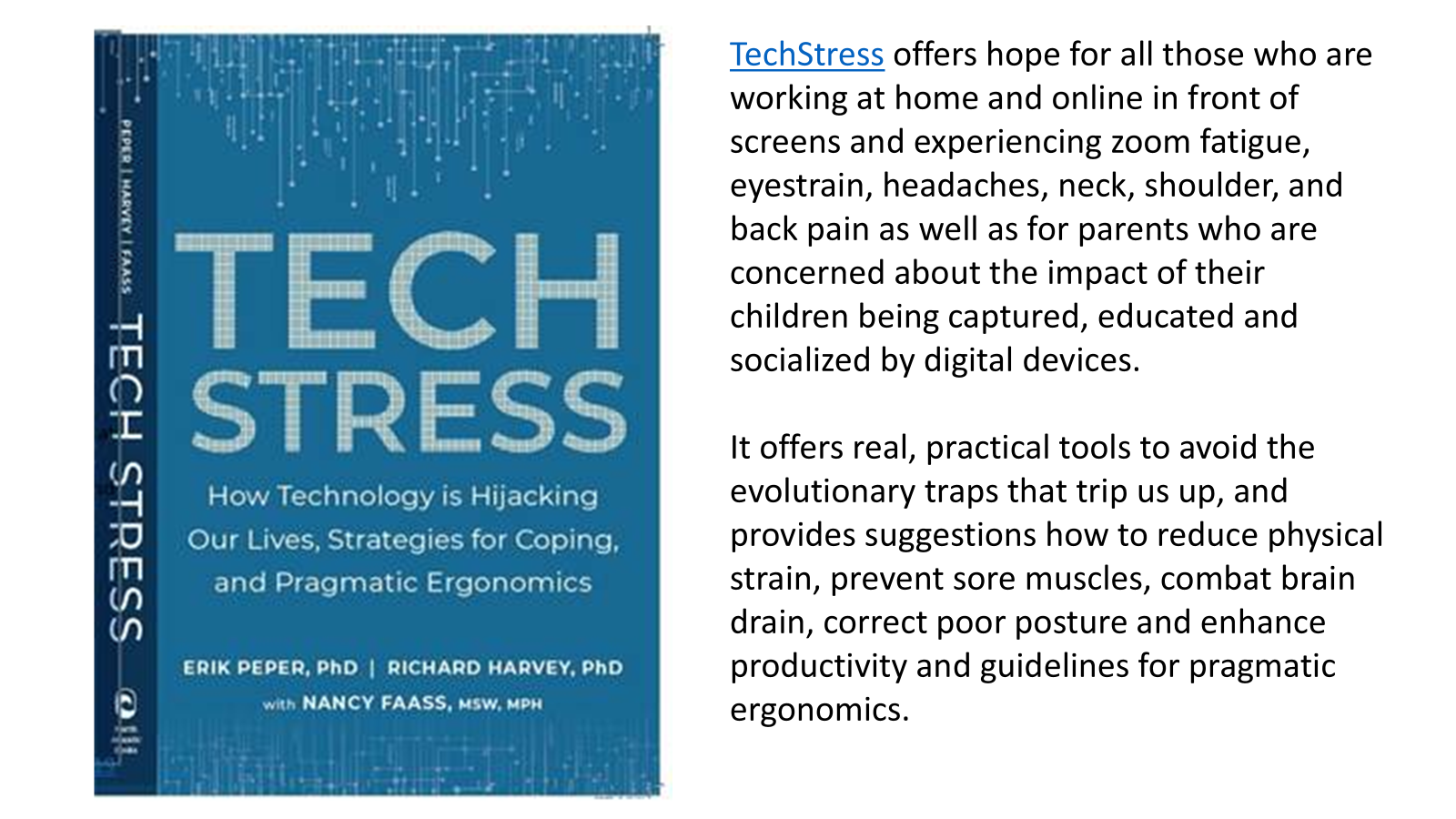
For detailed information and practices, see the book by Erik Peper, Richard Harvey and Nancy Faass,TechStress-How Technology is Hijacking our Lives, Strategies for Coping and Pragmatic Ergonomics, North Atlantic Press. https://www.amazon.com/Beyond-Ergonomics-Prevent-Fatigue-Burnout/dp/158394768X/
Useful resources about breathing, phytonutrients and exercise
Posted: June 30, 2021 Filed under: behavior, Breathing/respiration, cancer, Evolutionary perspective, health, Nutrition/diet, self-healing, Uncategorized | Tags: diet, exercise, immune system, nasal breathing, phytonutrients, respiration 1 Comment
Dysfunctional breathing, eating highly processed foods, and lack of movement contribute to development of illnesses such as cancer, diabetes, cardiovascular disease and many chronic diseases. They also contributes to immune dysregulation that increases vulnerability to infectious diseases, allergies and autoimmune diseases. If you wonder what breathing patterns optimize health, what foods have the appropriate phytonutrients to support your immune system, or what the evidence is that exercise reduces illness and promotes longevity, look at the following resources.
Breath: the mind-body connector that underlies health and illness
Read the outstanding article by Martin Petrus (2021). How to breathe.
https://psyche.co/guides/how-to-breathe-your-way-to-better-health-and-transcendence
You are the food you eat
Watch the superb webinar presentation by Deanna Minich, MS., PHD., FACN, CNS, (2021) Phytonutrient Support for a Healthy Immune System.
Movement is life
Explore the summaries of recent research that has demonstrated the importance of exercise to increase healthcare saving and reduce hospitalization and death.
Are you encouraging your child to get into accidents or even blind when growing up?
Posted: May 12, 2021 Filed under: ADHD, behavior, computer, education, ergonomics, Evolutionary perspective, Exercise/movement, laptops, Neck and shoulder discomfort, posture, screen fatigue, Uncategorized, vision | Tags: glaucoma, myopia, nearsightedness, palming 6 CommentsErik Peper and Meir Schneider
Adapted in part from: TechStress-How Technology is Hijacking our Lives, Strategies for Coping and Pragmatic Ergonomics by Erik Peper, Richard Harvey and Nancy Faass
As a young child I laid on the couch and I read one book after the other. Hours would pass as I was drawn into the stories. By the age of 12 I was so nearsighted that I had to wear glasses. When my son started to learn to read, I asked him to look away at the far distance after reading a page. Even today at age 34, he continues this habit of looking away for a moment at the distance after reading or writing a page. He is a voracious reader and a novelist of speculative fiction. His vision is perfect. –Erik Peper
How come people in preliterate, hunting and gatherer, and agricultural societies tend to have better vision and very low rates of nearsightedness (Cordain et al, 2003)? The same appear true for people today who spent much of their childhood outdoors as compared to those who predominantly stay indoors. On the other hand, how come 85% of teenagers in Singapore are myopic (neasighted) and how come in the United States myopia rate have increased for children from 25% in the 1970s to 42% in 2000s (Bressler, 2020; Min, 2019)?

Why should you worry that your child may become nearsighted since it is easy correct with contacts or glasses? Sadly, in numerous cases, children with compromised vision and who have difficulty reading the blackboard may be labeled disruptive or having learning disability. The vision problems can only be corrected if the parents are aware of the vision problem (see https://www.covd.org/page/symptoms for symptoms that may be related to vision problems). In addition, glasses may be stigmatizing and children may not want to wear glasses because of vanity or the fear of being bullied.
The recent epidemic of near sightedness is paritally a result of disrespecting our evolutionary survival patterns that allowed us to survive and thrive. Throughout human history, people continuously alternated by looking nearby and at the distance. When looking up close, the extraocular muscles contract to converge the eyes and the ciliary muscles around the lens contract to increase the curvature of the lens so that the scene is in focus on the retina — this muscle tension creates near visual stress.
The shift from alternating between far and near vision to predominantly near vision and immobility

Figure 2. The traditional culture of Hdzabe men in Tanzania returning from a hunt. Notice how upright they walk and look at the far distance as compared to young people today who slouch and look predominantly at nearby screens.
Experience the effect of near visual stress.
Bring your arm in front of you and point your thumb up. Look at your thumb on the stretched out arm. Keep focusing on the thumb and slow bring the thumb four inches from your nose. Keep focusing on the thumb for a half minute. Drop the arm to the side, and look outside at the far distance.
What did you experience? Almost everyone reports feeling tension in the eyes and a sense of pressure inside around and behind their eyes. When looking at the distance, the tension slowly dissipates. For some the tension is released immediately while for others it may take many minutes before the tension disappears especially if one is older. Many adults experience that after working at the computer, their distant vision is more fuzzy and that it takes a while to return to normal clarity.
When the eyes focus at the distance, the ciliary muscles around lens relaxes so that the lens can flatten and the extra ocular muscles relax so that the eyes can diverge and objects in the distance are in focus. Healthy vision is the alternation between near and far focus– an automatic process by which the muscles of the eyes tightening and relax/regenerate.
Use develops structure and structure limits use
If we predominantly look at nearby surfaces, we increase near visual stress and the risk of developing myopia. As children grow, the use of their eyes will change the shape of the eyeball so that the muscles will have to contract less to keep the visual object into focus. If the eyes predominantly look at near objects, books, cellphones, tablets, toys, and walls in a room where there is little opportunity to look at the far distance, the eye ball will elongate and the child will more likely become near sighted. Over the last thirty year and escalated during COVID’s reside-in-place policies, children spent more and more time indoors while looking at screens and nearby walls in their rooms. Predominantly focusing on nearby objects starts even earlier as parents provide screens to baby and toddlers to distract and entertain them. The constant near vision remodels the shape of eye and the child will likely develop near sightedness.
Health risks of sightedness and focusing predominantly upon nearby objects
- Increased risk of get into an accident as we have reduced peripheral vision. In earlier times if you were walking in jungle, you would not survive without being aware of your peripheral vision. Any small visual change could indicate the possible presence food or predator, friend or foe. Now we focus predominantly centrally and are less aware of our periphery. Observe how your peripheral awareness decreases when you bring your nose to the screen to see more clearly. When outside and focusing close up the risk of accidents (tripping, being hit by cars, bumping into people and objects) significantly increases as shown in figure 3 and illustrated in the video clip.
Pedestrian accidents (head forward with loss of peripheral vision)

Figure 3. Injuries caused by cell phone use per year since the introduction of the smartphone (graphic from Peper, Harvey and Faass,2020; data source: Povolatskly et al., 2020).
- Myopia increases the risk of eye disorder. The risk for glaucoma, one the leading causes of blindness, is doubled (Susanna, De Moraes, Cioffi, & Ritch, R. 2015). The excessive tension around the eyes and ciliary muscles around the lens can interfere with the outflow of the excess fluids of the aqueous humour through the schlemm canal and may compromise the production of the aqueous humour fluid. These canals are complex vascular structures that maintains fluid pressure balance within the anterior segment of the eye. When the normal outflow is hindered it would contribute to elevated intraocular pressure and create high tension glaucoma (Andrés-Guerrero, García-Feijoo, & Konstas, 2017). Myopia also increases the risk for retinal detachment and tears, macular degeneration and cataract. (Williams & Hammond, 2019).
By learning to relax the muscles around the lens, eye and face and sensing a feeling of soft eyes, the restriction around the schlemm canals is reduced and the fluids can drain out easier and is one possible approach to reverse glaucoma (Dada et al., 2018; Peper, Pelletier & Tandy, 1979).
- Increase in neck and upper back compression when the person cranes their head forward or looks down while reading books/articles, looking at a cellphone or a laptop screen, This often results in an increase of back, neck and shoulder pain as well as headaches (Harvey, Peper, Booiman, Heredia Cedillo, & Villagomez, 2018; Hansraj, 2014).
- Decrease in subjective energy and increase in helpless, hopeless, powerless and defeated thoughts when the person habitually looks down in a slouched position (Peper, Booiman, Lin, & Harvey, 2016; Peper, Lin, Harvey, & Perez, 2017).
WHAT CAN YOU DO?
The solutions are remarkable simple. Respect your evolutionary background and allow your eyes to spontaneously alternate between looking at near and far objects while being upright (Schneider, 2016; Peper, 2021; Peper, Harvey & Faass, 2020).
For yourself and your child
- Let children play outside so that they automatically look far and near.
- When teaching children to read have them look at the distance at the end of every paragraph or page to relax the eyes.
- Limit screen time and alternate with outdoor activities
- Every 15 to 20 minutes take a vision break when reading or watching screens. Get up, wiggle around, move your neck and shoulders, and look out the window at the far distance.
- When looking at digital screens, look away every few minutes. As you look away, close your eyes for a moment and as you are exhaling gently open your eyes.
- Practice palming and relaxing the eyes. For detailed guidance and instruction see the YouTube video by Meir Schneider.
Create healthy eye programs in schools and work
- Arrange 30 minute lesson plans and in between each lesson plan take a vision and movement breaks. Have children get up from their desks and move around. If possible have them look out the window or go outside and describe the furthest object they can see such as the shape of clouds, roof line or details of the top of trees.
- Teach young children as they are learning reading and math to look away at the distance after reading a paragraph or finishing a math problem.
- Teach palming for children.
- During recess have students play games that integrate coordination with vision such as ball games.
- Episodically, have students close their eyes, breathe diaphragmatically and then as they exhale slowly open their eyes and look for a moment at the world with sleepy/dreamy eyes.
- Whenever using screen use every opportunity to look away at the distance and for a moment close your eyes and relax your neck and shoulders.
BOOKS TO OPTIMIZE VISION AND TRANSFORM TECHSTRESS INTO TECHHEALTH
Vision for Life, Revised Edition: Ten Steps to Natural Eyesight Improvement by Meir Schneider.
YOUTUBE PRESENTATION, Transforming Tech Stress into Tech Health.
ADDITIONAL BLOGS THAT FOCUS ON RESOLVING EYES STREAN AND TECHSTRESS
REFERENCES
Bressler, N.M. (2020). Reducing the Progression of Myopia. JAMA, 324(6), 558–559.
Peper, E. (2021). Resolve eyestrain and screen fatigue. Well Being Journal, 30(1), 24-28.
Schneider, M. (2019). YouTube video Free Webinar by Meir Schneider: May 6, 2019.
Williams, K., & Hammond, C. (2019). High myopia and its risks. Community eye health, 32(105), 5–6.
Why did the CDC mishandle the COVID-19 pandemic response?
Posted: May 10, 2021 Filed under: education, health, Uncategorized | Tags: CDC, COVID-19 1 CommentThe CDC (Centers for Disease Control and Prevention) located in Atlanta, George, with a stellar international reputation responded too late and incompetently to the COVID-19 pandemic in the United States. Although many people blame the Trump administration for the failed response, a significant factor was the risk adverse and politicized CDC.. To understand what actually happened, listen to the superb New York Times podcast with Michael Lewis and read his just published book, The Premonition: A Pandemic Story. The interview and his book should be the first requirement for anyone interested in Public Health careers, government service and public policy.
Listen to the New York Times book review podcast interview: and read the book.

Nutrition to support the Stress Response
Posted: April 17, 2021 Filed under: behavior, Evolutionary perspective, health, Nutrition/diet, stress management, Uncategorized | Tags: food 5 Comments
Let food be thy medicine and medicine be thy food
-Hippocrates, the Greek physician and father of medicine.
What should I eat? More greens, more Vitamin D, more fish, no meats, no grains, or should I become a vegetarian, go on a ketogenic diet, or evolutionary diet? There are so many options. What are the best choices?
The foods we eat provide the building blocks and energy source for our body. If you eat high quality foods, the body has the opportunity to create and maintain a healthy strong structure; on the other hand, if you eat low quality foods, it is more challenging to create and maintain a healthy body. The analogy is building a house. If the materials are high quality, the structure well engineered and well built, the house has the opportunity to age well. On the other hand, if the house is built out of inferior materials and poorly engineered, it is easily damaged by wind, rain or even earthquakes.
Although we are bombarded with recommendations for healthy eating, many of the recommendations are not based upon science but shaped by the lobbying and advertisement efforts of agribusiness. For example, the scientific recommendations to reduce sugar in our diet were not implements in the government guidelines. This demonstrates the power of lobbying which places profits over health.
Officials at the Department of Agriculture and the Department of Health and Human Services rejected explicit caps on sugar and alcohol consumption. Although “the preponderance of evidence supports limiting intakes of added sugars and alcoholic beverages to promote health and prevent disease.” (Rabin, 2020).
To make sense out of the multitude of nutritional recommendations, watch the superb presentation by Dr. Marisa Soski, ND, Nutrition to Support Stress Response.* She discusses how and what we eat has direct impact on how our bodies manage our reactions to stress.
*Presented April 16, 2021 at the Holistic Health Series on Fridays: Optimize Health and Well-Being Lecture Series. The series is sponsored by the Institute for Holistic Health Studies and Department of Recreation, Parks, Tourism, San Francisco State University.
Reference
Rabin, R.C. (2020). U.S. Diet Guidelines Sidestep Scientific Advice to Cut Sugar and Alcohol. The New York Times. https://www.nytimes.com/2020/12/29/health/dietary-guidelines-alcohol-sugar.html
 the peper perspective